Our readers keep the lights on and my smoothie glass nicely filled. As an Amazon Associate, I earn from qualifying purchases.
Specs are compiled from manufacturer listings and verified buyer reviews and can change over time — please confirm the key details on the product page before buying.
If your engine has crossed the 100,000-mile mark, you already know the soundtrack: a light tick at idle, a puff of blue smoke on startup, or a slow drip on the garage floor. Those sounds are worn seals losing their grip and friction finding its way into moving parts. The right additive can quiet that tick, slow an oil leak, and restore responsiveness to a tired engine.
I’m Mohammad Maruf — the founder and writer behind WellFizz. This guide is built by comparing the manufacturers’ published specifications and the patterns across verified customer reviews, so you get each pick’s real strengths and trade-offs instead of marketing spin.
These are the top formulas for reviving a worn engine, from ceramic coatings to seal rejuvenators. engine additive for high mileage picks that actually quiet ticking, curb oil burn, and ease cold-start wear.
Our Picks at a Glance


How To Choose The Best Engine Additive For High Mileage
Not all additives do the same job. Some are engineered to stop leaks by softening aged rubber seals, while others coat metal surfaces to cut friction. Knowing which problem you are solving — a drip, a tick, or burning oil — is the first step to picking the right bottle.
Seal Conditioners vs. Friction Reducers
High-mileage engines suffer from two distinct issues: hardened seals that leak oil, and worn metal surfaces that create noise and heat. Seal conditioners chemically soften rubber so it grips again, which is why they are the go-to for oil drips. Friction reducers lay down a protective film on metal, which quiets ticking and protects during cold starts. Many of the best formulas combine both approaches.
Understanding the Chemistry
Ceramic particle additives like Cera Tec bond to metal surfaces to create a low-friction layer, but they do nothing for a leaking rear main seal. Meanwhile, a stop-leak formula swells the rubber gasket but offers no wear protection. Some premium treatments use synthetic nanoparticles to build a diamond-like carbon coating, a technology developed with U.S. Department of Energy and NASA funding that claims to reverse bearing wear.
Quick Comparison
| Model | Best For | Primary Action | Volume | Weight | Amazon |
|---|---|---|---|---|---|
| Liqui Moly Cera Tec★ Best Overall | Quieting ticking and knocking | Ceramic coating | 300 ml | 10.6 oz | Amazon |
| Camguard ConcentratePremium Protectant | Corrosion and wear protection | Full additive package | — | 8.32 oz | Amazon |
| XADO ATOMEX Stop LeakStops the Drip | Stopping rear main seal leaks | Seal rejuvenator | 250 ml | 10.8 oz | Amazon |
| Liqui Moly Motor Oil Saver | Reducing oil consumption | Seal regenerator | 300 ml | — | Amazon |
| LUCAS High Mileage Stabilizer | Raising low oil pressure | Oil thickener | 4000 ml | 1.9 lbs | Amazon |
| Gumout Regane Cleaner | Cleaning fuel systems | Fuel detergent | 6 oz | 2.6 lbs | Amazon |
| 505 CRO Oil Treatment | Cleaning sludge and carbon | Engine flush | 12 oz | 11.2 oz | Amazon |
| TriboTEX Small Engine | Motorcycles, mowers, generators | Nanoparticle coating | 1000 ml | — | Amazon |
| TriboTEX Diesel Truck | Big diesel pickups | Nanoparticle coating | 470 ml | — | Amazon |
In‑Depth Reviews
1. Liqui Moly Cera Tec Ceramic Additive
Our pick — over 4.5★ from 34,000+ verified ratings; the strongest balance of quality and price.
The crowd favorite that turns a ticking high-mileage engine back into a smooth, quiet cruiser.
The most-discussed trait here is noise reduction — over 300 owners single it out, and the pattern is impossible to ignore. A 160k-mile infinity V6 owner describes the result vividly: the engine ran smoother, a light ticking sound vanished, and coolant temperatures dropped around 10 degrees cooler. That kind of consistent feedback across tens of thousands of ratings makes this the safest bet on the list.
The magic comes from ceramic nanoparticles that bond to metal surfaces inside the engine, creating a low-friction coating that reduces wear. You pour the 300 ml bottle into your oil, and the maker says it stays stable under high thermal and dynamic loads, resists extreme temperatures, and is mixable with all commercially available motor oils.
Buyers report fuel efficiency gains of 1-3 MPG, especially on highways, and one notes the treatment lasts up to 30,000 miles per application. On a high-compression GDI engine like a Mazda 3 Turbo, the difference is described as night-and-day for idle smoothness. It is the most complete, proven option for the money.
The Noise-Killing Wins
- Quieted lifter tick and knocking in Mustangs, Mazdas, and BMWs
- Ceramic layer reduces friction and wear on worn metals
- One treatment reportedly lasts up to 30,000 miles
The Fair Warning
- Does not fix oil leaks — seal work is a different chemistry
- High-compression ticks may return and need a double dose
Reach for it if: your engine ticks, knocks, or just feels rough at idle and you want the most proven noise cure available.
Look elsewhere if: your real problem is a puddle under the car — that needs a seal conditioner, not a ceramic coating.
2. Camguard 100% Oil Additive Concentrate
The aviation-heritage additive that treats five problems at once, not just one.
Most oil additives focus on a single job — friction, or corrosion, or leaks. Camguard tackles five: wear, corrosion, friction, deposits, and seal degradation. The maker claims most competitors deliver under 25% actual additive, while this concentrate is 100% additive with no filler.
Its pedigree comes from the sky — the aircraft version of CamGuard is used religiously in many planes and is even required on certain engine models. Owners mention checking cylinder walls with a borescope after use and finding them “clean as a whistle,” with no moisture-related corrosion. That makes it the standout pick for vehicles that sit for long stretches.
At 8.32 ounces it is noticeably lighter than the XADO stop-leak bottle at 10.8 ounces, but it brings a broader protection profile. Owners run it in RAM 5.7L trucks at every oil change to guard against cam issues, and the universal fit works for both cars and trucks.
Best for storage queens: If your car sits for weeks between drives, this is the corrosion insurance your engine needs.
The trade-off: It is not a quick fix for an active leak — it is preventative chemistry, not a seal plug.
3. XADO ATOMEX Stop Leak Engine Treatment
The leak-stopping specialist that restored a failing rear main seal in under 200 miles.
This is the additive you reach for when the problem is oil loss, not noise. The formula restores elasticity to rubber gaskets and seals, which is exactly what a high-mileage engine needs when its seals have hardened with age and heat. On a failing rear main seal, customers note greatly reduced oil loss after about 180 miles of driving.
It is engineered as a universal fix that works across auto, motorcycle, and marine engines. The 250 ml bottle is smaller than the Liqui Moly Motor Oil Saver’s 300 ml, but it carries the same core promise of rejuvenating seals, valves, and cylinders. Owners also note reduced engine noise and oil consumption as the seals regain their grip.
The catch is that stop-leak results are genuinely mixed. Some reviewers point out their cars continue to leak even after treatment, so this works best on weeping seals rather than catastrophic failures. That said, a 2017 F-150 owner reports the treatment fixed leaking turbo cooling lines and O-rings with no issues for two years.
What wins people over: The effectiveness is the top praised trait, with buyers reporting real drips disappearing within 100 miles or less.
Who it is not for: If the leak is severe or the seal is physically torn, no additive will weld it shut.
4. Liqui Moly Motor Oil Saver 2-Pack

The fix for blue smoke and vanishing oil levels, packaged in a sensible 2-pack.
If you are topping off oil between changes and seeing a blue puff on startup, the culprit is often aged valve stem seals. This formula maintains and regenerates rubber and plastic seals in the oil circuit, directly targeting the oil consumption caused by hardened seals. Shoppers say zero oil loss at 1,300 miles in a 2013 Nissan Xterra that previously used a quart every 1,500 miles.
Each bottle is 300 ml, and you get two in this pack — which matters because some engines need a second dose to fully stop a leak. One owner with a large leak reports it slowed significantly after one bottle plus 500 miles, with the oil level finally stable. The 2-pack lets you commit to the full treatment without another shopping trip.
Beyond oil consumption, it dampens engine noise and minimizes external leaks, which owners confirm on EcoBoost trucks and aging SUVs alike. It is built for both gas and diesel engines with a universal fit, making it a strong maintenance habit for any high-mileage fleet.
Why It Works
- Regenerates valve stem seals to cut oil burning
- Two-bottle pack covers stubborn leaks fully
- Works in gas and diesel engines
Keep In Mind
- Results on rear main seals are mixed
- Delivery has occasionally been slow, per some buyers
The verdict: This is the first bottle to try when your engine drinks oil but does not visibly drip.
Think twice if: the leak is from a gasket you can simply replace — no additive beats fresh rubber.
5. LUCAS High Mileage Oil Stabilizer 2-Pack

The 100% petroleum thickener that brings low oil pressure back to a comfortable range.
This is the additive for the warning light that flickers at idle. It is a 100% petroleum product that reduces friction and heat while creating a coating that clings to metallic surfaces. In an LS-swapped Jeep YJ with low oil pressure, buyers report it raised the reading to a comfortable range and added protective coating for cold starts after long idle periods.
The pack gives you two cans totaling 64 fluid ounces, which is far more than any other additive here — enough to treat multiple vehicles. Owners have run it across a Ford F-250 at 179k miles, a Mazda CX-5 at 140k miles, and a Smart 453 at 39k miles, calling it a premium additive that works across engine types. One user has trusted Lucas products for over 20 years.
Because it is a thickener, it also eliminates dry starts by keeping a film on metal surfaces between startups. It is rated for motorcycle use too, so it works on bikes as well as trucks. The trade-off is that it does not condition seals — it protects metal and pressure, not rubber.
What wins people over: Performance is the most-praised trait, with noticeable help for oil pressure and noisy lifters.
The honest limit: This is a band-aid for worn bearings and clearances, not a rebuild in a bottle.
6. Gumout Regane High Mileage Fuel Cleaner 6-Pack

The fuel-side companion that keeps injectors and valves clean for daily drivers.
This one goes in the gas tank, not the crankcase, which makes it a different tool for a different problem. It uses CarbonClear technology that combines PEA cleaning power with PIBA and a patented detergent for a better clean than PEA alone. At 120k miles on a 2014 Prius V, owners mention that engine knocking under AC load stopped when used with 4-5 gallons of gas.
The 6-pack gives you six 6-ounce bottles, which is the right amount for a regular maintenance habit. One long-term user at 100k miles reports the fuel system looks new with clean spark plugs and pistons, and no induction services needed. The maker says it fights ethanol and water corrosion and prevents future carbon build-up.
It works best as a scheduled treatment — owners at 178k miles use it every 3,000 miles and credit it with helping their mileage. It conditions the upper cylinder to reduce friction and wear specifically for high-mileage vehicles while delivering boost performance in one fill-up.
The Everyday Wins
- Cleans fuel systems and reduces carbon deposits
- Six-bottle pack covers a year of maintenance
- Fights ethanol and water corrosion
The Limits
- Not a cure for engine knock in performance vehicles
- Adds nothing to oil-side protection
Best for: the daily commuter in need of a regular fuel-system cleanout, not a heavy repair.
skip it if: your problem is oil consumption — this never touches the crankcase.
7. 505 CRO Oil System Treatment
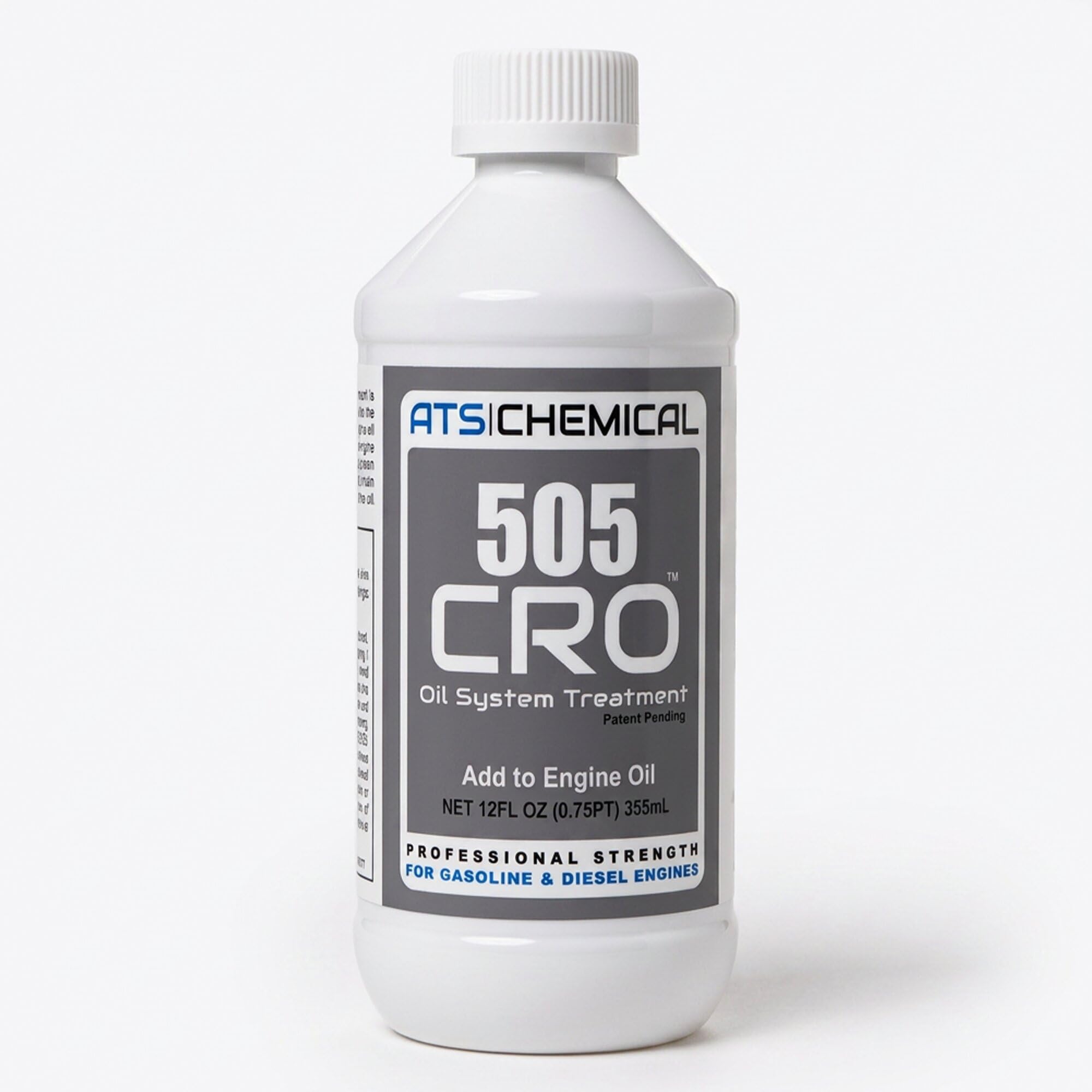
The internal cleaner that proves itself by draining out pitch-black oil loaded with carbon.
This 12-ounce treatment targets the gunk that builds up over 200,000 miles: sticking piston rings, lifters, camshaft phasers, and timing chain tensioners. Owners put it to the test — pouring it into fresh oil, idling for 10 minutes, then draining. The oil came out pitch black, visibly loaded with dissolved carbon deposits. That is the kind of proof you can see with your own eyes.
On a 330k-mile Jeep Cherokee, the engine ran noticeably smoother and quieter after a single treatment. A 2010 Honda Pilot owner drained similarly black oil after idling at around 2,000 RPM for 15 minutes, then switched to a fresh fill. Owners describe better throttle response and an engine that “runs like new,” with reported fuel efficiency gains around 5%.
The one frustration is physical, not chemical: the two-layer cap requires a screwdriver to pry off both tops. The performance gains, though, are the most-praised aspect, with cleaning performance close behind. For a high-mileage engine that has never had a flush, this is the deep-clean option.
The standout evidence: Black oil after a short idle cycle is visual confirmation that carbon is leaving the engine.
The catch: It is a maintenance treatment — you will still need a quality oil afterward to protect the now-clean surfaces.
8. TriboTEX Small Engine Treatment

The NASA-backed nanoparticle treatment that revived a 230,000-mile Civic and a lawn mower alike.
This science-heavy option was developed with funding from the U.S. Department of Energy, NASA, and the National Science Foundation. Its synthetic nanoparticles build a diamond-like carbon coating on bearings, which the maker claims reverses wear. On a 2005 Honda Civic with 230,830 miles, the result was a quieter engine, a gone valve tick after 50 miles, and road-trip MPG jumping from the low 30s to 36.5-38.5.
What makes it unusual is the range — it treats one motorcycle, lawn mower, or generator with a 4 or 2-stroke engine. Customers note lawn mowers starting easier and running smoother after a tune-up treatment. The 1000 ml bottle is also safe for wet clutches in motorcycles, which many additives cannot claim.
The reviews read like a redemption arc: an E70 BMW X5 around 200k miles that a mechanic said needed a new engine fixed its oil leak and consumption within two months of treatment. It is the most expensive small-engine option, and value-for-money feedback is mixed — but the performance and noise-reduction praise is loud and consistent.
What wins people over: Performance tops the praise list, with quieter operation and better fuel numbers in older engines.
The honest note: The upfront cost is steep for a small engine — treat it as insurance for a machine you cannot afford to rebuild.
9. TriboTEX Diesel Truck Treatment

The heavy-duty dose of the same nanoparticle tech, built for one big diesel pickup.
Diesel trucks punish oil harder than almost anything else, which is why this 470 ml can is formulated to treat one big diesel truck. It uses the same diamond-like carbon coating technology as the small-engine version, backed by a 6-month satisfaction guarantee. A 2015 Jeep EcoDiesel owner reports idle vibration gone, quieter running at all speeds, and a slight coolant temperature drop after 3,000 miles.
The fuel mileage story is the most concrete: an F-350 with the 6.7 diesel jumped from 18 miles per gallon to 21.5 after treatment. But results here are genuinely mixed — one F-350 owner saw no difference in noise, performance, or fuel mileage after 2,500 miles. The summaries note that noise level and fuel mileage have both positive and neutral outcomes, so patience matters.
That said, one owner found no effect for the first 500 miles on a Duramax, then saw major improvement later. The advice from experienced users is to let it work over time, not judge it after one tank. It is the premium, wait-and-see option for diesel owners who want the deepest protection available.
The headline win: Smoothness is the most-praised trait, with diesels idling calmer and quieter after treatment.
The honest caveat: Expect mixed fuel-milage results — some trucks respond dramatically, others barely change.
Understanding the Specs
Volume and Dosage
The bottle size tells you how many engines you can treat. A 300 ml bottle is a single treatment for a standard car oil system, while a 64-ounce pack gives you enough for multiple vehicles or a big diesel. Pay attention to whether you are buying one dose or a maintenance supply.
Ceramic vs. Seal Conditioners
Ceramic and nanoparticle additives coat metal surfaces to cut friction and quiet noise. Seal conditioners soften aged rubber to stop leaks. A friction coating will not fix a drip, and a seal sweller will not quiet a lifter — identify your symptom first, then match the chemistry.
FAQ
Will an engine additive fix my rear main seal leak?
Can I use a ceramic additive like Cera Tec to stop oil consumption?
How often should I add a high-mileage treatment to my oil?
Is it safe to use an additive in a turbocharged EcoBoost engine?
What is the difference between a fuel system cleaner and an oil additive?
Will a thicker oil stabilizer raise my low oil pressure?
Can I use a diesel truck treatment in a gas engine?
How long does it take for a stop-leak additive to work?
Is it worth using a high-mileage additive for a car that sits for weeks?
Will an engine flush treatment damage my high-mileage engine?
Final Thoughts: The Verdict
If you want one dependable pick, the engine additive for high mileage winner is the Liqui Moly Cera Tec because it is the most proven noise and friction cure on the market, backed by tens of thousands of owners and consistent praise for quieter running. If your problem is a visible oil leak, grab the XADO ATOMEX Stop Leak for its rear-main-seal results. And for protecting a truck or vehicle that sits idle, the Camguard Concentrate is the long-term corrosion insurance your engine deserves.
How We Picked
We do not accept paid placement. Every pick is matched to a real buyer and a real use-case; we do not hands-on test units.
Sources & Methodology
Specifications: manufacturer listings and product documentation. Review insights: verified customer reviews, as of August 2026. Pricing: not shown on this page (it changes often); check the current price via the retailer link.
As an Amazon Associate, WellFizz earns from qualifying purchases. This does not affect which products we feature.
Related Guides

Mo Maruf
I created WellFizz to bridge the gap between vague wellness advice and actionable solutions. My mission is simple: to decode the research and give you practical tools you can actually use.
Beyond the data, I am a passionate traveler. I believe that stepping away from the screen to explore new environments is essential for mental clarity and physical vitality.