Our readers keep the lights on and my smoothie glass nicely filled. As an Amazon Associate, I earn from qualifying purchases.
Specs are compiled from manufacturer listings and verified buyer reviews and can change over time — please confirm the key details on the product page before buying.
Buying your first enduro bike feels like a gamble: you want enough travel to survive rocky descents, but you do not want a heavy sled that makes every climb a miserable push. The modern enduro category has closed that gap, and this guide breaks down four bikes that deliver on both climbs and descents. You will learn what 150mm of travel really means on the trail, which component groups matter for a beginner, and how to read geometry numbers without a mechanical engineering degree.
I’m Mohammad Maruf — the founder and writer behind WellFizz. This guide is built by comparing the manufacturers’ published specifications and the patterns across verified customer reviews, so you get each pick’s real strengths and trade-offs instead of marketing spin.
The best enduro bike for beginners balances forgiving suspension, reliable shifting, and a frame that will not punish your first season of mistakes.
Our Picks at a Glance
How To Choose The Best Enduro Bike For Beginners
An enduro bike is built for descending fast and still pedaling back up for another lap. For a beginner, the key is finding a bike that forgives mistakes — enough suspension to soak up rock gardens, but a geometry that does not feel twitchy or unstable at moderate speeds.
Suspension Travel: The 150mm balance
Travel is how far your suspension compresses, measured in millimeters. Bikes with 150mm of front and rear travel are the most forgiving for learning because they absorb bigger hits without making the bike feel like a couch when you climb. More travel, like 170mm, is harder to pedal efficiently and can mask your mistakes instead of teaching you good line choice.
Drivetrain: Why 12-Speed Matters
A 12-speed drivetrain gives you a wide range of gears, so you keep a steady cadence on steep climbs and still have top-end speed on the flats. For a beginner, the Shimano Deore groupset is the benchmark because it shifts reliably under load and is inexpensive to replace when you crash. Look for trigger shifters, which let you change gears with a single finger while keeping your hands on the bars.
Quick Comparison
| Model | Best For | Frame Material | Drivetrain | Rear Travel | Amazon |
|---|---|---|---|---|---|
| SAVADECK Lantop 612 Plus★ Best Overall | Lightweight climbing on a budget | Carbon Fiber | Shimano Deore M6100 12-Speed | Dual-Link Suspension | Amazon |
| SAVADECK Titan 612 | Aggressive braking on descents | Carbon Fiber | Shimano Deore M6100 12-Speed | DNM Air Shock, 3-Stage Lockout | Amazon |
| Canyon Spectral 5 | Reputable brand, all-round trail duty | Aluminum | SRAM SX Eagle 12-Speed | 150mm | Amazon |
| Canyon Spectral 6 | Premium FOX suspension performance | Aluminum | Shimano Deore 12-Speed | 150mm | Amazon |
In‑Depth Reviews
1. SAVADECK Lantop 612 Plus Carbon Fiber Mountain Bike
The featherweight carbon climber that proves enduro does not have to mean a heavy fight uphill.
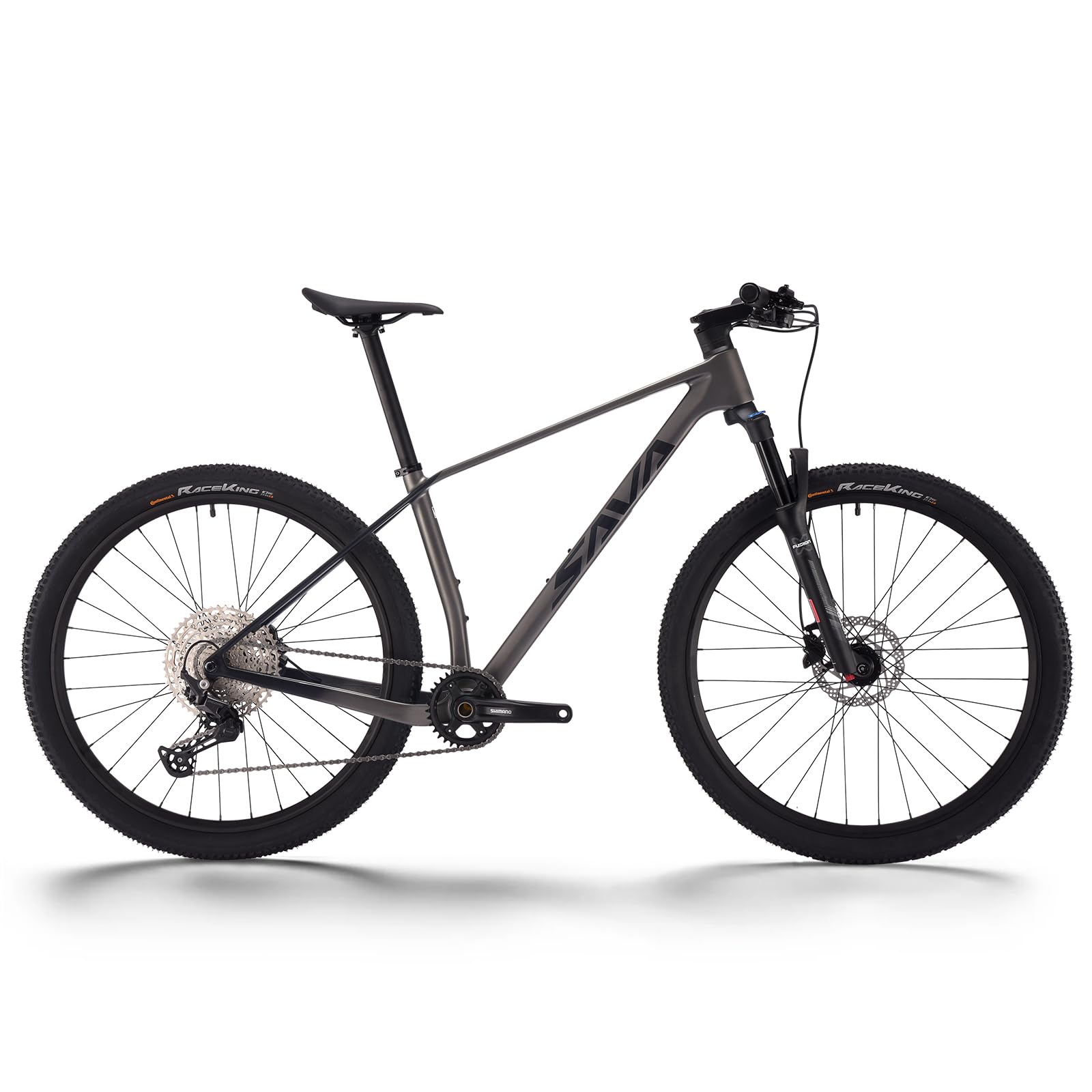
You will climb with less strain because the carbon fiber frame (a lightweight material that absorbs vibration) and internal cable routing (cables hidden inside the frame for a cleaner look) cut down on weight. Buyers report climbing with less effort, a key confidence boost for beginners still building leg strength.
The Shimano Deore M6100 12-speed groupset is the gold standard for entry-level durability, shifting smoothly under load on technical trails. The hydraulic disc brakes from Shimano MT200 give you low-maintenance stopping power in all conditions, which is the safety net you want when you are still learning to brake late into corners.
The durability stories here are remarkable: Owners mention nine years and 10,000+ miles with no repairs beyond routine maintenance, and one frame survived a car hit with only minor damage.. Assembly takes owners about 10 minutes. — and shorter riders just needed to cut the seat post by two inches, which is a simple fix at any shop.
What Riders Rave About
- Lightweight carbon frame makes climbing noticeably easier
- Smooth, precise shifting from the Shimano Deore M6100 12-speed drivetrain
- Hydraulic disc brakes provide powerful, low-maintenance stopping
- Proven long-term durability with low maintenance costs
Before You Buy
- Shorter riders (under about 5’4″) may need to cut the seat post for a proper fit
- Stock pedals and seat are basic; advanced riders will likely upgrade them
Reach for this if: you want a light bike that is fun to pedal uphill while staying affordable — the owner crowd is unanimous that this is exceptional value.
Look elsewhere if: you need the absolute max in descending forgiveness; this is tuned for efficiency, not for plowing through the roughest enduro stages.
2. SAVADECK Titan 612 Carbon Fiber Soft Tail Mountain Bike
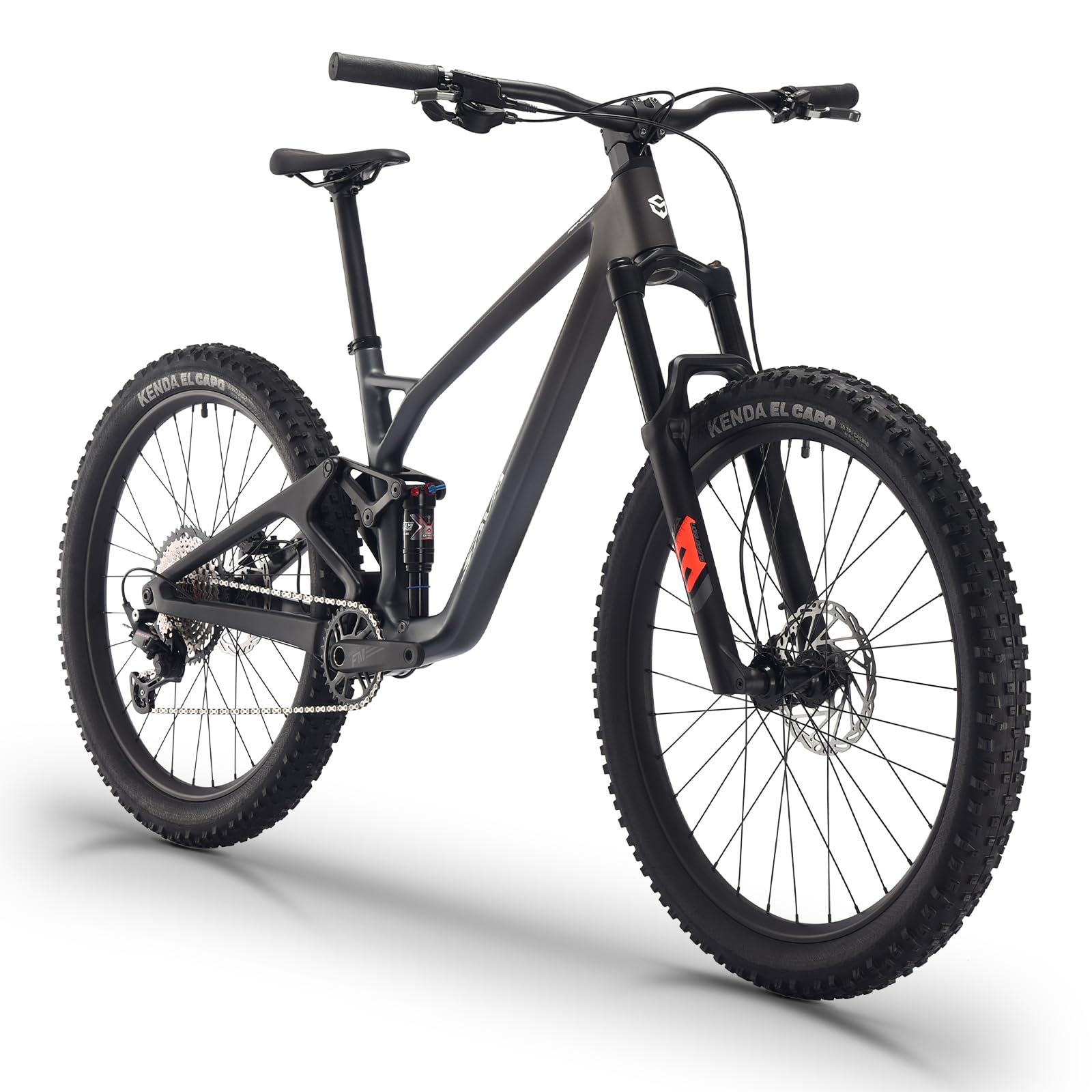
The burlier brother with four-piston brakes built to keep you confident on long, brake-dragging descents.
The defining feature here is the upgraded four-piston hydraulic disc brakes — a step up from the Lantop’s two-piston setup. Customers note powerful stopping power with better heat dissipation, reducing brake fade on long descents.
You get the same lightweight carbon fiber frame as its sibling, paired with the Shimano Deore M6100 12-speed drivetrain (a gear system with 12 gears for varied terrain). The DNM air shock (a rear suspension unit that uses air pressure) has a three-stage lockout, so you can stiffen the rear for climbing and then soften it for descents — a handy feature while you are still learning to adjust your bike.
The tire clearance is a future-proofing win: it comes with 2.4″ wide Continental all-terrain tires for grip on mud and gravel, and the frame supports upgrading to 2.6″ tires later for even more stability. One owner noted the sizing runs large, with a 17″ frame proving too big for a 5’8″ woman, so shorter riders should be cautious about fit.
A minority of owners reported quality issues with the pedals and frame, describing it in stark terms, but far more highlight the smooth ride, excellent parts value, and responsive seller support when a wrong frame was shipped. If you buy this, check the sizing carefully and plan to verify the build on arrival.
The Core Trade-Off: you get dramatically better stopping power and a harder-hitting suspension tune than the Lantop, but you trade that for a slightly heavier, more complex bike that demands careful sizing.
Who this suits: the rider who already knows descents are their favorite part and wants brake power that will not fade mid-run.
Who should skip it: shorter riders (under 5’4″) who cannot test the fit first — sizing is the recurring watch-out here.
3. Canyon Spectral 5

The crowd-pleasing all-rounder from a brand with decades of trail pedigree and a loyal fanbase.
For the reassurance of a well-known brand, Canyon’s Spectral 5 is a do-everything trail bike. It has a durable aluminum frame and 150mm of travel (how far the suspension compresses) front and rear, using a RockShox 35 Silver fork and Deluxe Select shock to keep the ride smooth. That 150mm is the textbook balance for a beginner enduro rider.
The build includes a SRAM SX Eagle 12-speed drivetrain (a gear system with 12 gears for steep climbs and fast descents), plus four-piston SRAM brakes (which use four pistons for strong stopping power) and a dropper seatpost (a lever that lowers your saddle on the fly for descents, giving you more room to shift your weight back). Owners call the craftsmanship “solid” and praise the smooth gear changes.
It arrives mostly pre-built, which takes the intimidation out of a first full-suspension bike. One owner did note the hard seat lacks padding and swapped it for a padded one — a simple, cheap fix. The Dark Honey colorway draws genuine compliments on the trail.
The Verdict: you pay more than the SAVADECK options, but you get a brand with proven geometry, a massive support network, and a bike the owner community describes as a joy to ride with excellent craftsmanship.
Reach for this if: brand trust and resale value matter to you, and you want a bike that is fully equipped for aggressive trail riding from day one.
Keep in mind: the hard stock saddle is the one recurring complaint — budget a few dollars for a replacement.
4. Canyon Spectral 6

The suspension upgrade king — FOX dampers front and rear that make rough trails feel surprisingly smooth.
The big jump here is the FOX suspension: a FOX 36 Rhythm Grip fork up front and an X Performance 2-Position shock in the rear, both with 150mm of travel. Owners who are 6′ tall say the size fits perfectly and call the suspension “amazing” on rock gardens and root-filled climbs.
You still get the durable aluminum frame and the Shimano Deore 12-speed drivetrain (a gear system with 12 gears), among the most dependable and budget-friendly groupsets (the set of gears and shifters) available. The Shimano Deore brakes and dropper seatpost (a lever that lowers your saddle on the fly) make it ready for technical terrain right from the start.
The honest catch is the cranks: returning riders note the off-brand cranks (the arms that connect the pedals to the bike) as the first thing you notice. One owner said that at full price, there are other bikes to consider from YT and Trek, but at a discount, the value is hard to argue with — another buyer grabbed it at a deal and called it above their current skill level.
Build quality is excellent: it arrives 75% pre-built, perfectly packed, with the derailleur already dialed in.
Why it’s the premium pick: FOX suspension components are a genuine step up in damping performance, and it shows in owner enthusiasm for how smooth the ride feels.
Who this is for: the buyer who wants the best suspension performance available here and is willing to pay for it.
Who might pause: value hunters — the off-brand cranks and price point mean you should compare it against discounted YT and Trek models before committing.
Understanding the Specs
Suspension Travel (mm)
This is how far your fork and rear shock compress to absorb bumps. In enduro bikes, 150mm of travel is the beginner balance: enough to handle rock gardens and drops, but not so much that pedaling uphill feels like you are fighting the bike. More travel (170mm+) is harder to climb with and can hide your mistakes rather than teach you.
Drivetrain Speed & Groupset
A 12-speed drivetrain gives you the wide gear range needed for both steep climbing and fast flats. The groupset is the brand of the shifting components: Shimano Deore is the dependable, budget-friendly benchmark, while SRAM SX Eagle is Canyon’s entry-level option. Trigger shifters let you change gears with one finger while keeping your grip on the handlebar.
FAQ
Is 150mm of suspension travel enough for a beginner enduro rider?
What is the difference between the Canyon Spectral 5 and Spectral 6?
How do I know which bike size is right for my height?
Is a carbon fiber frame better than aluminum for a beginner enduro bike?
Are the Shimano Deore components good enough for enduro riding?
How much assembly is required when the bike arrives?
What does a dropper seatpost do and do I need one?
What is the difference between a trail bike and an enduro bike?
Final Thoughts: The Verdict
For most beginners, the clear winner is the SAVADECK Lantop 612 Plus because its carbon frame takes the strain out of climbing while the Shimano Deore drivetrain keeps maintenance simple and affordable. If you want the confidence of an established brand with a dropper post and proven geometry, grab the Canyon Spectral 5. And for the rider who wants the smoothest suspension available, the Canyon Spectral 6 with its FOX dampers is the one to reach for.
How We Picked
We do not accept paid placement. Every pick is matched to a real buyer and a real use-case; we do not hands-on test units.
Sources & Methodology
Specifications: manufacturer listings and product documentation. Review insights: verified customer reviews, as of July 2026. Pricing: not shown on this page (it changes often); check the current price via the retailer link.
As an Amazon Associate, WellFizz earns from qualifying purchases. This does not affect which products we feature.
Related Guides

Mo Maruf
I created WellFizz to bridge the gap between vague wellness advice and actionable solutions. My mission is simple: to decode the research and give you practical tools you can actually use.
Beyond the data, I am a passionate traveler. I believe that stepping away from the screen to explore new environments is essential for mental clarity and physical vitality.