Our readers keep the lights on and my smoothie glass nicely filled. As an Amazon Associate, I earn from qualifying purchases.
Specs are compiled from manufacturer listings and verified buyer reviews and can change over time — please confirm the key details on the product page before buying.
If you are shopping for EMF shielding fabric, you are probably tired of the vague claims and the confusing specs. You want to know which material actually stops WiFi signals from reaching your bed, or which fabric will block your smart meter, without having to buy a roll of every option to find out. This guide breaks down nine different shielding fabrics, from pure copper to nickel-copper blends, so you can match the right roll to your specific project—whether that is a curtain, a phone pouch, or a full room canopy.
I’m Mohammad Maruf — the founder and writer behind WellFizz. This guide is built by comparing the manufacturers’ published specifications and the patterns across verified customer reviews, so you get each pick’s real strengths and trade-offs instead of marketing spin.
You will learn exactly how surface resistance, attenuation ratings in dB, and material composition affect real-world performance so you can confidently choose the right emf shielding fabric for your home or personal project.
Our Picks at a Glance


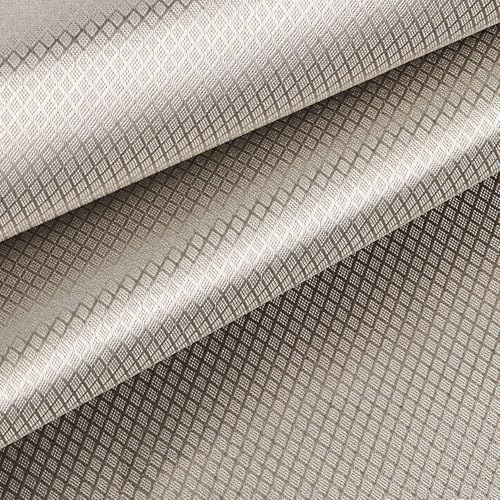
How To Choose The Best EMF Shielding Fabric
Picking the right fabric depends on understanding three things: the material it is made from, the electrical resistance of that material, and the size you actually need for your project. Getting these right means the difference between a curtain that actually stops your neighbor’s WiFi and a piece of cloth that does nothing.
Material Blend: Pure Copper vs. Nickel-Copper vs. Taffeta
Pure copper fabric offers the highest conductivity, which translates to better shielding—owners of one pure copper roll report their EMF meter reading dropping to zero the moment it is placed. The trade-off is that pure copper is stiffer and can oxidize over time. Nickel-copper blends (like the 20% copper and 80% polyester option) are more flexible and easier to sew for projects like clothing or pouches, but they provide slightly less absolute shielding performance. Simple metallized taffeta is the cheapest, but it lacks the conductive grid structure of a true Faraday fabric.
Surface Resistance: The Key Number
The spec that tells you if the fabric will actually work is surface resistance, measured in ohms. A true shielding fabric should have a surface resistance below 0.03 ohms. If the product listing does not provide this number, you are buying blind. Lower resistance means electrons can travel freely across the fabric, creating the conductive grid that blocks electromagnetic fields. The crowd-pleasing fabrics on this list all sit at the <0.03 ohm mark.
Attenuation in dB: How Much It Blocks
Attenuation is measured in decibels (dB) and tells you how much the signal strength is reduced as it passes through the fabric. A fabric rated at 85-95 dB attenuation from 30MHz to 40GHz covers the full range of household threats—from smart meters and cell towers to WiFi routers and Bluetooth devices. In plain terms, 85 dB of attenuation means the signal is reduced by a factor of over 300,000, which is plenty to stop a phone call or a data connection.
Size and Project Fit
Fabric comes in standard widths, typically 43 inches, but lengths vary wildly—from a small 36-inch square to a massive 197-inch roll. Think about your project before you buy. A curtain for a single window might only need standard 98-inch fabric. A full bed canopy or a ceiling installation needs the longer 197-inch rolls.
Quick Comparison
| Model | Best For | Material | Size (L x W) | Attenuation | Amazon |
|---|---|---|---|---|---|
| Copper Fabric Blocking RFID/RF★ Best Overall | Best Overall / Large Projects | Copper + Polyester | 197″ x 43″ | 85-95 dB | Amazon |
| Vehipa Faraday FabricBest Value | Best Value / Curtains & Pouch | Nickel + Copper + Polyester | 98.4″ x 43.3″ | — | Amazon |
| Faraday Copper Fabric (Amradield)Compact Pick | Ideal for Sewing Projects | Copper + Nickel + Polyester | 78″ x 43″ | 85 dB | Amazon |
| BSTFLEX Faraday Fabric | DIY Pouch & Car Key Bag | Copper + Nickel + Polyester | 98″ x 43.3″ | — | Amazon |
| NASAFES Conductive Fabric | Grounding & Bed Canopy | 20% Copper/Nickel + 80% Polyester | 42.5″ x 36.2″ | — | Amazon |
| TEC DEV RF Faraday Fabric | Office RF Interference Fix | Copper-based | 45″ x 43″ | — | Amazon |
| Amerthing Pure Copper Fabric | Premium / Ceiling & Bedroom | Pure Copper | 197″ x 43″ | — | Amazon |
| GOODEN ATIM Shielding Fabric | Long-Run Projects (18ft) | Copper + Polyester | 44″ x 216″ (18ft) | — | Amazon |
| JJ CARE Faraday Fabric Kit | Kit with Tape / Generators | Copper + Nickel + Polyester | 44″ x 240″ (20ft) | — | Amazon |
In‑Depth Reviews
1. Copper Fabric Blocking RFID/RF
Our pick — over 4★ from 950+ verified ratings; the strongest balance of quality and price.
The huge 197-inch roll that stops signals across the full frequency range.
You get a massive 197 by 43-inch piece of copper-polyester fabric that has a surface resistance below 0.03 ohms and an average attenuation of 85-95 dB from 30MHz to 40GHz. That covers everything from smart meters and microwave signals to cell towers and Bluetooth. It includes a free 40-inch conductive adhesive tape, which solves the common headache of sealing the edges of your enclosure.
What wins people over is the sheer size and the verifiable performance. The crowd favorite—4.3 stars across nearly a thousand owners—lands on the phrase “WiFi signal dropped behind fabric” as the real-world test that matters. A subwoofer owner solved a buzzing interference issue by covering his speaker with this fabric and some towels. The conductive tape makes building a smooth box or pouch straightforward, but do note the glue can permeate fabric if you press it too eagerly; let it get tacky first.
The most common limitation is that single-layer shielding is only as good as the seams. If you do not manage the folds and gaps properly, the signal leaks. A few owners found that reflections from walls can amplify weak signals rather than block them, so you may need to shape the fabric into a tent or use it with a ground plane.
Best for big rooms: The 197-inch length leaves all other mid-range options shortso you can curtain a whole wall or wrap a bed without piecing multiple sheets together.
Choose this if: You need one continuous sheet for a large space like a bedroom ceiling, a full bed canopy, or a wide smart meter shield. The included tape seals the deal.
Think twice if: Your project is a small phone pouch or a wallet insert. You will have a lot of leftover fabric, and a smaller, cheaper roll would stretch your dollar further.
2. Vehipa Faraday Fabric Military Grade
The thin, lightweight roll that owners confirm knocks readings down by 80 percent.
This is a military-grade nickel-copper-polyester fabric measuring 98.4 by 43.3 inches, and it is about as straightforward as shielding gets. One buyer summed up the experience in a way that cuts through the noise: “This works pretty well. It knocked the readings down 80+ percent.” That is the kind of blunt, honest feedback that makes this a safe bet for first-timers.
What owners praise most is the material quality and how easily it handles—the fabric is thin and lightweight (just 0.28 kg), making it ideal for sewing into clothing or draping as a blanket. It is effective for creating a personal EMF-free zone or wrapping a phone to stop cell signals. However, the same quality that makes it light also means it ravels at the edges if you do not finish them immediately. The metal threads can also damage sewing equipment, so use a sharp needle and consider folding the edges over.
The trade-off is that a single layer may not be enough for strong signals. Buyers report that a tight wrap works for phones, but for a WiFi router or a PEMF mat, you need multiple layers or a gather-and-seal approach with conductive tape on the seams to get complete isolation.
Reach for this if: You want a budget-friendly starting point for a phone pouch, a laptop sleeve, or a car key blocker. The V-shaped weave is easy to cut and sew.
Look elsewhere if: You need immediate edge finishing or a single-layer solution for high-power sources. Factor in the extra work for hemming or layering.
3. Faraday Copper Fabric (Amradield)
The diamond-pattern fabric that blocks radio waves when you connect the ends.
At 78 by 43 inches, this silver nickel-copper blend offers a true Faraday cage structure with a surface resistance below 0.03 ohms and a solid 85 dB attenuation from 30MHz to 40GHz. The thing everyone raves about is that it actually works when the fabric ends are connected. Owners mention testing it with a car key (push start), a cell phone, Wi-Fi, and Bluetooth—all disconnected when fully enclosed. Customers note: “I lack the scanner to test the radio frequency penetration, but the WiFi signal was blocked when I wrapped my phone in the material.”
The diamond weave pattern is the visual giveaway of a real conductive grid—fake fabrics use metallized taffeta without the cross-hatch structure. This one is machine washable (a rarity among shielding fabrics) and stands out for its grounding potential. Owners also use it as a grounding sheet under their mattress, connecting it to a ground wire for reported sleep benefits.
The catch is that the fabric is thin, meaning you may need to fold it over multiple layers for hard-to-block signals like 5G or high-power WiFi. One owner layered it to shield an infant’s crib from a nearby tower and made a point of folding the material over itself. The fabric is not stretchy, so it will not conform tightly around irregular shapes on its own; plan to add conductive tape at the seams.
Best for sewers: The machine-washable care instruction and the diamond weave make this a top choice for sewing into curtains, bedding, or wearable EMF garments.
Not for large rooms: At 78 inches long, it fits a single window or a crib canopy but comes up short for a full bed or a wide wall.
4. BSTFLEX Faraday Fabric (43.3″ x 98″)
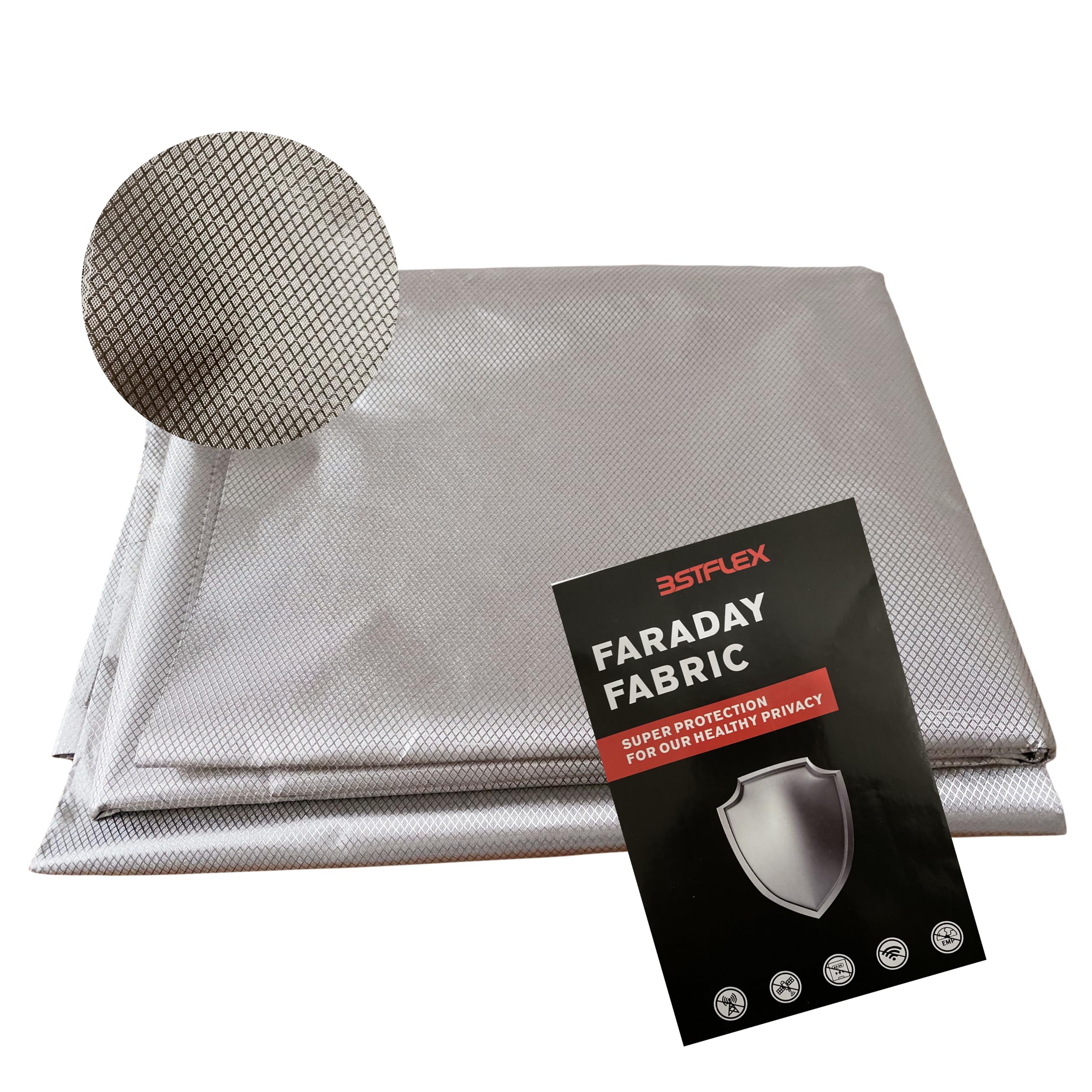
The wrinkle-free fabric that immediately shut down a laptop on contact.
This 98 by 43.3-inch sheet of copper-nickel-polyester blend makes a bold claim: 99% blocking efficiency. The real test, as one owner discovered, is that wrapping it around a powered laptop caused an immediate shutdown. That is the level of attenuation you can expect when the enclosure is complete.
What owners praise most is how easy the fabric is to cut and sew—it is marketed as wrinkle-free, and reviews confirm it lays flat for clean projects. The recommended test is simple: wrap your phone tightly with no gaps, wait 30-40 seconds, and try calling it. If the call does not connect, the fabric is working. The material is especially good for pouch-making: owners have sewn car key pouches and iPad sleeves that prevent open up when covered.
Do note that the 99% efficiency requires proper layering. Owners emphasize that a single or double wrap fails to block signals; three or more wraps are needed. Hand wash only, and avoid machine washing or twisting, as that can damage the conductive structure. The fabric may also darken when wet, so keep it dry.
Ideal for pouches: The wrinkle-free nature and easy sewing make this the go-to for DIY wallets, passport covers, and laptop sleeves where a neat finish matters.
Grab this if: You enjoy sewing and want a material that will not fight you. The 98-inch length is a balance for most home projects.
skip it if: You need machine-washable fabric or a single-layer solution. Dedicate time to proper layering and hand-washing only.
5. NASAFES Conductive Fabric

The tear-resistant aerospace material that does double duty as a grounding mat.
This 42.5 by 36.2-inch fabric is made from 20% copper/nickel and 80% polyester—a blend that the manufacturer calls “NASAFES” and claims has been used for years to shield aircraft cabins. The visible diamond-shaped grid of conductive threads is the tell that this is a real Faraday cage material, not a painted-on metallized taffeta. Grounding is where this fabric truly shines; reviewers point out that standing on it dropped their body’s electrical resistance from over 2000 kOhms down to 300 kOhms, connecting to a proper outlet ground.
What wins people over is the tear resistance. Despite being thinner than paper, owners describe it as strong as tarpaulin, and it can be cut into eight separate grounding mats from a single sheet. The fabric measurably reduces WiFi signal strength from a specific access point, though owners caution that two layers did not significantly improve blocking, and it is less effective on signals that are not directly in line with the fabric.
The downside is a split in the user base: Some users call it “absolutely perfect” for reducing body pain and fatigue after 10 days., while others say it “does nothing.” The difference likely depends on grounding—the fabric needs a proper earth connection to work at its full potential as a shield, and the manufacturer includes instructions for adding a grounding wire. Used without grounding, its blocking ability is directional and limited.
Best for grounding: If you want a conductive mat to sleep on or stand on while working, this fabric cuts cleanly into multiple pieces and handles wear better than pure copper alternatives.
Choose this if: You want a fabric that can ground your body and reduce measurable body voltage. The tear resistance makes it durable for floor or bed use.
Think twice if: You expect a plug-and-play WiFi blackout without grounding. You need to install a ground wire to get the full effect.
6. TEC DEV RF Faraday Fabric

The military-grade fix that solved one office’s years-long network dropout problem.
This 45 by 43-inch copper-based fabric comes with a free 1-inch wide conductive tape, making it a complete kit for small projects right from the start. The most compelling real-world use case came from an office that suffered from RF interference caused by manufacturing equipment after a renovation. Even double-shielded lines failed to solve the issue, but applying this fabric to the shared wall eliminated all network drops completely.
What owners praise most is the functionality (singled out 15 times in reviews) and the material quality (8 mentions). The fabric is described as easy to work with for small enclosures—owners have sewn pouches for iPhones that required doubling the fabric but successfully blocked all signals. The fabric is also lightweight at just 80 grams, one of the lightest options on this list.
There are dissenting voices. A few shoppers say that the fabric did not block signals when sewn into a computer blanket, and one review is blunt: “DOES NOT WORK.” The inconsistency appears to come from seam gaps and single-layer use—multiple layers and conductive tape on all edges are essential for reliable blocking. The signal blocking aspect received negative marks from some buyers, meaning the fabric is sensitive to proper installation.
Ideal for targeted fixes: If a specific wall or device in your home or office is leaking RF noise, this compact roll with its included tape is a focused, low-waste solution.
Not for large-area projects: At 45 inches long, you will need multiple pieces for a bed or curtain, which increases the risk of signal leaks at the seams.
7. Amerthing Pure Copper Faraday Fabric
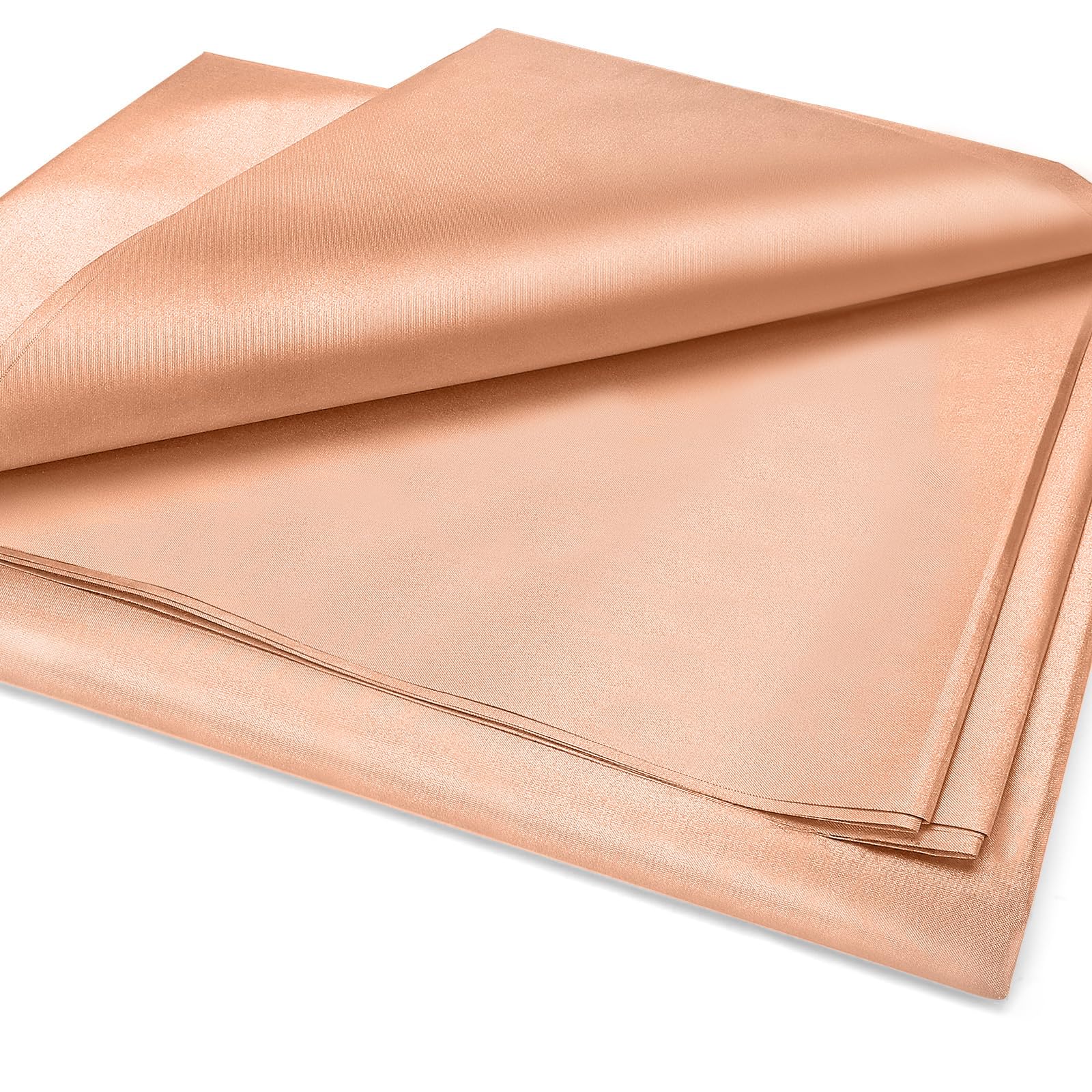
The pure copper fabric that reduces EMF meter readings to zero instantly.
This is the premium pure-copper option: 197 by 43 inches of copper-only fabric with a surface resistance below 0.03 ohms and a thickness of 0.085mm. The material quality is the thing everyone raves about (27 mentions in the reviews), with effectiveness as the second most praised aspect (21 mentions). Buyers report that their EMF meter reading drops to zero the moment the fabric is placed over a router or security system.
The pure copper construction gives it an advantage in conductivity over nickel-copper blends, and several owners have used it for ambitious bedroom ceiling projects or as a grounding blanket. One owner reported her husband’s sleep improved dramatically after laying the fabric across the bed. The copper-colored fabric also has a visual appeal when used in curtains or ceiling installs, providing a warm glow under antique bulbs.
The trade-offs are real. The fabric unravels at the edges, so you must sew, glue, or tape the ends to stop fraying. It is also stiffer than blended fabrics, feeling almost like plastic or mylar to the touch. One owner found that wrapping a phone in multiple layers still let a signal through, which suggests that this material is more effective for open-area coverage (like a ceiling) than for tight enclosures. Spot-clean only—do not wash it.
What owners celebrate
- Highest conductivity of any fabric on this list—meter readings drop instantly
- Huge 197-inch continuous roll for full-room coverage
- Can double as a grounding blanket for sleep improvement
What you need to manage
- Edges unravel aggressively; requires hemming or taping immediately after cutting
- Stiff, non-fabric feel, making it harder to sew than nickel-copper blends
- Cannot be machine washed—spot clean only
Reach for this if: You want maximum conductivity for a ceiling, wall, or full-bed project where the fabric will stay in place and not need to be folded frequently.
Look elsewhere if: You need a flexible fabric for clothing, pouches, or any project that requires frequent handling or washing.
8. GOODEN ATIM Shielding Fabric (44″ x 18ft)

The 18-foot continuous roll that blocks your neighbor’s WiFi without splicing.
At 44 inches wide and 18 feet long, this copper-polyester fabric gives you the second-longest single sheet on the list. It is specifically designed for projects where seam-free coverage matters, like a long curtain across a sliding glass door or a wrap for a generator. The manufacturer claims 100% signal shielding capability, and owners confirm it works well when you use the right technique: tape the ends, do not sew, and test with a Bluetooth speaker inside the enclosure and a phone outside.
The brown metallic weave is a change from the standard silver and gold fabrics, and owners describe it as soft fabric that handles nicely for large drapes. The instructions are clear about one major point: this fabric cannot be washed with water. If your test does not work, the company encourages contacting them. The fabric worked well for most owners, with one calling it “nice quality” and another confirming it “helps a lot.”
The frustration point is the packaging: several owners reported that the unit did not include the conductive tape that the photos and description show. While the tape is easy to source separately, the missing piece is a nuisance when you have already cut the fabric and need to seal it immediately. Plan to have your own conductive tape on hand if you choose this roll.
Best for long curtains: An 18-foot continuous piece means you cover an entire wall or a large window without any signal-leaking seams.
Choose this if: You are covering a large window, a sliding door, or a piece of equipment that is several feet long. The extra length saves you from piecing smaller fabrics together.
Watch out: The missing tape in some deliveries is a consistent complaint—buy a roll of conductive tape separately to be safe.
9. JJ CARE Faraday Fabric Kit (44″ x 20ft)

The 20-foot kit with enough tape to seal every seam in one go.
This is the longest single-piece fabric on the list at 20 feet long and 44 inches wide, and it includes a generous 6.6-yard roll of conductive Faraday tape—more than any other kit reviewed here. The 3-layer composition (polyester fiber, metallic copper, and metallic nickel) gives it a good balance of shielding performance and durability. Owners swear by it for big jobs, from covering generators for EMP protection to wrapping routers to eliminate static noise from studio monitors.
What owners praise most is the quality (14 mentions), though the effectiveness discussion is honest about its limitations. The consistent finding is that you need to double the fabric to block signals completely. One owner wrapped their phone twice and found that all incoming texts were blocked until they unwrapped it. Another used it in wallets to make them RFID-proof. The included tape makes sealing enclosures simple, and the fabric is soft, easy to cut, and lays flat.
The mixed feedback on effectiveness (37 mentions) depends on single-layer use. Owners who used one layer report that signals still get through; owners who folded the fabric over itself twice report perfect blocking. The fabric is machine washable, which is a plus for long-term use, but be aware that washing may reduce conductivity over time. The manufacturer suggests contacting them if your test fails, which is a good sign of customer support.
What comes in the box
- 20 feet of continuous fabric—the longest single roll on this list
- 6.6 yards of conductive tape for sealing seams and patches
- Soft, foldable material that is machine washable
What to expect
- Single layer is not enough for complete blocking; fold the fabric over twice for reliable results
- The effectiveness has mixed owner feedback—it works perfectly for some, not at all for others
Grab this if: You want the longest possible continuous roll and enough tape to seal everything at once, especially for EMP protection on large equipment.
Pass if: You expect plug-and-play performance from a single layer. Budget for the extra step of doubling the fabric.
Understanding the Specs
Surface Resistance (Ohms)
This number tells you how easily electricity flows across the surface of the fabric. A true shielding fabric needs a surface resistance below 0.03 ohms to create the conductive grid that works like a Faraday cage. The lower the number, the better the fabric is at blocking electromagnetic fields. If a product listing does not show this spec, you have no way to know if it will actually stop signals. Pure copper fabrics typically hit this target easily, while some nickel-copper blends may vary slightly. In practical terms, below 0.03 ohms means the fabric can weave a continuous conductive web that pushes incoming radio waves around the shielded object instead of through it.
Attenuation (dB)
Attenuation measures how much the signal strength drops when it passes through the fabric. It is measured in decibels (dB), and a higher number means better blocking. The fabrics on this list that publish their rating sit at 85-95 dB of attenuation across the 30MHz to 40GHz range. For comparison, 85 dB of attenuation reduces signal power by a factor of over 300,000. That is enough to stop a cell phone from ringing, a WiFi connection from syncing, or a smart meter from transmitting. The frequency range of 30MHz to 40GHz covers virtually all household and commercial signals, including FM radio, cell towers, WiFi (2.4 and 5 GHz), Bluetooth, and even satellite communications.
FAQ
Will EMF shielding fabric block all WiFi and cell signals if I wrap my phone in it?
How do I test if my EMF shielding fabric actually works without a meter?
What is the difference between pure copper fabric and nickel-copper blend fabric?
Can I wash EMF shielding fabric?
How much EMF shielding fabric do I need for a bed canopy or a full-room curtain?
Is EMF shielding fabric safe to sleep on or wear against my skin?
Why does my fabric need to be grounded to work effectively?
What is the best EMF shielding fabric for sewing into clothing?
How long does EMF shielding fabric last?
Is there a difference between “Faraday fabric” and “EMF shielding fabric”?
Final Thoughts: The Verdict
If you want one dependable pick, the emf shielding fabric winner is the Copper Fabric Blocking RFID/RF because it combines a generous 197-inch continuous roll with verified 85-95 dB attenuation across the full household frequency range and includes conductive tape—all at a price that undercuts the pure-copper premium options. If you want a flexible budget roll for sewing small pouches or a car-key bag, grab the Vehipa Faraday Fabric. And for a long-run bedroom canopy or a ceiling project where conductivity matters most, the Amerthing Pure Copper Fabric is the one to reach for—just be prepared to tape every edge.
How We Picked
We do not accept paid placement. Every pick is matched to a real buyer and a real use-case; we do not hands-on test units.
Sources & Methodology
Specifications: manufacturer listings and product documentation. Review insights: verified customer reviews, as of July 2026. Pricing: not shown on this page (it changes often); check the current price via the retailer link.
As an Amazon Associate, WellFizz earns from qualifying purchases. This does not affect which products we feature.
Related Guides

Mo Maruf
I created WellFizz to bridge the gap between vague wellness advice and actionable solutions. My mission is simple: to decode the research and give you practical tools you can actually use.
Beyond the data, I am a passionate traveler. I believe that stepping away from the screen to explore new environments is essential for mental clarity and physical vitality.