Our readers keep the lights on and my smoothie glass nicely filled. As an Amazon Associate, I earn from qualifying purchases.
Specs are compiled from manufacturer listings and verified buyer reviews and can change over time — please confirm the key details on the product page before buying.
Elk season is short, and the last thing you need is a knife that hesitates on a thick cape or rolls an edge halfway through a hind quarter. You need a blade that arrives screaming sharp, stays that way through a whole animal, and fits your hand even when it’s slick with blood and fat. The wrong knife turns a 45-minute job into a two-hour wrestle. We picked these by matching what the steel, the grind, and the handle actually do to the real demands of elk—thick hide, heavy sinew, and the need for control deep in the chest cavity.
I’m Mohammad Maruf — the founder and writer behind WellFizz. This guide is built by comparing the manufacturers’ published specifications and the patterns across verified customer reviews, so you get each pick’s real strengths and trade-offs instead of marketing spin.
Whether you are packing for a backcountry solo hunt or gearing up a camp for a group, the right elk skinning knife is the one that keeps its edge through the heavy work and fits your hand without slipping.
Our Picks at a Glance


How To Choose The Best Elk Skinning Knife
Elk are big animals—a mature bull can weigh well over 600 pounds on the hoof—so your knife has to handle thick hide, heavy muscle, and lots of connective tissue without needing a mid-animal sharpen. The most important factors are the steel type, the blade shape, and the handle design. A good elk skinning knife uses a steel that resists rolling (like AUS-8 or 420HC), a drop-point or trailing-point blade, and a non-slip handle.
Blade Steel and Edge Retention
The steel determines how long the knife stays sharp. Stainless steels like AUS-8 and 420HC resist corrosion well and are easy to sharpen in the field. High-carbon steels like 1095 hold a finer edge but can rust if not dried quickly. For elk, you want a steel that balances toughness and sharpenability—a blade that chips or rolls on a single leg joint is a liability.
Blade Shape and Length
A drop-point blade is the most versatile for skinning because its curved belly gives you long, sweeping cuts. A trailing point offers more control for detail work around the head and legs. For elk, a blade between 3 and 4 inches gives enough reach to open the body cavity without being unwieldy inside the chest.
Handle Grip and Safety
A rubberized or textured handle (like TPR or G-10) prevents slipping when your hands are wet. Finger grooves or jimping add control for precision cuts near organs. A full-tang design adds strength and balance for heavy work.
Quick Comparison
| Model | Best For | Blade Steel | Blade Length | Weight | Amazon |
|---|---|---|---|---|---|
| Outdoor Edge Swingblaze★ Best Overall | Field dressing speed | AUS-8 Stainless | 3.6″ / 3.2″ | 7.2 oz | Amazon |
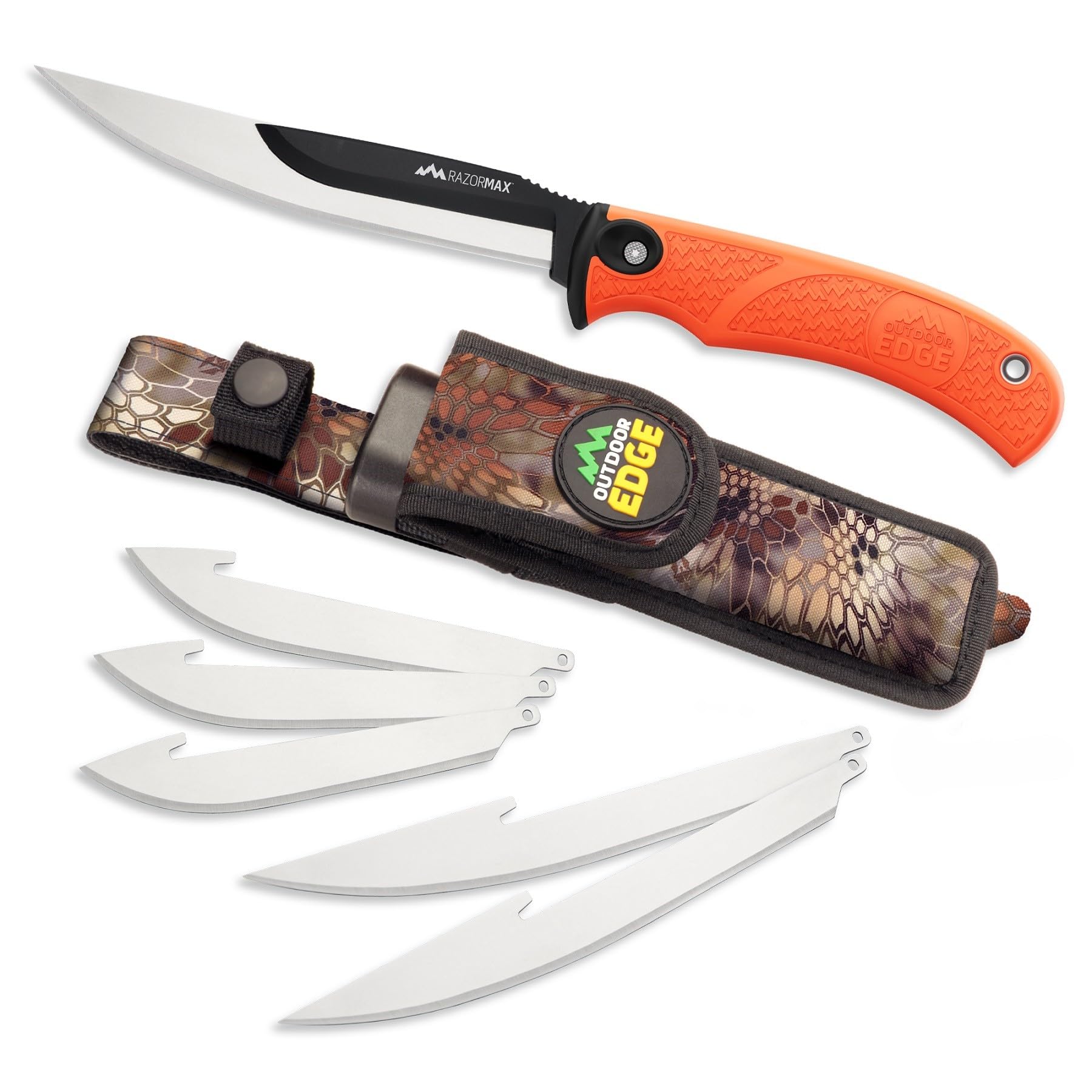
| Outdoor Edge RazorMaxBest Value | Replaceable blades | — (RazorSafe System) | 3.5″ / 5.0″ | 4.7 oz | Amazon |
| ESEE Ashley Game KnifePremium Craft | Premium 1095 steel | 1095 High Carbon | 3.5″ | 5.1 oz | Amazon |
| Gerber Vital Skin and Gut | Compact & ergonomic | Stainless Steel | 2.8″ | 4.6 oz | Amazon |
| Old Timer 15OT Deerslayer | Large classic blade | High Carbon Stainless | 5.6″ | 7.7 oz | Amazon |
| Buck Knives 684 BuckLite Max II | Ultra-light carry | 420HC Stainless | 3.25″ | 2.8 oz | Amazon |
| Spyderco Bow River | Precision trailing point | 8Cr13MoV Stainless | 4.36″ | — | Amazon |
| Buck Knives 113 Ranger Skinner | Classic skinning shape | 420HC Stainless | 3.13″ | 5.2 oz | Amazon |
In‑Depth Reviews
1. Outdoor Edge Swingblaze Double Blade Hunting Knife
Our pick — over 4.5★ from 700+ verified ratings; the strongest balance of quality and price.
The two-blade system that flips from skinner to gut hook without ever putting the knife down.
The key here is the rotating blade design. A button press swaps a 3.6-inch drop-point skinner for a 3.2-inch gutting hook, so you can open the belly with the hook and switch to the skinner for caping and quartering without setting the knife on a dirty log. The steel is AUS-8 stainless, a type that resists corrosion (rust and staining from blood) and keeps a working edge through a full animal, per buyers who report use through “100+ deer” without a touch-up. The rubberized TPR handle (a textured material that increases grip) comes in blaze orange so it stays visible in leaves or blood. The knife extends to 8.3 inches and weighs 7.2 ounces. Quality is praised by 113 owners, and 77 mention the sharpness. The nylon belt sheath works but is basic—several owners swapped it for a more secure fit.
What Makes It Click
- Dual-blade rotating system means one tool does it all
- AUS-8 steel holds edge through a full elk
- Blaze orange handle won’t vanish in leaves or blood
The Only Trade-Off
- Nylon sheath is cheap; plan to upgrade for hard use
The smartest buy: If you want the fastest field dressing possible with zero mid-animal blade swaps, this is it.
Who hesitates: Anyone who prefers a single fixed blade with no moving parts—the rotating joint adds a failure point in extreme conditions.
2. Outdoor Edge RazorMax Replaceable Blade Hunting Knife
The fixed-blade feel with a replaceable edge that stays scalpel-sharp for every cut.
This knife solves the dull-blade problem by letting you swap in a fresh edge instantly. It uses Outdoor Edge’s RazorSafe system: a 3.5-inch drop-point blade for skinning and a 5.0-inch boning/fillet blade for separating muscle from bone. You get six blades total—three of each shape. At 4.7 ounces and 10 inches overall, it is light enough for an all-day carry and long enough to reach deep into a chest cavity. The rubberized TPR handle is ergonomically shaped to reduce fatigue. Buyers report it made “skinning a deer a dream” and handles deboning and femur removal with ease. The quality and sharpness each get nearly 50 mentions from owners. Unlike the Swingblaze, the RazorMax includes a dedicated boning blade, making it the better pick for breaking down the entire animal rather than just skinning. A few owners note the locking mechanism can loosen over time—check it before each use.
Best for whole-animal processing: The 5-inch boning blade and six-blade supply make this ideal for hunters who quarter and debone at camp.
Who this fits perfectly: Anyone who hates sharpening and wants surgical sharpness on every animal.
Think twice if: You want a single blade that will last years—this is a disposable system designed for replaceability.
3. ESEE Knives Ashley Game Hunting Skinning Knife
A hand-filling skinner made of high-carbon steel that takes and holds a shaving-sharp edge.
ESEE built this for the hunter who wants one premium tool for a lifetime. The 3.5-inch blade is 1095 high carbon steel, heat-treated to a hardness of 55-57 Rc (Rockwell C scale, a measure of steel toughness). At 55-57 Rc it resists chipping on bone but stays soft enough to sharpen with a diamond stone in the field. The black oxide stone wash finish reduces glare and hides the patina (the natural dark coating that high-carbon steel develops over time). The handle is layered canvas Micarta—a material that gets grippier when wet—and fits medium to XXL hands. Weight is 5.1 ounces, overall length is 8.25 inches, and the included leather sheath holds the knife securely. Owners agree the edge is razor-sharp from the start and the ergonomics feel “perfect” for long sessions. The catch is that 1095 steel rusts if you don’t dry it after use. It takes more care than the stainless Swingblaze or RazorMax.
For the traditionalist: If you enjoy maintaining a fine edge and want a knife that will outlast you, this is it.
Skip if: You hunt in wet conditions and don’t want to baby your gear—stainless is easier.
Reach for this if: You value steel integrity and a hand-filling Micarta handle that only gets better with age.
Look elsewhere if: You need a low-maintenance blade that can sit wet in a pack all day without corroding.
4. Buck Knives 113 Ranger Skinner
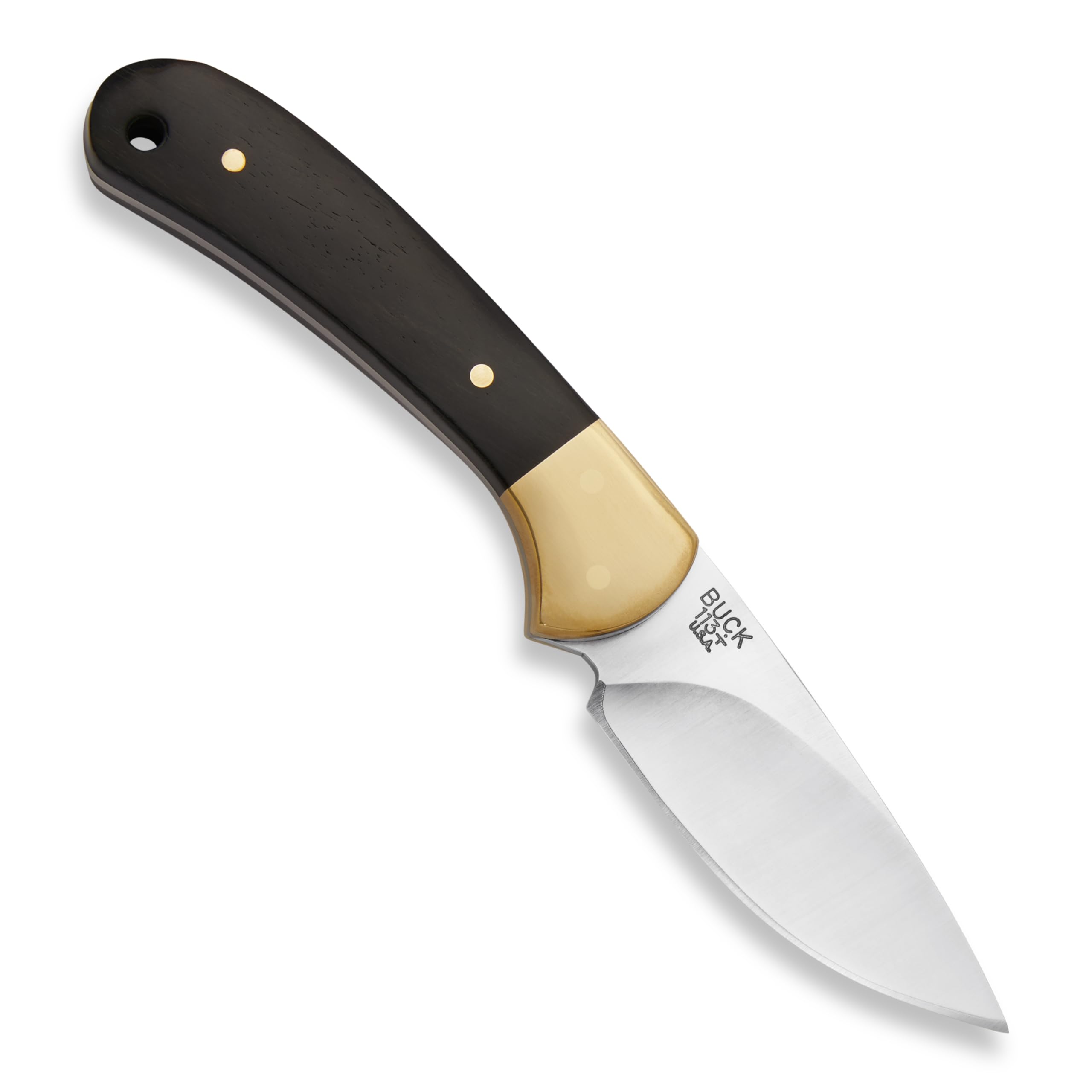
A classic drop-point shape with a narrow tip and wide belly for smooth skinning sweeps.
Buck has made this knife since 1902. The narrow, downward-angled tip prevents accidental punctures while the wide curved belly glides through thick hide and fat. The 3.13-inch 420HC stainless steel blade is heat-treated to a hardness of 58 Rc (Rockwell C scale), giving it strong edge retention for a stainless steel. The hollow grind—where the blade is ground inward to create a concave bevel—produces a razor-sharp edge that slices sinew easily. The handle is ebony, with a brass bolster, giving a classic look. Weight is 5.2 ounces, overall length is 7.25 inches. The leather sheath has a plastic insert and snap fastener. Customers note it arrives “shaving sharp” and handles small game as well as deer. The hollow grind is thin—do not pry or twist against bone, or it can chip.
What Shines
- Narrow tip prevents punctures—safe around organs
- 420HC at 58 Rc holds its edge well
- Classic wood and brass build that looks and feels premium
The Fine Print
- Hollow grind is not for prying or heavy bone work
- Sheath lacks a snap closure on some units
Reach for this if: You want a timeless skinning knife that feels like an heirloom and slices cleanly.
skip it if: You need a knife that can handle bone, cartilage, or camp chores beyond skinning.
5. Buck Knives 684 BuckLite Max II
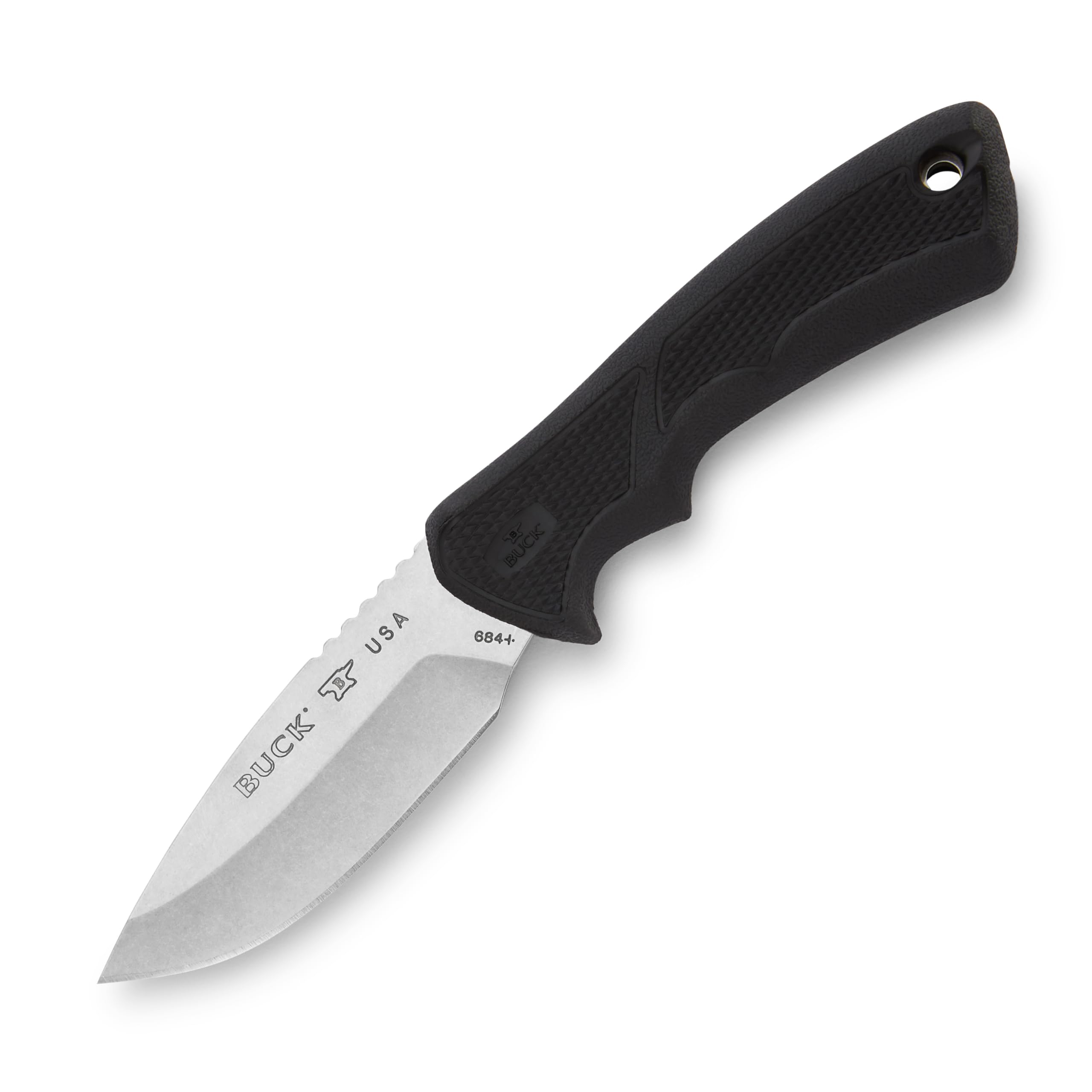
A full-tang hunting knife that weighs less than three ounces and disappears on your belt.
At 2.8 ounces, the BuckLite Max II is the lightest fixed blade here, yet it is a full-tang design—the blade runs through the entire handle for strength. The 3.25-inch 420HC stainless steel drop-point blade is heat-treated to 58 HRC, a hardness that provides toughness and edge retention. The Dynaflex rubber handle has integrated finger grooves and top jimping (small notches on the spine for thumb traction) for a secure grip when wet. The knife is 7.5 inches overall and comes with an imported polyester sheath. Quality is the top praise from buyers (80 mentions), and the grip gets 23 mentions. The value score is also strong at 42 mentions. The main downside is the taco-style nylon sheath: several owners say the knife can fall out if the strap isn’t secured, and the blade can cut through the foam rubber lining over time. Plan to replace the sheath for heavy use.
Best for backcountry hunters: Every ounce matters on a long pack-out, and this knife is barely noticeable.
Reach for this if: You want a USA-made knife that is featherlight and fits in a pocket or small pack pouch.
Look elsewhere if: You need a sheath that locks the knife securely—this one is the weak link.
6. Gerber Gear Vital Skin and Gut Knife
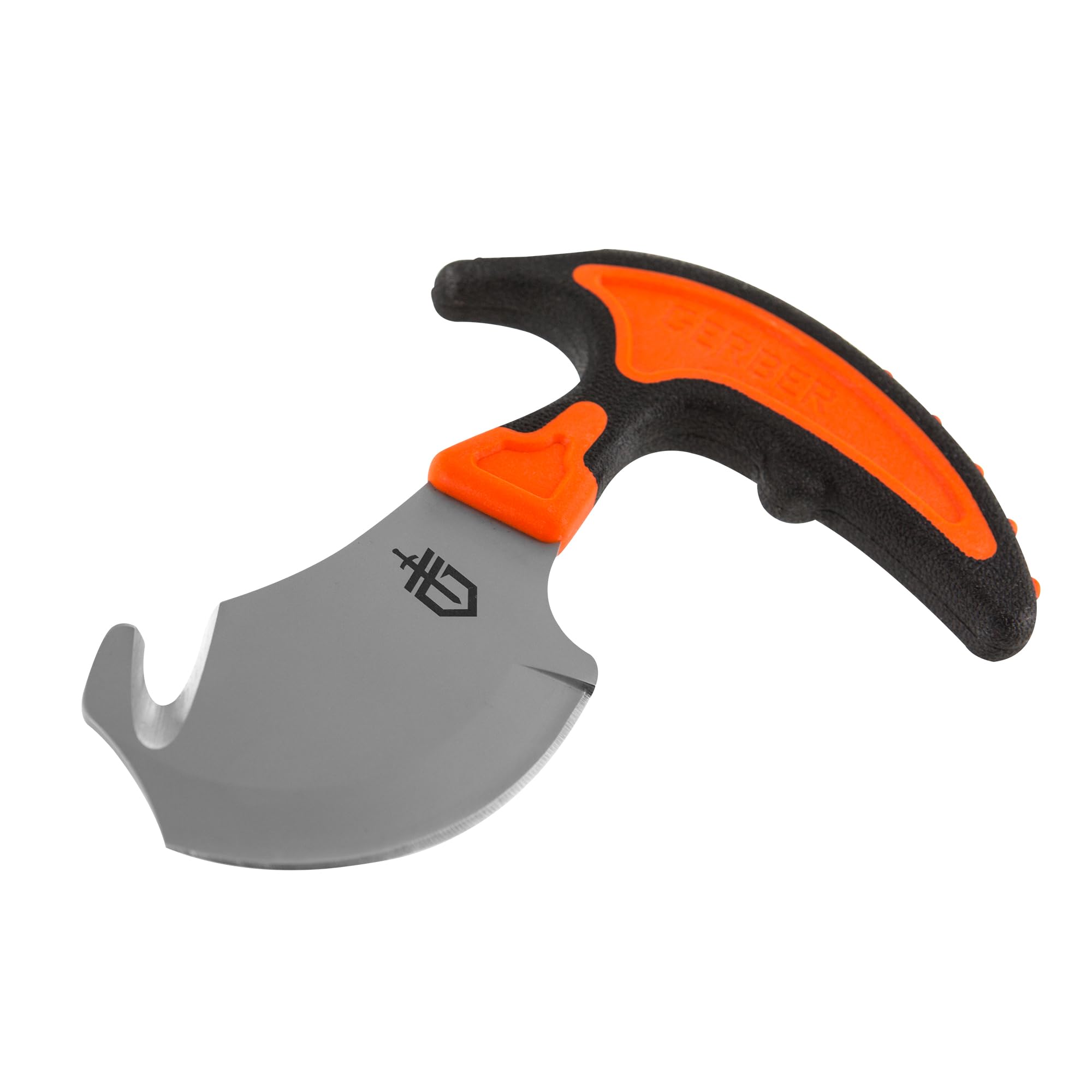
A compact, ergonomic knife that fights hand fatigue while you work through a whole elk.
The Gerber Vital focuses on comfort during long work sessions. The handle has intuitive finger grooves that guide your hand into a natural, relaxed grip. The orange rubberized handle is easy to spot and hold. The 2.8-inch blade is a gut-hook shape for opening the belly cleanly. The wide blade design gives good edge retention for a stainless steel. Reviewers point out they “skinned a deer and didn’t have hand fatigue.” At 5.5 inches overall and 4.6 ounces, it is the most compact knife here—shorter than the BuckLite Max II (7.5 inches) and much smaller than the Swingblaze (8.3 inches). That makes it good for detail work and light packing. The fabric sheath hooks onto a belt. The trade-off: at 2.8 inches, the blade is short for a large elk—you might want more length for deep cuts through thick hide. A few units arrive less sharp than expected and need a quick stone.
The Strong Points
- Ergonomic finger grooves reduce fatigue on long jobs
- Compact and ultralight at 4.6 oz
- Gut-hook shape opens bellies quickly
The Limits
- 2.8-inch blade is short for large elk—longer cuts take more passes
- Occasional dull out-of-box units need touching up
Take this if: Comfort and packability are your top priorities for a day hunt.
Think twice if: You are working on a large bull and want a longer blade for fewer passes.
7. Spyderco Bow River Fixed Blade

A Phil Wilson design that packs 4.36 inches of cutting edge into a lightweight, ergonomic package.
The Bow River uses a trailing-point blade shape—the spine curves upward to a fine tip—which gives you more control for detailed cuts like caping around the head and removing tendons. The 4.36-inch blade is full-flat ground from 8Cr13MoV stainless steel, a steel known for good edge retention and easy sharpening. The full-tang design gives it solid strength. The handle is layered G-10, a fiberglass-based laminate, with contoured scales that fill the hand comfortably. At 8.14 inches overall, it balances reach and control. The leather pouch-style sheath is handcrafted and looks higher-end than the knife’s price. Blade quality is the top praise (84 mentions), followed by sharpness (65 mentions) and value (51 mentions). The grip is smooth G-10—some owners wish for more texture when hands are wet. It is also the longest fixed blade here, giving a different cutting feel than the compact Gerber or BuckLite.
Perfect for caping: The trailing point gives you the fine tip control needed for precision work around the head and legs.
Reach for this if: You do detailed caping work and want a longer blade for slicing through thick hide.
pass on it if: You need a knife that stays locked in a wet hand—the smooth G-10 could be slippery.
8. Old Timer 15OT Deerslayer

A 5.6-inch clip-point blade that looks like a camp knife and works like a cleaver.
The Deerslayer’s 5.6-inch clip-point blade is the largest in this guide—it dwarfs the 2.8-inch Gerber and the 3.25-inch BuckLite. The blade is high-carbon stainless steel with a full-tang design. Overall length is 10.5 inches, weight is 7.7 ounces. The sawcut Delrin handle (a sturdy plastic) provides a secure grip, and the finger choil (a cutout for your index finger) and thumb jimping add control. The leather belt sheath is genuine and needs some breaking in but holds the knife well. Quality is the top praise (106 mentions), sharpness is strong (58 mentions), and value is high (45 mentions). The big advantage is reach—one long pass through elk hide replaces three or four passes with a shorter blade. The trade-off is weight (7.7 oz) and length (10.5 inches), making it less maneuverable inside a chest cavity. It works better as a camp butchering knife than a tight field-dressing tool.
Where It Excels
- 5.6-inch blade makes long cuts through thick hide in one pass
- Full-tang construction is tough and durable
- Genuine leather sheath included
Where It Lags
- 7.7 oz is heavy for backcountry carry
- 10.5-inch length is clumsy in tight chest cavities
Reach for this if: You want a camp butchering knife that can quarter an elk at the tailgate.
Think twice if: You need a compact field-dressing knife that fits in a small pack.
Understanding the Specs
Blade Steel and Edge Retention
The steel determines how many elk you can skin between sharpenings. AUS-8 and 420HC are stainless steels that balance corrosion resistance with easy field sharpening. 8Cr13MoV is similar but tends to hold an edge slightly longer. 1095 high carbon steel can take a finer edge but rusts if not dried—a trade-off for hunters who prefer traditional materials. The hardness (measured in Rc) also matters: 55-57 Rc is tough and resists chipping, while 58-60 Rc holds an edge longer but can be more brittle.
Blade Shape and Length
Drop-point blades have a curved spine that lowers the point for better control during skinning cuts. Trailing-point blades curve upward at the tip for detailed work like caping. Clip-point blades have a concave section near the tip for extra sharpness. For elk, a blade between 3 and 4 inches is ideal for field dressing—long enough to open the body cavity but short enough to maneuver inside. Blades over 5 inches are better for camp butchering than tight field work.
FAQ
What is the best blade length for skinning an elk?
Should I choose a stainless steel or high-carbon steel blade for elk?
What is the difference between a drop-point and trailing-point blade?
Is a replaceable-blade system better than a fixed blade?
How many knives do I need for a full elk processing?
What handle material is best for wet, slippery conditions?
Can I use a folding knife for elk skinning?
How often will I need to sharpen my knife during an elk?
Final Thoughts: The Verdict
For most hunters, the elk skinning knife that balances speed, versatility, and edge retention is the Outdoor Edge Swingblaze—its rotating dual-blade system lets you switch from gutting to skinning without ever putting the knife down. If you want the convenience of a fresh blade every time, grab the Outdoor Edge RazorMax with its six replaceable blades. And for the traditionalist who values premium 1095 steel and a Micarta handle, the ESEE Ashley Game Knife is the one to reach for.
How We Picked
We do not accept paid placement. Every pick is matched to a real buyer and a real use-case; we do not hands-on test units.
Sources & Methodology
Specifications: manufacturer listings and product documentation. Review insights: verified customer reviews, as of July 2026. Pricing: not shown on this page (it changes often); check the current price via the retailer link.
As an Amazon Associate, WellFizz earns from qualifying purchases. This does not affect which products we feature.
Related Guides

Mo Maruf
I created WellFizz to bridge the gap between vague wellness advice and actionable solutions. My mission is simple: to decode the research and give you practical tools you can actually use.
Beyond the data, I am a passionate traveler. I believe that stepping away from the screen to explore new environments is essential for mental clarity and physical vitality.