Our readers keep the lights on and my smoothie glass nicely filled. As an Amazon Associate, I earn from qualifying purchases.
Specs are compiled from manufacturer listings and verified buyer reviews and can change over time — please confirm the key details on the product page before buying.
The wrong pair of electrician boots turns an eight-hour shift into a foot-numbing, back-aching endurance test. You need the EH rating for live-circuit safety, plus all-day cushioning on concrete and traction on ladders and wet roofs. This guide ranks EH-rated boots that keep your feet comfortable through a 60-hour workweek.
I’m Mohammad Maruf — the founder and writer behind WellFizz. This guide is built by comparing the manufacturers’ published specifications and the patterns across verified customer reviews, so you get each pick’s real strengths and trade-offs instead of marketing spin.
Whether you are a commercial electrician, a lineman, or an industrial maintenance pro, the best electrician boots balance heavy-duty electrical hazard protection with all-day comfort, waterproofing, and slip resistance you can trust on any job site.
Our Picks at a Glance


How To Choose The Best Electrician Boots
Electrician boots must do three things at once: insulate you from electrical current, keep you stable on tricky surfaces, and let you stay on your feet for ten hours straight. Here are the critical specs to look for before you buy.
Electrical Hazard (EH) Rating
You get protection from accidental electrical shocks when you step on a live circuit, thanks to the EH (Electrical Hazard) rating. This means the outsole and heel use non-conductive materials to block current. Every boot here meets the ASTM F2413 or F2892-11 safety standard, so you can focus on fit and comfort instead of worrying about certification.
Toe Protection: Steel vs Composite vs Alloy
Steel toes are the toughest and most affordable, but they conduct cold and can set off metal detectors. Composite toes (made from Kevlar, carbon fiber, or fiberglass) are lighter, don’t conduct temperature, and are metal-detector friendly. Alloy toes are a middle ground — lighter than steel but stronger than composite — and pass the same safety impact tests as steel. If you work outdoors in winter, the crowd leans toward composite or alloy to avoid frozen toes.
Slip Resistance and Outsole Design
A good outsole keeps you planted on oily concrete, wet steel grating, and muddy ground. Look for outsoles marked ASTM F3445 slip-resistant, and consider the tread pattern. Wedge soles (flat, no pronounced heel) offer maximum surface contact and are popular with electricians who spend their shift on concrete floors. Lugged soles give better bite on uneven terrain and climbing ladders.
Quick Comparison
| Model | Best For | Toe Type | Weight | Safety Rating | Amazon |
|---|---|---|---|---|---|
| Ariat WorkHog Steel Toe★ Best Overall | All-day ladder and concrete work | Steel | — | ASTM F2892-11 EH | Amazon |
| New Balance Fresh Foam CremorneBest Cushion | Sneaker-like comfort on hard floors | Composite | 3.48 pounds | EH rated | Amazon |
| ROCKROOSTER Bakken ChelseaBest Slip-On | Easy slip-on/off for quick entry | Steel or Soft | — | ASTM EH rated | Amazon |
| Timberland PRO Gridworks | Waterproof and cold-weather grip | Alloy | — | EH rated | Amazon |
| Reebok Zig Kinetica Edge II | Trail and uneven terrain | Composite | 3.1 pounds | ASTM F2413, EH rated | Amazon |
| SKECHERS Work Arch Fit Tarver | Podiatrist-grade arch support | Composite | 3.1 pounds | EH rated | Amazon |
| Carolina Elm Logger | Linemen and outdoor climbing | Soft toe | 3 pounds | EH rated | Amazon |
| Harley-Davidson Bill | Restaurant and maintenance work | Steel | 4.21 pounds | EH rated | Amazon |
| Ariat Turbo Carbon Toe | Industrial plants with chemicals | Composite | 3.1 pounds | ASTM F2413, EH rated | Amazon |
| Danner Stronghold | Long-term investment with re-soling | Composite | — | EH rated | Amazon |
| Thorogood 1957 Series | Oil and gas / heavy industrial | Soft toe | — | EH rated | Amazon |
In‑Depth Reviews
1. Ariat Men’s WorkHog Wide Square Toe Steel Toe Work Boot
Our pick — over 4.5★ from 750+ verified ratings; the strongest balance of quality and price.
A pull-on steel-toe boot that withstands nail boards and ladders without damage.
This boot is built for the electrician who lives on a ladder and needs side-to-side stability. Ariat’s ATS Max platform delivers serious shock absorption and proper body alignment, so your legs stay fresh even when the ceiling you are wiring is a one-hour climb. The full-grain leather upper sheds drywall mud, paint, and caulk without holding onto them, which owners call a real job-site advantage.
The ASTM rated steel toe meets F2892-11 EH standards, meaning it insulates you on live circuits while the steel cap takes compression and impact hits. The fit runs true to Ariat sizing (about one full size smaller than other boot brands), and the U-Turn Entry System makes it easier to pull on — helpful when you are suiting up in a truck. The crowd favorite here is quality: 80 owner mentions call it well-made, and the nail board impact test passed without damage, so the protection is not theoretical.
Where it leads
- Exceptional lateral stability on ladders from ATS Max platform
- Full-grain leather cleans off quickly after mud, paint, or drywall
- Good moisture wicking and a steel toe that stays comfortable for long days
One honest trade-off
- Runs slightly narrow for some; a half-size adjustment usually solves it
- Durability gets mixed notes — some report the leather wears faster on newer pairs
Your go-to if: you need a pull-on steel-toe that locks your foot steady on ladder rungs and sheds the mess of a rough day onsite.
Pause if: you have a very narrow foot and prefer a lace-up fit — the U-Turn system works best on medium-to-wide feet.
2. New Balance Fresh Foam Cremorne Composite Toe Safety Shoes
A composite-toe safety boot with running-shoe softness that feels weightless on your feet.
This is the boot for the electrician who hates heavy footwear and spends ten-hour shifts on concrete. The Fresh Foam midsole delivers cloud-like cushioning that owners say eliminates foot fatigue on concrete. At 3.48 pounds, it is notably lighter than the Ariat WorkHog, and the composite toe keeps feet from freezing in cold weather since it does not conduct temperature like steel.
The shoe is also slip-resistant and electrical hazard rated, so you get the same safety protection in a sneaker-like package. It runs about a full size large, so order a half to a full size down from your usual sneaker size. Owners who do HVAC, woodworking, and warehouse work say the ability to feel the floor without getting sore feet is the real win here. The biggest drawback is the stock laces — many owners replace them immediately with better quality ones.
What wins people over: The Fresh Foam cushioning earns 120 comfort mentions, making it the most-praised feature in this lineup.. The shoe is breathable enough for attic work and keeps sand and water out of your feet.
Reach for these if: you want a safety shoe that feels like a running sneaker and keeps your feet fresh on 12-hour warehouse or service-call days.
Think twice if: you need maximum ankle support for heavy ladder climbing — the lower profile is less protective than an 8-inch boot shaft.
3. ROCKROOSTER Bakken 6 inch Chelsea Work Boots
A break-in-free Chelsea boot that slips on in seconds and meets EH safety standards.
If you need to get in and out of your boots quickly at the jobsite gate, the Bakken is built for that exact rhythm. The elastic collar and soft leather mean zero break-in — owners in brewery cellars, auto shops, and construction say they are comfortable day one. The Hydroguard waterproof membrane keeps feet dry below the ankle, and the slip, oil, and heat-resistant rubber outsole handles asphalt and oily concrete well.
RockRooster offers a soft toe and a steel toe option (the steel toe version is rated for electrical hazard). These are a full half-size large compared to sneakers, so order down half a size — especially if you have narrow feet. The durability is solid for the price: buyers report them surviving mud, chemicals, and even a bike accident, with the only failure being a sole that wore through after over a year. The elastic does loosen over time, and breathability is not great in hot weather, so plan for moisture-wicking socks.
What owners love: “After 3 back surgeries it’s hard to find good work shoes but — these are the best shoes I’ve ever bought.” That sums up why comfort tops the list with 108 mentions.
Perfect for: anyone who hates laces or needs a waterproof steel-toe slip-on for brewery, kitchen, or quick-entry site work.
Not for: hot summer climates where breathability matters more than waterproofing, or if you have very narrow feet that won’t fill the wide Chelsea footbed.
4. Timberland PRO Gridworks 6″ Alloy Toe Work Boot
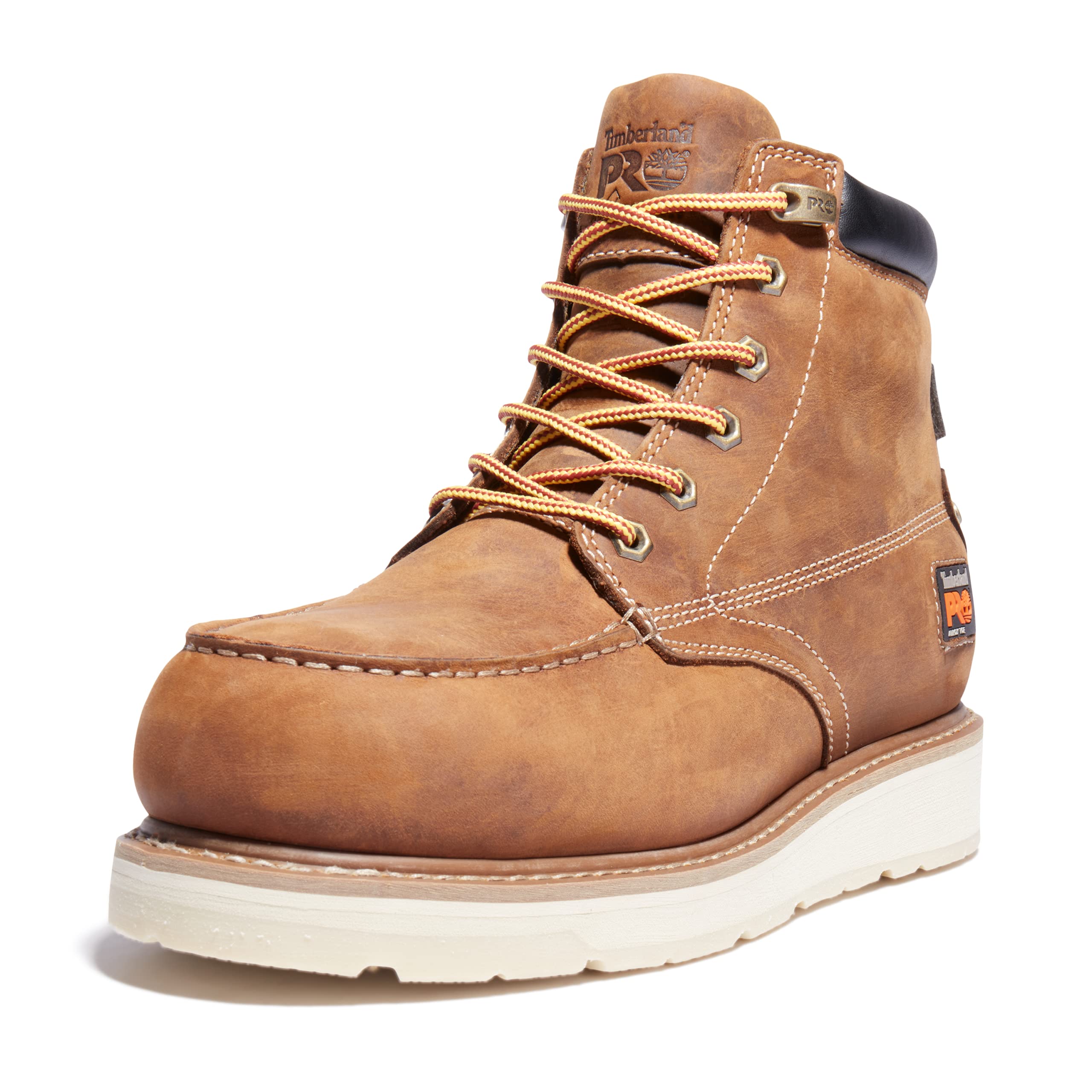
A cold-weather alloy-toe boot with shock-absorbing soles built for rough terrain.
Timberland PRO brings its construction site experience into a boot that handles freezing, oily, and slippery surfaces without complaint. The alloy safety toe is lighter than steel and meets EH standards, which matters when you are working on a panel in a wet trench. The internal waterproof membrane resists blood-borne pathogens too — a thoughtful safety layer for industrial environments.
The Anti-Fatigue Technology footbed absorbs shock and returns energy with each step, and owners confirm it works: some report 2+ years of life with only a few insert changes. The full-grain leather is beautiful in person — though the real color is darker than what Amazon photos show. The common caveat is the break-in period, which runs about a week, and a few owners say the sock-slip issue (socks sliding down inside the boot) can be annoying despite trying better socks.
What stands out: the wedge outsole provides excellent traction on slick surfaces, and the boot’s waterproofing holds up through deep puddles and wet grass on site.
Choose these if: you work outdoors in cold, wet conditions and want an alloy toe that does not weigh you down.
Skip them if: you need a boot that feels soft right from the start — this one needs a proper week of walking before it breaks in fully.
5. Reebok Work Zig Kinetica Edge II Composite Toe Boot
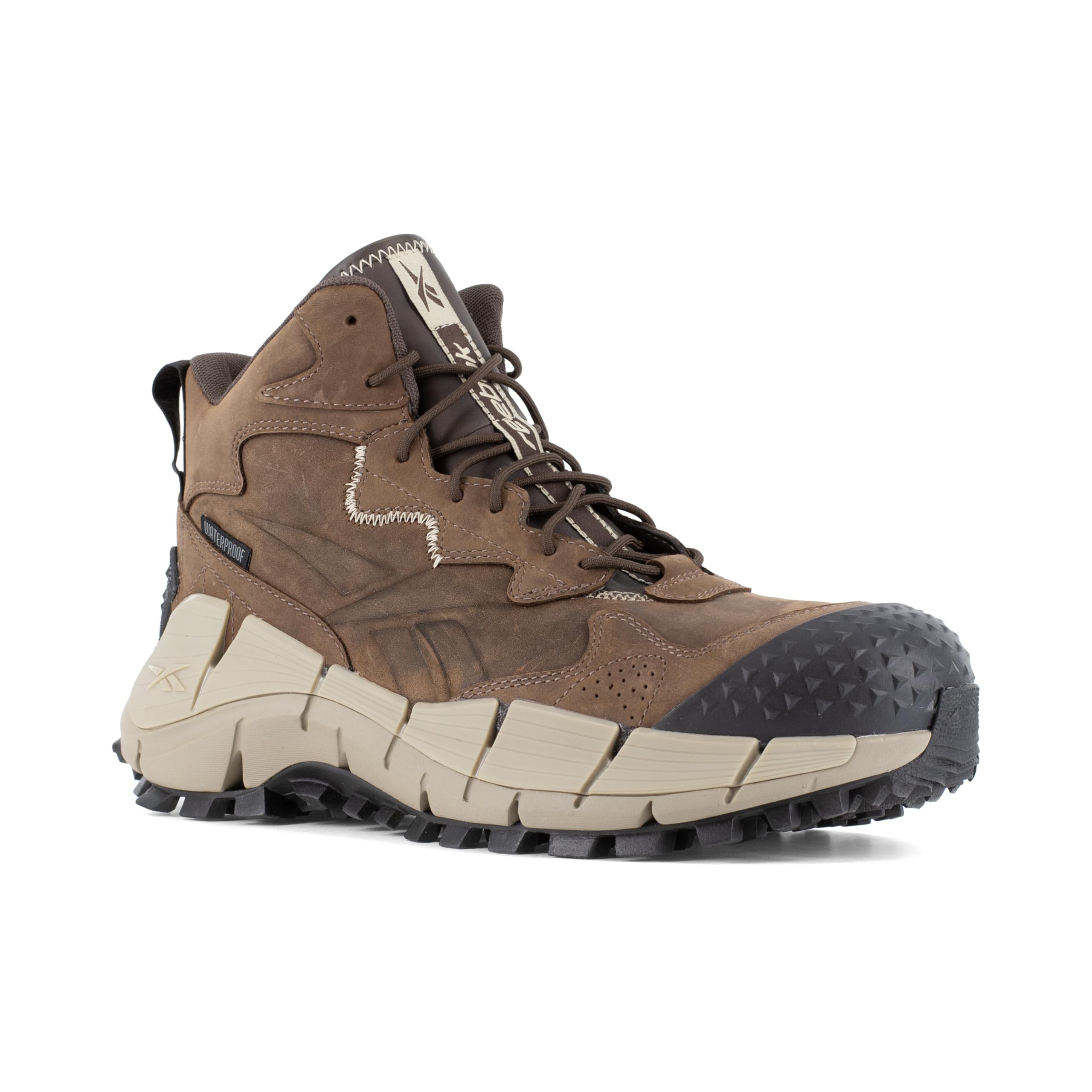
A waterproof, trail-inspired boot that cushions each step without sacrificing ankle support.
The Reebok Zig Kinetica Edge II is for electricians who chase jobs across uneven terrain — construction sites with mud, gravel, and raw ground. The Floatride Energy midsole combined with the Zig Energy system delivers light, responsive cushioning that owners compare to a quality running shoe. The DuraKick protective toe guard adds an extra layer against rocks and obstacles.
This boot is 100% non-metallic, so it breezes through metal detectors, and the waterproof membrane keeps moisture out even during slushy days. At 3.1 pounds, it is notably lighter than the Ariat WorkHog. The aggressive tread meets ASTM F3445 slip resistance standards, so wet steel gratings or muddy slopes are manageable. Some owners find they run slightly tight at first, but memory foam in the tongue softens with warmth. The only common complaint is foot sweat — a boot dryer and wool socks help.
Real owner take: “Perfect for wide feet with PF — 9000+ steps first day with no pain.” That is a strong endorsement for anyone dealing with plantar fasciitis on the job.
Best for: outdoor electricians and linemen who need aggressive tread and responsive cushioning on uneven ground.
Consider another if: you work exclusively indoors on smooth concrete — a wedge sole would serve you better than these trail lugs.
6. SKECHERS Work Arch Fit Tarver Comp Toe
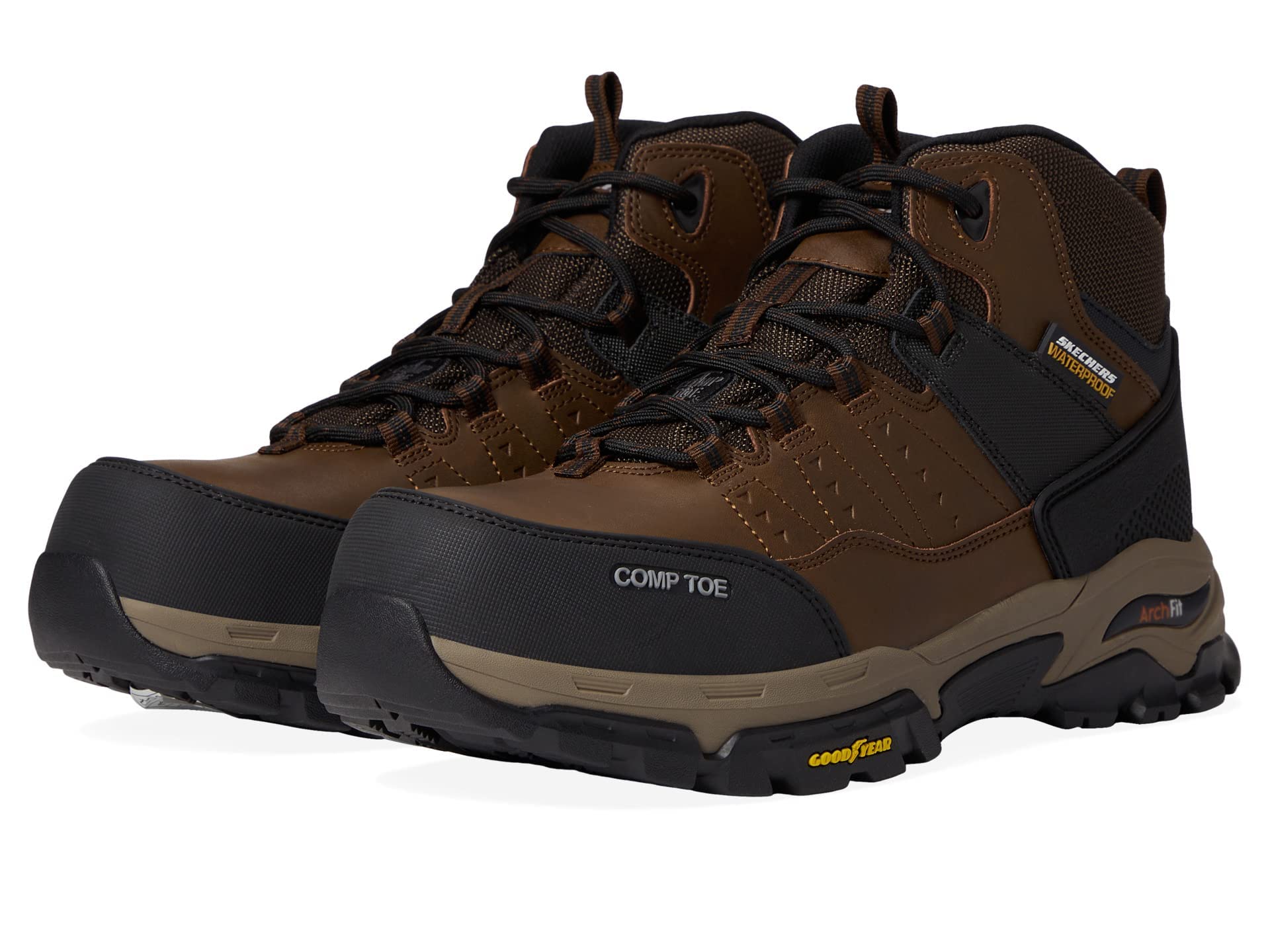
Podiatrist-certified arch support tucked into a waterproof, composite-toe work boot.
Skechers brought its Arch Fit technology — designed and certified by podiatrists — into a work boot that supports flat feet without needing aftermarket inserts. The composite toe meets EH standards, so you stay safe around live circuits, and the Goodyear Rubber outsole provides slip resistance on slick surfaces. Owners with flat feet say the arch support is the selling point, eliminating foot pain that other boots cause.
At 3.1 pounds, it is lightweight for a safety boot, and the mesh-leather-synthetic upper keeps the boot breathable. The fit is true to size with a roomy toe box, though some owners note the internal lining can rip with heavy use. The outsole is good on most surfaces but gets slippery on wet, polished concrete — something to consider if your site has slick floors. A few owners mention the stitching near the toe can come loose over time, but at this price point it is often seen as a fair trade-off for the comfort.
What makes it worth it: comfort mentions say these are supremely comfortable for long standing and walking — “most comfortable work boots I’ve ever worn” is a repeated line.
Pick these if: your feet demand arch support and you want a lightweight composite-toe that feels like a sneaker all shift.
Look elsewhere if: you work on very wet, polished floors all day — the traction on slick concrete earns mixed notes.
7. Carolina Elm 8″ Unlined Logger Boots

The lineman’s favorite unlined boot that breathes in summer and climbs with confidence.
Carolina’s Elm Logger is a soft-toe boot made for tradespeople who need 8 inches of ankle support and a slip-resistant lug outsole for climbing. The unlined design means it runs cool in hot weather — a clear advantage for linemen and arborists working in the sun. The triple-bar steel shank gives you serious structural support when you are on a pole or walking a beam.
The Pillow Cushion footbed with memory foam reduces foot fatigue on long shifts, and the leather is tough enough for construction and logging tasks. This boot is soft toe, not steel or composite, so it fits a specific niche: electricians who need EH protection but do not require toe impact protection. The big catch is that “unlined” really means unfinished inside — no insole or padding at all in some cases, so you will want aftermarket insoles if you expect cushioning. The stitching quality also gets mixed marks, with one owner experiencing sole stitching failure after five hours of wear.
Who it serves best: linemen, arborists, and anyone who works in hot conditions and needs breathable, EH-rated boots with a steel shank for climbing.
Reach for these if: you need a warm-weather, lightweight logger boot for climbing and want the breathability of an unlined design.
Not for: anyone who wants a cushioned, ready-to-wear experience from the start — these need your own insoles and patience with the raw interior.
8. Harley-Davidson Footwear Bill Steel Toe Work Boot
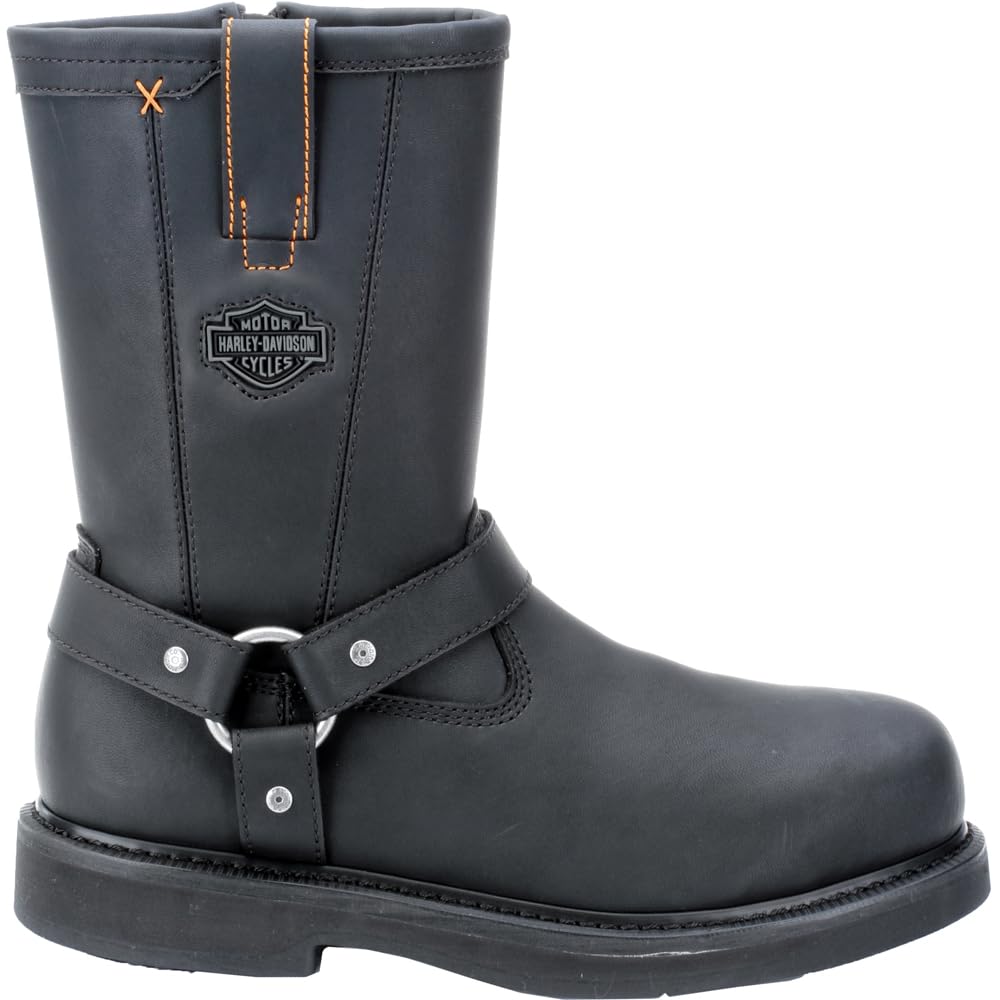
A classic side-zipper steel toe that restaurant maintenance teams swear by for oil-slick floors.
The Harley-Davidson Bill is a slip-on boot with a zip-up side that makes entry quick. The oil-resistant outsole is specifically praised by owners who manage maintenance in restaurant kitchens — where grease makes footing treacherous. The full-grain leather upper gives it a polished look that works for duty wear as well as casual settings, and the steel toe provides standard impact protection.
The boot runs about half a size large, and some owners with narrower feet add an extra insole to dial in the fit. Quality and comfort earn strong marks: 95 quality mentions make it among the most-praised picks in this lineup for build. The boot is not waterproof from the start — owners recommend a coat of mink oil to seal the leather. One durability caveat: a small number of owners mention the sole detaching after a few months, so it is worth checking your pair early in the return window.
Standout appeal: The side zipper lets electricians quickly remove boots between the service truck and the job site..
Best for: maintenance electricians and restaurant workers who face oily floors and want a good-looking, quality steel toe that slips on easily.
Watch out for: the snug fit on muscular calves — the shaft runs tighter than many competitors, so try a wide if you have big lower legs.
9. ARIAT Turbo 6″ Waterproof Carbon Toe Work Boot

A carbon-toe waterproof boot that shrugs off paint thinner and keeps your feet dry through a year of hard wear.
The Ariat Turbo is engineered for industrial environments where chemicals, solvents, and 12-hour shifts are the norm. The DRYShield waterproof membrane keeps moisture out, and the non-metallic composite toe (carbon) is metal-detector friendly and does not conduct cold. The ATS technology provides ergonomic support on uneven ground, and the Energy Max anti-fatigue insole delivers maximum comfort that owners say rivals any boot they have worn. The outsole passes hot contact tests at 150°C/302°F, so it handles hot surfaces without melting.
At 3.1 pounds, it is lighter than it looks. Owners working in industrial plants with paint and solvents report they buy a new pair every year, with the tread lasting long and the waterproofing holding up nearly 365 days of hard use. The main durability issue: kneeling frequently (carpenters and electricians who work low) can wear a hole through the leather over the composite toe in about six months. Break-in takes about a week of daily wear.
Why it wins: “I don’t want to take them off” sums up the ride. The Energy Max insole combined with the lightweight carbon toe makes a boot that feels like a sneaker on concrete.
Choose this one if: you work in industrial plants with chemicals, paint, or solvents and need a waterproof carbon-toe that keeps you comfortable all day.
Think twice if: you kneel frequently at work — the leather over the toe cap can wear through faster than with a steel-toe boot.
10. Danner Stronghold 6″ Waterproof Work Boot

A Pacific Northwest handmade boot that breaks in fast and grips slippery floors like no other.
Danner’s Stronghold is the result of over 85 years of bootmaking heritage fused with modern materials. The full-grain leather upper, Vibram SPE midsole, and slip-resistant outsole make this a boot that stands up to oil, grease, and wet concrete. The composite toe is roomy without being boxy — a detail owners note as a major comfort win — and the EH rating means you stay safe on live circuits.
The break-in is surprisingly quick compared to traditional work boots, typically one day to a week. Owners who wear them for 10-hour shifts on concrete floors report minimal fatigue. The tongue seam can rub your ankle at first, but it resolves after a few wears. The biggest caveat: this boot runs hot. The leather and construction offer zero breathability, so your socks will be wet on warm days. The sizing is also tricky — narrow feet may need a full size down, while wide feet find the EE too roomy.
What wins loyalty: owners who wear the Stronghold for years swear by the waterproofing and slip resistance on greasy floors. “Best boot yet,” one long-term owner writes after switching from composite to soft toe.
Best for: electricians who work on slippery, greasy floors all day and want a durable boot they can re-sole down the road.
Skip if: you need a cool, breathable boot for summer work — this one traps heat and will leave your socks soaked.
11. Thorogood 1957 Series 8″ Waterproof Work Boots

A re-issue of a mid-century American classic built with Goodyear Storm Welt for decades-long service.
Thorogood’s 1957 Series brings back the hard-working style of post-war America with modern waterproofing and memory foam comfort. The Briar Pitstop leather gives it a rich, classic look that draws compliments on the job site and off it. The Goodyear Storm Welt construction means these boots can be re-soled multiple times — a feature owners in oil and gas rely on to get 3 years or more out of a pair.
The MaxWear wedge outsole provides excellent traction on slippery mud and grass, and the soft toe means no pinching or cold transfer. The removable memory foam footbed molds to your foot, and the waterproof, breathable membrane keeps moisture out. At the price point, these are an investment. The common trade-off is fit: the boots run narrow, so owners recommend ordering a wider option than your usual size. A small number of customers note sole separation right from the start, but the brand’s restoration service is a fallback.
The bottom line from owners: “I work in the oil and gas industry and these boots are my go to. Pricey but worth the money.” The quality edge here is real — 123 quality mentions make it the most-praised category in the entire review set.
Invest in these if: you want an heirloom-quality boot that you can re-sole and wear for years, and you appreciate old-school craftsmanship with modern comfort.
Consider another if: you have a wide foot and want a snug fit — order up a width size or stick with brands that offer standard EE sizing.
Understanding the Specs
ASTM F2413 vs F2892-11
The ASTM F2413 standard is the full safety rating for protective footwear — it covers impact and compression resistance (steel/composite/alloy toe) plus electrical hazard protection. The F2892-11 standard is for soft-toe safety footwear that still provides EH protection but skips the impact/compression test. Both are common on electrician boots. F2413 means you get toe protection too; F2892-11 means the boot is EH-rated but soft-toe. Check your job site requirements to know which you need.
Wedge Sole vs Lug Sole
A wedge sole is a flat, non-heeled outsole that boost surface contact with concrete floors. It is the preferred choice for electricians on smooth, flat surfaces because it distributes weight evenly and does not trap debris. A lug sole has deep, aggressive treads for digging into mud, gravel, and ladder rungs. If you work both indoors and outdoors, a moderate lug sole gives you the best mix of traction and comfort on flat surfaces.
FAQ
What does EH rated mean for electrician boots?
Should I get steel toe or composite toe for electrical work?
How do I know if a boot has electrical hazard protection?
Will these boots fit my work site dress code requirements?
How long do electrician boots typically last?
Can I wear electrician boots for hiking or outdoor work?
Do electrician boots require break-in time?
What is the difference between ASTM F3445 and standard slip resistance?
Can I use aftermarket insoles in electrician boots?
Do electrician boots protect against shocks in wet conditions?
Final Thoughts: The Verdict
For most people, the best electrician boots winner is the Ariat WorkHog because it combines a steel toe with the best stability system for ladder work and a build quality that nearly 800 owners consistently praise. If you want a sneaker-light boot that eliminates foot fatigue, grab the New Balance Fresh Foam Cremorne. And for a slip-on that gets you in and out of the job site in seconds, the ROCKROOSTER Bakken is the one to reach for. Whichever you pick, make sure it carries the EH rating your job requires — your feet and your safety depend on it.
How We Picked
We do not accept paid placement. Every pick is matched to a real buyer and a real use-case; we do not hands-on test units.
Sources & Methodology
Specifications: manufacturer listings and product documentation. Review insights: verified customer reviews, as of July 2026. Pricing: not shown on this page (it changes often); check the current price via the retailer link.
As an Amazon Associate, WellFizz earns from qualifying purchases. This does not affect which products we feature.
Related Guides

Mo Maruf
I created WellFizz to bridge the gap between vague wellness advice and actionable solutions. My mission is simple: to decode the research and give you practical tools you can actually use.
Beyond the data, I am a passionate traveler. I believe that stepping away from the screen to explore new environments is essential for mental clarity and physical vitality.