Our readers keep the lights on and my smoothie glass nicely filled. As an Amazon Associate, I earn from qualifying purchases.
Specs are compiled from manufacturer listings and verified buyer reviews and can change over time — please confirm the key details on the product page before buying.
You want a sander that either strips material fast or leaves a glass-smooth finish without swirl marks—and you don’t need a garage full of tools to get both. A single well-matched sander handles most projects, from refinishing furniture to sanding drywall. Here are the real-world strengths and honest trade-offs of nine top contenders, so you can match the tool to the task.
I’m Mohammad Maruf — the founder and writer behind WellFizz. This guide is built by comparing the manufacturers’ published specifications and the patterns across verified customer reviews, so you get each pick’s real strengths and trade-offs instead of marketing spin.
Match the sander’s power, speed, and dust control to your project’s material and finish requirements. Find your match with this breakdown of the electric sander for woodworking.
Our Picks at a Glance

How To Choose The Best Electric Sander For Woodworking
Walk down the tool aisle and you’ll see palm sanders, orbital sanders, random orbital sanders, and detail sanders — all with different speed ratings and power draws. Match the sander’s action and speed to the material and desired finish for optimal results.
Random Orbit vs. Palm Sanders
A random orbital sander moves the pad in a random, overlapping pattern that prevents the telltale swirl marks you often see on cheap sanding jobs. Palm and orbital sanders, which move in a fixed circular path, are fine for aggressive stock removal but can leave those visible swirls behind if you rush. If you’re refinishing furniture or prepping wood for a clear finish, choose the random orbit style first.
Speed and Power
Speed is measured in OPM — orbits per minute — or RPM for revolutions when referring to motor output. More OPM means faster material removal and smoother results, but you’ll want a variable-speed dial to dial it down for fine finishes. Power, measured in amps for corded models, determines how much force the motor can sustain without bogging down under pressure.
Quick Comparison
| Model | Best For | Speed (OPM/RPM) | Power Source | Weight | Amazon |
|---|---|---|---|---|---|
| Milwaukee 2648-20 M18★ Best Overall | Battery users on a brand platform | — | 18V Battery | 2 lbs | Amazon |
| 16.8V Cordless SanderCompact Pick | Small jobs with no cords | 3500 RPM | 16.8V Battery | 1.7 lbs | Amazon |
| DWT Detail SanderValue Pick | Tight corners and touch-ups | 15000 OPM | Corded | 2.8 lbs | Amazon |
| Dong Cheng 5-Inch | Heavy material removal | 12800 OPM | Corded | 3.3 lbs | Amazon |
| Black+Decker BDERO100 | Entry-level reliability | 12000 OPM | Corded | 3.2 lbs | Amazon |
| Metabo HPT SV13YST | Variable speed finishing | 9000-13000 RPM | Corded | 3.1 lbs | Amazon |
| Bosch GSS20-40 | 1/4-sheet finishing precision | 12000 OPM | Corded | 2.7 lbs | Amazon |
| Bosch ROS20VSC | Versatile variable-speed polishing | 7500-12000 OPM | Corded | 3.5 lbs | Amazon |
| Metabo HPT SV1813DAQ4 | Premium cordless freedom | — | 18V Battery | 2.6 lbs | Amazon |
In-Depth Reviews
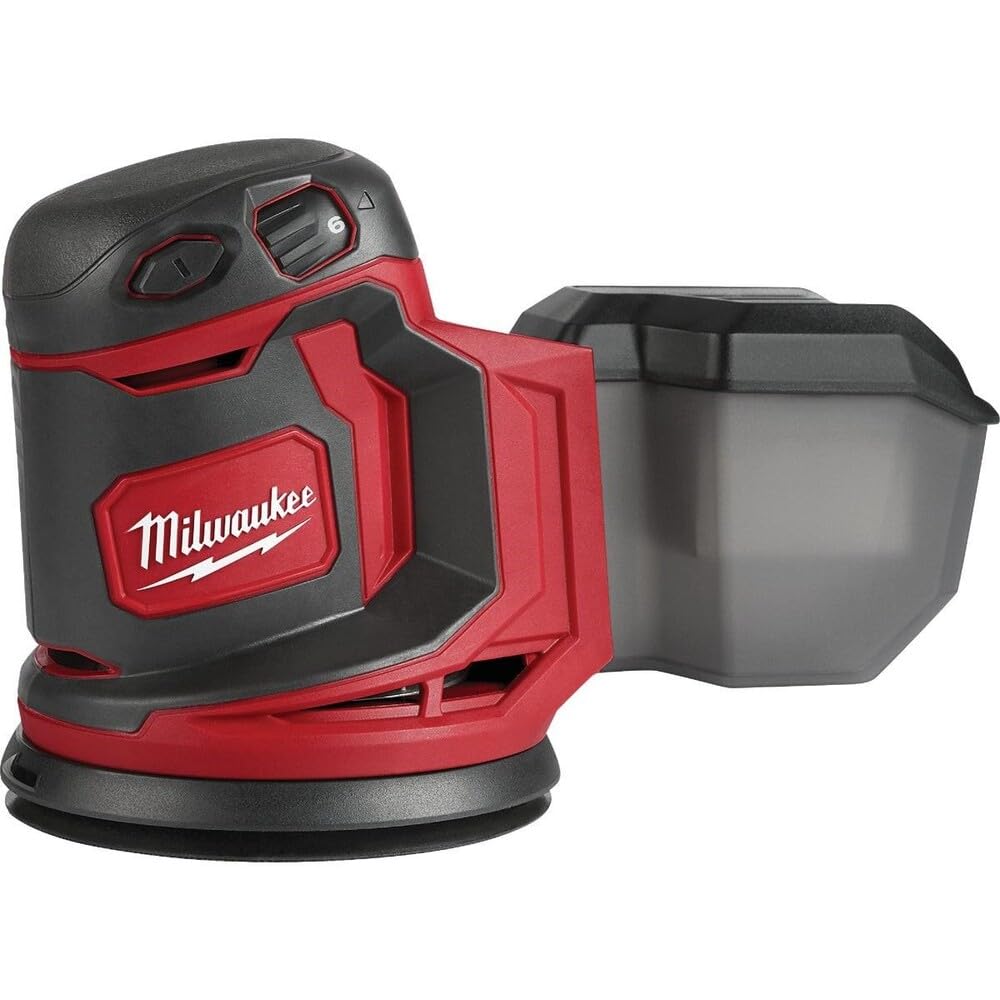
1. Milwaukee Electric Tools 2648-20 M18 Random Orbit Sander
Our pick — over 4.5★ from 3,500+ verified ratings; the strongest balance of quality and price.
The cordless pick that feels like a corded tool in daily woodworking.
Owners consistently call this sander a high-quality performer that punches above its battery-powered roots. The crowd favorite — with 4.7 stars from 3,500+ owners — keeps praising its durability and efficiency for woodworking operations, noting it fits right into a lineup of Milwaukee tools. What wins people over is the solid build, which earned the most positive mentions by far among buyers.
At just 2 pounds, this sander stays nimble in your hand during longer sessions—though several owners note the weight climbs once you attach the battery. You can run it with a vacuum attachment or let it collect its own dust, but buyers report the dust collector “clogs or fills in seconds,” so plan to empty it often or hook up a vac for cleaner work.
Battery life splits opinions: some report solid runtime, others say it depletes quickly, so a spare M18 battery is a smart hedge. The tool works with the broader M18 platform, making it a natural extension if you already own Milwaukee gear. It uses fine 100-grit paper, which suits finishing work right from the start.
Why it wins
- Compact size reaches tight spots easily
- Durable build with a proven track record
- Runs cordless on the M18 platform
The trade-offs
- Dust collector clogs quickly in practice
- Feels heavier with a battery attached
- Battery life draws mixed feedback
Reach for this if: you’re already in the M18 ecosystem and want a compact, capable sander for furniture work and touch-ups.
Think twice if: you need all-day dust collection without a shop vac, since the onboard collector fills fast.
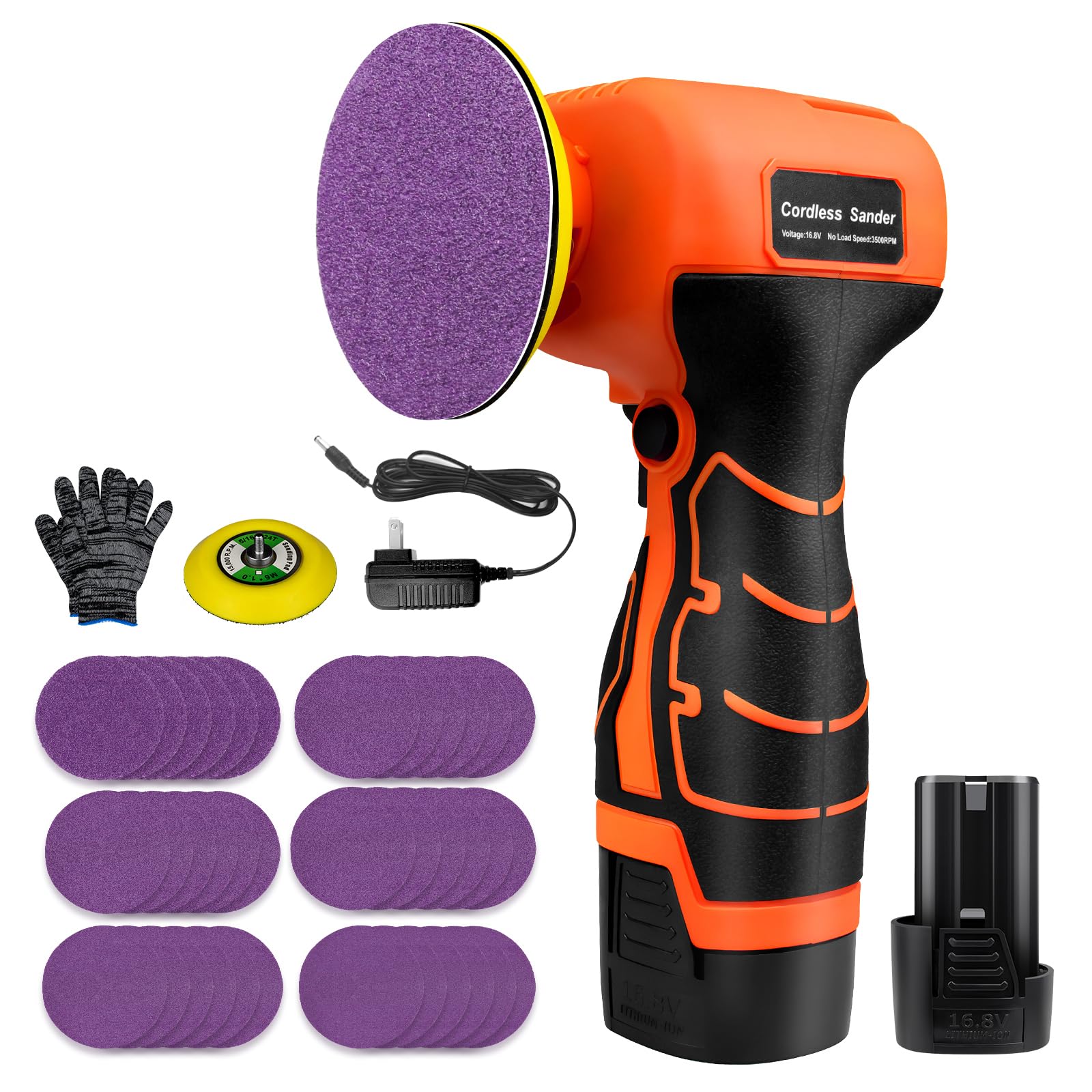
2. 16.8V Cordless Electric Sander with 36PCS Sandpapers
A featherweight cordless sander that tackles small home projects with surprising muscle.
Owners keep describing this one as a “powerful lil’ tool” that handles the majority of home projects right from the start. It spins at 3500 RPM — a big jump down from the Milwaukee’s unspecified top end — but for lighter-duty work that pace is plenty. The lightweight 1.7-pound body (including the battery) makes it easy to hold for extended periods, and the included 36 sandpapers span P60 to P320, so rough material removal and fine finishing are both covered.
At 16.8V with a 3.0Ah battery, it delivers up to 20 minutes of continuous runtime and recharges in about 3 hours. That runtime is fine for small projects, but the battery does eventually give up — and the tool lacks a charge-level indicator, which some owners flagged. The hook-and-loop discs press on with ease, making paper changes nearly easy during a job.
Its compact 7.9-inch length and 3-inch width let it reach corners a full-size sander can’t—one owner used it to finish an Adirondack bench and praised how it gets around corners far easier than a conventional sander. It also ships with gloves and a fast charger, so you’re ready to sand the moment it arrives.
What stands out
- 36 sandpapers included, from coarse P60 to fine P320
- Very light at 1.7 lbs with battery
- Cheap and easy to maneuver in tight spots
What to expect
- No battery charge indicator
- Runtime caps out near 20 minutes
- Slower than higher-end variable speed models
Buy it for: quick weekend projects and DIY sanding where cords get in the way.
Look elsewhere if: you plan long sanding marathons or need precise variable-speed control.
3. DWT Detail Sander, 1.5A 15000 OPM
The mouse-style sander built for detail work in corners and along edges.
This sander’s defining feature is its triangular pad and the changeable finger attachment, which slips into tight spaces, edges, and corners that round pads can’t touch. It spins at 15000 OPM — more than four times the speed of the 16.8V cordless above — so it removes material quickly despite its small footprint. The 1.5A copper motor keeps vibration low and heat down, which matters during longer sessions.
Owners find it durable after months of use and praise its ability to tackle jobs like refinishing teak furniture. The 24 included sandpapers span 60, 80, 100, and 120 grit in both triangular and fingertip shapes, and the hook-and-loop system makes swaps fast. The catch: the dust collection box draws mixed reviews, with some owners saying the mesh came unglued and blows dust, and others finding the collector hard to open.
At 2.8 pounds with a soft rubber grip, it’s easy to control one-handed and reach into tight spaces. Replacement pads are reportedly available at Walmart, which extends the tool’s life. The corner attachment can pop off during use, so treat it gently if you rely on it heavily.
Best attributes
- Finger attachment reaches tight corners
- Fast 15000 OPM speed
- 24 sandpapers included in 4 grits
Watch out
- Dust collector can blow dust in practice
- Corner attachment may pop off
- Instructions for the finger attachment are unclear
Grab this for: detail sanding in corners, edges, and tight spaces on furniture and trim.
skip it if: you need a clean workspace and won’t hook up a vacuum.
4. Dong Cheng 5-Inch Random Orbital Sander 3.2A

A 380W workhorse with six speed gears that strips material fast and finishes clean.
This sander earns its keep on tougher jobs, with a 3.2A motor that cranks out 8000–12800 OPM across six variable speed gears. Owners used it for months on brutal tasks like sanding off industrial-strength adhesive from hurricane shutters, and it kept performing. The 5-inch pad moves across large surfaces quickly, and the internal ventilation design improves both dust collection and heat dissipation.
Quality and value for money lead the positive feedback — buyers were pleasantly surprised by the build for what they paid, with one noting it performs much like far pricier brand-name sanders. The kit includes 20 sandpapers in five grits (80, 120, 180, 240, 320), a heavy-duty nylon bag, and a pair of carbon brushes for maintenance. A 3-year manufacturer warranty backs the whole package.
The composite dust box and dust-sealed switch keep the work area cleaner than most, and you can connect a vacuum (32mm OD) for long sessions. One owner noted the kit did not include the vacuum adapter despite the listing mentioning it, so confirm before relying on that feature. At 3.3 pounds it’s on the heavier side, but the balanced design and rubber grip reduce vibration.
Strengths
- Six variable speeds for material-specific sanding
- 20 sandpapers and tool bag included
- 3-year manufacturer warranty
Considerations
- Heavier at 3.3 lbs
- Vacuum adapter may not ship with the kit
- Dust bag can trigger smoke alarms if used indoors
Choose this if: you tackle heavy refinishing and want variable-speed control at a budget-friendly price.
Pass if: you need a light tool for delicate finishing work all day.
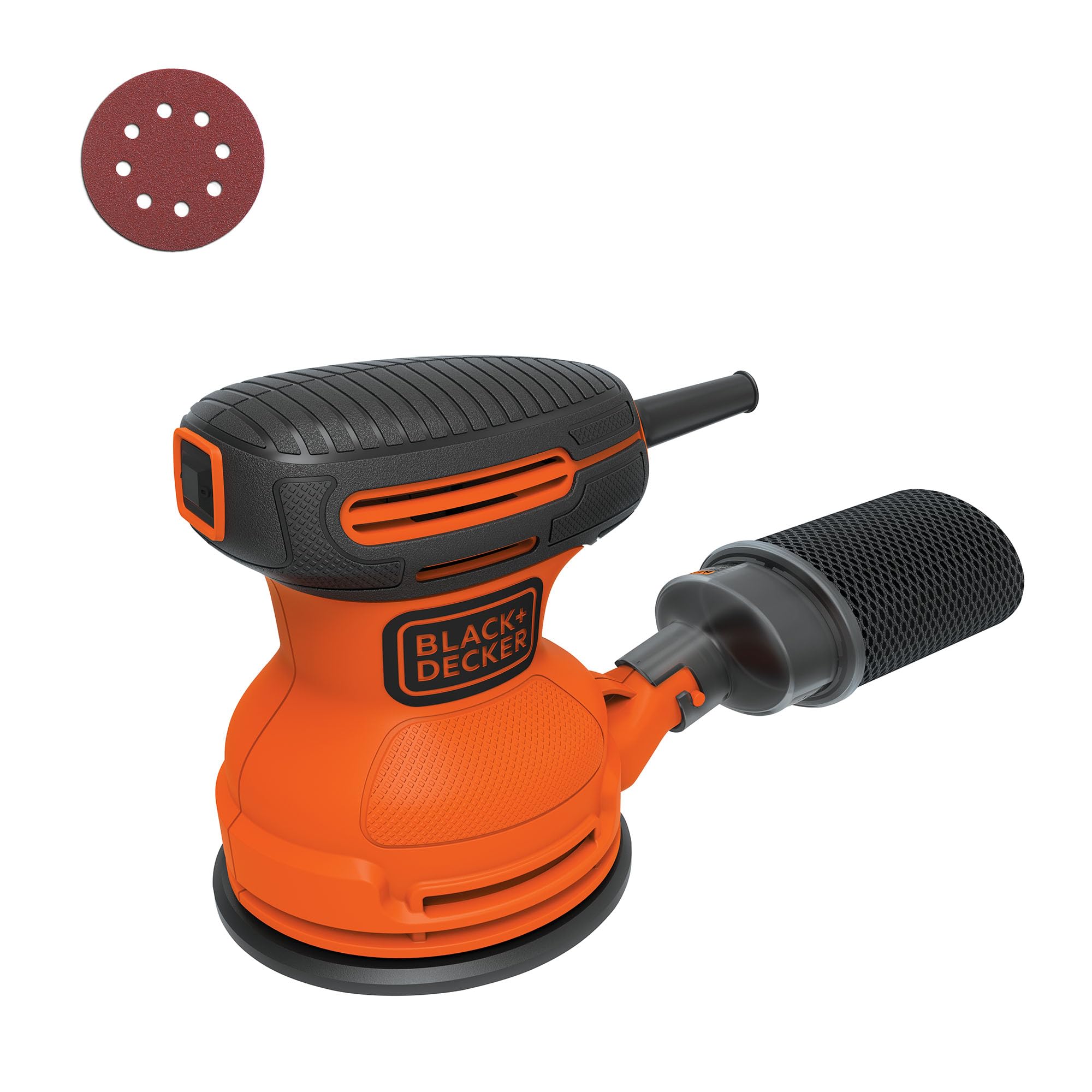
5. BLACK+DECKER BDERO100 Orbital Sander
The most-reviewed sander on this list, and for good reason — it just works.
This 2.0-amp corded sander delivers 12000 OPM for a swirl-free finish and has earned a massive following, with 4.6 stars from 15,000+ owners. It’s the entry-level king, praised for reliability and ease of use among first-time sander buyers and seasoned woodworkers alike. The random orbital action gives a high removal rate, and the hook-and-loop system means paper swaps take seconds.
Owners mention using it for everything from furniture refinishing to fence panels and drywall, with one running it for 1.5–2 hours without overheating. It stays quiet, runs cool, and handles corners reasonably well — impressive for the price point. The included dust bag works adequately, though some owners wish it captured more; the short cord also drew a few complaints.
At 3.2 pounds it’s neither the lightest nor the heaviest here, and the single-speed design keeps things simple. A 2-year limited warranty covers the tool. If you’re just getting into woodworking and want a proven, affordable sander that handles small projects and light tasks, this is the one most people reach for.
Why it’s popular
- Proven reliability across 15,000+ owners
- Swirl-free random orbit action
- Fast, easy hook-and-loop paper changes
Limits
- Single speed, no variable control
- Short power cord
- Dust collection is decent, not exceptional
Best for: first-time buyers and weekend DIYers who want dependable results without learning curves.
Not ideal if: you need variable speed for fine finishing work.
6. Metabo HPT SV13YST 5-Inch Random Orbit Finishing Sander

A palm-style finisher with a variable-speed dial that delivers mark-free results.
This 230W, 2.8-amp sander runs from 9000 to 13000 RPM, giving you the range to strip material fast or feather in a fine finish. Customers note excellent results up to 320 grit on hardwoods and 180–220 on softwoods — exactly the control you want for furniture work. The variable speed dial is the standout feature, with positive feedback matching the quality praise.
The 5-inch pad with hook-and-loop attachment makes paper changes quick, and the included vacuum adapter keeps dust nearly nonexistent when connected to a shop vac. One owner called it a “no-brainer” at its price, noting it cuts sanding time in half compared to a previous budget sander. It’s a rebadged Hitachi design, which explains the solid Japanese-engineered feel and the 5-year professional tool warranty.
At 3.1 pounds it’s lighter than the Dong Cheng but heavier than the cordless options. The dust bag works in a pinch, but the vacuum connection is clearly the better route for clean work. A couple of owners mentioned the rubber switch cover feels awkward and the dust collector can occasionally fall off, but overall this is a workhorse that outperforms pricier models per several long-term users.
Standout features
- Variable speed from 9000–13000 RPM
- Vacuum adapter for near-zero dust
- 5-year professional tool warranty
Keep in mind
- Dust bag alone offers weak collection
- Rubber switch cover feels awkward
- Heavier and louder than some premium rivals
Reach for this: when you want a professional-grade finish with real speed control on hardwoods and softwoods.
Consider another if: you mostly sand drywall or soft woods and don’t need the variable-speed range.
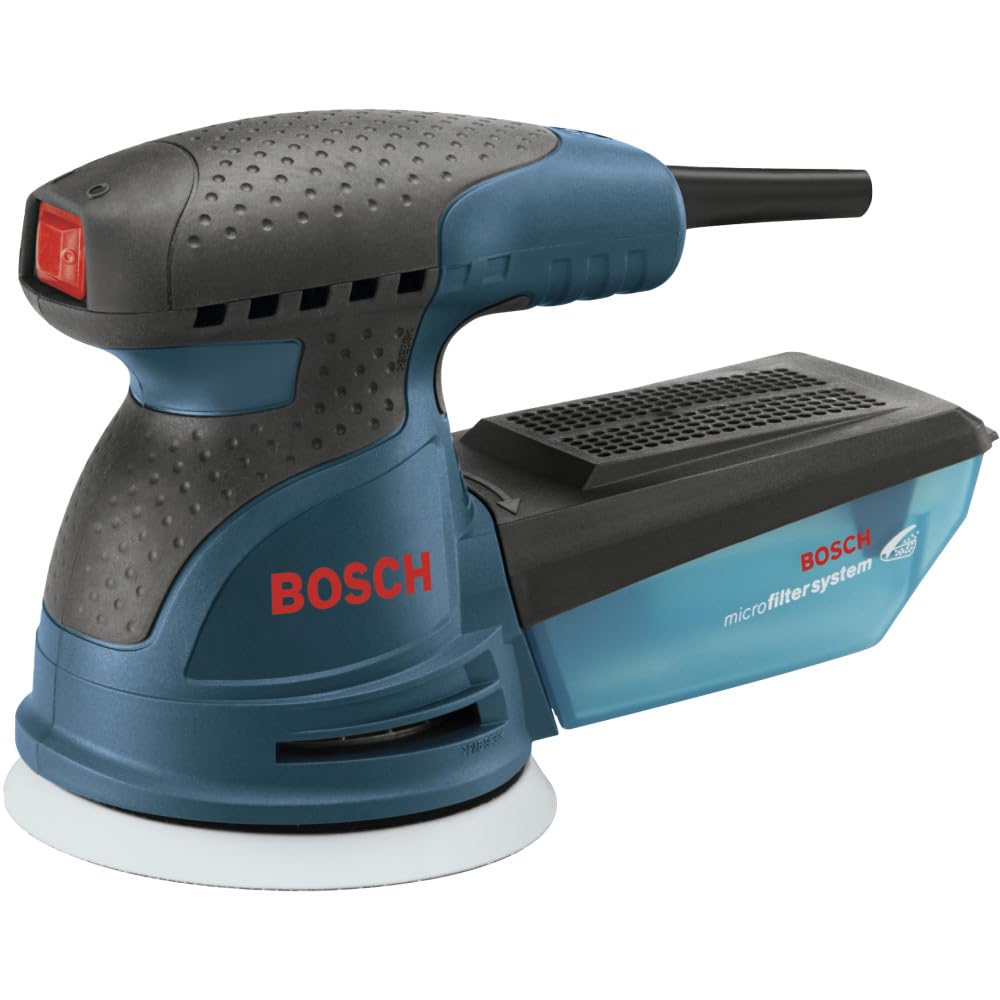
7. BOSCH GSS20-40 Orbital Finishing Sander

A 1/4-sheet finisher that turns big flat surfaces into a smooth, even canvas.
This Bosch sander uses a precision-machined aluminum sanding plate for even, long-lasting contact, which is why owners praise its performance on large flat surfaces. The 2.0-amp motor delivers 12000 OPM with very tight orbital motions, making it ideal for finishing work where consistency matters. The micro-filter dust canister with a screw-off cap extracts dust from coarse to fine particles through the pad.
Owners consistently highlight the low vibration and stable handling, thanks to the soft-grip design — one called it “solid” with vibration that’s “not too bad” and power that’s great. A common tip: attach the dust port side first when installing sanding sheets for easier alignment. The clamping system accepts multiple sheet types, including stick-on paper, and flush sanding works up to edges.
At 2.7 pounds it’s light enough for long sessions, and the included punch plate lets you create dust holes in non-mesh paper. The quiet operation and ergonomic handle earn regular praise. It does not have variable speed, so dialing back RPM for ultra-fine work requires a lighter touch instead. A 1-year limited warranty covers the tool.
What makes it special
- Aluminum plate for even, durable sanding
- Micro-filter canister with screw-off cap
- Low vibration and quiet operation
Limitations
- No variable speed control
- Punch plate works imperfectly
- 1-year warranty is shorter than some rivals
Best for: cabinet doors, tabletops, and any large flat surface needing a smooth, even finish.
Skip if: you need variable speeds for mixed material work.
8. BOSCH ROS20VSC Palm Sander with Vacuum Dust Collector
The variable-speed workhorse that earned its 4.6-star reputation across thousands of projects.
This Bosch model delivers a 2.5-amp motor with 7500–12000 OPM via a variable-speed dial, letting you match the pace to the workpiece. The signature hook-and-loop system contains over 35,000 long-life hooks on the pad, so discs grip firmly through heavy use. Owners call it easy enough for a 10-year-old to handle, which speaks to the thoughtful ergonomics and balanced weight.
The vacuum dust collector is the defining strength — the micro-filter traps particles down to 1/2-micron, and the twist-off canister shows the dust level so you know when to empty it. Owners consistently report excellent dust containment, with one noting it made sanding a pine cat tree nearly mess-free. The pad dampening system also helps minimize swirl marks on flat and contoured surfaces.
At 3.5 pounds it’s the heaviest here, but the comfortable grip and good balance offset that during use. The kit includes a vacuum hose adapter, contractor bag, backing pad, and sanding disc. A 30-day money-back guarantee and 1-year warranty back the purchase. On the downside, the stiff cord drew a comment, and the dust box o-ring may loosen over time.
Why owners love it
- Variable speed dial for task-matched pace
- Traps dust down to 1/2-micron
- 35,000+ hooks hold discs firmly
Fair warnings
- Heaviest pick at 3.5 lbs
- Stiff power cord
- Dust box o-ring may loosen
Pick this if: you want one sander that handles everything from stripping to fine finishing with excellent dust control.
Look elsewhere if: you want the lightest possible tool or cut corners regularly with a dust bag only.
9. Metabo HPT SV1813DAQ4 Cordless Random Orbital Sander

The lightweight cordless sander that sips battery and collects dust surprisingly well.
This 18V cordless sander runs from 7000 to 11000 OPM with six speed settings and an electric brake that stops the pad quickly for precise control. At just 2.6 pounds, it is the lightest full-size random orbital here, making it ideal for remodelers and finish carpenters who work overhead or all day. It’s part of the MultiVolt Metabo HPT battery system, so it accepts 18V packs or supercharges runtime with MultiVolt 18V/36V batteries up to 8.0Ah per charge.
Battery is sold separately, but owners confirm the tool sips power nicely — one noted “battery life is pretty good” and that it runs well on smaller packs. The vacuum connector works, which came as a pleasant surprise to buyers, and the dust bag collects well despite initial doubts about it staying on. One owner switched from a DeWalt that failed after a year and reports this feels sturdier built.
The ergonomic design includes top and side grip options, which help offset the tendency to tilt toward heavier batteries. A 5-inch sanding pad, 2 extra pads, and multiple dust collection adapters (1-3/8-inch, 1-1/2-inch, and 1-3/4-inch) come in the box. The 5-year tool warranty reflects Metabo HPT’s confidence in the build.
Key strengths
- Lightest full-size option at 2.6 lbs
- Six speeds plus electric brake
- Top and side grip options for control
Trade-offs
- Battery not included
- Tilts toward the battery side with large packs
- Fewer total reviews than some rivals
Choose this if: you’re already in the Metabo HPT battery system and want a light, capable cordless sander for pro work.
Pass if: you don’t already own Metabo HPT batteries, since that adds cost.
Understanding the Specs
OPM vs. RPM
OPM — orbits per minute — measures how fast the sanding pad moves in its orbital pattern. RPM — revolutions per minute — measures motor speed for tools that state it that way. Higher numbers generally mean faster material removal, but variable-speed models let you dial it down for finer work. The DWT hits 15000 OPM, while the 16.8V cordless churns at 3500 RPM — a 4.3x gap that shows why you should match the speed to the task.
Power Source and Runtime
Corded sanders give you unlimited runtime and consistent power, which is why the Bosch and Metabo HPT corded models are go-to picks for pros. Cordless models offer freedom but trade off runtime — the 16.8V sander runs about 20 minutes per 3.0Ah charge. The Milwaukee and Metabo HPT cordless options lean on their respective battery platforms, so factor in spare batteries for longer sessions.
Dust Collection Systems
Dust trapped under the paper causes swirl marks, so effective collection is critical for a clean finish. Look for micro-filter canisters (the Bosch ROS20VSC traps particles down to 1/2-micron), vacuum adapters (Metabo HPT and Dong Cheng both connect to shop vacs), or dust bags. The Milwaukee’s collector clogs quickly, while the Bosch GSS20-40’s screw-off canister is genuinely effective.
Sanding Paper Systems
Hook-and-loop (Velcro-style) systems let you swap discs in seconds without tools — standard on nearly every pick here. The fine 100-grit paper on the Milwaukee suits finishing, while multi-pack kits like the 16.8V cordless (P60–P320) give you the full range to start any project immediately. Replacement availability matters: the DWT uses a less common triangular pattern that can be harder to find.
FAQ
What is the difference between a random orbital sander and a palm sander?
Is a corded or cordless sander better for woodworking?
What does OPM mean and why does it matter?
How long does a cordless sander battery last?
What grit sandpaper should I use for woodworking?
Can I connect a shop vacuum to these sanders?
What is the best sander for sanding corners and tight spaces?
How do I prevent swirl marks when sanding?
What is the difference between a 1/4-sheet sander and a 5-inch random orbital sander?
Are expensive sanders worth the extra cost?
Final Thoughts: The Verdict
For most buyers, the electric sander for woodworking winner is the Milwaukee 2648-20 because it combines proven durability with cordless freedom on a platform many already own. If you want variable-speed finishing control with professional-grade results, grab the Metabo HPT SV13YST. And for a budget-friendly first sander that thousands of owners trust, the BLACK+DECKER BDERO100 is the one to reach for.
How We Picked
We do not accept paid placement. Every pick is matched to a real buyer and a real use-case; we do not hands-on test units.
Sources & Methodology
Specifications: manufacturer listings and product documentation. Review insights: verified customer reviews, as of August 2026. Pricing: not shown on this page (it changes often); check the current price via the retailer link.
As an Amazon Associate, WellFizz earns from qualifying purchases. This does not affect which products we feature.
Related Guides

Mo Maruf
I created WellFizz to bridge the gap between vague wellness advice and actionable solutions. My mission is simple: to decode the research and give you practical tools you can actually use.
Beyond the data, I am a passionate traveler. I believe that stepping away from the screen to explore new environments is essential for mental clarity and physical vitality.