Our readers keep the lights on and my smoothie glass nicely filled. As an Amazon Associate, I earn from qualifying purchases.
Specs are compiled from manufacturer listings and verified buyer reviews and can change over time — please confirm the key details on the product page before buying.
An electric blood pressure monitor takes the guesswork out of home health tracking, but only if the cuff actually fits your arm and the readings match what you’d see at a clinic. This guide breaks down nine top-rated upper arm models, focusing on the real factors that decide accuracy: cuff size, memory storage, and how easily you can share data with your doctor. You’ll get a clear winner for most households, plus honest notes on which pick suits smaller or larger arms best.
I’m Mohammad Maruf — the founder and writer behind WellFizz. This guide is built by comparing the manufacturers’ published specifications and the patterns across verified customer reviews, so you get each pick’s real strengths and trade-offs instead of marketing spin.
We’ve matched each monitor to the right user, from first-time buyers to tech-savvy trackers, so you can confidently choose the best electric blood pressure monitor for your home health routine.
Our Picks at a Glance
How To Choose The Best Electric Blood Pressure Monitor
Your arm shape and size are the first things to consider, not the screen or the app. A cuff that’s too loose or too tight can push your numbers higher than they really are, so always match the cuff’s range to your measured upper arm circumference.
Cuff Size Is the Real Dealbreaker
Most home monitors ship with a “wide-range” cuff covering roughly 8.7 to 16.5 inches (22 to 42 cm). This fits the average adult, but if your arm falls outside that band—especially on the larger side—you’ll want a model with an XL cuff option or one where the maker will send a different size.
Memory and App Tracking
If you’re tracking trends over weeks, look for a monitor that stores at least 90 to 240 readings on the device itself. Bluetooth models push that data to a free phone app for unlimited history, which makes sharing a weekly log with your doctor far simpler than keeping a paper diary.
Quick Comparison
| Model | Best For | Cuff Range | On-Device Memory | Power | Amazon |
|---|---|---|---|---|---|
| iHealth Track Smart★ Best Overall | App-driven tracking | 8.7″–16.5″ | 99 readings | 4 AAA Batteries | Amazon |
| HoMedics Upper ArmTwo-User Pick | Two-user simplicity | 9″–17″ | 180 (90 per user) | 4 AAA Batteries | Amazon |
| iHealth Accu Large CuffLarge-Cuff Value | Large arms, USB power | 8.7″–16.5″ | 240 (2 users) | 4 AA Batteries + USB | Amazon |
| Braun ExactFit 1 | One-button ease | 8.6″–16.5″ | Latest reading | 4 AA Batteries | Amazon |
| Medline Digital | Value and simplicity | 8.6″–11.8″ | 90 per user | 4 AA Batteries | Amazon |
| Greater Goods Upper Arm | Editor-approved reliability | 8.75″–16.5″ | 120 (60 per user) | 4 AAA + Wall Adapter | Amazon |
| Konquest KBP-2704A | Big bright display | 8.5″–16.5″ | Multiple (4 users) | 4 AA Batteries | Amazon |
| Microlife BPM2 | Clinically-rated accuracy | 8.7″–16.5″ | 60 results | 4 AA Batteries | Amazon |
| OMRON Gold | AFib detection, dual display | 9″–17″ | Unlimited via app | 4 AA + Plug-in Cord | Amazon |
In‑Depth Reviews
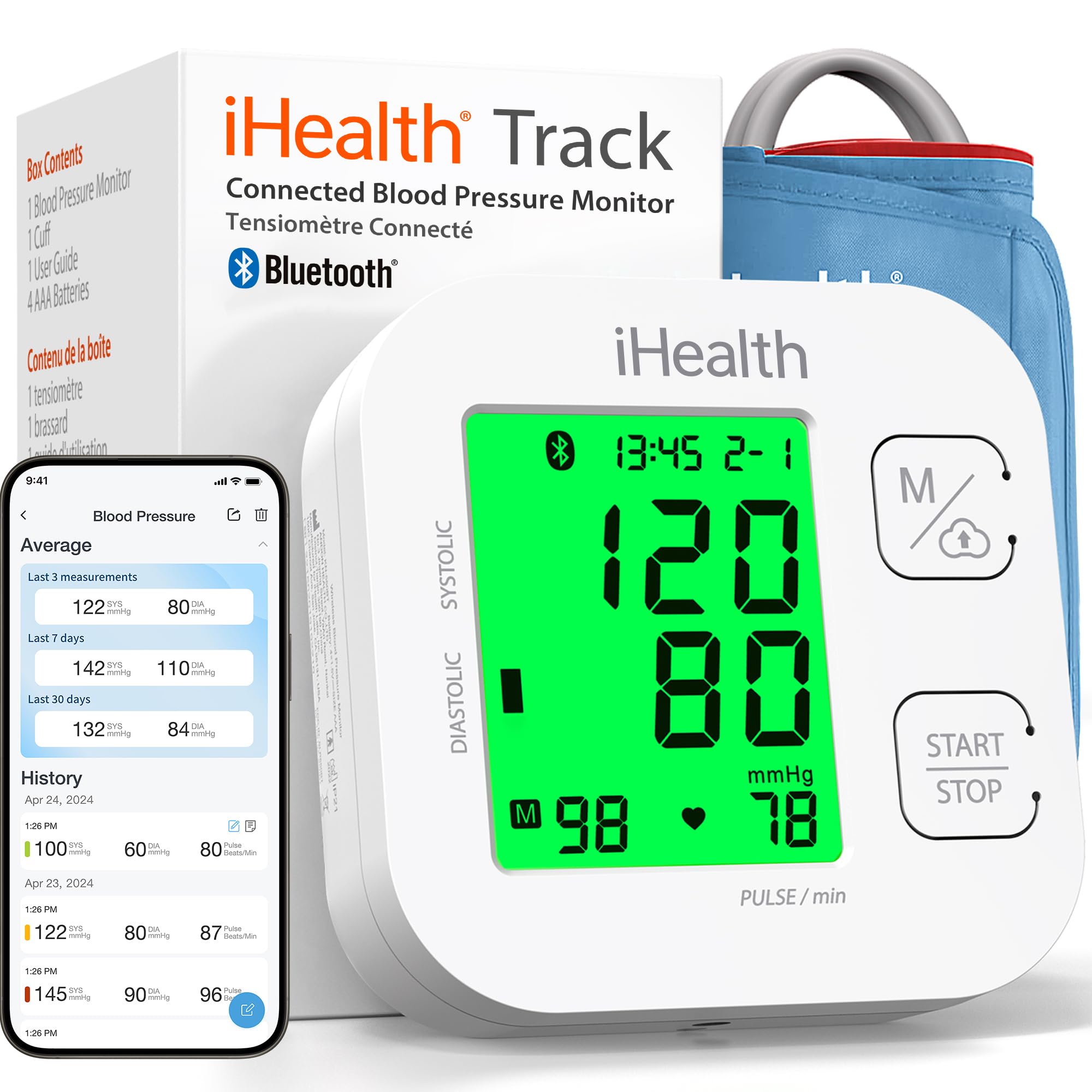
1. iHealth Track Smart Upper Arm Blood Pressure Monitor
Our pick — 4.5★ from 65,500+ verified ratings; the strongest balance of quality and price.
The app-first monitor that turns daily readings into a doctor-ready trend report without any setup fuss.
If your goal is tracking trends over time, this is the one that does the heavy lifting for you. The wide-range cuff fits upper arms from 8.7″ to 16.5″ (22–42 cm), and its two-button, no-calibration design keeps the process simple. After each reading, the display lights up in GREEN, YELLOW, or RED so you instantly know whether your numbers fall in a healthy zone.
It stores 99 readings on the device itself and unlimited readings in the free iHealth app (iOS 12.0+, Android 9.0+, Bluetooth 4.0+). That app connection is what buyers rave about—”Bluetooth syncs with iOS/Android app for tracking trends” is a recurring theme in owner feedback, and the large backlit digits make it easy for older eyes.
The battery setup is your main consideration: it needs 4 AAA batteries (included), so keep spares handy if you measure daily. A handful of users note the cuff tops out at 16.5″, so very large arms may need a different model. At 4.5 stars from over 65,000 owners, this crowd favorite earns the top spot for good reason.
Where It Wins
- Color-coded display for instant interpretation
- Auto-detects irregular heart rhythm disturbances
- Compact at 3.9 x 3.9 x 1.6 inches for travel
Watch Out For
- AAA battery life—no AC adapter option
- App requires a newer phone (iOS 12+ / Android 9+)
Reach for it if: you want app-based tracking with unlimited phone storage and a simple daily routine.
Look elsewhere if: your upper arm exceeds 16.5″ or you prefer plug-in power over batteries.
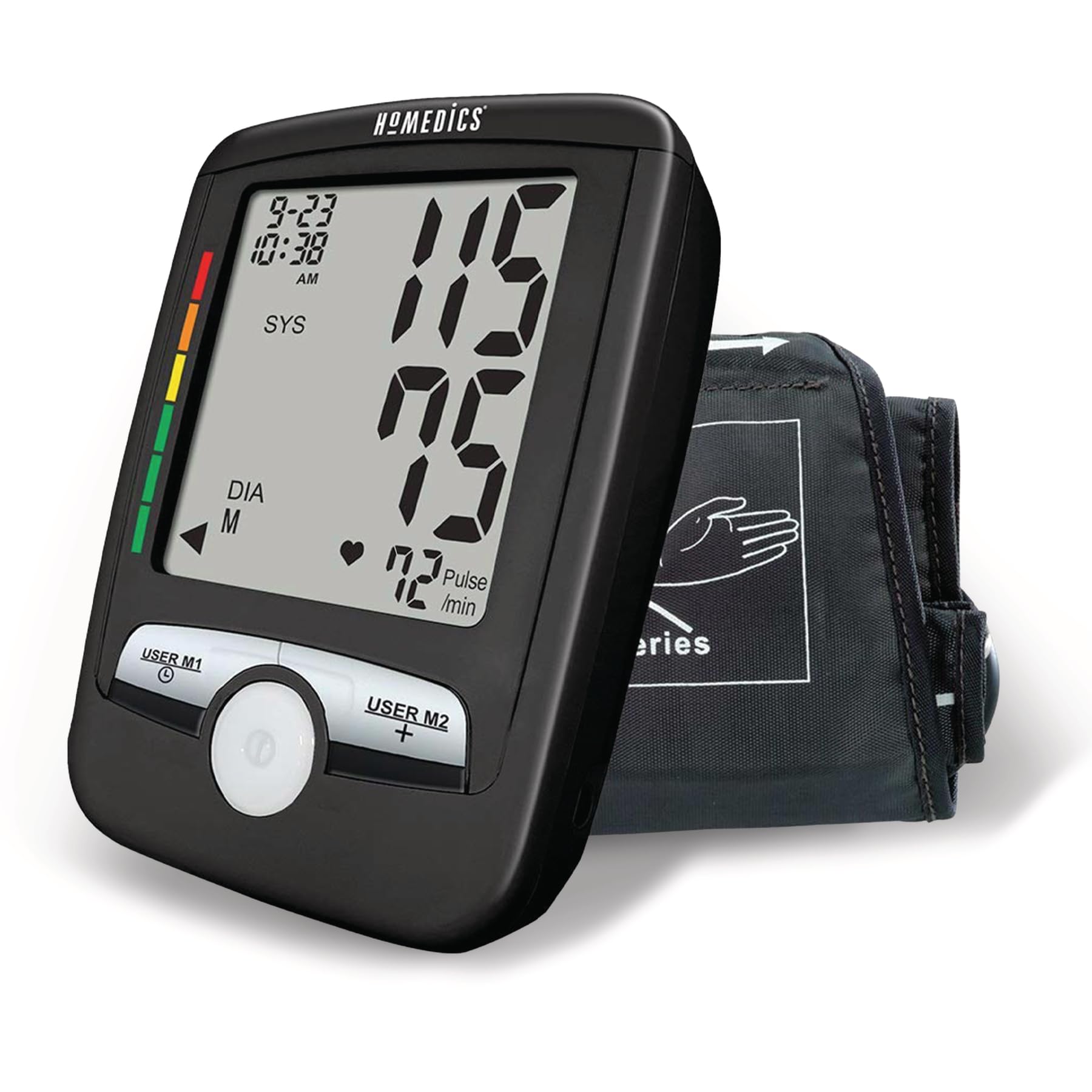
2. HoMedics Upper Arm Blood Pressure Monitor
A compact dual-user monitor that separates your history from your partner’s with zero app setup.
Sharing a monitor with a spouse? This one is built for exactly that. It stores up to 180 readings—90 per user—and lets each person view their last 3 average readings right on the screen. The cuff fits 9″–17″ arms, and its Smart Measure Technology inflates and deflates automatically to a comfortable level.
Accuracy is the headline here: buyers report that “readings matched Omron (systolic identical, diastolic ~2mm).” That’s high praise given Omron’s clinical reputation. The one-touch operation and included 4 AAA 1.5V batteries mean you’re ready to measure within a minute of opening the box.
The main trade-off is the display—it doesn’t light up, so reading it in a dark bedroom requires a nightlight. It also includes irregular heartbeat detection and a risk category index, giving you more insight than the price suggests. At 1.15 pounds, it’s a touch lighter on the shelf than the bulkier iHealth Accu model.
Solid for couples: separate user profiles keep each person’s history clean without any phone pairing.
One caveat: the unlit screen is best read in daylight or a lit room.
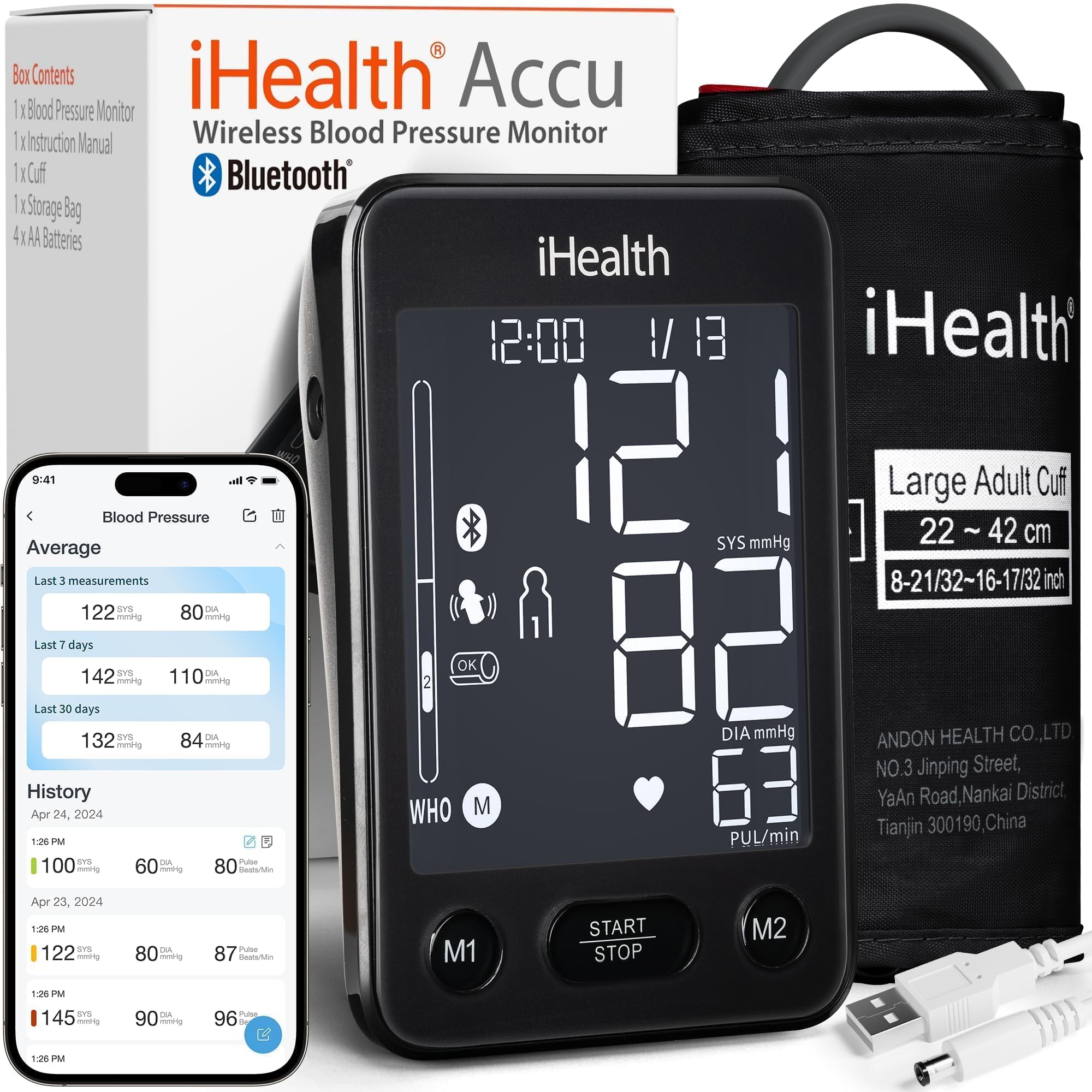
3. iHealth Accu Bluetooth Upper Arm Monitor with Large Cuff
The budget-friendly workhorse that holds 240 readings and runs on USB when the batteries give out.
For households that want maximum data without spending more, this iHealth model doubles the memory of its sibling—240 readings total with 2-user support—and adds a storage bag and power cable to the box. The cuff fits 8.7″–16.5″ arms, and buyers confirm it handles a 17″ arm snugly, though larger may not fit.
Accuracy is rated at ±3 mmHg, and the color-coded GREEN/YELLOW/RED display tells you at a glance if your reading is optimal. The Bluetooth auto-transfer to the iHealth MyVitals app means you can add notes to each reading—a feature buyers love for doctor visits, calling out the ability to “add notes for your doctor to see.”
Here’s the key contrast: at 6.3 x 3.15 x 4.33 inches, it’s noticeably larger than the compact iHealth Track Smart’s 3.9 x 3.9 x 1.6 inches, but it packs 2.4x the on-device memory (240 vs 99 readings). If you rarely sync your phone, that extra storage is the decider. Batteries are 4 AA (included), packed inside the cuff for protection during shipping.
What Owners Praise Most
- Accurate against clinic readings
- USB power for consistent home use
- Separate histories for 2 users
Before You Buy
- Larger frames (past 17″) may need an XL cuff
- Heavier at 1.21 pounds vs the 1.15-pound HoMedics
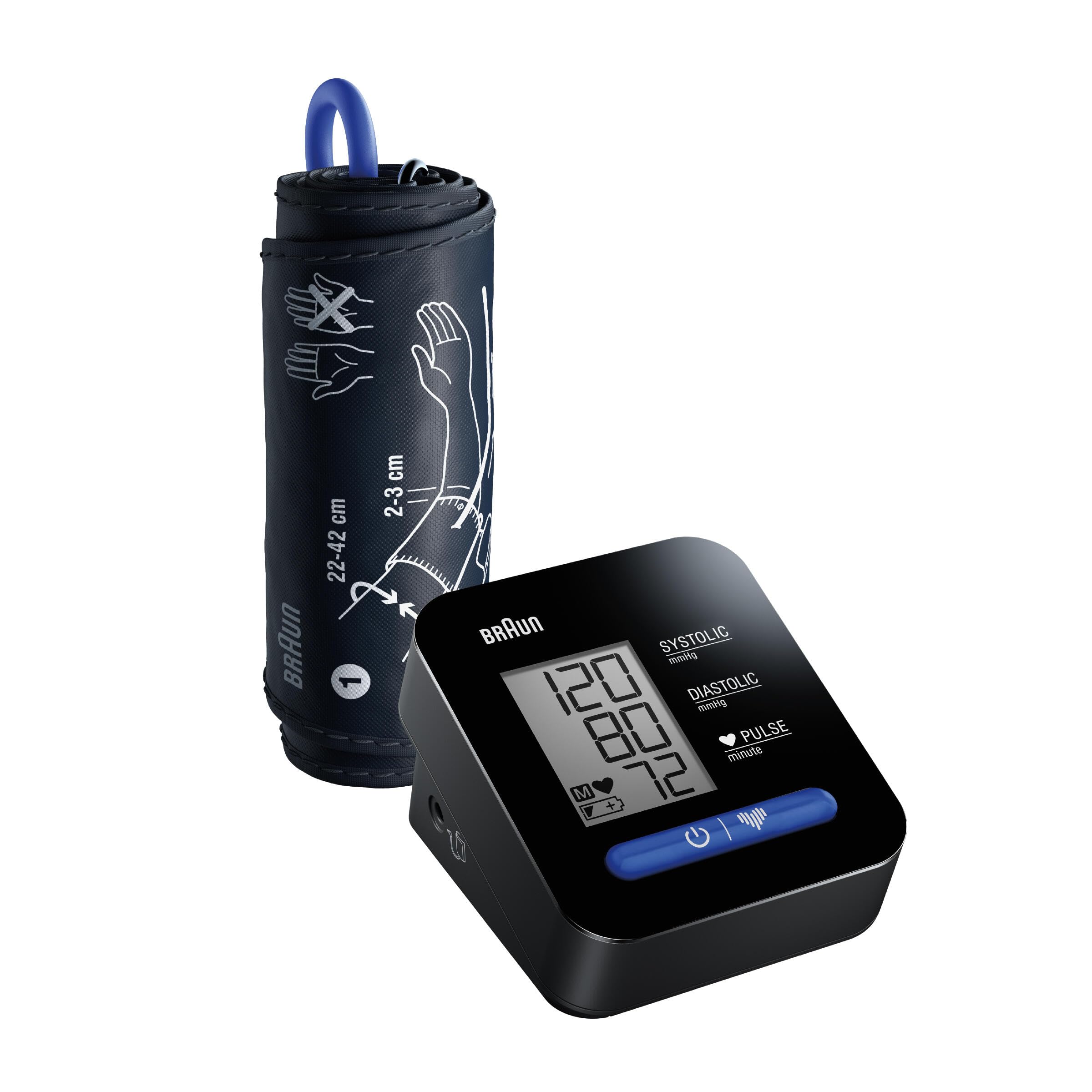
4. Braun ExactFit 1 Upper Arm Digital Monitor
A clinically-validated Braun with one-button simplicity that owners say beats their old wrist monitor.
If you want a monitor that demands nothing beyond pressing a single button, this Braun is it. The ExactFit 1 uses a universal cuff for 8.6″–16.5″ arms and automatically stores your latest reading after each measurement. The large, easy-to-read display is the standout for seniors and anyone who finds small screens frustrating.
Accuracy feedback is strong overall, with owners comparing it directly to their doctor’s office readings. One detailed review highlights that it’s a “clinically validated cousin” in the Braun lineup and delivers accurate results regardless of cuff placement—whether at the elbow crease or 1–2 cm above. The 1.25-pound body feels solid on a nightstand.
What wins people over is the sheer ease of use—the most-cited aspect in owner feedback. The trade-off is memory: it only stores the latest measurement, not a full history, so this suits someone measuring occasionally rather than tracking long trends.
Best for simplicity: a no-app, no-menu monitor that just works for quick check-ins.
skip it if: you want multi-week trend tracking on the device itself.
5. Medline Digital Blood Pressure Monitor

A straightforward, no-Bluetooth monitor with a well-lit screen made for pre-dawn readings.
If you check your blood pressure before sunrise, the Medline’s bright digital display makes the numbers easy to read in a dark room—one owner calls it “perfect for early risers, as results are well lit.” It saves up to 90 readings per user (with support for 2 users), and the cuff inflates at the push of a button, adjusting the inflation level to each person automatically.
The adult cuff fits 22–30 cm (8.6″–11.8″) arms, which is a narrower range than most picks here—so it’s best for average adult arms rather than larger frames. Quality is the most-praised aspect in owner feedback, and a medically-minded buyer notes Medline’s reputation for solid “medical grade products” compared to off-brands that consistently read low.
If you’re helping an older parent who doesn’t want an app, this keeps things refreshingly simple. The absence of Bluetooth is a feature, not a flaw, for that crowd. Note that some owners mention reliability issues after extended use, so the 1-year warranty is worth registering.
Right for: app-avoiders who want a bright display and generous per-user storage.
Not ideal for: larger arms beyond 11.8″ or tech-savvy trend chasers.
6. Greater Goods Upper Arm Blood Pressure Monitor
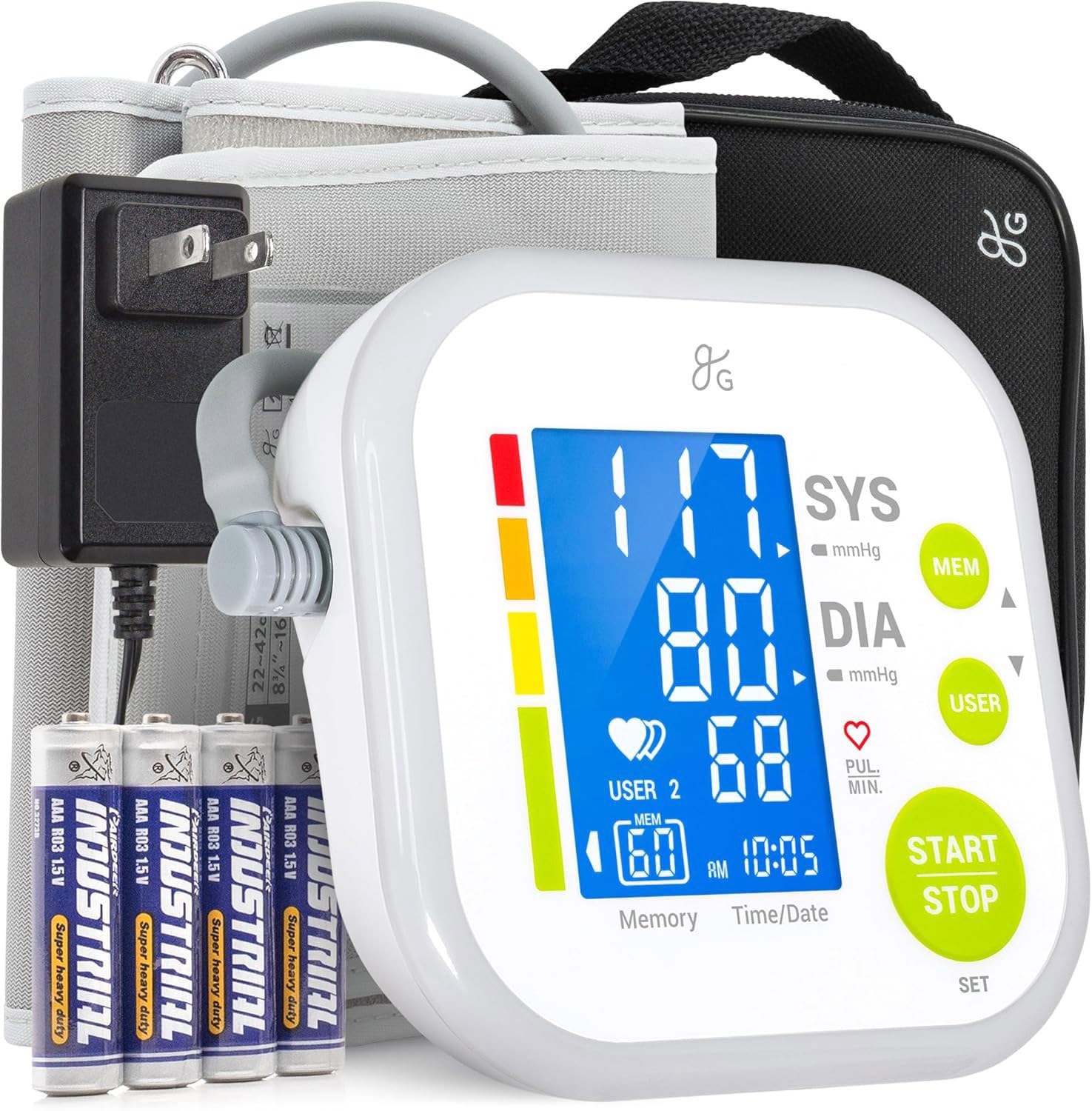
A five-time Wirecutter pick that pairs clinical accuracy with a genuinely complete home kit.
The Greater Goods monitor has been recommended by The New York Times Wirecutter five times, so it deserves a close look. You get a bright backlit display with large digits, an upper arm cuff with a printed artery alignment marker (so you position it correctly every time), and the flexibility to power it via a wall adapter or 4 AAA batteries.
It stores 60 readings per user (120 total) with a simple two-user memory, and skips Bluetooth entirely—no apps, no menus, no setup. That’s a deliberate choice that owners appreciate, and accuracy feedback is consistently strong, with buyers noting readings “consistently close to expected values” versus clinic measurements.
The kit is the real story: you get the monitor, a wall adapter, batteries, and a travel case. One honest note—the bundled cuff runs large, and the manufacturer will ship a smaller cuff free on request, which most owners say they need. At 11.2 ounces, it’s featherweight for travel.
Why It’s a Favorite
- Wall adapter means no battery anxiety
- Fits large arms up to 16.5″ comfortably
- Color-coded range indicator with arrow
The Small Print
- Stock cuff runs large—request the free smaller cuff
- No app or Bluetooth for phone tracking
7. Konquest KBP-2704A Automatic Upper Arm Monitor
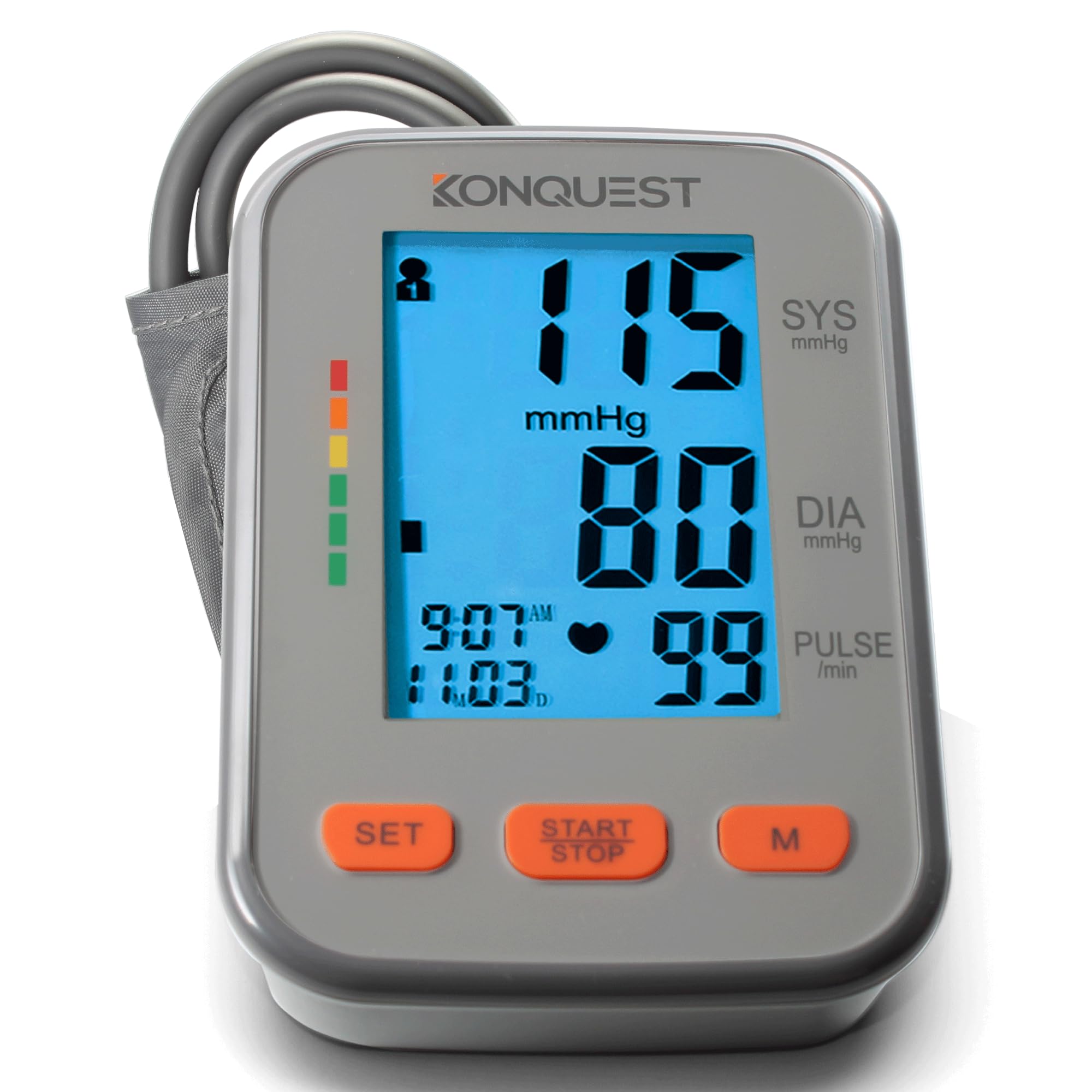
A huge backlit screen and 4-user memory make this the household-friendly choice for aging eyes.
If readability is your top priority, this Konquest delivers the biggest, brightest display in the lineup. It shows systolic, diastolic, pulse, date, time, and user profile on a single screen, and includes a WHO-based blood pressure indicator for easy interpretation. The adjustable cuff fits 8.5″–16.5″ arms, and buyer feedback notes it handles smaller upper arms well too.
Setup takes under a minute, and it stores readings for up to 4 users—the most flexible memory split here. One long-term owner reports 4 years of daily use before the pump began weakening, then bought the same model again. That durability, at a budget-friendly price, is a strong value signal.
The recurring trade-off is a busy display: some owners find the array of numbers cluttered compared to simpler monitors. Accuracy is generally trusted, though a few note the cuff can inflate painfully if wrapped too tight. It runs on 4 AA batteries (included).
Grab this for: multi-person households and anyone who wants the numbers as large as possible.
Be aware: you may find the on-screen data more cluttered than minimalist rivals.
8. Microlife BPM2 Automatic Digital Upper Arm Monitor
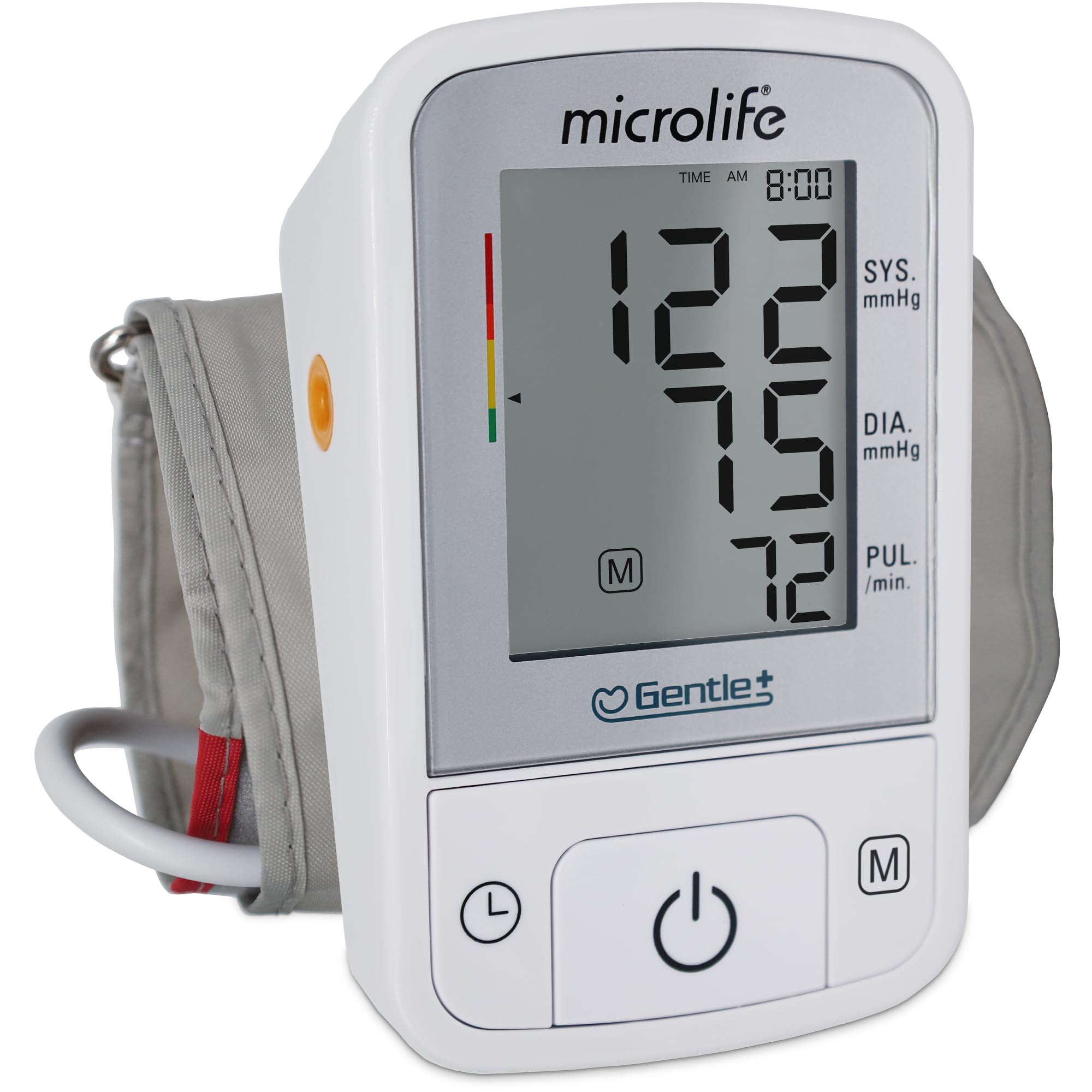
The clinically-rated monitor that uses less pressure and less time for a more comfortable reading.
For anyone who finds cuff inflation uncomfortable, Microlife’s Gentle+ Technology is the standout feature—it uses less pressure in less time without sacrificing accuracy. That’s backed by a top clinical rating: the BPM2 was awarded “Rated AA by BIHS” (British and Irish Hypertension Society), the highest accuracy rating available.
The contoured cuff fits medium to large arms (8.7″–16.5″, up to 22–42 cm) with a soft outer fabric that’s easier to put on. It stores the last 60 results and displays an average of all stored memories, which is handy for spotting trends. One daily user calls it “wonderful” for routine monitoring, noting it takes up very little space.
Accuracy against pricier rivals is where it shines: customers note it agreeing with their doctor’s readings “within a pound,” after cheaper monitors scared them with readings 25 points higher. It includes a storage bag and 4 AA batteries, with an optional AC adapter sold separately.
The Strengths
- Top clinical accuracy rating (AA by BIHS)
- Comfortable, low-pressure inflation
- Hypertension risk indicator included
Fair Warning
- 60-result memory is modest vs 240-reading rivals
- No Bluetooth for app-based tracking
9. OMRON Gold Blood Pressure Monitor
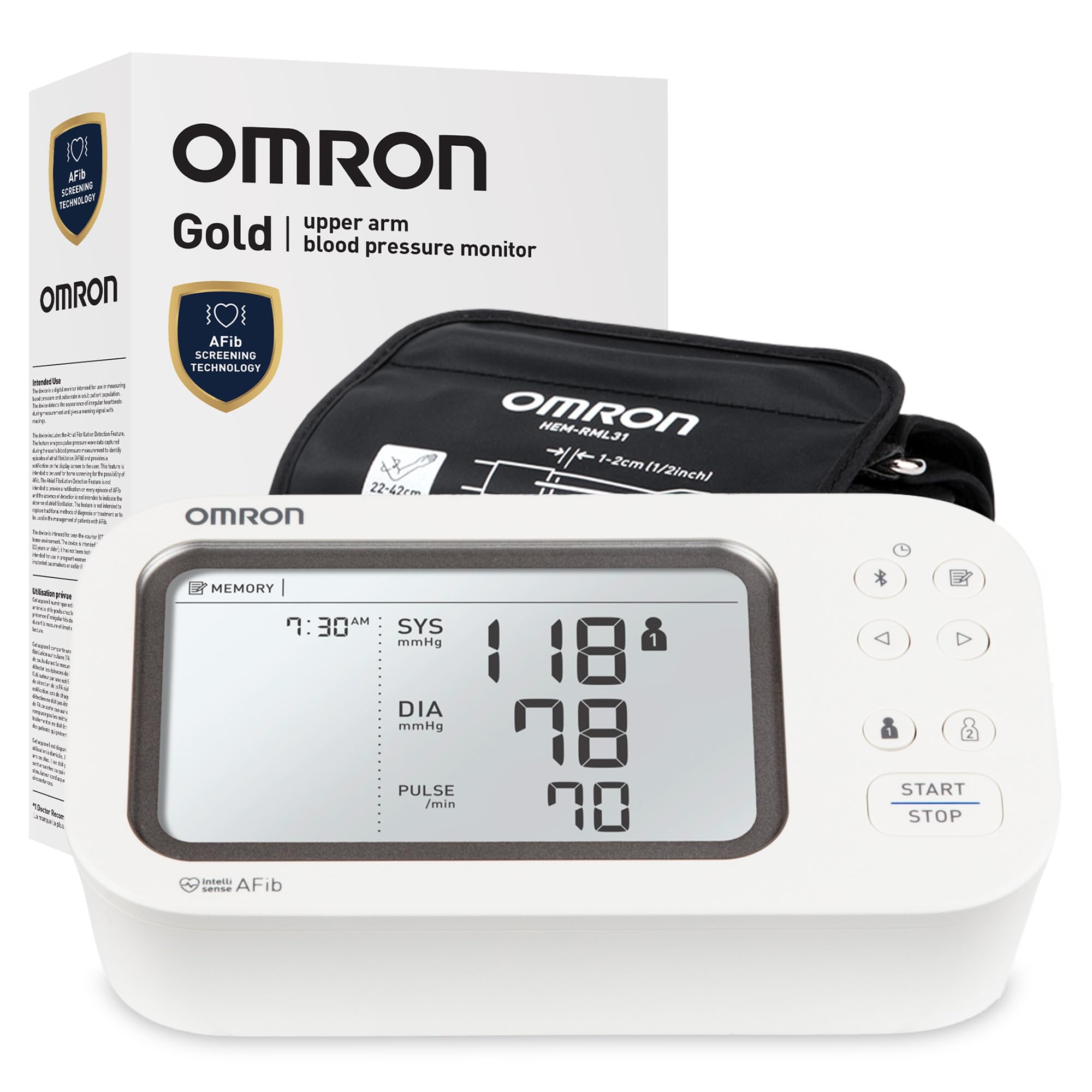
Omron is the #1 doctor and pharmacist recommended brand, and the Gold model shows why., and the Gold model shows why. Its standout feature is exclusive Atrial Fibrillation (AFib) detection—it screens for unusual heart rhythms with every reading, flagging “Possible Afib” so you and your doctor can decide if further evaluation is needed. That’s a level of insight no other pick here offers.
The wide-range D-ring cuff fits arms 9″–17″, and the dual display compares your current reading to your previous one side-by-side. Bluetooth syncs to the free OMRON connect app (compatible with Apple Health and Google Fit) for unlimited storage and doctor-ready reports. The High Morning Average Indicator checks for morning spikes linked to cardiovascular risk.
Quality is the most-praised aspect, and the app is genuinely polished—until it isn’t; a few owners warn the app can occasionally delete unbacked-up history, so export your data periodically. It’s the priciest pick here, but for anyone with heart rhythm concerns or a doctor who wants comprehensive logs, the investment buys meaningful data. It comes ready from the start with a storage case and 4 AA batteries.
Why It Leads on Features
- AFib detection on every reading
- Dual display compares current vs previous
- Plug-in cord and battery options
Consider This
- Premium price over simpler models
- App requires occasional data backup discipline
Understanding the Specs
Cuff Size Range
The single most important spec is the cuff’s arm circumference range, usually printed as inches or centimeters. An ill-fitting cuff—too loose or too tight—can skew your readings by several points. Measure your upper arm with a tape measure and match it to the range before you buy.
Memory Storage
On-device memory counts how many readings the monitor holds before overwriting the oldest. If you want to spot trends, look for at least 90 readings. Bluetooth models can store unlimited history on your phone, but only if you remember to sync.
Clinical Accuracy Ratings
Look for terms like “ESH 2010 validated” or “Rated AA by BIHS”—these mean the device passed independent clinical testing against a mercury sphygmomanometer. Accuracy of ±3 mmHg is the common standard for home monitors.
Irregular Heartbeat Detection
Many monitors flag irregular pulse patterns with a warning symbol. This isn’t a diagnosis, but it’s a useful early signal you can share with your doctor for further evaluation.
FAQ
Will an upper arm blood pressure monitor fit my arm?
How many readings should a home monitor store?
Is Bluetooth tracking worth paying extra for?
How do I know a monitor’s readings are accurate?
What does “clinically validated” actually mean?
Can two people use the same monitor?
What is AFib detection and do I need it?
How long do the batteries last in these monitors?
Why is my reading different from the doctor’s office?
What is the difference between upper arm and wrist monitors?
Final Thoughts: The Verdict
How We Picked
We do not accept paid placement. Every pick is matched to a real buyer and a real use-case; we do not hands-on test units.
Sources & Methodology
Specifications: manufacturer listings and product documentation. Review insights: verified customer reviews, as of August 2026. Pricing: not shown on this page (it changes often); check the current price via the retailer link.
As an Amazon Associate, WellFizz earns from qualifying purchases. This does not affect which products we feature.
Related Guides

Mo Maruf
I created WellFizz to bridge the gap between vague wellness advice and actionable solutions. My mission is simple: to decode the research and give you practical tools you can actually use.
Beyond the data, I am a passionate traveler. I believe that stepping away from the screen to explore new environments is essential for mental clarity and physical vitality.