Our readers keep the lights on and my smoothie glass nicely filled. As an Amazon Associate, I earn from qualifying purchases.
Specs are compiled from manufacturer listings and verified buyer reviews and can change over time — please confirm the key details on the product page before buying.
That white, chalky film creeping across your pavers is efflorescence — salt deposits left behind when moisture moves through masonry. It does not mean your patio is ruined, but it does mean you need the right cleaner: something strong enough to dissolve mineral salts without damaging the paver surface or your lungs. This guide cuts through the chemical jargon to help you pick the efflorescence remover for pavers that actually fits your project, whether you are scrubbing a single walkway or restoring a whole driveway.
I’m Mohammad Maruf — the founder and writer behind WellFizz. This guide is built by comparing the manufacturers’ published specifications and the patterns across verified customer reviews, so you get each pick’s real strengths and trade-offs instead of marketing spin.
Every product here targets the calcium, lime, and mortar haze that blights brick, concrete, and stone surfaces, with honest notes on where they excel and where they fall short. The best efflorescence remover for pavers does not need to cost a fortune or smell like a chemistry lab to leave your hardscape looking freshly laid.
Our Picks at a Glance

How To Choose The Best Efflorescence Remover For Pavers
Buying the wrong cleaner wastes money and can etch or discolor your pavers. Focus on three things: acid type, concentration, and safety profile.
Acid Type: Muriatic vs. Organic vs. Phosphoric
Muriatic acid (hydrochloric) is the cheapest and most aggressive, but it produces dangerous fumes, burns skin, and requires neutralization with baking soda before rinsing. Organic acid formulas (fruit acids, citric blends) clean without those hazards and are biodegradable — ideal around lawns and gardens. Phosphoric acid sits in between: effective on grout haze and rust, milder than muriatic, but still best treated with gloves and eye protection.
Concentrated vs. Ready-to-Use
A concentrate (diluted at 1:10 or 1:30) costs less per square foot and lets you dial up strength for stubborn deposits. Ready-to-use formulas cost more but offer zero guesswork for small jobs. Check the coverage area per gallon — most range from 100 to 400 square feet depending on how porous your pavers are.
Safety and Runoff
If your patio sits next to a lawn, pool, or garden, pick a biodegradable, low-VOC formula. Many safer cleaners neutralize on contact with water and won’t harm vegetation. Products that claim “no neutralizer needed” simplify the rinse step significantly.
Quick Comparison
| Model | Best For | Acid Type | Weight | Dilutable | Amazon |
|---|---|---|---|---|---|
| Miracle Sealants PHOSQT6★ Best Overall | Grout haze & mortar residue | Phosphoric | 2.4 lb | Yes | Amazon |
| Eco Etch ProBest Value | Safer etching & cleaning | Organic | 9 lb | Yes | Amazon |
| Blue Bear EBCEco Choice | Eco-friendly maintenance | Natural fruit acid | 5 lb | Yes (1:10 or 1:30) | Amazon |
| RadonSeal Efflorescence Remover | Stubborn white mineral buildup | Acid-free | 9 lb | Yes | Amazon |
| RadonSeal BrickTastic | Oil stains & general brick grime | Acid-free | 8.9 lb | Yes (up to 20 gal) | Amazon |
| Serveon H2600 | Oil stains & prep for sealing | Water-based | 8.77 lb | Yes | Amazon |
| Alliance Gator Clean | Coated paver & stone cleaning | No hydrochloric acid | 17.64 lb | No (RTU) | Amazon |
| F9 Efflorescence Remover | Hard water & calcium stains | Buffered acid | 9.8 lb | Yes | Amazon |
| Smart ‘n Easy Dumond | Large DIY projects | Water-based | 15 lb (2 gal) | No (RTU) | Amazon |
In‑Depth Reviews
1. Miracle Sealants Phosphoric Acidic Cleaner & Grout Haze Remover
Our pick — over 4★ from 200+ verified ratings; the strongest balance of quality and price.
The lightest bottle on this list that hits grout haze like a precision tool.
At 2.4 pounds, this quart-sized phosphoric acid cleaner is the featherweight among efflorescence removers — a 3.8x weight gap versus the 9-pound Eco Etch Pro. But it punches well above its weight on mortar haze and hard water deposits on unpolished tile, stone, and pavers. One buyer described it as a product that “instantly wiped away stubborn black grout stains from white mosaic tile in 15 minutes after days of failed attempts,” calling it extremely potent. Another owner found a 50/50 water-to-cleaner ratio with dish soap, applied via spray bottle with a 10‑15 minute soak, delivered surprisingly effective results. The product is dilutable, fast-acting, and milder than other acidic cleaners, though the crowd consensus shows that results vary — cleaning effectiveness earned mixed feedback, with some finding it ineffective on pre-mixed grout or heavy residue even at full strength. The formula does require a respirator, gloves, and good ventilation because of its potency, so treat it with respect. What wins most people over is the quality of the removal when it works — the bottle may be small, but for spot-treating haze on a single patio or fireplace surround, it is tough to beat.
Light and lethal: Perfect for small-to-medium paver projects where you want fast-acting phosphoric cleaning without hauling a heavy jug. Best on fresh mortar haze and light efflorescence.
Know the limits: Mixed effectiveness on dried or pre-mixed grout means heavier deposits may need a second pass or a different chemistry. Always test on an inconspicuous spot first.
Your go-to if: You need a compact, potent cleaner for grout haze and white film on a paver patio or stone wall. The 2.4 lb quart is easy to handle and store.
Look elsewhere if: You have thick, years-old efflorescence covering a large area — you will want a stronger concentrate or a larger volume for the same money.
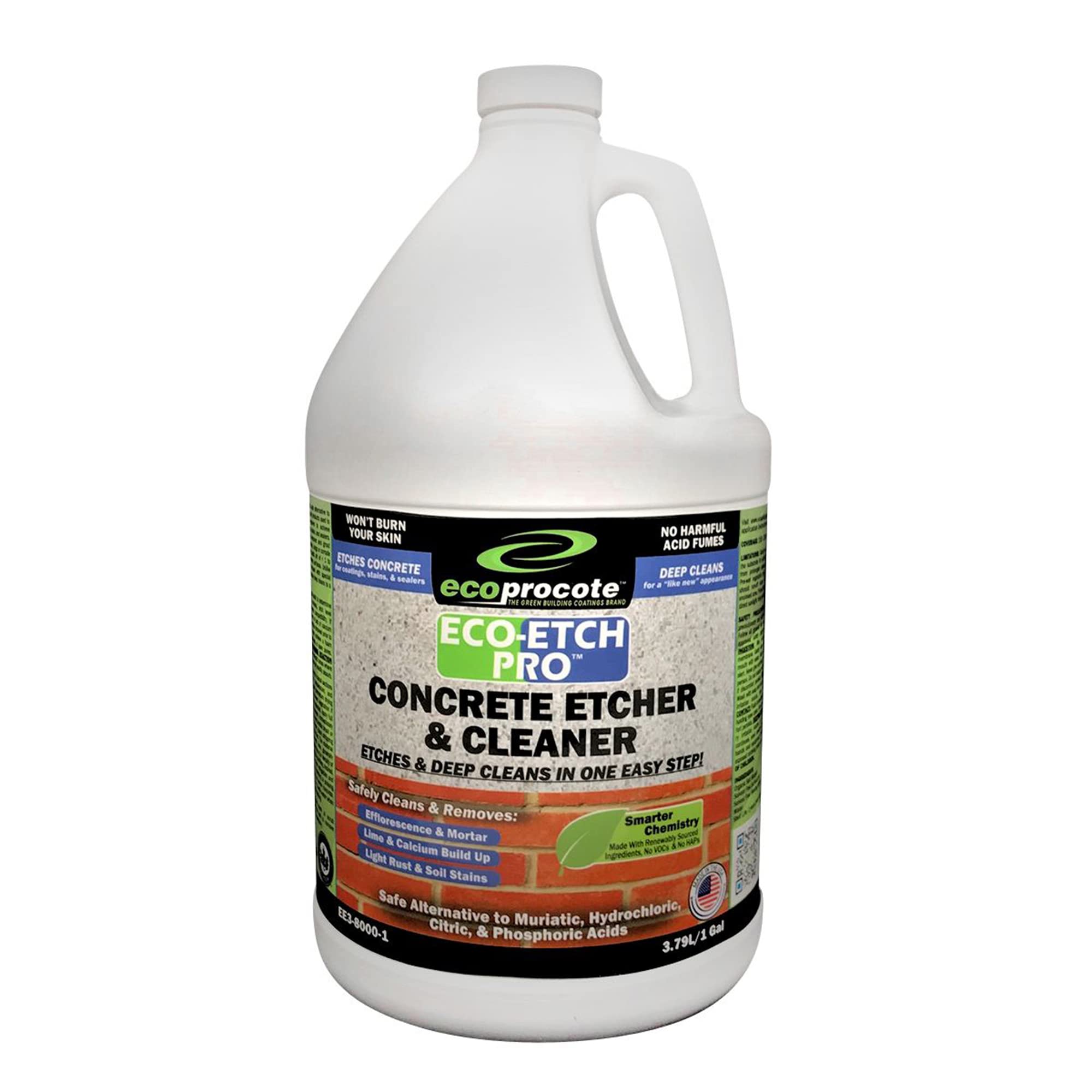
2. Eco Etch Pro Concrete Cleaner & Etcher Dissolver
A biodegradable acid alternative that does not burn skin or fill the air with fumes.
This 1-gallon jug weighs 9 pounds and replaces muriatic and citric acids with an organic formula derived from natural salts and acids — the maker claims it neutralizes upon water contact and will not harm vegetation, making it safe for use around landscaping. The trade-off at this price point is inconsistency: some buyers found the first gallon worked perfectly while a second left white residue on brick, and the summary confirms that cleaning effectiveness for efflorescence is mixed — some call it great, others report it does not remove deposits at all. One owner demonstrated that it works well on colored concrete driveway efflorescence, describing how it “foams and etches,” but noted it is completely ineffective on sealed efflorescence; the sealer must be removed first. Another owner praised its lack of strong odor and described it as pet-friendly and family-friendly for indoor stamped concrete. The crowd also notes that batch-to-batch inconsistency and poor customer support for returns are real frustrations when the product does not perform. So you effectively trade raw power and consistency for safety and ease of use — a worthwhile swap if you need to clean around kids, pets, or plants.
Safer chemistry: No hazardous fumes, no skin burns, biodegradable and odorless — ideal for homeowner use near grass and gardens. Works as both a cleaner and a concrete etcher for coating prep.
The gamble: Mixed reviews on efflorescence removal and occasional bad batches mean you risk wasted time and money. Not for sealed pavers without stripping first.
Reach for this if: You want the gentlest possible cleaner for unsealed concrete and brick, especially around sensitive areas where fume safety matters. Great for etching floors before staining.
skip it if: You need guaranteed removal of thick efflorescence on your first try, or you are working with sealed pavers — this product demands pretreatment removal.
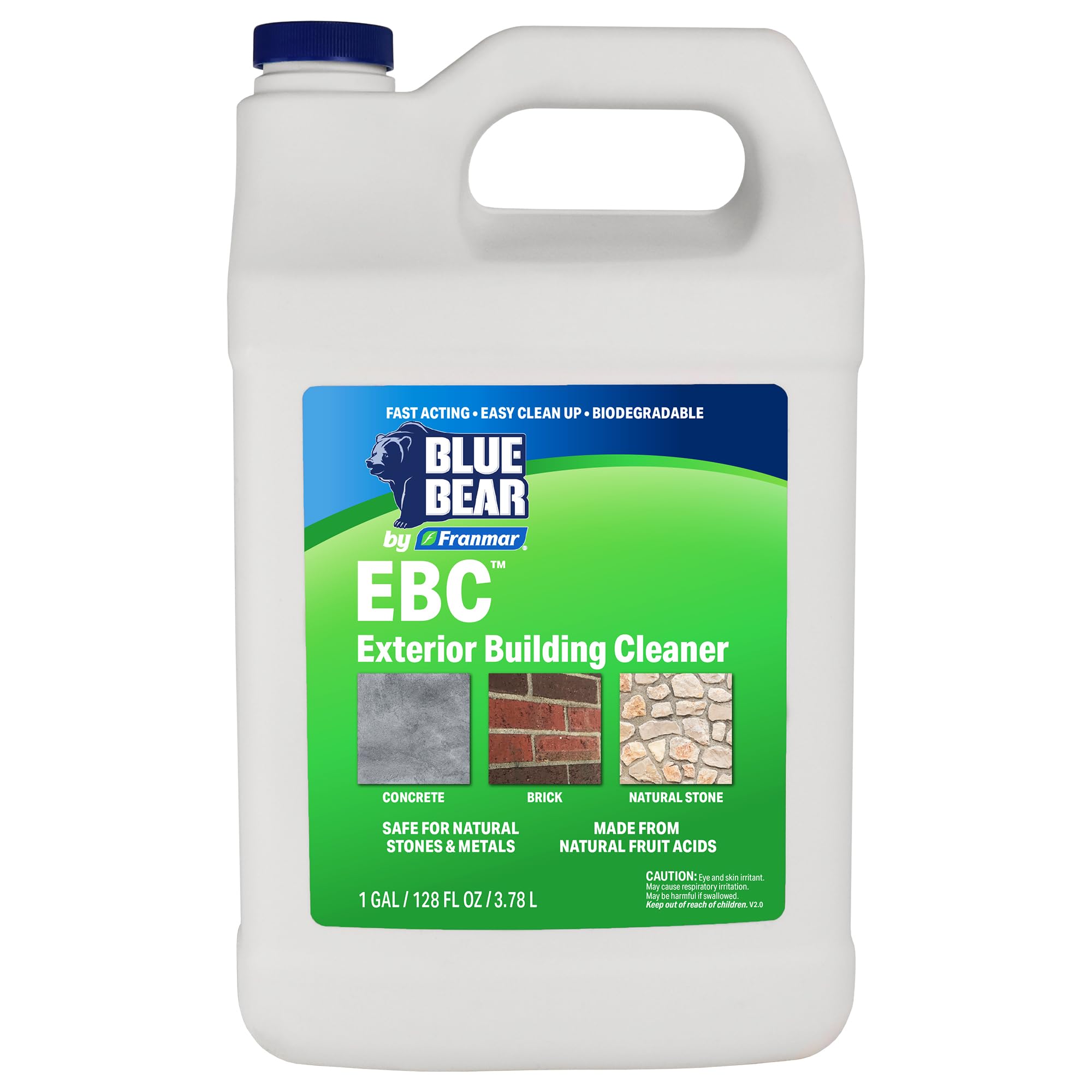
3. Blue Bear EBC Exterior Building Cleaner
Natural fruit acids that strip algae, moss, and efflorescence without the hazard label.
Blue Bear uses a natural fruit acid concentrate with super-infused surfactants — it dilutes at 1:10 for heavy buildup or 1:30 for light maintenance, making each gallon stretch further than most. Buyers report it “removed algae and efflorescence from brick and concrete with 1:10 dilution, mild odor, no pressure washer needed.” The formula is low-VOC (around 1% / 10.53 g/L) and biodegradable, which translates to easier cleanup: just rinse with water. The catch is that the concentrate is designed for light-to-moderate staining — one owner confirmed it “did absolutely nothing to the stains on the concrete” even at full strength for existing stains. The consensus among owners is that it shines as a seasonal maintenance cleaner for brick and concrete where the buildup is moderate, not a rescue product for decades-old white deposits. It does not connect directly to a hose, so you need a bucket, sprayer, or pressure washer system to apply it. For the eco-conscious paver owner who plans regular cleaning, this is a smart long-term buy that keeps harsh chemicals out of the runoff.
Clean and green: Fruit acid formulation means very low odor and safe rinsing around plants. Concentrate is economical for multiple projects.
Not a heavy lifter: Ineffective on set-in concrete stains and thick efflorescence. Works best as a scheduled cleaner rather than a spot-treatment product.
Your pick if: You maintain pavers and brick annually and want a biodegradable, low-odor concentrate that handles moss, algae, and light efflorescence in one spray. Safe near fruit trees and flower beds.
Pass on it if: Your pavers have serious, deep white salt deposits or oil stains that multiple cleaners have failed to touch — you need a stronger chemistry.
4. RadonSeal Efflorescence Remover for Brick, Concrete, Pavers & Masonry
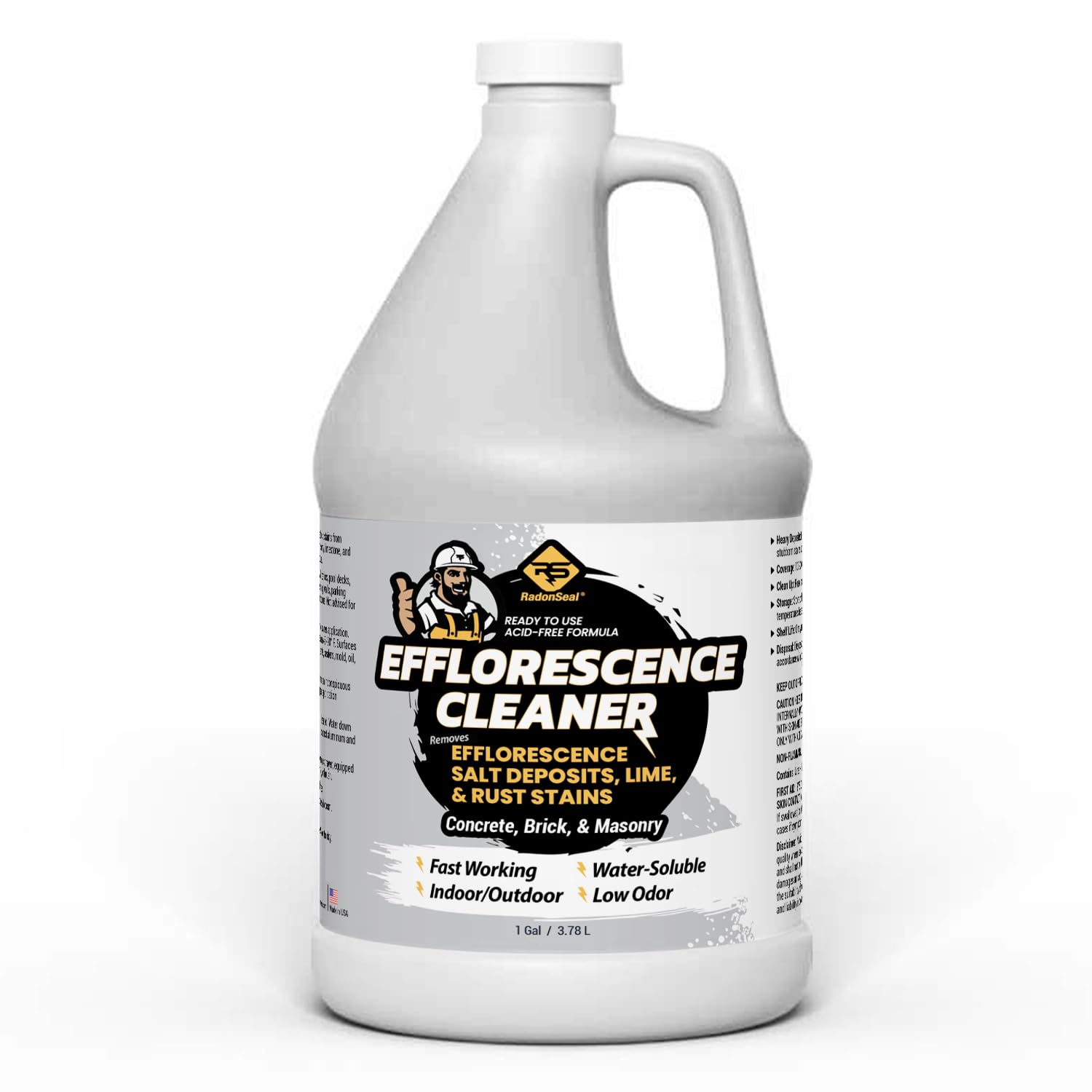
Professional strength that digs into calcium deposits without muriatic acid danger.
This low-odor, low-VOC formula contains no muriatic acid, phosphoric acid, bleach, or abrasives, yet it is aggressive enough that one owner called it the “best product tried for removing efflorescence from 180ft concrete block wall.” It covers up to 200 square feet per gallon and does not require a neutralizer — just rinse thoroughly with water when the deposit softens. The major talking point here is strength: owners mention it eats through white mineral buildup quickly, but also caution that it is “aggressive; may eat concrete” if left too long. One owner documented that it “removed efflorescence from concrete porch but left light streaks/etching” and runoff damaged adjacent sealed pavers. The summary confirms cleaning performance is mixed — some call it easy while others say it did nothing. The risk of etching or streaking makes it a product you must test on a hidden paver first. The consensus is that when it works, it works fast and deep; when it does not, the inconsistency frustrates. For tough, stubborn efflorescence on concrete block walls or brick, it is worth the caution.
Fast and furious: Penetrates and loosens thick lime scale and mortar haze quickly. No separate neutralization step simplifies clean-up.
Watch for etching: Can leave light streaks or etch the surface if oversaturated or left for too long. Runoff can damage adjacent sealed pavers — protect landscaping with plastic sheeting.
Best for: Concrete block walls, retaining walls, and brick veneer where thick, stubborn efflorescence has built up. The acid-free formula is safer around lungs and skin than traditional options.
Not for: Sealed pavers or situations where you cannot control runoff onto finished surfaces — the etching risk is real.
5. RadonSeal BrickTastic Brick & Paver Cleaner

An acid-free concentrate that takes on oil, leaf stains, and efflorescence without etching.
BrickTastic uses Advanced Butyl Technology and proprietary surfactants instead of dangerous acids or flammable solvents — it dilutes up to 20 gallons of cleaning solution from a single jug, making it among the most economical options for large patios. One owner reported it “removed dirt, leaf stains, oils, efflorescence” and did not harm nearby grass or plants after pre-soaking and covering with a tarp. The formula is non-abrasive, free-rinsing (no streaks), and safe for interior brick fireplaces and accent walls. The mixed feedback shows a split: about half the owners found it cleaned bricks beautifully with a little going a long way, while an equal share said the product “did not clean bricks at all.” That inconsistency appears to stem from surface type and stain age — fresh efflorescence and organic stains respond well, while old, deep-set deposits on highly porous brick may require multiple applications or a more aggressive chemistry. It is a smart versatile choice for routine paver maintenance and oil-spot removal rather than a dedicated heavy-efflorescence stripper.
Multi-stain fighter: Handles leaf stains, soot, creosote, tire marks, and oil alongside efflorescence. Very economical at up to 20 gallons of diluted solution per jug.
Inconsistent on tough deposits: Some surfaces see zero effect. Works best on moderate grime; old or thick white salt may need a dedicated remover.
Pick this if: Your pavers have a mix of issues — efflorescence, oil drips, leaf stains — and you want one cleaner that handles most of them. Great for brick driveways and patios that see regular use.
Think twice if: You only care about efflorescence and want the strongest possible chemical reaction — this is an all-rounder, not a specialist.
6. Serveon Sealants Concrete & Stone Cleaner H2600

A commercial-grade concentrate that lifts old oil stains when full-strength applied.
This water-based formula from Serveon Sealants is VOC-compliant and designed to penetrate below the surface to lift dirt, grime, oil stains, and hard water deposits. At full strength (1:1 water ratio), owners found it removed roughly 90% of old oil stains from a driveway, while a 10:1 dilution handled algae and deck grime. The bottle features a level gauge to help you measure dilutions accurately. One buyer described using it with a wire push brush on stained patio pavers and reported great results, while another noted that extending the dwell time to 20 minutes produced better cleaning than the standard 3-minute soak — and that scrubbing was not necessary with the longer dwell. The coverage estimate is 100–200 square feet per gallon, and when applied full strength it prepares the surface for sealer bonding. The main limitation is that it works best on light-to-moderate stains — deep-set driveway oil from years of parking may require repeated applications. The price reflects the commercial-grade chemistry, but for owners who want a single product that preps for sealing and removes oil and efflorescence, it simplifies the process.
Oil stain specialist: Full-strength application removed ~90% of old oil stains. Also preps surfaces for sealer adhesion without a separate etching step.
Not for the faint of wallet: More expensive per gallon than basic acid cleaners. Inconsistent on old, set-in stains on highly porous concrete.
Your match if: You want a single product that cleans, descales, and preps your pavers for sealing. The water-based safety is a bonus for driveway work near garage interiors.
Consider another if: Your efflorescence is thick and powdery across a wide area — this excels on oil and hard water, not as a dedicated salt stripper.
7. Alliance Gator Clean Efflorescence Cleaner

Made specifically for paver and natural stone, but multiple coats may be needed.
Gator Clean is formulated for concrete pavers and natural stones with no hydrochloric acid in the mix — it cleans approximately 200 square feet per gallon and washes off with water. One owner who tried other products without success reported that Gator cleaner “effectively removed white film from gray pavers when other products failed,” applying it from a pump sprayer on a covered patio and rinsing with a pressure washer. Another owner who bought it strictly for concrete stains found it “did absolutely nothing” even after trying both diluted and undiluted applications. The common thread across reviews is that Gator Clean can be effective, but it often needs multiple coats and a pressure washer — the white film may be gone in one pass on light staining, while thicker build-up requires patience and repeated applications. The bottle is the heaviest in this mid-range tier at 17.64 pounds, so factor in the weight if you need to carry it up steps. If other products have failed on your pavers, Gator is worth a shot, but budget for extra time and product.
Designed for pavers: Acid-free and specifically targets efflorescence and calcium on paver and stone surfaces. Washes off easily with water.
Results vary heavily: Works brilliantly for some, does nothing for others. Definitely a try-before-you-commit product on a small test area.
Reach for it if: You have cleanable gray pavers with a moderate white film that has resisted other cleaners. The Gator brand is a trusted name among paver installers.
pass on it if: You need guaranteed one-pass removal, or your stain is on deep-red brick — this formula has the highest inconsistency in this guide.
8. F9 Efflorescence, Hard Water Stains and Calcium Remover

A user-friendly muriatic acid replacement with a pleasant smell and minimal fumes.
F9 is formulated as a replacement for 31.45% strength muriatic acid, using a buffered acid blend that produces a mild odor instead of the choking fumes typical of hydrochloric cleaners. Coverage is generous: one gallon covers 200-400 square feet of porous masonry or up to 1,200 square feet of non-porous surfaces. The shelf life is two years unopened and one year once opened. Customers note that it works well on concrete pavers — one buyer confirmed it “does the job on my concrete pavers” and plans to buy again, though areas with heavier staining required a second pass. Another owner used it to remove 20-year hard water stains on brick, applying in the shade and scrubbing within 30 seconds before power washing. The drawback surfaced with efflorescence-specific stains — one disappointed buyer followed directions multiple times from diluted to full strength with scrubbing and saw minimal results, calling the product overpriced for that task. The F9 clearly excels on hard water scale and calcium build-up, but efflorescence is a more specific chemistry that this buffered formula handles inconsistently. For mixed stains (hard water + light efflorescence), it is a strong candidate.
Broad coverage: Up to 1,200 square feet per gallon on non-porous surfaces. Pleasant smell and low fume profile make it much more comfortable than muriatic acid.
Efflorescence is hit-or-miss: Works great on hard water and calcium, but multiple buyers reported it made no dent in efflorescence. Not a specialist stripper.
Best for: Concrete pavers covered in calcium carbonate or hard water films, especially if you want to avoid heavy breathing protection. Good for coating prep as well.
Not for: Pure white efflorescence on brick or block — seek a dedicated acid-free remover if that is your primary target.
9. Smart ‘n Easy Efflorescence Remover by Dumond (2 Gallons)
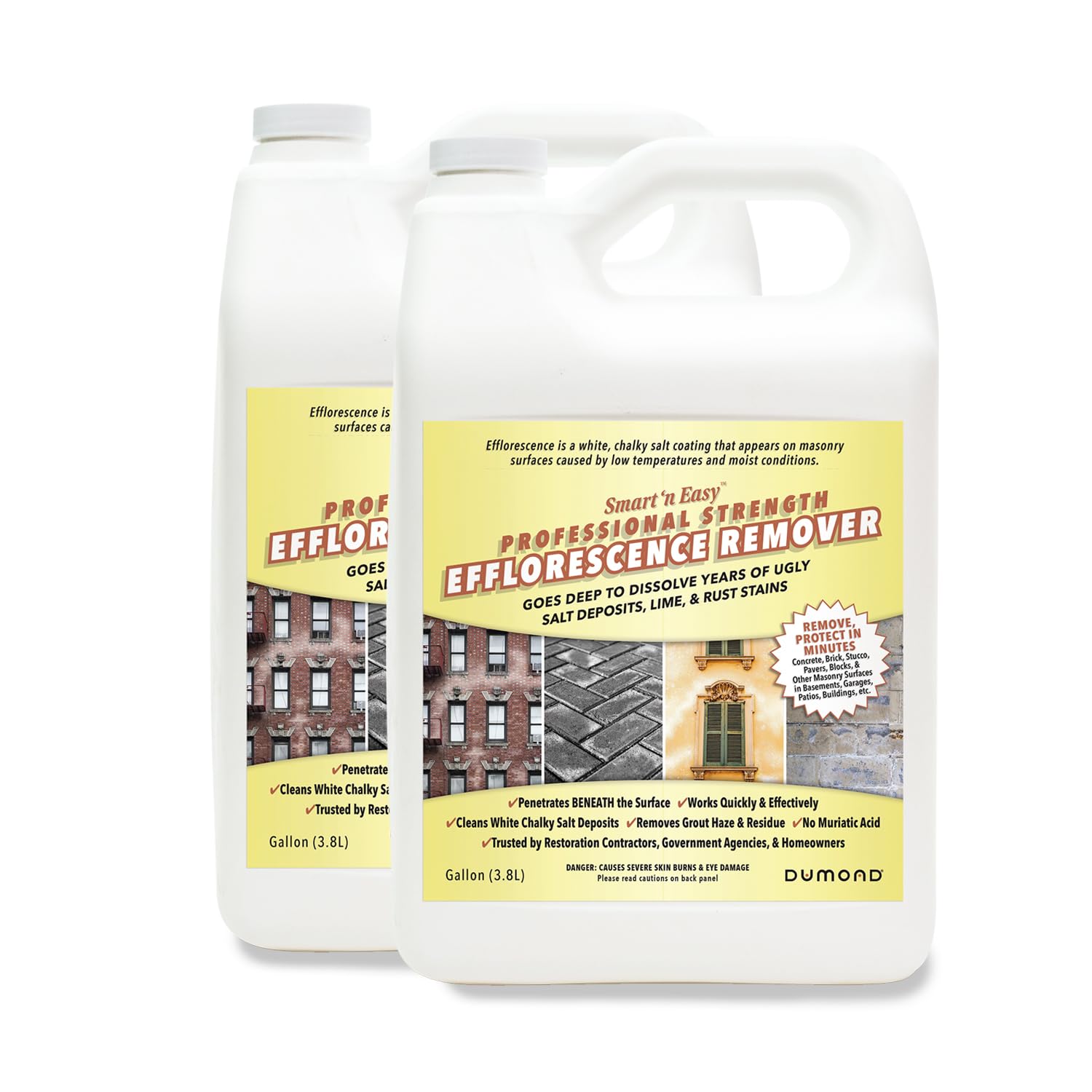
Two gallons of ready-to-use formula for covering big paver areas without mixing.
Dumond’s Smart ‘n Easy is a water-based professional-strength formula that ships ready to use — no dilution, no guesswork. It weighs 15 pounds across two gallons and is designed for brick, limestone, sandstone, flagstone, concrete, travertine, and other non-polished masonry surfaces. The maker recommends applying with a pump sprayer, brush, or roller and rinsing with a pressure washer. One owner with significant efflorescence on old red brick reported fantastic results: “I sprayed this stuff onto old red brick with significant effervescence, let it sit for 30 minutes and washed off with a pressure washer, no scrubbing. It did a great job!” But another owner using the same method on red bricks found the opposite, stating it “made them Whiter than before use” and was a complete waste of money and time. The summary shows ease of use is the top positive aspect (6 mentions), but effectiveness scored heavy mixed feedback (33 mentions). The biggest complaint is that it is expensive compared to other products — the price point for two gallons is the highest in this guide by a clear margin. For DIYers covering large patios or entire house brickwork who value ready-to-use convenience over cost, it may be worth the gamble.
Spray and forget: No mixing, no dilution, just apply and rinse with a pressure washer. High ease of use and versatile across many stone and brick types.
Pricey gamble: High cost for the volume, and results vary wildly — one owner got a perfect clean, another got whiter bricks. Cannot be diluted to stretch further. Test first.
Your pick if: You want zero-hassle application for a large brick wall or paver driveway and are prepared to test an inconspicuous section first. The ready-to-use convenience is real.
Look elsewhere if: Budget is a concern or you need guaranteed performance — the mixed feedback makes this a risk for cost-conscious buyers.
Understanding the Specs
Acid Chemistry: Organic vs. Phosphoric vs. Muriatic
The type of acid (or no acid at all) decides how aggressive the cleaning action is and how carefully you need to handle the product. Muriatic acid is cheap and fast but produces harmful fumes and must be neutralized. Phosphoric acid is milder but still requires gloves and goggles. Organic and fruit acid formulas (sometimes labeled “acid-free” alternatives) are safest for landscaping but may need longer dwell times or repeated coats on thick deposits. Water-based, low-VOC cleaners are the most forgiving option for indoor use or pool-adjacent patios.
Dilution Ratio and Coverage
Concentrated formulas typically list a ratio like 1:10 (one part cleaner to ten parts water) for heavy cleaning or 1:30 for light maintenance. Higher ratios mean more cleaning power but less total solution per gallon. Ready-to-use (RTU) bottles skip the math but cost more per project. Coverage ranges from 100 square feet per gallon for heavy scrubbing on porous surfaces up to 1,200 square feet for non-porous substrates. Always buy enough volume to keep your application wet for the recommended dwell time — drying cleaner is ineffective and can leave residues.
FAQ
Will efflorescence remover damage my pavers if left on too long?
Can I use an efflorescence remover on sealed pavers?
Do I need to neutralize efflorescence remover after cleaning?
Why does efflorescence keep coming back after cleaning?
Can I use a pressure washer with an efflorescence remover?
Is there a difference between efflorescence cleaner and grout haze remover?
Which is better: organic acid or muriatic acid for pavers?
How long should I let an efflorescence remover sit before rinsing?
Final Thoughts: The Verdict
Most homeowners tackling efflorescence on pavers will want to start with the efflorescence remover for pavers winner — the Miracle Sealants Phosphoric Acidic Cleaner — because its compact quart size, phosphoric acid punch, and real-world success on grout haze and white deposits solve the most common paver problem without committing to a heavy jug. If you prioritize safe chemistry around plants and pets, grab the Eco Etch Pro; just plan for potential inconsistency. And for large paver areas with mixed oil and efflorescence stains, the Serveon H2600 is the one to reach for, thanks to its commercial-grade concentrate and sealing prep ability.
How We Picked
We do not accept paid placement. Every pick is matched to a real buyer and a real use-case; we do not hands-on test units.
Sources & Methodology
Specifications: manufacturer listings and product documentation. Review insights: verified customer reviews, as of July 2026. Pricing: not shown on this page (it changes often); check the current price via the retailer link.
As an Amazon Associate, WellFizz earns from qualifying purchases. This does not affect which products we feature.
Related Guides

Mo Maruf
I created WellFizz to bridge the gap between vague wellness advice and actionable solutions. My mission is simple: to decode the research and give you practical tools you can actually use.
Beyond the data, I am a passionate traveler. I believe that stepping away from the screen to explore new environments is essential for mental clarity and physical vitality.