Our readers keep the lights on and my smoothie glass nicely filled. As an Amazon Associate, I earn from qualifying purchases.
The most efficient dehumidifier isn’t the one with the highest pint rating—it’s the one that pulls the most moisture per watt. Many units boast massive capacity but secretly consume enough electricity to offset any comfort gains. The real metric to watch is energy factor: liters of water removed per kilowatt-hour. Below 1.8 L/kWh, you’re paying more than you should to keep your basement dry.
I’m Mohammad Maruf — the founder and writer behind WellFizz. I spend hundreds of hours cross-referencing Energy Star certification databases with real-world customer wattage measurements, compressor technology, and long-term failure reports to find units that actually deliver on their efficiency promises.
After analyzing pint ratings, compressor types, and verified power consumption across dozens of models, this guide covers only the nine most reliable picks to help you find the best efficient dehumidifier for your specific space and humidity level.
How To Choose The Best Efficient Dehumidifier
Efficiency in a dehumidifier means removing the most water while drawing the least power. Beyond the Energy Star sticker, several hidden specs determine whether a unit saves or wastes electricity in your particular climate and space.
Energy Factor (L/kWh) — The Real Efficiency Number
Ignore the marketing noise. Look for the integrated energy factor (IEF) listed on the Energy Star database. A unit pulling 34 pints per day that draws 450 watts is less efficient than one pulling 30 pints per day at 280 watts. Cross-reference pint claims with actual wattage readings from verified buyer reports.
Compressor Type: Rotary vs Piston
Rotary compressors (used in most mid-range and premium units) run cooler, quieter, and more efficiently than reciprocating piston compressors. They maintain stable energy draw even as ambient temperature drops toward 41°F. Units with rotary compressors also tend to have fewer moving parts, translating to longer service life.
Drainage Method & Tank Size
A small tank forces the compressor to cycle on and off more frequently, wasting startup surge electricity. Units that accept a continuous drain hose (gravity or pump-assisted) run in steady state and maintain consistent energy factor. If you plan to let the unit run unattended, prioritize models that natively support continuous drainage without adapters.
Quick Comparison
On smaller screens, swipe sideways to see the full table.
| Model | Category | Best For | Key Spec | Amazon |
|---|---|---|---|---|
| Waykar 34 Pint PRO | Mid-Range | Energy savings per square foot | 33 dB / 111–119W draw | Amazon |
| Waykar 34 Pint JD-CE | Mid-Range | Adjustable air direction | 90° adjustable vent | Amazon |
| AEOCKY Leo-Lite | Premium | Whole-basement coverage | 74 pint/day / 44 dB | Amazon |
| Trazico Max 21 Pint | Mid-Range | Compact space drying | 39 dB / 1.5L tank | Amazon |
| PLUSCENT 32 Pint | Mid-Range | Laundry & bedroom combo | 32 pint/day / 2L tank | Amazon |
| Vellgoo DryTank | Premium | Energy Star Most Efficient | 34 pint/day / 6.56 ft hose | Amazon |
| Trazico 30 Pint | Mid-Range | Quiet bedroom operation | Below 40 dB | Amazon |
| Gasbye DryPrime | Premium | Large basement drying | 115 pint/day / 1.7 Gal tank | Amazon |
| DECIUU 100 Pint | Premium | Extra-large 5000 sq.ft spaces | 100 pint/day / 1.45 Gal tank | Amazon |
In‑Depth Reviews
1. Waykar 34 Pint PRO (Energy Star Most Efficient)
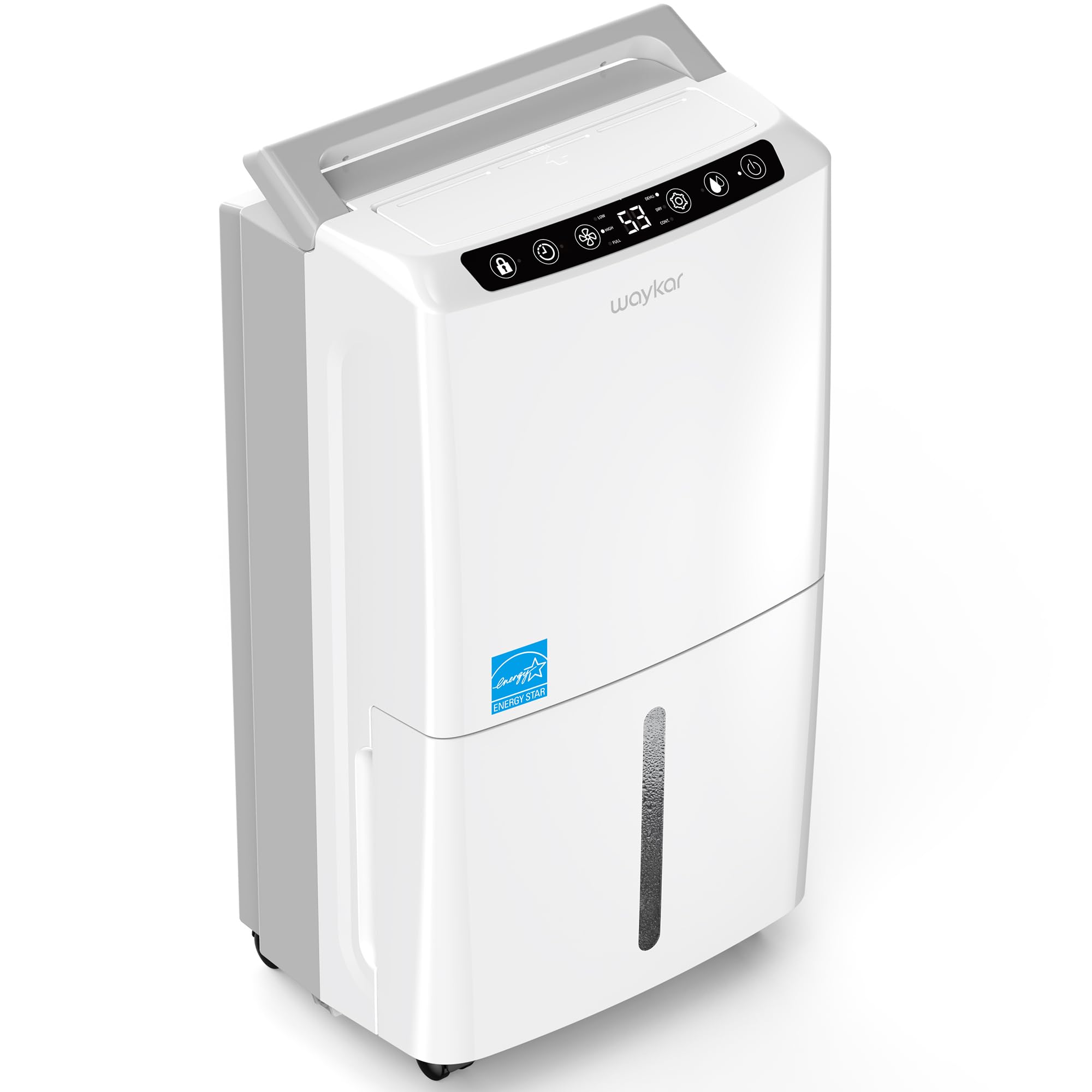
The Waykar PRO earns its 2025 Energy Star Most Efficient badge by drawing only 111–119 watts while the compressor runs. That is roughly 45% less energy than a standard model—verified by multiple customer watt-meter readings. It removes 34 pints per day in 95°F/90% RH conditions, covering up to 2,000 square feet without spiking your utility bill.
Noise performance is exceptional. The 33 dB minimum setting is quieter than a library, making it one of the few high-efficiency units suitable for a bedroom or nursery at night. The two-speed fan lets you trade airflow for silence depending on the time of day.
The 0.62-gallon tank is small relative to the 34-pint capacity, so expect frequent emptying in humid climates unless you connect the included 3.3-foot drain hose. Customer service reviews highlight responsive warranty support—multiple buyers received free replacements after units froze up or failed in the second season.
Why it’s great
- Sub-120W power draw verified by buyers
- 33 dB noise floor fits bedroom use
- Auto defrost runs down to 41°F
Good to know
- Smallish tank needs frequent manual drain
- Some units developed frost issues after a year
- Warranty registration required for second year
2. Waykar 34 Pint JD-CE
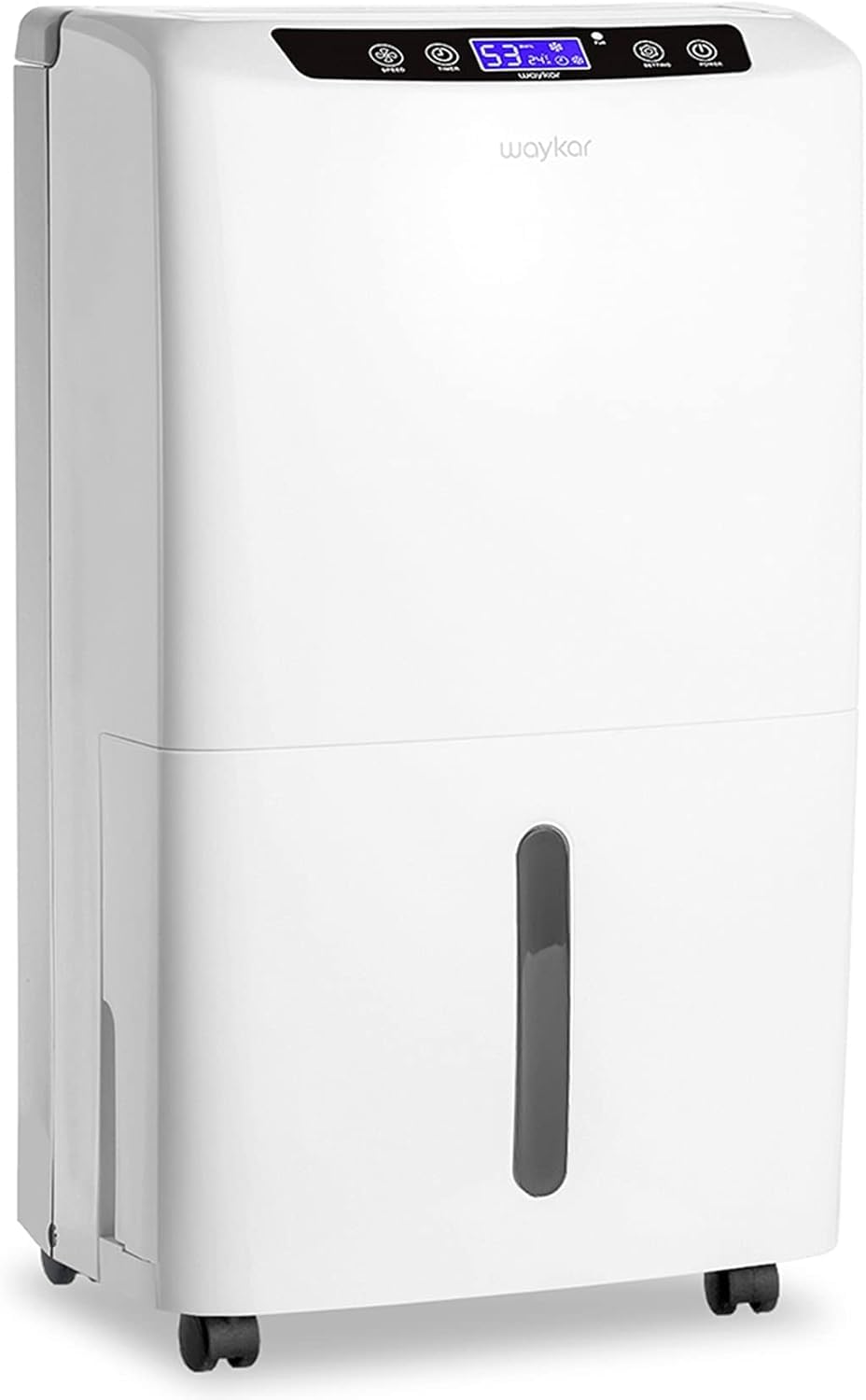
The JD-CE variant of the Waykar 34-pint shares the same compressor platform but adds a manually adjustable 90-degree air vent. This lets you direct dry airflow toward damp corners, laundry racks, or a specific part of the room—a feature missing from most fixed-top units at this capacity. The vent can be locked vertically for fastest air movement when humidity is highest.
Its smart humidity control operates within a 3% deadband, pausing extraction when the room falls 3% below the set point and restarting when it rises 3% above. This prevents the short-cycling that wastes power and wears out piston-style compressors. The 24-hour timer lets you schedule off-peak operation to further reduce electricity cost.
Customer feedback after roughly a year of use highlights quiet, reliable performance and fast warranty resolution when units did freeze. Waykar’s support team consistently sent free replacements rather than offering complex repair steps. The 0.66-gallon tank is slightly larger than the PRO version, but continuous drainage via the included hose remains the recommended setup for unattended operation.
Why it’s great
- 90° adjustable vent for targeted drying
- 3% deadband smart humidistat reduces cycling
- Auto restart with memory after power loss
Good to know
- Some units developed frost after one season
- Warranty extension requires online registration
- Tank still modest for continuous use without hose
3. AEOCKY Leo-Lite 74 Pint
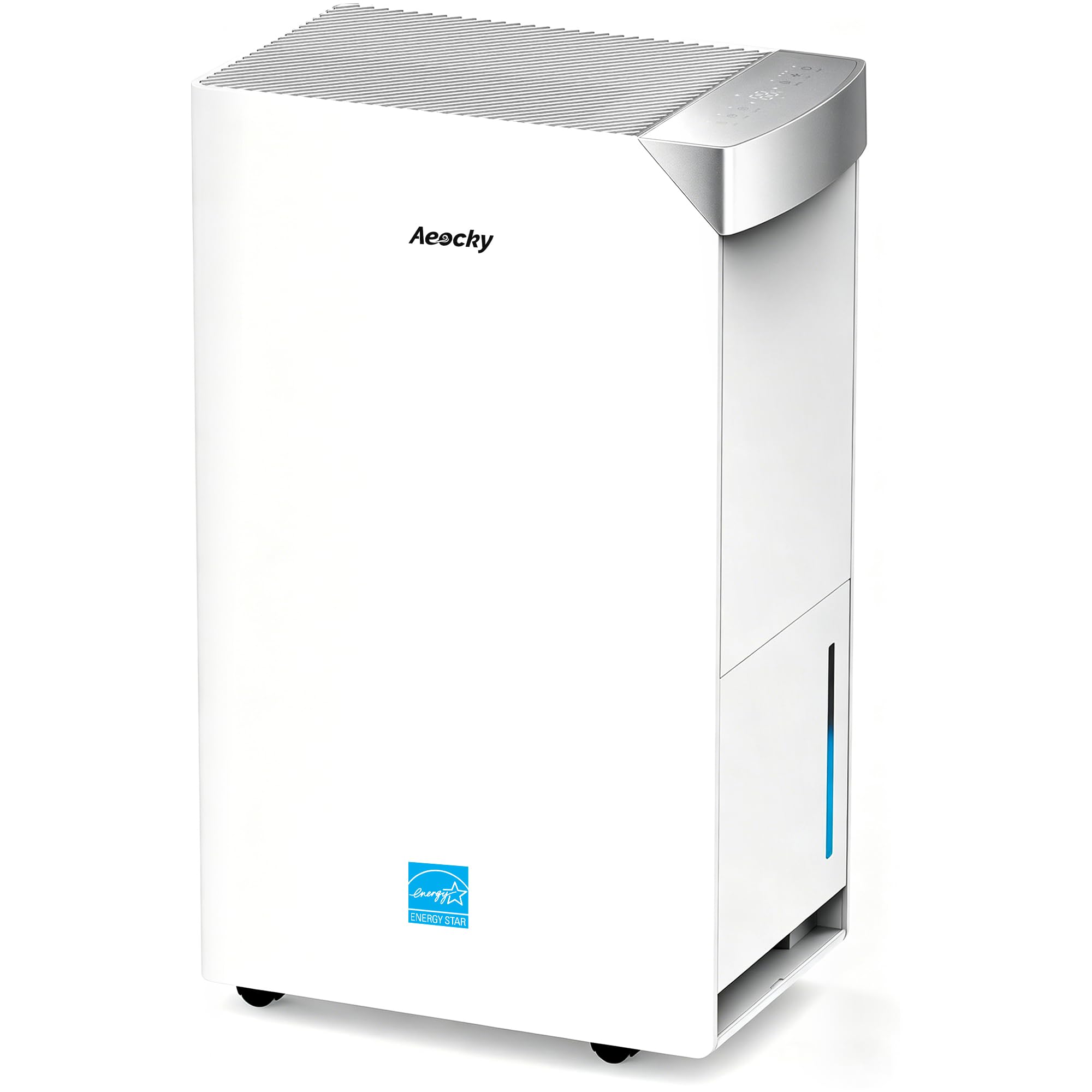
The AEOCKY Leo-Lite is one of the first models certified to Energy Star Version 6.0—a standard so strict that many 2024 “Energy Star 2025” claims are marketing fluff by comparison. With a 74-pint daily capacity (95°F/95% RH) and 52-pint rating in typical basement conditions (86°F/80% RH), it handles spaces up to 4,500 square feet while using up to 50% less energy than non-certified competitors.
Its rotary compressor PRO+ paired with a “3+2” evaporator-condenser stack using 7mm pure copper tubing (not aluminum) delivers measurable efficiency gains. Customers who posted watt-meter readings confirm low electricity draw even during continuous 24-hour operation. The Archimedes Wind Tunnel fan design achieves 44 dB on the lowest setting—quiet enough for an open-plan basement living area.
The unit’s auto-defrost system operates effectively at ambient temperatures as low as 42°F, making it practical for unheated basements in northern climates. The 3-year coverage is longer than most brands offer at this price tier. The 1.45-gallon tank requires emptying roughly every 10–12 hours in high-humidity conditions, though the continuous drain hose attachment eliminates that chore entirely.
Why it’s great
- Energy Star 6.0 certification (strictest tier)
- 7mm copper tubing, not aluminum replacement
- 3-year coverage exceeds market standard
Good to know
- Large footprint (23.3″ tall, 14.4″ deep)
- 1.45-gal tank needs frequent emptying in wet spaces
- Highest setting still louder than smaller units
4. Trazico Max 21 Pint
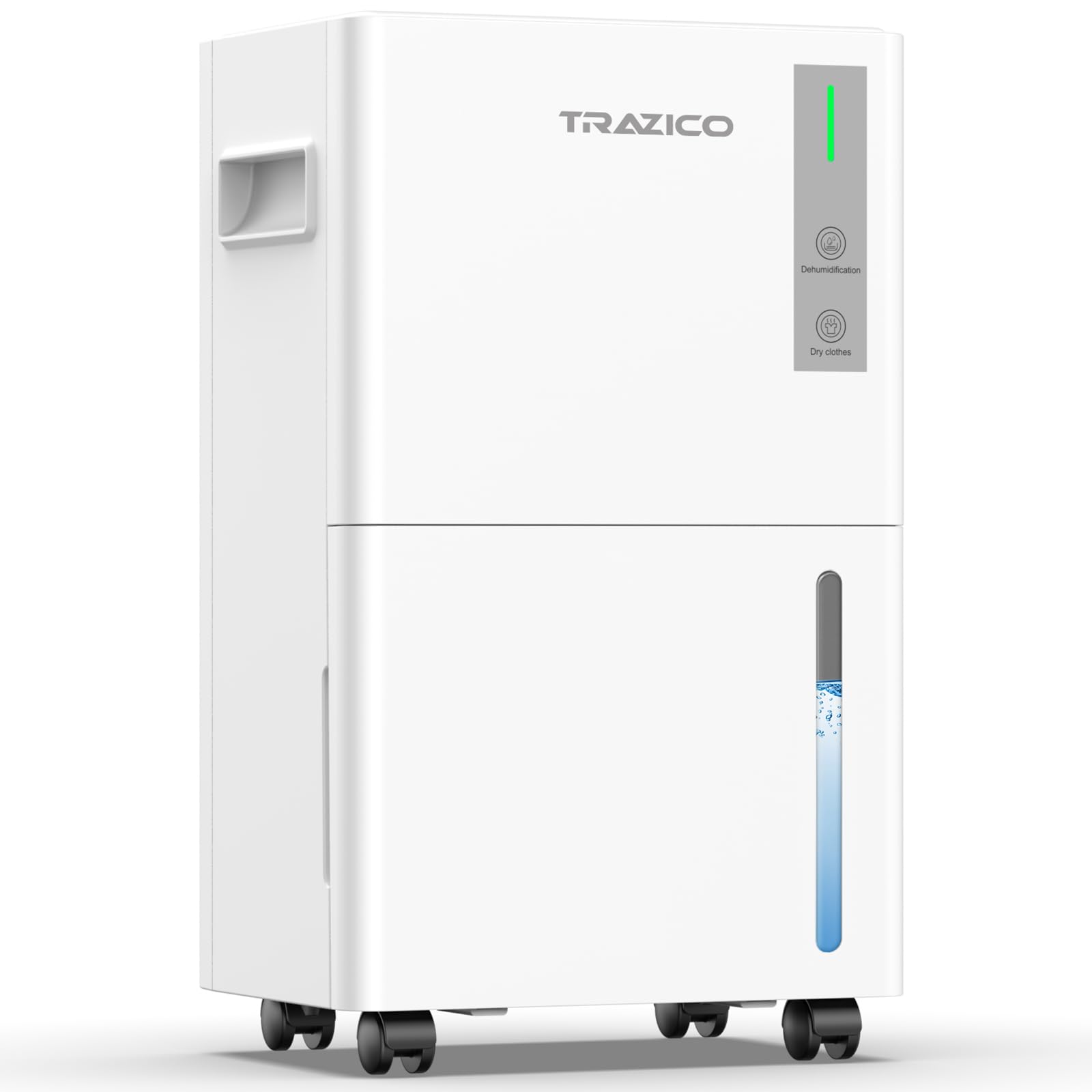
At 7.5 inches deep and 17.5 inches tall, the Trazico Max 21 Pint is one of the most compact units that still uses a real compressor (not a Peltier cooler). It pulls 21 pints per day at 95°F/90% RH, enough for a 1,500-square-foot basement or main-floor bedroom. The 39 dB noise rating makes it unobtrusive enough to run while you sleep.
Three operating modes—DEHU (custom 30–80% RH), DRY (fast drying for laundry), and CONTINUOUS (nonstop extraction)—adapt to different seasons. The 1.5L tank triggers auto-shutoff when full, and the gravity drain hose connection lets you run it indefinitely without manual emptying. Buyers in South Texas reported visible humidity reduction within 24 hours and a near-elimination of musty basement smells within a week.
The reusable washable filter eliminates ongoing consumable costs. The 360-degree casters and ergonomic handles make it easy to move from room to room. The small tank is the biggest practical limitation: in humid southern climates, the tank fills in 6–8 hours, so continuous drainage is almost mandatory for unattended operation.
Why it’s great
- Smallest compressor-based footprint for its capacity
- 39 dB noise floor suits bedrooms
- Three modes cover seasonal humidity changes
Good to know
- 1.5L tank fills quickly in high humidity
- 21 pint/day is modest for large basements
- Continuous drain hose connection required for unattended use
5. PLUSCENT 32 Pint
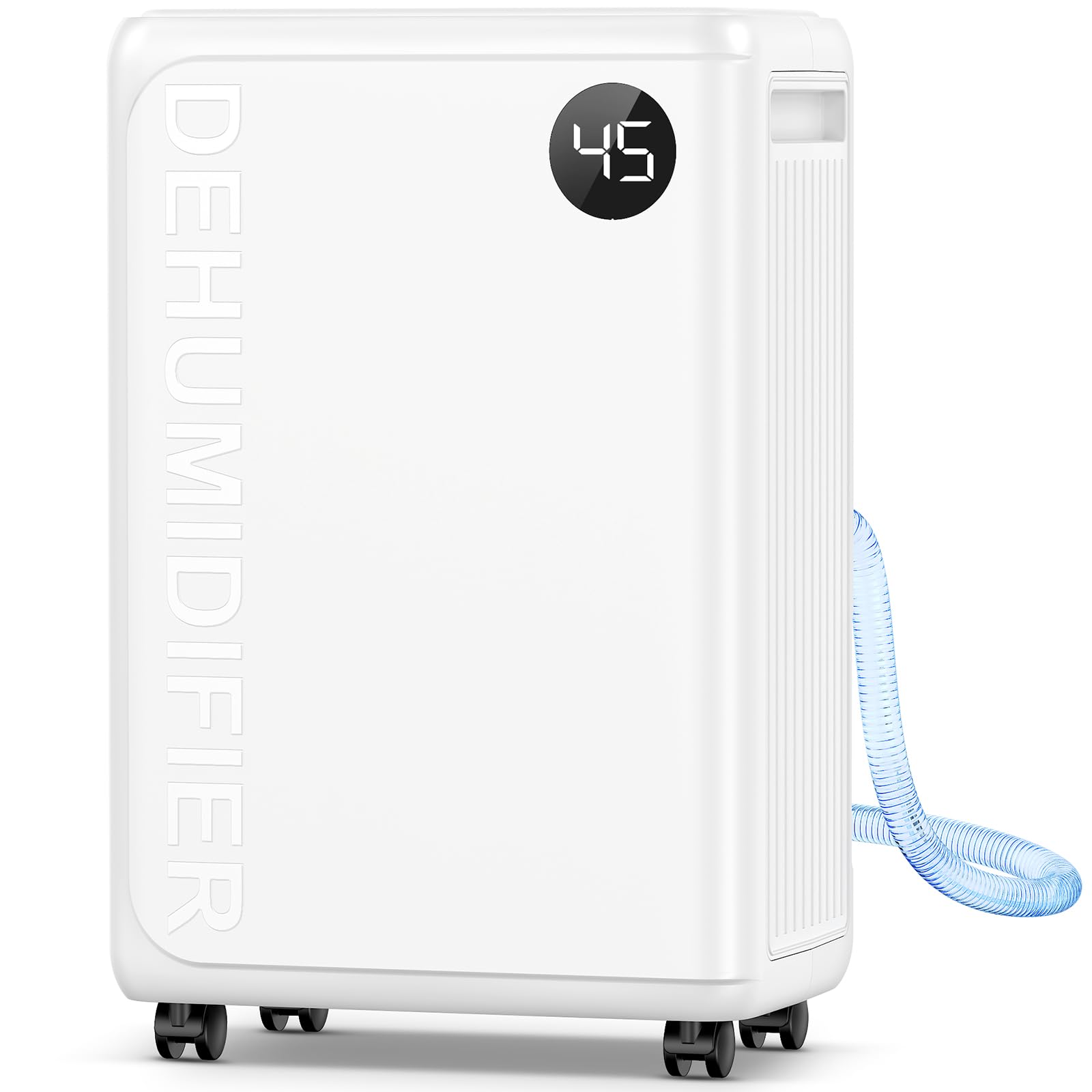
The PLUSCENT 32 Pint delivers a strong capacity-to-price ratio for spaces up to 2,500 square feet. Its rotary compressor removes 32 pints per day under peak summer conditions while keeping sound levels between 39 and 42 dB—quiet enough for a bedroom or home office. The integrated 24-hour timer lets you shift operation to off-peak electricity hours to maximize savings.
Three operating modes (DEHU custom RH, CONT continuous, DRY laundry drying) give flexibility across seasons. The 39.4-inch gravity drain hose provides hands-free drainage, while the 2L tank with auto-stop works for shorter sessions. Customer reviews consistently note a 15% humidity drop within the first hour of operation in damp basements, and several buyers mentioned reduced AC workload after the unit stabilized indoor humidity.
The child lock prevents accidental setting changes—useful in households with young children. The washable filter and 360-degree casters reduce maintenance effort and make room-to-room repositioning simple.
Why it’s great
- Strong 32 pint/day for its price tier
- 39–42 dB noise suits living areas
- 24-hour timer for off-peak scheduling
Good to know
- 2L tank undersized for unattended operation
- Continuous hose required for overnight runs
- Some units reported freezing after prolonged use
6. Vellgoo DryTank 34 Pint
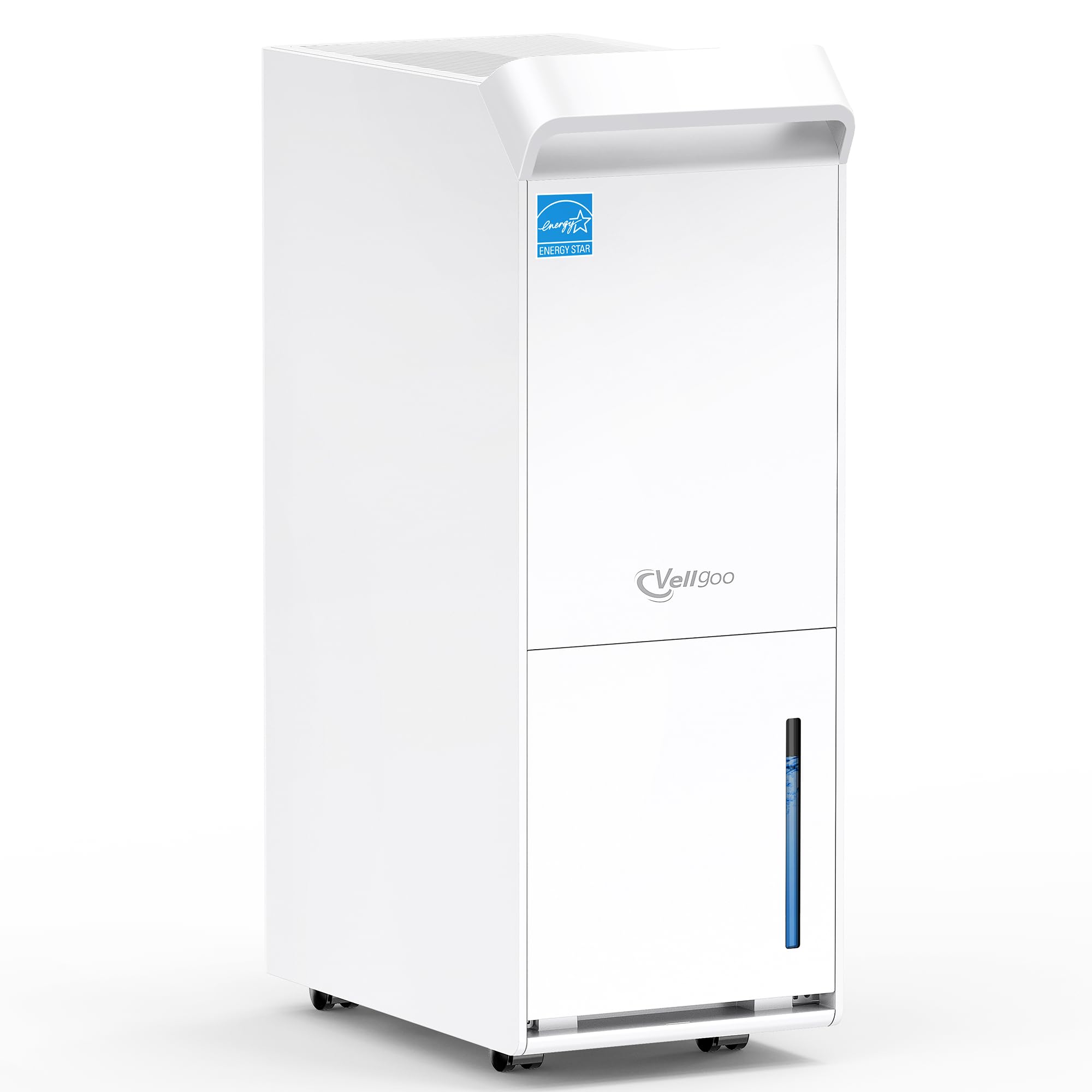
The Vellgoo DryTank was officially recognized as one of the Energy Star Most Efficient dehumidifiers for 2025—a designation that requires documented energy factor performance, not just self-reported pint claims. Its high-efficiency rotary compressor is paired with a “3+2” evaporator-condenser system using pure copper tubing and hydrophilic aluminum fins for improved heat exchange without sacrificing efficiency.
In the real world, this translates to up to 50% better energy efficiency than non-certified units at the same pint rating. The DryTank covers 2,500 square feet, removing 34 pints per day at 90°F/90% RH and 22 pints per day in standard basement conditions. The 34-pound build is heavier than many competitors—a tradeoff for the thicker copper coils and larger condenser surface area that improve longevity.
Three drainage options include manual tank emptying, the included 6.56-foot drain hose, or a standard 3/4-inch garden hose connected via the quick-connect port. Several buyers noted the unit was slightly louder than expected for its size, but the overall impression after months of use is overwhelmingly positive. Long-term reliability reports are mixed: some units failed after the first season, but Vellgoo’s customer service consistently offered free replacements.
Why it’s great
- Energy Star Most Efficient 2025 certified
- 3+2 copper tube evaporator for better heat exchange
- Multiple drainage options including garden hose
Good to know
- Some units failed after 1–2 seasons
- Slightly louder than advertised in some setups
- No filter included; requires aftermarket foam
7. Trazico 30 Pint (TZ04)

The Trazico TZ04 is rated at below 40 dB despite its 30-pint daily extraction capacity—a rare combination at this price tier. Its high-efficiency compressor was engineered specifically for quiet operation, and customer reviews consistently mention that the unit is easy to ignore during sleep or TV time. It covers 2,000 square feet, making it suitable for finished basements, open-concept living rooms, and large master bedrooms.
Three smart modes give operational flexibility: DEHU for target humidity from 30–80% with two fan speeds, DRY for fast laundry drying, and CONTINUOUS for nonstop extraction in extreme dampness. The auto-restart function remembers previous settings after a power outage, which is critical for unattended basement operation where outages are common.
The 57-ounce (1.7L) tank is small relative to the extraction rate—in high humidity it fills in 4–6 hours. Owners in humid regions like South Texas reported needing to empty it twice per 12-hour cycle. The included drain hose solves this for permanent installations. The 360-degree casters and ergonomic handles make it easy to relocate between rooms, and the washable filter eliminates recurring costs.
Why it’s great
- Rated below 40 dB with 30-pint capacity
- Three modes adapt to seasonal needs
- Auto-restart after power loss
Good to know
- Tank fills very fast in humid climates
- Continuous drain hose recommended for overnight runs
- Not suitable for spaces below 41°F
8. Gasbye DryPrime 115 Pint
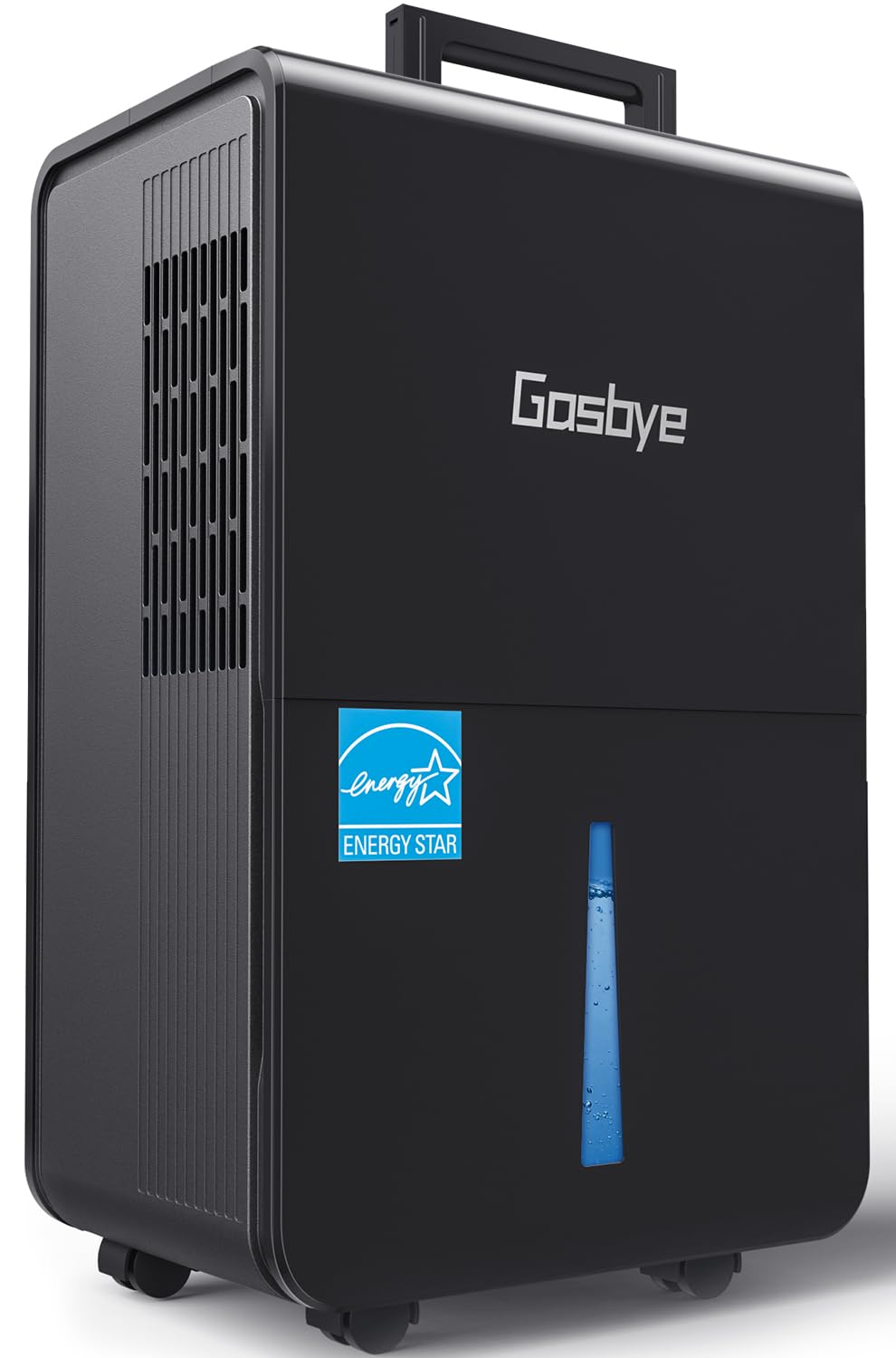
The Gasbye DryPrime is one of the few units that publishes honest three-temperature pint ratings: 115 pints at 86°F/80% RH, 73 pints at 80°F/60% RH, and 50 pints at 65°F/60% RH. This transparency lets you match its performance to your actual basement conditions rather than inflated peak-use numbers. The 43-pound build uses reinforced 5-tier copper coils designed specifically to resist the corrosion and vibration failures that kill cheaper units after 1–2 years.
Despite its large 115-pint peak capacity, the DryPrime operates at roughly 45 dB—noticeably quieter than competing units in the same class. The Energy Star 2026 certification (Unique ID: 3417537) guarantees up to 30% better efficiency than non-certified alternatives. The compressor automatically shuts off when humidity drops 3% below your target and restarts when it rises 3% above, with the fan continuing briefly to scavenge residual coil cooling.
Three drainage options include a 1.7-gallon tank, an included 5-foot drain hose, or a standard 3/4-inch garden hose. Customer reviews emphasize stellar support response times—often within 8 hours via email. Some units experienced HI error codes or frost buildup within the first month, but Gasbye replaced them without hassle. The 2-year full replacement warranty adds significant long-term value.
Why it’s great
- Transparent three-temperature pint ratings
- Reinforced 5-tier copper coils for longevity
- 45 dB noise at 115-pint capacity
Good to know
- 43 lbs is heavy to move frequently
- Some units had early frost or error codes
- Large footprint (24″ H x 15″ W x 11″ D)
9. DECIUU 100 Pint
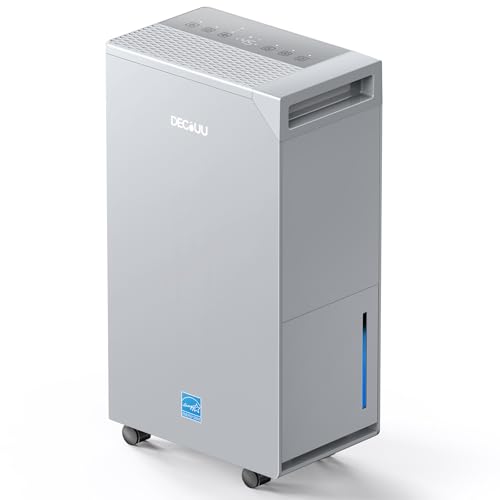
The DECIUU 100 Pint is designed for the largest residential spaces: up to 5,000 square feet. Under peak summer conditions (95°F/90% RH) it removes 100 pints per day; at basement standard (86°F/80% RH) it removes 70 pints. Its Energy Star Most Efficient 2024 certification verifies that the high capacity does not come at the cost of proportional electricity consumption—a risk with many large units that draw 700+ watts.
The intelligent humidistat operates across a 35–80% RH range with auto-defrost protection for cooler environments. The 5.5L (1.45-gallon) tank is reasonably sized for manual emptying, but the included 6.56-foot drain hose and optional 3/4-inch garden hose adapter allow truly unattended operation. Customers moving from older GE units reported significantly lower noise levels and better humidity holding—one buyer saw humidity drop from 73% to 50% within a week.
360-degree swivel casters and a hidden handle make relocation manageable despite the 32.8-pound weight. The washable filter reduces maintenance costs. Some users experienced H5 error codes when operating below 65°F, despite the auto-defrost feature. Customer service responded within 12 hours to those reports, and the 2-year warranty provides a safety net. For anyone managing a large basement, garage, or crawl space, this unit offers the best capacity-per-watt ratio in the premium tier.
Why it’s great
- 100 pint/day covers 5,000 sq.ft
- Energy Star Most Efficient 2024 certified
- Three drainage options including garden hose
Good to know
- 1.45-gal tank fills quickly at max extraction
- Some units throw H5 error below 65°F
- Requires continuous hose for overnight runs
FAQ
What does Energy Star Most Efficient actually mean for a dehumidifier?
Will a higher-pint dehumidifier always be less efficient than a lower-pint one?
Why does my dehumidifier keep freezing up, and how do I prevent it?
How often should I clean the filter to maintain efficiency?
Is it worth spending more for pure copper coils instead of aluminum?
Final Thoughts: The Verdict
For most users, the best efficient dehumidifier winner is the Waykar 34 Pint PRO because it draws only 111–119 watts while removing 34 pints per day with a 33 dB noise floor—a combination that maximizes both energy savings and home comfort. If you need adjustable airflow direction for targeted drying, grab the Waykar JD-CE. And for a large basement or whole-home coverage, nothing beats the AEOCKY Leo-Lite 74 Pint with its Energy Star 6.0 certification and 3-year warranty.

Mo Maruf
I created WellFizz to bridge the gap between vague wellness advice and actionable solutions. My mission is simple: to decode the research and give you practical tools you can actually use.
Beyond the data, I am a passionate traveler. I believe that stepping away from the screen to explore new environments is essential for mental clarity and physical vitality.