Our readers keep the lights on and my smoothie glass nicely filled. As an Amazon Associate, I earn from qualifying purchases.
Specs are compiled from manufacturer listings and verified buyer reviews and can change over time — please confirm the key details on the product page before buying.
Six-year-olds are at that brilliant age where they can follow multi-step instructions, read simple words, and ask “why” until you run out of answers. The right toy channels that curiosity into problem-solving, fine motor control, and early STEM thinking. The challenge is finding toys that feel like pure play while secretly building those skills.
I’m Mohammad Maruf — the founder and writer behind WellFizz. This guide is built by comparing the manufacturers’ published specifications and the patterns across verified customer reviews, so you get each pick’s real strengths and trade-offs instead of marketing spin.
Whether it’s a birthday or just a rainy afternoon, the key is choosing educational toys for 6-year-olds that match their growing attention span and need for hands-on discovery.
Our Picks at a Glance


How To Choose The Best Educational Toys For 6-Year-Olds
At six, kids are leaving preschool play behind and entering a phase where they crave real challenges. They want to build, experiment, and figure things out on their own. The best toys respect that independence while offering a safety net when they get stuck.
Look for Open-Ended Play Value
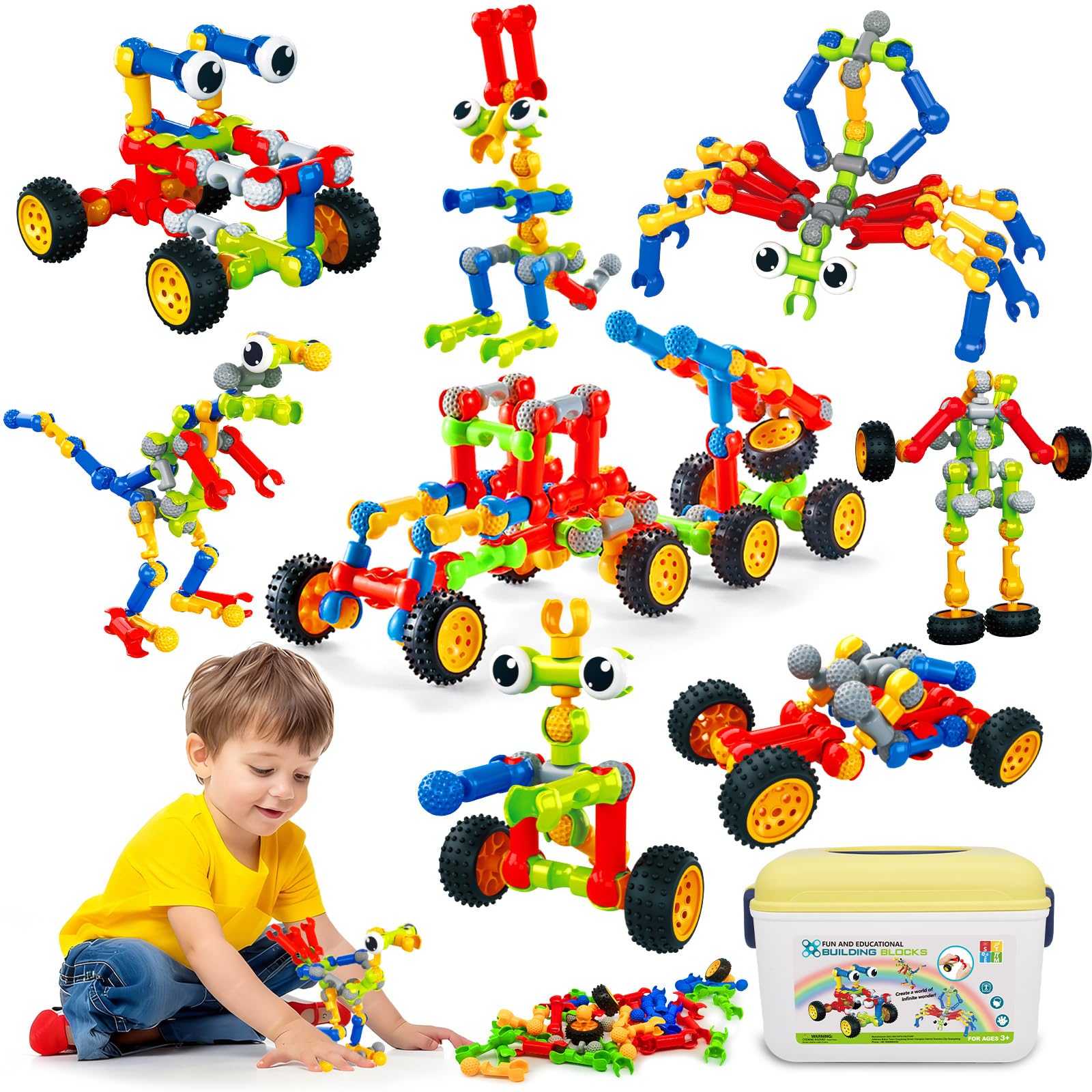
Toys that can be assembled, disassembled, and reimagined in endless ways give you far more for your money than a single-use gadget. A building set that can become a robot one day and a dinosaur the next keeps a six-year-old coming back for weeks, not minutes.
Consider the Adult Involvement Required
You can pick a kit that lets your 6-year-old work alone, or one that turns into a fun weekend project for both of you. Look for instructions that are illustrated and step-by-step, and materials that are safe for solo play. Your choice depends on how much hands-on time you want to share.
Quick Comparison
| Model | Best For | Play Style | Piece Count | Skill Focus | Amazon |
|---|---|---|---|---|---|
| Caferria STEM Building Toys★ Best Overall | Creative builders | Hands-on construction | 142 pieces | Engineering & motor skills | Amazon |
| Doctor Jupiter Science KitLittle Scientist | Budding scientists | Guided experiments | 50+ experiments | Critical thinking & observation | Amazon |
| Educational Insights Math WhizMath Master | Math practice on the go | Electronic quiz game | 3 game modes | Arithmetic fluency | Amazon |
| Smartivity Rocket Launcher | Physics in action | Build & launch | Precision-cut parts | Engineering & physics | Amazon |
| National Geographic Chemistry Set | First lab experiences | Hands-on chemistry | 50 experiments | Scientific method basics | Amazon |
| Smartivity Magic Science Kit | Variety-seeking experimenters | Guided experiments | 50+ experiments | Chemistry & physics concepts | Amazon |
| BMDSAE Digital Microscope | Curious explorers | Tech-enabled discovery | 1000x magnification | Observation & biology | Amazon |
| National Geographic Marble Run | Engineering-minded kids | Construction & motion | 95 pieces | Physics & problem-solving | Amazon |
In-Depth Reviews
1. Caferria STEM Building Toys
Our pick — over 4.5★ from 850+ verified ratings; the strongest balance of quality and price.
The crowd-pleasing builder that turns loose parts into robots, trucks, and dinosaurs.
What wins families over here is the building quality — it’s the single most-praised thing about this set, and it’s easy to see why. The 142 colorful pieces snap together smoothly and pull apart without a fight, which keeps a 6-year-old in flow instead of frustration. They’re made from non-toxic ABS plastic that’s free of BPA, phthalates, and lead, with smooth rounded edges that protect little hands.
The set is built around open-ended creativity: kids can follow the idea book to make race cars, robots, trucks, and dinosaurs, or invent their own designs. Parents describe the outcome as “his creations are endless” — exactly the kind of replay value you want at this age. With a durable plastic storage box for cleanup and travel, it’s ready for classrooms, playdates, or the backseat.
At 9 x 6 x 6 inches, the box is compact enough to stash on a shelf, but the pieces inside offer a 22% bigger footprint of creative possibility than the slimmer science kits on this list. The only honest note is that a few families find some connections looser than others, so very rough handling might lead to a piece popping off mid-play.
What parents cheer
- Durable pieces that withstand repeated building and rebuilding
- Endless design possibilities keep kids engaged for hours
- Storage box makes cleanup and travel simple
- Certified safe materials with rounded edges
The honest trade-offs
- A few connections can feel a bit loose
- Requires adult help for some of the more complex structures
Grab it for: any 6-year-old who loves building and imagining — it’s the rare toy that grows with them.
Think twice if: your child gets frustrated easily and prefers instant results over working through a build.
2. Doctor Jupiter My First Science Experiments Kit
Fifty-plus experiments that turn your kitchen table into a weekend science lab.
This kit packs over 50 experiments into a slim 11.02 x 9.84 x 1.77-inch box, covering everything from making Dinosaur Squishies and an Infinity Soap Volcano to creating your own perfume and face mask. It’s a screen-free activity that families report keeps kids busy for months — “used 6 months, plenty of experiments left” is the kind of longevity that makes this a real value.
Everything you need is included: food colors, baking soda, corn starch, a mini volcano, test tubes, a dropper, and more. The illustrated step-by-step manual makes it simple for both kids and parents to follow along, and the experiments include fresh ideas that don’t feel like recycled versions of the typical baking soda volcano. It meets the U.S. safety standard ASTM F963-17.
There’s no battery required and no screens involved — just pure hands-on discovery. The main thing to know is that younger kids will need adult supervision for the messier moments, and some experiments are genuinely more notable than others. But the variety means there’s always something next on the list.
Why it works
- Massive experiment variety keeps novelty alive for months
- Most materials are included right in the box
- Clear illustrated instructions for kids and parents
- Excellent for rainy-day indoor bonding
Keep in mind
- Some experiments land better than others in terms of wow factor
- Adult supervision is needed for younger kids
Best for: families who want a shared activity and a guaranteed screen-free afternoon.
Not ideal if: you’re looking for something your 6-year-old can run entirely solo without any help.
3. Educational Insights Math Whiz
A pocket-sized math coach that makes arithmetic feel like a game, not homework.
This handheld device covers addition, subtraction, multiplication, and division — and it’s genuinely fun about it. There are three modes: Drill Mode serves up progressively harder problems, Challenge Mode is a numbers elimination game, and Calculator Mode handles the standard stuff. Each skill in Drill mode has eight difficulty levels, so it grows with your child through the early grades.
Parents report measurable gains, with several noting improved math grades after regular use. The device is compact at 2.5 x 8.5 x 6 inches, making it perfect for road trips, waiting rooms, and restaurant tables. It runs on two AAA batteries (not included), and the LCD screen keeps everything screen-free in the sense of no apps or videos.
The educational value is the most-praised aspect by a wide margin — kids genuinely don’t realize they’re learning. The one issue to watch: a small number of units arrive with functionality problems, so it’s worth testing it right from the start. But when it works, it’s a durable little workhorse.
What shines
- Adjustable difficulty spans multiple grade levels
- Portable design fits in a backpack or car console
- Kids report it’s fun enough to play voluntarily
- Parents report real academic gains
What to check
- Requires 2 AAA batteries you’ll need to buy separately
- Occasional unit arrives with functionality issues
Choose this if: you want math practice that travels and doesn’t feel like a chore.
skip it if: your child is already solid on math facts and needs a broader learning focus.
4. Smartivity DIY Rocket Launcher STEM Kit
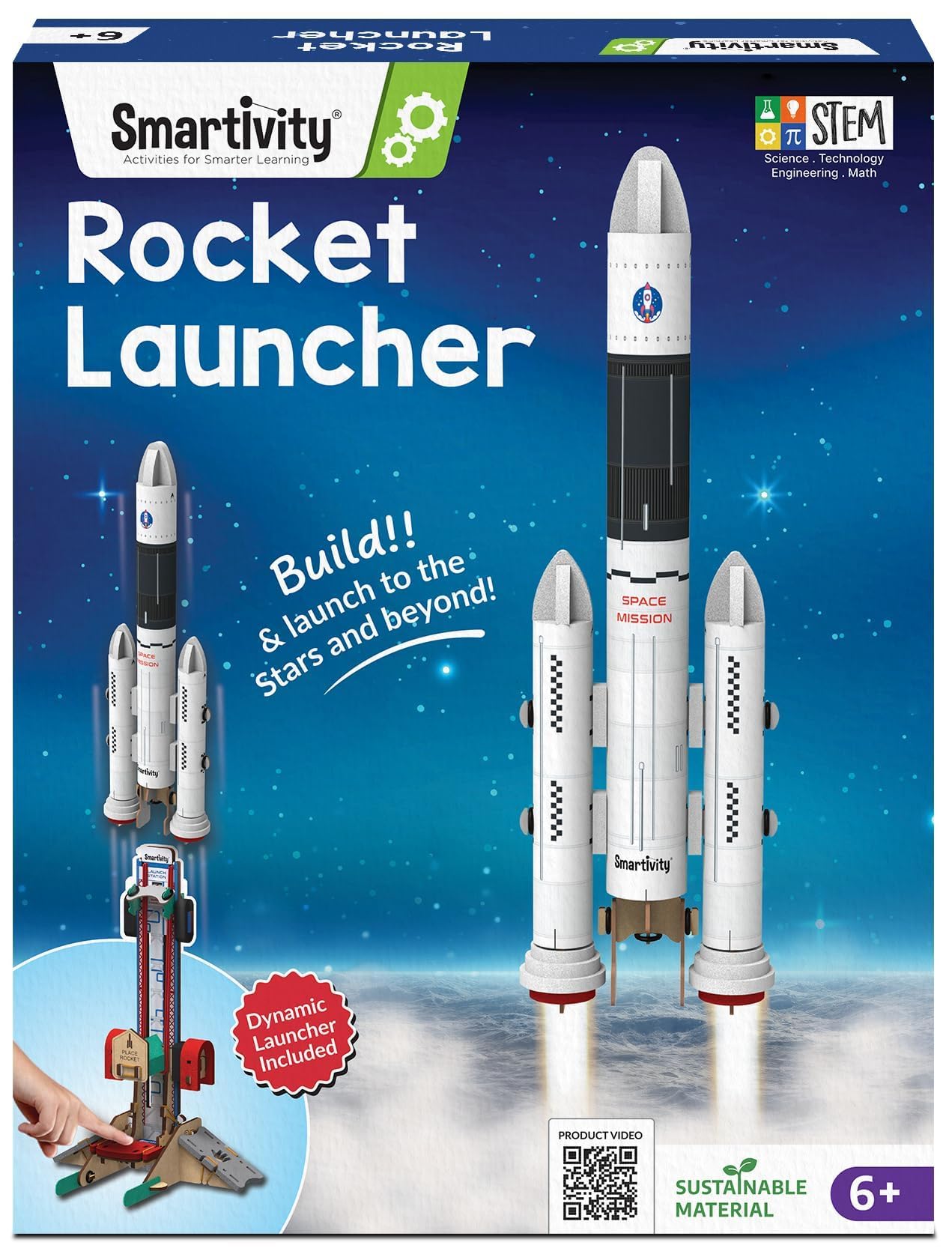
The build-it-yourself rocket that blasts up to 10 feet on pure mechanical power.
Kids assemble a realistic rocket and launcher from precision-cut wooden parts, then press the red button and watch it soar up to 10 feet into the air. There are no batteries and no electricity — just pure mechanical action that demonstrates Newton’s Third Law of Motion in the most tangible way possible. The soft foam tip makes it safe for indoor launching in the living room or classroom.
Assembly teaches structural engineering, spatial reasoning, and mechanical thinking before the first launch. Parents praise the instructions as the clearest they’ve encountered in any assembly kit, with parts that fit together smoothly yet tightly. It’s reloadable and replayable — kids adjust angle, force, and technique to experiment with how high and how far the rocket goes each time.
The trade-off is durability: it’s built from MDF wood, so it’s designed for enthusiastic play rather than rough-and-tumble abuse. But as an award-winning gift that combines building satisfaction with launch thrill, it’s hard to match. The process is challenging in the right way — engaging enough to hold attention without requiring constant adult rescue.
The wins
- Real physics lesson with visible, notable results
- Safe for indoor use with foam tip
- Clear, well-machined parts that fit together well
- Reloadable for endless experimentation
The limits
- Not built for heavy-duty, long-term play
- A 6-year-old may need adult help for part of the build
Reach for it if: your child loves building with their hands and is fascinated by space.
Look elsewhere if: you need something that will survive years of rough play.
5. National Geographic Junior Chemistry Set

A complete starter lab with real tools that introduces chemistry through 50 hands-on experiments.
This kit gives young scientists everything they need to explore chemistry using common household items like baking soda and vinegar. With over 20 durable, child-safe lab tools — including test tubes, goggles, and more — kids feel like real researchers. The 50 experiments come with fully illustrated step-by-step instructions that let kids work independently.
What stands out about this set is the quality — it’s the most-praised aspect by owners. The plastic tools are durable, the instructions are clear, and the experiments genuinely teach basic chemistry concepts rather than just being flashy. Families report it keeps kids engaged for months, with some noting it appeals to a wide age range from 4 to 12.
It’s easy to use and requires no assembly, making it immediately gratifying from the start. The honest caveat is that value perception is split — some families feel it’s a great deal, while others find it pricey for what’s included. You’ll also want to have baking soda and vinegar on hand, as experiments draw on those common kitchen staples.
Standout strengths
- High-quality, durable kid-safe lab tools
- Fully illustrated instructions enable independence
- Engaging experiments that teach real concepts
- No assembly required — works right from the start
Fair warnings
- Value-perception is mixed among buyers
- Needs common kitchen ingredients like baking soda and vinegar
Pick this for: a first real lab experience that makes science feel accessible and notable.
Pass if: you expect every single consumable to be included in the box.
6. Smartivity Magic Science Kit

A complete science kit with a messy mat so kids can experiment without wrecking the kitchen.
The included messy mat is the unsung hero here — it turns a potentially chaotic science session into a clean, manageable activity. With 58 parts and an instructional manual, this kit covers chemical reactions, density, polymers, air pressure, magnetism, electricity, and optics across 50+ experiments. Parents report over 100 hours of engagement from the set.
Fun questions drive the experiments: How does a rocket shoot up in the air? Why does lemon taste tangy? How are new colors made? Is there a way to mix oil and water? Each one is designed to spark curiosity while teaching fundamental chemistry and physics concepts. The step-by-step manual is clear enough that kids can follow along with minimal adult help.
It’s non-toxic, tested in global labs, and trusted by families in 24 countries. The enjoyment factor is the most-praised aspect — kids genuinely love working through the experiments. The only consideration is that, like most science kits, adult supervision is wise for the messier or more involved experiments.
What makes it special
- Messy mat keeps cleanup simple and stress-free
- Broad subject coverage from chemistry to optics
- Clear step-by-step instructions for independent play
- High enjoyment factor reported by families
What to expect
- Adult supervision recommended for some experiments
- Experiments vary in wow-factor
Best for: parents who want the science fun without the aftermath of a messy table.
Consider another if: you already own a comprehensive science kit with similar experiments.
7. BMDSAE Handheld Digital Microscope
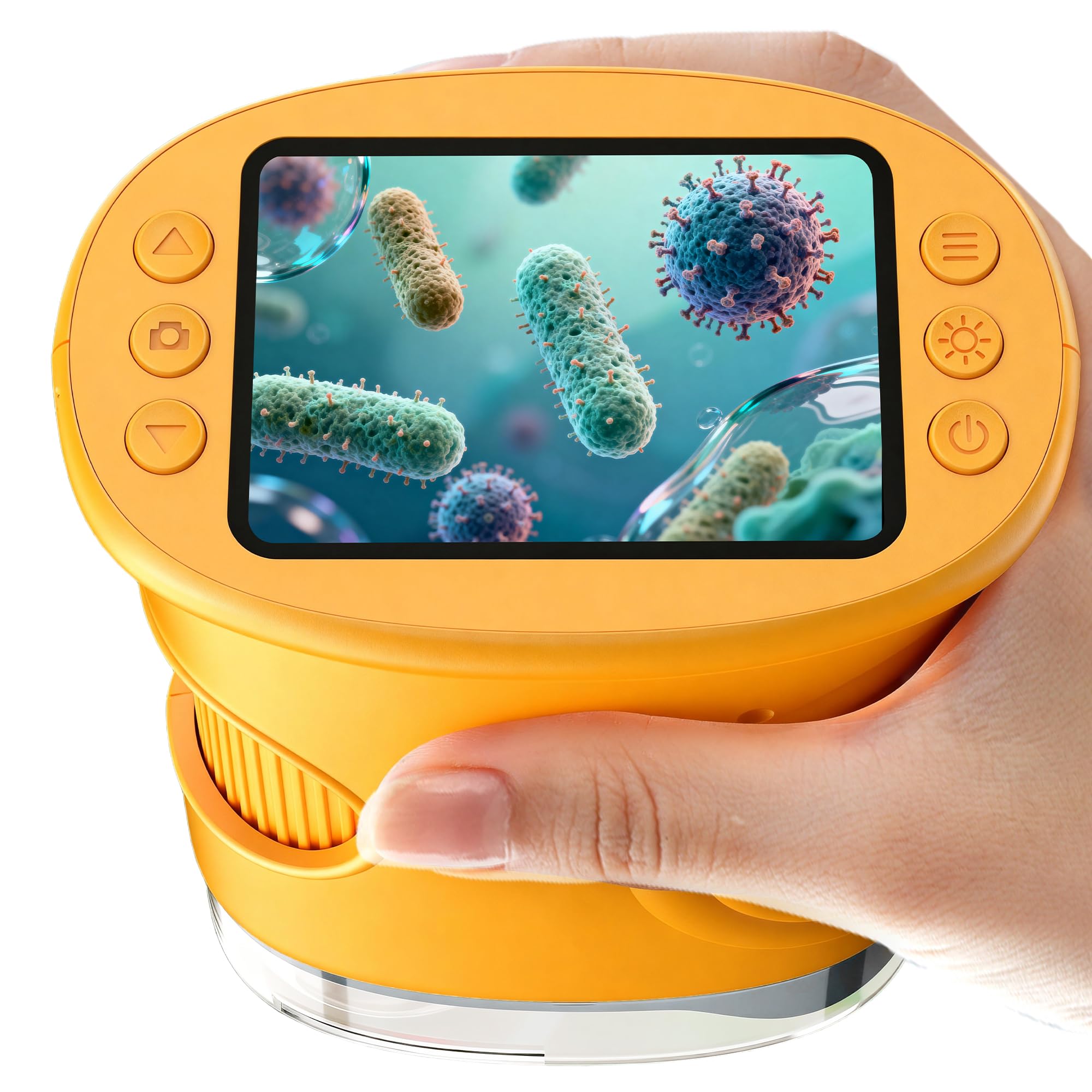
A pocket microscope that turns backyard leaves and bugs into a full-scale discovery adventure.
With real 1000x optical and digital magnification and a 2MP camera, this microscope brings actual plant cells and insect anatomy into view on a 2.0-inch IPS screen. The manual focus system delivers crisp, lab-quality imaging, and the anti-shake design keeps specimens visible even in excited little hands. The featherlight 200g body is easy for a 6-year-old to hold and operate solo.
You get 8 adjustable LEDs with three brightness modes (Off, Medium, High), so your child can spot hidden details even in dim light—like watching fireflies at dusk or turning their room into a midnight “bedroom lab.” The 600mAh battery runs for about 2 hours of discovery and recharges through USB or a portable charger. Kids can snap photos or AVI videos onto the 32M storage, saving 200+ images to show teachers or build a research portfolio.
It’s made from eco-friendly ABS plastic with CE/FCC/CPC safety certifications and smooth, odorless edges. The oversized focus dials and shock-absorbent rubber casing are designed for young, uncoordinated fingers and playground drops. The only notes: the yellow control icons can be hard to read, and slides aren’t included — but the included lanyard and USB-C cable make it ready to explore immediately.
The highlights
- Genuine 1000x magnification with manual focus
- Built-in screen makes viewing easy for kids
- Photo and video capture for science projects
- Shock-absorbent design survives drops
Small notes
- Control icons can be difficult to read
- No slides included in the box
Pick it for: a curious child who loves exploring the world up close and documenting what they find.
Think twice if: you’re looking for a lab-grade precision instrument rather than a kid-friendly discovery tool.
8. National Geographic Marble Run with Motorized Elevator

A motorized marble machine that teaches gravity and momentum through endless track configurations.
The motorized lift carries marbles up almost 20 inches before dropping them onto your track, creating a perpetual motion machine that runs continuously. With 61 construction pieces, 20 marbles, and a 14-piece spiral lift, kids can build massive, complex mazes limited only by their imagination. A storage bag keeps everything organized when playtime ends.
What owners praise most is the fun factor, followed closely by how age-appropriate it is for younger builders. Kids as young as 5 can enjoy it, and it keeps children busy for hours as they experiment with different track layouts. The included Learning Guide contains fascinating facts about physics and motion, plus tips for building better marble runs. It’s also compatible with other National Geographic marble run sets for expansion.
The educational value is embedded in the trial-and-error process: kids figure out how to make marbles run smoothly through funnels, ramps, and twists. Assembly feedback is mixed — some find it straightforward, others find parts of it tricky. Notably, the elevator housing assembles best in the numbered order marked by tiny numbers. Durability of the motor is a slight concern for some, but the play value is undeniable.
The appeal
- Motorized elevator adds a dynamic, notable element
- Teaches gravity, momentum, and problem-solving
- Includes storage bag for easy cleanup
- Expandable with other National Geographic marble runs
The catches
- Assembly can be tricky, especially for the elevator
- Motor durability is a mild concern for long-term use
Choose this for: kids who love engineering challenges and watching their creations move.
Consider an alternative if: you want something that works perfectly with zero assembly frustration from day one.
Understanding the Specs
STEM Skill Focus
STEM stands for Science, Technology, Engineering, and Math. At age six, toys that build these skills do it through hands-on play — constructing, experimenting, and problem-solving. Look at what specific skills a toy targets: building sets develop fine motor skills and spatial reasoning, while science kits build observation and critical thinking. A toy that covers multiple STEM areas offers more long-term value.
Open-Ended vs. Guided Play
Open-ended toys like building blocks and marble runs can be played with in endless ways and grow with your child. Guided toys like science kits follow a specific set of experiments. Neither is better — it depends on your child’s personality. If they love following instructions to a clear result, a kit is perfect. If they prefer to invent their own outcomes, open-ended construction is the way to go.
FAQ
Can a 6-year-old use these toys without adult help?
How do I choose between a science kit and a building set?
Are these toys safe for a 6-year-old?
Which toy has the longest replay value?
Are electronic learning toys better than hands-on ones?
What is the difference between the two science kits from Smartivity and Doctor Jupiter?
Is the motorized marble run too advanced for a 6-year-old?
What is the best educational toy gift for a 6-year-old who loves space?
How much adult involvement does the rocket launcher require?
Do these toys require additional purchases to be useful?
Final Thoughts: The Verdict
Across the board, the educational toys for 6-year-olds winner is the Caferria STEM Building Toys because it combines durable pieces, endless creativity, and genuine skill development in one tidy storage box. If you want a shared screen-free adventure, grab the Doctor Jupiter Science Kit — families stretch its 50+ experiments across months. And for the thrill of physics in action, the Smartivity Rocket Launcher delivers a build-and-launch experience that’s tough to top.
How We Picked
We do not accept paid placement. Every pick is matched to a real buyer and a real use-case; we do not hands-on test units.
Sources & Methodology
Specifications: manufacturer listings and product documentation. Review insights: verified customer reviews, as of August 2026. Pricing: not shown on this page (it changes often); check the current price via the retailer link.
As an Amazon Associate, WellFizz earns from qualifying purchases. This does not affect which products we feature.
Related Guides

Mo Maruf
I created WellFizz to bridge the gap between vague wellness advice and actionable solutions. My mission is simple: to decode the research and give you practical tools you can actually use.
Beyond the data, I am a passionate traveler. I believe that stepping away from the screen to explore new environments is essential for mental clarity and physical vitality.