Our readers keep the lights on and my smoothie glass nicely filled. As an Amazon Associate, I earn from qualifying purchases.
Specs are compiled from manufacturer listings and verified buyer reviews and can change over time — please confirm the key details on the product page before buying.
You want a STEM toy that actually gets played with, not one that disappears under the sofa or becomes a choking hazard. Giant blocks fix both: they are easy for small hands to grip, and they build towers and forts big enough to feel like a real construction project. This guide sorts through the best jumbo block sets on Amazon, from soft foam for babies to heavy-duty cardboard for bigger builders, so you can match the right set to your child’s age and energy level without wading through listing after listing.
I’m Mohammad Maruf — the founder and writer behind WellFizz. This guide is built by comparing the manufacturers’ published specifications and the patterns across verified customer reviews, so you get each pick’s real strengths and trade-offs instead of marketing spin.
If you are looking for the best educational giant blocks for stem learning, this guide breaks down eight top-rated sets by durability, size, and what real families say about them.
Our Picks at a Glance


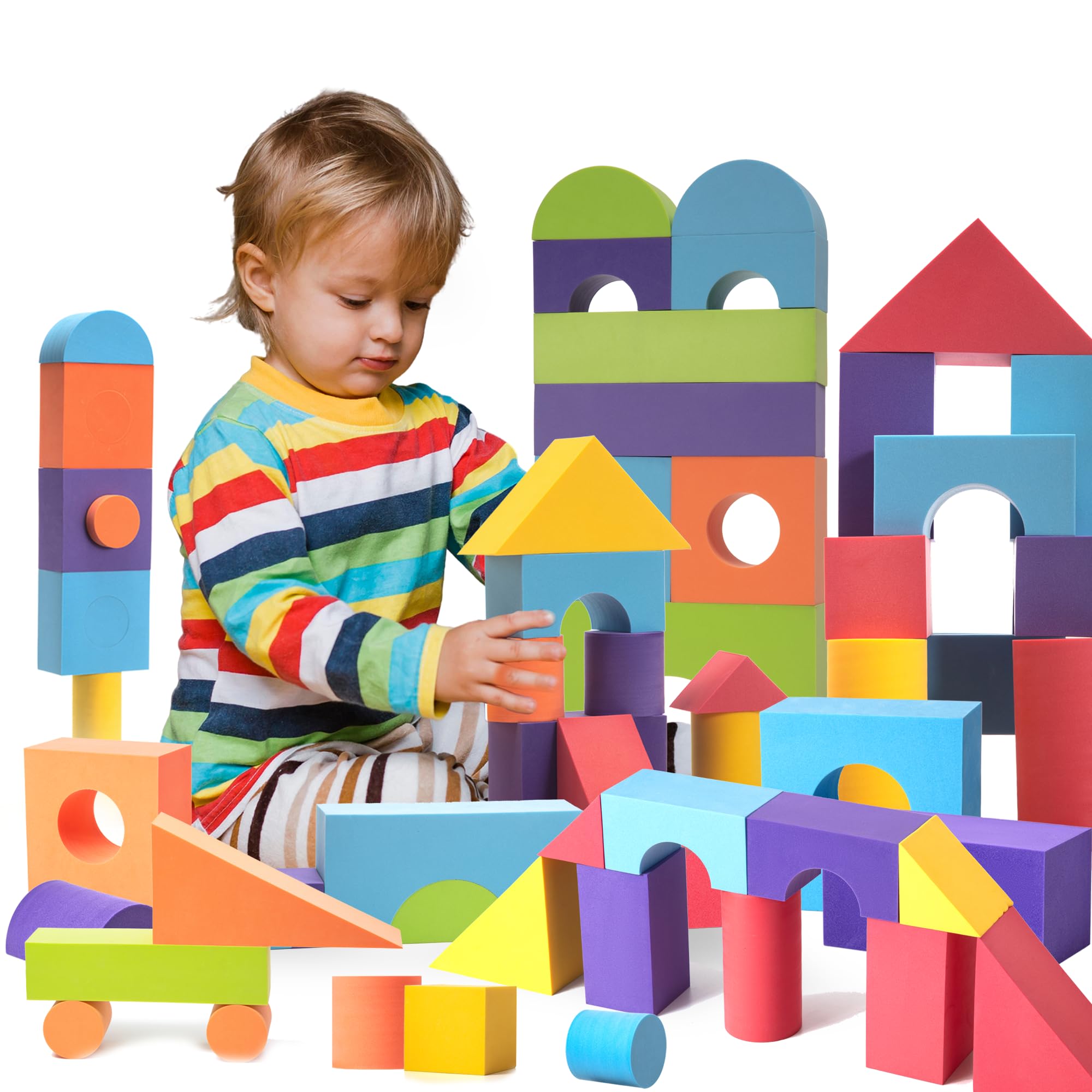
How To Choose The Best Educational Giant Blocks For STEM Learning
Giant blocks all look similar in product photos, but the material and size differences completely change how your child plays with them. The three decisions that matter most are material, piece size, and how many pieces you actually need for the type of builds your child enjoys.
Material: Foam, Wood, or Cardboard
Foam blocks are soft, lightweight, and quiet when they tumble, making them ideal for babies and toddlers under three. Wooden blocks offer satisfying heft and a classic feel but demand a bit more care. Cardboard blocks are hollow, so they can build surprisingly large structures while staying light enough for a preschooler to carry.
Piece Size and Grip
The whole point of “giant” blocks is that each piece is large enough for little hands to grab confidently. Look for blocks at least 3 inches across, which prevents choking hazards and makes stacking easier because the contact area is bigger. If a set claims to be jumbo but ships pieces smaller than your palm, it misses the point.
Count vs. Build Scale
A 16-piece set is plenty for a one-year-old learning to stack two blocks high. A 40-piece set lets a five-year-old build a fort or castle wall they can actually sit inside. Think about the scale of what your child wants to make, not just the number of pieces on the box.
Quick Comparison
| Model | Best For | Material | Piece Count | Age Range | Amazon |
|---|---|---|---|---|---|
| LOLO TOYS Foam Blocks★ Best Overall | Toddlers who need soft, safe stacking | EVA Foam | 30 | 3+ years | Amazon |
| Migargle Wooden BlocksClassic Pick | Classic wooden feel for ages 3-5 | Wood | 32 | 3+ years | Amazon |
| CRAFTY HAPPITOYS Foam BlocksTower Champion | Precise stacking for tall towers | EVA Foam | 34 | 3+ years | Amazon |
| National Geographic Kids Jumbo Cardboard Blocks | Building big forts and castles | Cardboard | 40 | 3+ years | Amazon |
| Bingyouth Foam Blocks | Firm foam that holds shape | EVA Foam | 30 | 3+ years | Amazon |
| Lillian Vernon Cardboard Bricks | USA-made bricks for indoor forts | Cardboard | 24 | 18+ months | Amazon |
| BiggoBlocks Jumbo Set | Rough-and-tumble builders ages 4-8 | Plastic | 24 | 3+ years | Amazon |
| Kvintes Rainbow Wooden Blocks | Baby’s first sensory stacking set | Wood | 16 | 12+ months | Amazon |
In‑Depth Reviews
1. LOLO TOYS Large Building Foam Blocks
Our pick — over 4.5★ from 800+ verified ratings; the strongest balance of quality and price.
The preschool-classroom favorite that survives years of daily play and keeps coming back for seconds.
What wins people over here is the build quality — it is the most-discussed trait by a wide margin, and the reason sets get repurchased. The blocks are made of high-density EVA foam that is washable, lightweight, and floatable, so they work on the living room floor and in the bath. Parents report that a set bought two years ago for a preschool still holds up, which is why some have ordered a second batch without hesitation.
At 30 pieces in 6 colors, the set is sized generously — the whole package measures 23.6 inches by 18.8 inches — and each block is big enough for little hands to grab firmly. The smooth finish is gentle on sensitive skin, and the manufacturer rates it for ages 3 and up. A clear zippered bag keeps everything organized between play sessions, which removes the “where did all the blocks go” problem that plagues open-ended toys.
One honest caveat: while the foam is firm enough to build real towers, it is still soft material, so ambitious castles will have height limits compared to wood or cardboard. Buyers report the set is ideal for building, sorting, and knocking down — which is exactly what a toddler’s STEM journey looks like at this stage.
Why parents stay loyal
- High-density foam holds shape for real stacking play
- Washable, floatable, and waterproof for bath-time builds
- Clear storage bag keeps 30 pieces organized
Who should think twice
- Soft foam limits tower height versus rigid materials
- 30 pieces may feel light for large fort builders
Reach for this if: you want a durable, soft, all-around set that grows with a toddler from first stacks to preschool classroom use.
Look elsewhere if: your child wants to build life-sized forts they can climb inside, since foam pieces cap out at modest heights.
2. Migargle Large Wooden Building Blocks
The hefty wooden set that gives toddlers a satisfying crash and a proper introduction to classic building.
Unlike the soft foam options above, these blocks are noticeably heavier — owners mention pieces run 3-4 inches across with a satisfying heft that makes stacking feel substantial. The set mixes natural wood with painted pieces, all with smooth edges and non-toxic paint, so it is safe for ages 3 and up. The satisfying crash when a tower falls is part of the appeal; it is a sensory experience foam simply cannot replicate.
With 32 pieces including cubes, cylinders, arches, and triangles, the set targets color recognition, sorting, balancing, and hand-eye coordination — the core STEM skills for ages 3-5. A storage bag with drawstring and handles comes included, though parents note the fabric is stiff at first and one handle has been known to give out under heavy use. Some families found 32 pieces limiting for ambitious builds and ordered a second set to double the options.
The trade-off is real: wood is durable but unforgiving if a toddler throws it, and some parents of one-year-olds flagged the half-cylinders as a choking concern, so this is best kept for kids past the mouthing stage. As owners put it: “Great, non-choke size and quality wood. Nice colors. Love that it comes with a bag.”
The honest read: this is the wooden set to beat for ages 3-5, offering real heft and classic educational value that foam cannot match.
The one gripe: the included bag is the weak link — plan on bin storage for long-term use.
3. CRAFTY HAPPITOYS 34 Large Foam Blocks
The precision-cut foam set that stacks taller than most soft blocks and keeps a 4-year-old busy for hours.
Customers note these blocks are much bigger than expected, and the precision machining is the standout feature — exact counts and clean cuts mean towers balance higher than typical foam. The texture actually aids stability when stacking, and the blocks are light enough for a 2-year-old to manage while firm enough to hold shape. One grandmother summed it up: “These blocks are fantastic! They were much bigger than I expected, well made and durable.”
This is a set families buy twice — multiple reviews mention ordering a second set because the first became a daily favorite. The 34 pieces come in mixed shapes and colors with a clear storage bag, and the set covers ages 3 and up with a manufacturer maximum of 120 months. Blocks are non-toxic and tested to high safety standards, with the floatable design making them a candidate for wet play.
The honest limitation is teething: the foam will show bite marks and dents if a toddler chews on it, since the material is soft enough to mark. Parents of teething kids should supervise closely, but for everyone else, this set earns its reputation as among the most-played-with foam options around.
What gets the raves
- Precision-cut foam stacks into taller, more stable towers
- Lightweight enough for 2-year-old hands
- Harder zip storage container protects pieces better than bags
Keep an eye on
- Shows bite marks and dents from teething toddlers
- Bath use is possible but risky for the foam
Best for: families who want a foam set that stacks higher than the competition and holds up to daily creative play.
Not for: households with an active teether who mouths everything, since the soft foam marks easily.
4. National Geographic Kids Jumbo Cardboard Blocks
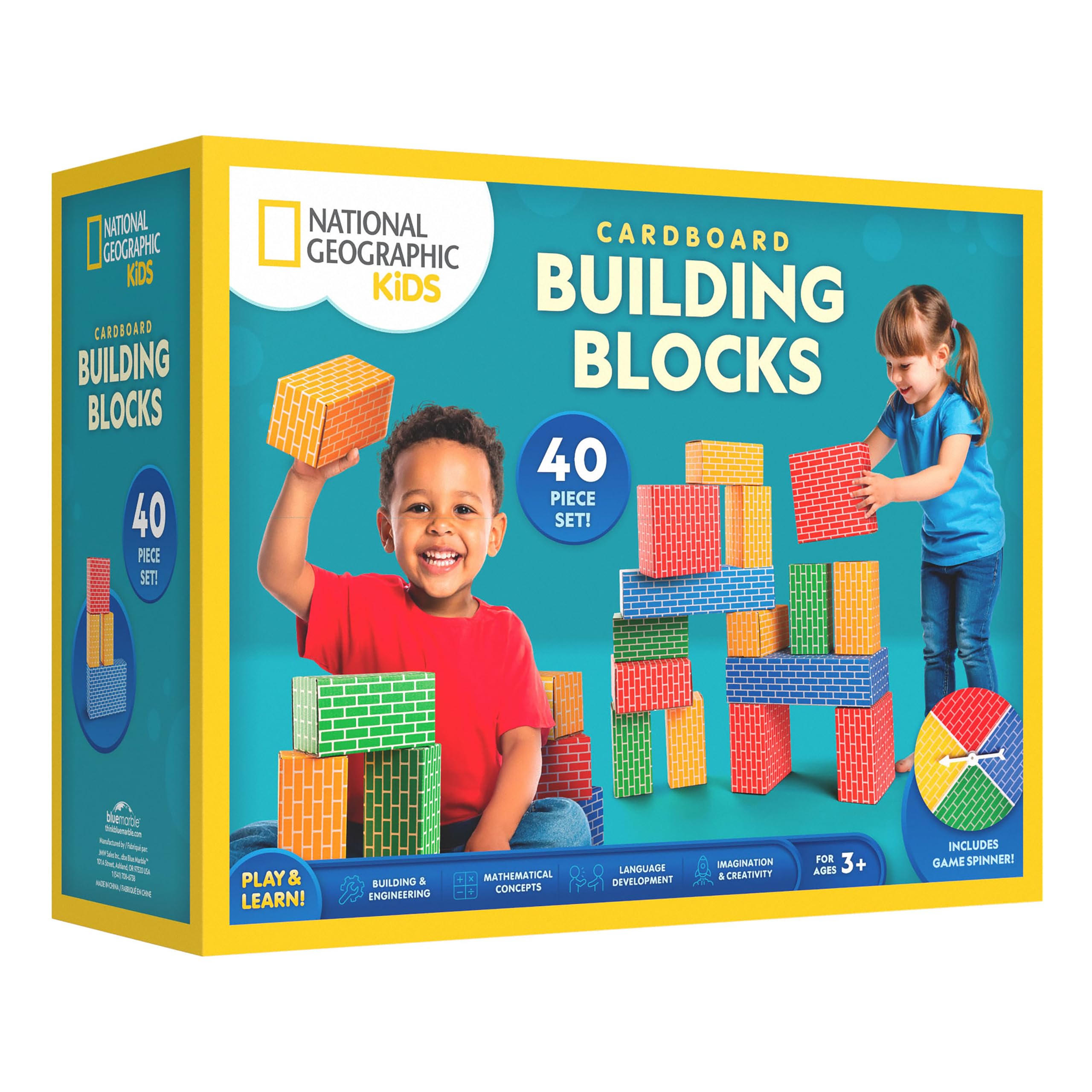
The heavy-duty cardboard kit that builds castles big enough to stand on and survives 18 preschoolers.
The durability story here is the headline — the blocks are sturdy enough for a grown adult to stand on, and one classroom report notes a set held up to a group of 18 kids aged 2-4. The 40 pieces come in red, blue, yellow, and green across 3 brick sizes, plus a game spinner and illustrated activity cards that turn construction into engineering and math prompts. This is the set to beat for open-ended creative play.
Assembly is the catch and it is a real one: the flat-pack bricks take roughly an hour to fold, and some parents admit they only finished the rectangle shapes. Reviewers point out the blocks are worth the setup time, with one family building a sizeable castle wall that sparked princess-and-dragon scenarios. The stackable design holds together securely once assembled, and the cardboard is lightweight and safe on knockdown — no stubbed toes here.
What sets this apart from foam is the scale of possibility: blocks in 3 sizes let a child build towers, forts, tunnels, and even a bridge, which is why classrooms favor it. The stone-style colors look better than basic bricks, and the included crowns and torches add play value no foam set offers.
The standout quality: durability that survives both daily play and adult weight, which no other pick in this lineup can claim.
The cost of entry: expect a full hour of folding before the first build — an occasional unit arrives with uneven folds that need care.
5. Bingyouth Large Building Foam Blocks
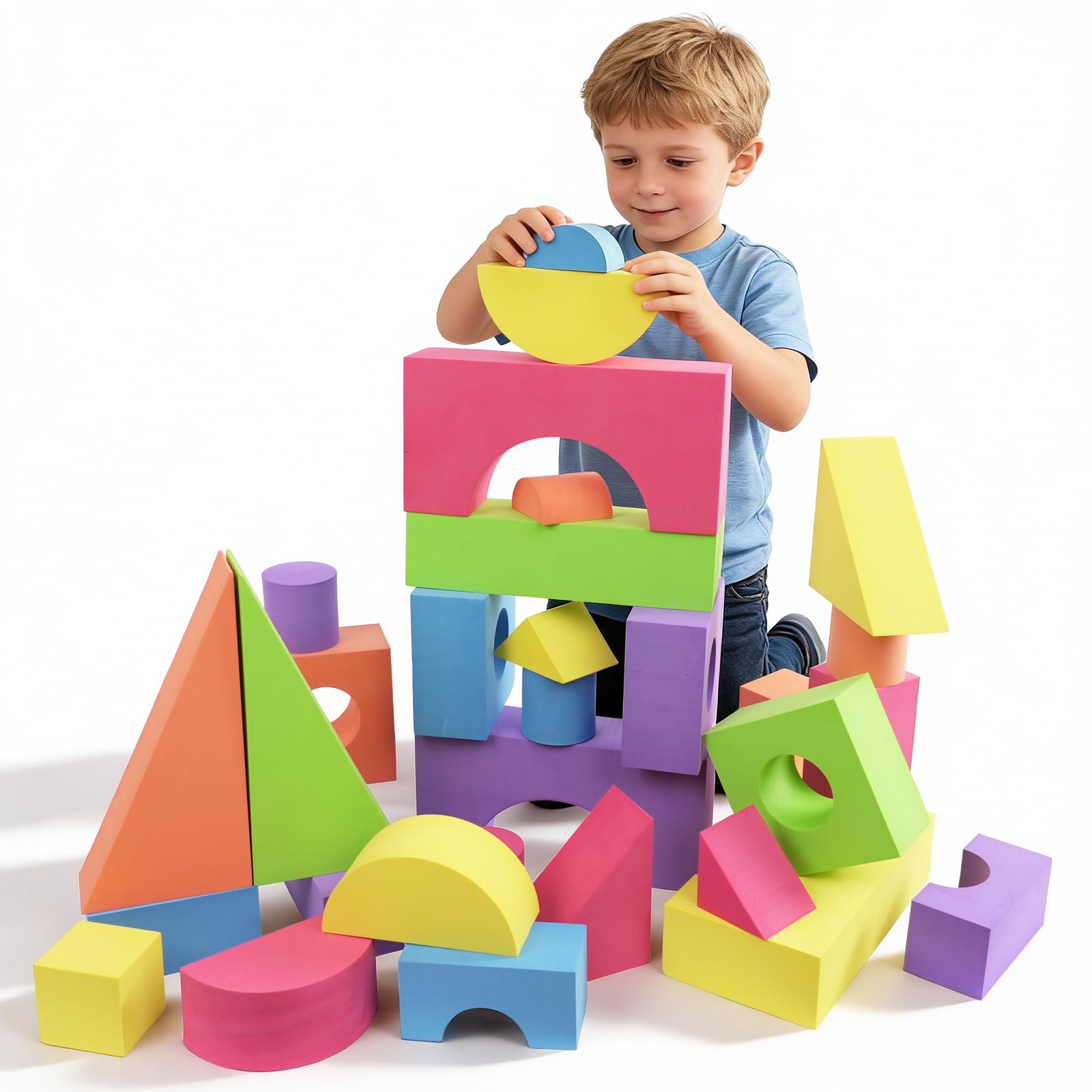
The firm foam set that holds its shape for real building while staying soft enough for painless tumbles.
If you want foam that builds like wood, this is the one parents name their favorite. The blocks use high-density EVA foam that is firm enough to hold shape during construction rather than squishing under pressure, which is what “100% yes, our favorite building blocks!” buyers are describing. At 30 pieces across 6 colors, the set is sized generously — each block is extra large both to prevent accidental swallowing and to give toddlers a bigger grip surface for confident stacking.
The softness is the safety story: when towers fall, there is no pain, no risk of cut hands, and no smashed fingers, which makes it a favorite for grandparents hosting toddlers. The set is tested under strict safety standards, non-toxic, and washable, with a transparent storage bag for easy cleanup. One grandmother of a 2.5-year-old confirmed the blocks are perfect for that age — big, colorful, and soft enough for enthusiastic play.
The main wish from buyers is simply more pieces — “just wish more in package” is a recurring note from families who found one set too small for ambitious builds. For the recommended ages of 3-5, the size and firmness are spot on, and the firm foam holds shape better than softer competitors.
Why it wins fans
- Firm foam holds shape for real construction
- Large size prevents choking and improves grip
- Soft surface means painless tower knockdowns
The common wish
- Only 30 pieces — many families want a bigger bundle
Choose this if: you want the safety of foam with the structural integrity of wood for a preschooler.
Expect to add: a second set if your child likes big builds, since 30 pieces runs out quickly.
6. Lillian Vernon Primary Building Bricks

The USA-made corrugated bricks sturdy enough for adults to stand on, rated for kids as young as 18 months.
Proudly made in the USA, these 24 bricks are crafted from tough corrugated cardboard that is strong enough for a grown adult to stand on yet light enough for a toddler to tote around. Each block measures 9″ x 4″ x 2″, and the set is rated for ages 18 months and up — younger than most competitors, making it a rare option for the under-two crowd. The no-sharp-edges design delivers safe, imaginative play that builds strength and balance.
The durability is the most-praised trait, followed by quality, with owners describing the bricks as sturdy and easy for kids to use. Grandparents report grandchildren playing for hours, building secret hideouts and working toward team goals together. The fold-flat design sets up in minutes, which is faster than the National Geographic kit above, though buyers do note the blocks run smaller than expected and come in just one size.
The honest notes: some say the blocks are smaller than anticipated, and a few report uneven folds on certain bricks. For the 18-month to 3-year range, the light weight and safe edges make this a strong early builder, but older kids building large forts may want the bigger National Geographic pieces.
The clear strength: USA-made durability with the youngest age rating in this lineup — a rare combo for giant blocks.
The honest caveat: single-size bricks run smaller than expected, so check the 9-inch dimension against your space.
7. BiggoBlocks Big Blocks for Kids

The oversized plastic blocks described as basically indestructible, built for kids who throw, stomp, and sit on their creations.
Here is the rare set that survives a child who hurls blocks across the room daily. The quality is the top-praised trait, with one parent calling them “basically indestructible” after watching a son throw them all over the play area. Weighing in at 8 pounds for the full set, these are the heaviest blocks in this lineup, and at 16 x 16 x 16 inches packaged, they are genuinely giant — the kind kids can make a chair from and actually sit on.
Aimed at ages 4-8, the set focuses on motor skills, color recognition, and STEM thinking through large-scale construction. Children have built chairs, walked across floor layouts, and used them for everything from forts to Bible class storytelling — the versatility is a recurring theme. The blocks are non-toxic, stackable, and easy to store, with bright blue, green, red, and yellow colors that hold visual appeal.
Two caveats stand out: at 24 pieces, families consistently wish more came in the bundle, and the item ships flat-packed so there is some assembly required. For kids at the top of the age range who need durable, large-scale building, this is the pick — just know you may end up ordering a second set.
Built for rough play
- Holds up to daily throwing and stomping
- Big enough to build furniture kids can sit on
- Bright colors and easy stacking for ages 4-8
Plan for more
- 24 pieces runs short for big builds
- Flat-pack assembly needed before play
The pick for: energetic kids 4-8 who need blocks that survive rough treatment and build large enough to play inside.
Budget for: a second set, since 24 pieces only goes so far with ambitious builders.
8. Kvintes Large Wooden Rainbow Blocks
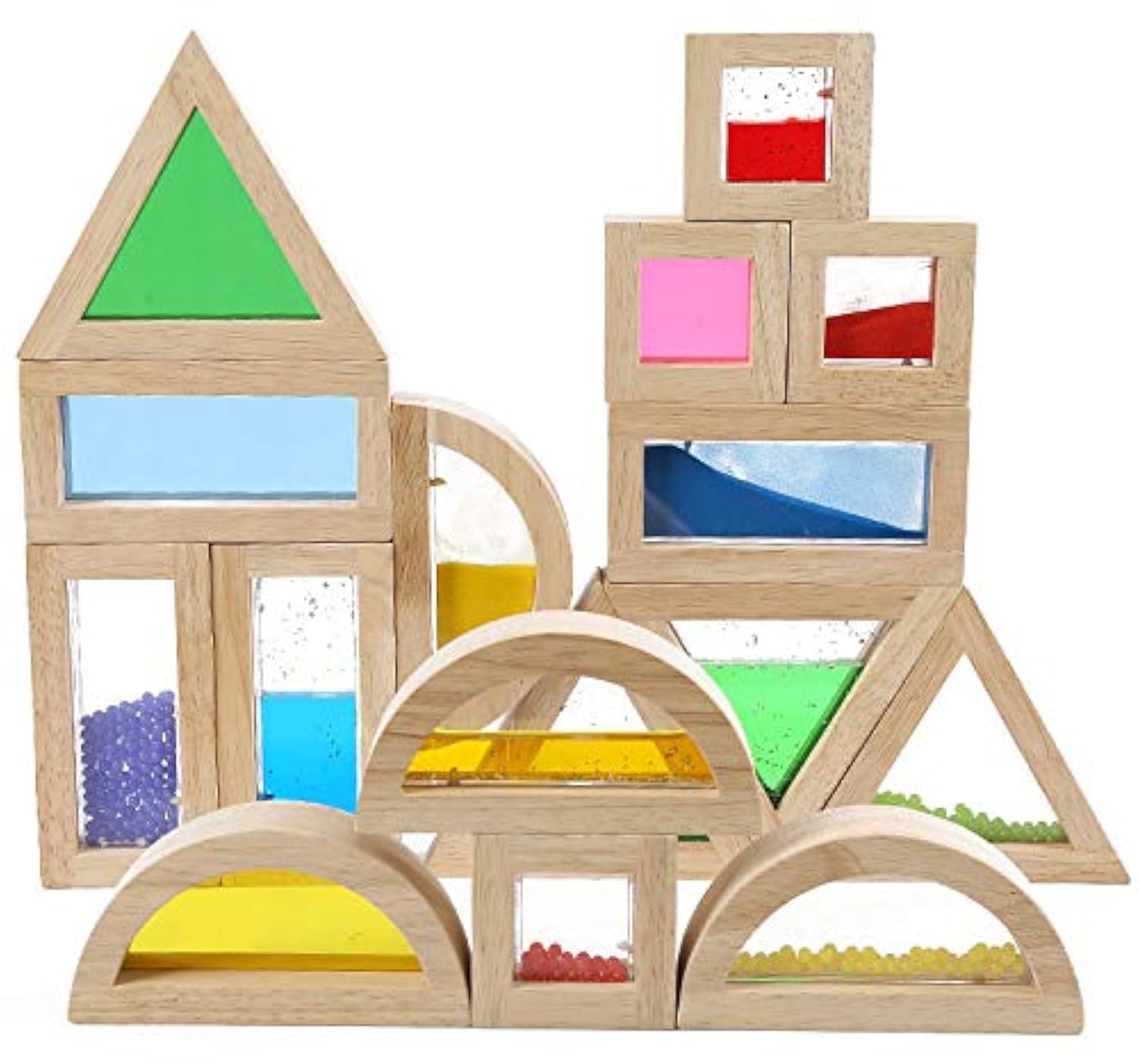
The rainbow hardwood starter set that held a one-year-old’s attention for almost an hour on Christmas morning.
This is the baby’s-first-block set done right. Rated for ages 12-120 months, the 16 pieces come in 4 shapes and 4 rainbow colors made from high-quality hardwood with non-toxic finishes. The size is big enough to eliminate choking worries while remaining easy for small hands, and the engagement factor is proven — one family reported a one-year-old stayed absorbed for nearly an hour, with 3 and 4-year-old siblings also drawn in.
The blocks promote shape awareness, color recognition, matching, stacking, and sorting — the foundational skills that make this a true preschool learning toy. Buyers in kindergarten classrooms praise the quality and educational value, calling it “entirely worth the money for a lasting classroom resource.” The wooden construction is sturdy and easy to store, making it a durable addition to any toy shelf.
The honest trade-offs: 16 pieces is a starter count, not a fort-building arsenal, and some shoppers say the wood shows scratches with heavy play. A few buyers also noted the price feels high for the piece count, though the quality and longevity balance that concern for most.
The best fit: the first wooden block set for a 1-year-old that grows with them through preschool years.
The honest limit: 16 pieces means this is a starter set, and the wood will show wear from enthusiastic play.
Understanding the Specs
EVA Foam Density
EVA foam (ethylene vinyl acetate) is the soft, squishy material most toddler blocks use. High-density EVA is firmer, so blocks hold their shape while stacking instead of collapsing. Low-density foam is softer but dents and bites more easily. If your child chews everything, expect marks on any foam block.
Age Range and Choking Safety
The manufacturer’s age range tells you the minimum safe size for a child’s airway. Blocks that are 3-4 inches across are too large to swallow, which is why most giant block sets start at age 3. Some wooden sets include smaller shapes like half-cylinders that can be a choking hazard for kids under 2, so check the shapes if you have a baby.
FAQ
How many giant blocks do I actually need for good STEM play?
Are foam blocks better than wooden blocks for a 2-year-old?
How do I clean foam building blocks?
Can giant blocks really support a child’s weight?
What is the difference between foam and cardboard giant blocks?
How much assembly do cardboard blocks require?
Do giant blocks really help with STEM learning?
Why do some buyers buy two sets of the same blocks?
At what age can a baby start playing with giant blocks?
How long do giant block sets last?
Final Thoughts: The Verdict
Across the board, the educational giant blocks for stem learning winner is the LOLO TOYS Foam Blocks because it combines the best durability rating, soft safety for toddlers, and a storage bag that keeps the set organized. If you want classic wooden heft for ages 3-5, grab the Migargle Wooden Blocks. And for kids who want to build forts they can climb into, the National Geographic Cardboard Blocks is the one to reach for.
How We Picked
We do not accept paid placement. Every pick is matched to a real buyer and a real use-case; we do not hands-on test units.
Sources & Methodology
Specifications: manufacturer listings and product documentation. Review insights: verified customer reviews, as of August 2026. Pricing: not shown on this page (it changes often); check the current price via the retailer link.
As an Amazon Associate, WellFizz earns from qualifying purchases. This does not affect which products we feature.
Related Guides

Mo Maruf
I created WellFizz to bridge the gap between vague wellness advice and actionable solutions. My mission is simple: to decode the research and give you practical tools you can actually use.
Beyond the data, I am a passionate traveler. I believe that stepping away from the screen to explore new environments is essential for mental clarity and physical vitality.