Our readers keep the lights on and my smoothie glass nicely filled. As an Amazon Associate, I earn from qualifying purchases.
Specs are compiled from manufacturer listings and verified buyer reviews and can change over time — please confirm the key details on the product page before buying.
Landscape edging is the unsung hero of a tidy yard. It keeps mulch in flower beds, stops grass from creeping into your garden, and gives pathways a crisp, finished look. But with so many materials — plastic, steel, rubber, stone-style resin — finding edging that does not pop up, rust through, or look cheap can feel like a gamble.
I’m Mohammad Maruf — the founder and writer behind WellFizz. This guide is built by comparing the manufacturers’ published specifications and the patterns across verified customer reviews, so you get each pick’s real strengths and trade-offs instead of marketing spin.
The real trick is matching the material to the job you need done. Whether you are dividing a veggie bed from the lawn or lining a long driveway, the right edging for landscaping stays hidden in plain sight while doing the hard work for years.
Our Picks at a Glance

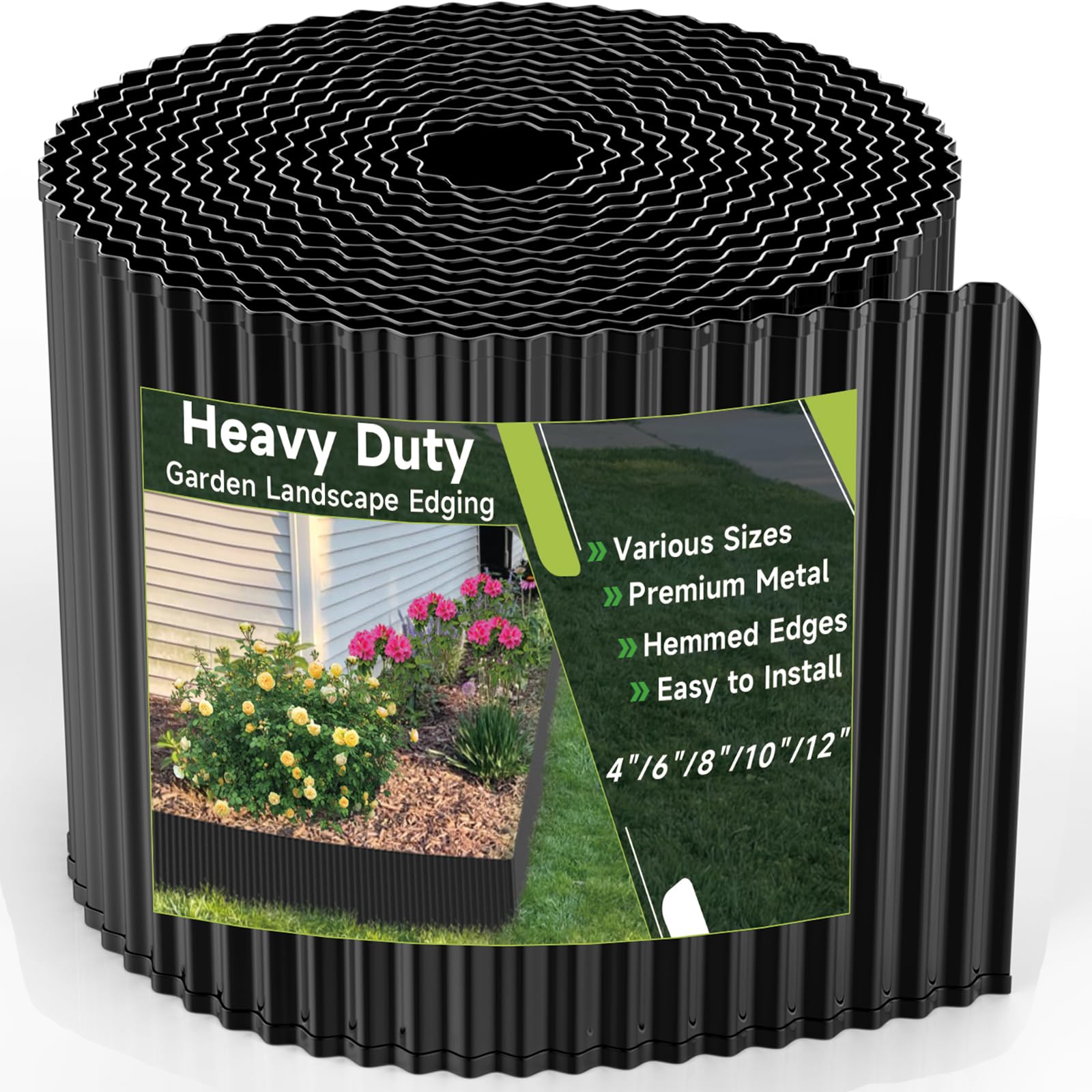

How To Choose The Best Edging For Landscaping
The best edging for your yard depends on two things: what you are trying to contain and how much bending or installing you are willing to do. A flexible plastic coil is great for gentle curves around trees but can wave if the ground is hard. Heavy steel strips stop aggressive roots like Bermuda grass but need a mallet and patience. Rubber sections look professional and survive string trimmers, but they cost more per foot. Match the material to the job — not the other way around.
Material Matters: Plastic, Steel, or Rubber
Plastic edging made from HDPE (high-density polyethylene, a durable outdoor plastic) is light and flexible. It works for simple borders and is easy to cut. Metal edging — usually galvanized or COR-TEN steel — is heavier and lasts much longer, but it can rust in a way that either looks rustic or damages the steel, depending on the type. Recycled rubber edging is thick, bounces back from mower hits, and stays put well in cold climates, but it can be a fair bit heavier per foot than plastic.
Height and Depth: What You See vs. What You Bury
The part of the edging you see above ground is usually between 2 and 5 inches. What matters more is how far the edging goes into the soil. A depth of 4 to 6 inches below ground stops roots and burrowing weeds. A shallower depth is easier to install but may let grass creep under over time. For aggressive lawn grasses, look for edging that offers at least 4 inches of buried material.
Installation: No-Dig vs. Hammer-In vs. Trench
No-dig edging uses long spikes that you pound into the ground through slots in the edging. It is fast but works best in soft or average soil. Hammer-in metal strips have serrated teeth on the bottom that you drive straight down with a mallet. Trench-style edging requires you to dig a narrow channel first, which takes longer but gives a straight, stable result for high-traffic areas like driveways or patios.
Quick Comparison
| Model | Best For | Total Length | Material | Height | Amazon |
|---|---|---|---|---|---|
| Beuta Polyrock Bricks★ Best Overall | Stone-like appearance | 16 ft (4 x 48 in) | Resin | 2.25 in | Amazon |
| GTSABWAY Galvanized SteelTop Performer | Deep root barriers | 20 ft | Galvanized Steel | 12 in | Amazon |
| MASTER MARK Terrace BoardBest Value | Long, straight runs | 40 ft | HDPE Plastic | 5 in | Amazon |
| shsyue Flexible Edging | Curved beds on a budget | 33 ft | HDPE Plastic | 4 in | Amazon |
| EasyFlex Tall Wall | No-dig convenience | 40 ft | Recycled Plastic | 2.5 in | Amazon |
| LXVOOEE Edging Kit | Lots of metal spikes | 60 ft | HDPE Plastic | 4 in | Amazon |
| Worth Garden Galvanized Strips | Hammer-in metal sections | 33 ft (10 x 40 in) | Galvanized Steel | 4.5 in | Amazon |
| EcoBorder Recycled Rubber | Durability and trimmer resistance | 24 ft (6 x 48 in) | Recycled Rubber | 2.75 in | Amazon |
| Edge Right COR-Ten Steel | Heavy-duty permanent borders | 20 ft (5 x 48 in) | COR-TEN Steel | 6 in | Amazon |
In‑Depth Reviews
1. Beuta Polyrock Bricks
Our pick — over 4.5★ from 900+ verified ratings; the strongest balance of quality and price.
The stone-look resin sections that make a flower bed look like a professional hardscape job.
This edging does not pretend to be plastic. Each 6-brick section is made from resin and molded to look like real stone pavers. That is the first thing owners notice — the appearance is the most-praised feature by a wide margin. The sections interlock and come with spikes that buyers confirm deliver “three spikes per six-brick piece,” so each section gets solid anchor points. At 2.25 inches tall, this is a low-profile border, so it works best for defining the edge of a bed rather than stopping aggressive grass roots.
The kit includes four sections, giving you about 16 feet total to work with. Installation is straightforward: snap the pieces together, then drive the included spikes through the pre-placed holes. The resin holds up to weather and seasons; owners mention it stands up well to sun and rain without fading or cracking the way some cheaper plastics do. The biggest caveat is the price — this is a premium look with a premium cost, and some owners find it expensive for the amount of coverage you get. It is also made in the USA, which matters for some buyers.
Unlike the coiled plastic options below, these sections do not wave or curl in the sun. They sit flat and stay where you put them. The trade-off is that you cannot bend them into tight curves the way you can with a flexible coil. For straight lines, gentle arcs, or rectangular beds, this edging delivers a high-end look that genuinely fools the eye.
What Owners Love
- Appearance is the top praise — looks like real stone, not plastic.
- Easy to snap together; no special tools needed.
- Withstands weather without cracking or fading.
The Trade-Offs
- Pricier per foot than coil edging.
- Low height (2.25 in) limits root blocking.
- Cannot form tight curves.
Reach for this if: you want the look of stone edging without the weight or cost of real stone, and you have rectangular or gently curved beds.
Think twice if: you need a tall root barrier or you are covering a very long border on a tight budget.
2. GTSABWAY Galvanized Steel Edging
The tall galvanized steel coil that stops Bermuda grass roots cold.
When your lawn grass is actively trying to invade your flower beds, a 2-inch plastic lip is not going to cut it. This corrugated steel edging stands a full 12 inches tall, That extra depth below ground is what makes this pick a true barrier rather than just a visual border. The corrugated design adds rigidity, so the steel holds its shape even when you bend it into gentle curves.
At 20 feet long and weighing 4.13 kg, this is a dense, heavy roll. You will need a shovel or a rubber mallet to seat it, and for harder soils, a narrow trench makes installation much easier. The steel has a pre-rusted dark patina finish that buyers report looks natural and does not change much with more weathering. The rolled top and bottom edges are smooth to the touch, so there is no sharp metal edge to worry about. Owners also note it cuts easily with metal snips for custom lengths, and it is flexible enough to form circles, straight lines, or unique contours without cracking.
Compared to the MASTER MARK plastic coil below, this is a different class of barrier — the steel is much heavier (4.13 kg vs 3.59 kg for a similar length) and the 12-inch height compared to 5 inches for most plastic options. The only real complaint is that the coil can be unruly straight off the reel. Laying it flat in the sun before installation helps it relax into a manageable shape.
Why It Stands Out
- 12-inch height provides a serious root barrier.
- Galvanized steel with rolled edges — durable and safe to handle.
- Flexible enough for curves, rigid enough for straight lines.
Consider This
- Heavier and more effort to install than plastic coils.
- Can be unruly off the reel; needs flattening or trenching.
Best for: stopping invasive lawn grass, creating deep barriers for raised beds, or edging along pathways where a low profile is not enough.
skip it if: you want a quick no-dig install in soft soil — this needs a trench or a mallet for best results.
3. MASTER MARK Terrace Board
The 40-foot HDPE (high-density polyethylene, a tough flexible plastic) coil that has been a go-to for years at a price that is tough to top.
MASTER MARK has been making HDPE (high-density polyethylene) plastics since 1966, and this coiled edging is their most popular offering for a reason. At 40 feet long and 5 inches tall, it covers a lot of ground for a modest cost. The material is thin enough to flex into curves but rigid enough to hold a straight line once staked. Owners who have bought it repeatedly over the years note that “the original order from 7+ years ago was a thicker material, as with everything else they have made them thinner,” so the current version is a bit more flexible than older batches. Still, the consensus is that it works well for creating quick, neat borders around flower beds and vegetable gardens.
The kit includes 10 stakes, but many owners find that is not enough for the full 40 feet. They recommend buying extra stakes — or spacing them closer together — to prevent the edging from waving. Another tip that comes up frequently is to lay the coil flat in the sun before installation. Warm HDPE relaxes and straightens out much more easily, giving you a cleaner line. The wood-grain texture on the visible side adds a subtle decorative touch that looks better than plain black plastic.
Compared to the EasyFlex below, this one costs less per foot but is thinner and more prone to waving if not staked properly. The EasyFlex has a thicker, rubberier feel and a more sturdy spike system, which may justify the extra cost for longer or more visible runs. The MASTER MARK is the better choice for covering large areas where minor imperfections in the line are acceptable.
Solid value pick: good quality, easy to install, and inexpensive for 40 feet. Just budget for extra stakes and a sunny day to warm the coil.
Reach for this if: you have a large border to edge and want the most footage for your dollar, or you are okay with a few extra steps (warming, extra stakes) for a clean result.
The catch: thinner than earlier versions; plan for closer stake spacing to avoid waves.
4. shsyue Flexible Edging
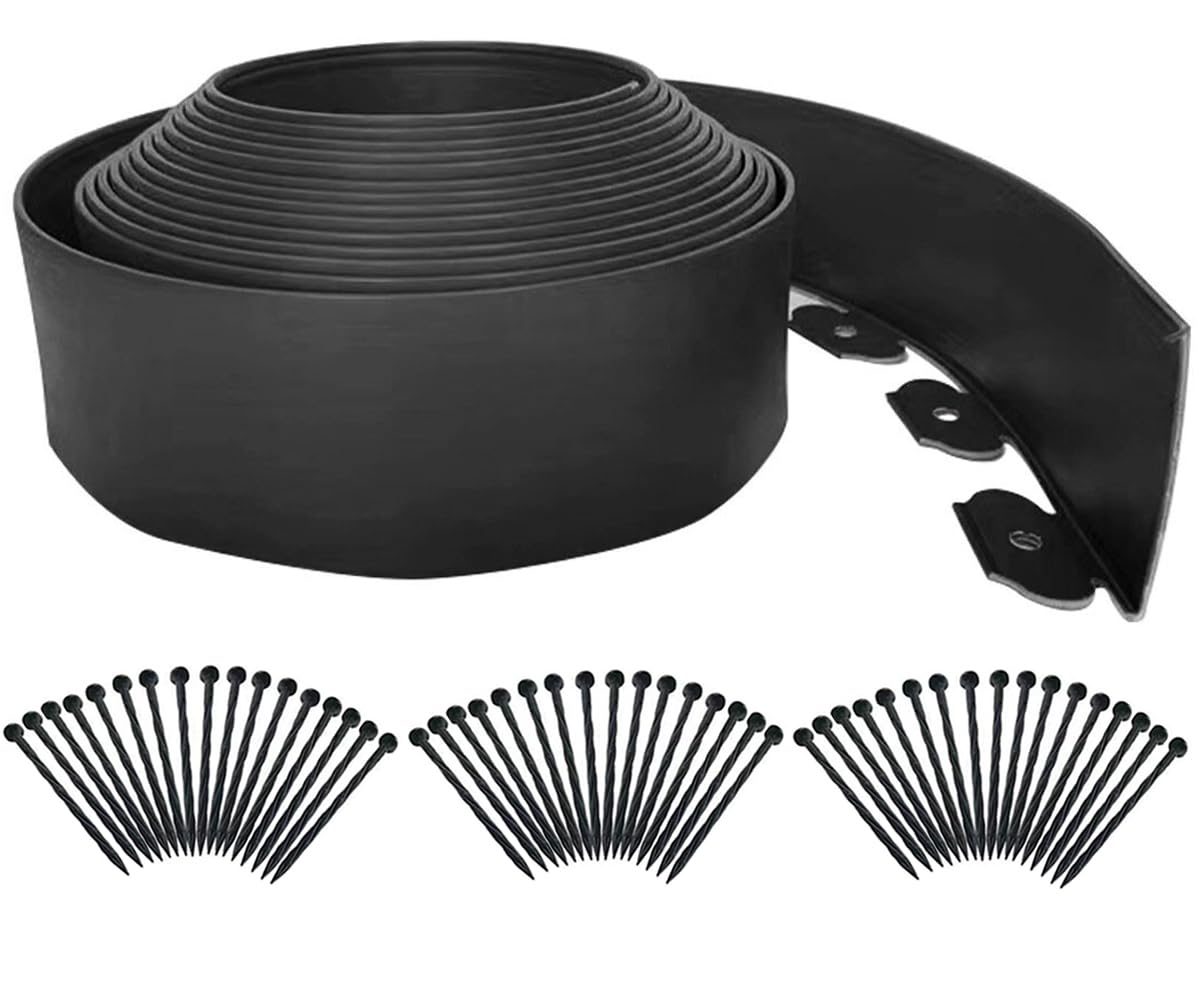
The no-dig entry point that wraps around trees and wavy beds with minimal effort.
At 33 feet long and 4 inches tall, this plastic coil edging from shsyue is a straightforward, budget-friendly way to clean up garden borders. The kit comes packed with 50 spiral spikes, which is more than most kits include, giving you plenty of anchors to keep the edging in place. The “no need to dig” installation is a real time-saver: just bend the edging to the shape you want along the ground and hammer the spikes through the pre-cut slots. Owners confirm it works well for containing mulch and soil, and the 4-inch height is enough for most light-duty borders around flower beds and trees.
The main durability question is the plastic stakes. Several owners note that the spikes can break if you hammer them straight into hard or rocky soil without pre-drilling. The advice is to use a metal stake or a screwdriver to create a pilot hole first, then drive the plastic spikes in. The HDPE (high-density polyethylene) material itself feels durable enough for typical yard use, but it is not as thick or rigid as the MASTER MARK or EasyFlex coils. For soft soil and gentle curves, it works perfectly. For heavy clay or very long straight runs, you may want to look at a sturdier option.
Overall, this is a good match for first-time edging buyers or anyone covering multiple small beds on a tight budget. The generous spike count is a genuine plus, even if the spikes themselves need gentle handling.
Good start for budget edging: easy to install, lots of spikes, and 33 feet of coverage. Pre-drill for the spikes in firm soil and it will do the job.
Best for: small curved beds, tree rings, and anyone who wants a simple weekend project with no digging.
pass on it if: your soil is rocky or hard-packed, or if you need edging that can survive direct hits from a string trimmer.
5. EasyFlex Tall Wall No-Dig Edging
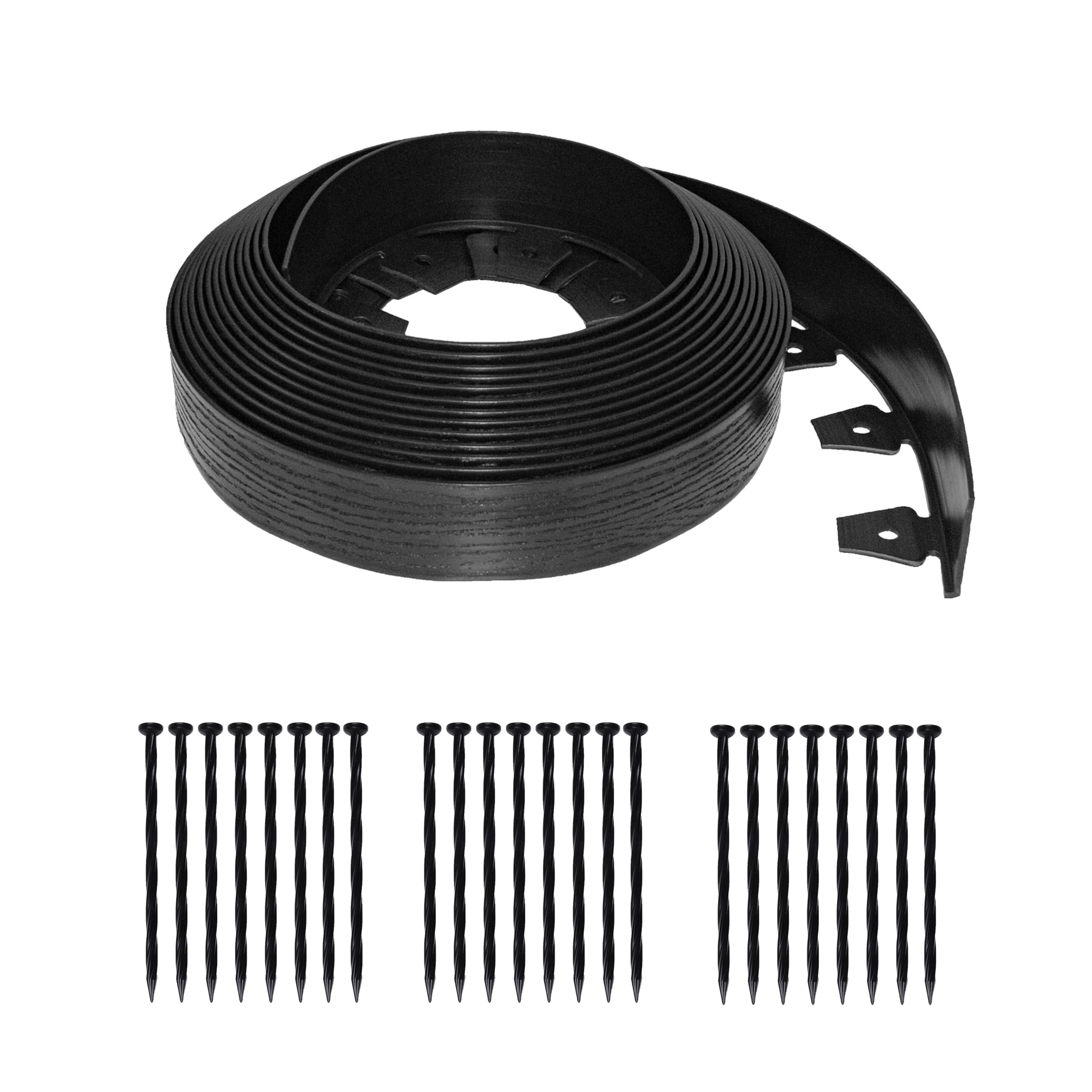
The no-dig coil that feels more like a sturdy rubber bumper than a flimsy plastic strip.
EasyFlex uses a thicker, recycled plastic blend that feels denser and more rubbery than standard HDPE edging. At 2.5 inches tall, it is on the shorter side, but the material’s rigidity means it resists bending from soil pressure and mower bumps better than thinner coils. The 40-foot kit includes 24 anchoring spikes — long spiral stakes that grip the ground firmly. Owners consistently say you need more spikes than the kit provides; spacing them every foot instead of the standard gap makes a big difference in keeping the edge straight.
among the most appreciated details is that the 2.5-inch height is low enough that most lawn mowers can ride right over it without hitting the blade. That means less hand-trimming along borders. The material also stands up to string trimmers well; owners mention it takes direct hits without cracking or fraying. The only recurring issue is that the edging can curl in hot sun if not staked firmly enough — another reason to buy extra spikes and space them closely.
Compared to the MASTER MARK coil, the EasyFlex is pricier but noticeably thicker and more trimmer-resistant. It is also made in the USA from recycled materials, which adds appeal for eco-conscious buyers. If you want a no-dig installation with a more substantial feel, this is a strong upgrade.
What Works
- Thick, rubbery material resists trimmers and mower hits.
- Low profile clears most mower decks.
- Made in USA from recycled plastic.
What to Plan For
- Buy extra spikes — the 24 included are barely enough for 40 ft.
- Can curl in hot sun if not staked every foot.
Best for: a durable no-dig border that will not crumple under the lawn mower, especially along driveways or paths.
Think twice if: you need a tall root barrier — the 2.5-inch height is strictly for visual separation and mulch retention.
6. LXVOOEE Edging Kit
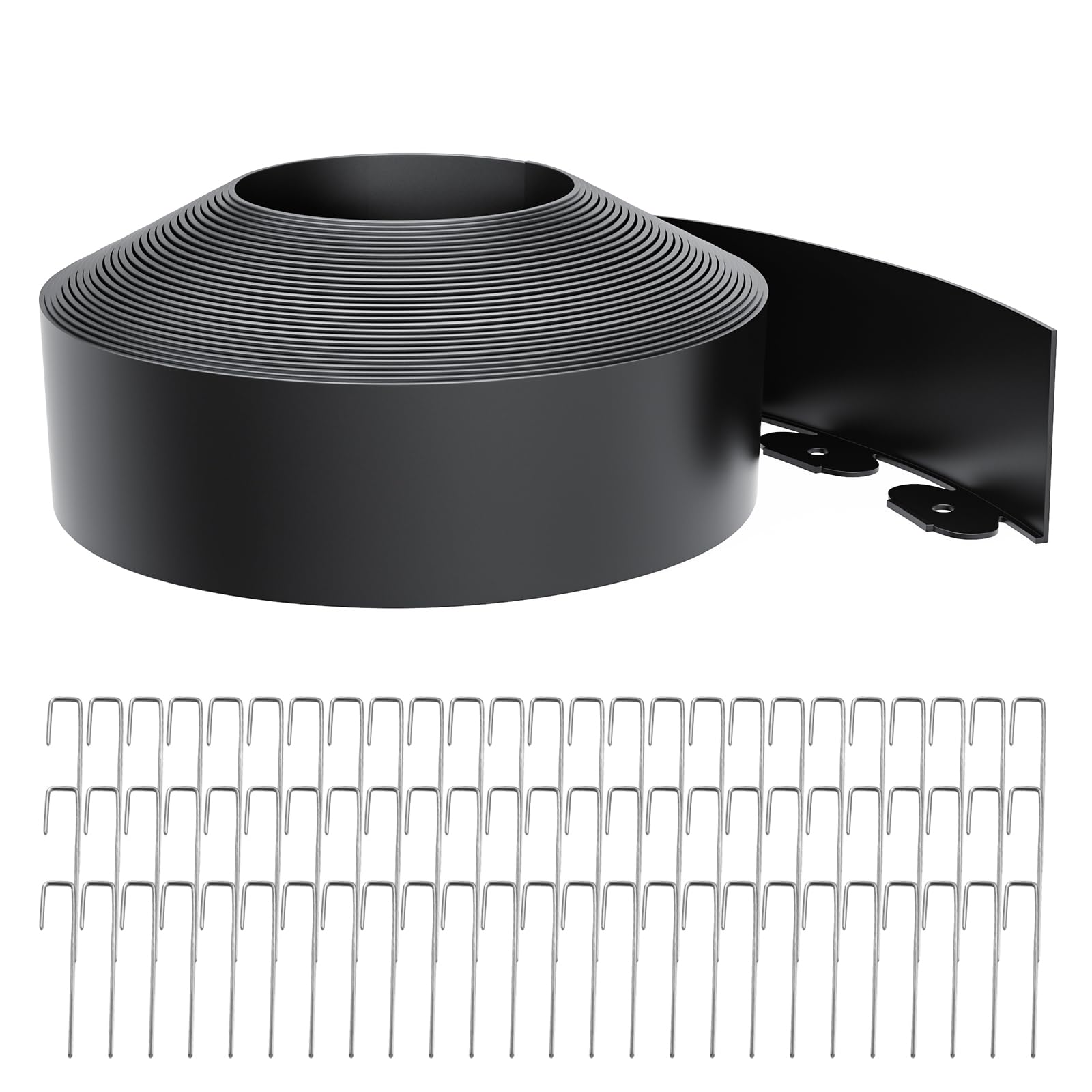
The 60-foot coil that gives you more plastic and more metal spikes than almost any other kit.
This kit from LXVOOEE boost the two things that matter most for a no-dig install: length and anchors. The coil runs 60 feet, which is enough to edge a good-sized yard, and it comes with 75 metal staples — not plastic ones. That is a big difference. The spikes are made from 8-gauge galvanized steel, so they will not snap during installation the way plastic stakes can. The dual-anchor-point design also holds the edging more securely than a single-prong spike, especially in moist soil where a single anchor might shift.
The edging itself is made from thick PE (polyethylene) material. Owners find it easy to bend into curves and note that it keeps its shape once staked. The 4-inch height is standard for decorative borders and works well for keeping mulch and soil contained. The only criticism is that the kit could include even more spikes for a 60-foot run, though 75 is already a generous count. If you space them every 10 inches or so, you will use all of them and get a very clean line.
Smart buy for large borders: 60 feet of coverage plus heavy-duty metal staples. The thick PE material and professional spike system make installation straightforward and long-lasting.
Best for: covering a long perimeter with no-dig convenience and metal spikes that will not break.
The only note: you may still want a few extra spikes for the tightest, straightest hold.
7. Worth Garden Galvanized Steel Strips

The hammer-in metal strips that create razor-sharp lines between lawn and garden.
Unlike coiled edging that you stake from above, these 40-inch metal strips from Worth Garden hammer directly into the ground. Each strip has serrated saw teeth along the bottom edge that grip the soil and prevent frost heave. The pack of 10 strips covers about 33 feet total, and the 4.5-inch height includes 2 inches above ground and 2.5 inches below as spikes. The black powder coating protects the galvanized steel from corrosion, and the rounded top edge keeps the profile safe for barefoot traffic.
Owners consistently praise how easy these are to install: mark your line, place the strip, and drive it down with a rubber mallet. Because each strip is a individual piece, you can create very straight lines or gentle curves by angling each section slightly. The kit includes 11 connecting clips that lock the strips together, plus a pair of gloves. The main critique is that the spikes can be hard to drive into rocky or very hard soil — some owners pre-soak the ground or use a smaller pilot hole. For sandy or average soil, installation is fast and satisfying.
Compared to the GTSABWAY coil, these strips are less flexible for tight curves but give a much more precise straight line. They are also easier to handle one at a time than wrestling a full steel coil. The trade-off is a slightly higher price per foot, though the powder-coated finish adds corrosion protection that the bare galvanized coil does not have.
Advantages
- Hammer-in design gives a crisp, straight border.
- Powder-coated for extra rust resistance.
- Individual strips are easier to handle than a full coil.
Limitations
- Not ideal for very tight curves; better for straight or gentle arc lines.
- Hard ground may need pre-soaking or pilot holes.
Best for: creating a precise, permanent edge along straight pathways or rectangular beds where a professional look matters.
it’s not for you if: you have winding, complex curves that need a flexible coil to follow closely.
8. EcoBorder Recycled Rubber Edging

The hefty L-shaped rubber sections that shrug off string trimmers and snow plows.
EcoBorder is a different breed of edging. Each 48-inch section is made from recycled rubber in a solid L-shape profile that sits flush against the ground. At 2.75 inches tall and 6.8 pounds per box of six sections, this is heavy, dense material that stays put by sheer weight as much as by its anchoring spikes. The rubber does not crack, rot, or fade the way some plastics do, and customers note it surviving direct hits from mowers and trimmers without any damage. One owner even expects it to withstand a tractor running over it in snow.
Installation is straightforward but has a few quirks. The joining pins that connect sections are plastic, and multiple owners note that they can break if hammered too hard. The workaround is to pre-drill the pin holes with a small drill bit and tap the pins in gently. Others have replaced the plastic pins with pieces of hooked rebar painted black. The rubber itself is flexible enough for gentle curves, but it will not bend into tight circles. For straight runs and wide arcs along driveways or foundation beds, it creates a very polished, finished edge that keeps mulch exactly where it belongs.
Compared to the resin Beuta bricks, the EcoBorder is more sturdy and lower-profile, and it is much better at surviving equipment hits. It is also more expensive and heavier to transport. If you are tired of replacing plastic edging every couple of years, this is the upgrade that finally ends the cycle.
Heavy-duty upgrade: the rubber L-shape is nearly indestructible, and the finished look is tough to top. Handle the plastic joining pins with care and this edging will outlast most of your yard tools.
Best for: high-traffic borders near driveways, sidewalks, or foundation beds where mowers and trimmers constantly hit the edge.
Think twice if: you need tight curves or you are covering a very large area — the cost per foot adds up quickly.
9. Edge Right COR-Ten Steel Strips

The 16-gauge COR-TEN steel that will probably outlast your house.
Edge Right uses COR-TEN steel — the same weather-resistant material used in architectural cladding and shipping containers. It is 16-gauge thick, which is noticeably heavier than the galvanized steel used in most landscape edging. The steel develops a stable rust patina over time that actually protects the metal from further corrosion, rather than eating through it. Reviewers point out the patina develops into an “attractive bronzey” color that blends naturally with garden soil and stone. The rolled top edge is smooth and safe, and the serrated bottom sinks deep into the soil for a 6-inch total height — one of the tallest options available.
The 5-pack covers about 20 feet, and each strip is 48 inches long. Installation requires a sledgehammer or heavy mallet with a wood block to protect the rolled top edge. The strips bend with foot pressure for gentle curves, but tight bends need patience and a bending brake or similar tool. Owners confirm it cuts easily with a circular saw or hacksaw for custom lengths. The joining stakes are designed to flow with the contour of the edging, so connections stay flush even on curves.
This is the most expensive pick here, and it is the most permanent. If you plan to stay in your home for decades and want edging that will never rot, crack, or need replacement, Edge Right is the final answer. The one honest caveat: the developing rust patina is not for everyone. If you prefer a consistent black or green finish, you will need to seal the steel, which adds a step and extra cost.
What Justifies the Price
- 16-gauge COR-TEN steel — thicker and more durable than any other edging here.
- 6-inch depth for serious root blocking.
- Develops a protective rust patina that lasts for generations.
What to Know
- Expensive — the premium for permanent edging is real.
- Rust patina look is not for everyone; sealing is an option.
- Tight curves require significant effort and may need a bending tool.
Best for: homeowners who want a “buy it for life” edging solution for high-visibility borders, especially along driveways, patios, or formal gardens.
look elsewhere if: you are on a tight timeline or budget, or you want a look that stays uniform black or green without extra work.
Understanding the Specs
Depth: The Real Root Barrier
The height you see above ground is just for looks. What counts for keeping grass and weeds out is how far the edging goes below the surface. A depth of 4 inches or more will stop most common lawn grass roots. Shallow edging (2 inches or less underground) works fine for holding mulch but will not stop creeping grasses like Bermuda or zoysia.
Spike Count and Type
The stakes that hold your edging in place matter as much as the edging itself. Plastic spikes are cheaper but can snap when hammered into hard ground. Metal spikes — especially galvanized steel — are tougher and reusable. More spikes mean a straighter, more stable line. A good rule is one spike every 8 to 12 inches for the cleanest result. Kits that skimp on spikes leave you with a wavy border.
FAQ
How deep should I bury landscape edging for the best results?
Is plastic edging durable enough for long-term use?
Can I install landscape edging without digging a trench?
Will galvanized steel edging rust and damage my garden soil?
How do I keep plastic edging from waving or bowing?
What is the best edging for keeping mulch in flower beds?
Can I cut landscape edging to custom lengths?
Which edging is best for curved flower beds?
How long does landscape edging typically last before needing replacement?
Can I reuse landscape edging if I redesign my garden later?
Final Thoughts: The Verdict
Across the board, the edging for landscaping winner is the Beuta Polyrock Bricks because it combines the best possible look with genuinely easy installation and over 900+ owners rating it at 4.6 stars. If you want a tall root barrier that stops invasive grass, grab the GTSABWAY Galvanized Steel Edging. And for a no-dig border that resists mowers and trimmers, the EcoBorder Rubber Edging is the one to reach for.
How We Picked
We do not accept paid placement. Every pick is matched to a real buyer and a real use-case; we do not hands-on test units.
Sources & Methodology
Specifications: manufacturer listings and product documentation. Review insights: verified customer reviews, as of July 2026. Pricing: not shown on this page (it changes often); check the current price via the retailer link.
As an Amazon Associate, WellFizz earns from qualifying purchases. This does not affect which products we feature.
Related Guides

Mo Maruf
I created WellFizz to bridge the gap between vague wellness advice and actionable solutions. My mission is simple: to decode the research and give you practical tools you can actually use.
Beyond the data, I am a passionate traveler. I believe that stepping away from the screen to explore new environments is essential for mental clarity and physical vitality.