Our readers keep the lights on and my smoothie glass nicely filled. As an Amazon Associate, I earn from qualifying purchases.
A true everyday carry first aid kit shouldn’t be a bulky afterthought you leave in the car. It needs to disappear into a backpack, sling, or glovebox until a scraped knee, deep cut, or blister demands fast, organized action — which is exactly where most kits fail, turning a moment of panic into a frustrating dig for supplies.
I’m Mohammad Maruf — the founder and writer behind WellFizz. I’ve spent countless hours cross-referencing the contents, case materials, weight, and closure systems of the most popular compact medical kits to separate genuine trauma-ready designs from overpriced band-aid collections.
Whether you are a trail runner, a daily commuter, or a parent packing a diaper bag, the right edc first aid kit balances smart organization with real trauma supplies without weighing you down.
How To Choose The Best EDC First Aid Kit
Every EDC first aid kit makes a trade-off between compactness and comprehensive coverage. Understanding the few specs that actually matter will prevent you from buying a pouch that stays in a drawer — or a bag that tries to treat a GSW but barely fits a Band-Aid.
Case Material and Closure
A kit that lives in a pack or car needs a shell that resists punctures and moisture. Look for 600D to 1000D ripstop nylon or water-resistant EVA hard shells. Two-way zippers that open wide enough to lay the case flat make a difference when you are rifling through supplies with one hand. Molle webbing adds versatility if you plan to attach it to a pack or vest.
Content Curation Versus Bulk Count
A 200-piece count means little if the kit is stuffed with tiny alcohol wipes and useless butterfly strips. Smart kits include trauma shears, a CPR mask, a trauma pad, an elastic bandage, and proper blister care like moleskin. Ignore the total part number — scan the actual supply list for what stops bleeding and stabilizes injuries.
Organization and Labeling
Under stress, you will not remember which compartment holds the gauze versus the tape. Kits with labeled or color-coded pockets let you grab the right supply in seconds. Elastic loops keep items from migrating inside the pouch. A built-in quick-reference card or wilderness medical guide adds genuine value for backcountry carry.
Quick Comparison
On smaller screens, swipe sideways to see the full table.
| Model | Category | Best For | Key Spec | Amazon |
|---|---|---|---|---|
| Pasenhome Rapid-Response Kit | Premium | Quick-access in car or pack | 600D ripstop with Molle straps | Amazon |
| Adventure Medical Hiker | Premium | Ultralight day hikes | Water-resistant bag, 9.91 oz | Amazon |
| Rhino Rescue EVA Kit | Mid-Range | Water-resistant outdoor carry | EVA hard shell, 130 pieces | Amazon |
| Everlit Tactical IFAK | Mid-Range | Heavy-duty tactical loadouts | 1000D nylon, 180 pieces | Amazon |
| Rhino Rescue Ultralight | Budget | Minimalist EDC sling packing | Nylon case, 0.45 lb loaded | Amazon |
In‑Depth Reviews
1. Pasenhome Rapid-Response Compact First Aid Kit

This kit solves the single biggest problem in EDC first aid: finding what you need under pressure. Twenty labeled compartments with brief use notes mean you do not waste seconds guessing which pocket holds the trauma pad versus the tape. The 600D ripstop polyester shell and reinforced two-way zippers are built to live in a backpack or clip onto Molle-compatible gear without fraying or splitting.
Packed with trauma pads, gauze, shears, tweezers, an emergency blanket, and a triangular bandage, the contents lean toward real wound care rather than a pharmacy of alcohol wipes. The compact footprint, roughly 7.9 by 5.9 by 3.6 inches, leaves enough spare room to add a personal tourniquet or extra meds without bulging the zipper.
Alaska-based reviewers specifically praised the absence of brittle clear plastic that cracks in extreme cold. The combination of smart labeling, a tough shell, and genuine trauma essentials makes this the most practical daily-ready kit for car, camping, or home storage in this roundup.
Why it’s great
- Labeled compartments accelerate access during real stress.
- 600D ripstop shell resists punctures and weather.
- Compact with extra room for user-added items.
Good to know
- Includes only one trauma pad — serious users may want to double up.
- Not fully waterproof; zipper is weather-resistant, not sealed.
2. Adventure Medical Kits Mountain Series Hiker
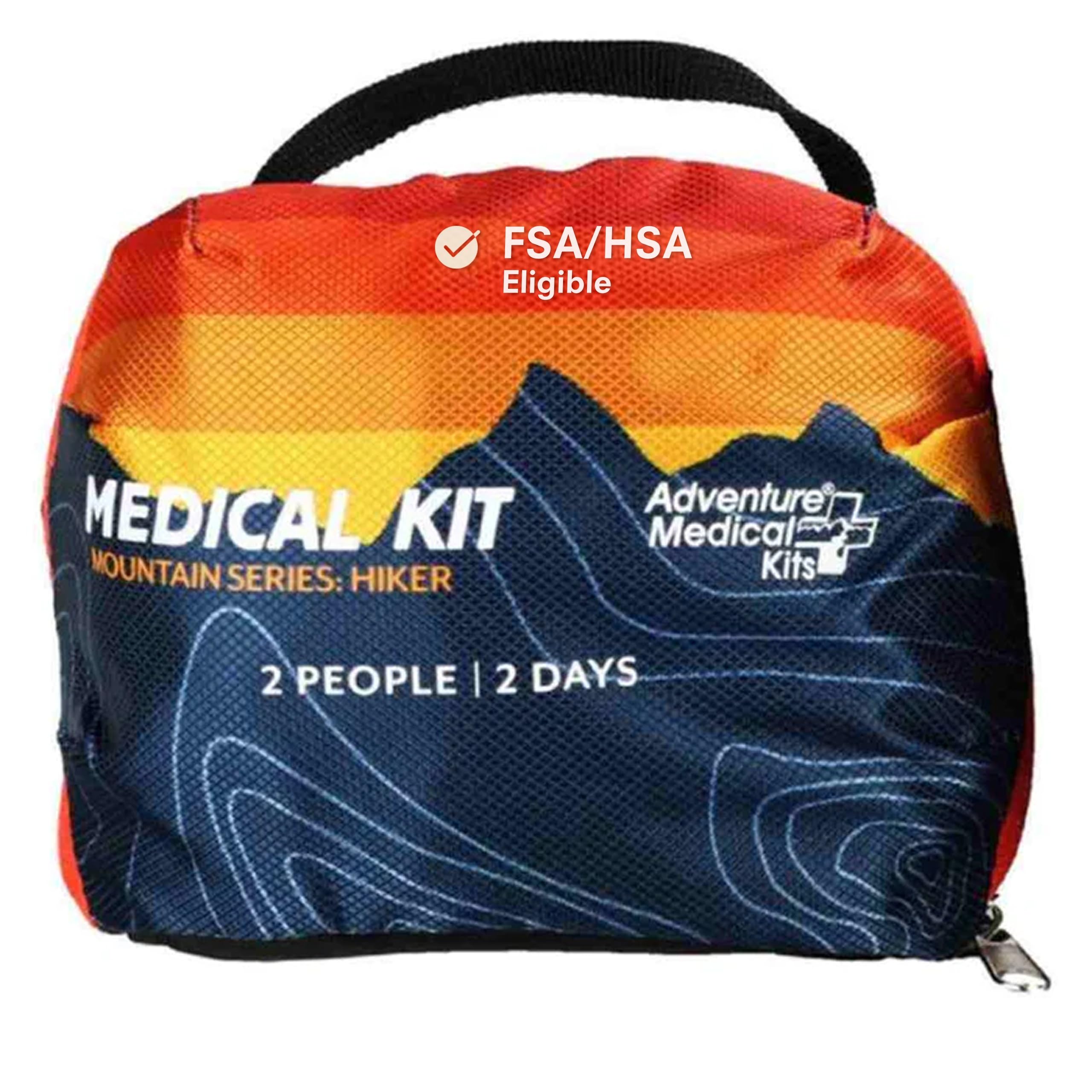
Adventure Medical Kits targets a specific buyer: the backcountry traveler who needs a summit-ready kit that weighs under ten ounces. The Hiker variant supports two people for two days with a curated selection focused on advanced wound care — a trauma pad, an elastic bandage, and a comprehensive wilderness first aid book that instructs rather than assumes prior medical knowledge.
The Easy Care organization system uses clearly labeled pockets inside a water-resistant bag, so you can locate supplies without dumping the whole pouch on the trail.
Day hikers and short backpacking trips are this kit’s sweet spot. The form factor leaves space for adding a few personal medications if you remove the guidebook. For anyone who wants a lightweight but medically credible companion for alpine routes, this is the most intelligent option on the list.
Why it’s great
- Includes a real wilderness medical guide.
- Weighs only 9.91 ounces fully stocked.
- Quality elastic bandage and trauma pad included.
Good to know
- Gauze roll and tape quantities are short for extended trips.
- Medications expire within roughly 20 months — rotate supplies.
3. RHINO RESCUE EVA First Aid Kit

The EVA hard-shell case from RHINO RESCUE brings a different advantage: crush resistance and water repellency. The carefully selected EVA material and water-resistant outer zipper keep contents dry during unexpected rain or splashes, making this kit a strong candidate for boaters, kayakers, and anyone who stores gear in a damp environment like a truck bed or trunk.
With 130 pieces including a CPR mask, first aid guide, and a whistle, the contents cover everything from blister prevention to burn care. The double-way zippers and upgraded carabiner allow you to clip it to a backpack or bicycle frame. Two zippered dividers inside prevent supplies from shifting into a single jumbled pile, which is the most common reason compact kits become useless over time.
Reviewers consistently note this kit’s value for road trips and fishermen, especially the inclusion of anti-itch ointment for no-see-um bites. The trade-off is weight: at 1.35 pounds fully loaded, it is heavier than a soft pouch, but the added protection justifies the bulk for wet or rough environments.
Why it’s great
- EVA hard shell protects contents from crushing and moisture.
- Includes a CPR mask and whistle for emergency signaling.
- Two zippered dividers keep supplies organized.
Good to know
- Heavier than soft-shelled kits of similar capacity.
- Plastic clips on the carabiner may feel less durable than metal alternatives.
4. Everlit 180-Piece Tactical First Aid Kit IFAK

Designed by Army veterans, the Everlit IFAK uses a 1000D reinforced nylon pouch that can handle the worst abuse a tactical vest, plate carrier, or duty belt can throw at it. The exterior measures 6 by 6 by 4 inches and weighs 1.2 pounds, but the real story is the density of trauma-focused supplies: burn dressing, shears, a CPR mask, wound dressings, elastic bandages, eye pads, iodine, and moleskin for blister relief.
The two main pockets plus elastic keepers prevent the classic IFAK problem of supplies rattling loose inside a single cavern. Users regularly add their own tourniquet, chest seal, and blood-stop gauze, which the pouch accommodates without needing a larger case. The compact square shape packs efficiently into bags but does consume corner space — something to consider if you are stuffing it into a small daypack.
For anyone building a genuine tactical or vehicle trauma kit, this is the most serious option here. The included supplies cover both everyday cuts and more serious bleeds, and the 1000D shell will outlast any soft-sided pouch in rough conditions.
Why it’s great
- 1000D nylon pouch is nearly indestructible.
- Includes iodine, burn dressing, and moleskin — not just basics.
- Veteran-designed layout with two organized main pockets.
Good to know
- Square shape wastes some space in rounded backpack compartments.
- No trauma shears included — some IFAK users want dedicated shears.
5. RHINO RESCUE Ultralight Small First Aid Kit

Weighing just 20 grams empty and 0.45 pounds fully stocked, this is the kit for the ultralight backpacker, commuter sling user, or cyclist who refuses to carry extra grams. The high-quality nylon fabric was deliberately selected from dozens of materials to balance featherweight feel with surprising tear resistance. Dimensions of 180 by 100 by 30 mm let it slide into any bag pocket without noticeable bulk.
RHINO RESCUE trimmed the contents to 79 pieces — only the most needed items for minor wounds, cuts, scrapes, burns, and cold care. A CPR mask and emergency blanket add life-saving potential without ballooning the weight. The water-resistant shell and bright colors make the kit easy to locate inside a dark pack. Reviewers note that the scissors are serviceable but recommend upgrading to TSA-approved shears for serious cutting power.
This is not a trauma kit. It is a carefully curated minimalist supply for the person who wants to carry something rather than nothing. If your EDC philosophy is built on the lightest possible load, this kit delivers the best weight-to-coverage ratio in the lineup.
Why it’s great
- Extremely light — barely noticeable in any bag.
- Water-resistant nylon shell withstands light rain.
- Includes a CPR mask and emergency blanket despite tiny size.
Good to know
- Scissors are weak — plan to replace with better shears.
- Clip clasp feels flimsy for frequent attachment and removal.
FAQ
Should I add my own tourniquet to an EDC first aid kit?
What is the ideal size for an everyday carry medical pouch?
How often should I replace the contents of my EDC first aid kit?
Final Thoughts: The Verdict
For most users, the edc first aid kit winner is the Pasenhome Rapid-Response Compact Kit because its labeled compartments and durable 600D shell deliver the fastest access to real trauma gear in a daily-carry size. If you want an ultralight summer kit that disappears into a sling, grab the RHINO RESCUE Ultralight. And for a rugged tactical loadout ready to attach to a plate carrier, nothing beats the Everlit 180-Piece IFAK.

Mo Maruf
I created WellFizz to bridge the gap between vague wellness advice and actionable solutions. My mission is simple: to decode the research and give you practical tools you can actually use.
Beyond the data, I am a passionate traveler. I believe that stepping away from the screen to explore new environments is essential for mental clarity and physical vitality.