Our readers keep the lights on and my smoothie glass nicely filled. As an Amazon Associate, I earn from qualifying purchases.
Specs are compiled from manufacturer listings and verified buyer reviews and can change over time — please confirm the key details on the product page before buying.
Nothing ruins a powder day faster than earbuds that pop out every time you pull your helmet on. You need something that tucks away cleanly, stays locked in through a tumble, and still lets you hear the skier coming up behind you. This guide cuts through the noise to find the best earbuds for ski helmet that actually work with your gear and keep you safe on the mountain.
I’m Mohammad Maruf — the founder and writer behind WellFizz. This guide is built by comparing the manufacturers’ published specifications and the patterns across verified customer reviews, so you get each pick’s real strengths and trade-offs instead of marketing spin.
if you want dedicated helmet speakers or ultra-slim earbuds, the best options balance comfort, battery life, and cold-weather performance for all-day music without constant re-pairing.
Our Picks at a Glance
How To Choose The Best Earbuds For Ski Helmet
Not all earbuds or speakers are built for winter sports. The right pick fits inside your helmet without pressure points, survives cold temperatures, and lets you control it with gloves on. Here is what matters most.
Helmet Compatibility: Audio-Ready Pockets vs. Everything Else
The first check is your helmet itself. Many modern helmets from Smith, Giro, Anon, and Bolle have removable ear pads with designated pockets for drop-in speakers. If your helmet has those, a set of dedicated helmet speakers is the cleanest setup — no wires or buds to fuss with. If you prefer in-ear buds or your helmet has no pockets, you need an ultra-low-profile design that won’t push against your ear and cause pain over a full day on the mountain.
Speaker Type: Open-Ear Safety vs. In-Ear Isolation
Helmet speakers sit just outside your ear canal, so you still hear ambient sounds like approaching skiers or a lift attendant’s instructions. That situational awareness is a huge safety advantage. In-ear earbuds block out more wind noise and can sound richer, but they require a low-profile shell to avoid digging into your ear when the helmet presses in. Most skiers and snowboarders lean toward open-ear speakers for confidence.
Glove-Friendly Controls
You will be wearing thick mittens or gloves in the cold. Tiny touch panels or barely-there buttons are a nightmare to fumble with. A good helmet audio system uses large, distinct physical buttons you can press through a glove without fishing your phone out of a pocket.
Battery Life and Cold-Weather Performance
A full ski day is often 6–8 hours of riding. You want a battery that clears that mark with extra margin for the cold, which drains lithium batteries faster than room temperature. Look for models with at least 10 hours of playtime and rugged construction rated for sub-zero temperatures.
Quick Comparison
| Model | Best For | Battery Life | Bluetooth | Driver Size | Amazon |
|---|---|---|---|---|---|
| ALECK Snow Series Core★ Best Overall | All-day audio-ready helmets | 12 hours | 5 | 40mm | Amazon |
| OutdoorMaster MZ04mBest Value | Reliable sound & fit | 10+ hours | 5.3 | 40mm | Amazon |
| Doohoeek T10Powerhouse | Maximum battery with case | 50 hours | 5.3 | — | Amazon |
| KONNECT Adventure | Multi-day trips without charging | 24 hours | 4 | — | Amazon |
| Outdoor Tech Chips Ultra 2.0 | True wireless luxury | 13 hours | 5 | 40mm | Amazon |
| OutdoorMaster MZ04 | Great value with charging case | 10 hours | 5.3 | 40mm | Amazon |
| Uclear Universal Earbud | Budget in-helmet earbuds | — | — | — | Amazon |
| eleror Z1 | Stealthy ultra-small fit | — | 5.2 | 8mm | Amazon |
In‑Depth Reviews
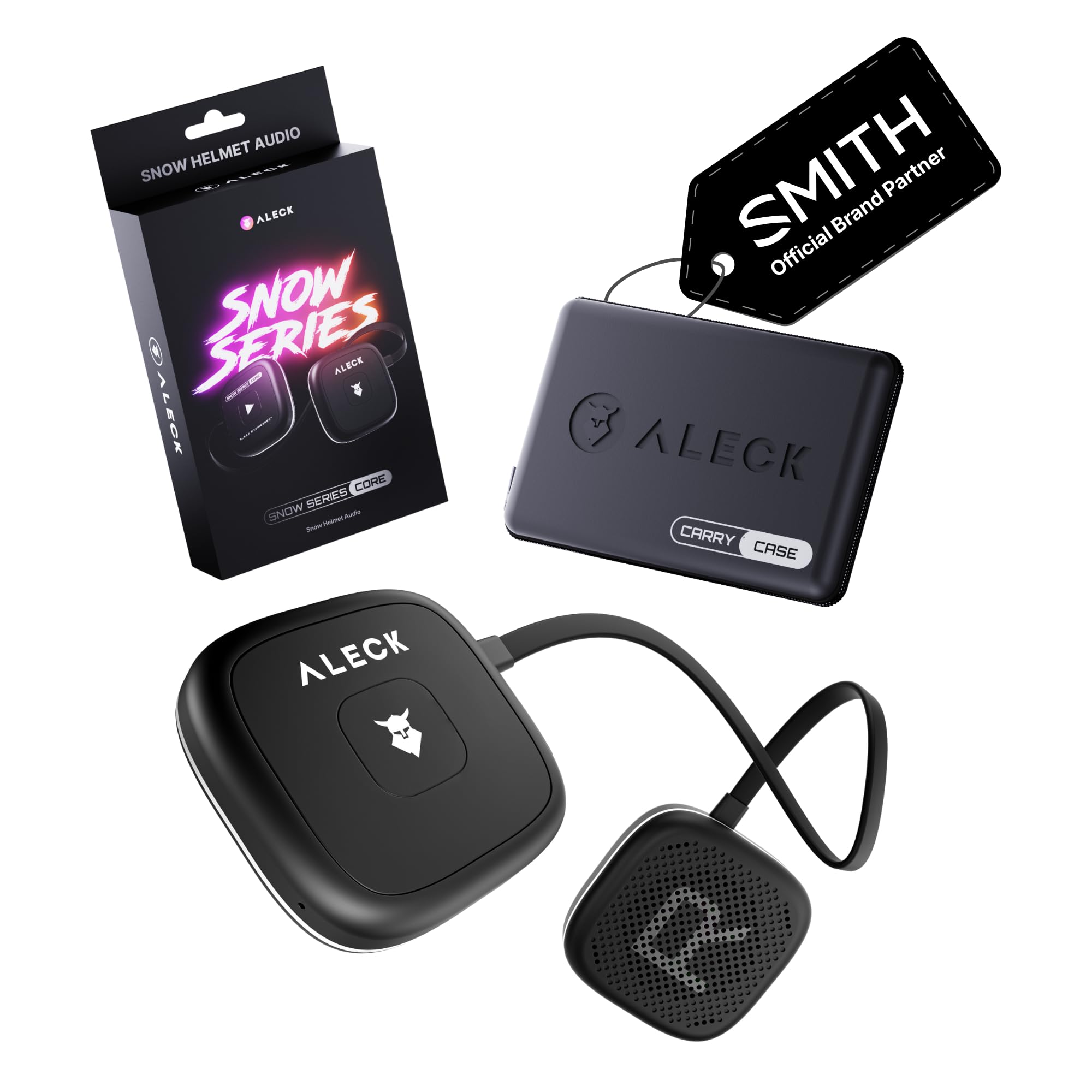
1. ALECK Snow Series Core Wireless Bluetooth Speakers
Our pick — over 4★ from 60+ verified ratings; the strongest balance of quality and price.
The purpose-built helmet speaker that lasts from first chair to last call.
The ALECK Snow Series Core is Smith’s trusted audio partner, and the low-profile modules slide right into standard ear-pad cutouts without creating pressure points. You get clear sound with decent bass from the 40mm dynamic drivers, but the real story here is the 12-hour battery life and the rugged construction engineered for conditions down to -20°C. That means you can ride two full days without charging Buyers report “good sound, pairs quickly with your device,” though several note the module “was a little thick for my helmet” in certain models like the Smith Scout.
The glove-friendly controls are a standout. Large, physical push buttons let you pause music, adjust volume, or summon Siri or Google Assistant without pulling off a mitten. The built-in microphone handles voice calls and voice control. An occasional owner finds the thickness causes ear fatigue after a full day, so check that your helmet has deep enough pockets before buying. With a 4.3-star average across more than 60 global ratings, what wins people over is the simple “it just works” reliability — easy setup, quick pairing, and a hard case included for storage.
Compared to the OutdoorMaster MZ04m, the ALECK leads on brand-verified helmet compatibility and battery stamina.
What Riders Rave About
- Trusted fit with major helmet brands (Smith, Giro, Anon)
- Long 12-hour battery life with quick 1-hour USB-C charge
- Glove-friendly buttons with Siri/Google Assistant support
The Fair Warning
- Thicker profile can cause ear pressure in snug helmet pockets
- Sound is good, not audiophile-grade — decent bass at best
Reach for this if: you own an audio-ready helmet and want the most smooth drop-and-go solution that will run for two full ski days without needing a charge.
Look elsewhere if: your helmet has shallow ear pockets or you need true wireless earbuds that fit inside any shell type.
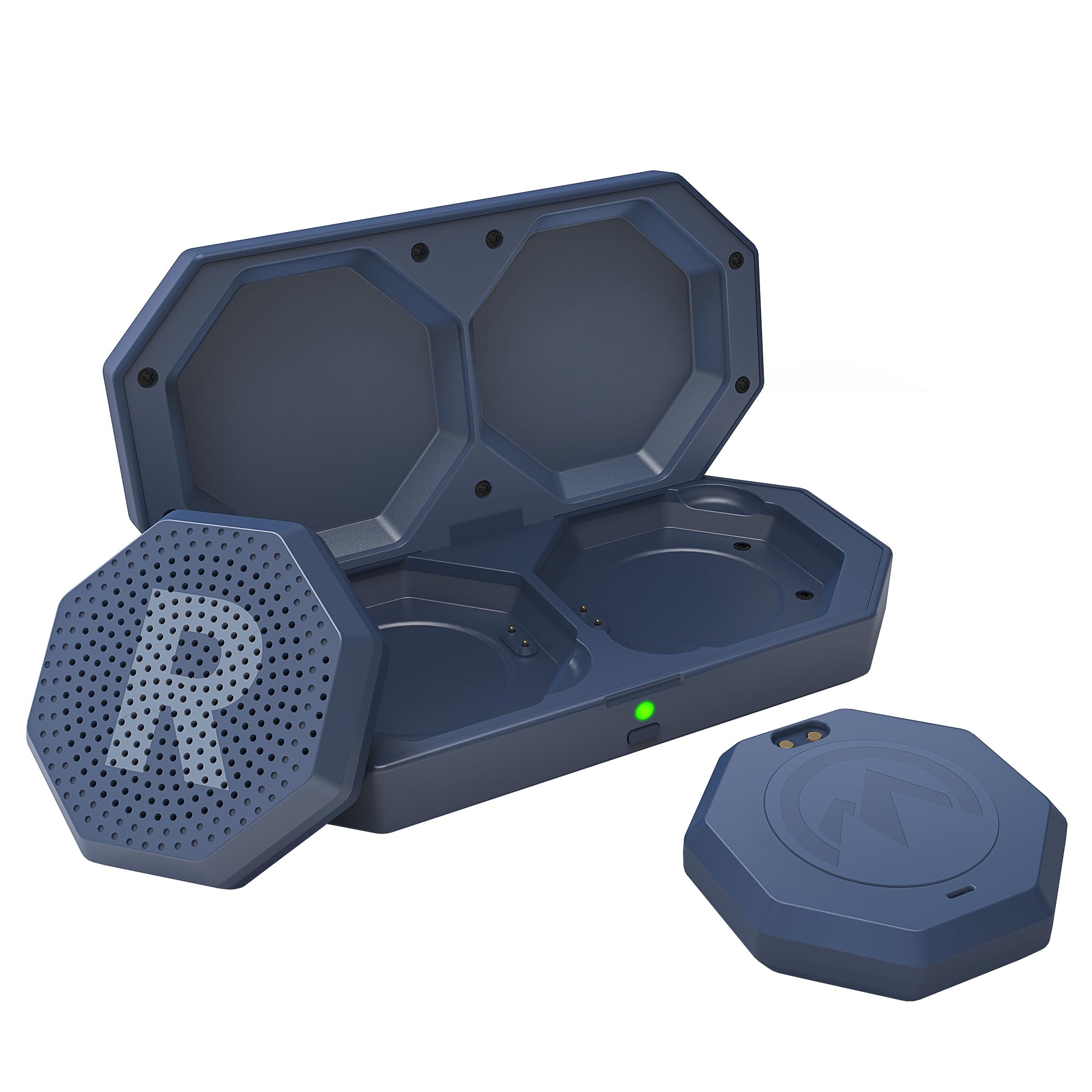
2. OutdoorMaster MZ04m Ski Helmet Headphones
The balanced performer that prides itself on connection stability and sound quality.
With a 4.2-star average across over 140 ratings, the OutdoorMaster MZ04m is the most consistently praised model here for sound quality (20 positive mentions) and Bluetooth connectivity (17 positive mentions). It shares the same 40mm driver and Bluetooth 5.3 architecture as the MZ04 but comes in a tidy package that fits most audio-ready helmets from Giro, Smith, Burton, K2, POC, and Anon. The 10+ hours of playback reliably handles an 8-hour day with intermittent use, and one long-term user reported “reliable over 100 ski days,” which is a strong durability sign.
The glove-friendly big buttons work well through thick mittens. A minority of owners note a long lag between pressing a button and the phone responding, and the built-in microphone struggles with clarity for Siri or phone calls when tucked inside a helmet shell. Those small drawbacks are the price you pay for an open-ear design that keeps you aware of other riders and lift operators.
Compared to the ALECK Snow Series Core, the MZ04m is slightly cheaper, but it lacks the same tested brand partnership with Smith. One buyer called it “a touch expensive,” but the reliability across hundreds of days on the hill makes the value argument tough to top.
Standout Strengths: Sound quality and Bluetooth connectivity are the most-discussed wins among buyers. The slim 13.7mm profile fits even snug helmet pockets without the pressure complaints the ALECK sometimes draws.
Honest Trade-Off: The microphone is weak inside a helmet, and the button-to-phone input lag might bother riders who want instant feedback.
The call: This is the balance for most skiers — proven reliability, strong sound, and a shape that squirms into tight helmet pockets without mashing your ears.
Skip if: hands-free calling is your priority, or you want the absolute longest battery life without compromise.
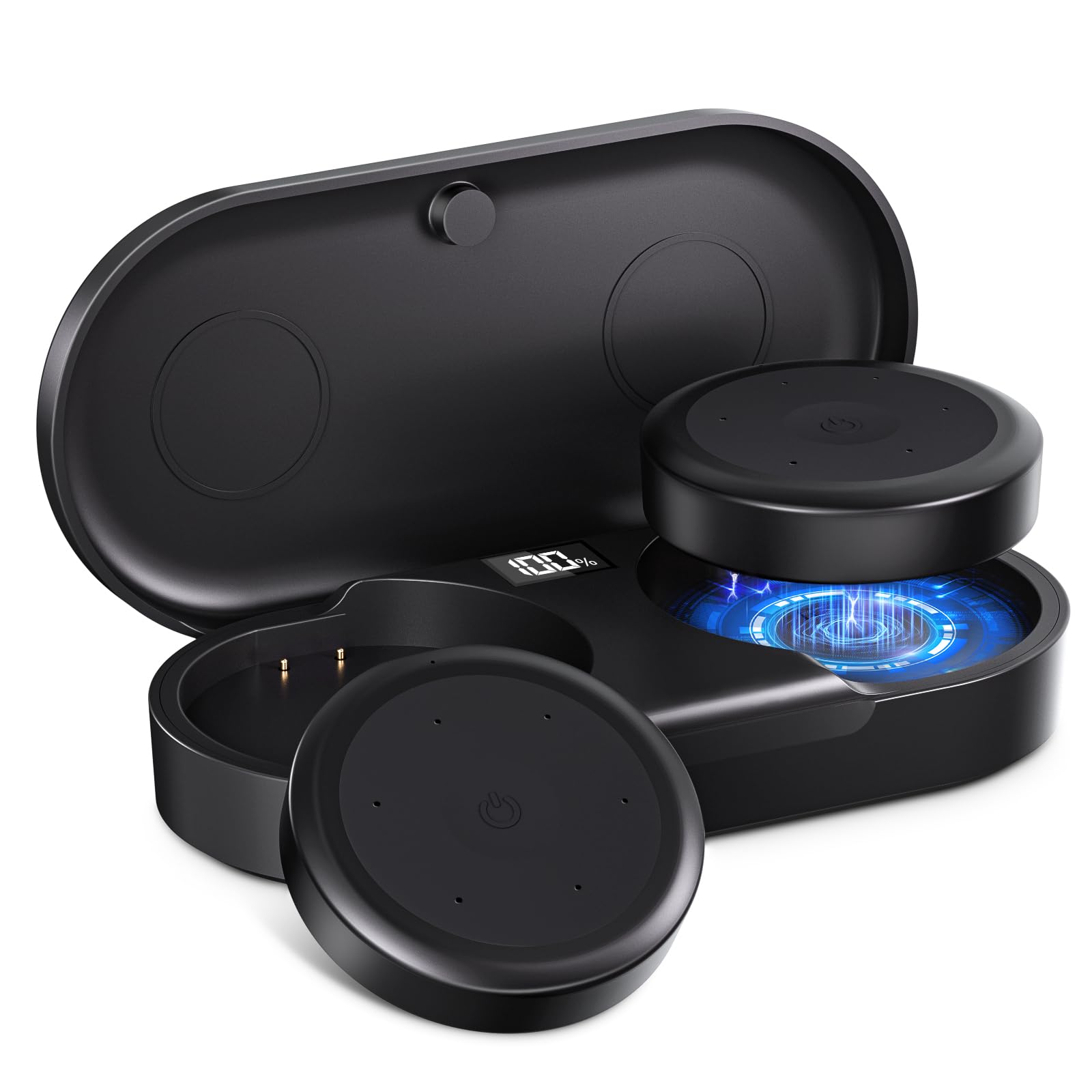
3. Doohoeek 2025 Ski Helmet Speaker (T10)
The battery champ with a handy LED case display that lasts a full week of riding.
The Doohoeek T10 stands out for one simple reason: the charging case provides a massive 50 hours of total battery life with an LED display that shows you exactly how much juice is left. The Bluetooth 5.3 connection ensures solid anti-interference on crowded slopes. The slim speaker pads are designed to fit most audio-ready helmets without adding bulk, and the IPX5 water-resistance rating (it withstands water jets from any direction, so snow and sweat don’t damage the electronics) means you can ride in heavy snow confidently.
The trade-off is the control scheme. Volume up requires a double-press on the right earpiece, next track requires a triple-press — gestures that owners found “unintuitive” and “difficult to click with a glove.” There is also about a 2-second delay between pressing a button and the action happening. Sound quality gets mixed reviews: highs and mids come through clearly, but the bass is thin and can sound muddy even with EQ adjustments. One owner directly compared it to the Wildhorn Alta and noted the Alta had better bass resolution and volume, though it cost more.
The verdict here is clear: if you hate babysitting batteries and want a single charge to last an entire ski vacation, the Doohoeek is the obvious pick. Just prepare to live with awkward controls and adequate-but-not-amazing sound.
The Big Perks
- 50-hour total battery life with convenient LED charge display on the case
- IPX5 water-resistant for snow and sweat protection
- Ultra-slim pads that fit without pressure points
The Glitches
- Control scheme is clunky and hard to operate with gloves on
- Bass lacks authority; sound is thin compared to pricier competitors
Best suited for: multi-day riders who forget to charge daily and want a case that shows remaining capacity at a glance.
Not for: anyone who prioritizes button precision and rich bass — pick the OutdoorMaster MZ04m instead.
4. KONNECT Wireless In-Helmet Adventure Headphone

The rugged workhorse built for a full season and then some, with battery to spare.
KONNECT boasts a 24-hour battery life The build is sweat-proof and rated for operation down to -20°C, making it one of the toughest options here for riders who treat their gear hard. Sound quality is the feature buyers discuss most often (26 positive mentions), with many praising that it gets loud enough to hear at high speeds while still allowing ambient noise awareness. The boomless microphone (a microphone design that lacks a protruding arm, keeping the helmet interior clean) is a neat design touch.
The Achilles’ heel is button accessibility. The controls sit on the back of the earpiece, which is inaccessible once the speaker is installed inside the helmet. The manufacturer addresses this with an optional external remote (the KONNECT 3BR), but that is an extra purchase. Without it, you cannot skip tracks or adjust volume without pulling the speakers out. The Bluetooth version is 4 (an older standard that offers shorter range and less resistance to interference than Bluetooth 5.3), so connection is stable but the range is shorter than newer models. Some owners describe the audio as “cheap and tinny” compared to a simple Bluetooth beanie.
KONNECT is a niche pick. If you want to install something once and forget about charging for a week, it delivers. But the control placement is a genuine workflow flaw for riders who frequently adjust their music.
The edge: A 24-hour battery that actually lasts years — owners mention the battery holds its charge even after months in storage.
The catch: The controls are buried behind the earpiece; you will almost certainly want the optional external remote to make this usable.
Who it fits: Riders who want a low-maintenance system with monster battery life and do not mind adding a remote for control access.
Who it does not: Anyone who streams daily and needs a modern Bluetooth codec or wants simple on-board button control without extra accessories.
5. Outdoor Tech Chips Ultra 2.0 Headphones

The true-wireless luxury pick that cuts the cord and the clutter.
Outdoor Tech’s Chips Ultra 2.0 are the only fully true-wireless helmet speakers here — each puck is independent with no cord tether, so you can use just one ear if you prefer. The 40mm drivers deliver a well-rounded sound that owners describe as “crisp and clear” with subtle bass, loud enough to overcome snowboarding noise. The premium charging case provides up to three full recharges, giving you around 36 hours of total playtime, and the case itself charges via USB-C. Each individual charge lasts 12–13 hours. The slimmer profile improves on the previous generation’s fit, making these comfortable in lower-profile helmets.
The price tag raises eyebrows. At the premium tier, owners expect perfection, and some found the low frequency notes “distort badly” at higher volumes. The controls require a firm mash that pushes the speakers into your ears in the cold — one buyer called it “hard to operate.” Phone calls play only through the right earpiece, which is an odd limitation for a premium product. The mixed feedback on sound quality (12 mentions) and Bluetooth connectivity (also mixed) means this is a product you buy for the form factor and convenience, not sound purity.
If you value the absence of wires the most — nothing to snag when you take the helmet off — the Chips Ultra 2.0 are the only game in town. Just temper expectations on bass depth and button feel.
What Stands Out
- Truly wireless pucks — no cables or tethers to manage
- Generous 36-hour total playtime with the charging case
- Slim profile that fits tighter helmets comfortably
What Holds It Back
- Low frequency distortion at higher volumes disappoints
- Phone audio only in the right ear, and controls need a hard press
Grab these if: you want the absolute cleanest cable-free setup and are willing to pay a premium for the convenience.
Think twice if: you expect studio-quality bass or instant tactile button response — you will find better value in the OutdoorMaster MZ04m.
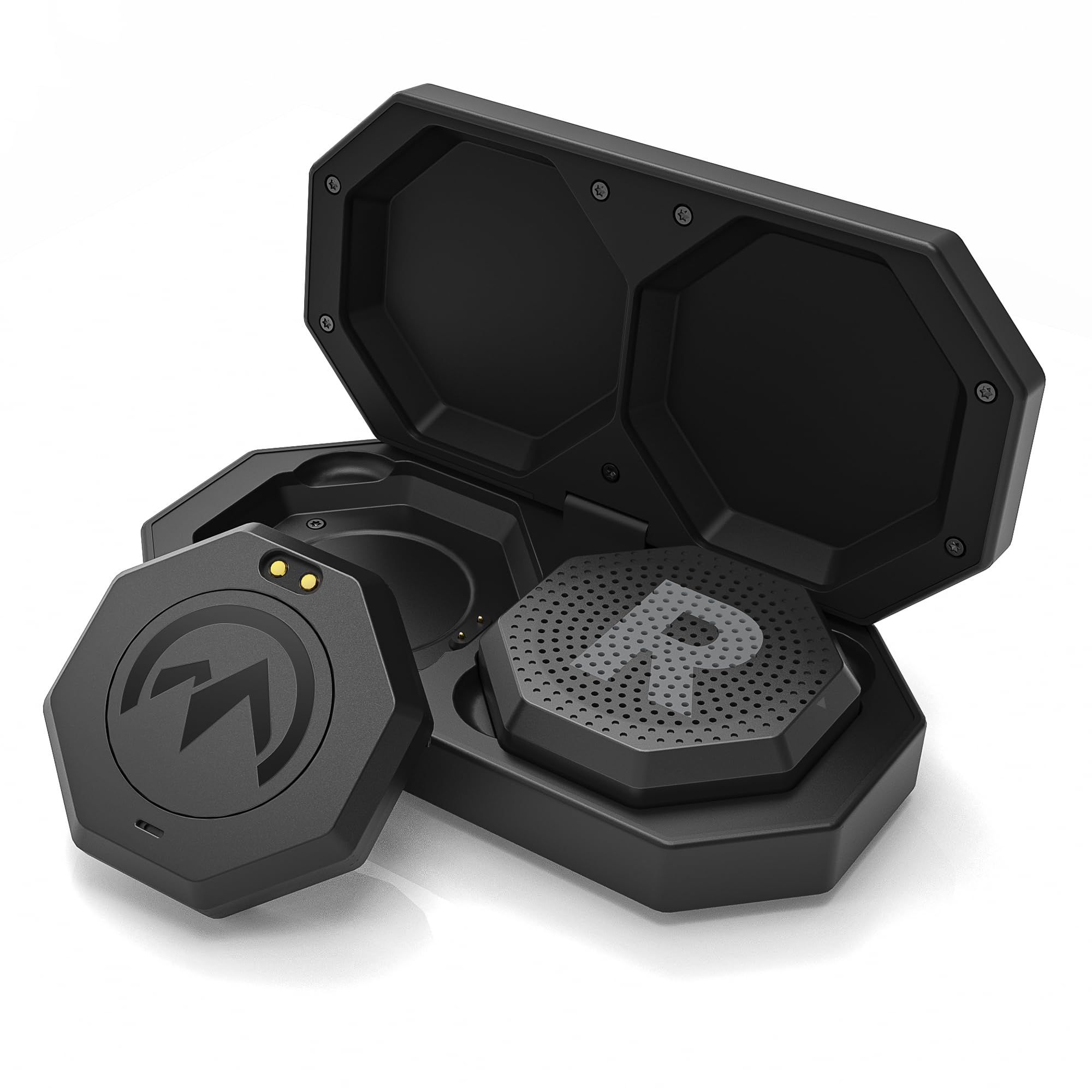
6. OutdoorMaster MZ04 Ski Helmet Headphones (with Case)
The entry-level charger that comes with the case for total 30-hour listening.
This is the MZ04 — the version with a dedicated charging case that adds 20 extra hours on top of the 10-hour individual battery, totaling a useful 30 hours. It shares the same 40mm drivers and Bluetooth 5.3 chip as the MZ04m above, along with the same 13.7mm thickness that fits into most Giro, Smith, Burton, and K2 helmets. Sound quality gets 18 positive mentions from the crowd, with owners appreciating that they can still hear their surroundings while skiing. The big clicky pause button works perfectly with mittens, and the fast-charging feature refills both the buds and case in about 2 hours.
This pick has the most social proof of the OutdoorMaster duo — 150 global ratings averaging 4.1 stars. The most common gripe involves the inability to turn the speakers off without placing them back in the case, and a low battery alert that beeps every few minutes on the slopes. One vocal owner called the sound “like an old transistor radio,” but the consensus is far kinder: most find the audio adequate for the price, with the caveat that bass is definitely not strong. The customer service story is also a positive — early defective pairs were replaced quickly without a return.
Between the two OutdoorMaster models, the MZ04 (with case) is the better pick for lift-line socializers who want the extra portable charging. The MZ04m (without case) is for minimalists who just want the speakers.
Why it wins at this price: The case doubles your listening time to 30 hours, and fast-charging in 2 hours means you can top up during lunch.
Where it cuts corners: The bass is weak, the speakers cannot be turned off without the case, and the low-battery alarm is persistent.
Best for: budget-conscious riders who want a reliable, case-charged system with enough volume to be heard over the mountain.
Not for: audiophiles or anyone who wants deep bass — the MZ04m delivers a slightly better sound profile for the same driver size.
7. Uclear Universal Earbud (B00GI1B30Q)
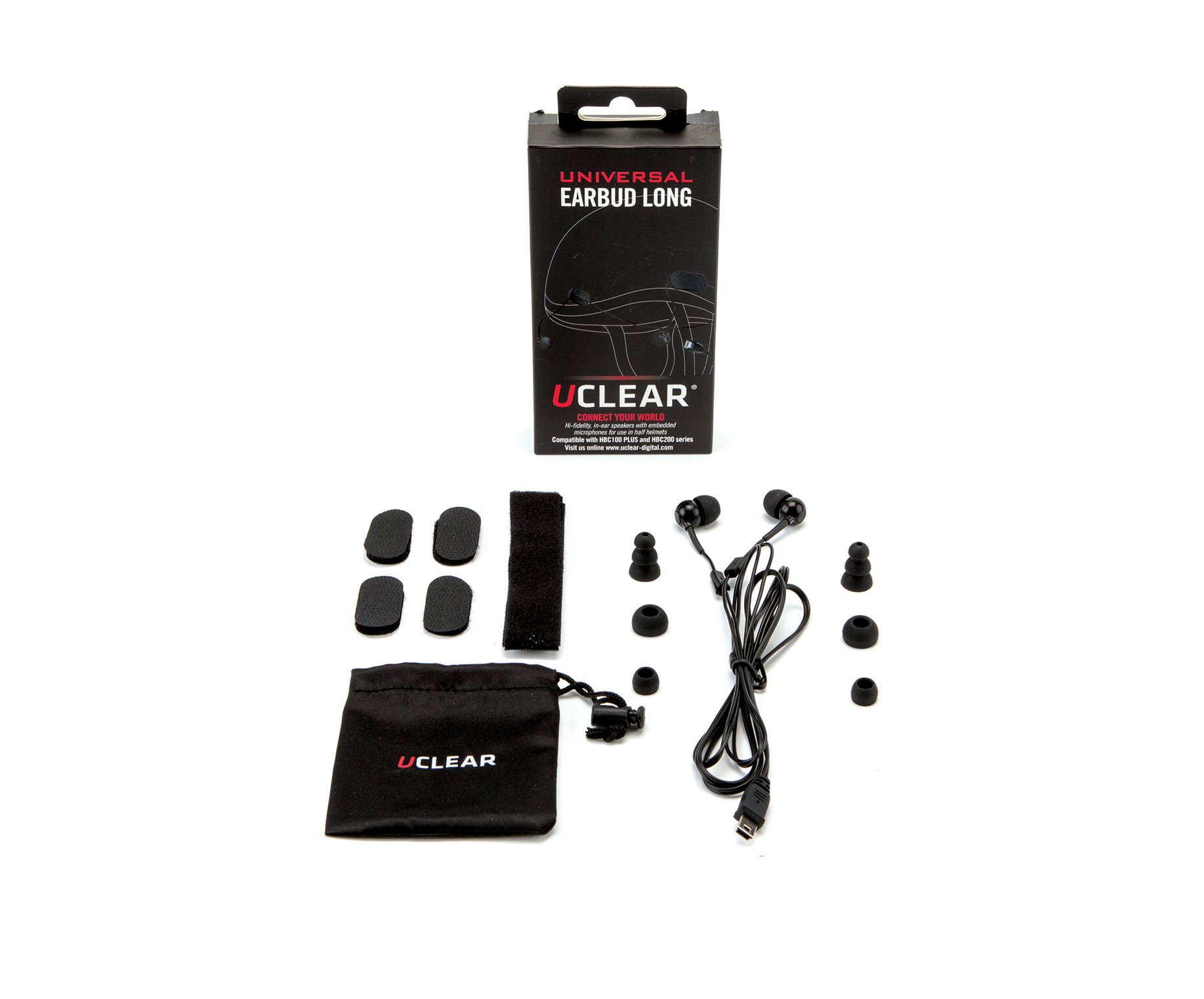
The lowest-cost in-ear solution that blocks wind noise and delivers clear calls.
If you are on a tight budget and need something that works with any helmet — no audio-ready pockets required — the Uclear Universal Earbud is the bare-bones option. It is an old model (first available in 2013), but it still does the basics well: compatibility (10 positive mentions) and sound quality (10 positive mentions) are its strongest suits. Buyers using Bell Rogue helmets and half-shells report that it fits well, blocks wind noise effectively, and delivers crisp phone calls and music even at highway speeds. The embedded microphone in the wire picks up voice with minimal road noise.
The catch is build quality. One owner bluntly stated, “These ear buds have been made like an afterthought,” pointing to thin wires and unprotected solder connections that pull out easily. The value proposition also gets mixed reviews — several buyers felt the product was overpriced for its build quality. Mic performance is also inconsistent: works great in a full-face helmet, but picks up too much wind noise in a half-shell or beanie setup above 30 MPH.
At this price point, you are trading long-term reliability for immediate budget relief. The earbuds work well when they work, but fragile construction means they may not last a full season of regular use.
What Works
- Excellent noise isolation cuts out wind roar
- Clear call and music audio at speed
- Compatible with nearly any helmet style
What Worries Owners
- Thin wires and solder joints raise durability concerns
- Mixed reviews on value — some find it overpriced for the build
Reach for this if: you need a cheap, functional in-ear solution for casual riding and don’t expect it to survive years of abuse.
Look elsewhere if: you want something that can handle daily use all season — the fragile cable is a known weak spot.
8. eleror Z1 Extra-Small Wireless Earbuds
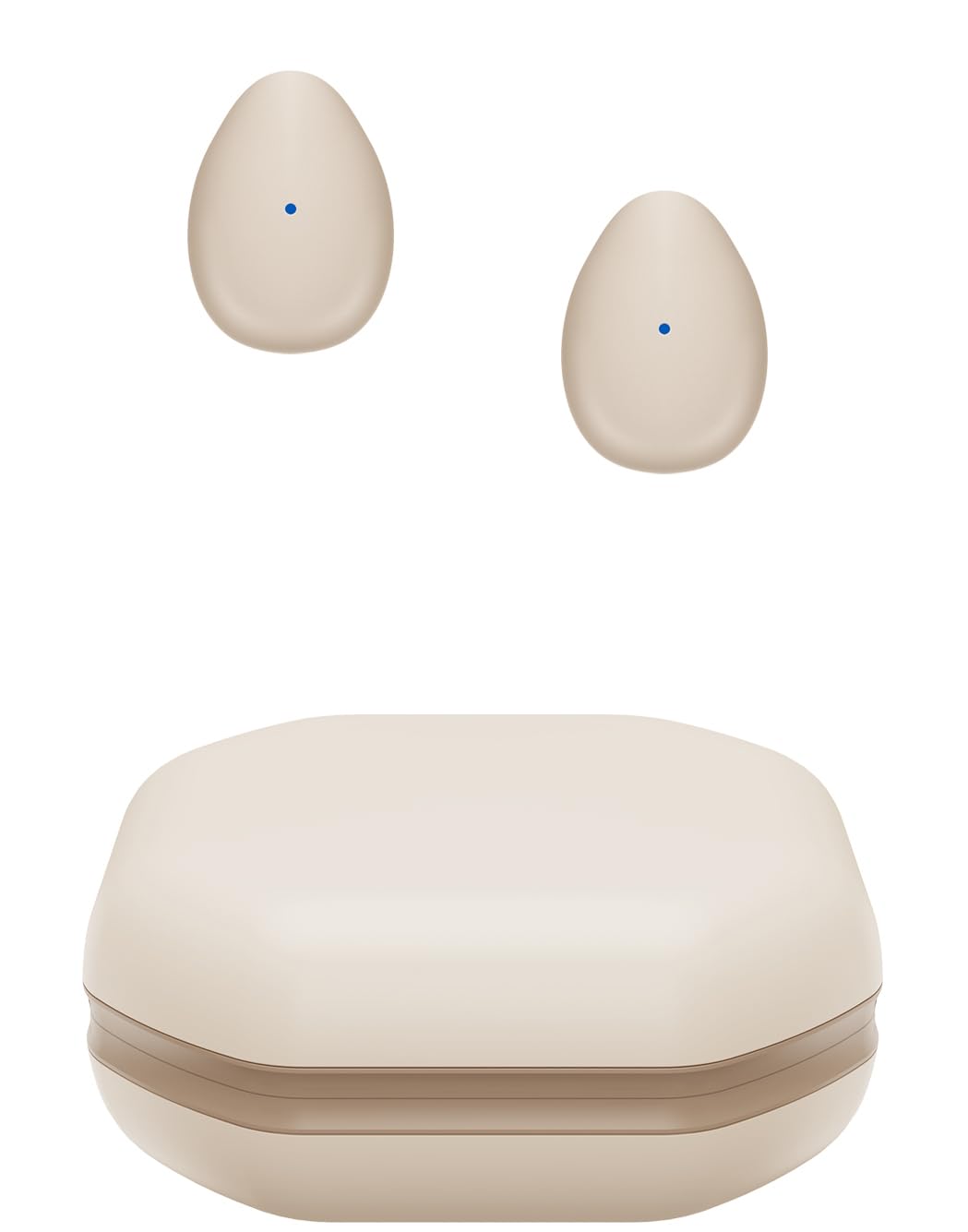
The tiniest wireless buds that vanish under any helmet without a bulge.
At just 2.3 grams per earbud, the eleror Z1s are almost impossibly small. They are designed as semi-in-ear buds with a flush, no-stem profile that fits smoothly under a helmet — no poking, no pressure. The semi-open design lets ambient sound through, keeping you aware of your surroundings on the mountain. Size is the most-praised feature (14 positive mentions), and comfort runs second (11 mentions), making these a strong pick for riders with small ears or anyone who finds full-size earbuds painful under a hard shell. The IPX5 water-resistance rating means sweat and light snow won’t damage them.
The compromises start with battery life: customers report less than 2 hours per charge. More concerning is the reliability score — battery life, reliability, and durability all appear as negative aspects in customer data. Several customers note units dying after a month, with battery life under 2 hours for some. Sound quality is mixed: fine for audiobooks and podcasts, but far from the richness you would get from wired headphones. One owner noted that “after a few minutes they start hurting my ears,” despite the tiny size.
The eleror Z1 is a specialized tool — it is the answer to “what fits inside a tight helmet that bigger buds cannot.” Just know you are making a trade-off on longevity and audio fidelity for that vanishingly small fit.
The Unique Strength
- 2.3g weight and no-stem design hide completely under any helmet
- Semi-open ear design for safe situational awareness
- IPX5 sweat resistance for active use
The Hard Truths
- Battery life and reliability are the most common negative feedback
- Sound quality is poor for music; best suited for spoken word
Choose this for: the impossible-to-find fit — if nothing else fits under your helmet without pain, these will.
skip it if: you want solid battery life and rich audio for music on the slopes; look at the OutdoorMaster MZ04 instead.
Understanding the Specs
Driver Size and Sound Quality
Driver size is the diameter of the speaker element inside the earbud or helmet speaker, measured in millimeters. In this category, a 40mm driver is the standard for dedicated helmet speakers — it delivers the volume and fullness you need to hear music over the noise of a ski run. Smaller in-ear buds use 8mm drivers, which are more compact but cannot produce the same bass presence or loudness. For skiing, a 40mm driver gives you clear audio without needing to max out the volume, helping protect your hearing over long days.
Bluetooth Version and Connection Stability
Bluetooth version determines how your device connects to the speakers. Version 5 and 5.3 are the modern standards and offer better range and anti-interference compared to the older Bluetooth 4 found on the KONNECT model. In a crowded ski lodge or on a busy slope, a newer Bluetooth chip reduces the chance of audio dropouts when your phone is in a chest pocket. Range also varies — most models here are rated for 10 meters (about 30 feet), which is plenty for keeping your phone in a jacket pocket.
Battery Life and Real-World Usage
Battery life tells you how many hours the speakers will play on a single charge. For a typical ski day of 6-8 hours, look for at least 10 hours of rated battery life. Cold weather (below -10°C) can reduce actual battery capacity by 20-30%, so a model rated for 12 hours provides comfortable margin. Some models come with a charging case that multiplies total listening time — the Doohoeek T10 offers 50 hours total with its case, which is overkill for a single day but brilliant for multi-day trips.
IPX Water Resistance Rating
IPX refers to the standard that measures a product’s resistance to water. IPX5 means the device can withstand water jets from any direction — think heavy snowfall, splashes from slush, or sweat from an intense run. This rating is not for submersion, so do not drop your speakers in a puddle. For skiing and snowboarding, IPX5 is the ideal minimum because you will encounter snow, melting ice, and perspiration throughout the day.
FAQ
Will these speakers fit my Smith or Giro helmet?
Can I still hear other skiers with these earbuds?
How long does the battery last in cold weather?
Can I take phone calls while skiing?
Are true wireless earbuds good for skiing?
How do I know if my helmet is audio-ready?
What does Bluetooth 5.3 give me over older versions?
Are the controls easy to use with thick gloves?
Final Thoughts: The Verdict
For most skiers and snowboarders, the best earbuds for ski helmet winner is the ALECK Snow Series Core because it pairs verified compatibility with Smith, Giro, and Anon helmets with a long 12-hour battery and the most glove-friendly controls in the lineup. If you want proven reliability with slightly lower cost and stronger sound quality reviews, grab the OutdoorMaster MZ04m. And for multi-day trips where you hate charging gear, the Doohoeek T10 gives you a 50-hour total battery with a useful LED display on the case.
How We Picked
We do not accept paid placement. Every pick is matched to a real buyer and a real use-case; we do not hands-on test units.
Sources & Methodology
Specifications: manufacturer listings and product documentation. Review insights: verified customer reviews, as of July 2026. Pricing: not shown on this page (it changes often); check the current price via the retailer link.
As an Amazon Associate, WellFizz earns from qualifying purchases. This does not affect which products we feature.
Related Guides

Mo Maruf
I created WellFizz to bridge the gap between vague wellness advice and actionable solutions. My mission is simple: to decode the research and give you practical tools you can actually use.
Beyond the data, I am a passionate traveler. I believe that stepping away from the screen to explore new environments is essential for mental clarity and physical vitality.