Our readers keep the lights on and my smoothie glass nicely filled. As an Amazon Associate, I earn from qualifying purchases.
Specs are compiled from manufacturer listings and verified buyer reviews and can change over time — please confirm the key details on the product page before buying.
Lossless audio earbuds let you hear the recording exactly as the artist and engineer intended—every breath, every string resonance, every cymbal shimmer that standard Bluetooth compression crushes. Whether you chase the detail of a 24-bit studio mix or the spatial cues that make a live recording feel three-dimensional, the right pair lets you rediscover your music library. This guide cuts through the hype to show you the real contenders, from wired IEMs with reference-grade transparency to true wireless models that finally match it wirelessly.
I’m Mohammad Maruf — the founder and writer behind WellFizz. This guide is built by comparing the manufacturers’ published specifications and the patterns across verified customer reviews, so you get each pick’s real strengths and trade-offs instead of marketing spin.
Whether you prioritize wired precision, wireless convenience, or something in between, this roundup of the top earbuds for lossless audio helps you match your gear to the music you love, without wasting money on specs you will never hear.
Our Picks at a Glance
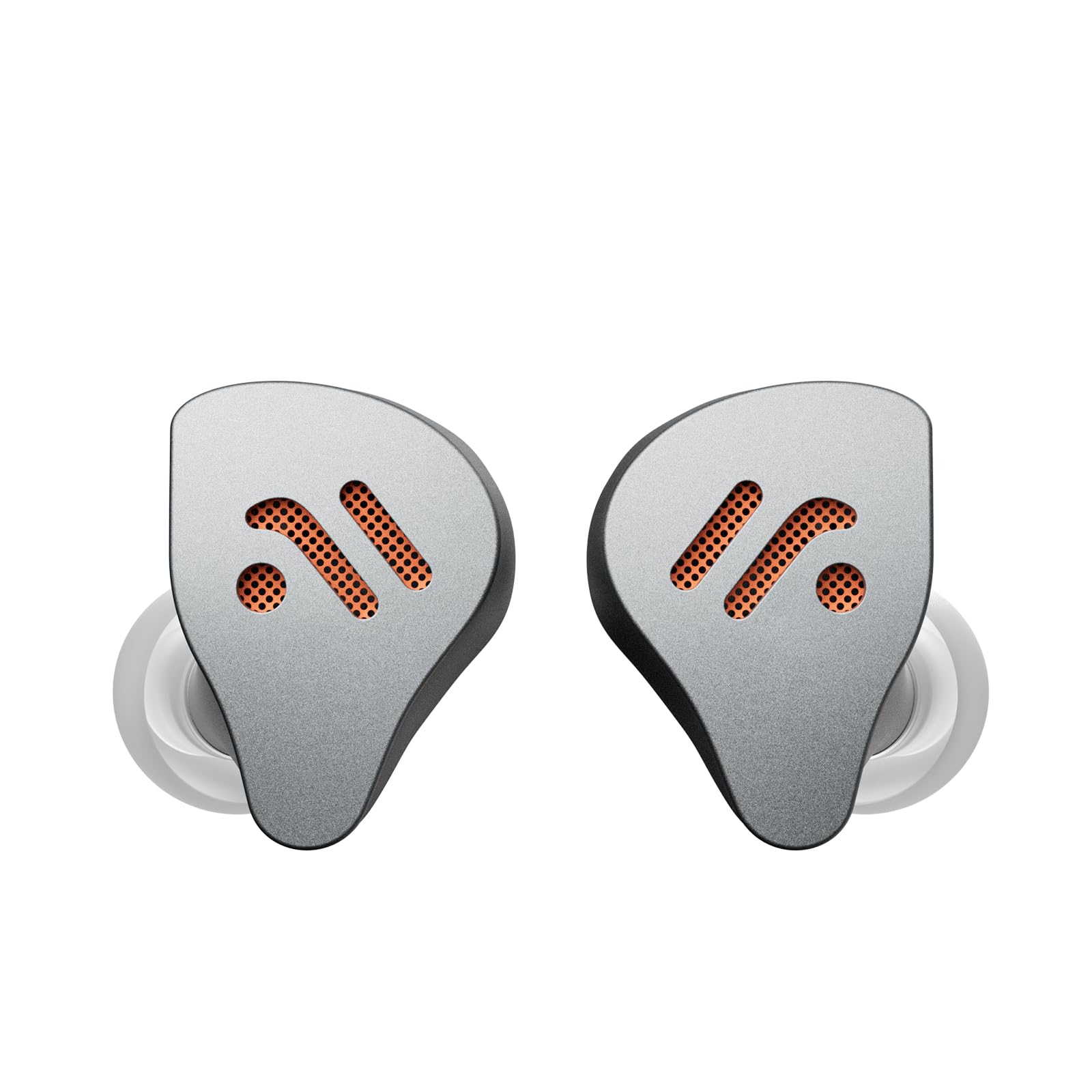

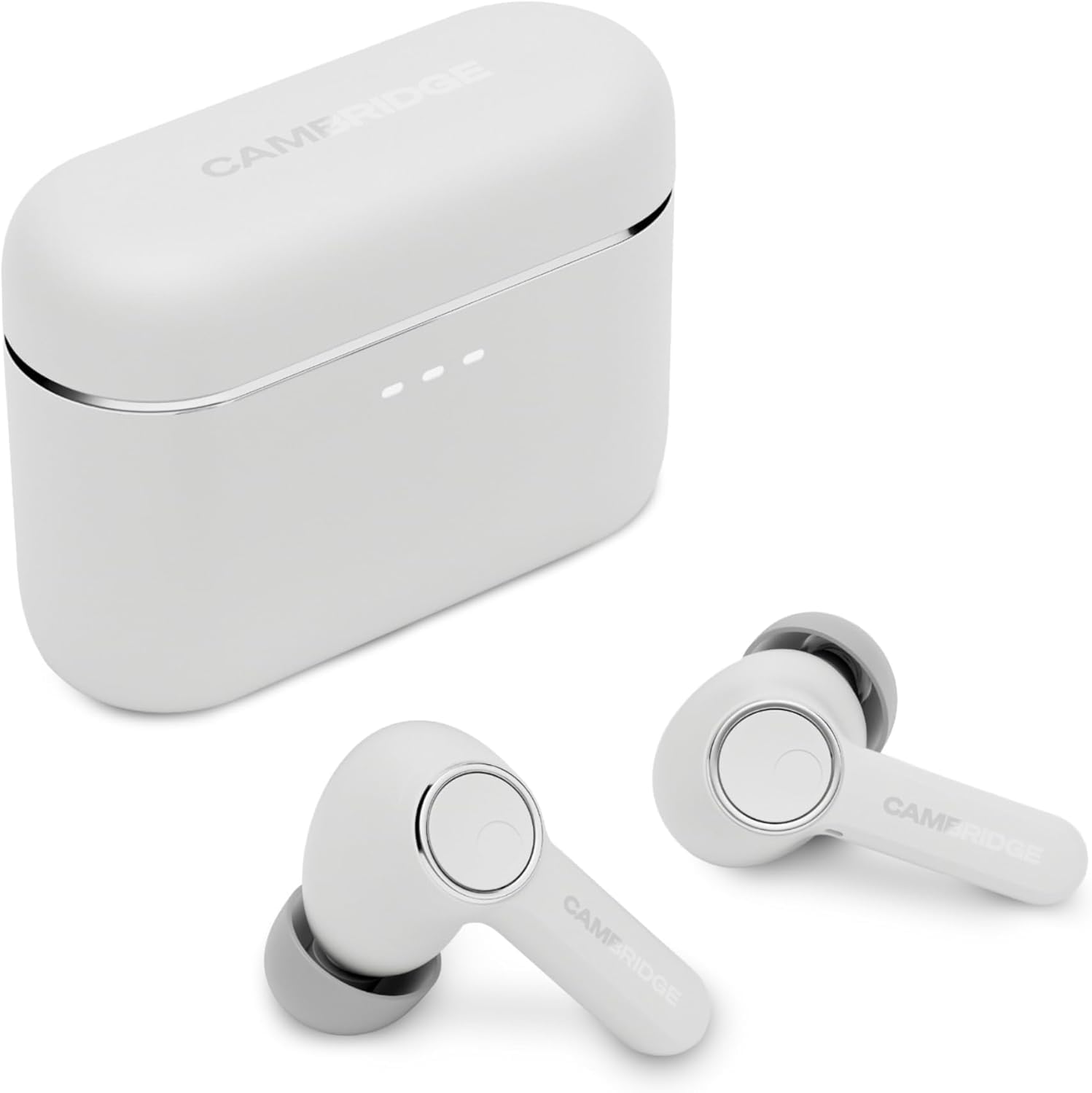
How To Choose The Best Earbuds For Lossless Audio
Choosing the right lossless earbuds depends on understanding two things: how you will listen (wired vs. wireless) and the driver technology that reproduces the sound. The right pair reveals sonic details that standard gear masks.
Wired vs. Wireless: The Codec Question
A wired connection delivers full lossless audio with zero compression, regardless of the source. That is the most reliable path to the studio master. For wireless freedom, you need a Bluetooth codec that can carry lossless data — aptX Lossless from Qualcomm or LDAC from Sony. Without one of these, standard Bluetooth squeezes the music down, and you lose the very detail you paid for. Check that both your earbuds and your phone or music player support the same high-res codec.
Driver Configuration: Single, Hybrid, or Multi
A single dynamic driver, like the 10mm unit in the Fosi Audio IM4, can produce clear, balanced sound but has limits in separation across the full frequency range. Hybrid designs stack different driver types — a dynamic driver for bass, a planar for speed, a piezoelectric for airy treble — to split the workload. The SIMGOT EW300 uses a tri-matrix setup with all three types, while the Shure SE846 Gen 2 packs four dedicated balanced armature drivers. More drivers can mean better clarity and less muddiness, but it also demands more precise engineering to integrate them smoothly.
Fit, Isolation, and Cable Design
Lossless audio exposes every detail in your music—and every flaw in your ear seal. A poor fit leaks ambient noise and kills bass response and soundstage depth. Look for earbuds that come with multiple ear tip sizes (silicone, foam, or both) and have ergonomic shells based on realistic ear databases. A detachable cable, like the 2-pin 0.78mm standard, is a huge plus — it lets you swap in a balanced cable for a higher-quality signal and also saves you from throwing away the whole earbud if the cable fray.
Quick Comparison
| Model | Best For | Driver Type | Connection | Key Feature | Amazon |
|---|---|---|---|---|---|
| Fosi Audio IM4★ Best Overall | Pure wired value | 10mm Single Dynamic | Wired (3.5mm) | Beryllium-coated diaphragm | Amazon |
| SIMGOT EW300 DSPVersatile Hybrid | Versatile hybrid tuning | 1DD + 1Planar + 1PZT | Wired (DSP USB-C) | Detachable tuning nozzles | Amazon |
| Cambridge Audio Melomania A100True Wireless Star | True wireless with aptX Lossless | 10mm Dynamic | Bluetooth (aptX Lossless/LDAC) | 39-hour battery life | Amazon |
| MEZE AUDIO ALBA | Audiophile comfort | 10.8mm Dynamic | Wired (3.5mm + USB-C DAC) | Ergonomic metal chassis | Amazon |
| Questyle NHB15 | Plug-and-play lossless via USB-C | 10.2mm Dynamic | Wired (USB-C + 3.5mm cable) | Built-in SiP DAC/amp with 192kHz support | Amazon |
| Status Pro X | Premium wireless with ANC | 12mm Dynamic + Dual Knowles BA | Bluetooth (LDAC) | 52dB hybrid ANC | Amazon |
| Bowers & Wilkins Pi8 | Reference wireless sound | 12mm Carbon Cone | Bluetooth (aptX Lossless) | Carbon cone drivers from Px8 | Amazon |
| Shure SE846 PRO Gen 2 | Customizable studio-grade monitoring | Quad Balanced Armature | Wired (MMCX) | Interchangeable sound filters | Amazon |
| Sennheiser IE 900 | Flagship reference clarity | 7mm TrueResponse Dynamic | Wired (MMCX, 3.5/2.5/4.4mm) | X3R triple-chamber absorber | Amazon |
In‑Depth Reviews
1. Fosi Audio IM4
Our pick — over 4.5★ from 150+ verified ratings; the strongest balance of quality and price.
The wired champ that sets the value standard for lossless transparency.
At just 7 grams per bud, the IM4 is barely there weight-wise, but its 10mm beryllium-coated diaphragm delivers a level of detail that is staggering at this level. The open-back design creates a spacious, airy soundstage — instruments spread out naturally and vocals never feel boxed in, making long listening sessions easy. Buyers report “clear, crisp highs and mids with powerful low bass,” with some even noting it outperforms multi-driver competitors like the SIMGOT EW300s in bass fidelity.
Customization is a real strength here. Fosi includes three sets of ear tips (balanced, bass, deep-bass) across three sizes, plus two types of tunable nozzles (brass and aluminum alloy) so you can tweak the tonal balance to your preferences. The all-metal housing is precision CNC-machined, and the detachable 2-pin 0.78mm cable means you can upgrade down the line without replacing the whole set. One caveat: the stock cable lacks a swappable termination plug, so you will need an adapter for balanced connections.
The single-driver architecture keeps the phase coherence clean, but if you crave multi-driver separation in other frequency ranges, the SIMGOT EW300 above offers a different flavor. For the price, the IM4 is the crowd favorite—a smooth entry into lossless listening that punches far above its weight.
Why It Wins
- Exceptional clarity with beryllium-coated driver
- Open-back soundstage creates fatigue-free listening
- Three tip sets and two nozzle types for tuning
- Lightweight, all-metal build at 7g per earbud
Consider This
- Open-back design leaks sound; not for noisy environments
- Stock cable lacks swappable termination
- Bass is clean but not thumping for hard bass-heads
Grab these if: you want a wired, neutral, highly detailed listen that leaves room to grow with cable upgrades.
Think twice if: you need noise isolation — these are open-back and let sound in and out freely.
2. Linsoul SIMGOT EW300 DSP
A triple-driver hybrid with swappable nozzles for tailored tuning on the fly.
The EW300 packs a dynamic driver for punchy bass, a planar driver for fast detail, and a piezoelectric ceramic driver for airy, non-fatiguing treble — all inside a CNC-machined alloy shell. The DSP version includes a built-in DAC in the cable, placing the chip away from your hand to reduce RF interference and heat, which makes it especially comfortable for long gaming sessions. Owners mention it sounds “clear and cohesive,” with silver nozzles preferred for sharper detail retrieval.
The tunable nozzles are the standout feature here. Swap between the gold-copper nozzle (tuned for gaming with the H-2019 curve, emphasizing footsteps and gunfire clarity) and the silver nozzle (based on the SIMGOT-Golden2023 target curve for a more balanced sound). The threaded connection makes switching quick. That said, a few owners note the included travel case has a zipper that failed after a month, so you may want a third-party case for pocket carry.
Compared to the Fosi IM4 above, the EW300 offers a more complex driver array and the convenience of on-the-fly tuning — but its bass response can feel a bit “clean and boring” to those wanting a harder slam. The IM4 beats it in pure bass fidelity, per direct owner comparisons.
Why It Shines
- Triple-driver hybrid for detailed, layered sound
- Swappable nozzles for gaming vs. music tuning
- DSP cable with mid-cable DAC reduces interference
- Lightweight, secure fit for long sessions
Watch Out For
- Case zipper reported fragile by some buyers
- DSP cable may need higher volume for full power
- Fit less secure than silicone-tipped rivals for active use
Pick this if: you game and listen to music and want one IEM that switches between the two smoothly.
skip it if: you prefer a single-driver’s cohesive sound signature over a hybrid’s complexity.
3. Cambridge Audio Melomania A100
Wireless freedom meets true lossless with aptX Lossless and LDAC in one earbud.
The Melomania A100 is one of the few true wireless earbuds that supports both aptX Lossless and LDAC, meaning it works at full resolution whether you have a Qualcomm-based Android phone or a Sony device. The 10mm dynamic driver delivers “rock solid lows, smooth mids, and sparkly highs” according to owners, who often rank it above the Sony WF-1000XM4 for sound quality. The 7-band adjustable EQ in the companion app gives you fine control over the tuning.
Battery life hits up to 39 hours total with the charging case, and the IPX5 water resistance means sweat or light rain won’t stop you. Adaptive ANC adjusts automatically to your surroundings. The main design friction is the fit — the earbuds sit deep in the ear cavity, making them “hard to remove from the case,” and some owners find the deep fit uncomfortable over long stretches. Call quality also gets mixed marks, with one buyer noting the caller’s voice sounds “boxy.”
If you want a wireless set that does not sacrifice lossless quality, the A100 is the most balanced option in the mid-range. It lags behind the Status Pro X below in ANC depth (52dB vs. the A100’s adaptive ANC), but it wins on battery stamina and codec support.
Why it works: Dual lossless codecs (aptX Lossless + LDAC) ensure you get full quality with nearly any modern phone. The 39-hour total battery is class-leading for this feature set.
The real trade-off: The deep-fitting shell makes them tricky to extract from the case, and call quality is decent but not outstanding. If your priority is crisp phone calls, look at the Status Pro X instead.
4. MEZE AUDIO ALBA

A beautifully built IEM with a natural, balanced sound and a purpose-fit USB-C adapter.
The ALBA’s 10.8mm dynamic driver delivers sound that owners describe as “natural and balanced across all ranges,” with lower tones enhanced for richness and high notes staying crisp without harshness. The shell is machined from zinc alloy and anodized aluminum, giving it a solid, premium feel that rivals models double the price. The custom 3.5mm-to-USB-C adapter includes a built-in DAC/amp, so you can plug directly into a phone or laptop and get high-res quality without a separate dongle.
Comfort is the headline here — the design was refined using extensive 3D ear contour analysis, and the result is a set of earbuds that disappear into your ears over time. The eco-leather carrying pouch is stylish and practical. One consistent owner note is that the bass is “just okay” for hip-hop and EDM, leaning toward a more neutral, reference presentation that excels with vocals, acoustic tracks, and podcasts. The braided cable also tends to tangle more than owners would like.
Between the ALBA and the Fosi IM4, the ALBA offers a slightly warmer, more forgiving treble and the convenience of a bundled USB-C DAC — but the IM4 is more transparent and costs less. Your call on whether that extra refinement in the cable and case matters to you.
Standout Qualities
- Natural, balanced sound with excellent vocal clarity
- Included USB-C adapter with built-in DAC/amp
- Premium zinc alloy and aluminum build
- Very comfortable for extended wear
Areas to Note
- Bass is modest; not for bass-forward genres
- Thin cable tangles easily
- 2-pin connectors can feel loose on some units
Choose the ALBA if: daily comfort and a refined, non-fatiguing sound are your top priorities over raw bass impact.
Look elsewhere if: you need powerful low-end for electronic or hip-hop — the Shure SE846 below or even the SIMGOT EW300 would suit you better.
5. Questyle NHB15

These are earbuds with a high-end DAC and amp built into the USB-C plug.
The NHB15 eliminates the dongle dance. Questyle’s patented Current Mode Amplifier SiP chip (the MA2430) handles both digital-to-analog conversion and amplification inside the USB-C connector, supporting master-tape-level music up to 192kHz with ultra-low distortion at 0.0002% THD. Owners describe the sound as “phenomenal,” revealing details in familiar tracks they had never heard before, and some say it rivals closed-back headphones. The included 3.5mm cable means you can also use it with traditional audio gear.
The 10.2mm dynamic driver is housed in a shell designed from over 100 individual wear tests, aiming for a secure and comfortable fit across different ear shapes. That said, the USB-C end is heavier than a standard connector, and one owner found it caused ear fatigue over longer sessions. A few units have arrived with a faulty USB-C connector, though the seller offered full refunds in those cases. The cable itself is also on the shorter side, so a USB-C extender may be useful for desktop use.
Compared to the MEZE ALBA, the NHB15 offers a more advanced integrated DAC solution, but the ALBA has a more refined overall build and a less fatiguing weight. If you prioritize pure DAC performance and compatibility across iPhone 15, Android, and PC without extra gear, the NHB15 is a unique value.
The big win: No external DAC needed — the built-in SiP chip delivers reference-level 192kHz/24-bit lossless audio with exceptional clarity and dynamics.
The honest catch: The heavier USB-C plug can cause ear fatigue over time, and cable durability has been a point of concern in a few reviews. Great for short listening sessions and travel, less ideal for all-day wear.
6. Status Pro X Wireless

A wireless earbud that brings a 12mm dynamic driver and dual Knowles balanced armatures to battle ANC noise.
The Status Pro X is a serious statement: LDAC support for high-res wireless streaming, a 12mm dynamic driver for bass foundation, and two Knowles balanced armature drivers for midrange and treble precision. The result is an “audiophile-grade TWS” that owners say delivers about 80% of the quality you would get from wired IEMs. The 52dB hybrid ANC is genuinely powerful — one owner describes it as “scary good,” making a factory floor sound silent.
Six beamforming microphones with Voiceloom AI speech enhancement mean calls come through loud and clear even in noisy environments. Bluetooth 5.3 with LE Audio, LC3, and Auracast support future-proofs the buds. Battery life sits at 8 hours per charge (32 hours total with the case), and Qi wireless charging is included. The main drawbacks are the limited ear tip selection (the stock ones are basic and can compromise the seal) and average battery life with ANC active (around 5 hours). The app also requires occasional reconnections.
Compared to the Cambridge Audio Melomania A100, the Status Pro X has a deeper, more rich soundstage and far stronger ANC. However, the Melomania A100 offers a longer total battery (39H vs. 32H) and a more proven fit for a wider range of ears. If ANC is your priority, the Status Pro X leads; if battery life and fit versatility matter more, the A100 is a safer choice.
What Stands Out
- Exceptional sound detail with triple-driver hybrid
- 52dB ANC is top-tier for this list
- Six mics with AI for clear calls anywhere
- LDAC + Bluetooth 5.3 with future-ready Auracast
What to Know
- Included ear tips are cheap — budget for foam replacements
- Battery drops to ~5 hours with ANC on
- App reconnections can be buggy
Ideal for: commuters, travelers, and anyone who wants wireless lossless quality paired with the best noise cancellation on the market.
Not for: those who prioritize all-day battery life over ANC performance — the Cambridge Audio Melomania A100 lasts longer between charges.
7. Bowers & Wilkins Pi8

Flagship wireless earbuds with carbon cone drivers borrowed from the Px8 over-ear headphones.
The Pi8 uses 12mm carbon cone drive units adapted directly from Bowers & Wilkins’ acclaimed Px8 headphones, delivering “lifelike clarity and high-frequency detail” that is rare in a true wireless form factor. With aptX Lossless, it maintains fully lossless transmission. The smart charging case doubles as a Bluetooth transmitter, letting you stream lossless audio wired from a laptop, in-flight entertainment, or TV wirelessly to the earbuds — a genuinely useful feature that no other pick here offers.
Battery life is solid at up to 8 hours per charge, and a 15-minute quick charge gives you 2 hours of playback. The adaptive ANC adjusts to your environment, though some owners find it lacking for mid-to-high frequencies compared to rivals. A few early units had troublesome connectivity issues (dropping out, interference), but an Android 15 and firmware update appears to have resolved those. The app is functional but has drawn criticism for its data-collection demands.
Compared to the Status Pro X above, the Pi8 has a more refined, reference-level sound that excels with classical and instrumental music, but it falls slightly short on ANC depth and raw battery. For the price, you are paying for the Bowers & Wilkins tuning expertise and the unique transmitter case — a luxury pick for home listening rather than a travel companion.
Why it matters: Carbon cone drivers deliver a level of coherence and detail that TWS earbuds rarely achieve. The wireless transmitter case is a standout feature for travelers wanting lossless from any source.
The compromise: ANC performance is not class-leading, early connectivity bugs required user-initiated fixes, and the app’s privacy stance is a concern for some. This is a home-listening luxury, not a rough-and-tumble daily driver.
8. Shure SE846 PRO Gen 2

Four dedicated drivers and swappable filters let you dial in exactly the sound signature you want.
The SE846 Gen 2 is a professional reference IEM with a quad balanced armature driver system in a three-way configuration, distributing low, mid, and high frequencies across four separate drivers. What makes it special is the filter system on the nozzle — Gen 2 adds a new “extended” filter to the existing balanced, warm, and bright options, letting you swap between four distinct frequency curves. Owners say “these pack a lot of clarity for something so small,” rivaling full-size open-back headphones like the HD660S2 in detail retrieval.
The sound-isolating design blocks ambient noise effectively for rich listening, whether gaming or monitoring. The detachable cable system uses secure MMCX connectors, and the over-ear fit keeps the cable out of the way. A comprehensive fit kit is included: Comply foam sleeves, soft flex sleeves, triple flange sleeves, and yellow foam sleeves, so you can find the perfect seal. The trade-off at this level is clear: you need a capable amplifier to drive them properly, as the bass and midrange tighten up significantly with more power. They are also priced in the premium range, and while many find them worth it, some note the value proposition is mixed compared to newer all-in-one IEMs.
Compared to the SIMGOT EW300’s hybrid approach, the SE846’s all-BA design offers faster transient response and a more analytical presentation, but it lacks the raw dynamic driver punch of a good DD for bass impact. The EW300 gives you more driver variety for less money, but the SE846 delivers a level of refinement and filter-customizability that the rest simply cannot match.
What Makes It Special
- Four balanced armature drivers for ultra-low distortion
- Four interchangeable sound filters for any genre
- Comprehensive fit kit with foam, silicone, and triple-flange tips
- Proven durability and long-term reliability
What You Give Up
- Needs a good amplifier to reach full potential
- Significant investment compared to single-driver alternatives
- Not wireless — requires a cable and source
Reach for these if: you need studio-grade precision with the ability to tailor the frequency response to each track or mix.
Skip them if: you prefer a single-driver’s cohesive sound or if you do not own a capable headphone amplifier — the SE846 will sound good but not legendary without one.
9. Sennheiser IE 900

German engineering distilled into the world’s most articulate in-ear monitor.
The IE 900 is Sennheiser’s flagship, built around a 7mm TrueResponse transducer that is entirely designed and manufactured in Germany. The X3R technology integrates a specially developed membrane foil, a triple-chamber absorber system, and an acoustic vortex that removes masking resonances, producing a treble extension that owners call “smooth, sparkly, and articulate.” It is, in short, a masterclass in single-driver execution.
The included cable set is uniquely generous: three para-aramid reinforced cables with gold-plated MMCX connectors — one single-ended 3.5mm and two balanced cables (2.5mm and 4.4mm) — so you are ready for any high-end source from the start. The aluminum housing is precision-machined and feels indestructible. Owners consistently describe the bass as “top-tier: powerful, tight, fast, meaty, booming,” with a texture and speed that surpasses many full-size over-ear headphones.
There is a significant caveat: some units have suffered intermittent disconnections at the proprietary MMCX connector, and a frustrated owner reported going through multiple pairs within 15 months due to failure. This is not universal, but it is a recurring theme in reviews. The IE 900 also demands careful tip selection for the perfect seal. If you get a flawless unit, it is arguably the most accomplished IEM on the market — but the QC variance at this price is hard to ignore.
class-leading Strengths
- Reference-level resolution with X3R acoustic technology
- Includes 3.5mm, 2.5mm, and 4.4mm cables
- top-tier bass speed and texture
- Extremely comfortable for extended wear
Important Considerations
- Reported intermittent MMCX connector issues on some units
- Significant investment; QC variance at this price is notable
- Requires careful tip selection for optimal seal and sound
This is for the purist: if you value the absolute highest resolution and can afford to gamble on QC, the IE 900 delivers an audio experience that few can match.
Think twice if: reliability is your top concern — the Shure SE846 Gen 2 or the Fosi Audio IM4 offer far fewer durability worries for a fraction of the cost.
Understanding the Specs
Lossless Audio Codecs (aptX Lossless vs. LDAC)
These are the two main Bluetooth technologies that can carry a lossless signal. aptX Lossless is developed by Qualcomm and can deliver CD-quality (16-bit/44.1kHz) audio wirelessly without any compression. LDAC by Sony can transmit up to 24-bit/96kHz at its highest bitrate, but that rate is variable and may drop down near standard quality depending on signal strength. For true lossless, you need both the earbuds and the source device (phone, music player) to support the same codec. Check your phone’s specs before buying — iPhones do not support either, so you would need a wired pair for lossless.
Driver Types: Dynamic, Balanced Armature, Planar, Piezoelectric
A dynamic driver works like a miniature speaker cone — good for full-range sound and bass impact. A balanced armature driver is smaller and more efficient, excelling at midrange and treble precision, but lacks deep bass. Planar drivers use a thin diaphragm between magnets for fast, detailed transients. Piezoelectric drivers handle the highest frequencies, adding air and sparkle. Hybrid IEMs combine two or more types to split the workload. More drivers can mean better separation, but a well-tuned single dynamic driver (like in the Sennheiser IE 900) can sound more coherent and natural.
Impedance and Sensitivity
Impedance (measured in ohms) is how much electrical resistance the earbuds present to the source. Lower impedance (under 32 ohms) is easier for phones and laptops to drive to high volume. Higher impedance (over 64 ohms) usually needs a separate headphone amplifier to sound its best — the Shure SE846 Gen 2 falls into this category. Sensitivity (measured in dB/mW) tells you how loud the earbuds get with a given amount of power. A higher sensitivity (over 110 dB) means they will play loud from almost any device. For lossless listening, matching impedance and sensitivity to your source ensures you get the full dynamic range.
Detachable Cables and Connectors
A detachable cable is a sign of a well-designed IEM. Standard connectors are 2-pin 0.78mm (used by Fosi, SIMGOT, MEZE, Questyle) and MMCX (used by Shure and Sennheiser). A detachable cable means you can replace a frayed wire instead of the entire earbud, and you can upgrade to a balanced cable (like 2.5mm or 4.4mm) for even lower noise and better channel separation. Some IEMs, like the Sennheiser IE 900, even bundle multiple cables for different outputs right in the box. For wireless models, the cable obviously does not exist, but the best ones support the right codec.
FAQ
Can I get lossless audio wirelessly from an iPhone?
What is the difference between aptX Lossless and standard aptX?
Will any USB-C earbuds work losslessly with my Android phone?
How many drivers do I really need for lossless audio?
Are open-back IEMs better for lossless audio?
Does the cable material matter for lossless audio?
Why do some lossless earbuds need a DAC or amplifier?
How do I tell if my phone supports LDAC or aptX Lossless?
Can I use balanced cables for better sound quality?
How long should lossless earbuds last?
Final Thoughts: The Verdict
For most buyers, the top earbuds for lossless audio winner is the Fosi Audio IM4 because it delivers reference-level transparency, a spacious open-back soundstage, and extensive tuning options at a price that leaves room for a quality DAC or cable upgrade. If you want wireless freedom with lossless quality, grab the Cambridge Audio Melomania A100 for its dual-codec support and marathon 39-hour battery life. And for the ultimate studio-grade customization with the best fit kit on the market, the Shure SE846 PRO Gen 2 is the one to reach for — its four interchangeable filters let you tune the sound to any genre or preference.
How We Picked
We do not accept paid placement. Every pick is matched to a real buyer and a real use-case; we do not hands-on test units.
Sources & Methodology
Specifications: manufacturer listings and product documentation. Review insights: verified customer reviews, as of July 2026. Pricing: not shown on this page (it changes often); check the current price via the retailer link.
As an Amazon Associate, WellFizz earns from qualifying purchases. This does not affect which products we feature.
Related Guides

Mo Maruf
I created WellFizz to bridge the gap between vague wellness advice and actionable solutions. My mission is simple: to decode the research and give you practical tools you can actually use.
Beyond the data, I am a passionate traveler. I believe that stepping away from the screen to explore new environments is essential for mental clarity and physical vitality.