Our readers keep the lights on and my smoothie glass nicely filled. As an Amazon Associate, I earn from qualifying purchases.
Specs are compiled from manufacturer listings and verified buyer reviews and can change over time — please confirm the key details on the product page before buying.
If you can hear the difference between a compressed MP3 and a lossless FLAC, you know that most consumer earbuds are working against you — they boost the bass, smear the mids, and gloss over the details your ear is trained to catch. An audiophile earbud is not a product; it is a tool for truth. The challenge is that the market drowns you in driver counts and technical specs, but what you actually need is a clear, neutral window into the recording — and a fit that allows you to spend hours there without fatigue. This guide cuts through the noise to find the wired in-ear monitors (IEMs, earbuds that seal inside your ear canal for better isolation and accuracy) that deliver honest sound and genuine engineering value.
I’m Mohammad Maruf — the founder and writer behind WellFizz. This guide is built by comparing the manufacturers’ published specifications and the patterns across verified customer reviews, so you get each pick’s real strengths and trade-offs instead of marketing spin.
After looking closely at the top-rated hybrids, planars, and multi-driver arrays in this space, the picks below represent the real standouts for critical listening. If you are searching for the best earbuds for audiophiles, these are the models that deliver measurable performance, honest engineering, and a sound signature that reveals what is actually in the mix.
Our Picks at a Glance


How To Choose The Best Earbuds For Audiophiles
An audiophile earbud is a precision instrument. Before you scroll through driver counts and cable metals, there are three key decisions that will determine whether your next pair actually improve your listening or just collects dust. Start with these.
Driver Type: The Engine of the Sound
The driver is the tiny speaker inside the earbud. A dynamic driver (a single moving coil and diaphragm) delivers natural, punchy bass and a cohesive sound. Balanced armature drivers (small, precise magnets used mostly in hearing aids and high-end IEMs) excel at clarity in the mids and treble. Hybrid designs combine both — a dynamic for lows and one or more balanced armatures for mids and highs — to cover the full range without compromise. Planar magnetic drivers, using a flat diaphragm between magnets, offer incredibly fast transient response and detailed bass. Your choice here determines the character of everything you hear.
Tuning and Sound Signature: Neutral vs. Fun
Not every audiophile wants the same curve. A neutral or reference tuning (often called a “flat” response) is designed to reproduce the recording exactly as the engineer intended. This is ideal for mixing and critical listening. A “fun” or “V-shaped” tuning boosts the bass and treble slightly, which makes pop, EDM, and rock more notable. Many high-end IEMs now include physical tuning switches or interchangeable nozzles that let you switch between these profiles without equalizer software.
Fit, Isolation, and Cable Quality
A precise seal is non-negotiable. If an IEM does not fit snugly in your ear canal, you lose bass response and noise isolation. Look for models that include multiple ear tip sizes (silicone and memory foam). Passive noise isolation (often measured in dB, like 35-42dB) physically blocks ambient sound. A detachable cable with a standard connector (either MMCX or 0.78mm 2-pin) means you can replace the cable when it wears out or upgrade it for better sound — a crucial longevity feature that budget models omit.
Quick Comparison
| Model | Best For | Driver Type | Frequency Range | Noise Isolation | Amazon |
|---|---|---|---|---|---|
| Tipsy M3 Professional★ Best Overall | Studio monitoring & mixing | Hybrid (2BA + 1DD) | 20 – 20,000 Hz | 36dB PNC | Amazon |
| KZ AS24Tuning Customizer | Tuning flexibility | 12BA | — | Noise Isolation | Amazon |
| Sennheiser IE 200Balanced Entry | Neutral listening with bass tuning | Dynamic (7mm) | — | Ergonomic seal | Amazon |
| MEZE AUDIO ALBA | Everyday portable hi-fi | Dynamic (10.8mm) | — | Noise Isolating | Amazon |
| KZ AS24 Pro | Professional monitoring | 24BA | 20 – 20,000 Hz | Excellent isolation | Amazon |
| Letshuoer Astralis | Warm, bassy planar sound | Planar Magnetic (15.5mm) | 20 – 20,000 Hz | Secure fit | Amazon |
| Etymotic ER4SR | Neutral reference monitoring | Balanced Armature | — | 35-42 dB | Amazon |
| Linsoul Kiwi Ears Astral | Professional detail & sub-bass | Hybrid (1DD + 6BA) | 10 – 22,000 Hz | Secure seal | Amazon |
| Shure SE846 PRO Gen 2 | High-end customizable signature | 4BA | — | Sound isolating | Amazon |
In‑Depth Reviews
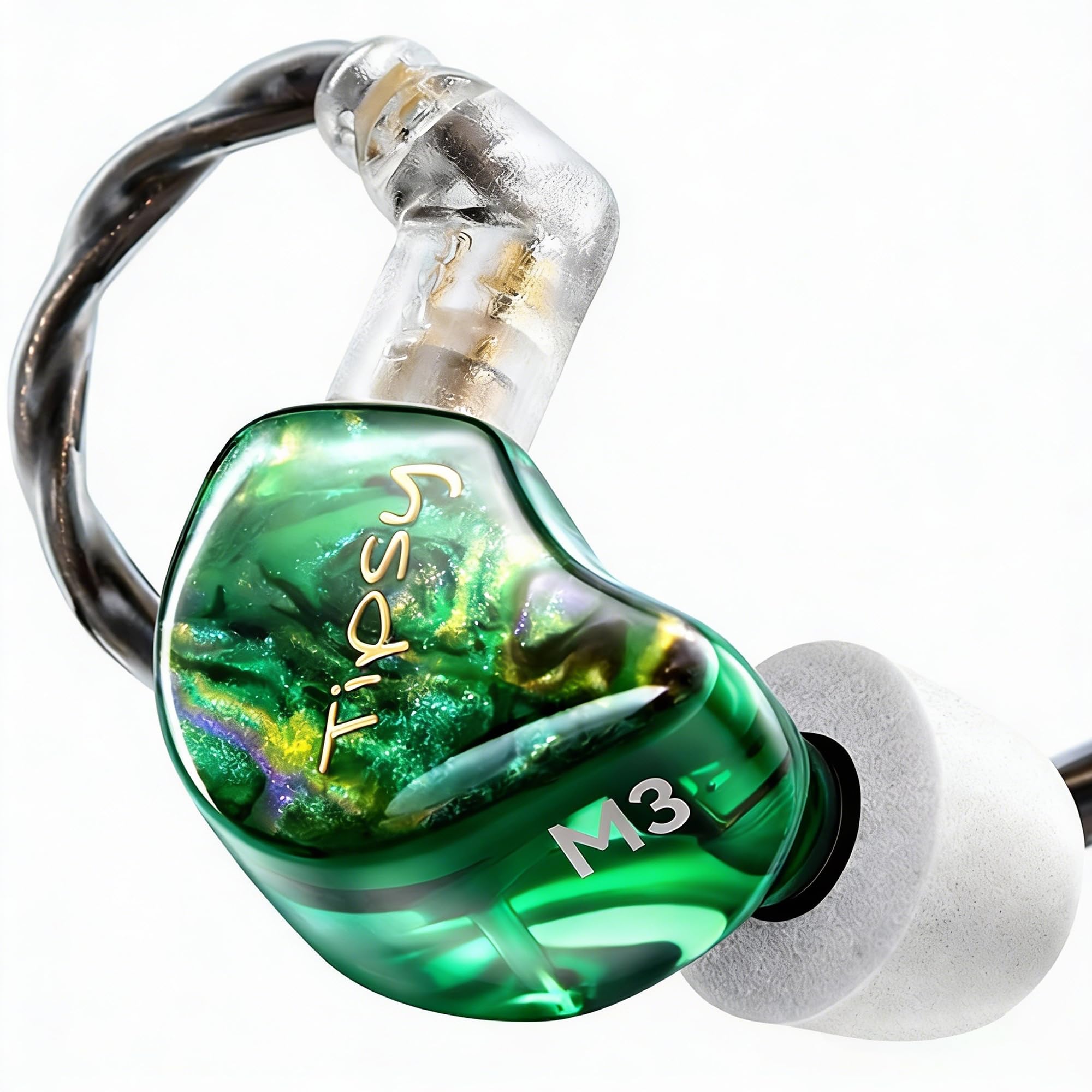
1. Tipsy M3 Professional IEM for Musicians
Our pick — over 4.5★ from 150+ verified ratings; the strongest balance of quality and price.
A studio-grade hybrid IEM that brings three separate acoustic tubes to your ears.
This is the pick for anyone who needs to hear every layer of a mix without congestion. The Tipsy M3 uses a hybrid engine — a 9.2mm titanium-plated dynamic driver for the bass and two custom balanced armature (BA) drivers for the mids and highs — and routes each frequency band through its own physical tube inside the shell. That is the Acoustic-Runway Technology. The result is that a dense rock track or a competitive game soundtrack does not blur into sonic traffic; kick drums, vocals, and hi-hats each have their own lane. You get a 20 Hz to 20,000 Hz frequency range that covers the full audible spectrum without peaks or valleys.
The build reinforces the precision. The gem-grade resin shell is hand-polished over 100 times, so it is transparent enough to see the drivers and tubes inside. More importantly, the shape was developed from over 20,000 ear scans, giving it a leak-free seal that delivers 36dB of passive noise cancellation (PNC — meaning it blocks sound physically, without batteries). The detachable 0.78mm 2-pin cable is high-purity silver-plated copper, which keeps signal integrity high. Buyers consistently praise the sound quality — it is the most-mentioned strength — and the comfort, with owners noting it works for small ear canals and all-day recording sessions without pressure.
The honest trade-off is the over-ear wire routing. A few owners find the memory wire around the ear slightly stiff during very long gaming or studio sessions. The M3 also comes in a single green color option, which is a minor aesthetic constraint for some. Despite this, the combination of a verified 4.6-star consensus and professional-grade driver layout makes this the most complete package at this level.
Why it wins
- Proprietary three-tube Acoustic-Runway Tech eliminates crossover distortion for instrument separation
- Hybrid 2BA + 1DD driver layout delivers deep bass and analytical detail simultaneously
- 36dB passive noise cancellation isolates you without active electronics
- Shell shaped from over 20,000 ear scans ensures a secure, fatigue-free fit
The trade-off
- Over-ear memory wire can feel stiff on very long listening sessions
- Single color finish limits visual choice
Reach for this if: you are a musician, studio engineer, or dedicated listener who needs clean, layered sound and reliable isolation for hours at a time.
Think twice if: you prefer a wireless, truly-wireless experience — this is purely wired via a 3.5mm connection.
2. KZ AS24 In Ear Monitor Headphone
A twelve-driver BA array that puts five different EQ curves at your fingertips via physical switches.
The KZ AS24 is a pure balanced armature IEM — single-sided, twelve units — with a twist: a tuning board inside each earpiece has four independent switches that control ultra-high, high, medium, and low frequencies. You get eight levels of adjustment, which means you can dial the sound from a flat neutral profile to a boosted V-shape without any app or software. The goal here is versatility. A professional drummer who upgraded from a KZ10 reported that the extra drivers add serious depth and clarity for stage monitoring.
Build quality centers on a 3D-printed shell that is one-piece molded, with a smooth finish. The detachable cable is high-purity silver-plated dual parallel line (2-pin, 0.75mm) that plugs into a standard 3.5mm stereo jack. The isolation is sufficient for noisy environments. Sound quality is the top aspect mentioned by owners. The fit, however, gets mixed feedback — some find the rounded shape secure, while others report difficulty keeping them in place. The stock cable is described as a little flimsy by a few buyers, though functional. For the price, you are getting substantial driver hardware and on-board EQ control that few competitors offer.
This IEM is also compatible with Bluetooth adapters and microphone replacement cables, making it more modular than most wired-only models. Compared to the KZ AS24 Pro, this version uses a smaller 12BA configuration and slightly different tuning hardware.
Best for tinkerers: the in-ear tuning switches give you real tonal control without a graphic equalizer.
Fit note: if your ear canals are narrow or shallow, you may need to experiment with the included ear tips to get a proper seal.
Choose this for: the flexibility of switching between multiple sound signatures on the fly — great for moving between genres or monitoring needs.
skip it if: you want a single, perfectly neutral reference; the AS24 rewards those who enjoy tweaking.
3. Sennheiser IE 200 In-Ear Audiophile Headphones
Sennheiser’s 7mm TrueResponse dynamic driver in a compact body with two different bass tuning positions.
The IE 200 is the gateway to Sennheiser’s wired audiophile line. The single dynamic driver design keeps things simple: a 7mm TrueResponse transducer that delivers neutral, natural sound with expressive mids and smooth treble. What gives it flexibility is the dual ear-tip mounting position — push the ear tip fully onto the nozzle for a tight, controlled bass, or leave a small gap for a warmer, fuller low-end. This is an elegant mechanical solution that replaces electronic tuning. The frequency response is balanced, and the sound signature reveals differences between playback sources.
The ergonomic housing is compact, with flexible over-ear hooks that owners call the most comfortable IEM fit they have tried — no “ear creep” even after hours of use. The cable is a low-noise braided MMCX design with a 3.5mm gold-plated plug. It comes with both silicone and memory foam ear tip sets in S, M, L. The biggest caveat from owners centers on the cable: it can twist easily and the proprietary MMCX connector prevents easy third-party cable upgrades. A few listeners also note the IE 200 lacks sub-bass thump compared to hybrid or multi-driver sets. If you value a clean, analytical listen with an absurdly comfortable fit, this is a strong contender.
The comfort champ: buyers consistently call this the most comfortable IEM for long sessions, with one owner calling it “the best fit of any IEM.”
A note on the cable: the stock braided cable is functional but picks up some microphonics (that brushing noise when the cable rubs your clothing); many owners eventually upgrade it.
Pick the IE 200 for: a fatigue-free, natural listen that works for all-day wear and reveals detail across genres.
Look elsewhere if: you need thumping sub-bass, heavy isolation, or aftermarket cable flexibility — the MMCX connector here is proprietary.
4. MEZE AUDIO ALBA Wired In-Ear Monitor

A beautifully-crafted metal IEM with a built-in USB-C DAC that works like a premium dongle for your phone.
The Meze Audio ALBA is built around a 10.8mm dynamic driver that delivers a natural, balanced sound with enhanced lower tones and crisp highs. The design language is unmistakable: a zinc alloy and anodized aluminum shell with an iridescent pearl finish that catches light. The included 3.5mm to USB-C adapter contains a built-in DAC and amplifier (a Digital-to-Analog Converter that translates digital music files into analog signals your IEMs can play). This means you can plug directly into a modern phone or laptop and get higher-quality audio than most headphone jacks provide.
The 1.2m braided SPC cable uses a 2-pin 0.78mm connection with a 3.5mm gold-plated termination. Four pairs of silicone ear tips are included (S, M, L, XL). The eco-leather pouch is practical and premium. Sound quality is the most-praised aspect across owners — particularly the textured bass and clear midrange. The ALBA is also a noticeable step above the Sennheiser IE 200, according to direct owner comparisons, with better build and more musical presentation. The fit, however, gets mixed feedback: some find it secure and ergonomic, while others note the 2-pin connector on the left earbud can loosen over time. The stock cable can be slightly tangle-prone. For a compact, high-design daily driver that does not require a separate DAC, this is a compelling choice.
Best for phone-first listeners: the included USB-C DAC adapter lets you get high-res audio from any phone, tablet, or laptop without an extra box.
A minor fit caveat: a few units have a slightly loose 2-pin connector on the left channel; check the connection when new and consider a thicker aftermarket cable if it persists.
Go with the ALBA for: a portable, premium-feeling setup that pairs as naturally with a phone as with a dedicated music player.
Think twice if: you need deep bass for EDM or hip-hop — the ALBA is balanced and textured but not bass-heavy.
5. KZ AS24 Pro 24BA In-Ear Monitor

Twenty-four balanced armature drivers per side with a digital filter system for studio-grade tuning.
The AS24 Pro doubles the driver count of the standard AS24, using 24 BA drivers per ear. The array splits into 31736 high-frequency and ultra-high-frequency units, 29689 mid-frequency units, and 22955 low-frequency BA units. The crossover and tuning are handled by a built-in 8-level electronic filter — a digital signal processing (DSP, hardware that adjusts the frequency response) switch that lets you customize the sound profile without software. The shell is produced using DLP 3D printing technology with a 0.01mm error margin, ensuring the acoustic chambers are precise. The silver-plated cable is designed to reduce signal loss and resist oxidation over time.
A professional drummer who upgraded from a KZ10 to the AS24 Pro called it “one of the best cost-friendly monitors” they have owned, praising the depth and clarity. Another owner using a Fiio M17 DAC and Fiio BR17 Bluetooth amp rated it an A++. The ergonomic design, based on a large dataset of ear canals, provides strong isolation. The honest downside is the short stock cable (about 3 feet), which some PC users find too short and may need an extension. The AS24 Pro also has a slightly longer soundstage and more headroom than its non-Pro sibling, making it a step forward for critical studio work.
What owners love: the tunable digital filter and the sheer clarity across the full 20-20,000 Hz range make this a serious tool for mixing and monitoring.
Cable length: the included 3-foot cable is fine for portable use but short for desktop listening; budget for a longer aftermarket cable if you use it at a computer.
This is your pick if: you are a working musician, audio engineer, or a demanding listener who wants studio-grade detail and on-bud tuning without spending on multi-thousand-dollar monitors.
Pass this by if: you prefer a simpler setup — the 24-driver array and 8-level switch demand a willingness to experiment with tuning.
6. Letshuoer Astralis Planar Magnetic IEM
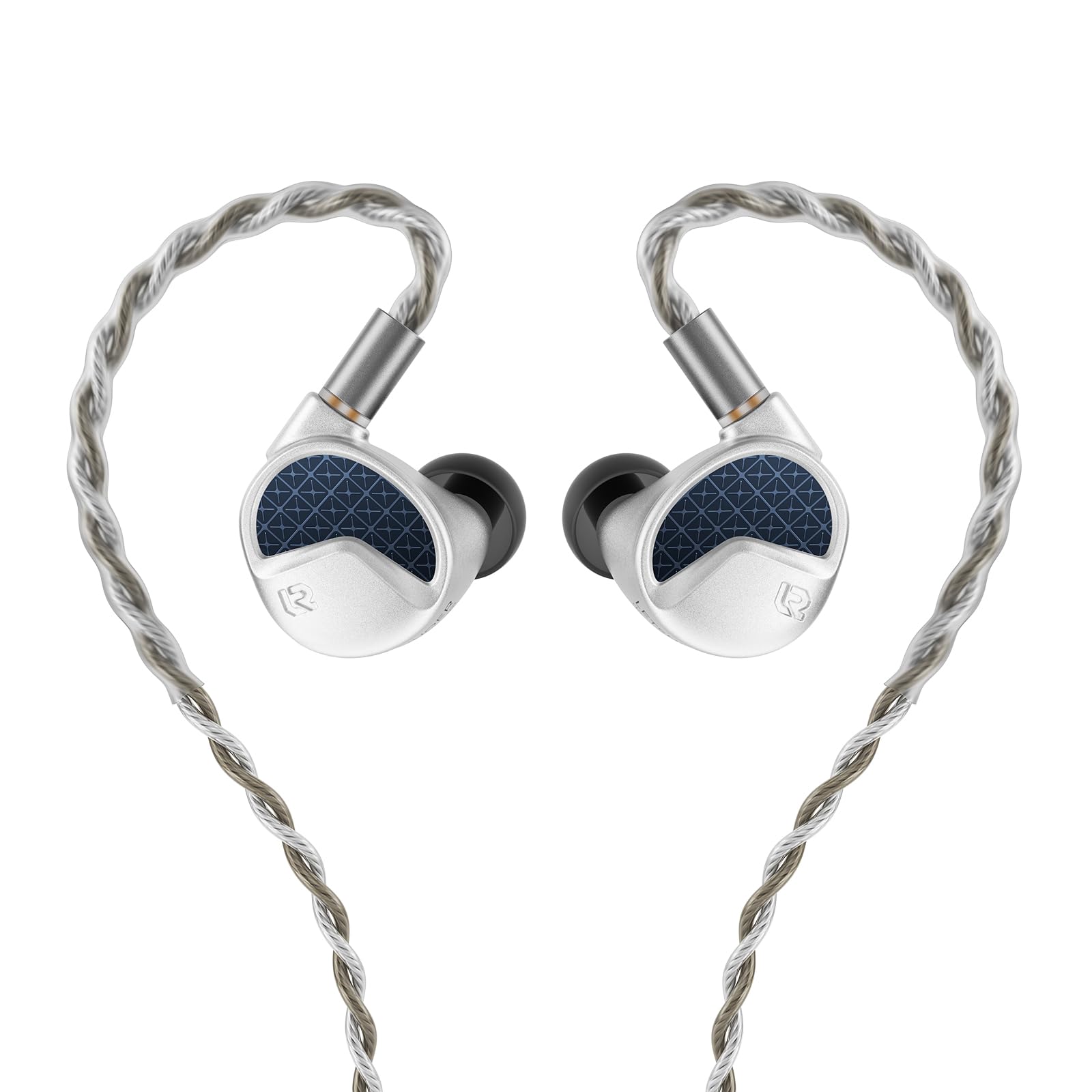
A 15.5mm ring-type planar driver in a CNC aluminum housing with clean, tight bass and silky highs.
The Letshuoer Astralis takes a different engineering path from balanced armature hybrids. Its 15.5mm 5th-generation planar diaphragm driver is circular rather than the typical square, which the company claims achieves optimal acoustic properties for deeper low-frequency extension and rapid transient response. The direct solder structure minimizes impedance for efficient signal transmission and resists oxidation. The housing is CNC-machined aluminum with a lunar silver-grey finish and a blue star emblem. The cable is a 216-strand high-purity SPC (silver-plated copper) cable with interchangeable 3.5mm and 4.4mm plugs — a rare and valuable inclusion at this price. Both terminations give you flexibility to pair with standard portable players and balanced sources.
Owners describe the sound as warm, musical, and engaging with deep, controlled bass and non-fatiguing treble. One reviewer called it “one of the best bassy all-arounders” at its price level. Another said it outperformed their Bose QC Ultra 2 and ATH-M50X in clarity. The bass is notably clean and tight rather than boomy. The 20-20,000 Hz frequency range covers the full spectrum. The look and feel are premium, with a weight that signals quality. The only recurring caveat is that the included USB-C dongle blocks the microphone function on Android — not a problem if you use a dedicated source. Some owners also say the sound improves noticeably with aftermarket ear tips, especially for detail retrieval.
What stands out: the interchangeable 3.5mm and 4.4mm plugs mean you can use a balanced DAC/Amp without buying a separate cable — a genuine value add.
Fit tip: swapping to a narrower-bore ear tip improves treble air and detail; the stock tips are good, but aftermarket tips open up more performance.
Reach for the Astralis if: you want a planar magnetic sound signature — fast, detailed, with excellent bass control — without entering the multi-hundred-dollar bracket.
pass on it if: you need the absolute most neutral analytical reference; the Astralis has a slight warm tilt that enhances musicality.
7. Etymotic ER4SR Studio Reference Earphone
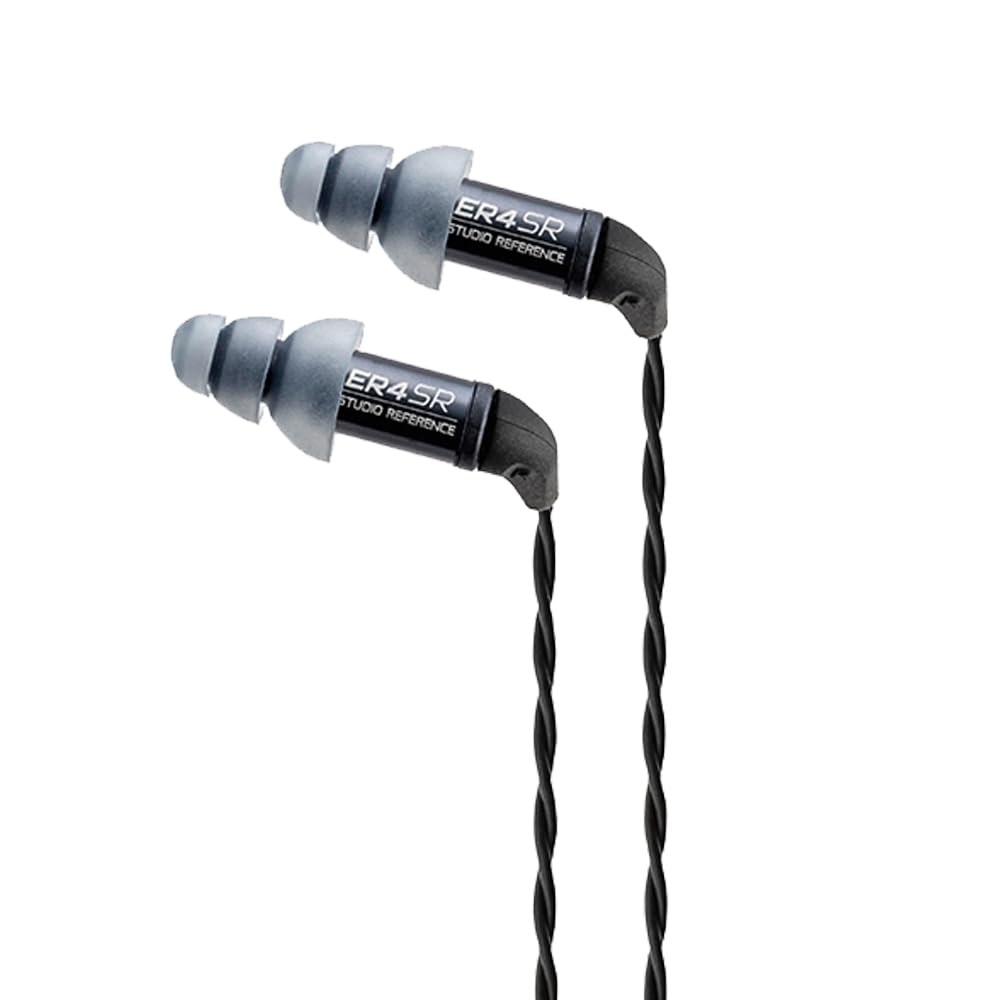
The most accurate balanced armature IEM in its class — precision-matched to within 1 dB.
The Etymotic ER4SR is a reference tool. Its high-performance balanced armature drivers are precision-matched to within 1 dB of each other, which means the left and right channels are nearly identical in output — essential for critical stereo imaging. The aluminum body is anodized and laser-etched. The cable is a braided, reinforced 5-foot detachable MMCX cable. The passive noise isolation rating of 35-42 dB is among the highest of any IEM on the market, achieved through deep insertion of the triple-flange ear tips. The maximum output hits 122 dB SPL.
Owners overwhelmingly praise the accurate, uncolored sound. One owner described the ER4SR as “a higher level” compared to the ER3SE, with phenomenal detail and instrument separation. Another called it “the best under.” The fit, however, is a dividing line. The deep insertion required for the isolation can be uncomfortable for some, and the long cable can pick up microphonics (that is, cable rustle noise). A few owners have reported driver distortion after extended use, a recurring reliability note in the review data. This IEM is not for bass heads — its bass is clean and punchy but not abundant. If your priority is a pure, neutral reference, the ER4SR is a classic.
What owners say: the sound quality is referenced repeatedly as the most outstanding feature, with 90 positive mentions — it is the most-discussed aspect by a wide margin.
Who this is not for: if you find deep-fitting IEMs uncomfortable, or if you want a warm or bass-heavy signature, the ER4SR will frustrate you.
Choose the ER4SR for: clinical reference monitoring, mix evaluation, and any use where tonal accuracy is the only goal.
Look elsewhere if: you want a relaxed, fatigue-free sound or if your ear canals are sensitive to deep insertion; try the shorter ER4XR for a slightly warmer tuning.
8. Linsoul Kiwi Ears Astral

A 1DD+6BA hybrid that delivers a powerful 9dB sub-bass shelf without sacrificing vocal clarity.
The Kiwi Ears Astral is a professional-grade hybrid designed for engineers and discerning listeners. It uses a 10mm bioceramic diaphragm dynamic driver as a subwoofer for the low frequencies, two custom balanced armature drivers for the midrange (tuned for a neutral response with an accurate pinna compensation curvature at 2.8kHz — a frequency that matches how the human ear naturally perceives midrange), and dual SWFK balanced armature tweeters for ultra-high frequencies. The result is a 10 Hz to 22 kHz frequency range with a 9dB sub-bass shelf that transitions smoothly into the low-midrange, cutting off at 300Hz to avoid muddiness.
The shell is 3D-printed resin with a black gold-sprinkled faceplate. The cable is modular with both 3.5mm and 4.4mm adaptors. Sound quality tops the praise list — owners highlight bass articulation, linearity, and micro-detail, along with a relaxed, non-fatiguing treble. The build quality and included accessories also earn high marks. The major caveat is the shell size. The Astral uses large housings that can cause comfort issues for smaller ears, and the 6mm nozzle requires aftermarket ear tips for many users to get a good seal. The fit is the most mixed aspect, with some owners reporting that the stock ear tips can cause irritation. If you prioritize raw detail and sub-bass extension and have average-to-large ears, this is a high-performing choice.
For the detail-seeker: the hybrid driver configuration produces exceptional instrument separation and a soundstage that reveals layers in complex mixes.
Comfort warning: the shells are noticeably larger than most competitors; try before you buy if you have small ears, or budget for aftermarket ear tips.
Grab the Astral for: reference-level detail with a satisfying sub-bass foundation — ideal for gaming, critical listening, and studio work where accuracy matters.
Pass on it if: your ear canals are smaller than average, or if you prioritize a lightweight, forget-they-are-there fit.
9. Shure SE846 PRO Gen 2

A quad-driver IEM with four interchangeable nozzles that let you change the earbud’s frequency response in seconds.
The Shure SE846 PRO Gen 2 is the latest iteration of a long-running reference. It uses four custom-engineered balanced armature drivers in a three-way configuration — dedicated drivers for low, mid, and high frequencies — with a groundbreaking low-pass filter that provides subwoofer-like bass without clouding the mids. The headline feature is the interchangeable sound nozzle system: four filters (balanced, warm, bright, and a new extended filter) that you screw into the earpiece to tailor the frequency response. No equalizer, no app — just a mechanical swap that lets you go from analytical to warm in ten seconds.
The sound isolating design (passive) blocks ambient noise effectively, and the ergonomic low-profile housing is designed for all-day comfort. The detachable MMCX cable uses a standard 3.5mm termination, and the comprehensive fit kit includes Comply foam sleeves (XS through L), soft flex sleeves, triple flange sleeves, and yellow foam sleeves. Buyers report that the SE846 Gen 2 rivals over-ear headphones like the Sennheiser HD660S2 in detail, especially when paired with a good DAC/amp. The balanced red filter, for example, delivers superior top-end extension and more powerful bass compared to earlier SE535 models. The value-for-money perception is mixed — some call it expensive, but owners consistently confirm the sound quality justifies the investment. If you want a premium, customizable IEM that grows with your gear, this is the endgame for many.
The killer feature: the four nozzle filters give you what amounts to four different IEMs in one package — a warm signature for relaxing, a bright one for analytical mixing, and balanced ones for everyday listening.
What it needs: the SE846 Gen 2 benefits significantly from a balanced DAC/amp to open up its full potential; it is a wired IEM that rewards a quality source.
Reach for the SE846 Gen 2 if: you value build quality, a broad accessory kit, and the unique ability to physically change your tuning without any digital equalization.
Think twice if: your budget is tight, or if you prefer a single, neutral signature — the modular approach might feel over-engineered for someone who just wants one perfect sound.
Understanding the Specs
Driver Types: What Each One Does To Your Music
A dynamic driver (like the 7mm in the Sennheiser IE 200) works similarly to a traditional speaker — a coil and magnet move a diaphragm to push air. It tends to produce natural, cohesive bass and a warm overall sound. A balanced armature (BA) driver (like the twelve in the KZ AS24) uses a tiny balanced armature that pivots between two magnets, which makes it extremely efficient and precise for mids and treble. Hybrid IEMs (like the Tipsy M3 and Kiwi Ears Astral) combine both types, assigning lows to the dynamic driver and mids/highs to the BA drivers, aiming to get the best of both worlds. Planar magnetic drivers (the 15.5mm in the Letshuoer Astralis) use a large flat diaphragm between magnets for fast transient response and detail.
Impedance and Sensitivity: Driving Compatibility
Impedance (measured in ohms) is how much electrical resistance the earbud presents to the audio source. Low impedance (below 32 ohms) is easy for a phone to drive — higher impedance often requires a dedicated headphone amplifier. Sensitivity (measured in dB SPL per milliwatt) tells you how loud the earbud will get with a given amount of power. A high-sensitivity IEM (over 100 dB) will play loudly from a phone. A low-sensitivity model (around 90 dB) needs a more powerful source, like a USB dongle DAC/amp. Most of the picks here are designed for general portable use; the Shure SE846 Gen 2, for example, noticeably benefits from a balanced DAC/amp to reach its soundstage potential.
Frequency Response: What The Numbers Really Mean
A spec like “20 Hz – 20,000 Hz” tells you the range of sound frequencies the driver can reproduce. 20 Hz is a very low sub-bass rumble (almost a vibration), and 20,000 Hz is the upper limit of typical human hearing in youth. Most audiophile IEMs cover this standard range, but a wider span like 10 Hz – 22,000 Hz (found on the Kiwi Ears Astral) is not necessarily a sign of better sound — it simply indicates the driver can extend beyond the normal hearing limit. What matters more is how flat or even the response is across that range; a neutral IEM is designed to reproduce frequencies without added boost or cut.
Noise Isolation vs. Noise Cancellation
Passive noise cancellation (PNC, also called sound isolating) works purely by creating a physical seal inside your ear canal — foam or silicone ear tips block ambient noise. The Etymotic ER4SR offers the highest isolation here at 35-42 dB, which is enough to make a busy room disappear. Active noise cancellation (ANC) uses microphones and electronics to cancel out noise and is found on wireless earbuds. None of these picks use ANC; they rely entirely on the seal. If you plan to use these in a very loud environment (planes, trains), you will want foam ear tips for maximum passive isolation.
FAQ
Do I need an external DAC or amplifier to use these audiophile earbuds?
What is the difference between a 2-pin and MMCX connector?
Are these IEMs better than wireless earbuds like AirPods Pro?
What is the correct way to wear in-ear monitors?
How long do audiophile IEMs typically last?
Can I use these earbuds for gaming?
What is the difference between an IEM and a regular earbud?
How do I clean and maintain my ear tips and nozzles?
Why do some of these IEMs have tuning switches or nozzles?
Is a higher driver count always better?
Final Thoughts: The Verdict
If you want one dependable pick, the best earbuds for audiophiles winner is the Tipsy M3 Professional because its Acoustic-Runway Technology and hybrid driver layout deliver genuinely layered sound with 36dB of passive isolation, all from a shell shaped to fit a wide range of ears. If you want an even more customizablesignature at a lower entry point, the KZ AS24 with its 12-BA array and on-board tuning switches gives you serious playful depth without breaking into premium pricing. And for the audiophile who wants a single IEM that can sound like four different earphones, the Shure SE846 PRO Gen 2 is the modular endgame, letting you swap sound nozzles to match your mood, your source, or your genre in seconds. Each of these picks was chosen to deliver measurable performance and real-world owner satisfaction, because in this category the goal is not to drown you in specs but to make sure every note, every layer, and every subtle detail you are chasing actually reaches your ears.
How We Picked
We do not accept paid placement. Every pick is matched to a real buyer and a real use-case; we do not hands-on test units.
Sources & Methodology
Specifications: manufacturer listings and product documentation. Review insights: verified customer reviews, as of July 2026. Pricing: not shown on this page (it changes often); check the current price via the retailer link.
As an Amazon Associate, WellFizz earns from qualifying purchases. This does not affect which products we feature.
Related Guides

Mo Maruf
I created WellFizz to bridge the gap between vague wellness advice and actionable solutions. My mission is simple: to decode the research and give you practical tools you can actually use.
Beyond the data, I am a passionate traveler. I believe that stepping away from the screen to explore new environments is essential for mental clarity and physical vitality.