Our readers keep the lights on and my smoothie glass nicely filled. As an Amazon Associate, I earn from qualifying purchases.
The roar of a table saw, the scream of a planer, the constant drone of a dust collector — woodworking is an assault on your hearing that compounds silently with every project. The ringing in your ears after a long day in the shop isn’t a badge of honor; it’s a warning sign that your current setup is failing you.
I’m Mohammad Maruf — the founder and writer behind WellFizz. I’ve spent hundreds of hours analyzing decibel ratings, foam density, electronic circuitry, and real-user durability reports across the most popular hearing protectors to separate marketing noise from genuine protection.
This guide cuts through the static to help you find the best ear protection for woodworking that matches your shop environment and personal comfort needs.
How To Choose The Best Ear Protection For Woodworking
Selecting hearing protection for a wood shop involves more than picking the highest NRR number. You need a balance of attenuation, comfort for extended wear, and features that keep you aware of your surroundings while blocking the dangerous peaks.
Passive vs. Electronic: Situational Awareness in the Shop
Passive earmuffs provide consistent, unpowered sound blocking. They are simple, reliable, and never need batteries. Electronic muffs use microphones to amplify safe ambient sounds (conversation, a bearing going bad on your jointer) while instantly compressing dangerous impulses (a slammed cabinet door, a kickback). For woodworking, electronic muffs let you hear your tools running smoothly, which is a critical safety cue. If you work alone in a quiet shop, passive muffs may suffice. If you need to communicate or monitor tool sound, invest in electronics.
Comfort and Sweat Management During Long Sessions
Hours at a benchtop or assembly station make cushion material and clamping force critical. Vinyl or PU leather cushions trap heat and sweat, becoming uncomfortable fast. Memory foam or gel-filled cushions conform to your head shape and reduce pressure points. Headband width and padding matter — a thin headband concentrates the weight of the muffs on a small area of your skull. Look for wide, padded headbands and deep ear cups that don’t press your ears flat against your head.
Compatibility With Other Safety Gear
You likely wear safety glasses, a respirator, or a face shield while woodworking. Low-profile ear cups prevent interference with your eyewear temples, and slim headbands sit comfortably under welding hoods or hard hats. Some muffs are designed to attach directly to hard hats, which is useful if your shop requires head protection. Check the inside depth of the ear cup — shallow cups press on larger ears and cause pain after thirty minutes.
Quick Comparison
On smaller screens, swipe sideways to see the full table.
| Model | Category | Best For | Key Spec | Amazon |
|---|---|---|---|---|
| 3M WorkTunes Connect | Electronic + Bluetooth | All-day shop use with music | 26 dB NRR | Amazon |
| Walker’s Razor Slim | Electronic | Combined woodworking and shooting | 23 dB NRR | Amazon |
| Howard Leight Impact Sport | Electronic | Durability and compact storage | 22 dB NRR | Amazon |
| 3M PELTOR X5 | Passive | Maximum passive noise reduction | 21 dB NRR | Amazon |
| Walker’s TACTI Grip | Electronic | Tactical shooting and range use | 23 dB NRR | Amazon |
| Qozybuds Bluetooth 6.0 | Electronic + Bluetooth | Budget-friendly all-in-one | 30 dB SNR | Amazon |
| Dewalt DPG62-C Interceptor | Passive | Simple, reliable protection | 22 dB NRR | Amazon |
In‑Depth Reviews
1. 3M WorkTunes Connect Wireless Hearing Protector

3M’s latest WorkTunes generation solves the two biggest complaints of its predecessor: flimsy headband feel and tinny audio. The new model delivers fuller bass response and a gentler midrange without sacrificing clarity for podcasts or phone calls. The 26 dB NRR rating is sufficient to tame a planer or a miter saw to a safe level, and the water-resistant build holds up against shop sweat.
The integrated microphone allows you to take calls without removing the headset, and USB-C charging means you can top up from any modern shop charger. The Audio-Assist Technology walks you through Bluetooth pairing aloud, which is a thoughtful touch when your hands are covered in sawdust. The volume limiter automatically caps the output to safe listening levels, preventing accidental damage on top of the passive attenuation.
Comfort is a standout feature for large-headed users — the headband has a baseball-hat cutout relief area that reduces pressure, and the soft padding remains comfortable for six-hour sessions. The ear cups are deep enough to avoid pinching most ears, though replacing the stock cushions with the optional 3M gel hygiene kit improves long-wear comfort even further.
Why it’s great
- Excellent 26 dB NRR with quality Bluetooth audio
- USB-C charging with 40+ hours of battery life
- Integrated mic for calls hands-free
Good to know
- Bass response is moderate, not audiophile-grade
- Microphone quality is adequate for calls, not studio-grade
- Stock cushions benefit from gel upgrade for hot shops
2. Walker’s Razor Slim Electronic Muff
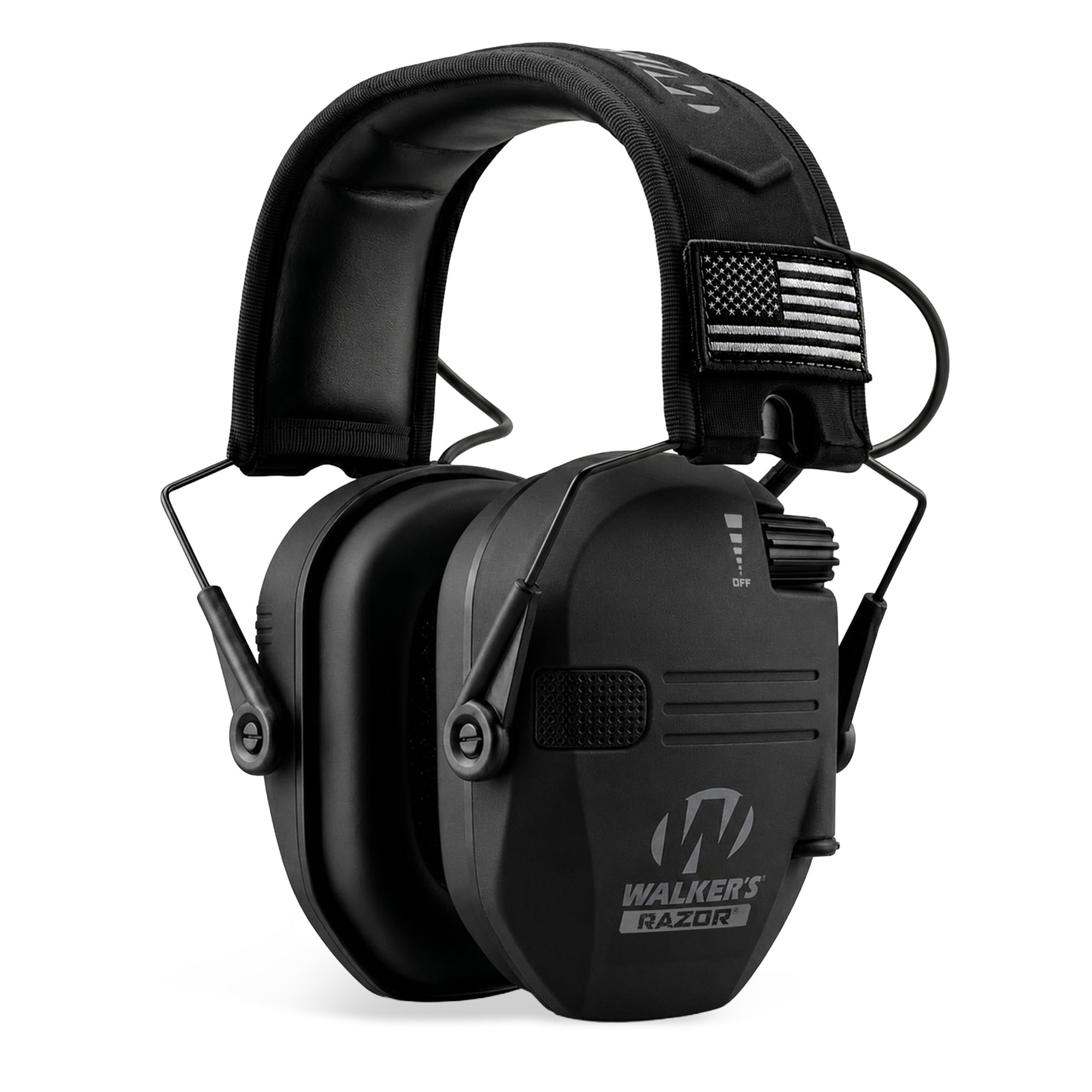
Walker’s built their reputation on shooting electronics, and the Razor Slim carries that DNA into the wood shop. The low-profile ear cups are the defining feature — they provide excellent clearance for safety glasses temples and allow a natural cheek weld if you use a bandsaw or scroll saw in close quarters. At 23 dB NRR, they cut router and circular saw noise to a manageable hum.
The electronic circuitry delivers natural sound amplification for conversation, and the instant compression kicks in fast enough that a sudden impact from a dropped board never reaches your eardrum. The volume adjustment knob is accessible and easy to dial with gloves on. Battery life is solid, and the build quality feels durable enough to survive drops onto concrete.
The slim profile does come with a trade-off: the ear cups are shallower than bulkier models. Users with larger ears may experience pressure fatigue after two hours. The headband compression is firm, which helps the seal but can feel tight on wider heads. For woodworkers who also spend time at the range, this dual-purpose design makes it a strong second set.
Why it’s great
- Low-profile cups clear glasses and rifle stocks
- Instant sound compression for impulse noise
- Durable build with reliable battery life
Good to know
- Shallow cups may press on larger ears
- Firm headband can feel tight at first
- Not as comfortable for all-day passive wear
3. Howard Leight Impact Sport

The Howard Leight Impact Sport has been a staple in the shooting and shop community for years, and its reputation is earned through sheer durability. The olive drab green color is distinctive, but the real story is the robust hinge design that allows the muffs to fold into a compact bundle for toolbag storage. After years of hard use, the headband retains its tension, and the electronics remain reliable.
The directional microphones amplify ambient sounds to a safe 82 dB, providing natural situational awareness. You can hear the subtle change in pitch of a table saw under load, which is a valuable diagnostic cue. The automatic shut-off after four hours of inactivity preserves battery life, and the single volume/power knob is intuitive even with gloves. The included 3.5mm aux input lets you connect a music player or scanner.
The 22 dB NRR is moderate, so you may want to pair these with foam earplugs for extremely loud tools like a thickness planer or a chain saw. The ear cups are comfortable for most head shapes, though safety glasses with thick arms can break the seal slightly. The Impact Sport is a proven workhorse that prioritizes longevity over gimmicks.
Why it’s great
- Folding design fits easily in any tool bag
- Directional mics for natural sound awareness
- Proven durability over years of field use
Good to know
- 22 dB NRR is lower than some competitors
- Can interfere with thick safety glasses
- Gel ear pad upgrade recommended for comfort
4. 3M PELTOR X5 Series

The 3M PELTOR X5 is the workhorse of industrial hearing protection. While the NRR rating of 21 dB may seem modest on paper, PELTOR’s testing methodology is conservative compared to some consumer brands, and the real-world attenuation is substantial. In a deafening mill environment, users report it outperforms foam plugs when worn alone. The large, deep ear cups encase the entire ear without pressure points.
This model is designed for hard hat attachment, making it ideal for construction woodworkers or anyone who needs combined head and hearing protection. The installation on standard hard hat slots is straightforward and secure. The headband is wide and well-padded, distributing the weight of the cups evenly. Users report comfort during twelve-hour shifts, which is a testament to the ergonomic design.
The main drawback is the bulk. The X5 cups are large and protrude noticeably, which can interfere with some face shields or tight workspace clearances. The vinyl cushions can cause sweating in warm shops, and the lack of gel pads from the factory is a missed opportunity. For pure, no-nonsense passive protection in a high-noise environment, the X5 is a top contender.
Why it’s great
- Excellent real-world noise reduction for industrial settings
- Hard hat compatible with easy mounting
- Deep ear cups for all-day comfort on long shifts
Good to know
- Bulky cups clear tight spaces poorly
- Vinyl cushions trap heat and sweat
- Gel pads sold separately, not included
5. Walker’s TACTI Grip Series

The TACTI Grip differentiates itself with a silicone composite headband that provides a secure, slip-free fit in dynamic scenarios. For woodworking, this means the muffs stay put even when you’re leaning over a bench or reaching into a cabinet. The metal wireframe inside the rubber headband adds durability without adding excessive weight. The 23 dB NRR rating is solid for most power tools.
The omnidirectional microphones provide clear sound pickup, and the 0.02-second sound-activated compression is fast enough to protect against the loudest impacts. The control knob is intuitive, and the 3.5mm audio input allows for connection to a phone or MP3 player. The gel earpads are comfortable out of the box and provide a good seal without excessive clamping force.
Long-term users note that the rubberized coating on the headband can become tacky or sticky after several years of exposure to heat and humidity. The lack of auto shut-off means you may drain the batteries if you forget to power down. For the price, the TACTI Grip offers electronic features that rival more expensive models, making it a smart entry point into active hearing protection.
Why it’s great
- Non-slip silicone headband stays secure during movement
- Fast 0.02-second sound compression for impulse noise
- Comfortable gel earpads from the factory
Good to know
- Rubber coating can degrade over years
- No auto shut-off feature
- Flat ambient sound localization compared to pricier models
6. Qozybuds Bluetooth 6.0 Hearing Protection Headphones

The Qozybuds entry-level model punches above its weight in battery life — rated at 120 hours of playtime with a 1200mAh battery. A five-minute quick charge provides four hours of use, which is convenient for a shop where forgetting to charge overnight is common. The 30 dB SNR (Single Number Rating, a European metric roughly equivalent to NRR) indicates strong passive attenuation, though real-world performance depends on fit.
The larger button design is deliberate for glove use, and the Bluetooth 6.0 connection is stable throughout a typical workshop range. Sound quality is decent for spoken word and mid-range music, though bass response is limited. The memory foam cushions are comfortable initially, but users report they compress over several months, reducing the seal quality.
The voice prompt system that announces “please charge” at 20% battery can become repetitive, and there is no auto shut-off when Bluetooth disconnects. The build uses more plastic than premium options, so it feels lighter but less rugged. For the budget-conscious woodworker who wants Bluetooth streaming without spending premium dollars, the Qozybuds delivers impressive battery endurance.
Why it’s great
- Exceptional 120-hour battery life
- Large buttons for easy operation with gloves
- Very attractive price for a Bluetooth model
Good to know
- Foam cushions compress over time
- Voice prompts can’t be disabled
- Build feels lighter and less durable
7. Dewalt DPG62-C Interceptor Protective Safety Earmuff

The Dewalt DPG62-C is a straightforward passive earmuff that does exactly what it promises without fuss. The bright yellow color serves as a visual safety cue — easy to spot on a cluttered bench or hanging on a pegboard. The headband adjusts smoothly for smaller heads, and the cups fold inward for compact storage. At 22 dB NRR, it handles mowers and routers effectively.
Comfort is decent for short to medium sessions. The foam padding is adequate but not plush, and the clamping force is moderate. Users with larger heads report some soreness after extended wear, as the ear cups are not as generously padded as premium models. The build quality is solid for the price, with a sturdy plastic frame that survives drops.
The primary limitation is the lack of electronic features — no microphones, no Bluetooth, no audio input. In a quiet shop, that is fine. In a noisy environment where you need to hear a phone ring or a colleague’s warning, you will need to remove them. As a spare pair, a loaner for helpers, or a simple shield for occasional use, the DPG62-C is a reliable value buy.
Why it’s great
- Simple, reliable passive protection at a low cost
- Bright yellow color aids visibility and safety
- Folds compact for storage in a tool box
Good to know
- No electronic features like Bluetooth or amplification
- Clamping force may cause fatigue on larger heads
- Ear pads are basic, not deep or gel-filled
FAQ
Can I wear electronic earmuffs with foam earplugs for extra protection?
Why do my passive earmuffs seem less effective over time?
Will Bluetooth earmuffs affect the noise reduction rating?
How do I clean my earmuffs without damaging them?
Final Thoughts: The Verdict
For most users, the ear protection for woodworking winner is the 3M WorkTunes Connect because it combines a solid 26 dB NRR with quality Bluetooth audio, USB-C charging, and all-day comfort in a package that is purpose-built for the shop. If you want a slim profile that clears safety glasses and still offers electronic amplification, grab the Walker’s Razor Slim. And for pure durability and a folding design that stows anywhere, nothing beats the Howard Leight Impact Sport.

Mo Maruf
I created WellFizz to bridge the gap between vague wellness advice and actionable solutions. My mission is simple: to decode the research and give you practical tools you can actually use.
Beyond the data, I am a passionate traveler. I believe that stepping away from the screen to explore new environments is essential for mental clarity and physical vitality.