Our readers keep the lights on and my smoothie glass nicely filled. As an Amazon Associate, I earn from qualifying purchases.
A snoring partner, a barking dog at 3 AM, or the relentless hum of city traffic—when your bedroom stops being a sanctuary, your health takes a hit. The right ear protection turns chaos into calm, but finding a pair that stays comfortable all night without falling out or causing pressure is surprisingly difficult.
I’m Mohammad Maruf — the founder and writer behind WellFizz. I’ve spent hundreds of hours analyzing foam densities, silicone formulations, and Noise Reduction Ratings across dozens of brands to separate the overnight champions from the one-time disappointments.
This guide breaks down the five best models for deep, uninterrupted rest, covering everything from disposable foam packs to reusable silicone options. My goal is to help you find the absolute best ear protection for sleeping that fits your unique sleep style and sensitivity level.
How To Choose The Best Ear Protection For Sleeping
Not all earplugs are made for lying down. The ideal sleep plug balances noise reduction with all-night comfort, especially if you sleep on your side. Here are the three factors that matter most.
Material and Fit
Slow-expansion memory foam is the gold standard for blocking continuous noise and pressure against the ear canal as it conforms. Moldable silicone putty, on the other hand, sits over the outer ear rather than inside it, making it a better choice for sensitive canals. Reusable silicone plugs with interchangeable tips offer a middle ground, but their rigid stems can press against the ear if the fit isn’t perfect.
Noise Reduction Rating vs Real World Use
Foam plugs with an NRR of 32 dB are the theoretical maximum for blocking sound, but real-world attenuation is typically half that due to fit and insertion technique. A lower NRR of 22–28 dB from a silicone plug that seals consistently may actually perform better in practice. Focus on consistent seal comfort rather than chasing the highest number on the package.
Durability and Hygiene
Disposable foam plugs are hygienic and cheap, but generate waste and rarely stay soft after one or two uses. Reusable silicone plugs can be washed with soap and water, lasting months if stored in a ventilated case. Moldable putty earplugs are reusable for several nights but lose adhesion over time. For daily sleepers, reusable options often deliver better long-term value.
Quick Comparison
On smaller screens, swipe sideways to see the full table.
| Model | Category | Best For | Key Spec | Amazon |
|---|---|---|---|---|
| Audree Soft Ear Plugs | Reusable Silicone | Side Sleepers with Sensitive Skin | SNR 28 dB | Food-grade Silicone | Amazon |
| CURVD Everyday Earplugs | Premium Reusable | Ergonomic Fit & Portability | NRR 15 dB / SNR 30 dB | 5 Tip Sizes | Amazon |
| Mack’s Pillow Soft Silicone | Moldable Putty | Outer Ear Comfort & Swimming | NRR 22 dB | Moldable Putty | Amazon |
| 3M Disposable Earplugs | Disposable Foam | Budget Bulk & High NRR | NRR 32 dB | 80 Pairs | Amazon |
| Beinkap NC Ear Plugs | Reusable Dual-Pair | Conversational Noise Filtering | NRR 28 dB | 12 Tips / 2 Pairs | Amazon |
In‑Depth Reviews
1. Audree Soft Ear Plugs
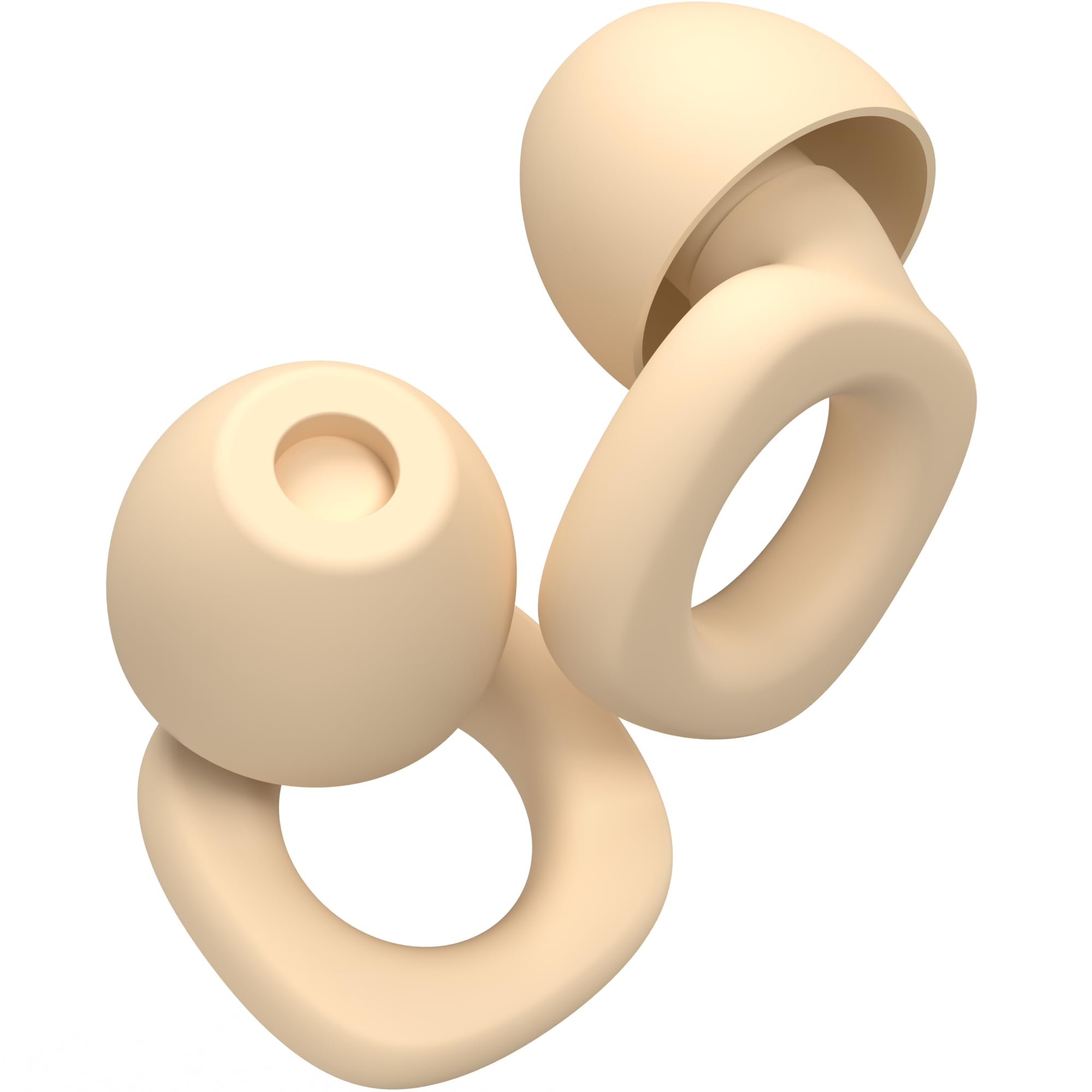
The Audree Soft Ear Plugs earn the top spot because they solve the two hardest problems for sleepers: comfort for side-sleeping and a consistent seal that doesn’t fall out. The unique square ring sits flush against the outer ear and keeps the silicone tip from traveling too deep into the canal, which eliminates the pressure headache common with bullet-style plugs. With an SNR rating of 28 dB, they effectively mute snoring, traffic, and barking dogs while still letting you hear an alarm clock or a crying baby.
The kit includes four silicone tip sizes from XS to L, so even the narrowest ear canals can find a pain-free fit. Users report wearing these all night without soreness or itching, which is rare for reusable silicone plugs. The super-soft food-grade material is hypoallergenic, making this an excellent pick for people with contact dermatitis or sensitive skin.
One trade-off is that the acoustic seal is slightly less aggressive than high-NRR foam plugs; if you need dead silence in a construction-zone-level environment, the 3M foam will block more raw decibels. But for the vast majority of bedroom scenarios, the Audree offers the best balance of lasting comfort and real-world noise reduction in a reusable format.
Why it’s great
- Square-ring design prevents deep insertion and ear pain.
- Four tip sizes ensure a custom fit for narrow or wide canals.
- Comfortable for all-night side-sleeping without falling out.
Good to know
- Noise reduction is good, not absolute; very loud environments may still bleed through.
- The tiny carry case is easy to misplace.
2. CURVD Everyday Earplugs
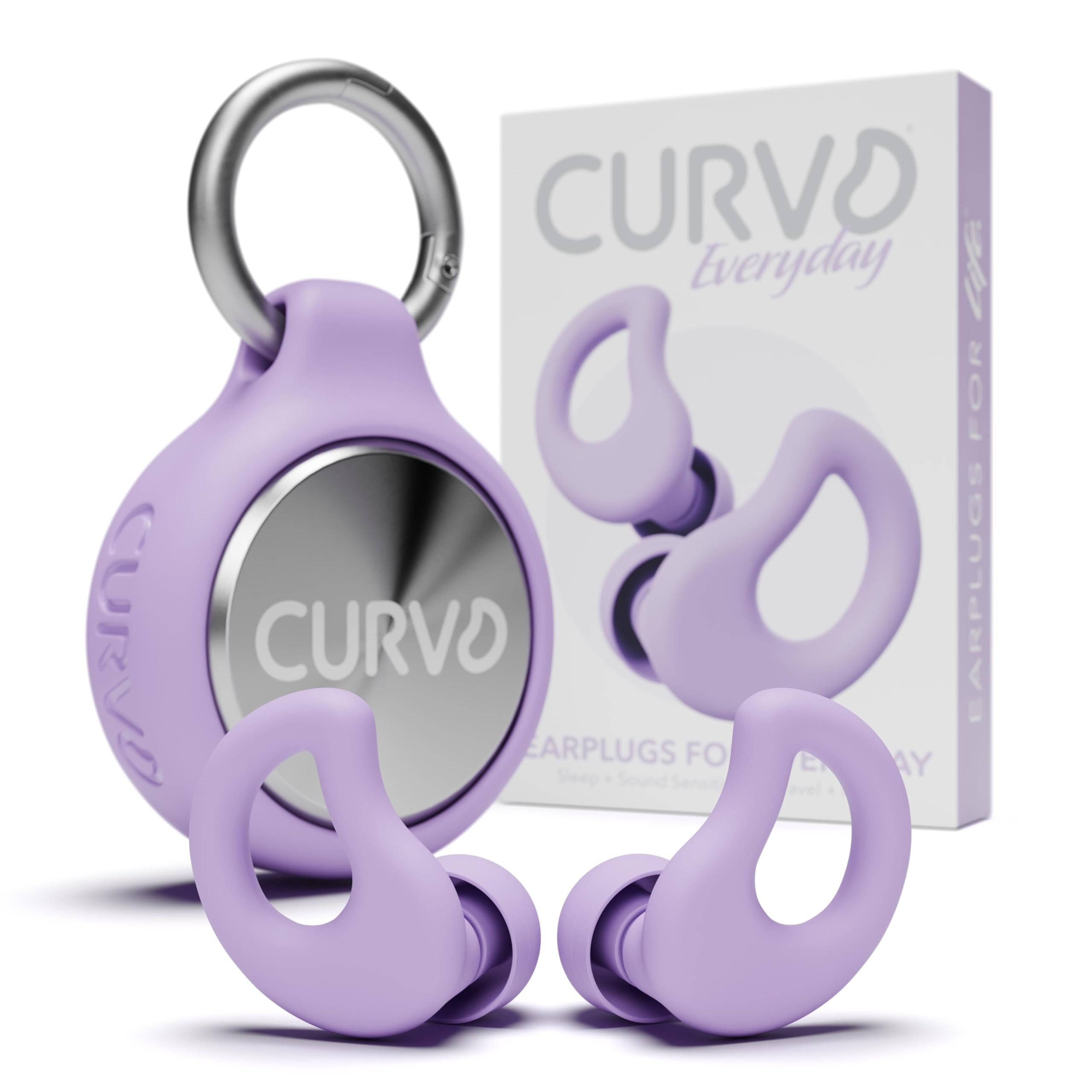
CURVD focuses on ergonomics, and it shows. The patented shape is designed to follow the natural curve of the ear, which makes these plugs feel almost invisible once inserted. The kit includes five pairs of ultra-soft silicone tips (XXS through L), so dialing in the right fit is straightforward. With an SNR of 30 dB and an NRR of 15 dB, the primary noise reduction comes from the canal seal rather than material density, making them ideal for moderate bedroom noise like distant traffic or a droning fan.
The aluminum carrying case is a standout feature — it’s compact, attaches to a keychain or bag with the included satin nickel clip, and keeps the plugs clean. Users consistently mention that the case feels premium, though the screw-top design can be slightly inconvenient for quick one-handed access. The flexible silicone material is hypoallergenic and easy to clean with mild soap.
Some light sleepers report that the CURVD plugs don’t completely silence a snoring partner; they reduce volume rather than eliminate it. But for anyone who prioritizes a barely-there feel and wants a portable, reusable package that travels effortlessly, this is a top-tier choice.
Why it’s great
- Patented ergonomic shape follows the ear’s natural contour.
- Five tip sizes from XXS to L for an ultra-custom fit.
- Compact aluminum case with clip is travel-friendly and protective.
Good to know
- Noise reduction is moderate; not ideal for extremely loud environments.
- The screw-top case requires two hands to open and close.
3. Mack’s Pillow Soft Silicone Earplugs

Mack’s is the original moldable silicone putty earplug, and it remains the best option for people who cannot tolerate anything inserted into their ear canal. Instead of pushing into the canal, the putty sits over the outer ear and seals by pressing gently against the ear’s natural contours. This makes it exceptionally comfortable for side sleepers — there is no hard plastic stem to push into the ear when your head hits the pillow. The NRR of 22 dB is lower than foam, but the seal consistency is excellent because you shape it specifically to your ear each time.
The 18-pair pack offers strong value, and each pair can be reused for several nights before losing adhesion. Users also rely on Mack’s for swimming and showering, as the waterproof putty prevents water from entering the ear. The formula is non-toxic and non-allergenic, and it’s the #1 doctor-recommended brand for snoring relief.
One downside is that the putty can feel warm or slightly sticky in hot climates, and it may collect dust or lint if left exposed. It also doesn’t block low-frequency noise as effectively as deep-insertion foam. But for sleepers with sensitive canals or a history of ear infections, Mack’s remains the safest and most comfortable route.
Why it’s great
- Zero canal insertion — ideal for sensitive or infected ears.
- Seals reliably against snoring and ambient noise when molded correctly.
- Reusable for multiple nights; excellent value per pair.
Good to know
- Warm or humid conditions can make the putty feel sticky.
- Low NRR of 22 dB means very loud noises may still be audible.
4. 3M Disposable Earplugs (80 Pairs)

The 3M Disposable Earplugs are the gold standard for raw noise blocking. With an NRR of 32 dB, these small light-blue foam plugs achieve the highest theoretical attenuation in this lineup. The slow-expansion polyurethane foam is soft and pliable — you roll it into a thin cylinder, insert it, and watch it expand to fill your ear canal over about 30 seconds. The resulting seal is dense enough to block snoring, road noise, and even the hum of a mini-split AC unit virtually completely. Many users report missing doorbells and alarms, so pair them with a vibrating alarm clock if you need to wake up on time.
The resealable bag contains 80 pairs, which works out to a very low cost per use. The foam is smooth and non-irritating for most people, and the plugs are easy to insert and remove without leaving residue. They’re also disposable, which eliminates the need for cleaning — just use a fresh pair when the old ones lose their shape or get dirty.
On the downside, the slow-expansion design requires a bit of technique: roll thin enough, insert deep enough, and hold still while the foam expands. Some users occasionally receive a batch with slightly inconsistent foam density, leading to a poor seal on the first try. For the price, though, these are the undisputed kings of maximum noise reduction.
Why it’s great
- Highest NRR in the guide at 32 dB for maximum noise blocking.
- Very low cost per pair, especially when bought in bulk.
- Soft, smooth foam is comfortable for most ear shapes.
Good to know
- Slow expansion requires correct rolling technique for a proper seal.
- Occasional quality control variance in foam consistency.
5. Beinkap NC Ear Plugs (2 Pair)

The Beinkap NC Ear Plugs offer unique versatility by including two distinct pairs in a single package: one optimized for full noise reduction and one with a filtered acoustic channel for conversation-friendly blocking. This dual-pair system means you can sleep with the full-blocking pair and switch to the filtered pair when you need to hear your spouse or a child while still muting background chaos. The NRR of 28 dB is effective against snoring and household noises, and the soft silicone material is comfortable enough for overnight wear.
The kit includes 12 silicone ear tips in three sizes (S, M, L), so finding a secure fit is easy. The plugs sit flush against the ear and don’t protrude much, which helps when sleeping on your side. Users note that the filtered pair creates a slight “underwater” effect but still allows clear speech, making this a strong option for parents or night-shift workers who need to stay aware of their environment.
A few users report moisture buildup inside the ear after extended wear, which can create mild pressure discomfort. The filtered pair also doesn’t block as much low-frequency rumble as solid foam. But for the price and the dual-use flexibility, the Beinkap plugs deliver an impressive range of functionality in one compact package.
Why it’s great
- Two distinct pairs: one for full quiet, one for conversation-friendly filtering.
- 12 silicone tips across three sizes for a custom fit.
- Comfortable and low-profile for side sleeping.
Good to know
- Moisture buildup can occur during long overnight wear.
- Filtered pair has a slight underwater acoustic effect.
FAQ
Can I reuse disposable foam earplugs for sleeping?
Do silicone earplugs work better than foam for side sleepers?
Will sleep earplugs block out an alarm clock?
Final Thoughts: The Verdict
For most users, the best ear protection for sleeping winner is the Audree Soft Ear Plugs because they combine a comfortable, non-painful square-ring design with enough noise reduction (SNR 28 dB) to handle snoring partners and street noise without falling out overnight. If you want maximum raw noise blocking, the 3M Disposable Earplugs offer the highest NRR of 32 dB at an unbeatable cost per pair. And for people with sensitive or infection-prone ear canals who need a zero-insertion solution, the Mack’s Pillow Soft Silicone putty remains the safest, most comfortable choice.

Mo Maruf
I created WellFizz to bridge the gap between vague wellness advice and actionable solutions. My mission is simple: to decode the research and give you practical tools you can actually use.
Beyond the data, I am a passionate traveler. I believe that stepping away from the screen to explore new environments is essential for mental clarity and physical vitality.