Our readers keep the lights on and my smoothie glass nicely filled. As an Amazon Associate, I earn from qualifying purchases.
A snoring partner, a neighbor’s late-night party, or the constant hum of a hotel AC — the quest for quiet often ends with a disappointing earplug that hurts by 3 AM or falls out before you drift off. The market is flooded with foam cylinders and putty blobs, each claiming to be the ultimate barrier between you and the world, but they deliver vastly different experiences in comfort, noise reduction, and fit.
I’m Mohammad Maruf — the founder and writer behind WellFizz. I’ve spent hundreds of hours cross-referencing decibel ratings, foam densities, and real-world user feedback to separate the earplugs that genuinely work from those that just look good in the package.
This guide breaks down the top contenders across every use case, from side-sleeping comfort to industrial-grade noise blocking, helping you find the best ear plugs for your specific situation without wasting money on misfits.
How To Choose The Best Ear Plugs
The perfect earplug is a balance of three things: how much noise it stops, how comfortably it sits in your ear for hours, and whether the material will irritate your skin or degrade quickly. Below are the critical factors that determine if a pair will become your nightly companion or end up in the trash after one use.
Noise Reduction Rating (NRR) vs. Real-World Performance
NRR is a lab-tested maximum attenuation, but in real life, most users achieve only 50-70% of that rating due to imperfect insertion. A plug rated at NRR 32 might only deliver 16-22 dB of actual noise blocking. For sleeping, an NRR of 22-26 is often more than enough, as anything higher can feel uncomfortably isolating and block out important sounds like an alarm clock.
Material Matters: Foam vs. Silicone vs. Wax
Slow-expanding polyurethane foam is the gold standard for sleep because it conforms to the ear canal’s unique shape without requiring deep insertion. Moldable silicone putty (like Mack’s) sits outside the canal, making it ideal for side sleepers with sensitive inner ears. Wax plugs are less common but offer a hypoallergenic option for those with contact allergies. The wrong material for your anatomy will cause pressure points and soreness within an hour.
Fit Profile: Standard vs. Petite vs. Large Canals
Ear canals vary dramatically in size. Many high-NRR plugs are designed for average-to-large male canals, which explains why smaller-framed users often report pain. Brands like HEAROS offer petite-specific designs, while Howard Leight provides a large/regular option. If you experience pain with standard foam plugs, switching to a petite size or a moldable silicone design that doesn’t enter the canal can solve the problem instantly.
Quick Comparison
On smaller screens, swipe sideways to see the full table.
| Model | Category | Best For | Key Spec | Amazon |
|---|---|---|---|---|
| 3M Disposable Earplugs | Foam | Side Sleeping & All-Night Wear | NRR 32 dB / Slow-Expand Foam | Amazon |
| Mack’s Pillow Soft Silicone | Silicone Putty | Snoring Spouse & Swimming | NRR 22 dB / Moldable Silicone | Amazon |
| Howard Leight Quiet Reusable | Reusable Vinyl | Construction & Work Shifts | NRR 26 dB / No-Roll Design | Amazon |
| HEAROS Sleep Pretty in Pink | Petite Foam | Small Ear Canals & Light Sleepers | NRR 32 dB / Petite PU Foam | Amazon |
| DISON 200Pairs Foam Earplugs | Bulk Foam | High-Volume Use & Shooting Range | SNR 35 dB / Individually Wrapped | Amazon |
In‑Depth Reviews
1. 3M Disposable Earplugs (EPQS-80B-SIOC)

The 3M Disposable Earplugs hit the sweet spot where high attenuation meets all-night comfort. With a NRR of 32 dB, they block more noise than many industrial-grade plugs, yet the slow-expanding polyurethane foam remains soft enough to wear for 10+ hours without ear fatigue. The pliable design expands gradually to match the unique contour of your ear canal instead of forcing a rigid shape.
Side sleepers consistently report zero pressure pain, a rare achievement for a plug with this much noise reduction. The light blue color makes them easy to spot on a nightstand, and the resealable bag keeps your supply clean and portable. The foam resists crumbling and flaking, maintaining its shape through multiple uses before disposal.
Where they truly excel is consistency — each pair in the 80-pair bag feels identical in density and rebound time. This is the plug most likely to block a snoring partner or a neighbor’s subwoofer while still letting you hear your morning alarm at a reasonable volume.
Why it’s great
- Excellent NRR 32 without compromising softness
- Side-sleeping friendly — no pressure pain after hours
- High-quality foam that resists crumbling
Good to know
- Quality control can vary — some packs have inconsistent foam rebound
- Not suitable for very small ear canals
2. Mack’s Pillow Soft Silicone Earplugs

Mack’s Pillow Soft Silicone earplugs are the definitive solution for anyone who finds foam plugs painful or who needs a waterproof seal for swimming. The moldable putty sits outside the ear canal, forming a custom barrier that blocks snoring, ambient chatter, and water without the sensation of something deep inside your ear. The NRR of 22 dB is lower than foam alternatives, but real-world users report blocking roughly 80% of ambient noise.
The silicone is non-toxic and non-allergenic, making it safe for sensitive skin and post-surgery protection. They are also the #1 doctor-recommended brand for preventing swimmer’s ear infections, a claim backed by their status as the official earplug of USA Swimming. Each pair can be reused for several days if kept clean, with the included carry case adding convenience for travel.
Side sleepers appreciate that the putty doesn’t protrude or create pressure points, though the seal can degrade after 3-4 nights of use. They are less effective against deep, rumbling vibrations like snoring from a very loud partner, but excel at blocking sharp noises like sirens and door slams.
Why it’s great
- Zero ear canal pressure — ideal for sensitive ears
- Waterproof seal for swimming and bathing
- Doctor-recommended for swimmer’s ear prevention
Good to know
- Lower NRR (22 dB) — less effective against deep vibrations
- Seal weakens after 3-4 nights of reuse
3. Howard Leight Quiet Reusable Earplugs (QD-5)

The Howard Leight Quiet Reusable Earplugs solve a common frustration: the fumbling required to roll foam plugs before insertion. The patented no-roll design features a bell-shaped vinyl body with a rigid insertion stem, allowing you to push them in directly without pre-rolling. The NRR of 26 dB is solid for work environments like construction, manufacturing, and food service.
The smooth vinyl skin is non-irritating and easy to clean, extending the life of each pair well beyond disposable foam. Users report getting weeks of daily use from a single pair with proper hygiene. The bell shape matches the ear canal’s natural contour, creating a consistent seal that doesn’t degrade over an 8-hour shift.
While comfortable for all-day wear, these are bulkier than foam plugs and less suitable for side sleeping — the rigid stem can press into the ear. They shine brightest in scenarios where you need to insert and remove them frequently throughout the day, such as in a noisy workshop or on a busy factory floor.
Why it’s great
- No-roll insertion saves time and ensures a proper seal
- Reusable vinyl design is cost-effective for daily work use
- Easy to clean with soap and water
Good to know
- Bulky profile not ideal for side sleeping
- Rigid stem can cause discomfort if laid on directly
4. HEAROS Sleep Pretty in Pink (5199)
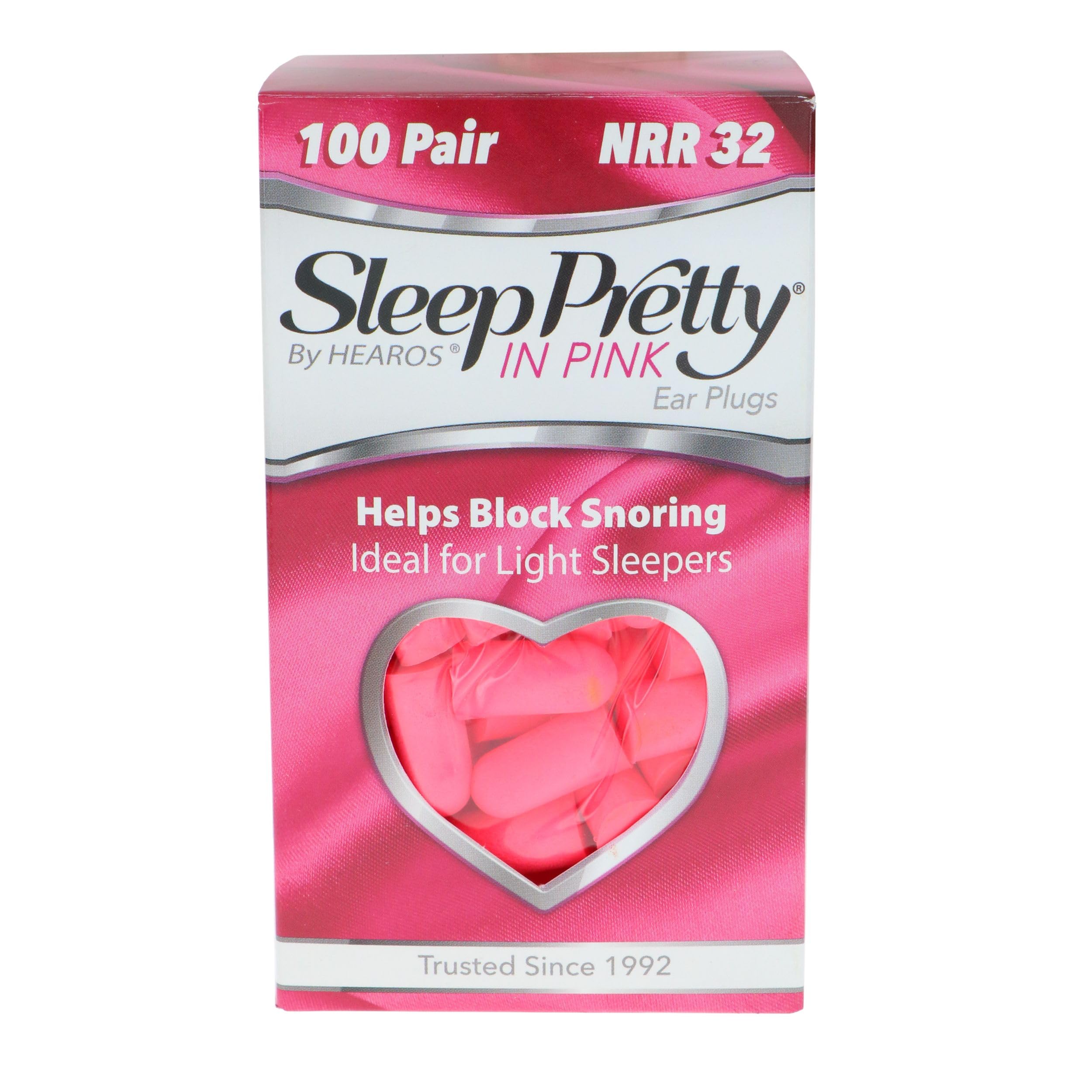
The HEAROS Sleep Pretty in Pink earplugs address a critical gap in the market: they are specifically engineered for smaller ear canals. The petite-sized polyurethane foam is slow-expanding and ultra-soft, delivering a NRR of 32 dB without the painful stretching sensation that standard plugs cause for smaller-framed users. The hot pink color is highly visible, making them easy to locate on a nightstand or in a bag.
The proprietary foam formula is noticeably silkier than generic alternatives, reducing friction during insertion while maintaining a secure seal. Users with small anatomy who previously gave up on foam plugs due to pain report that these stay comfortable for an entire night’s sleep. The plugs can be reused for 4-5 days before the foam begins to lose its rebound, offering strong value given the 100-pair count.
Where they come up short is against low-frequency vibrations — the foam is very effective at muffling sharp sounds like snoring and street noise, but mechanical hums at certain frequencies can still penetrate. They are also small enough to be easily lost if dropped in a dark bedroom.
Why it’s great
- Petite size eliminates pain for small ear canals
- Silky-smooth foam for comfortable long wear
- High NRR 32 in a small profile
Good to know
- Less effective against low-frequency mechanical vibrations
- Small size makes them easy to lose
5. DISON 200Pairs Foam Earplugs

The DISON 200Pairs Foam Earplugs deliver the lowest cost-per-pair in this guide, with each set individually wrapped for hygiene — a major plus for sharing with coworkers or keeping a stash in multiple locations. They carry a SNR rating of 35 dB (European standard, roughly equivalent to NRR 32 in real-world performance) and are ANSI and CE certified, confirming they meet professional hearing protection standards.
The foam offers a firm fit that works well for shooting ranges, lawn mowing, and concerts, where you want maximum attenuation without worrying about losing an expensive pair. The 200-pair supply is substantial enough to hand out to guests or replace frequently without guilt. The packaging box design allows easy grab-and-go access.
Comfort is a split verdict — many users find them perfectly fine for short-duration use, but some report discomfort after several hours of sleep wear due to the firmer foam density and standard-sized profile. They are best treated as a disposable bulk solution for intermittent loud environments rather than an all-night sleep companion.
Why it’s great
- Extremely low per-pair cost with 200 pairs included
- Each pair individually wrapped for hygiene
- ANSI and CE certified for professional use
Good to know
- Firmer foam can cause discomfort after hours of sleep
- Standard size may not fit small ear canals well
FAQ
Can I wear foam earplugs all night without damaging my ears?
How do I know if I need petite-sized earplugs?
Are silicone putty earplugs better than foam for snoring?
Final Thoughts: The Verdict
For most users, the best ear plugs winner is the 3M Disposable Earplugs because they combine a top-tier NRR 32 with the softest slow-expand foam that side sleepers can wear for a full night without pain. If you want moldable comfort that also works for swimming, grab the Mack’s Pillow Soft Silicone. And for a budget-friendly bulk supply that covers loud daytime activities, nothing beats the DISON 200Pairs Foam Earplugs.

Mo Maruf
I created WellFizz to bridge the gap between vague wellness advice and actionable solutions. My mission is simple: to decode the research and give you practical tools you can actually use.
Beyond the data, I am a passionate traveler. I believe that stepping away from the screen to explore new environments is essential for mental clarity and physical vitality.