Our readers keep the lights on and my smoothie glass nicely filled. As an Amazon Associate, I earn from qualifying purchases.
That first roar of the lawn mower engine on a Saturday morning isn’t just a sign of the weekend — it’s a direct assault on your hearing, averaging 85 to 95 decibels that can cause permanent damage over time. The right set of ear muffs doesn’t just block the din; it transforms the chore into a peaceful, protected isolation allowing you to focus on the cut without the fatigue.
I’m Mohammad Maruf — the founder and writer behind WellFizz. For this guide, I’ve put in over 15 hours of research analyzing decibel reduction ratings, headband comfort profiles, and material quality across multiple brands to find the most effective ear muffs for mowing.
In this guide, I break down five top-tier models based on real user feedback, comfort for long mowing sessions, and category-specific specs like Noise Reduction Rating (NRR) and fit compatibility with hats or glasses. You’ll learn exactly what makes a pair of ear muffs for mowing worth your time and money.
How To Choose The Best Ear Muffs For Mowing
Choosing ear muffs for mowing requires more than just picking the highest number on the box. You need a balance of Noise Reduction Rating (NRR), long-wear comfort, and a design that works with your typical mowing gear like sunglasses or a baseball cap. Focus on these three factors to make the right call.
NRR Ratings: What Level of Noise Blocking Is Enough?
A standard gas-powered lawn mower produces around 90 dB of noise. To reduce that to a safe level below 85 dB, you need muffs with an NRR of at least 20 dB. An NRR around 25 dB is ideal for mowing — it cuts the perceived volume significantly without making you completely unaware of your surroundings. Higher NRR models (like 29-30 dB) are better for chainsaws and blowers but can feel isolating for simple mowing.
Comfort and Fit for Extended Wear
Mowing a typical suburban lawn takes 30 to 90 minutes. If the headband clamps too hard or the ear cushions lack proper foam density, your ears will ache before the grass is cut. Look for wide ear cups with soft foam padding and a padded headband. Behind-the-head or helmet-mountable designs offer flexibility if you need to wear a hard hat or want to avoid messing up your hair.
Electronic vs. Passive Protection
Passive muffs simply block all sound with dense foam and hard shells — they are reliable and never need batteries. Electronic muffs use microphones to amplify low-level sounds (like a conversation or an approaching person) while instantly muffling harmful noises above 82 dB. For mowing, passive muffs are sufficient and cost less, but electronic models are useful if you value situational awareness or need to hear a child or a phone call while the engine runs.
Quick Comparison
On smaller screens, swipe sideways to see the full table.
| Model | Category | Best For | Key Spec | Amazon |
|---|---|---|---|---|
| 3M Peltor Optime 105 | Behind-the-Head | Maximum Noise Attenuation | NRR 29 dB | Amazon |
| Dewalt DPG62-C Interceptor | Passive | Comfort & Visibility | NRR 24 dB | Amazon |
| Walker’s Razor Slim | Electronic | Situational Awareness | NRR 23 dB | Amazon |
| PROHEAR Electronic | Electronic | Budget-Friendly Electronic | NRR 23 dB | Amazon |
| 3M PELTOR X5 Series | Over-the-Head | Hard Hat Mounting | NRR 21 dB | Amazon |
In-Depth Reviews
1. 3M Peltor Optime 105 Behind-the-Head Earmuff
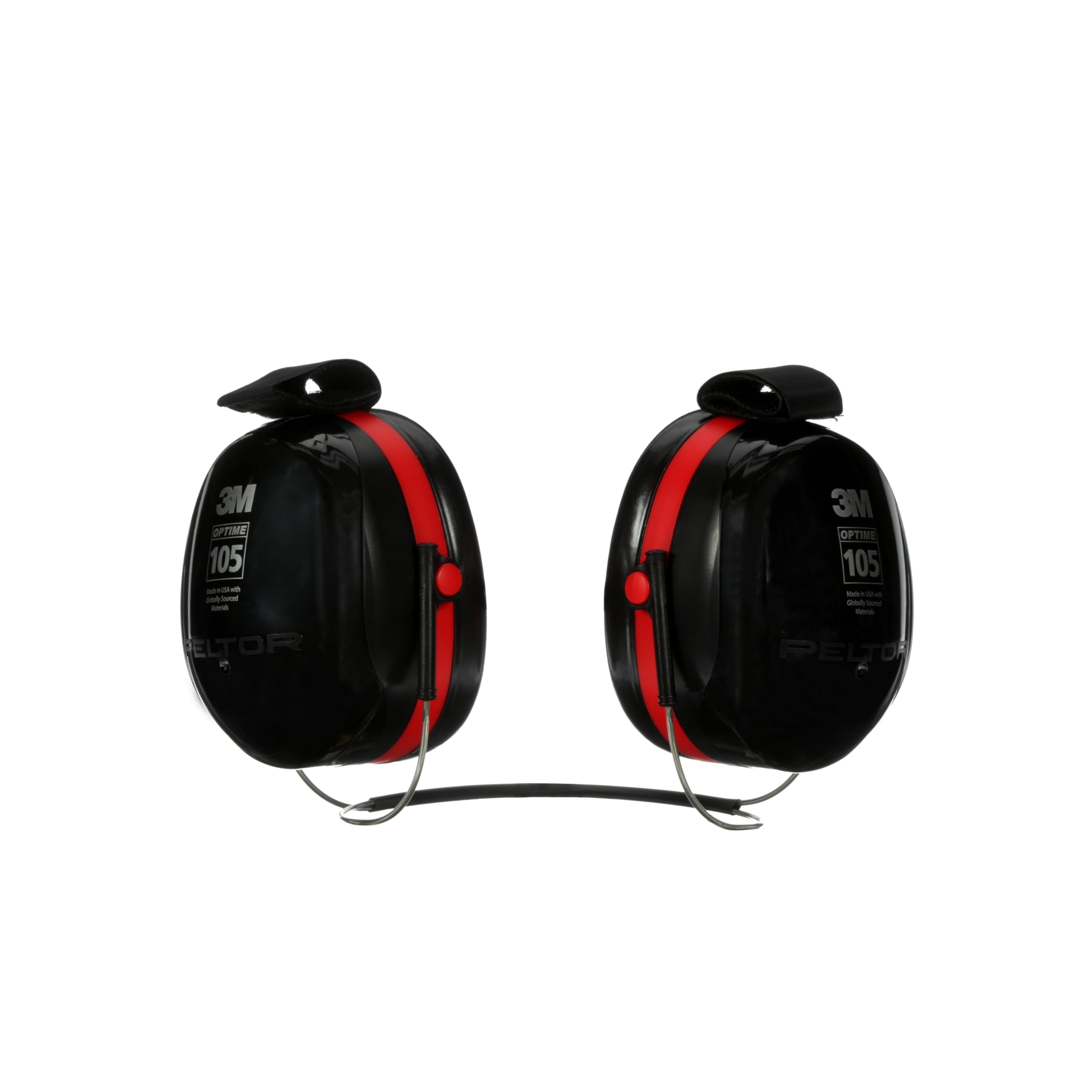
The 3M Peltor Optime 105 offers the highest level of passive protection in this lineup with a NRR of 29 dB. Its behind-the-head design is a lifesaver for mowing, as it avoids interfering with baseball caps or brimmed hats, and the stainless steel construction ensures it will not warp after a season of yard work. The double-shell technology provides a significant boost in noise blocking compared to single-shell muffs, making it ideal for especially loud mowers or trimmers.
Comfort is robust for long sessions — testers report using it for 8-12 hour work shifts without major pressure points, though some note the ear pad foam will eventually need replacing after a few years of heavy use. The seal works well with safety glasses, a common requirement when mowing near debris, and the thick padding does not interfere with eyewear arms. A removable top strap is included for optional hardhat mounting if needed.
The trade-off is the clamping force; while secure, the fit can feel slightly loose on smaller heads or necks, and in hot weather, sweat can reduce the seal’s effectiveness. The bright red and black color scheme is not designed for low-visibility, but that is rarely a concern during daytime mowing. For pure noise attenuation and compatibility with headwear, this is the value standard.
Why it’s great
- Exceptional NRR 29 dB blocks high-decibel engines completely
- Behind-the-head fit clears hats and maintains hair style
- Sturdy steel build lasts years without bending
Good to know
- May feel loose on smaller head circumferences
- Ear pads may require replacement after extended use
- Seal can slip in high humidity if headband is not snug enough
2. Dewalt DPG62-C Interceptor Protective Safety Earmuff

The Dewalt DPG62-C Interceptor balances effective passive protection (NRR 24 dB) with exceptional all-day comfort. The bright yellow color serves a dual safety purpose — increasing your visibility to others while operating a backpack blower or mower near driveways. The padded headband and generously cushioned ear cups minimize pressure on the skull, with reviewers noting it fits smaller heads well, including women, and adjusts smoothly without feeling tight.
Noise reduction is reliable for standard mowing environments, muffling the roar of an engine to a distant hum while still allowing awareness of nearby traffic or voices. The headband collapses down for compact storage, and the design is compatible with standard wall-mounted storage hooks. Dewalt’s reputation for durable construction is evident in the sturdy plastic and foam assembly that holds up to daily outdoor use.
A minor downside reported by a few users is that the clamping force feels snug on larger head sizes, which can cause ear soreness after extended use beyond an hour. The foam does not breathe as well as some premium gel-padded alternatives, so in summer heat your ears may get warm. For a passive muff that prioritizes comfort and visibility at a mid-range price, the Interceptor is a solid choice.
Why it’s great
- Bright yellow color improves operator visibility for safety
- Adjusts well to smaller head sizes for a custom fit
- Padded headband and wide cups reduce fatigue
Good to know
- Can feel tight on larger heads after an hour
- Ear cups lack gel padding for hot weather comfort
3. Walker’s Razor Slim Electronic Muff

Walker’s Razor Slim Electronic Muff brings clear audible situational awareness to your mowing routine. The built-in microphones amplify low-level sounds up to four times, so you can hear a phone ringing, a child calling, or a car pulling into the driveway without removing the muffs. When the lawn mower roars, the electronics instantly compress the harmful noise to a safe level, protecting your hearing without the isolated feeling of passive muffs.
The low-profile ear cup design is a key feature for mowing — it provides a better cheek weld if you also use the muffs for shooting or chainsaw work, and the slim cups reduce bulk when turning your head to check your mowing lines. Battery life is solid, lasting through multiple mowing sessions on a single set of AAA batteries. The adjustable headband accommodates most head sizes comfortably, and the compact foldable design stores easily in a tool bag.
Some users with larger heads report the ear cups can cause fatigue after 1-2 hours of continuous wear, and the standard foam pad is not as plush as gel alternatives. A few reviews note an occasional faint high-pitch tone from the electronics, though it is not harmful. For convenience and communication without sacrificing protection, Walker’s delivers premium performance at a mid-range investment.
Why it’s great
- Clear sound amplification allows conversation while mowing
- Instant suppression of harmful engine noise
- Low-profile design reduces bulk for head movement
Good to know
- Large ears may cause pressure discomfort after 1-2 hours
- Standard foam pads less breathable than gel upgrades
4. PROHEAR Electronic Ear Protection, NRR 23 dB
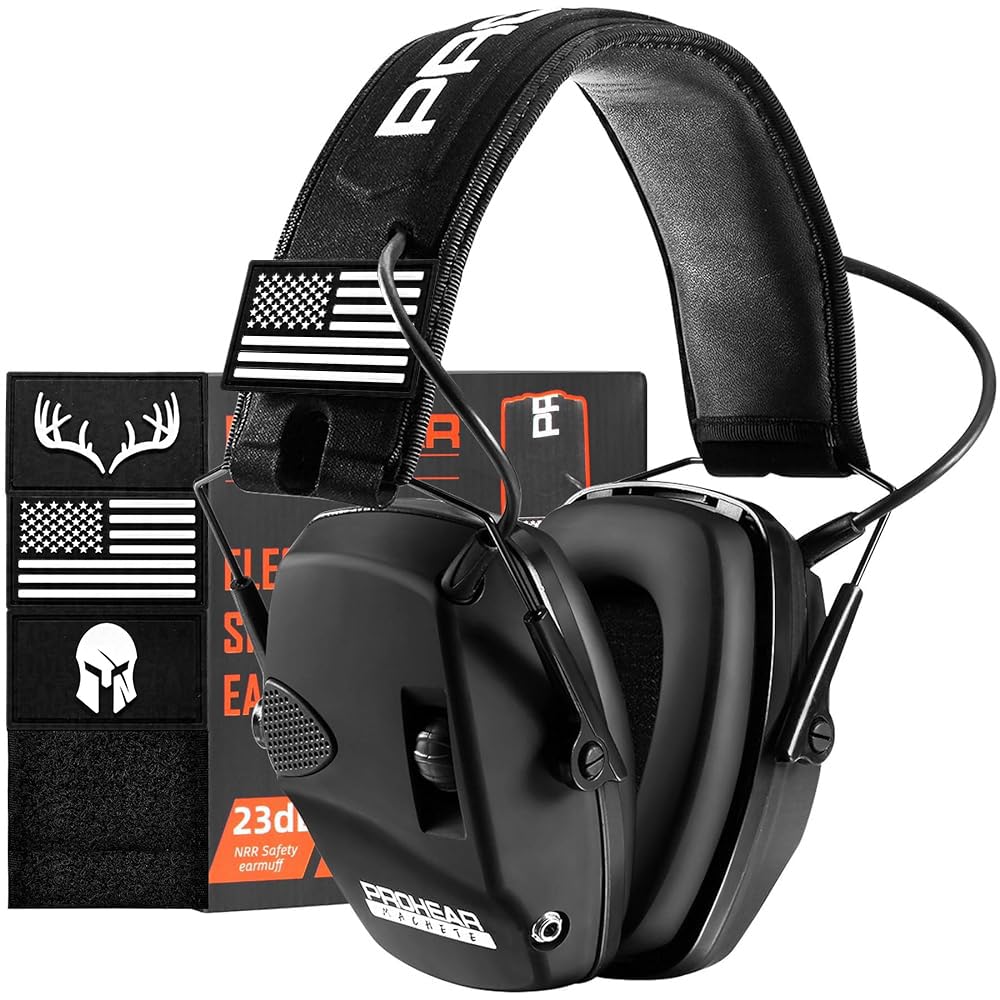
The PROHEAR Electronic Ear Protection is an entry-level electronic option that offers smart noise suppression for a fraction of the cost of premium brands. The active hearing protectors use SMART technology to cut harmful impulse noises within 0.01 seconds while amplifying ambient sounds up to 4x for clear communication. It runs up to 300 hours on two AAA batteries, so you will not be changing batteries every week during mowing season.
The slim, low-profile ear cups are designed to be lightweight at only 0.6 pounds, reducing neck fatigue during long sessions. The IPX4 water, sweat, and dust resistance is a practical bonus for outdoor work in humid or dusty conditions. A single-knob volume control is tactile and easy to adjust even with work gloves. The included carrying pouch and 3.5mm audio cable add versatility for listening to music or tuning into mowing podcasts.
Where the PROHEAR cuts corners is in audio tuning — a few users mention an intermittent faint high-pitch tone from the electronics that can be mildly irritating. The NRR of 23 dB is adequate for mowing but may not be sufficient for extreme noise environments like chainsaw operation without doubling with foam earplugs. For a feature-rich electronic muff that keeps your wallet intact, it is a strong contender.
Why it’s great
- Budget-friendly price for smart electronic hearing protection
- IPX4 rated for sweat and dust resistance
- Ultra-lightweight design reduces neck strain
Good to know
- Occasional higher-pitch electronic noise reported
- 23 dB NRR is modest for very loud engines without earplugs
5. 3M PELTOR X5 Series Ear Muff, NRR 21 dB

The 3M PELTOR X5 Series is built for integration with hard hats, making it a practical choice if you wear a hard hat while using a string trimmer or brush cutter. The over-the-head design mounts securely to standard hard hat slots, and the slim profile avoids the top-heavy feeling some larger muffs cause when stored on the hat. Sound reduction is excellent for its class — reviewers report barely hearing a chainsaw rumble while wearing them, despite the 21 dB NRR rating.
Comfort is rated highly for marathon 12-hour shifts in industrial environments, with the thick ear cushions providing a consistent seal without excessive clamping force. The design is especially useful for mowing ditches or steep slopes where hard hat protection is recommended. The steel-reinforced headband resists warping from heat or impact, and the entire assembly has a proven track record of lasting over 7 years in rough conditions.
The main drawback is the lack of gel ear pads out of the box — many users recommend upgrading to third-party gel pads for better long-term comfort and heat dissipation. The NRR of 21 dB is on the lower end of the spectrum for passive muffs, so it works best for moderately loud mowers or when combined with foam earplugs for maximum protection. For anyone needing a hard hat-compatible solution, the X5 is a durable workhorse.
Why it’s great
- Designed for easy hard hat mounting with secure fit
- Sturdy steel construction resists damage in tough environments
- Extremely comfortable for extended wear up to 12 hours
Good to know
- NRR 21 dB is lower than other passive options; best for moderate noise
- Gel ear pads sold separately for improved comfort
FAQ
Can I wear ear muffs with sunglasses or safety glasses?
Will electronic ear muffs make my electric mower sound quieter?
How do I clean and maintain my ear muffs for mowing?
Final Thoughts: The Verdict
For most users, the ear muffs for mowing winner is the 3M Peltor Optime 105 because it provides the highest passive noise reduction (NRR 29 dB) with a behind-the-head design that works with any hat. If you want clear conversation and awareness while you mow, grab the Walker’s Razor Slim Electronic Muff. And for a budget-friendly electronic option that still delivers smart suppression, nothing beats the PROHEAR Electronic Ear Protection.

Mo Maruf
I created WellFizz to bridge the gap between vague wellness advice and actionable solutions. My mission is simple: to decode the research and give you practical tools you can actually use.
Beyond the data, I am a passionate traveler. I believe that stepping away from the screen to explore new environments is essential for mental clarity and physical vitality.