Our readers keep the lights on and my smoothie glass nicely filled. As an Amazon Associate, I earn from qualifying purchases.
Specs are compiled from manufacturer listings and verified buyer reviews and can change over time — please confirm the key details on the product page before buying.
The biggest worry with a kids’ e-scooter isn’t the battery — it’s whether the throttle will send your child flying before they’ve figured out how to steer. Every parent wants the grin without the gravel rash, which means the difference between a great first ride and a bad one depends on a handful of specific choices: the top speed, how the motor engages, and whether the scooter fits now and next year. This guide walks through nine of the most popular models, comparing the real specs and real owner experiences so you can pick the one that matches your child’s age, size, and confidence level.
I’m Mohammad Maruf — the founder and writer behind WellFizz. This guide is built by comparing the manufacturers’ published specifications and the patterns across verified customer reviews, so you get each pick’s real strengths and trade-offs instead of marketing spin.
You want a scooter that is safe enough for a beginner but fun enough to keep them riding long after the novelty wears off — that is what this breakdown of the best e-scooter for kids is designed to deliver.
Our Picks at a Glance
How To Choose The Best E-Scooter For Kids
The wrong e-scooter can make a child scared to ride or, worse, unsafe. The right one builds confidence and gets them outdoors. Here are the four rules to get it right.
Start with a kick-to-start motor
A scooter that takes off the second a child touches the throttle is a recipe for a wiped-out kid. Look for models that require a push-off — usually around 2 to 3 mph — before the motor kicks in. This prevents accidental acceleration and lets kids learn balance before they add power.
Match the top speed to your child’s experience
A 10 mph top speed is great for a confident 10-year-old but terrifying for a 6-year-old on their first ride. The best models offer three speed settings, usually starting around 3 to 5 mph for beginners and stepping up from there. A 5 mph cap is ideal for ages 3 to 7; 8 to 10 mph suits ages 8 and up.
Check the handlebar height and weight limit
A scooter that is too tall or too short makes steering awkward and uncomfortable. Most adjustable models cover a range of roughly 29 to 37 inches, which spans ages 4 through 12. The weight limit matters too — a 110 lb limit will be outgrown faster than a 132 lb or 154 lb limit, so buy for the next growth spurt, not today.
Prioritize battery life over range claims
Manufacturers advertise range in miles, but real-world battery life depends on rider weight, terrain, and speed. A more honest measure is ride time — look for at least 40 minutes per charge for daily use. Anything under 30 minutes means charging every single day, which gets old fast.
Quick Comparison
| Model | Best For | Top Speed | Weight Limit | Ride Time | Amazon |
|---|---|---|---|---|---|
| FanttikRide C9 Pro★ Best Overall | Growing riders 8-12 | 5/8/10 mph | 132 lbs | ~40 min | Amazon |
| ANHAO E9Best Budget Entry | Budget-friendly starter | 4/6 mph | 110 lbs | — | Amazon |
| Gyroor KS2Best for Beginners | Beginners ages 3-8 | 5 mph | 121 lbs | — | Amazon |
| Riuiio G07 | Longer rides & commuting | 3/6/9 mph | — | 10 miles range | Amazon |
| iScooter IK3 Pro | Older/heavier kids up to 154 lbs | 3/6/10 mph | 154 lbs | 60-80 min | Amazon |
| Caroma E35 | Nighttime visibility & safety | 5/8/10 mph | 132 lbs | ~60 min | Amazon |
| ECOROAD EK6 | Certified safety for beginners | 3/6/10 mph | 154 lbs | — | Amazon |
| Segway Ninebot C2 Pro | Premium build & water resistance | 9.9 mph | 132 lbs | ~70 min | Amazon |
| Razor Pocket Mod Petite | Retro-styled seated riding | 8 mph | 110 lbs | ~40 min | Amazon |
In‑Depth Reviews
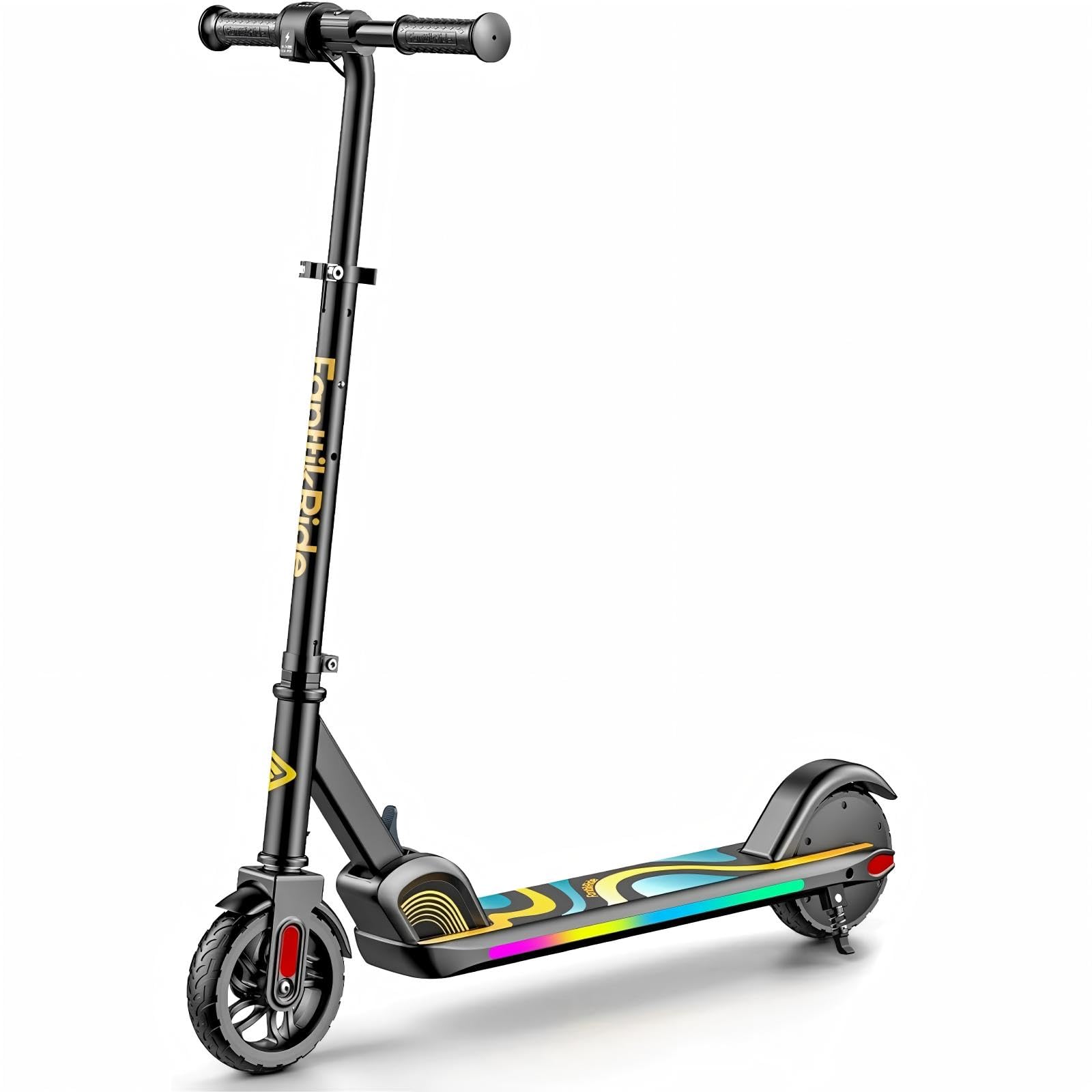
1. FanttikRide C9 Pro
Our pick — 4.5★ from 650+ verified ratings; the strongest balance of quality and price.
Three speeds, three heights, and the highest owner satisfaction in the group.
The FanttikRide C9 Pro hits the balance because it grows with the rider — literally. The handlebar adjusts to three exact heights (31.7, 34.1, or 36.5 inches), covering kids from 3.9 to 5.2 feet tall, with a 132 lb weight limit that keeps it relevant for years. The three speed settings (5, 8, or 10 mph) let a beginner start slow and a confident rider open it up, all controlled through a clear LED display that shows battery and speed.
Safety is the headline here. The rear foot brake and rear EABS brake give consistent stopping power, while the integrated rainbow LED lights on the deck make the rider visible day or night. Buyers report the battery delivers roughly 40 minutes of ride time and about a 5-mile range — realistic numbers that match the spec sheet — and the one-step folding system means it stows in a car trunk or closet in seconds. It weighs 14 pounds, which is light enough for a parent to carry but stable enough for a 10-year-old to handle alone.
The one-pedal assembly from the start is a recurring point of relief for parents, and the general sentiment is that this scooter survives the inevitable drops and bumps without rattling apart. If you want one scooter that works for ages 6 through 12 and doesn’t need replacing next year, this is the one.
Its 10 mph top speed, compared to the Gyroor KS2’s 5 mph cap, means it suits a wider age range.
Why parents buy this
- Three adjustable handlebar heights fit a 3.9-5.2 ft range
- Three speed modes (5/8/10 mph) grow with the child’s skill
- Integrated rainbow LED lights for low-light visibility
- One-step folding for easy storage and transport at 14 lbs
What to keep in mind
- 5-hour charge time means planning ahead for daily rides
- Not suitable for children under age 8 due to the 10 mph top speed
The best all-rounder: Ideal for parents who want one scooter that works from age 8 through 12 without being outgrown too soon.
skip it if: Your child is under 7 and needs a slower maximum speed to build confidence first.
2. ANHAO Electric Scooter for Kids Ages 6-12
A low-speed starter that saves the budget without skimping on safety basics.
The ANHAO is built for the cautious parent: it tops out at 6 mph, with a second, slower mode at 4 mph, and the motor won’t engage until the rider hits a 2 mph kick-push. That kick-to-start feature is the real safety star here — it prevents the scooter from lurching forward if a small hand accidentally twists the throttle. The frame is aluminum with what owners describe as “sturdy metal construction,” and the deck has LED lights in the front wheel and deck that glow during rides for extra visibility at dusk.
Four adjustable handlebar heights (up to 31.8 inches) and a 110 lb weight limit make this a decent fit for kids ages 6 to 10, though the brand specifies it mainly for ages 6-10. The assembly takes minutes with included tools, and the rear foot brake is simple enough for a child to learn quickly. What keeps it from climbing higher in this list is durability: after about five months, some owners mention bolts loosening or the front wheel failing. The battery life also draws mixed feedback — some say it is good for the price, others say it diminishes sooner than expected.
At 110 lbs max weight, versus the FanttikRide C9 Pro’s 132 lb limit, heavier or taller kids will outgrow it faster.
A fair trade-off: You get a safe, easy-to-ride beginner scooter with good safety features at a budget-friendly price, but the long-term durability is not as strong as the more expensive options on this list.
Reach for this if: You want the lowest-cost entry point for a 6- to 10-year-old who is just learning and may not ride daily.
Look elsewhere if: You need a scooter that will survive multiple years of heavy use without mechanical issues.
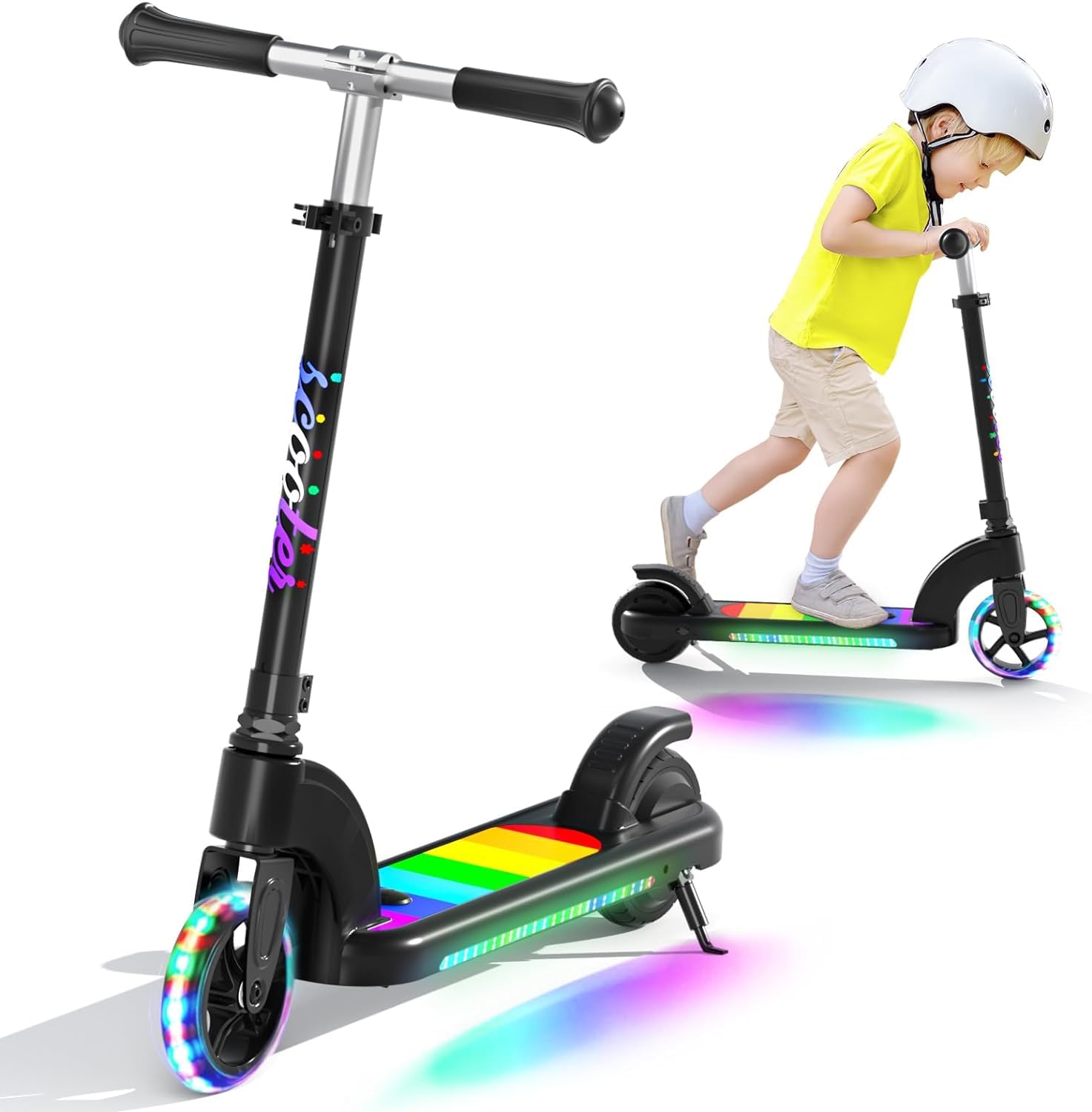
3. Gyroor KS2 Electric Scooter for Kids Ages 3-8
The slowest, lightest scooter on the list — perfect for a 4-year-old’s first ride.
At 5 mph max and 9.3 pounds, the Gyroor KS2 is purpose-built for the smallest riders. The motor only engages after a 2 mph kick-push, and there are no confusing buttons — just step on the deck and push off. This foot-sensor start is the simplest system in this roundup, ideal for toddlers and kids ages 3 to 8 who are still building coordination. The two adjustable handlebar heights (29.5 to 33.5 inches) mean it fits kids as young as three, and the 121 lb weight limit gives it surprising longevity for such a small scooter.
The reinforced metal frame feels solid despite the low weight, and the bright multi-color LED wheels and deck add visibility that parents appreciate at dusk. The battery charges in about 4 to 5 hours, and owners consistently praise how smooth and controlled the ride feels. The main limitation is obvious: 5 mph feels slow once a child gains confidence, so this is strictly a beginner scooter, not one they will ride for years. The foldable design and low carry weight are a bonus for trips to the park.
It weighs 9.3 pounds, compared to the 14-pound FanttikRide C9 Pro, making it the easiest for a parent to carry or a young child to steer.
Best for tiny first-timers: Perfect for a 3- to 6-year-old who needs the gentlest introduction to powered riding. The 5 mph cap and foot-sensor start make it nearly simple to use.
Buy this for: A preschooler or kindergartener who has never ridden an electric scooter before.
Outgrow it fast if: Your child is already 7 or 8 years old and riding a bike well — they will want more speed within weeks.
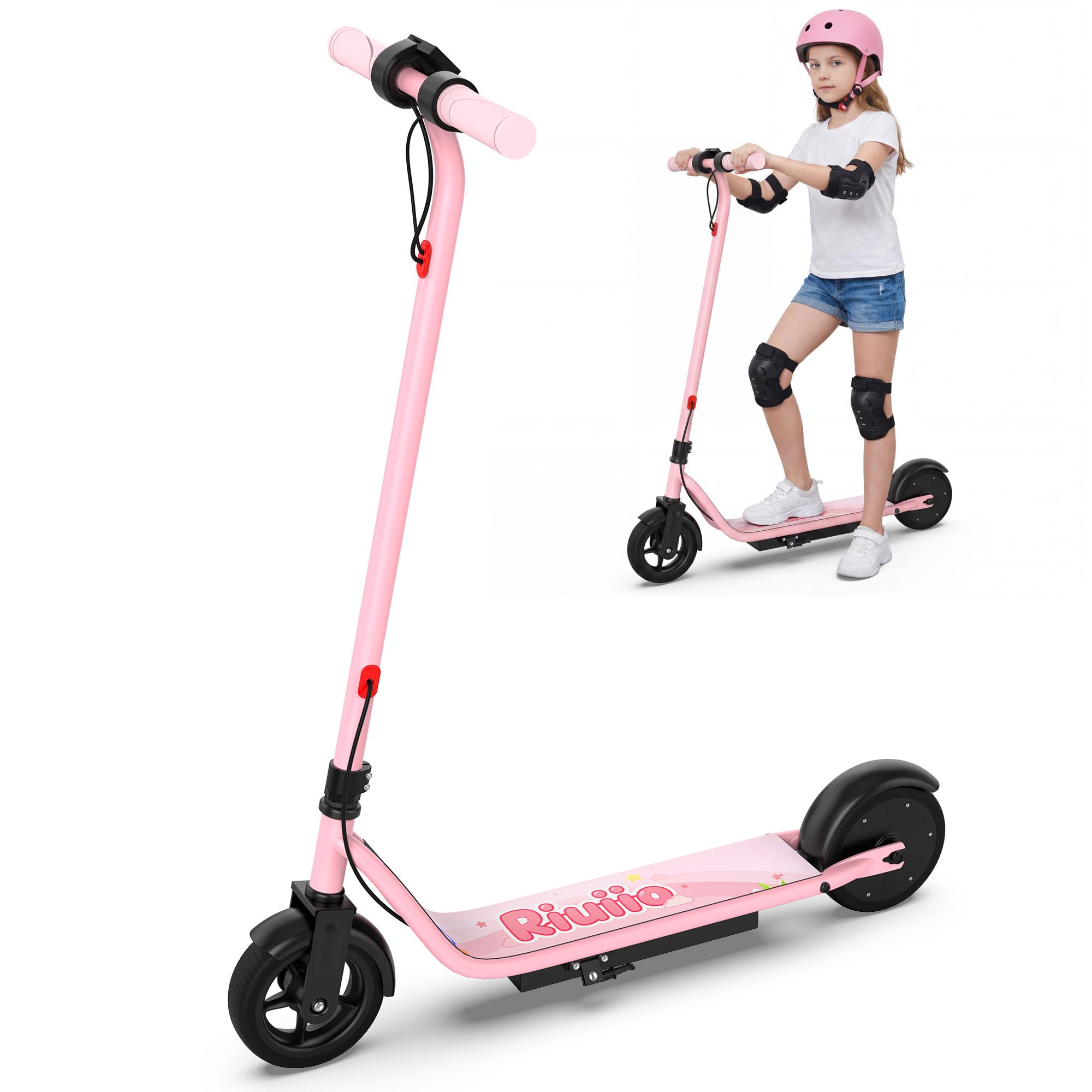
4. Riuiio G07 Electric Scooter
A 10-mile range in a 16-pound foldable frame — the commuter for school runs.
The Riuiio G07 stands apart with a 10-mile maximum range, which owners confirm holds up convincingly in real-world riding — one grandparent reports keeping up on 10- to 12-mile rides without the battery dying. Three speed modes (3/6/9 mph) let a beginner start slow and a more experienced child pick up the pace, and the dual brake system (electronic brake plus rear foot brake) gives confident stopping power. The UL2272 certification adds a layer of electrical safety that many budget scooters skip.
At 16 pounds, it is light enough for a child to carry into school or for a parent to toss in the trunk, and the simple folding mechanism takes seconds. The pink design is a hit with younger riders, and the ergonomic grips make longer rides comfortable. The mixed feedback comes on reliability — a portion of customers note the battery draining faster than expected after a few months, or the scooter stopping working entirely. The app features are described as essentially non-functional by some, so do not buy this for its smart features.
The 10-mile range tops the 5-mile range of the FanttikRide C9 Pro, but its mixed reliability reviews mean the FanttikRide is a safer bet for daily use.
Great range, check the QC: If you need a scooter for daily trips that go beyond the block, the range is genuine. Just be prepared for the possibility of an early battery issue.
Ideal for: An older child (ages 8-14) who needs to cover real distances — school, friend’s house, park — without constant recharging.
Not for you if: You want a set-and-forget scooter with reliable electronics and a functional companion app.
5. iScooter IK3 Pro
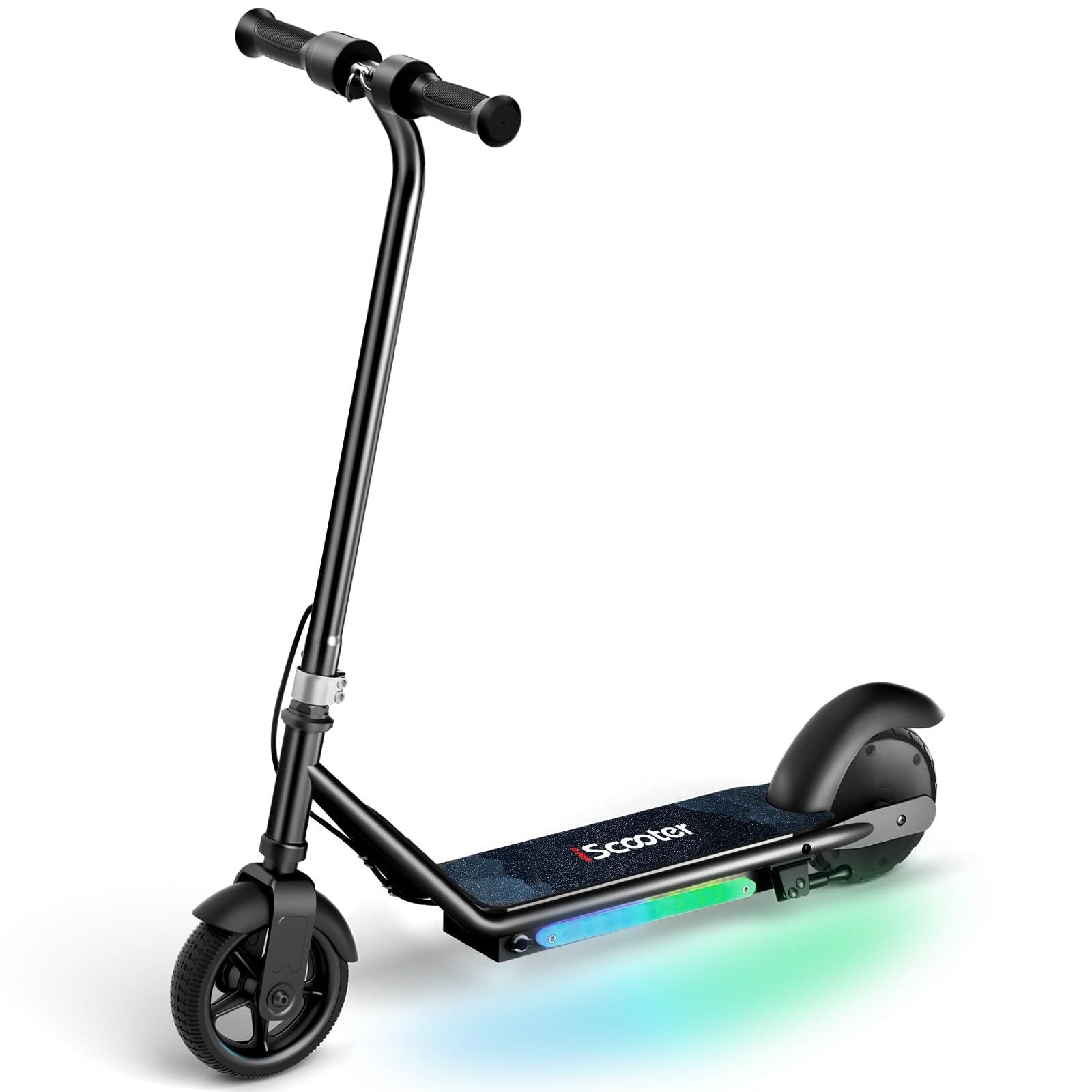
A 154 lb weight limit and 80 minutes of ride time — built for bigger kids.
This makes it the best choice for a taller or heavier tween who is still within the age range (6-12) but needs more structural capacity. The 150W motor pushes three speed modes (3/6/10 mph), and the magnetic charging port is a genuinely clever design touch — no more wrestling with tangled cables. Battery life is advertised at 60-80 minutes, which owners generally confirm, though some note it falls closer to 30 minutes with heavier riders.
The dual braking system (e-brake and foot brake) and kick-to-start safety feature are solid, and the LED display keeps speed and battery readouts clear. The lights and horn are a fun addition that kids love. The biggest concern here is durability — about a quarter of reviewers point out the scooter breaking within months or not working properly from the start. The customer service experience also draws sharp criticism, with one owner describing a “terrible return process.” This is a high-risk, high-reward pick: great specs on paper, but the quality control is inconsistent.
Its 154 lb limit beats the 132 lb cap on the FanttikRide C9 Pro and the 110 lb cap on the ANHAO, making it the only pick that truly fits kids approaching their teens.
The strong points
- Highest weight limit in this guide at 154 lbs
- Longest advertised battery life at 60-80 minutes
- Magnetic charging port for easy plug-in
- Kick-to-start safety prevents accidental acceleration
The risk
- Inconsistent quality control and durability complaints
- Customer service and return process described as difficult
Spec-forward pick: The weight capacity and battery life are class-leading here — perfect if your child is on the heavier side and you are willing to gamble on build quality.
Think twice if: Reliability is your top priority. The FanttikRide or Segway are safer bets for daily, long-term use.
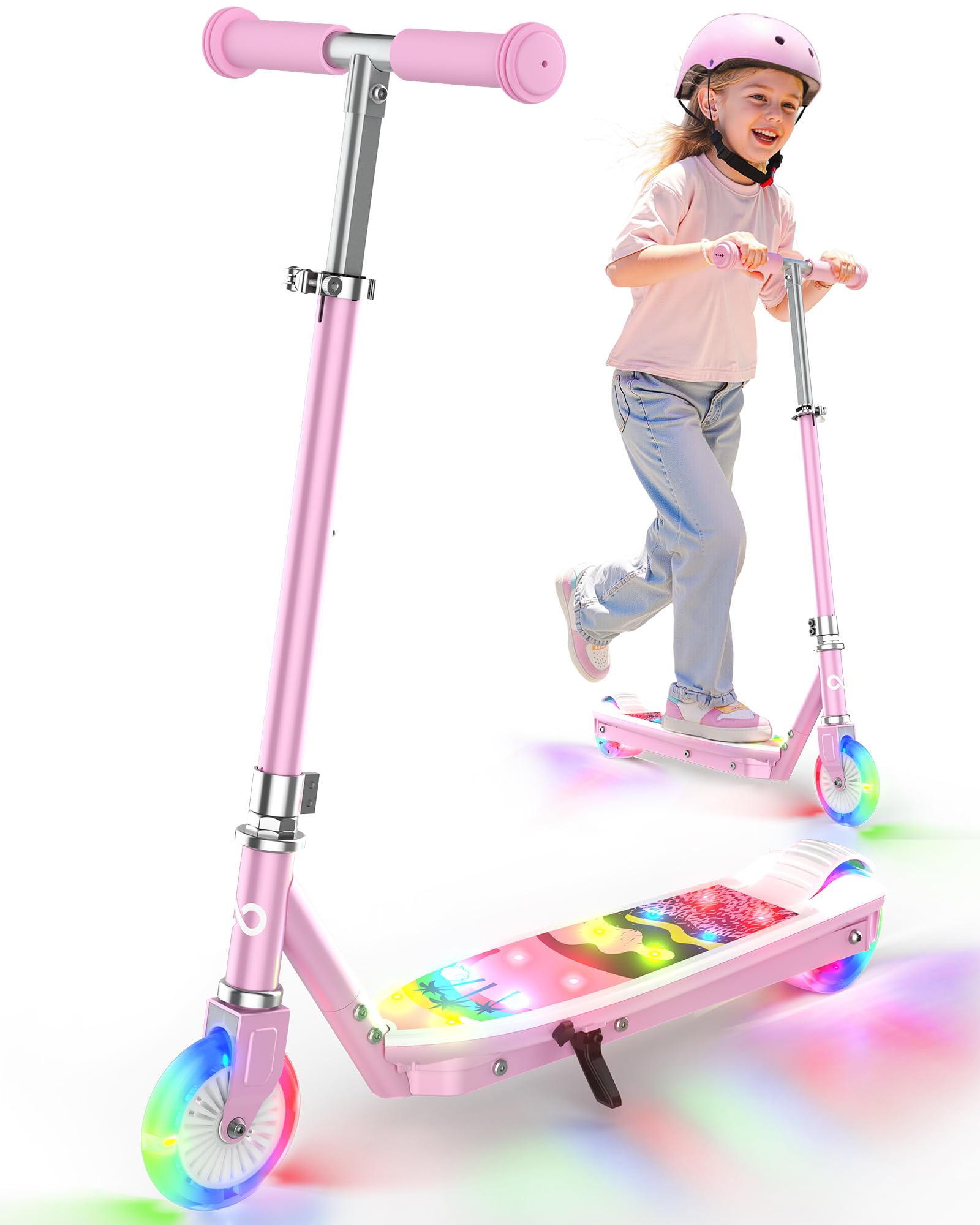
6. Caroma E35
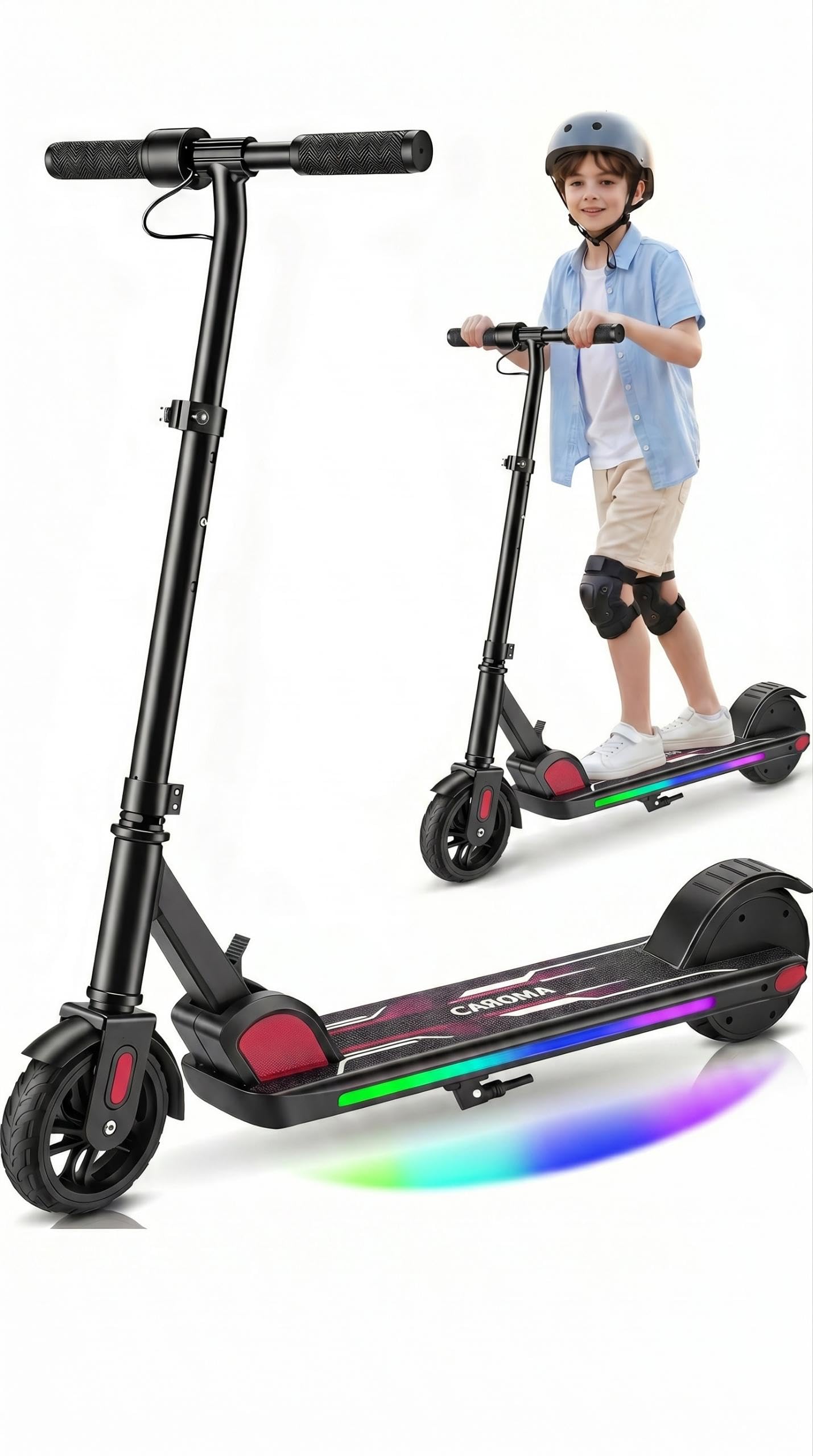
A UL2272-certified frame with four height settings and a 60-minute ride time.
The Caroma E35 earns its place with a UL 2272 safety certification — a third-party electrical safety standard that gives parents confidence in the battery and charging system. The 150W motor tops out at 10 mph across three speed modes (5/8/10 mph), with an LED display that shows real-time speed, mode, and battery. Four adjustable handlebar heights (30, 32, 34, or 37 inches) cover kids from ages 8 to 12 and up to 132 lbs, making it among the most adjustable models in this guide.
The rainbow LED lights on the deck are bright and change color, adding a fun factor that kids love and a visibility boost that parents appreciate. The 13.6-pound weight makes it easy to carry, and the folding design fits in a car trunk without fuss. Owners consistently highlight the build quality and ease of assembly — it arrives mostly pre-assembled and needs just one screw. The realistic caveat is that the 150W motor struggles with riders over 90 lbs on inclines; at 110 lbs, it moves noticeably slower. So it is best for kids under that weight threshold.
At 13.6 lbs, compared to the 17.6 lb iScooter IK3 Pro, it is easier for a child to manage on their own.
Certified confidence: If UL2272 certification matters to you — and it should — this is the best-priced scooter that carries it. The build quality and adjustability are excellent for the weight class.
Buy this for: A child aged 8-12 who weighs under 90 lbs and needs a certified, durable scooter for daily neighborhood riding.
Not ideal for: Heavier riders — the motor loses power noticeably above 90 lbs.
7. ECOROAD EK6
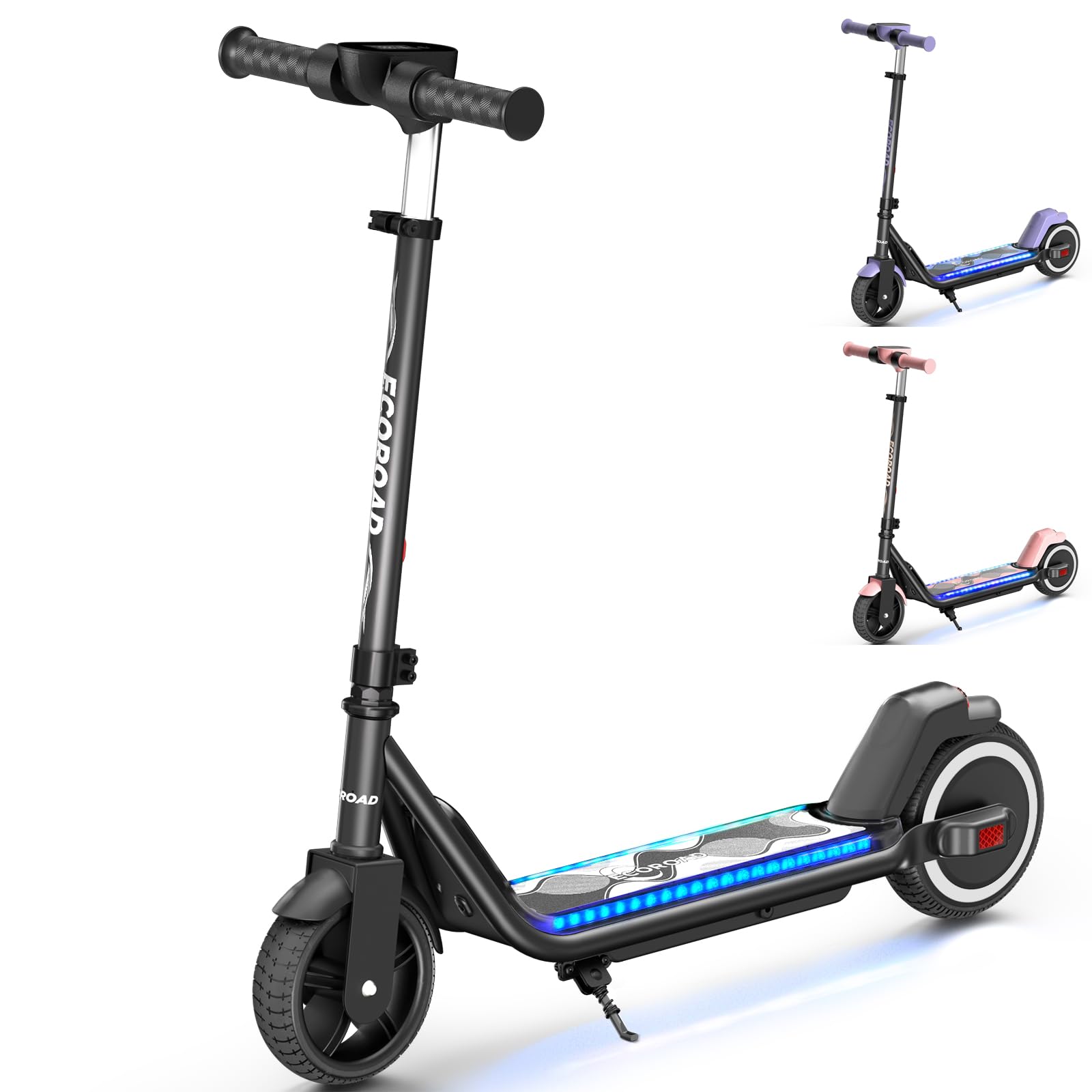
A TÜV-certified frame with a 3 mph beginner mode — the safest slow start in this guide.
The ECOROAD EK6 is the only scooter on this list certified to ANSI/CAN/UL 2272 by TÜV Rheinland, which is a triple safety standard that goes beyond the typical UL2272 check. The real differentiator, though, is the 3 mph low-speed mode — the slowest dedicated beginner setting of any model here. That crawl speed is designed for a child who has never touched an electric scooter, letting them learn throttle control and balance at a walking pace. The other two modes go up to 6 mph and 10 mph, so the scooter grows with them.
The 150W motor, dual brake system (finger-dial e-brake plus rear fender foot brake), and LED stem and deck lights round out a well-thought-out safety package. The frame supports up to 154 lbs, giving it a long usable life. However, battery life is a clear weak point: owners consistently report 20 to 30 minutes of ride time, which is the shortest in this guide. For a quick spin around the block it is fine, but do not expect it to last through a trip to the park and back.
The 3 mph beginner mode is the slowest speed available on any scooter here, well below the 5 mph on the Gyroor KS2 and the 5 mph starting mode on the FanttikRide.
Best for terrified parents: The triple certification and 3 mph crawl mode are class-leading for confidence. Just plan for short rides only.
Perfect for: A cautious 5- or 6-year-old who needs the slowest possible introduction to electric scooters.
Pass on this if: You need more than 30 minutes of continuous riding time — this scooter demands frequent charging.
8. Segway Ninebot Kids eKickScooter C2 Pro

Segway’s build quality, a drum brake, and IPX4 water resistance — this is a proper machine.
The Segway Ninebot C2 Pro brings engineering maturity that most kids’ scooters lack. The IPX4 water resistance means it can handle light rain without electrical failure — a rare feature in this category. The rear drum brake combined with a mechanical handbrake provides stopping power that feels more like a full-sized scooter than a toy, and the solid tires handle rough pavement better than air-filled alternatives. Three adjustable riding modes let you cap the speed, and the 9.9 mph top speed is fast enough for a confident 8-year-old without being reckless.
The 17.2-pound weight is on the heavier side, but the sturdy alloy steel frame inspires confidence. Battery life is rated for up to 70 minutes, which owners generally confirm, though the 5.5-hour charge time demands some planning. The kick-to-start feature requires a 3 mph push before the throttle activates, providing a solid safety buffer. The main downsides are the lack of front or rear lighting (buy a separate set) and mixed feedback on long-term battery durability. Some owners also note it struggles on hills, so keep that in mind if you live in a sloping neighborhood.
At 70 minutes of runtime, it easily beats the 40-minute ride time of the FanttikRide C9 Pro, making it the best choice for longer excursions.
Engineering-first choice: The build quality, water resistance, and drum brake are a step above. You pay more, but you get real hardware improvements.
Best for: Parents who want a premium, durable scooter from a trusted brand and do not mind paying extra for water resistance and better braking.
Consider something else if: You need built-in lights or live on steep hills. Also, the 132 lb limit means it won’t fit very large tweens.
9. Razor Pocket Mod Petite

A 28-pound seated cruiser with retro styling — this is a whole different kind of ride.
The Razor Pocket Mod Petite is not a stand-up scooter; it is a miniature seated Euro-style moped that kids actually sit on and steer with handlebars. This changes the experience entirely — a child sits on a padded seat, uses a twist-grip throttle, and operates a hand brake, just like a real motorcycle. The 100-watt hub-driven motor delivers up to 8 mph, which feels plenty fast when you are seated low to the ground. The rear-wheel drive provides better traction and balance than some front-drive stand-up scooters.
Assembly is the main hurdle here — owners warn it takes time and recommend watching video guides. The battery life is rated at about 40 minutes, which matches real-world reports, though the initial charge takes around 12 hours. At 28 pounds, this is the heaviest scooter in the guide by a wide margin, so it is not something a parent will casually carry. The retro styling with two-tone paint and a padded seat is a massive hit with kids, and owners consistently say it is “the hit of Christmas.” The quality is typical Razor — solid enough but not premium, with mixed feedback on long-term battery life.
Its 28-pound weight, compared to the 13.6 lb Caroma E35, makes portability a real consideration — plan to store it in a garage or shed.
What makes it special
- Seated riding position is unique and confidence-building for younger kids
- Retro Euro styling with padded seat is a guaranteed attention-grabber
- Rear-wheel drive provides better balance and traction
The trade-offs
- 28 pounds is very heavy — not portable for carrying or storage in tight spaces
- Assembly is more complex than stand-up scooters
- 8 mph top speed and 40-min battery limit growing riders
Unique and memorable: If your child is ages 7 to 10 and would love a “real” motorcycle experience without the speed, this is a blast. Perfect for flat driveways and sidewalks.
Not for you if: You need a portable scooter, or your child prefers a stand-up riding position. This is a statement piece, not a daily commuter.
Understanding the Specs
Speed Modes & Kick-to-Start
The most important safety feature in any kids’ e-scooter is a kick-to-start motor. This means the scooter does not move until the child pushes off with their foot to reach a certain speed — usually around 2 to 3 mph. It prevents accidental acceleration if they hit the throttle while standing still. Top speed matters, but the number of speed modes matters more: a 10 mph scooter with a 3 mph beginner mode is safer than a 6 mph scooter with only one speed. Look for at least two to three settings so you can dial it up as your child’s confidence grows.
Battery Life & Weight Limits
Battery life is almost always shorter than advertised. A manufacturer’s “up to 10 miles” claim assumes a 50-pound child on flat pavement at the lowest speed setting. In the real world, with a heavier child, hills, and higher speeds, you can expect roughly half the advertised ride time. Weight limits are more honest — they tell you the maximum load the frame and motor can handle. A 132 lb limit buys you an extra year or two over a 110 lb limit, so buy for the next growth spurt. Also consider the scooter’s own weight: a 17-pound scooter that your child has to lift onto a bus or up a flight of stairs becomes a daily chore.
FAQ
What age is an e-scooter safe for?
Is a kick-to-start motor really necessary?
How long does a kids e-scooter battery last in real use?
Can a 10-year-old use a scooter made for ages 6 to 12?
What safety certifications matter?
How fast is too fast for a kids e-scooter?
How much should I spend on a kids e-scooter?
Do I need to buy safety gear separately?
Final Thoughts: The Verdict
Across the board, the e-scooter for kids winner is the FanttikRide C9 Pro because it combines three adjustable speeds, three adjustable heights, a 132 lb weight limit, and a 4.5-star consensus from over 600 owners — it is the safest bet for a scooter that grows with your child for years. If you want the longest ride time and premium engineering, grab the Segway Ninebot C2 Pro. And for a tiny first-time rider who needs the gentlest introduction, the Gyroor KS2 at 5 mph and 9.3 pounds is the one to reach for.
How We Picked
We do not accept paid placement. Every pick is matched to a real buyer and a real use-case; we do not hands-on test units.
Sources & Methodology
Specifications: manufacturer listings and product documentation. Review insights: verified customer reviews, as of July 2026. Pricing: not shown on this page (it changes often); check the current price via the retailer link.
As an Amazon Associate, WellFizz earns from qualifying purchases. This does not affect which products we feature.
Related Guides

Mo Maruf
I created WellFizz to bridge the gap between vague wellness advice and actionable solutions. My mission is simple: to decode the research and give you practical tools you can actually use.
Beyond the data, I am a passionate traveler. I believe that stepping away from the screen to explore new environments is essential for mental clarity and physical vitality.