Our readers keep the lights on and my smoothie glass nicely filled. As an Amazon Associate, I earn from qualifying purchases.
Pet hair doesn’t just sit on top of your couch cushions—it weaves into the fabric, clings to carpet fibers, and embeds itself in car upholstery, resisting even powerful vacuums. The best solutions use material science and mechanical leverage to extract hair rather than just skim the surface.
I’m Mohammad Maruf — the founder and writer behind WellFizz. I’ve spent hundreds of hours analyzing electrostatic materials, rubber durometers, and directional blade geometry to find which tools actually pull embedded pet hair from fabric without damaging it.
After evaluating several models on carpet, couch cushions, car upholstery, and bedding, I’ve narrowed down the field to the top contenders that define the best duster for pet hair for different cleaning scenarios and fabric types.
How To Choose The Best Duster For Pet Hair
The market offers everything from telescopic rubber brooms to compact handheld rollers, and choosing the wrong tool means wasted effort and leftover fur. Your fabric type, the size of the area, and whether you need portability all dictate which design makes sense.
Bristle Material and Durometer
Rubber bristles create static electricity that attracts pet hair, pulling it from fabric rather than pushing it around. Softer rubber compounds flex into carpet nap to reach embedded undercoat hairs, while firmer bristles work best on smooth furniture upholstery. Avoid stiff plastic bristles that can snag loops in microfiber or velvet.
Handle Reach and Ergonomics
Floor models should have at least a 12-inch wide head and a handle extending past 35 inches to eliminate bending. Furniture-focused tools benefit from a handle of 7 to 17 inches so you can apply direct downward pressure without your hand cramping. The grip material—rubber versus bare plastic—affects control during repetitive short strokes.
Self-Cleaning Versus Manual Hair Removal
Some tools trap hair inside a built-in receptacle that you empty by pressing a release button, while others require you to wipe or peel hair off the bristles manually. Self-cleaning bins reduce contact with fur and dander, making them better for allergy sufferers, but they add moving parts that can jam with long hair strands.
Quick Comparison
On smaller screens, swipe sideways to see the full table.
| Model | Category | Best For | Key Spec | Amazon |
|---|---|---|---|---|
| ChomChom Roller | Roller | Furniture & bedding | 7.5″ bidirectional roller | Amazon |
| FURemover Rubber Broom | Broom | Floors & carpets | 61″ telescopic handle | Amazon |
| ACE2ACE Hair Remover | Silicone Brush | Upholstery & cat trees | Self-cleaning dust bin | Amazon |
| sukitch Long Handle Remover | Washable Brush | Large fabric surfaces | 17.3″ handle length | Amazon |
| Lilly Brush Mini Detailer | Handheld | Cars & tight spots | 2.12 oz weight | Amazon |
In‑Depth Reviews
1. ChomChom Roller Pet Hair Remover
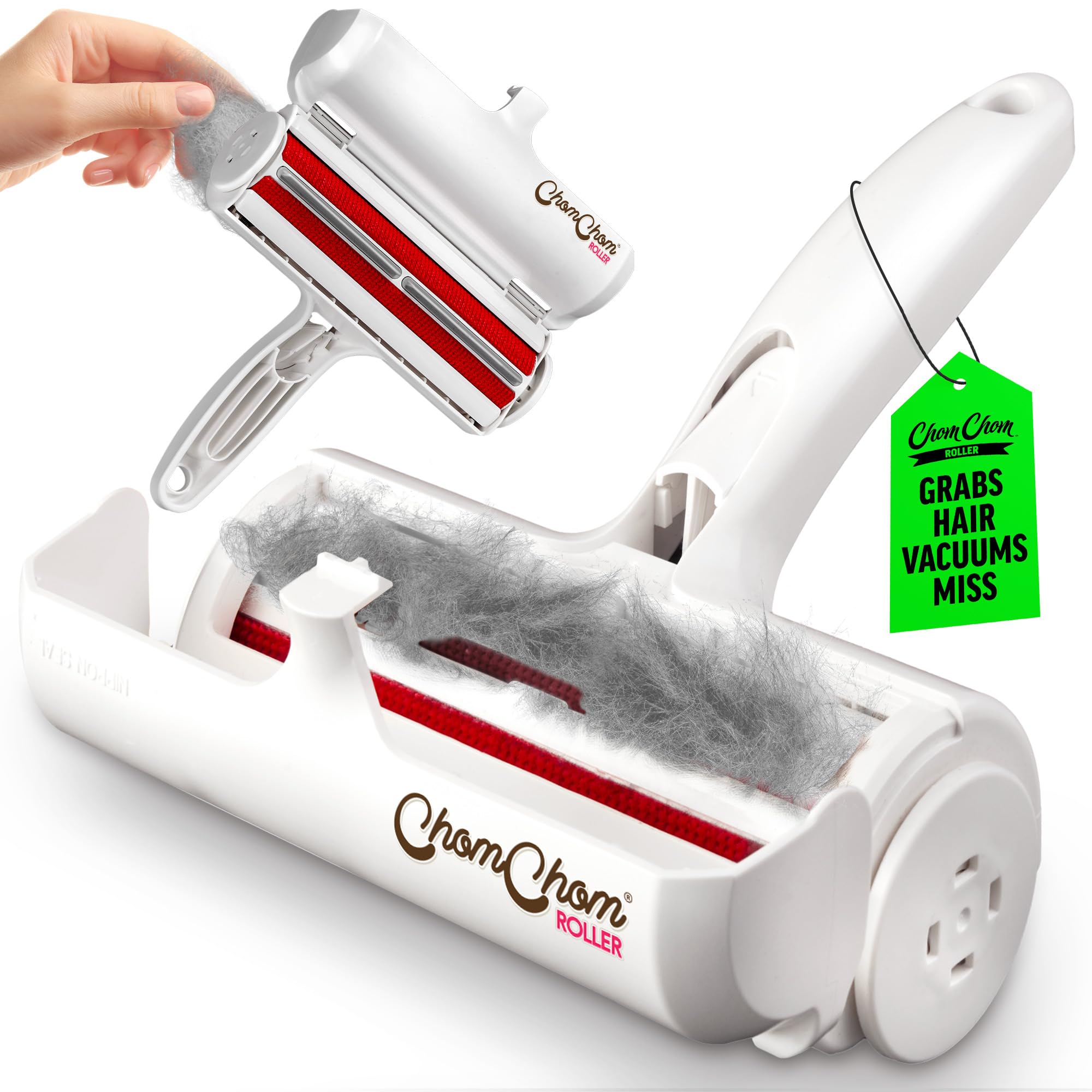
The ChomChom Roller uses a bidirectional squeegee mechanism that traps hair inside a sealed chamber as you roll it back and forth across fabric. Unlike sticky rollers that lose adhesion after a few passes, this tool relies on directional rubber vanes that scrape hair off the surface and funnel it into an internal bin—no tape refills required. The 7.5-inch width covers moderate-sized areas efficiently, and the release button empties the chamber directly into your trash can without you touching the fur. Customer feedback confirms that even fine undercoat hair from multiple cats gets captured after mastering the short, level stroke technique.
The plastic construction feels solid enough for daily use, though the storage door latch can pop open if dropped. Users with microfiber, faux leather, and tight-weave upholstery report excellent results, while loose knits and high-pile shag may require extra passes. It is not designed for smooth hard surfaces or clothing—the vanes need fabric friction to work. This premium pick delivers consistent performance on the surfaces where pet hair accumulates most: couches, pillows, rugs, and car seats.
The trade-off for the self-contained design is that hair can sometimes get trapped in the side hinges, requiring occasional cleaning with the included brush. The ChomChom also produces a chattering sound during use, which some pet owners note as a minor annoyance. But for a reusable, cordless tool that rivals the extraction power of a vacuum’s upholstery attachment, it stands as the most effective all-arounder for furniture-focused pet hair removal.
Why it’s great
- Built-in collection bin minimizes contact with hair and dander
- Reusable with no sticky tape or disposable sheets needed
- Effective on fine undercoat and coarse guard hairs alike
- Portable and cordless for quick touch-ups throughout the day
Good to know
- Not suitable for clothing or smooth non-fabric surfaces
- Plastic latch for the storage door feels less durable than the roller
- Requires short, level strokes—long sweeping motions reduce effectiveness
2. FURemover Pet Hair Removal Rubber Broom
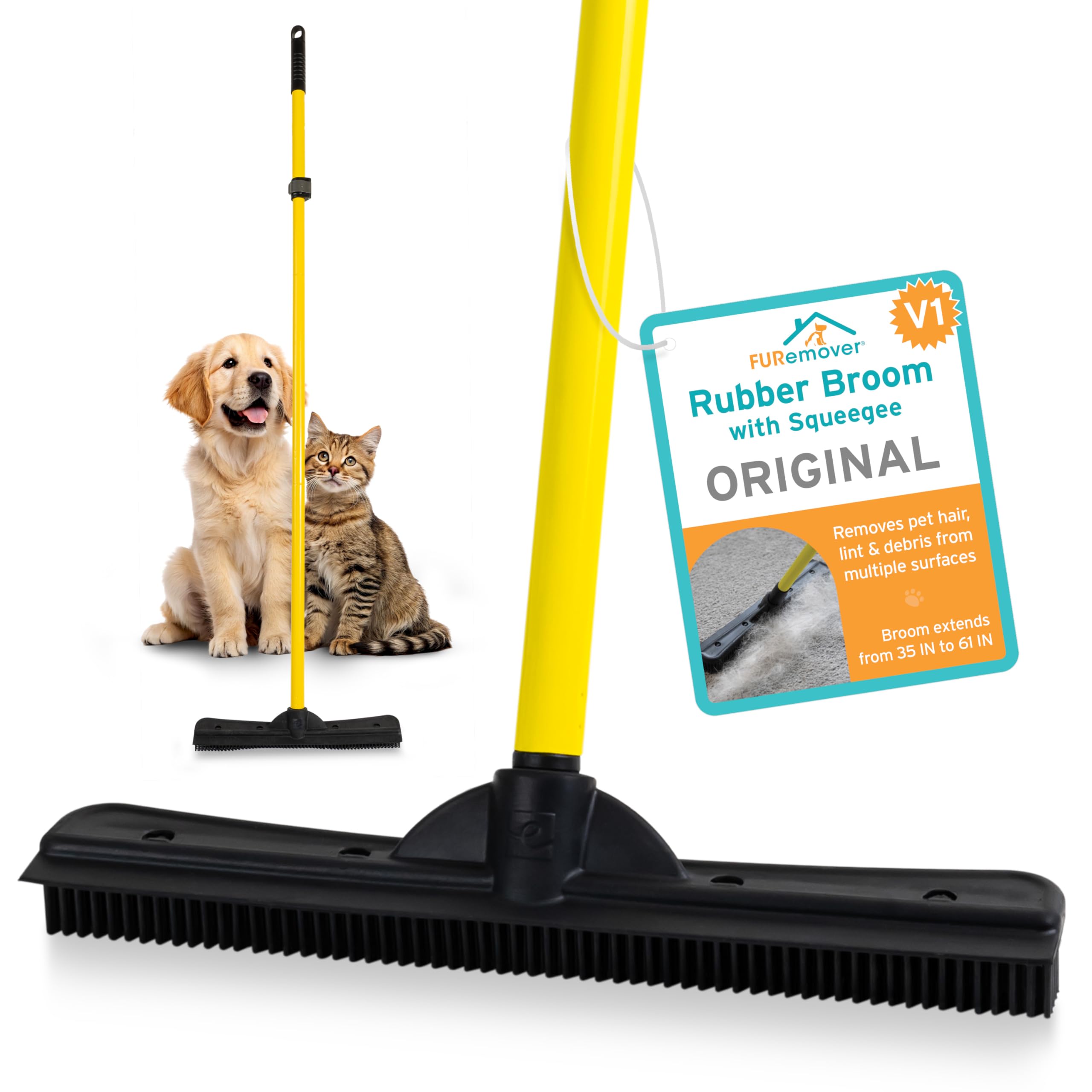
The FURemover Rubber Broom tackles large floor areas with a 12.5-inch wide head of electrostatic rubber bristles that attract hair rather than scattering it like traditional brooms. The telescopic handle extends from 35 to 61 inches, allowing you to clean carpets, tile, and hardwood without bending—a critical ergonomic advantage for households with multiple shedding pets. The rubber bristles work with short, sharp strokes to pull embedded hair from carpet nap, and the built-in squeegee edge handles liquid spills on hard floors and windows.
Users report that it picks up significantly more pet hair from low-pile carpet than a standard vacuum on its own, and the rubber material rinses clean under running water in seconds with no clogging. The broom works best when you use the bristle side to loosen hair and the rubber blade side to consolidate it into piles for disposal. It also performs well on concrete garage floors and patio decks where pet hair accumulates from outdoor dogs.
The main limitation is that the rubber bristles require more physical effort than sweeping with a standard broom—you must pull toward you with firm pressure. The tool is less effective at collecting non-hair debris like crumbs or sand, so it works best as a specialist hair tool rather than a full replacement for your broom. For pet owners dealing with wall-to-wall shedding on floors and carpets, this mid-range option delivers broad coverage and simple maintenance.
Why it’s great
- Adjustable handle suits users from 4′ to over 6′ tall
- Electrostatic rubber bristles attract hair without scattering
- Integrated squeegee expands utility to windows and wet floors
- Rinses clean with water and dries quickly
Good to know
- Requires more physical effort than a standard broom
- Less effective on small debris like sand or cat litter
- Not designed for furniture or vertical fabric surfaces
3. ACE2ACE Pet Hair Removal Tool
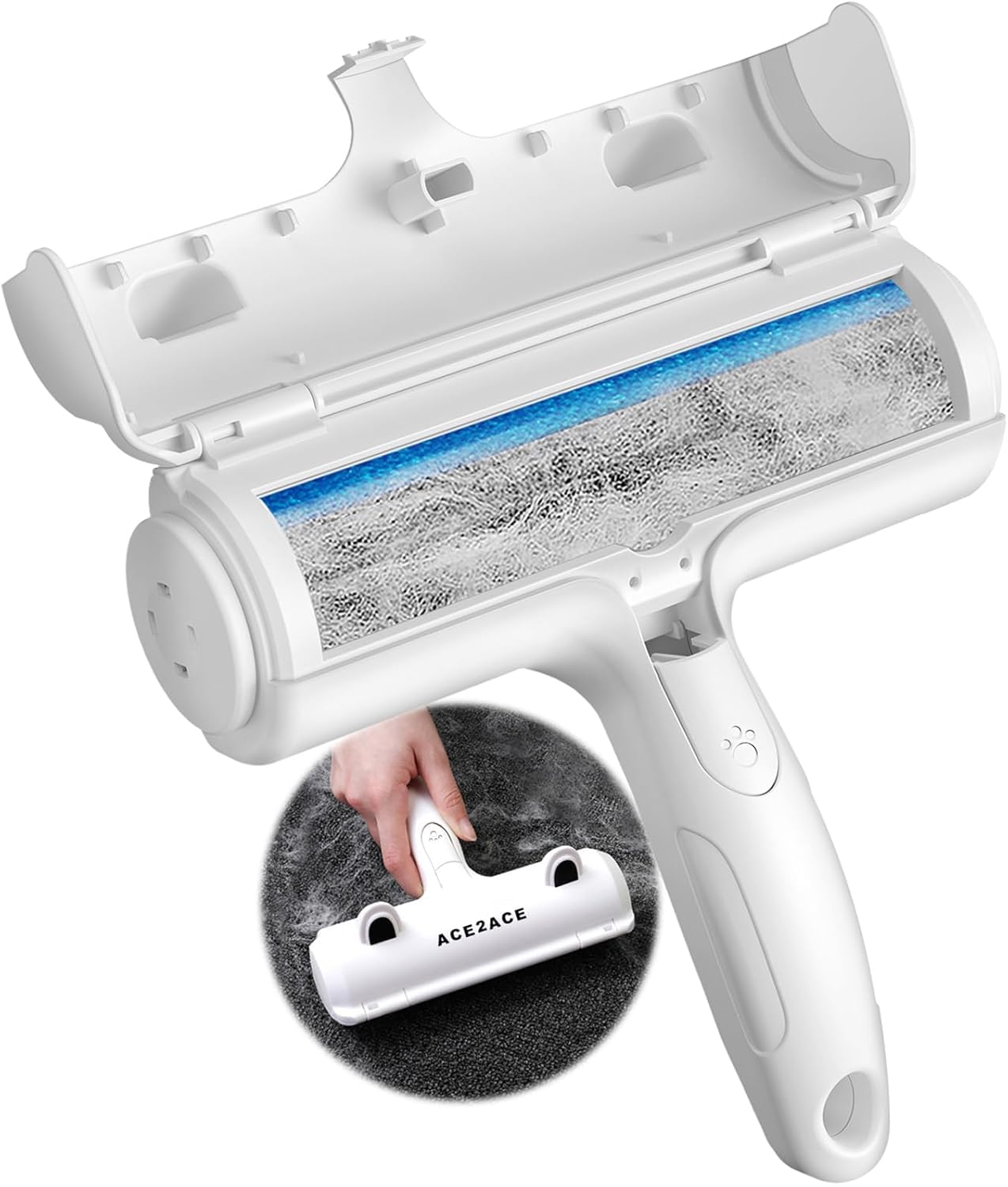
The ACE2ACE tool uses two electrostatic silicone pads that you roll back and forth over fabric surfaces, trapping hair in the textured material. A pinch-and-swing motion cleans the pads instantly, depositing hair into a built-in receptacle that opens with a single button press. This self-cleaning mechanism eliminates the need to touch fur or wash pads between uses, making it one of the most hygienic options for allergy-conscious pet owners. The ergonomic handle with a nylon-wrapped grip reduces hand fatigue during extended cleaning sessions.
Real-world testing shows it excels on furniture, carpet, cat trees, and bedding, particularly for short to medium-haired cats and dogs. The electrostatic attraction pulls hair from crevices that vacuums miss, and the reusable design means zero consumable costs over its lifetime. Users with Labrador retrievers and other heavy shedders report daily use without degradation in performance, and the white color scheme makes it easy to spot accumulated dust for cleaning.
The primary durability concern involves the lid connection where the cover snaps onto the base—some users report breakage after a drop from table height. The tool also requires multiple passes for maximum pickup on high-pile fabrics, and longer hair strands occasionally wrap around the silicone pads rather than releasing into the bin. But at this budget-friendly entry point, the combination of self-cleaning convenience and effective hair pickup makes it a compelling alternative to disposable lint rollers.
Why it’s great
- Self-cleaning dust bin requires no direct contact with hair
- Electrostatic silicone pads attract hair strongly without adhesives
- Ergonomic handle reduces hand strain during extended use
- Completely reusable with no refill costs
Good to know
- Lid hinge feels vulnerable to breakage if dropped
- Long hair strands can wrap around pads instead of releasing
- Multiple passes needed on high-pile fabrics for full pickup
4. sukitch Pet Hair Remover for Couch and Furniture
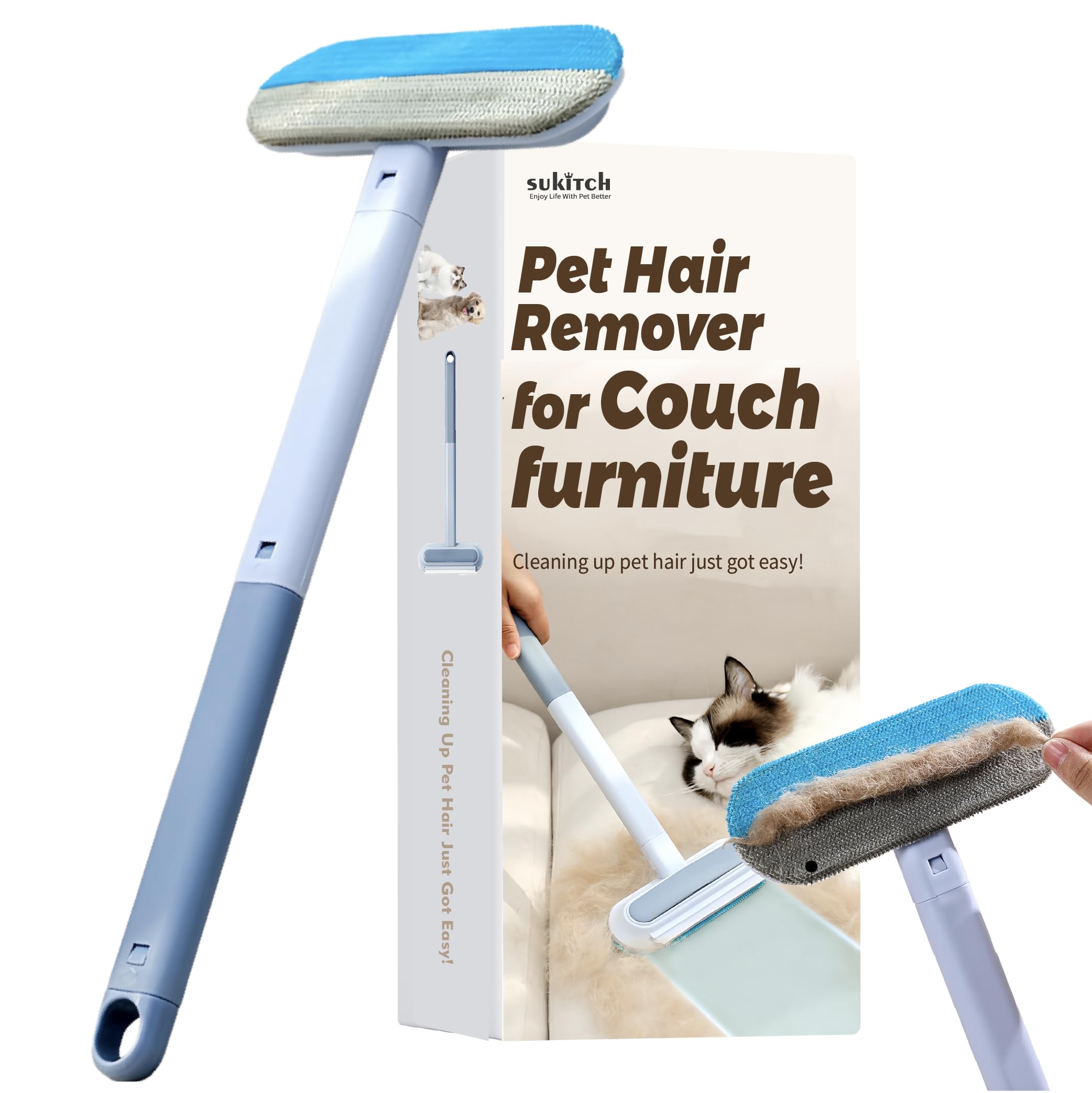
The sukitch Pet Hair Remover stands out with its 17.3-inch handle, which allows you to clean sofa cushions, beds, and rugs without hunching over—a significant ergonomic advantage over short-handled brushes. The washable lint cleaner head uses a frosted rubber material that gathers visible hair from smooth, tight-weave fabrics with a simple back-and-forth motion. A included silicone cleaning brush helps remove collected hair from the tool surface, and the head itself rinses clean under running water for deeper maintenance.
Users with long-haired cats report excellent results on cat towers and upholstered furniture, with the tool pulling hair that was invisible to the naked eye before brushing. The grey and blue color scheme keeps it looking clean even after months of use, and the rubber handle provides a secure grip even with wet hands. It also includes a smaller clothing cleaner attachment, extending its utility to lint removal from garments between washes.
The handle adjustment mechanism uses a small plastic push-button that some users find difficult to operate—it requires firm thumb pressure to release. The tool is best suited for smooth, tighter fabric surfaces; loose knits and textured upholstery may require a different approach. Without a built-in collection bin, you must manually remove hair from the brush head after each cleaning session, which means more contact with fur compared to self-contained designs. But for pet owners who need reach without back strain, this mid-range option delivers solid performance at a reasonable cost.
Why it’s great
- Extended handle reduces back strain during furniture cleaning
- Washable head eliminates ongoing consumable costs
- Includes separate clothing lint remover attachment
- Rubber grip handle provides secure, comfortable hold
Good to know
- No self-cleaning bin—hair must be manually removed
- Handle adjustment button requires significant finger pressure
- Best for smooth fabric; less effective on high-pile or textured surfaces
5. Lilly Brush Mini Pet Hair Detailer

The Lilly Brush Mini Pet Hair Detailer is a compact handheld tool weighing just over 2 ounces, designed specifically for tight spaces where larger tools cannot reach. The soft rubber bladed edge bends into crevices between car seats, under couch cushions, and along baseboards to extract deeply embedded hair using short, rake-like strokes. Unlike sticky rollers that leave residue, this reusable detailer relies on mechanical friction and rubber tackiness to grab hair and pull it free from fabric loops where vacuums fail.
Users consistently rate it as the best tool for car interiors—headliners, carpet mats, and fabric seats—because its small size allows precise maneuvering around cup holders and seatbelt anchors. The rubber edge rinses clean under water and stays supple for years without cracking. Customer feedback from professional car detailers confirms that it outperforms expensive pet hair erasers on medium to coarse coats typical of Beagles, Labradors, and short-haired cats.
The Mini Detailer is not recommended for fine, long, clingy undercoat hair typical of Golden Retrievers or long-haired cat breeds—those hairs tend to slide over the rubber rather than catching. It also requires multiple passes and moderate pressure to achieve full results on carpet, and the small surface area makes it impractical for large jobs like whole-couch cleaning. But as a targeted detail tool for cars, stairs, and furniture crevices, this budget-friendly pick fills a specific niche that larger tools leave uncovered.
Why it’s great
- Ultra-portable design fits in glovebox or cleaning caddy
- Soft rubber edge reaches into tight crevices and corners
- Rinses clean and remains effective for years
- Professional-grade results on car upholstery and mats
Good to know
- Less effective on fine, long undercoat hair types
- Small surface area means slower coverage on large areas
- Requires firm, repetitive strokes for deep extraction
FAQ
Can a rubber broom damage my carpet fibers?
How often should I wash a reusable pet hair duster?
Do bidirectional rollers work on long-haired cat fur?
Final Thoughts: The Verdict
For most users, the duster for pet hair winner is the ChomChom Roller because the bidirectional roller and built-in collection chamber deliver consistent, hygienic hair removal on couches, beds, and rugs without consumable costs. If you need to cover large floor areas without bending, grab the FURemover Rubber Broom. And for spot-cleaning car seats and furniture crevices, nothing beats the Lilly Brush Mini Detailer.

Mo Maruf
I created WellFizz to bridge the gap between vague wellness advice and actionable solutions. My mission is simple: to decode the research and give you practical tools you can actually use.
Beyond the data, I am a passionate traveler. I believe that stepping away from the screen to explore new environments is essential for mental clarity and physical vitality.