Our readers keep the lights on and my smoothie glass nicely filled. As an Amazon Associate, I earn from qualifying purchases.
Specs are compiled from manufacturer listings and verified buyer reviews and can change over time — please confirm the key details on the product page before buying.
If you work wood in a small shop, the single biggest quality-of-life upgrade is a proper dust extractor — not a shop vac, not a broom. Fine airborne particles hang in the air for hours and settle everywhere, and the wrong solution either lacks the suction to grab chips at the source or takes up floor space you do not have. The goal is a machine that pulls debris away from the blade, traps the dangerous micron-size dust, and fits into the corner you have left.
I’m Mohammad Maruf — the founder and writer behind WellFizz. This guide is built by comparing the manufacturers’ published specifications and the patterns across verified customer reviews, so you get each pick’s real strengths and trade-offs instead of marketing spin.
Whether you are hooking up a planer, a miter saw, or a sander, understanding CFM, filter micron rating, and capacity is what separates an extractor that actually works from one that just makes noise. This is your straight-ahead guide to the best dust extractor for small workshop setups, ranked by real-world performance and owner satisfaction.
Our Picks at a Glance

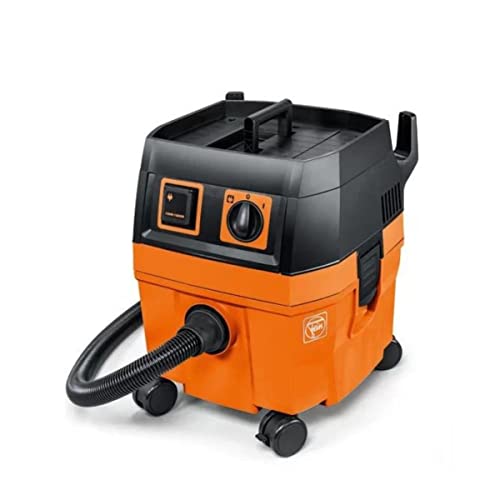

How To Choose The Best Dust Extractor For Small Workshop
Picking the right dust extractor for a small workshop means balancing suction power (measured in CFM — cubic feet per minute) against physical footprint and filter quality. A machine that handles a planer’s thick shavings might be overkill for a sander’s fine dust, and a unit that is too big for your space just becomes a trip hazard. Here are the three specs that decide whether a dust extractor earns its spot in a small shop.
CFM — The real measure of chip-moving power
CFM, or cubic feet per minute, is the volume of air the motor moves in one minute. For a table saw or planer, you want at least 400 CFM to pull chips away before they pile up. For sanders or routers, a lower CFM of 130-150 is fine, but the air speed (velocity through the hose) needs to stay high enough to keep dust suspended. A 4-inch port moves roughly four times the volume of a 2.5-inch port at the same velocity, which is why larger tools demand bigger ports.
Filter micron rating — What gets trapped vs what you breathe
The micron rating tells you the smallest particle size the filter catches. A 5-micron bag stops most visible sawdust but lets the dangerous lung-penetrating fines through. A 2-micron bag captures far more of the respirable fraction. A HEPA filter, rated at 0.3 microns, traps 99.97% of particles, making it essential for drywall, lead paint, or any work where the dust is toxic rather than just messy. In a small shop, HEPA is the gold standard because the room is tight and airborne particles concentrate faster.
Capacity and footprint — Fitting the machine into your workflow
Capacity (in gallons) determines how often you empty the bin or bag. A 2.6-gallon unit is perfect for a sander but fills in minutes on a planer — you would be emptying it constantly. A 12-gallon bag gives you a full day of planing without interruption. But bigger capacity usually means a larger physical footprint. Wall-mountable units and compact rolling bases are the two small-shop solutions. If floor space is the constraint, a wall-mount with a remote control lets you stash the extractor up high and still turn it on without climbing over tools.
Quick Comparison
| Model | Best For | CFM | Capacity | Filter Type | Amazon |
|---|---|---|---|---|---|
| Festool Ct Midi I Hepa | Fine dust / sanding | 130 CFM | 3.9 gal | HEPA cartridge | Amazon |
| Bosch GAS18V-3N | Portable / cordless | — | 2.6 gal | HEPA | Amazon |
| WEN DC3401 | High-volume chip collection | 660 CFM | 12 gal | 5-micron bag | Amazon |
| BUCKTOOL DC30A-1 | Wall-mount / space saving | 550 CFM | — | 2-micron bag | Amazon |
| Rikon Dust Extractor | Affordable 12-gal pickup | 142 CFM | 12 gal | Cartridge | Amazon |
| PSI DC725 | Carving / detail work | — | — | 2 x 10 x 20 filter | Amazon |
| Fein Turbo I | Ultra-quiet HEPA extraction | 151 CFM | 5.8 gal | HEPA | Amazon |
| WEN DC1300 | Large shop / dual-tool | 1,300 CFM | 50 gal | 5-micron bag | Amazon |
| DEWALT DWV010 | Automatic filter cleaning | 150 CFM | 8 gal | HEPA | Amazon |
| Bosch VAC090AH | OSHA-compliant dust control | 150 CFM | 9 gal | HEPA | Amazon |
| DEWALT DWV015 | Max capacity / TSTAK system | 155 CFM | 10 gal | HEPA | Amazon |
In‑Depth Reviews
1. Festool 574837 Ct Midi I Hepa Bluetooth Dust Extractor
The compact HEPA machine that turns sanding dust into a non-event.
This is the extractor that reduces airborne particles so dramatically that buyers report sanding dust hitting just 2 parts per million versus 45 with their old setup — a drop from 45 ppm to 2 ppm in the air you breathe. The secret is the tight combination of a 130 CFM suction rate, a HEPA cartridge filter, and the integrated Bluetooth connectivity that starts the vacuum automatically when you pull the trigger on a battery-powered sander or remote control. So you never forget to turn it on, and the fine dust never has a chance to escape. The 3.9-gallon container capacity means you can sand for a full session without stopping to empty it, and the internal hose holder keeps the 36mm smooth suction hose organized and protected during transport.
The build quality is the thing buyers praise most — 49 owners call it out by name, and the verdict is unanimous: it is sturdy, well-designed, and performs exactly as advertised. The tool-activated suction via Bluetooth is what wins people over; you clip the remote to your belt or use a Bluetooth battery pack, and the extractor follows your tool’s lead. The adjustable suction also helps minimize noise when you are working on lighter tasks. The one honest trade-off is value — opinions on price are genuinely mixed, with 38 owners flagging it. This is a premium tool, and the accessories (like a boom arm or adapters for non-Festool hoses) cost extra. For the hobbyist on a tight budget, the entry price stings.
If your priority is breathing clean air in a small workshop and you want a machine that integrates smoothly with your sanding workflow, this is the one. The crowd favorite — 4.8 stars across 500+ owners — speaks for itself.
What seals the deal
- Bluetooth auto-start keeps dust extraction on every time
- HEPA filtration catches dangerous sub-micron particles
- Compact footprint with internal hose storage
- Anti-static hose eliminates annoying shocks
What gives you pause
- Premium price that some owners feel is steep
- Hose needs adapters for non-Festool tool ports
- Higher-end CT36 accessories like the boom arm are not supported
Who it fits: The woodworker who sands a lot and wants HEPA-level air quality in a compact, Bluetooth-connected package.
One real limitation: The entry price is high, and the accessory ecosystem costs extra — budget for adapters if you own other tool brands.
2. Fein Turbo I Wet/Dry Dust Extractor (92035236090)
The surprisingly quiet HEPA extractor that works beautifully with Festool sanders for much less.
At just 66 decibels, this is one of the quietest dust extractors in its class — you can hold a conversation next to it without raising your voice. That low noise level does not come at the expense of power: the 1100W turbine generates 151 CFM of airflow and 98 inches of water lift (a measure of suction depth that tells you how hard it pulls), making it a legitimate extraction partner for sanders, routers, and even a CNC router. The 5.8-gallon capacity is a step up from the Festool Midi, giving you more runtime between bag changes, and the 13-foot flexible hose paired with a 19-foot heavy-duty power cord means you can reach across most small shops without switching outlets. The autostart outlet includes a built-in power-on delay so the vacuum does not trip the circuit when a tool kicks on.
What wins people over is the price-to-performance ratio — owners consistently say this machine performs comparably to the Festool at roughly half the cost. Owners mention that it works with the Festool sander from the start without any additional adapter, which is a huge convenience if you already own Festool tools. The large swivel wheels rotate 360 degrees, making the unit easy to maneuver in tight spaces. The one common gripe is that the replacement bags are expensive, though they last a long time. And the suction is strong enough that it can accidentally pick up small loose parts from your workbench if you are not careful, so you want to watch where the nozzle goes.
Quiet workhorse: If you want HEPA-level dust control with a noise level that does not force you to wear earplugs, and you want to save about one-third over the Festool, this is your pick.
The standout trait: Near-silent operation at 66 dB with 151 CFM of suction that rivals pricier models.
A note on cost: Replacement bags are pricey, but they last through many sessions before needing a swap.
3. BOSCH GAS18V-3N 18V Cordless Wet Dry Vacuum
The 10.2-pound cordless HEPA vac that goes where the cord cannot.
At only 10.2 pounds with a rugged carry handle, this is the dust extractor you grab when you need to move around the shop, climb a ladder, or clean out a vehicle without hunting for an outlet. The rotational airflow technology keeps the HEPA filter from clogging as fast as a standard shop vac — the filter captures 99.97% of particles at 0.3 microns, so the fine dust stays trapped rather than recirculating. The 2.6-gallon canister is small (2.6 gallons vs the WEN’s 12 gallons), which is the trade-off: you get portability but you will empty it frequently when doing heavy planing. The hose is 5.25 feet, and three extension tubes and a floor nozzle are included.
Quality is the thing buyers praise most — 70 owners single it out, calling it well-made with excellent ergonomics and balance. The flexible rubber hose is a favorite; it does not kink like rigid plastic hoses do. But the battery life draws mixed reactions. With a 6.0Ah battery (sold separately, as this is a bare tool), you get up to 24 minutes of high-power cleaning. For spot cleaning after a sanding session, that is fine. For continuous extraction on a planer, you would chew through batteries. One owner reports that after 4 years of frequent jobsite use the motor lost suction with no obstruction found — a normal lifespan for a cordless tool used hard. This is a grab-and-go solution, not a dedicated stationary collector.
Why it stands out
- Ultra-light at 10.2 lbs with a comfortable carry handle
- HEPA filter traps 99.97% of fine particles
- Rotational airflow technology prevents rapid filter clogging
Where it compromises
- Battery and charger sold separately — adds to cost
- 2.6-gallon capacity fills fast with planer shavings
- 24-minute runtime requires extra batteries for long sessions
Best for: The mobile woodworker who needs HEPA filtration in a lightweight package for quick cleanup and detail work.
skip it if: You need to run it continuously for hours on a planer — the cordless format and small tank cap runtime.
4. WEN Woodworking Dust Collector (DC3401)

The 5.7-amp rolling collector that moves 660 CFM — compared to a typical HEPA extractor’s 130 CFM.
Where a HEPA extractor like the Festool moves 130 CFM, this WEN moves 660 CFM through its 4-inch dust port. That gap matters the moment you fire up a planer or a table saw — the high volume of air sweeps chips and shavings away before they can pile up on the tool or the floor. The 5.7-amp brushed motor spins a 6-inch steel impeller, and the 12-gallon zippered collection bag holds an entire day’s worth of planer debris without needing to stop and empty. The entire unit rolls on lockable swivel casters and includes an onboard carry handle, so you can tuck it into a corner or roll it from tool to tool. It can also be wall-mounted to save floor space entirely.
Performance is what wins owners over — 64 call it effective with miter saws and table saws, and owners say it “worked great for my planer and table saw dust collection.” It is also noticeably quieter than a standard shop vac running the same job. However, durability is the recurring note of caution: 34 owners flag it as a concern, with a few units failing within the first month or after several months of use. The positive side is that customer service from WEN is responsive — one owner had a bad switch diagnosed and replaced within a week. The 5-micron bag catches visible sawdust but lets more fine particles through than a 2-micron or HEPA filter, so for sanding dust you would want to add a fine-dust filter or use a cyclone separator.
High-volume champion: If you plan to run a planer or table saw and want to move massive air volume on a budget, this is the most CFM per dollar in the list — just be aware of the durability questions and the 5-micron filtration limit.
The right buyer: The weekend woodworker whose primary tools are a planer, miter saw, or table saw and wants huge airflow without spending premium money.
The honest caveat: A small percentage of units have had motor or switch issues within the first year; WEN’s service has been good for some owners but unresponsive for others.
5. BUCKTOOL 1HP Wall-mount Dust Collector (DC30A-1)

The 550-CFM wall-mount collector that pairs a bigger 2-micron bag with a 49-foot remote.
If floor space is your limiting factor, this is the best solution on the list — it mounts on the wall and includes wheels with a brake so you can also roll it around when needed. The 1HP induction motor (TEFC — totally enclosed, fan-cooled) is designed to be more durable and quieter than a brushed motor, and it delivers 550 CFM of airflow through a steel impeller. That is enough air volume for a 12-inch planer or a 6-inch sander, and customers note it can run two tools simultaneously via a splitter without choking. The included 2-micron filter bag is a meaningful upgrade over the 5-micron bags found on many budget collectors — it traps finer particles, so you breathe cleaner air during operation. And the 49-foot remote control means you can turn the collector on and off from anywhere in a small shop without walking over to the wall.
Quiet operation is what owners notice first — significantly quieter than a typical shop vac. Buyers who chose this over the WEN DC3401 cite the included remote and the better 2-micron bag as the deciding factors. The TEFC induction motor is maintenance-free, meaning no brushes to replace. Assembly takes less than 10 minutes according to owners. The downside: build quality is adequate rather than premium — the bolts and wheels feel cheap, and the remote feels light. A small number of reviewers point out that their unit had no suction from the start (the bag would not inflate), which suggests a quality-control variance. Worth noting: the 2-micron bag will clog faster than a larger bag if you fill it with very fine dust, so regular emptying is important.
What makes it unique
- Wall-mountable design saves precious floor space
- 2-micron filter bag catches finer dust than 5-micron
- 49-foot remote control for convenient on/off
- Quiet induction motor, no brushes to maintain
Where it falls short
- Build quality is functional, not premium (cheap-feeling hardware)
- Quality control can vary — a few units arrive with no suction
- 2-micron bag clogs faster when filled with very fine dust
Best suited for: The small-shop owner who values wall-mounted space saving and wants the finer filtration of a 2-micron bag with the convenience of a remote.
One thing to check: Inspect the unit immediately upon arrival — a small number have had airflow issues that require an exchange rather than a fix.
6. Rikon Dust Extractor with Fittings & Wall Mount

The 1.5-HP, 12-gallon cannister that owners call “stronger than a shop vac” at a budget price.
This blue cannister-style dust extractor delivers 142 CFM from a 1.5 HP motor — enough suction to keep a table saw or drill press clear of debris during a day’s work. The 12-gallon capacity matches the WEN’s bag size, giving you plenty of room between emptyings, and it includes a 4-inch by 6.5-foot hose, two hose clamps, four hose connector fittings, a filter cartridge, and five replacement paper filters. That is a generous accessory kit for the price. Shoppers say it works well with an auto-switch (where the tool triggers the extractor), making it hands-free for sanding and sawing sessions. The top carry handle and on/off switch are right where you expect them.
Performance gets a solid nod from owners — 7 call it out positively, with one noting it “keeps their table saw clean.” A buyer with a small workshop called it “a very affordable option for dust collection.” The two consistent notes are noise and a minor build quality detail. Noise level is the more-discussed aspect, with 8 owners flagging it as too loud — ear protection is a must. One owner had a plastic hose connector break before first use and found the replacement part out of stock with uncertain availability, which is frustrating. Overall, this is a straightforward, no-frills extractor that gets the job done if you are on a tight budget and can tolerate the sound.
Budget-friendly and functional: If your workshop is loud anyway and you just want something that pulls chips away from a table saw without spending much, this Rikon is a solid entry point — just keep hearing protection handy and check the connectors.
Who it suits: The beginner or budget-conscious woodworker who needs a 12-gallon extractor for a table saw or drill press without frills.
One catch: The noise level is high and some plastic components are fragile — treat the hose connector gently.
7. PSI Woodworking DC725 Portable Tabletop Dust Collector
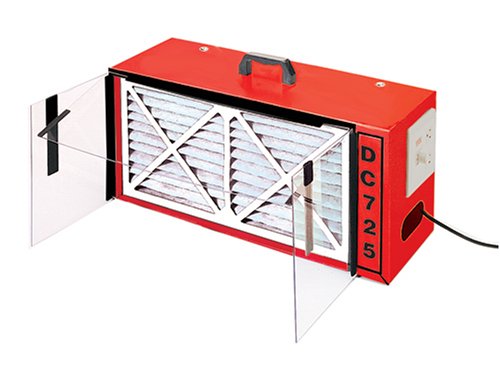
The 24-pound tabletop unit that finally tames power carving and Dremel dust.
If your work is detail-oriented — power carving, Dremel sanding, wood burning, or small lathe projects — this is the only machine on the list that is purpose-built for that. It weighs 24 pounds and sits on a tabletop with a footprint of 23 by 8 inches and a height of 10.5 inches, so it takes up almost no floor space at all. The steel impeller is enclosed in adjustable clear polycarbonate shields that direct airflow right at the workpiece, catching dust right at the source. The variable speed control knob lets you dial suction up or down depending on the tool — a power carver needs less airflow than a detail sander, and turning down the speed reduces noise. There are two grounded 115-volt outlets on the side panel, so you can plug your tool directly into the collector and have both turn on from a single switch.
Quiet operation is what owners appreciate most — much quieter than a shop vac running the same task, comparable to an air vent in the next room. Owners of Ram BP50 power carvers and Dremel tools report that the DC725 prevents dust from spreading around the room, and many say they no longer need to vacuum themselves or the work area after carving. The two side outlets are a clever touch, effectively giving you a switched power strip for your small tools. The included filter is a 2 by 10 by 20 inch unit, and the clear shield that directs airflow also protects your eyes from flying chips. However, the filter is thin and odd-sized, and replacements from the manufacturer are expensive. It also does not capture all dust — some fine particles settle in front of the work table, so a mask is still recommended for toxic materials. A few units arrived with the impeller blade detached, requiring a repair before first use.
What it does best
- Variable-speed suction for fine control with carving tools
- Extremely quiet — no ear protection needed for many tasks
- Integrated switched outlets for tool + extractor from one switch
- Portable, lightweight, and sits on any workbench
Where to be cautious
- Filter is thin, odd-sized, and expensive to replace
- Does not capture 100% of dust — still wear a mask for fine work
- Occasional quality issues like detached blades on arrival
Ideal for: The carver, detail sander, or wood burner who needs a quiet, compact tabletop unit that keeps the immediate work area clear of chips and fine dust.
Not for: Planers or table saws — this is a low-volume, high-control machine for detail work, not heavy chip collection.
8. DEWALT DWV010 HEPA Dust Extractor
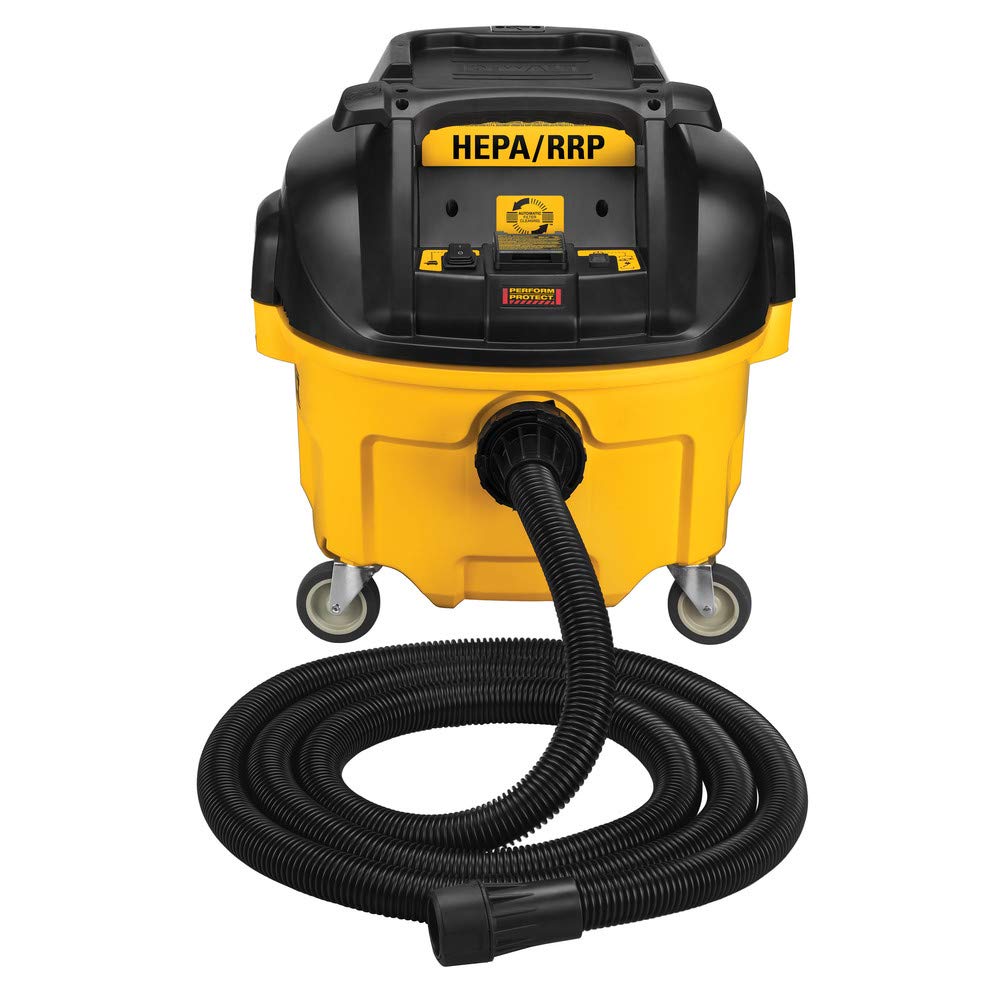
The HEPA extractor that cleans its own filter every 30 seconds so you do not have to stop.
Nothing kills productivity like having to stop mid-cut and bang the dust out of a clogged filter. This DEWALT solves that with automatic filter cleaning that pulses every 30 seconds — a burst of air that shakes the dust off the HEPA filter media and restores suction without you lifting a finger. The 15-amp motor delivers 150 CFM of airflow, which is on par with the Fein and Bosch at a more accessible price point. It meets the EPA Lead Renovation, Repair and Painting (RRP) Rule for HEPA vacuums, specifically when used with DWV9330 filters, so it is a legitimate choice for lead-paint or renovation work. The power tool actuation feature lets you plug a tool into the vacuum outlet and have the vacuum start automatically when the tool runs, exactly like the Festool ecosystem but in a bright yellow package. The 8-gallon capacity is a useful middle ground — larger than the compact 3.9-gallon Festool but smaller than the 10-gallon DEWALT sibling, so it slides into a shop corner without dominating the space.
Performance is the standout — 61 owners call it better than a regular shop vac for fine dust, and one reports it collects “99% of dust” effectively. Owners of DeWalt tools find the integration smooth, especially the auto start/stop and the included DWV9000 hose adapter for the DeWalt RO sander. The self-cleaning filter works well, though there is a brief, momentary loss of suction during the pulse cycle that you can feel on the tool. The downsides are the noise (a high-pitched squeal from the motor that some find grating) and the hose storage—the 15-foot anti-static hose is stiff and difficult to coil back onto the unit. The friction-fit accessories also tend to fall apart during use, and no attachments are included in the box.
Hands-off HEPA: The automatic filter cleaning makes this the most maintenance-free HEPA extractor on the list — set it up, plug in your sander, and forget about it until the bag is full.
Best for: The woodworker or contractor who runs a sander for hours and does not want to stop every 15 minutes to shake a filter — the self-cleaning cycle is a genuine time-saver.
Look elsewhere if: You need raw suction power for wet pickup or large debris — this is engineered for HEPA-level fine dust collection, not brute-force vacuuming.
9. Bosch VAC090AH 9 Gallon Dust Extractor
The HEPA extractor built for OSHA Table 1 silica compliance, with a filter pulse every 15 seconds.
This Bosch dust extractor is the machine you want if dust control is a regulatory requirement rather than just a preference. It delivers a maximum 150 CFM of airflow with a sustainable 97 inches of static water lift (a measure of suction depth), and it features the Bosch PRO+GUARD end-to-end dust collection system designed to help contractors move toward OSHA Silica Table 1 compliance. That means it is engineered not just to collect dust, but to meet the specific air-quality standards the government enforces on jobsites. The automatic filter cleaning pulses every 15 seconds — twice as often as the DEWALT’s 30-second cycle — to maintain maximum suction power even when you are grinding concrete, cutting fiberglass, or sanding thinset. The 9-gallon capacity is generous, and the included fleece filter bag protects the HEPA filter and extends its life. The Power Broker dial lets you match the suction force to the application, so you can turn down the power for a detail sander and crank it up for a surface grinder.
Dust control is the aspect that owners praise most — 41 call it effective, and one reported it “filled two bags with concrete dust in two hours” during heavy grinding work. The HEPA filter captures 99.97% of particles at 0.3 microns or larger, so the air you breathe after a session is dramatically cleaner than before. The auto filter clean system is described as a “lifesaver” by owners who work with concrete and thinset. The tool-activation feature works well with miter saws, track saws, and routers, and owners note that the hose fits Festool ports snugly without an adapter. Noise level is the only aspect that draws mixed feedback — 26 owners flag it, and the filter-cleaning thump every 15 seconds is the loudest part of the machine (though it can be disabled). Like the other premium extractors, the VAC090AH does not come with a full set of attachments given its price, which some owners find disappointing.
Compliance-grade performance
- Designed for OSHA Silica Table 1 compliance with PRO+GUARD system
- Aggressive 15-second filter pulse cycle keeps suction high
- Works with Festool ports without an adapter
- Power Broker dial matches suction to the tool
The trade-offs
- Filter pulse is loud and cannot be silenced without disabling it
- No full attachment set included for the price point
- Not a general shop vac replacement — tune for fine dust
The right choice for: The professional contractor or serious hobbyist doing concrete, drywall, or other hazardous dust work where compliance and filter longevity matter more than raw pick-up power.
Think twice if: You mostly just need to vacuum up planer shavings — this is over-engineered for basic chip collection and the filter pulse may annoy you in a quiet shop.
10. DEWALT 10 Gal. Dust Extractor with Automatic Filter Clean (DWV015)

The 10-gallon, 155-CFM beast that locks into the TSTAK storage system and eats concrete dust for breakfast.
This is the largest-capacity dust extractor on the list at 10 gallons, with the highest CFM among the HEPA extractors at 155 CFM. The motor is a 15-amp unit designed for maximum suction performance on the jobsite, and the automatic filter clean pulses every 30 seconds to maintain that suction without manual intervention. The defining feature is the Storage Accessory Rack that interlocks with DEWALT’s TSTAK and TOUGHSYSTEM storage boxes — you can stack tool boxes on top of the extractor, latch them with durable latches, and roll the whole tower to the next location. The AirLock system minimizes dust exposure when you disconnect the hose, a thoughtful touch for contractors who move between rooms all day. The 44.3-pound weight reflects the heavy-duty build and the large motor.
Dust extraction is what owners praise most — 9 call it effective, with one saying it “absolutely sucks everything.” A flooring contractor who grinds concrete daily says it “does the work with ease” and recommends it for heavy commercial use. The build quality gets consistent praise, with owners reporting it lasts 4-5 years in commercial use with proper maintenance (blowing out motor dust, rinsing filters, changing fleece bags). The capacity with the dust-collecting bag (DWV9402) is reduced, so you need to plan for that if you use the bag to keep the HEPA filter cleaner longer. One critical note: owners warn against using the front electrical receptacle to plug in a power tool, as it can cause overheating and motor burnout. The hose diameter is 1.25 inches and the hose length is 15 feet with an anti-static design.
Heavy-duty infrastructure: If you already own DEWALT TSTAK boxes and want a HEPA extractor that stacks with your storage system for easy transport, this is the clear choice — the 155 CFM and 10-gallon capacity are the top figures in the HEPA category.
Best for: The contractor or serious hobbyist who needs the largest HEPA container capacity (10 gallons) and wants integration with the DEWALT TSTAK modular system for jobsite mobility.
A warning: Do not use the front power tool outlet — it can cause the motor to overheat and fail prematurely.
11. WEN DC1300 1,300 CFM Dust Collector

The 14-amp, 50-gallon collector that moves 1,300 CFM — more air than anything else on this list combined.
This is the big one. The WEN DC1300 circulates 1,300 cubic feet of air per minute — compared to the WEN DC3401’s 660 CFM and a typical HEPA extractor’s 130 CFM. The 14-amp motor spins a 10-inch steel impeller at 3,450 RPM, and the dual 4-inch air inlets let you attach two tools simultaneously. The vertical collection bag holds 50 gallons — so large that you can go weeks between emptyings in a home shop. The mobile base with four swivel casters lets you roll this substantial unit around the shop, and assembly is straightforward. This is not a HEPA extractor; it uses a 5-micron collection bag, so very fine airborne particles will pass through. But for capturing chips and shavings from a planer, jointer, table saw, or bandsaw, the sheer volume of air moving makes it nearly impossible for debris to stay on the tool or the floor.
Performance is what owners praise most — 43 call it effective, with one reporting “99% table saw dust capture” and another calling it “perfect for my small shop.” The value for money draws the second-highest praise (29 mentions), and owners consistently say it performs as well as more expensive brands. The noise level gets a positive nod — it is quieter than you would expect for a machine moving this much air, though ear protection is still standard in any wood shop. The critiques are about build details: the vertical supports feel flimsy, the upper bag arm is not adjustable, the bag hook tends to slip, and the manual is poorly written. For the price, those are acceptable compromises on a machine that moves 1,300 CFM. If you need HEPA-level filtration, you can add an aftermarket dust collector filter or a cyclone separator to the intake side.
class-leading airflow
- 1,300 CFM moves more air than any other unit here — planer chips vanish
- 50-gallon bag means emptying is a rare event
- Dual 4-inch inlets let you run two tools at once
- Mobile base with casters for easy positioning
Where it cuts corners
- 5-micron bag lets fine dust through — add a separator for sanding work
- Build hardware feels flimsy (bag hook slips, supports are thin)
- Takes up floor space — not ideal if your shop is very cramped
Who it is for: The woodworker whose shop can accommodate a rolling collector and who wants maximum chip-moving capacity for a planer, jointer, or table saw without spending premium money.
Who should look elsewhere: If fine dust filtration matters to your health or you have very limited floor space, a smaller HEPA extractor or wall-mount unit will serve you better.
Understanding the Specs
Cubic Feet per Minute (CFM)
CFM measures the volume of air the motor moves in one minute. It is the single most important number for chip collection. A planer or table saw needs at least 400 CFM to pull shavings away before they pile up on the tool. Sanders and routers work fine with 130-150 CFM because the air velocity stays high enough in a smaller hose to keep dust moving. If you see 660 CFM (like the WEN DC3401), that means it moves 660 CFM versus 130 CFM for a typical extractor — a huge difference when you are hogging boards through a planer. The higher the CFM, the bigger the port you need; a 4-inch port moves roughly four times the volume of a 2.5-inch port at the same speed.
HEPA vs Micron Rating
A filter’s micron rating tells you the smallest particle size it traps. A 5-micron bag (common on budget collectors) stops visible sawdust but lets lung-penetrating fines through. A 2-micron bag catches more of those respirable particles. A true HEPA filter is rated at 0.3 microns and captures 99.97% of particles at that size — it is the standard for toxic dust like lead, silica, or fine sanding dust. In a small workshop where the air volume is limited, a HEPA filter makes a dramatic difference. If the data does not mention “HEPA” or a micron number, assume the filter is coarse and you should upgrade it or add a secondary separator.
FAQ
What size dust extractor do I need for a small workshop?
Can I use a HEPA shop vac instead of a dust extractor?
What is the difference between a dust collector and a dust extractor?
Does the hose size matter for my tools?
How often do I need to empty the dust bag or bin?
Can I wall-mount a dust extractor to save floor space?
What is automatic filter cleaning and why does it matter?
Is a cordless dust extractor powerful enough for woodworking?
Final Thoughts: The Verdict
For most small workshop owners, the best dust extractor for small workshop is the Festool Ct Midi I Hepa because its Bluetooth tool activation, HEPA filtration, and compact 3.9-gallon form factor turn sanding from a dusty chore into a clean, breathable process. If you want massive chip-moving power for a planer or table saw on a budget, the WEN DC3401 moves 660 CFM at a fraction of the price. And for the contractor tackling concrete dust or renovation work where OSHA compliance matters, the Bosch VAC090AH with its 15-second filter pulse is the professional-grade choice.
How We Picked
We do not accept paid placement. Every pick is matched to a real buyer and a real use-case; we do not hands-on test units.
Sources & Methodology
Specifications: manufacturer listings and product documentation. Review insights: verified customer reviews, as of July 2026. Pricing: not shown on this page (it changes often); check the current price via the retailer link.
As an Amazon Associate, WellFizz earns from qualifying purchases. This does not affect which products we feature.
Related Guides

Mo Maruf
I created WellFizz to bridge the gap between vague wellness advice and actionable solutions. My mission is simple: to decode the research and give you practical tools you can actually use.
Beyond the data, I am a passionate traveler. I believe that stepping away from the screen to explore new environments is essential for mental clarity and physical vitality.