Our readers keep the lights on and my smoothie glass nicely filled. As an Amazon Associate, I earn from qualifying purchases.
Specs are compiled from manufacturer listings and verified buyer reviews and can change over time — please confirm the key details on the product page before buying.
Your tennis shoes blow out at the toe after three matches, or the tread goes smooth on hard courts. You need a pair that holds up set after set. This guide looks at nine shoes that actually last, built with reinforced outsoles, drag guards, and tougher uppers. You get each pick’s real strengths and trade-offs from published specs and verified customer reviews, not marketing spin. Whether you play three times a week or just want shoes that survive the season, these are the durable tennis shoes that keep gripping long after cheaper pairs would be retired.
I’m Mohammad Maruf — the founder and writer behind WellFizz. This guide is built by comparing the manufacturers’ published specifications and the patterns across verified customer reviews, so you get each pick’s real strengths and trade-offs instead of marketing spin.
Our Picks at a Glance
How To Choose The Best Durable Tennis Shoes
Tennis shoes take a beating — hard courts scrape the outsole, toe drag wears through the upper, and lateral cuts stress the sidewalls. Here is what separates a pair that lasts a season from one you will return by month two.
Reinforced Toe Guard
The toe area is the first to fail for most players because you drag your back foot on serves and groundstrokes. Look for rubber wraps or protective layers (adidas calls theirs AdiTuff; ASICS uses PGUARD) that cover the toe and the medial side. This single feature can double the life of a shoe if you drag your toes.
Outsole Material and Warranty
Hard courts demand a dense rubber compound. Many premium brands use a carbon-rubber blend (ASICS uses AHARPLUS; Wilson uses Duralast) that resists flat spots longer than standard rubber. Some manufacturers even offer a six-month outsole warranty on their top-tier models — meaning if you wear through the tread within six months of buying, they will replace the shoes.
Stability Chassis
A shoe that flexes too much in the midfoot wears unevenly and breaks down faster. A rigid chassis (like TWISTRUSS from ASICS or the 4D Support Chassis from Wilson) locks your foot in place during lateral cuts and prevents the upper from separating from the sole. It is a must if you move aggressively side to side.
Quick Comparison
| Model | Best For | Outsole Rubber | Weight | Key Protection | Amazon |
|---|---|---|---|---|---|
| ASICS Court FlyteFoam 3★ Best Overall | Heavy-court grinders | AHARPLUS | 1.5 lb | PGUARD toe/heel | Amazon |
| New Balance 696 V6 WomensBest Value | Budget court play | Standard rubber | 1.5 lb | Leather upper | Amazon |
| K-Swiss Court Express WomenCourt Classic | Frequent daily players | AOSTA II | 2.0 lb | Leather upper | Amazon |
| adidas Courtjam Control 3 | Aggressive movers | Adiwear | 2.43 lb | AdiTuff toe wrap | Amazon |
| WILSON Rush Pro Ace | Recreational all-court | Duralast | — | 4D Support Chassis | Amazon |
| adidas Ubersonic 5 | Speed-focused players | Standard rubber | 2.13 lb | Heel Lock Support | Amazon |
| Wilson Rush Pro 4.5 | Powerful baseline players | Duralast | — | Precision-engineered package | Amazon |
| ASICS Gel-Resolution X | Baseline control players | Standard rubber | 1.44 lb | DYNAWALL lateral support | Amazon |
In‑Depth Reviews
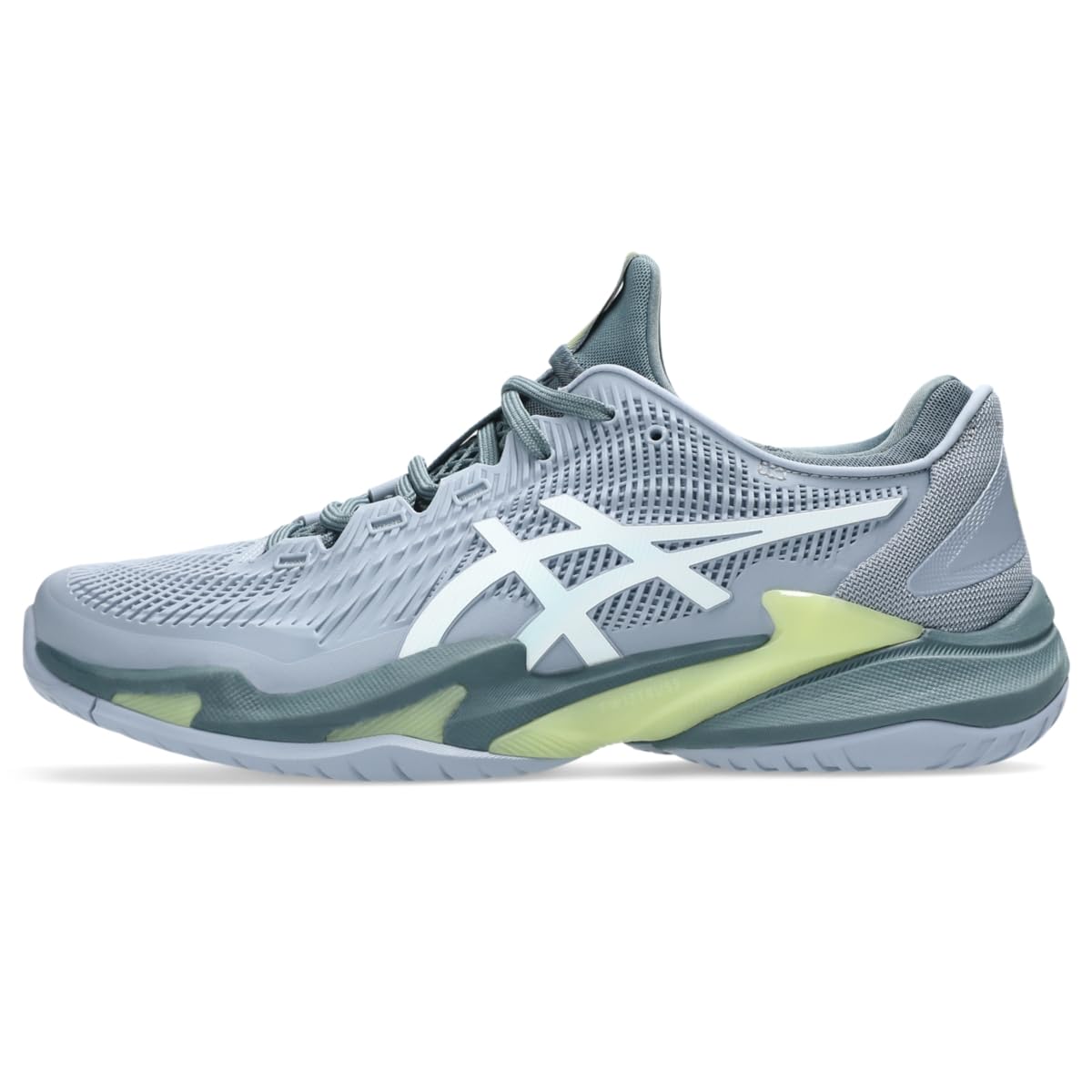
1. ASICS Men’s Court FlyteFoam 3 Tennis Shoes
Our pick — 4.5★ from 500+ verified ratings; the strongest balance of quality and price.
The dedicated hard-court warrior you can trust set after set without worrying about blowouts.
This shoe leads the list because it protects your feet where they wear first — the toe and heel. PGUARD technology is a reinforced rubber overlay at the toe and heel, designed specifically to handle toe drag and the constant scrape of hard courts. Underfoot, the AHARPLUS rubber outsole is ASICS’s densest compound, so the tread pattern stays sharp longer than standard rubber. More than 500 owners call it an “ultimate choice with outstanding support and stability,” and they rate quality as the top positive feature by a wide margin.
At just 1.5 pounds (the adidas Courtjam Control 3 is 2.43 pounds), you are not lugging extra weight around the court. The FlyteFoam midsole delivers lightweight cushioning that absorbs impact on every landing, while the Forefoot GEL (a silicone-based insert) creates a softer feel at footstrike. The MONO-SOCK construction wraps your foot snugly, and buyers report it fits true to size for normal-width feet. They do warn the inner sock liner makes it tight to get on — use a shoe horn — but the durable outer shell and excellent performance more than make up for it.
The sockliner is made using a solution dyeing process that cuts water usage and carbon emissions, according to the brand, which is a thoughtful bonus if you care about the footprint of your gear.
Lightweight responsive cushioning
- PGUARD reinforced toe and heel area for drag protection
- AHARPLUS outsole is the toughest compound ASICS makes
- Lightest in this roundup at 1.5 pounds
- FlyteFoam cushioning absorbs hard-court shock without packing down
Narrow toe box
- Sock-liner design makes it tough to slip on without a shoe horn
- Owners mention poor breathability — expect warm feet on hot days
Speed players: you play on hard courts multiple times a week and want the best combination of lightweight feel and dedicated toe/heel protection.
Wide feet: you need maximum breathability for hot summer play — the liner runs warm.
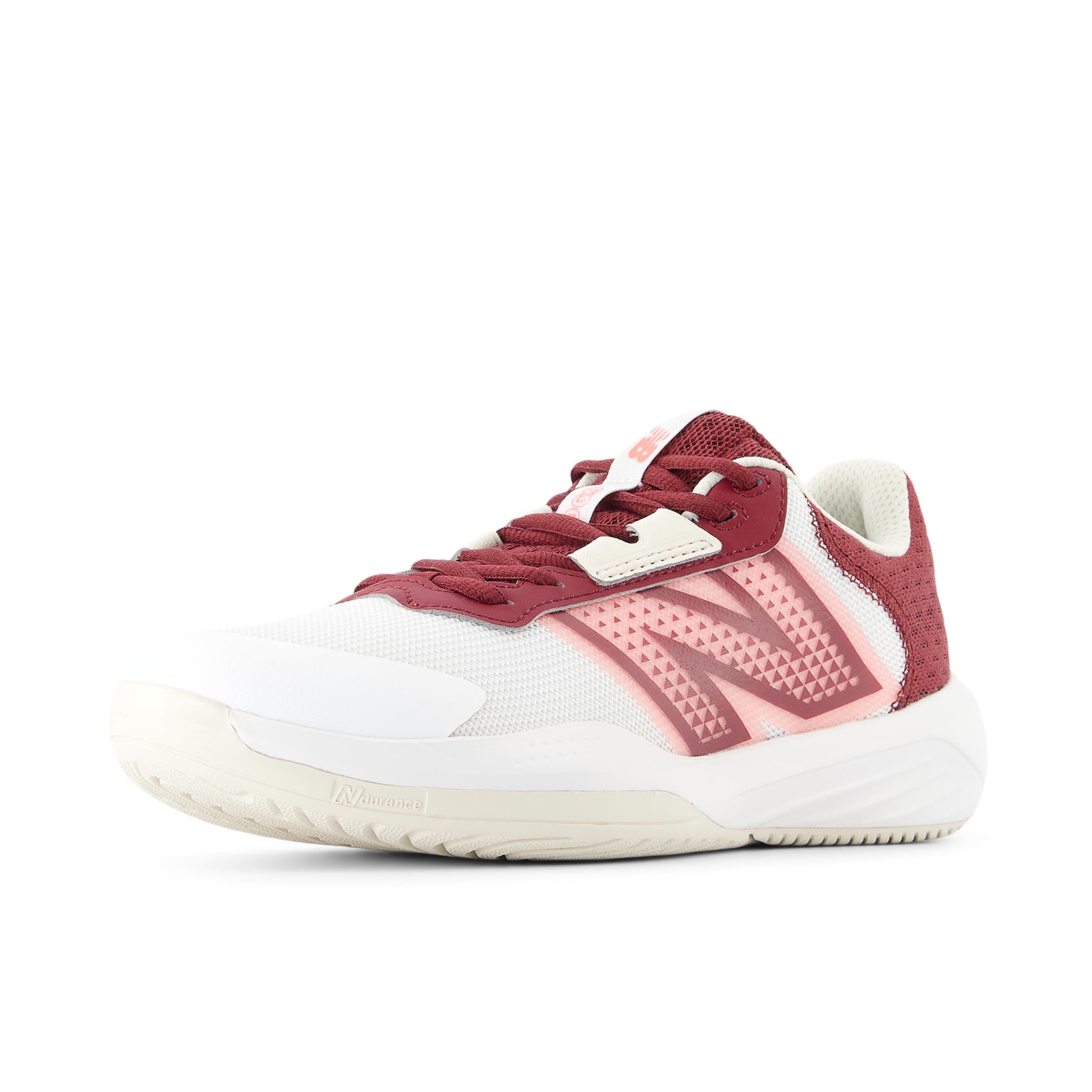
2. New Balance Womens 696 V6 Tennis Shoe
The reliable entry-level partner that lets you hit the court without spending a fortune.
This is the budget-friendly choice that still delivers where it counts. The leather upper gives it a traditional, sturdy feel that resists scuffs better than many mesh-only shoes at this level. Buyers rave about the grip on hard courts, calling it “splendid” for lateral movement, and the wide toe box is a huge plus for players with broader feet or those who wear orthotics. One player who uses them for 12-hour work shifts plus tennis reports they hold up beautifully, and a twice-a-week player loves how light and breathable they feel compared to white court shoes.
The fit is a genuine differentiator here. While some with wide feet found the “wide” width still too narrow, the shoe is a dream for narrow-to-medium feet — “my foot tends to be a bit narrow and this shoe fits perfectly,” one regular player says. Just know that arch support is minimal, so if you need a high arch, plan on swapping in your own insole.
Sturdy budget-friendly build: a ventilated, leather-reinforced design that weighs only 1.5 pounds and comes in a wide toe box that players with bunions or wider feet specifically praise. The trade-off is a break-in period — the first couple of games will feel tight until the leather softens.
Value seekers: you are starting out, play once or twice a week, and want a comfortable, breathable shoe at a friendly price.
Immediate comfort: you have genuinely wide feet — the wide option here still runs slightly narrow.
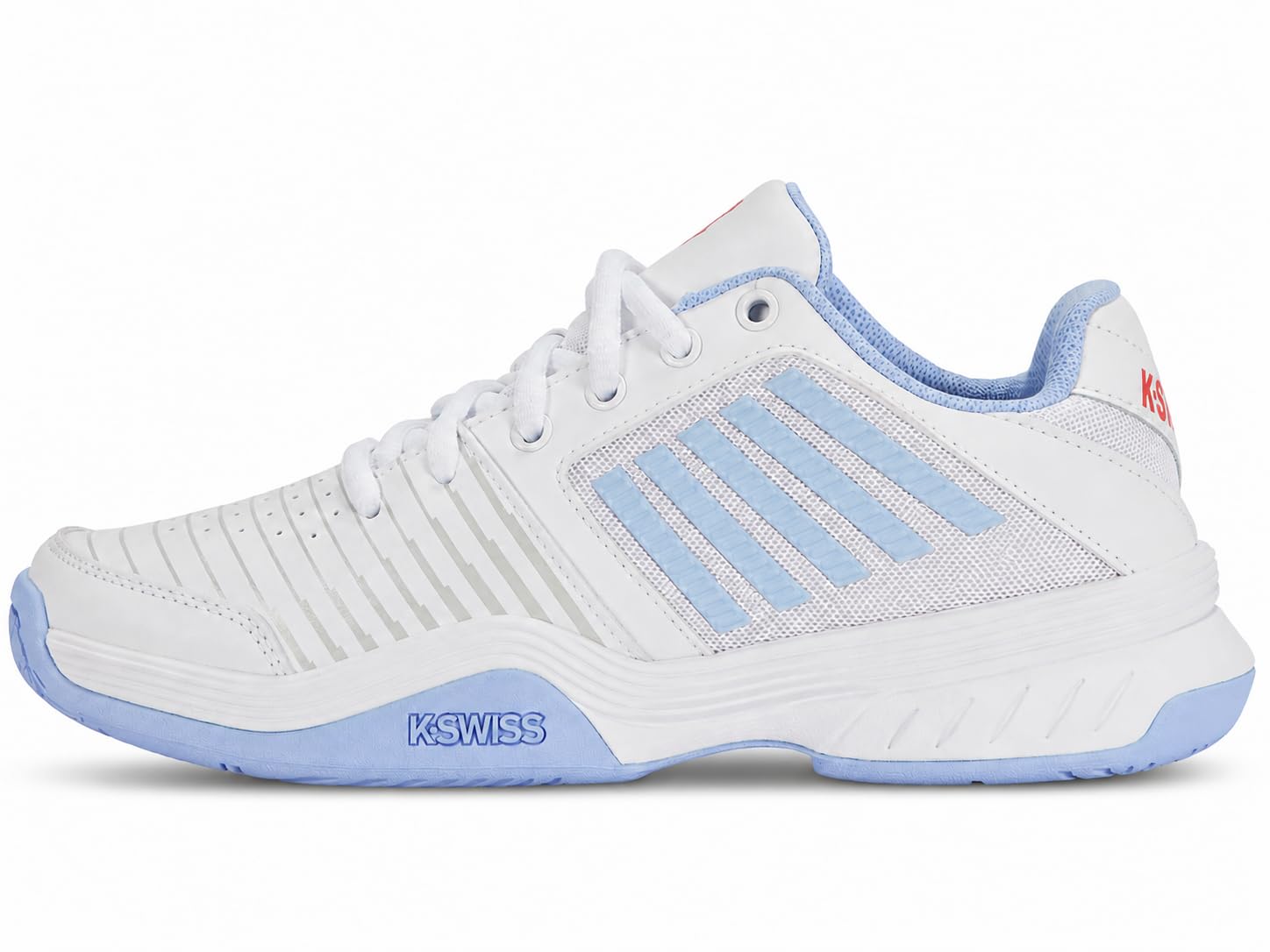
3. K-Swiss Women’s Court Express Tennis Shoe
The proven workhorse that frequent players lean on for its leather toughness and year-plus lifespan.
If you play five days a week, the Court Express is built for that kind of abuse. The AOSTA II high-density rubber outsole is K-Swiss’s signature dense compound, and buyers confirm it lasts about a year at that frequency. The leather upper resists the kind of scuffing and tearing that kills mesh shoes, and the shaped sole gives you solid traction on hard courts right from the start. Owners specifically praise the “sturdy” feel and the roomy toe area, with one handywoman wearing them all day on her feet for work.
The catch is the fit. K-Swiss recommends ordering one size larger than your usual size, and many buyers confirm this style runs small with a sleek, close-fitting silhouette. The shoe is also not the lightest in this list — it comes in at 2 pounds — and the leather makes it stiff for the first few wears. A minority of customers note the sole wearing through or the leather tearing at the little toe after several months, so if you drag your back foot aggressively, check the ASICS picks above for better toe protection.
Casual play: high-frequency play — five days a week, year after year, the leather and AOSTA outsole give you a dependable lifespan that mesh shoes cannot match.
Aggressive movers: you have narrow feet and want a true-to-size fit — size up at least half a size or expect a tight squeeze.
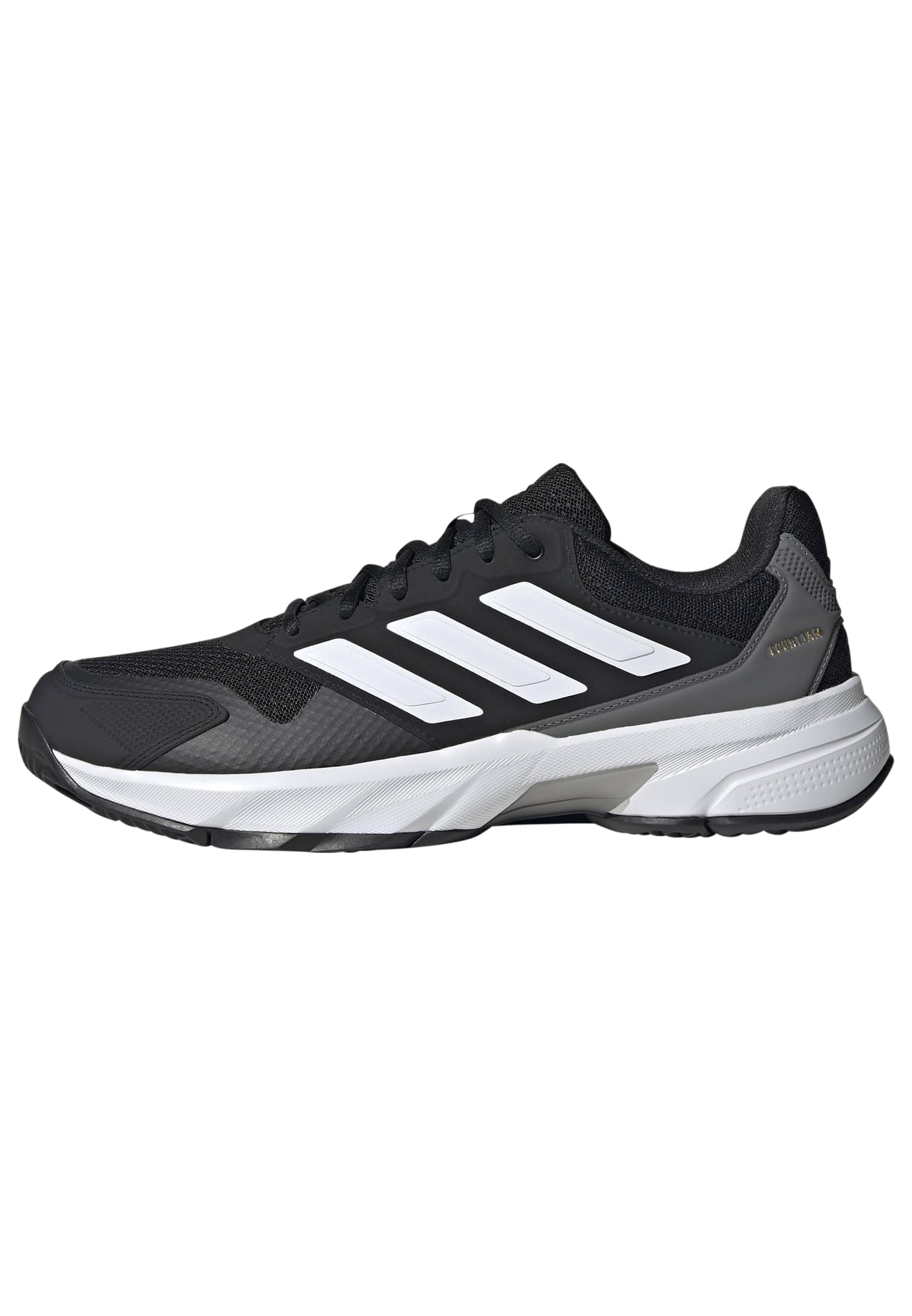
4. adidas Mens Courtjam Control 3 Tennis Sneakers Shoes – Blue
The anchor of the list for aggressive movers who drag their toes and need industrial-grade reinforcement.
The defining feature here is AdiTuff — a rubber wrap that covers the toe area specifically to protect against foot drag. The rear foot matches this with an Adiwear outsole designed for high-tempo hard court matches. Regular reviewers point out these hold up for 10 to 11 months playing three times a week, with one owner calling them “durable for 60 days of heavy hardcourt play.” The mesh upper is light and airy, so your feet breathe better than in the ASICS FlyteFoam 3, while the Bounce cushioning keeps landings soft.
At 2.43 pounds, this is the heaviest shoe in the list — the ASICS FlyteFoam 3 is 1.5 pounds. That weight comes from the dense rubber and the AdiTuff shield, so the trade-off is obvious: more protection, more weight. A few shoppers say toe pain from the square-ish toe box, and the stiffness is something you will notice before break-in. But for intermediate players who slice and drag, the stability and grip during side-to-side movement are tough to top.
Hard court durability
- AdiTuff toe wrap shields against serve drag and toe scuffs
- Adiwear outsole is a tough, dense compound for abrasive surfaces
- Breathable mesh upper keeps feet cooler than leather or solid synthetics
Heavy feel
- Heaviest pick here at 2.43 pounds — you will feel it late in a third set
- Spacious square toe box works for some but causes toe pain for others
Baseline grinders: you are an intermediate-to-advanced player who drags your toes on serves and wants a breathable shoe with visible reinforcement.
Quick changes: lightweight seekers or players with narrow feet who prefer a snug, racy fit.
5. WILSON Men’s Rush Pro Ace Tennis Shoes
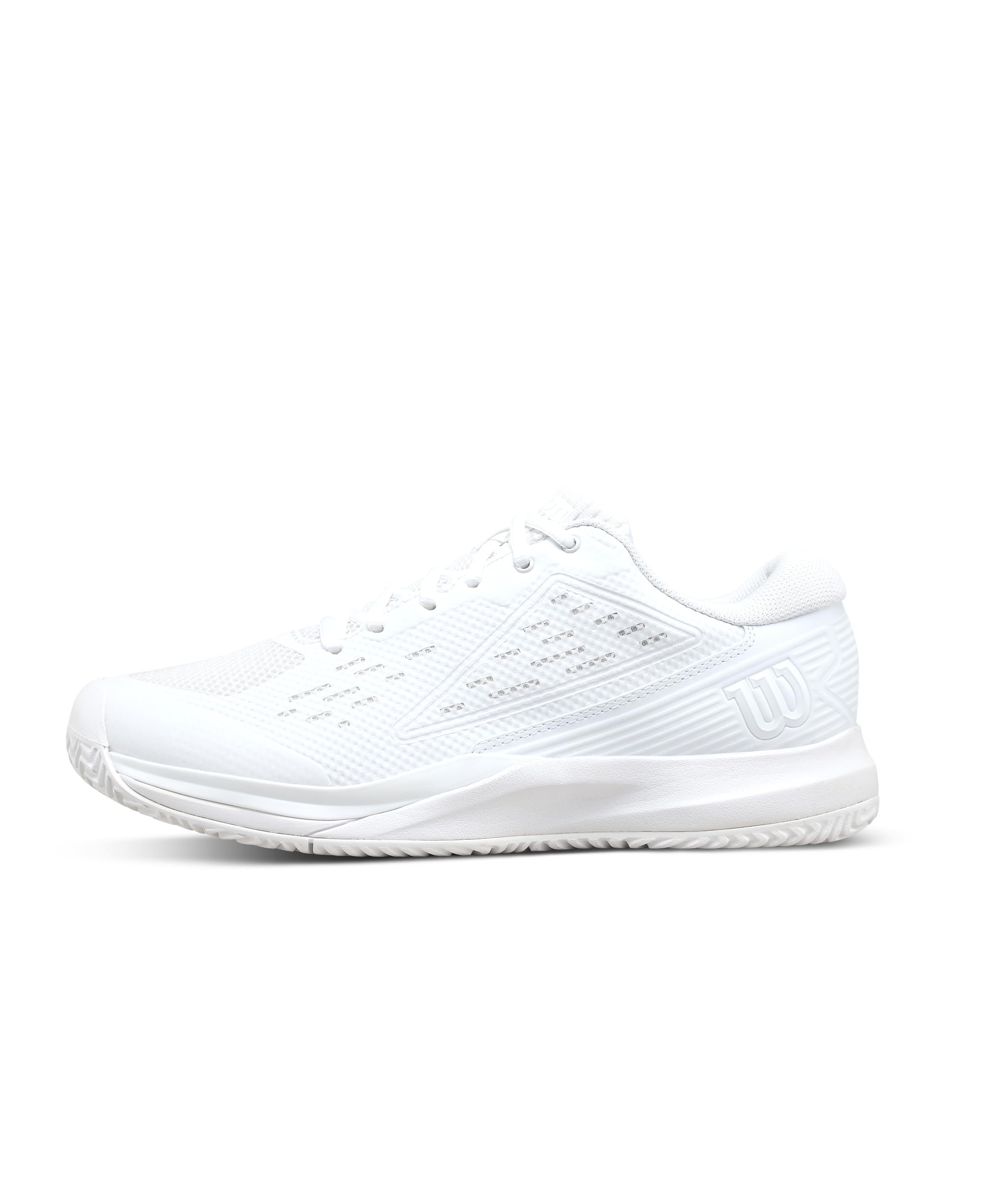
The spacious, stable pick designed for recreational players who value a roomy toe box and dependable lateral lockdown.
Wilson brought the best traits of its Rush Pro 3.0 and 3.5 into this Ace model — the same Duralast outsole and a more generous toe box. The 4D Support Chassis is an asymmetrical heel-to-toe frame that keeps your foot from rolling during lateral cuts, and buyers describe it as “perfect for pickleball” with proper cushion and no foot squishing. Comfort is the top praise by a large margin, with owners calling it the best pickleball shoe they have owned after trying Asics, Skechers, and K-Swiss.
The outsole is all-court Duralast, which provides excellent durability and traction on hard surfaces. Just be aware that the breathable mesh upper and EVA-based cushioning mean this shoe skews toward recreational use — a hard-playing 18-year-old wore through the sole before a full season. At its price point, though, the quality-to-value ratio wins over most buyers.
Stable lateral support
- 4D Support Chassis locks down lateral movement during cuts
- Spacious forefoot accommodates wider feet and orthotics
- Duralast outsole delivers strong grip and wear resistance on hard courts
Firm midsole
- Durability is mixed — heavy players may wear the sole down before a full season ends
Side-to-side players: if you play recreational tennis or pickleball 2-3 times a week and need a shoe that supports wider feet without feeling sloppy.
Cushion lovers: you are a high-intensity player who grinds on hard courts four times a week — the sole may wear faster than you want.
6. adidas Men’s Adizero Ubersonic 5 Tennis Shoes
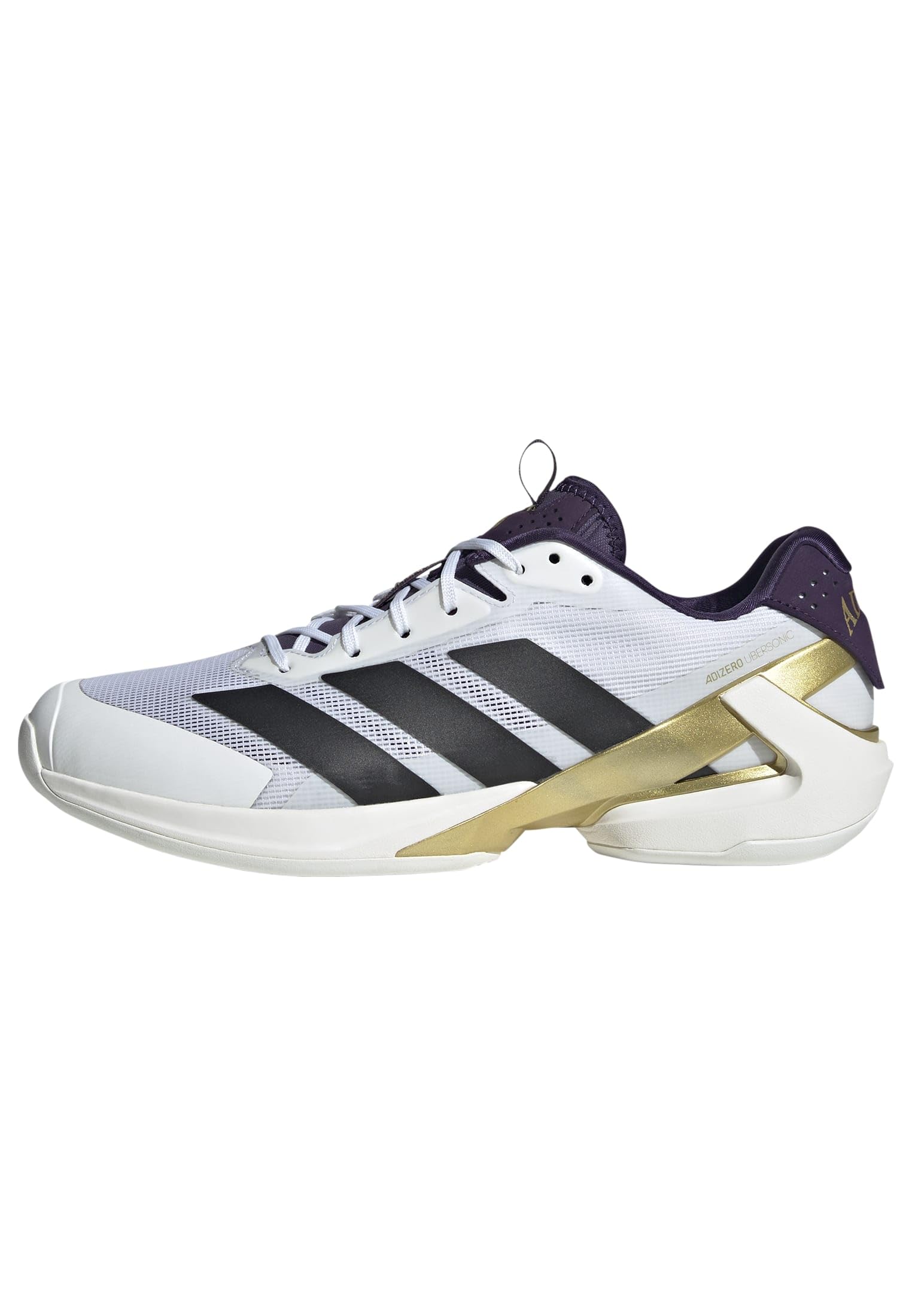
The nimble, fast-feeling pick that prioritizes agility over armor for speed-focused players.
The Ubersonic 5 is not about raw durability — it is about helping you move faster. The breathable mesh upper keeps your feet cool, and the Heel Lock Support holds your foot in place during explosive starts. Owners say it offers “great support and comfort” and that it feels “very stable and light” during play. The integrated tongue design prevents slippage, and buyers who play most days rotate two pairs at a time.
The trade-off is straightforward: this shoe is narrower than typical court models, especially in the toe box. A few buyers found them “very narrow and even tight on the top of the foot,” so plan on ordering a half size up if you have medium or wide feet. At 2.13 pounds (the Courtjam Control 3 is 2.43 pounds), it carries less toe drag protection — the prior version reportedly split at the instep crease after roughly three months of heavy use. The grip on clay is excellent, though, and the price puts it in a balance for players who want a fast shoe without spending for the top tier.
Tournament pace: speed-oriented players who prioritize quick footwork and a locked-in heel over maximum toe protection.
Long matches: you have wide feet or drag your front toes aggressively — this is a narrower fit with less toe armor.
7. Wilson Men’s Rush Pro 4.5 Tennis Shoes
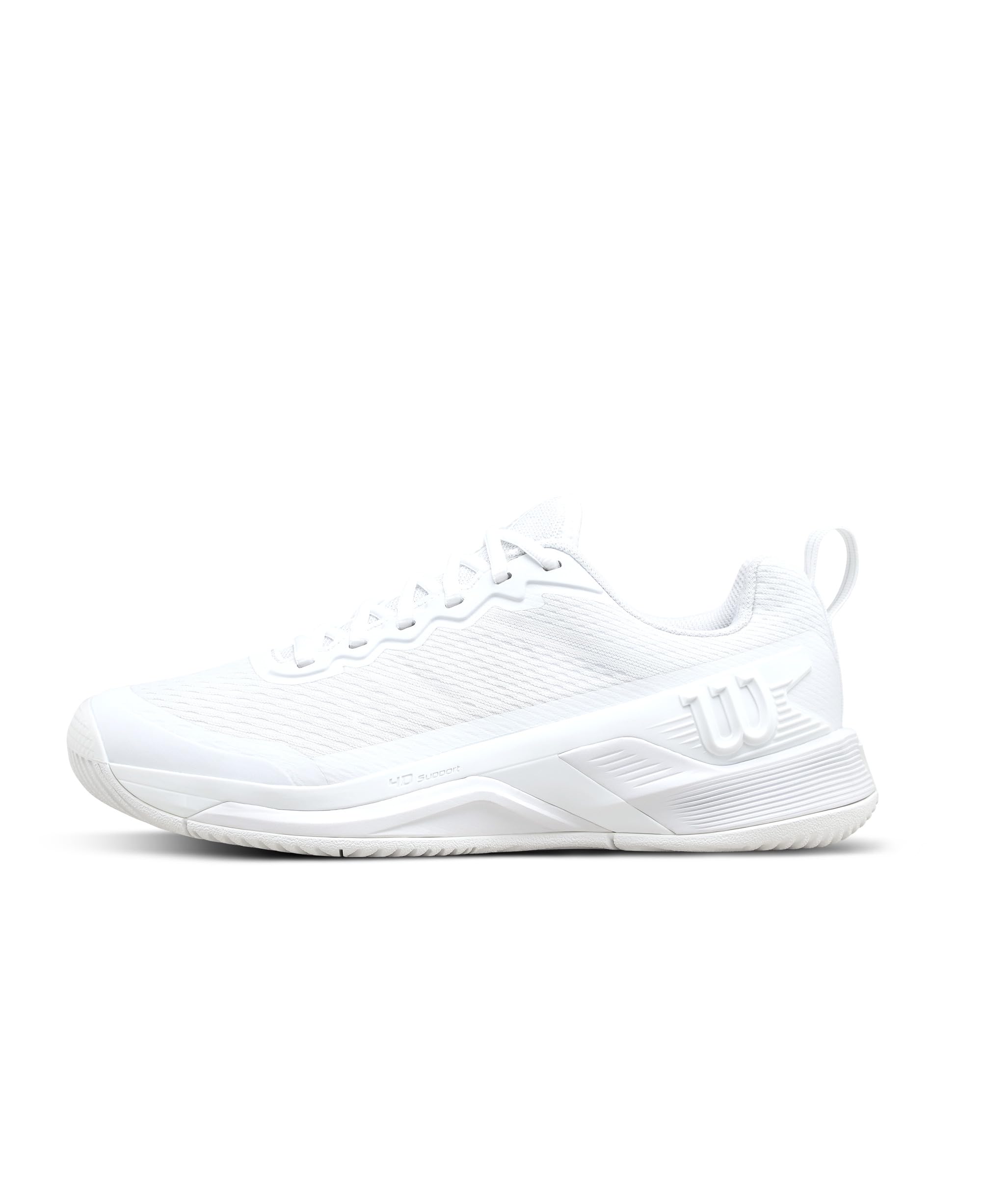
The precision-engineered package for powerful players who need lateral stability and a responsive, locked-in feel.
Wilson markets the Rush Pro 4.5 for “powerful players who want responsiveness, lateral stability and durability,” and the reviews back that up. Owners say it fits “narrow heel, wider toe” and offers excellent grip with almost no break-in period. The Duralast outsole provides fantastic traction on hard courts, and the stiffer construction gives you a confident platform for aggressive movements. Buyers using it for pickleball three days a week call it “true to size” and “comfortable” with good performance.
The main complaint is sole wear. A few buyers report the last two pairs wearing out in about six weeks each, which is a red flag if you play at high intensity. Others note the cushioning is not plush — you trade some softness for better court feel. If you are a lightweight recreational player, this shoe will likely last you many months. If you are a big mover who plays four times a week, budget for a replacement sooner.
Heel strikers: players with narrower heels who want a true-to-size fit, responsive grip, and a stable, stiff platform for hard courts.
Forefoot runners: you need deep cushioning or log heavy weekly hours — the sole can wear fast for frequent aggressive movers.
8. ASICS Men’s Gel-Resolution X Tennis Shoes
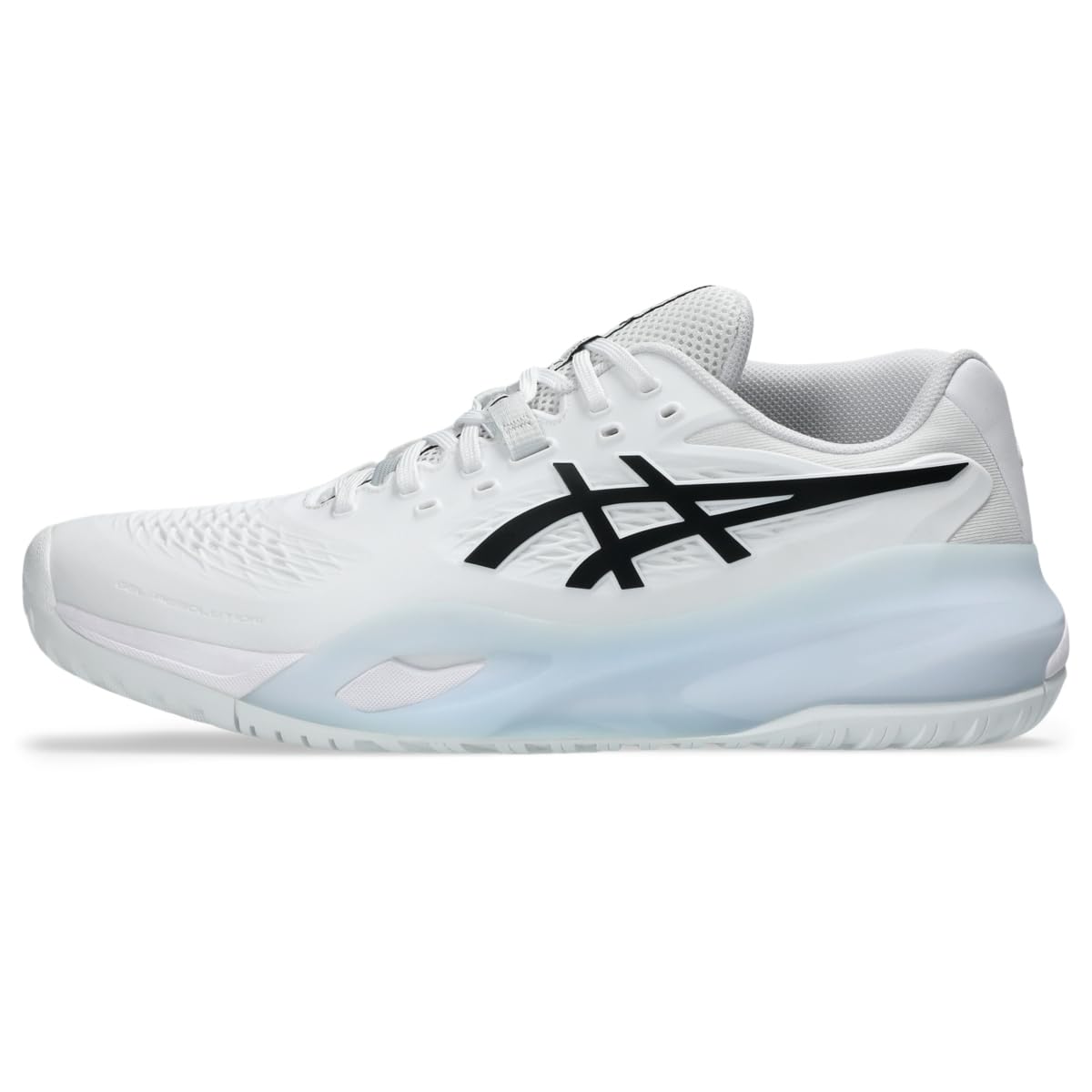
The premium baseline controller built for heavy use — stable, supportive, and designed to hold up over a year of regular play.
The Gel-Resolution X is the flagship stability shoe from ASICS, designed for players who control the game from the baseline. DYNAWALL technology extends into the heel for added stability during lateral movements, and DYNALACING holds tight when you need extra support during quick transitions. The two-piece midsole design improves stability on landing, which makes a difference when you are covering both sides of the baseline. Buyers confirm it lasts about a year with 6-8 hours of outdoor play per week, and it has a loyal following — one owner has bought it three times.
The main complaints are fit and weight. The shoe runs large, so sizing down is recommended, and the updated model has a higher ankle opening and stiffer feel than the previous Gel-Resolution 9. A minority of owners call it the “worst iteration of the Resolution line,” citing less cushioning and a slippery feel on hard court. The insole is also reportedly terrible and needs immediate replacement for most players. But for frequent players who value stability over plush comfort, the Gel-Resolution X still delivers serious court time.
Clay courters: you are a frequent outdoor player (4-8 hours a week) and want a stable, durable shoe that will last a year with proper care.
Wide sizes: you have a narrow foot and prefer the older Gel-Resolution 9 fit — this version runs wider and larger, and some owners feel the quality slipped.
Understanding the Specs
Outsole Rubber Compound
Tennis outsoles are not all the same. The rubber compound determines how fast the tread pattern wears down on abrasive hard courts. ASICS uses AHARPLUS (a dense carbon-rubber blend), K-Swiss uses AOSTA II, and Wilson uses Duralast — each designed to resist flat spots longer than budget rubber. If you see “standard rubber” without a brand name, expect faster wear on hard courts.
Toe and Heel Reinforcement (Drag Guard)
Most wear occurs at the toe (from your serve drag) and the heel (from your landing foot sliding). Reinforcements like adidas AdiTuff or ASICS PGUARD wrap rubber around these high-wear zones. A shoe without a dedicated drag guard will burn through faster if you drag your toes naturally during serves or forehands.
FAQ
How long should a pair of durable tennis shoes last on hard courts?
What is the difference between a tennis shoe and a running shoe for court durability?
Do I need a six-month outsole warranty?
What is a toe drag guard and do I need one?
What does the weight of a tennis shoe affect on the court?
Can I use durable tennis shoes for pickleball?
Why do my tennis shoes wear out at the big toe area specifically?
Should I size up in tennis shoes for hard court play?
What is the difference between EVA and gel cushioning in tennis shoes?
Are leather uppers more durable than mesh uppers for tennis?
Final Thoughts: The Verdict
For the majority of shoppers, the best overall pick is the ASICS Court FlyteFoam 3 because it combines a lightweight build (1.5 pounds) with dedicated toe and heel reinforcement (PGUARD) and the densest outsole compound ASICS makes (AHARPLUS), all backed by more than 500 owners. If you want maximum toe drag protection and a breathable mesh upper, grab the adidas Courtjam Control 3. And for high-frequency players who need a leather upper and a proven year-plus lifespan, the K-Swiss Court Express is the one to reach for.
How We Picked
We do not accept paid placement. Every pick is matched to a real buyer and a real use-case; we do not hands-on test units.
Sources & Methodology
Specifications: manufacturer listings and product documentation. Review insights: verified customer reviews, as of July 2026. Pricing: not shown on this page (it changes often); check the current price via the retailer link.
As an Amazon Associate, WellFizz earns from qualifying purchases. This does not affect which products we feature.
Related Guides

Mo Maruf
I created WellFizz to bridge the gap between vague wellness advice and actionable solutions. My mission is simple: to decode the research and give you practical tools you can actually use.
Beyond the data, I am a passionate traveler. I believe that stepping away from the screen to explore new environments is essential for mental clarity and physical vitality.