Our readers keep the lights on and my smoothie glass nicely filled. As an Amazon Associate, I earn from qualifying purchases.
Specs are compiled from manufacturer listings and verified buyer reviews and can change over time — please confirm the key details on the product page before buying.
Juggling a work line and a personal line without carrying two phones is the whole reason you are looking for a dual SIM phone. The challenge is finding a model that maintains stable dual connections, delivers all-day battery life, and stays within budget without sacrificing display or camera quality.
I’m Mohammad Maruf — the founder and writer behind WellFizz. This guide is built by comparing the manufacturers’ published specifications and the patterns across verified customer reviews, so you get each pick’s real strengths and trade-offs instead of marketing spin.
if you need a rugged workhorse or a flagship camera system, the right best dual sim phone depends on matching network bands to your carrier and battery size to your daily routine.
Our Picks at a Glance


How To Choose The Best Dual SIM Phone
Dual SIM implementations vary widely across open up phones. Some give you two physical nano SIM trays, some combine one physical slot with an eSIM, and a few make you choose between a second SIM and expandable storage. Your carrier determines which dual SIM configuration works, so verify supported bands before purchasing.
Dual SIM Configurations
You will see phones with dual nano-SIM slots, which let you pop in two physical cards from different carriers. Others use one physical nano SIM plus an eSIM (a digital SIM you download). A handful of models allow both nano SIMs and an eSIM, so you can run three lines if needed. The trade-off is that some phones with a shared slot force you to pick between a second SIM and a microSD card for extra storage.
Carrier Compatibility and Network Bands
open up phones are not universally compatible with all US carriers. T-Mobile and its MVNOs (Mint Mobile, Tello, Metro) generally work best with international models. AT&T requires specific LTE and 5G bands (like B12 and n5). Verizon is the trickiest — many open up phones lack CDMA support and need the IMEI manually whitelisted by Verizon before they will work. Always cross-reference the phone’s band list with your carrier’s required bands.
Battery Capacity and Dual SIM Drain
Running two SIMs simultaneously drains battery faster than a single line because the phone maintains two separate radio connections. A battery of at least 5000mAh is the practical starting point for all-day dual SIM use. Phones with capacities above 8500mAh or even 22000mAh can last multiple days of heavy use or serve as a portable power bank for other devices.
Software Updates and Bloatware
Clean Android skins such as Nothing OS and Motorola’s near-stock interface minimize bloatware and deliver faster updates. Xiaomi and Samsung skin their phones with extra features but also include some bloatware you may want to remove. Manufacturer upgrade commitments vary: Samsung promises up to 7 major Android upgrades on flagships, while budget brands often stop after one or two.
Quick Comparison
| Model | Best For | Battery | Display | Storage/RAM | Amazon |
|---|---|---|---|---|---|
| Xiaomi Poco X8 Pro Max★ Best Overall | Max battery & speed | 8500mAh | 6.83″ 120Hz AMOLED | 512GB / 12GB | Amazon |
| Nothing Phone (3)Nothing (3) Flagship | Premium design & quad cameras | 5150mAh | 6.67″ 120Hz AMOLED | 256GB / 12GB | Amazon |
| Samsung Galaxy S23 UltraValue Flagship | S Pen & proven flagship | 5000mAh | 6.8″ 120Hz AMOLED | 256GB / 8GB | Amazon |
| Motorola Moto G86 | Value & everyday use | 5100mAh | 6.67″ P-OLED | 256GB / 8GB | Amazon |
| Xiaomi Redmi Note 14 Pro | 200MP camera value | 5500mAh | 6.67″ 120Hz AMOLED | 256GB / 8GB | Amazon |
| Ulefone Armor X16 Pro | Rugged & extreme battery | 10360mAh | 6.56″ 120Hz HD+ | 256GB / 16GB | Amazon |
| MMY 16PROMA X | Monster battery & dual SIM | 22000mAh | 6.99″ HD+ OLED | 32GB+1TB / 12GB | Amazon |
| Samsung Galaxy A56 5G | Samsung quality & AI | 5000mAh | 6.7″ 120Hz AMOLED | 256GB / 8GB | Amazon |
| Motorola Edge 2025 | Flagship feel, mid price | 5200mAh | 6.7″ Super HD (1220p) | 256GB / 8GB | Amazon |
| Nothing Phone (4a) Pro | Unique design & zoom camera | 5080mAh | 6.83″ 144Hz AMOLED | 256GB / 12GB | Amazon |
In‑Depth Reviews
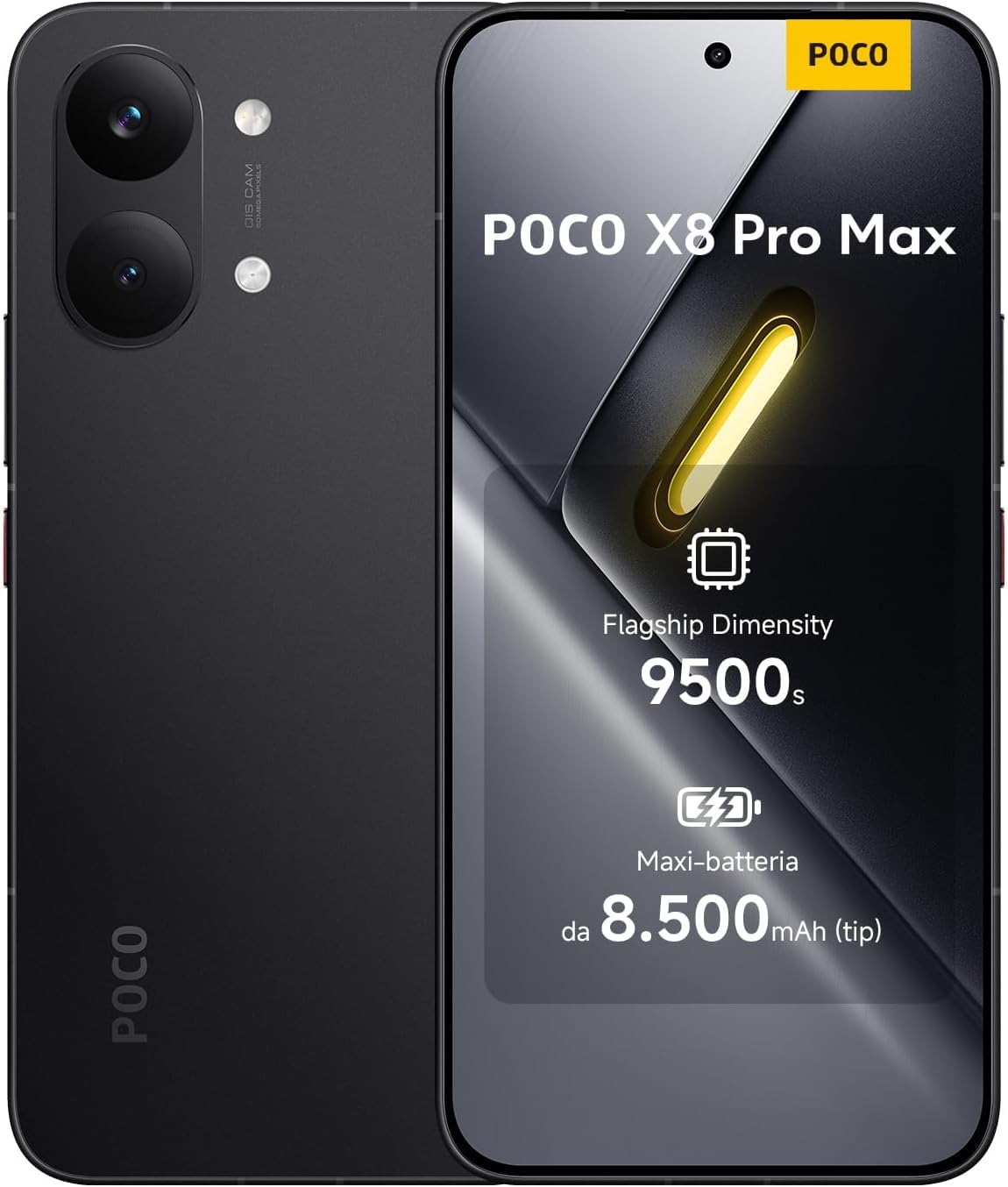
1. Xiaomi Poco X8 Pro Max 5G
Our pick — over 4.5★ from 350+ verified ratings; the strongest balance of quality and price.
The dual SIM phone that laughs at power banks — 8500mAh is massive, even among flagships.
This phone ends battery anxiety for good. The 8500mAh cell lasts more than two full days of heavy use, as owners consistently report, and the 100W HyperCharge can refill it in a matter of minutes. That is a 67% larger capacity than the Motorola G86, which means you leave the house without the charging cable more often.
The 6.83-inch 1.5K 120Hz AMOLED display peaks at 3500 nits, so text and video stay readable even under direct sunlight. The MediaTek Dimensity 9500 chip combined with 12GB of RAM handles demanding games without hesitation. Dual SIM works with nano SIM plus nano SIM or nano SIM plus eSIM — just note there is no microSD slot, so the 512GB storage is your only space. The phone works on T-Mobile and its MVNOs like Mint and Tello; AT&T may require checking specific bands, and Verizon is not recommended.
What the reviews pages sum up: “Flagship at half the price.” The main trade-off is that the included wall adapter was missing for some buyers, so you may need a separate 100W charger right away. The camera is good but not top-tier compared to a Galaxy S23 Ultra. Also, eSIM setup failed for a few users, so a physical SIM is the more reliable path for the second line.
Why this wins
- Enormous 8500mAh battery — easily two days with one line, closer to three with moderate use
- Blazing 100W wired charging, plus 27W reverse charging for other devices
- Stunning 6.83″ 120Hz AMOLED with 3500-nit peak brightness and Dolby Vision
- 512GB storage and 12GB RAM keep the MediaTek Dimensity 9500 running smooth
Realities to know
- No microSD expansion — the 512GB is all you get
- eSIM can be finicky; some buyers report it never activated
- Charger brick may not ship with every unit, despite the listing
Your move if: You want the longest battery life of any mainstream dual SIM phone and do not need expandable storage.
Look elsewhere if: You rely heavily on eSIM and want guaranteed carrier support on AT&T or Verizon.
2. Nothing Phone (3)
Four 50MP cameras and a light-up Glyph interface that turns notifications into art.
Nothing Phone (3) stands out with a clean, almost stock Android experience on Nothing OS, paired with the Snapdragon 8s Gen 4 chip. The 6.67-inch FHD+ AMOLED display hits 4500 nits peak brightness and runs at 120Hz. Owners praise the “clear and responsive” performance and the camera system that captures natural tones with good dynamic range. The 5150mAh battery easily lasts a full day of mixed use, and owners mention 4-5 hours of screen time with 80% charge.
Dual SIM uses two physical nano SIM slots — no eSIM here. The phone supports AT&T and T-Mobile bands well, but Verizon compatibility is limited and requires IMEI whitelisting. Owners love the customization options and amazing sound quality. The build is premium with an IP68 rating, meaning it survives submersion in water.
What wins people over is the unique design and the clean software free of bloatware. A few owners noted some early call static that was fixed by an update, and the top speaker can hiss at high volume. The lack of eSIM may be a dealbreaker if you want to add a second line without a physical card.
What makes it special
- Unique transparent design with customizable Glyph Matrix lighting
- Snapdragon 8s Gen 4 chip delivers flagship speed with Android 15
- All four 50MP lenses produce sharp images with natural color science
- IP68 dust and water resistance for real confidence
What to watch for
- No eSIM support — dual SIM requires two physical nano SIMs
- Verizon compatibility is limited and needs IMEI whitelisting
- Accessories like cases are harder to find compared to Samsung or Apple
For the design lover: If you value visual uniqueness, a clean OS, and capable 50MP quad cameras, the Nothing Phone (3) delivers a flagship feel for less than the S25 Ultra.
skip it if: You need eSIM functionality or a phone that works simply with Verizon without extra steps.
3. Samsung Galaxy S23 Ultra 5G
The previous-gen king that still shoots 200MP photos and writes with an S Pen.
Even a generation old, the S23 Ultra holds its own against newer releases. The 200MP main sensor captures incredible detail, and the 10MP telephoto with 3x optical zoom plus a 10MP periscope with 10x optical zoom gives you a versatile range for portraits and wildlife. The 6.8-inch 120Hz AMOLED display is sharp at 500 PPI, and the S Pen lets you take notes on the lock screen without open up the phone. Owners call it “durable” and say the “battery lasts a long time” — the 5000mAh cell comfortably gets through a full day.
Dual SIM uses two physical nano SIMs plus an eSIM, though only two can be active at once. That makes it great for separating work and personal lines or adding a travel eSIM. The Snapdragon 8 Gen 2 chip still flies through apps and games, and Samsung’s One UI is polished. The catch is the international model: it works best on AT&T and T-Mobile, but Verizon users need to check bands and may lack 5G. There is no US warranty, and a few owners mention the lack of Wi-Fi calling support on this version. The price, however, drops significantly from the original MSRP, giving you flagship hardware for mid-range money.
Battery life and camera quality are the two things owners mention most. The camera takes great pictures quickly, and the S Pen adds a productivity layer no other phone here matches. If you can handle the US carrier caveats, this is a phenomenal value.
Still a heavy hitter: The 200MP camera, S Pen, and 10x optical zoom remain rare features — even newer phones rarely offer all three. The 5000mAh battery with 44 hours of talk time supports the all-day claim. Just know that Verizon support is partial, and the international warranty situation means you rely on the seller for support.
Buy it for: The best camera zoom range and S Pen productivity of any dual SIM phone near this price.
Pass on it if: You need smooth Verizon 5G or a local US warranty for confidence.
4. Nothing Phone (4a) Pro
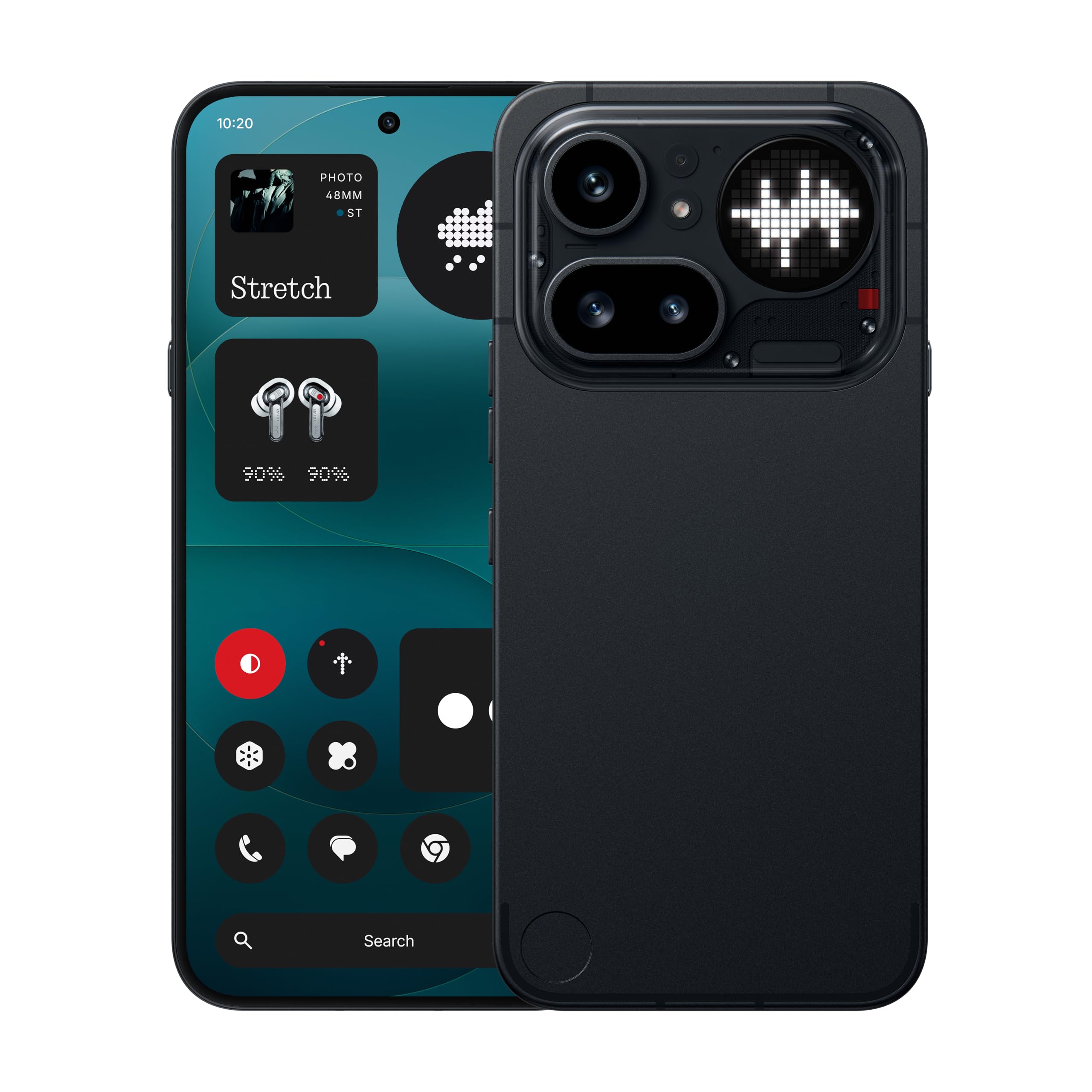
A periscope zoom lens in a mid-range body — 3.5x optical, 140x digital reach.
Nothing Phone (4a) Pro brings a rare periscope telephoto to a more affordable price tier. The 50MP Sony main sensor with OIS pairs with a 50MP periscope that delivers up to 140x ultra zoom. That means you can grab detailed shots of distant subjects — stage photos, mountain peaks, street signs — that other phones at this price simply miss. The 6.83-inch 144Hz AMOLED display is the smoothest in this list, with a 5000-nit peak brightness that stays legible in harsh sunlight.
Dual SIM uses two physical nano SIM slots, and the battery is a 5080mAh unit that owners say easily lasts all day. The Snapdragon 7 Gen 4 processor is fast enough for social media and 4K video editing, though heavy gamers may want more GPU power. The Nothing OS 4.1 based on Android 16 is clean and bloat-free. Buyers rave about the “customizable Glyph interface” and the build quality — an aluminum unibody that feels premium. Over 148 owners give it 4.4 stars, with quality and camera quality being the most-praised aspects.
The catch: Verizon compatibility is limited and not recommended by Nothing. The phone also lacks wireless charging. And at 144Hz, the screen can drain the battery faster if you leave it at max refresh rate. For T-Mobile and AT&T users, this is a compelling mid-range pick with genuine zoom capability.
Zoom advantage
- 50MP periscope telephoto with 3.5x optical and 140x ultra zoom
- 144Hz refresh rate on a 6.83″ 5000-nit AMOLED — smooth and bright
- Aluminum unibody feels premium in hand
- 5080mAh battery with 50W fast charging hits 60% in 30 minutes
What is missing
- No wireless charging support
- Verizon support is limited and requires IMEI whitelisting
- Snapdragon 7 Gen 4 is mid-tier — not for heavy 3D gaming
Ideal for: Photography enthusiasts on a mid-range budget who need genuine optical zoom without spending flagship money.
Not for you if: You are on Verizon or want wireless charging convenience.
5. Motorola Moto G86 Dual-SIM
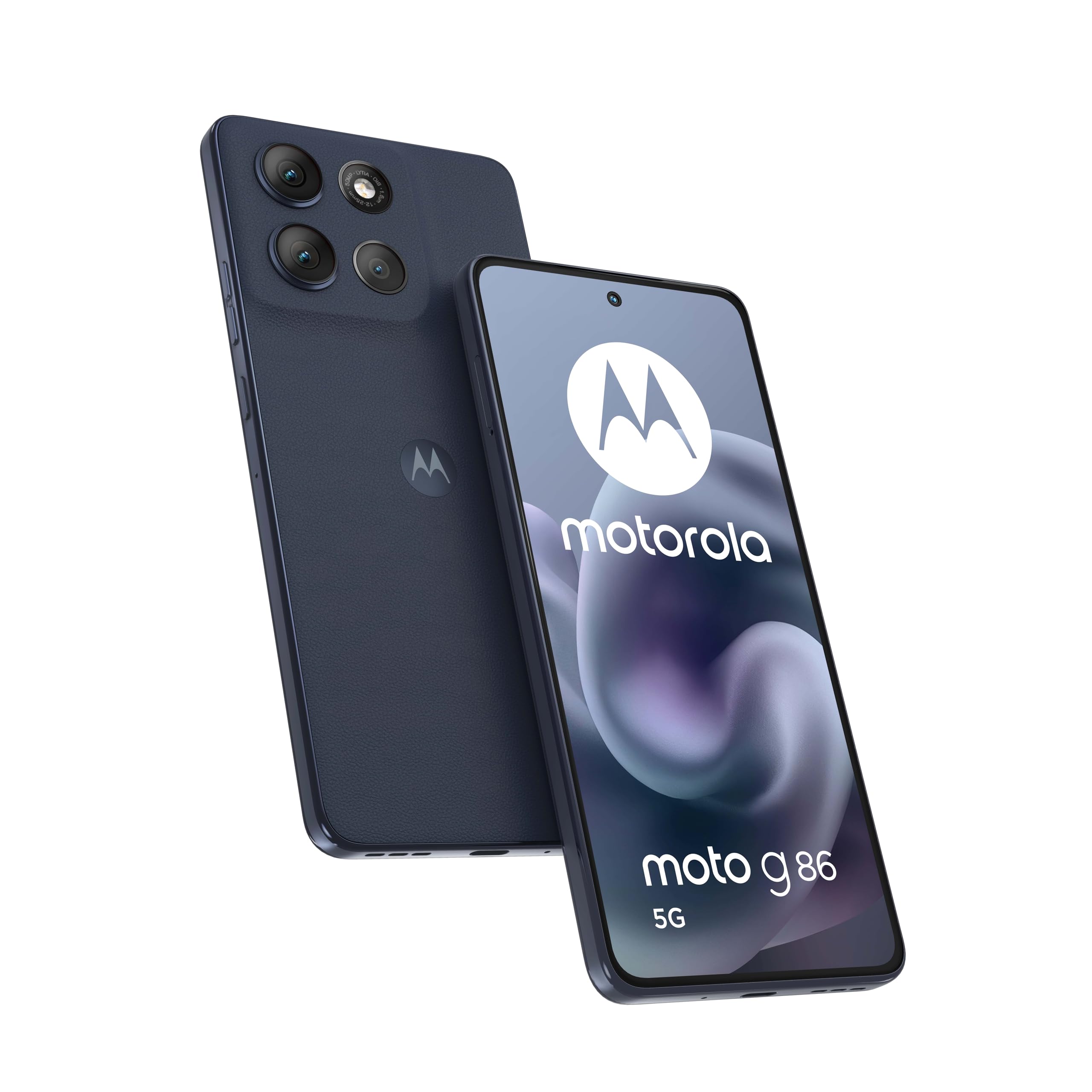
A clean Android experience with a P-OLED screen and dedicated microSD slot — at a price that is tough to top.
Motorola G86 is built for someone who just wants reliable dual SIM without paying for features they will not use. The 6.67-inch P-OLED display shows 1 billion colors and runs at 2712 x 1220 resolution — crisp enough for video streaming and everyday reading. Under the hood, the MediaTek Dimensity 7300 chip and 8GB of RAM handle social apps and navigation smoothly. The 256GB storage is ample, and the dedicated microSDXC slot means you can add even more space without sacrificing the second SIM.
The 5100mAh battery keeps you going all day. Customers note: “Battery lasts all day on light use, ~14hrs heavy use (80% charge cap).” That real-world feedback matches the spec sheet. The 50MP rear camera with OIS captures decent photos in good lighting, and the 32MP selfie camera is solid for video calls. The phone runs Android 15 with Motorola’s light software layer — nearly stock, minimal bloat. Over 826 owners give it 4.3 stars, with quality and value for money being the top praise points.
The honest trade-off is the speaker. Owners call it “terrible” — notification sounds are inconsistent, and music lacks depth. The stereo speaker setup disappoints. If you listen to lots of music or podcasts on the phone speaker, this is a real drawback. But if you use headphones or a Bluetooth speaker, the G86 is an outstanding budget-friendly dual SIM option.
Practical and affordable: Dual SIM with a dedicated microSD slot is rare at this price. The P-OLED screen is a genuine step up from typical LCDs in this tier. The 256GB internal storage plus expandability means you will rarely run out of space. Just budget for headphones or a small Bluetooth speaker to bypass the built-in audio.
Grab it when: You want a dependable open up dual SIM phone with great battery life and clean software, without overspending.
Look past it if: You regularly listen to music or podcasts through the phone’s speaker.
6. Xiaomi Redmi Note 14 Pro 5G
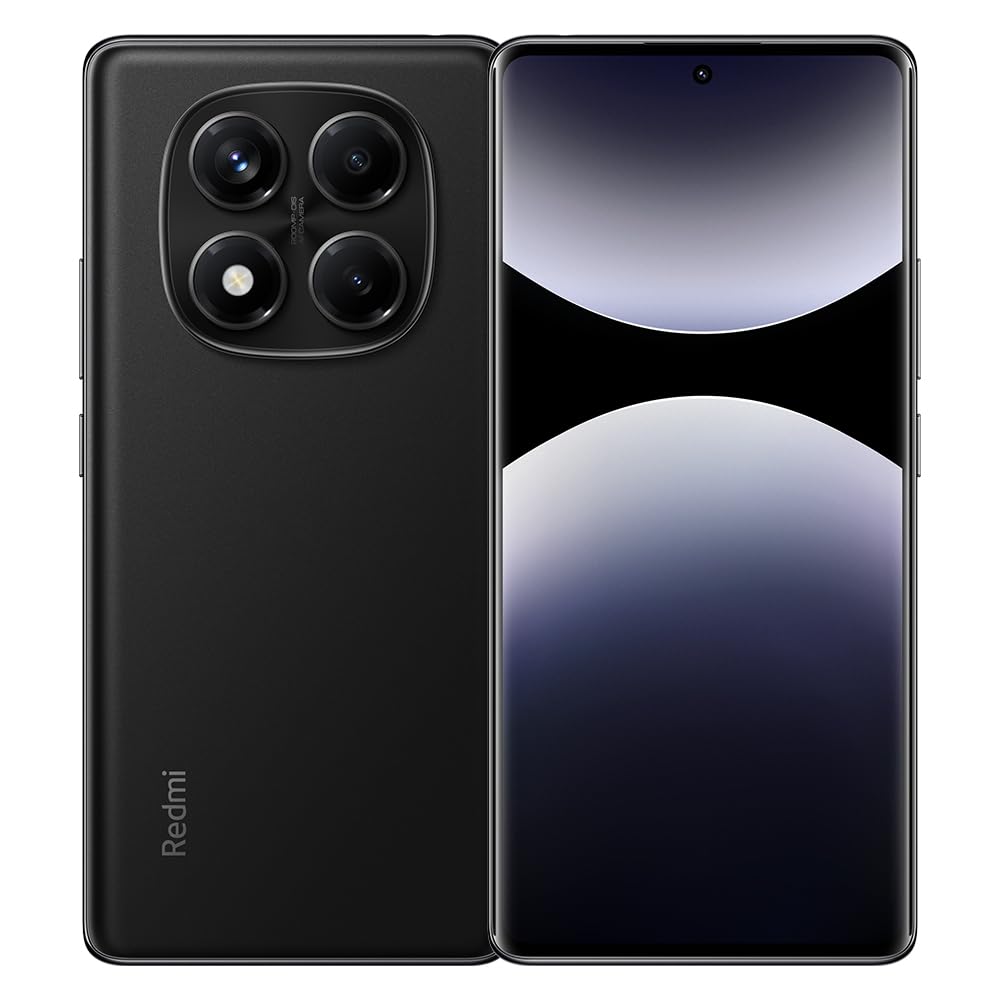
A 200MP main sensor for under — resolution that rivals phones costing three times as much.
The Redmi Note 14 Pro 5G is a camera-first value phone. Its 200MP main sensor with OIS uses 16-in-1 pixel binning to create large 2.24µm pixels, which means night shots come out brighter and sharper than most phones at this price point. The 6.67-inch CrystalRes AMOLED display (2712 x 1220) runs at 120Hz and peaks at 3000 nits, making HDR content look punchy even in bright rooms. Owners call the screen “vivid crystal” and say the camera captures “hi-res photos.”
The 5500mAh battery supports the 200MP camera through a full day of shooting and browsing. The MediaTek Dimensity 7300-Ultra chip handles everyday tasks smoothly. Dual SIM uses two nano SIM slots, but there is no microSD slot — so the 256GB storage is all you get. The phone runs Android 15 with Xiaomi’s HyperOS, which adds useful features like Circle to Search with Google. The 20MP front camera with soft-light ring takes solid selfies even in dim conditions.
The catch is the performance has drawn mixed feedback — some reviewers point out it works perfectly, while others note occasional lag. Battery life also gets mixed reviews, with one customer saying it started to fail. The included case is basic, and the phone feels very light, which some interpret as less premium. But at this price, the 200MP camera and AMOLED display are class-leading.
Photo powerhouse
- 200MP main camera with OIS and 16-in-1 pixel binning
- Bright 6.67″ 120Hz AMOLED with 3000-nit peak brightness
- 5500mAh battery with 45W fast charger included in the box
- Dual SIM with reliable T-Mobile/Mint/Tello support
Consider these
- No microSD slot — 256GB is not expandable
- Performance and battery life draw mixed feedback from owners
- Plastic build feels less substantial than glass-backed phones
Choose this for: The 200MP camera resolution and AMOLED display on a tight budget — you get flagship-level photo detail for mid-range money.
Pass on it if: You need the smoothest everyday performance or expandable storage.
7. Samsung Galaxy A56 5G 2025
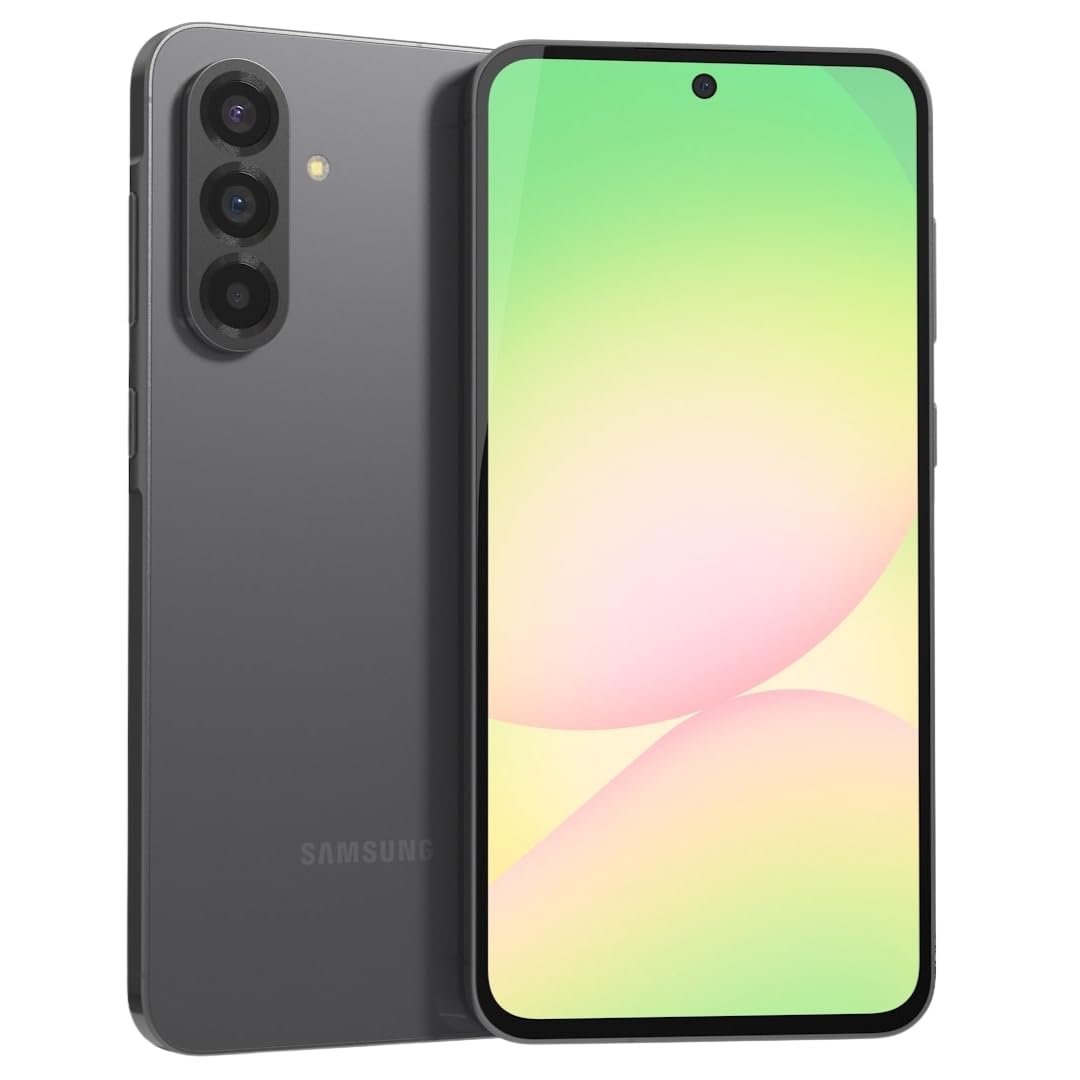
Samsung’s mid-range AI phone that brings One UI 7 and IP67 water resistance to the dual SIM crowd.
Samsung Galaxy A56 5G balances premium features with a mid-range price. The 6.7-inch Super AMOLED display runs at 120Hz with HDR10+, and the 50MP main camera (f/1.8) plus 12MP ultrawide covers most shooting scenarios well. Owners describe the battery as “long lasting” and say it “lasts quite a while.” The 5000mAh cell comfortably gets through a full day, and the included 25W charger can top it up quickly.
Dual SIM uses two physical nano SIM slots — no eSIM on this model. The Exynos 1580 chip (4nm) is paired with 8GB of RAM and 256GB of storage, but there is no SD card slot, so manage your files carefully. The phone has an IP67 rating, meaning it survives splashes and brief submersion in fresh water. Samsung promises up to 6 major Android upgrades, which is excellent for a mid-range device. The device works on AT&T and T-Mobile, but not with some MVNOs like Xfinity or Spectrum.
What owners praise most is the build quality and snappy performance. The 12MP front camera is good for selfies, and the One UI 7 interface is polished. The lack of an SD card slot and eSIM are the biggest practical drawbacks. If you want a Samsung ecosystem device with water resistance and a clean dual SIM setup, this is a strong contender.
Solid Samsung mid-ranger: The IP67 water resistance and 6 major OS upgrades are rare at this price. The 120Hz AMOLED display is bright and smooth. Just note the missing eSIM and microSD slot — you get two physical SIMs and 256GB of locked storage.
Ideal if: You want a water-resistant Samsung with long software support and do not mind using two physical SIMs.
pass on it if: You need eSIM capability or expandable storage for media files.
8. Motorola Edge 2025

68W charging that fuels a 5200mAh battery in minutes — plus military-grade drop protection.
Motorola Edge 2025 is the phone for people who break phones. It meets MIL-STD-810H military standards for drop resistance, uses Corning Gorilla Glass 7i (2x stronger than standard), and carries an IP68/IP69 rating — meaning it survives fresh water immersion and high-temperature water jets. The quad-curved design with a soft-touch finish feels expensive, but the real story is the battery system. The 5200mAh cell lasts “more than 24 hours” per owners, and the 68W TurboPower charger can give you 12 hours of battery life in just 6 minutes of charging (with the sold-separately TurboPower charger).
The 6.7-inch Super HD (1220p) display with Dolby Atmos sound is great for media consumption. The 50MP pro-grade camera system with moto ai handles photo processing intelligently, and owners say it takes “great photos.” The MediaTek Dimensity 7400 chip is snappy enough for multitasking and light gaming. Dual SIM uses two physical nano SIM slots. The phone is open up and works on all major US carriers, including Verizon, AT&T, and T-Mobile — a rare advantage over many international models here.
Owners note the display is bright and clear, and the included 68W charger is not in the box, so you need to buy one separately for the fastest speeds. A few users report bloatware and ad notifications. Also, there is no microSD slot and no headphone jack. For the price, the combination of military-grade durability, IP69 water resistance, and blazing 68W charging is class-leading.
Built tough
- MIL-STD-810H drop protection and IP68/IP69 water/dust resistance
- 5200mAh battery with 68W TurboPower — 12 hours in 6 minutes
- Works on Verizon, AT&T, and T-Mobile without any whitelisting
- Quad-curved 1220p display with Dolby Atmos sound
Downsides
- 68W charger sold separately — only a standard cable in the box
- No microSD expansion or headphone jack
- Bloatware and ad notifications frustrate some owners
For the active user: The Edge 2025 survives a drop, a dunk, and still charges fast enough to get you through the day in minutes.
Not if: You need a headphone jack, expandable storage, or do not want to buy a separate 68W charger.
9. Ulefone Armor X16 Pro 5G
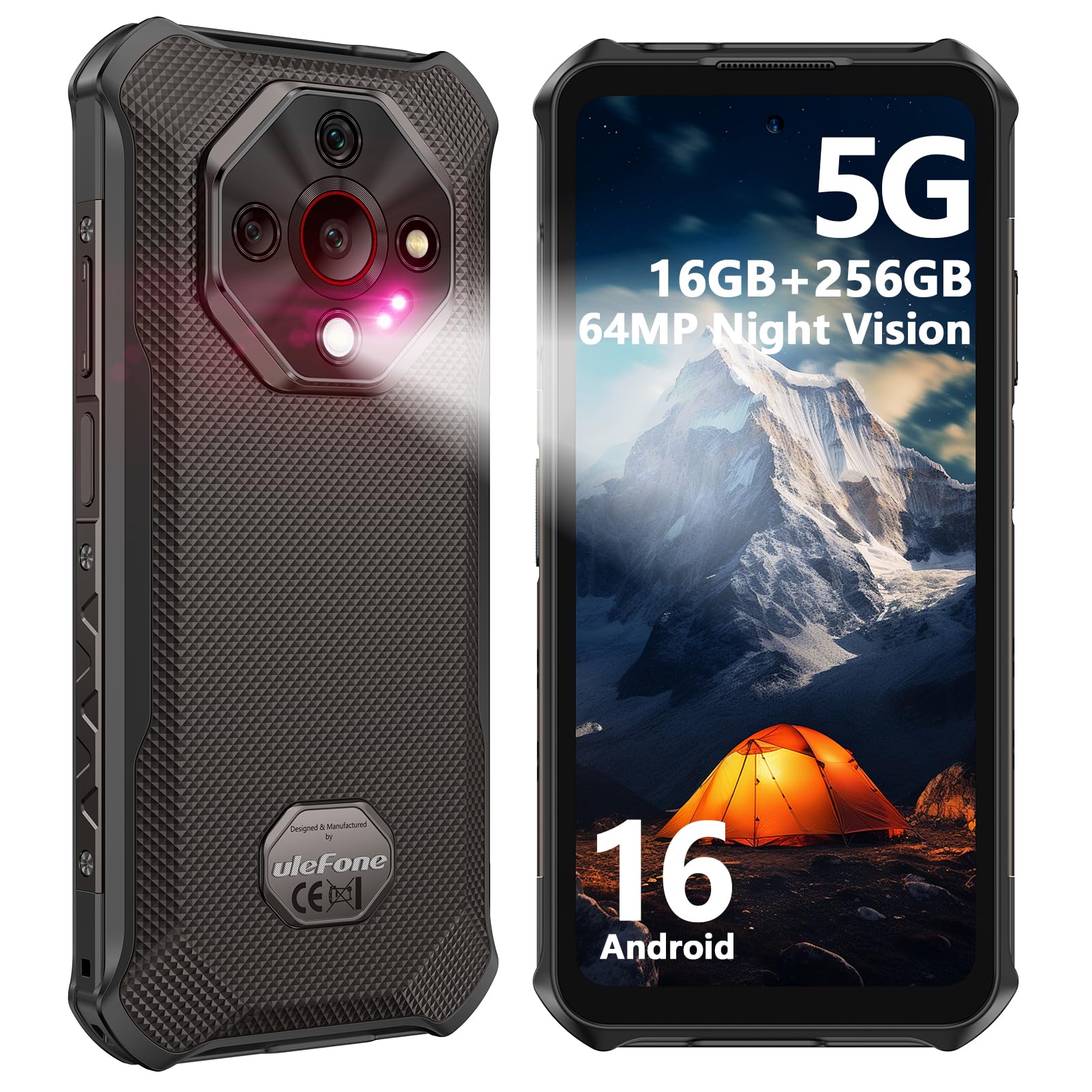
A 10360mAh battery that doubles as a power bank — and the phone survives 2-meter drops and submersion.
If your job or hobby takes you to places where a fragile phone would die, the Armor X16 Pro is the right tool. The 10360mAh battery delivers roughly 56 hours of talk time and days of moderate use — shoppers say getting 3 days on a single charge. You can also reverse-charge other devices, turning the phone into a backup battery. The IP68/IP69K rating means it survives submersion to 2 meters for 30 minutes and resists high-pressure hot water jets. The shockproof design handles drops from up to 2 meters.
The MediaTek Dimensity 6300 chip and 16GB of RAM (8GB physical + 8GB virtual) run Android 16 smoothly. The 64MP Sony IMX682 main camera takes solid photos, and the 25MP night vision camera captures clear images in complete darkness — ideal for camping, field work, or home inspection. The 6.56-inch 120Hz display is not the sharpest at 720p, but it is bright enough for outdoor use. Owners praise the built-in 133-lumen flashlight, the IR blaster, and the glove mode. Over 100 owners give it 4.4 stars, with battery life and build quality being the top praise.
The phone is heavy and bulky — owners repeatedly mention it demands a belt clip. It works on T-Mobile and MVNOs but not on AT&T or Cricket. The 720p display resolution is a compromise for the extreme battery life. If you need a rugged dual SIM phone that lasts all week, this is it.
Unstoppable battery life: 10360mAh is more than double most flagship batteries. Night vision, IR blaster, glove mode, and the 133-lumen flashlight make this a tool, not just a phone. The catch is the weight and the 720p screen — but for outdoor work or long expeditions, those trade-offs are easy to accept.
Perfect for: Outdoor workers, campers, and anyone who hates charging their phone daily — this one lasts days and survives real abuse.
Avoid it if: You want a slim phone for pocket carry, need AT&T compatibility, or expect a sharp high-resolution display.
10. MMY 16PROMA X Rugged 22000mAh

A 22000mAh battery that outlasts every other phone here by a factor of two — and it takes underwater photos.
The MMY 16PROMA X is the battery king. Its 22000mAh cell is more than four times the size of a typical flagship battery, meaning you can go days or even a week between charges. The phone supports reverse charging, so it doubles as a power source for your other devices. The rugged body carries IP68 waterproofing and dustproofing, and it has been tested for high-altitude drop resistance. You can even take photos underwater — the phone supports underwater photography and night vision photography through the 108MP main camera and 68MP front camera.
The 6.99-inch HD+ OLED display (1440 x 3040) is large and sharp for media consumption. Android 15 runs with Face ID and fingerprint open up options. Dual SIM uses a shared SIM/TF card holder — you get two 5G SIMs or one SIM and a microSD for storage up to 1TB. NFC and infrared functions are built in. Owners rate the quality highly, and the screen protection gets positive feedback. Over 326 owners give it 4.5 stars.
The honest downside is the weight — a 22000mAh battery is heavy, and the phone is bulky. It is not a pocket-friendly device. The camera is decent but not at the level of dedicated photo phones, and the brand (MMY) is less established than Samsung or Xiaomi. If your priority is maximum battery life and ruggedness above all else, this phone delivers like nothing else.
Battery extreme
- class-leading 22000mAh battery — lasts multiple days, even a week with light use
- IP68 waterproof and dustproof with high-altitude drop resistance
- 108MP main camera supports underwater and night vision photography
- Dual SIM with up to 1TB storage expansion via shared microSD slot
Compromises
- Extremely heavy and bulky — not easy to carry in a pocket
- Lesser-known brand with less community support and accessory availability
- Camera quality is good but not flagship-grade despite the high megapixel count
For the extreme user: If you need a phone that lasts a week and survives drops and dunks, the MMY 16PROMA X is the ultimate battery-first choice.
Not for you if: You want a slim pocketable device or a camera that competes with Samsung flagships.
Understanding the Specs
Dual SIM Configurations
Dual SIM phones come in a few flavors. The most common setup is two physical nano SIM slots — you pop in a SIM from your work number and a SIM from your personal number. Some phones replace one physical slot with an eSIM (a programmable digital SIM that you download from your carrier). A few models, like the Samsung Galaxy S25 Ultra, give you two physical slots plus an eSIM, letting you run up to three lines. The trade-off: some phones make you choose between a second SIM and a microSD card for extra storage, so check for a dedicated or shared slot before buying.
Battery Capacity and Dual SIM Drain
Running two SIMs simultaneously means your phone constantly maintains two separate radio connections, which drains battery faster than a single-line setup. For reliable all-day use with dual SIMs on, look for a battery of at least 5000mAh. Phones like the Xiaomi Poco X8 Pro Max (8500mAh) and the Ulefone Armor X16 Pro (10360mAh) are built to handle this extra draw, while the 22000mAh MMY model can last days as a portable power bank. Fast charging speeds (measured in watts) also matter — 68W TurboPower or 100W HyperCharge can refill a drained battery in minutes, not hours.
FAQ
Will an open up dual SIM phone work with my current carrier?
Can I use two different carriers in a dual SIM phone?
What is the difference between dual SIM dual standby and dual SIM dual active?
How long does a 5000mAh battery last with two SIMs active?
Can I use a microSD card and two SIMs at the same time?
Do dual SIM phones support 5G on both lines?
Is eSIM better than a physical SIM for dual SIM use?
What is the advantage of a rugged dual SIM phone over a standard one?
Final Thoughts: The Verdict
Across the board, the best dual sim phone winner is the Xiaomi Poco X8 Pro Max because it delivers an outstanding 8500mAh battery, a gorgeous 120Hz AMOLED display, and 512GB of storage for a mid-range price — the battery alone separates it from almost every competitor. If you want the ultimate camera system and a titanium build with three SIM slots, grab the Samsung Galaxy S25 Ultra. And for a budget-friendly dual SIM phone that keeps things simple with clean software and a solid P-OLED screen, the Motorola Moto G86 is the one to reach for.
How We Picked
We do not accept paid placement. Every pick is matched to a real buyer and a real use-case; we do not hands-on test units.
Sources & Methodology
Specifications: manufacturer listings and product documentation. Review insights: verified customer reviews, as of July 2026. Pricing: not shown on this page (it changes often); check the current price via the retailer link.
As an Amazon Associate, WellFizz earns from qualifying purchases. This does not affect which products we feature.
Related Guides

Mo Maruf
I created WellFizz to bridge the gap between vague wellness advice and actionable solutions. My mission is simple: to decode the research and give you practical tools you can actually use.
Beyond the data, I am a passionate traveler. I believe that stepping away from the screen to explore new environments is essential for mental clarity and physical vitality.