Our readers keep the lights on and my smoothie glass nicely filled. As an Amazon Associate, I earn from qualifying purchases.
Specs are compiled from manufacturer listings and verified buyer reviews and can change over time — please confirm the key details on the product page before buying.
You want a swirl-free finish without wasting an afternoon, and the tools that deliver that hinge on pad orbit speed, motor power, and dust collection. This guide focuses on the dual action sanders that actually hold up on wood, metal, and auto body work, covering the best corded, cordless, and air-powered options.
I’m Mohammad Maruf — the founder and writer behind WellFizz. This guide is built by comparing the manufacturers’ published specifications and the patterns across verified customer reviews, so you get each pick’s real strengths and trade-offs instead of marketing spin.
Find the best dual action sander for your workshop with expert picks that balance power, dust control, and comfort for a flawless finish.
Our Picks at a Glance

How To Choose The Best Dual Action Sander
A dual action sander spins and orbits the pad at the same time, so you avoid the swirl marks a plain orbital sander leaves behind. Your choice depends on your power source, project size, and how much dust you can tolerate.
Power Source: Corded, Cordless, or Air
Corded electric models give you constant power without worrying about battery life, making them perfect for long sanding sessions. Cordless models offer the freedom to move around a workshop or job site without a cord, but you’ll need to manage battery runtime. Air-powered (pneumatic) sanders are lighter and often smoother, but they require a substantial air compressor that can supply enough volume to keep them running.
Speed Control and Pad Size
Variable speed is a major feature for versatility. You can crank it up for aggressive stock removal and dial it down for a delicate finish. The pad size also matters: a 5-inch pad is the standard for most woodworking and finishing tasks, while a 6-inch pad covers more surface area, which is great for auto body work and larger flat panels.
Quick Comparison
| Model | Best For | Pad Size | Max Speed | Power Source | Amazon |
|---|---|---|---|---|---|
| DEWALT DWE6421K★ Best Overall | Overall woodworking | 5 inches | 12,000 OPM | Corded Electric | Amazon |
| DEWALT DCW210P1Premium Pick | Workshop freedom | 5 inches | 12,000 OPM | 20V Battery | Amazon |
| Dong Cheng DSA02-125Best Value | Best value kit | 5 inches | 12,800 OPM | Corded Electric | Amazon |
| NARBELL NT50001 | Variable speed control | 5 inches | 14,000 RPM | Corded Electric | Amazon |
| Autolock Air Sander | Starter air kit | 6 inches | 12,000 RPM | Air Powered | Amazon |
| Gedu GAOA124-3 | Pro air finishing | 6 inches | 12,000 RPM | Air Powered | Amazon |
| Chicago Pneumatic CP870 | Heavy paint removal | 6 inches | 10,000 RPM | Air Powered | Amazon |
| Ingersoll Rand 311A | Silent operation | 6 inches | 12,000 RPM | Air Powered | Amazon |
| Ingersoll Rand 300G | Feather-light finishing | 6 inches | 10,000 RPM | Air Powered | Amazon |
In‑Depth Reviews
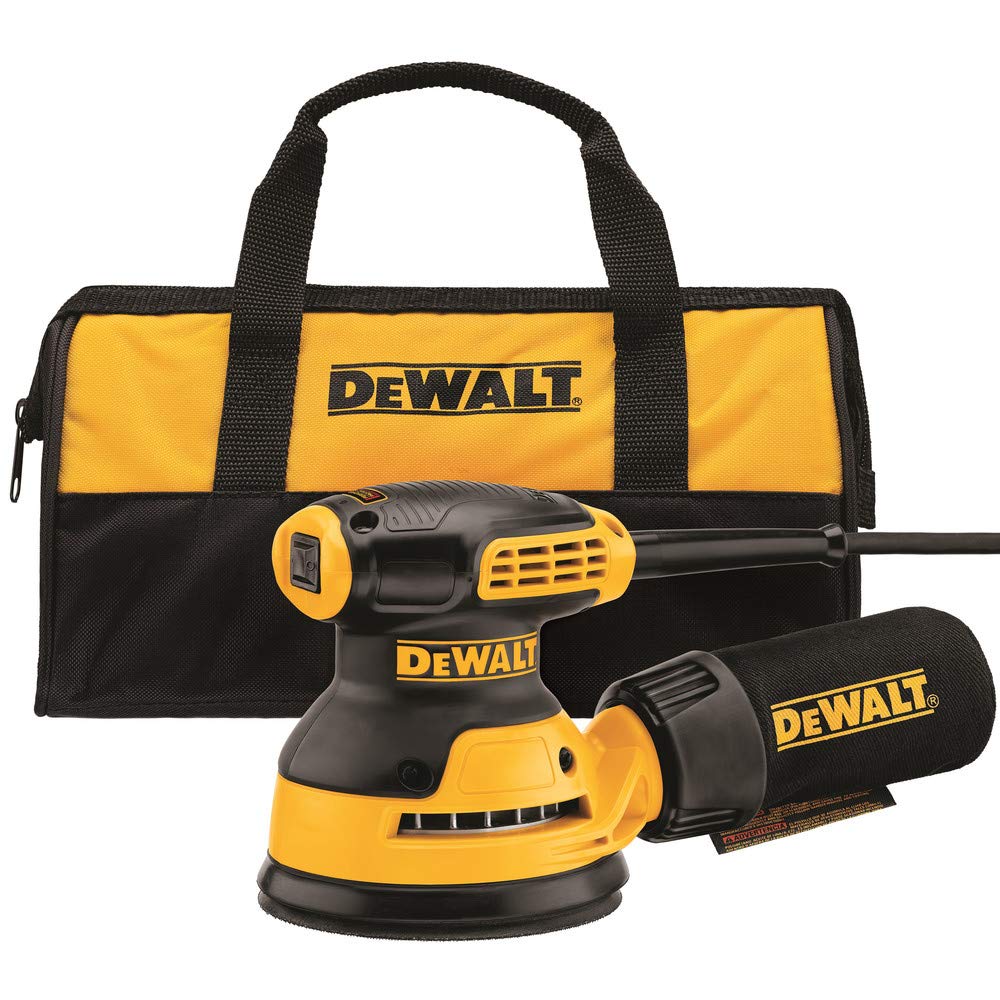
1. DEWALT Orbital Sander Kit (DWE6421K)
Our pick — over 4.5★ from 5,500+ verified ratings; the strongest balance of quality and price.
The crowd-favorite woodworker that balances raw power with a genuinely comfortable, low-vibration grip.
You get a 3.0 amp motor that spins the pad at 12,000 OPM (orbits per minute — how many times the pad moves in a circle each minute), so you can strip varnish fast without the tool stalling. A separate counterweight design cuts vibration, keeping your hands comfortable during long refinishing jobs. The rubber over-mold covers the grip areas, and the shorter height lets you work closer to edges for better control.
What wins people over is the effective dust management. The improved dust collection system feeds into a one-handed locking dust bag that’s simple to empty, and it’s designed to fit directly onto DEWALT’s DWV010 or DWV012 dust collectors for a cleaner workshop. Buyers report it’s “powerful, balanced, effective dust bag (minimal side dust), minimal swirl marks, light, maneuverable” — with many noting the dust bag catches particles that other sanders let fly. It even serves double duty for resin artists, delivering a smooth, professional finish on uneven surfaces.
The durability is the one area where opinions split. While many owners find it lasting, a few report the tool failing after about 8 hours of heavy use. For the vast majority handling DIY projects, furniture refinishing, and car restoration, it holds up beautifully. The popularity is undeniable with its strong 4.7-star reputation earned across thousands of owners.
What Owners Rave About
- Powerful motor with low vibration keeps sanding comfortable
- Effective dust bag minimizes airborne particles
- Well-balanced and light enough for one-handed work
The Trade-Off
- An occasional unit has failed after a few hours of use
Your best bet: If you want the most dependable, comfortable corded sander for a wide range of woodworking and finishing, this is it.
Think twice if: You need the freedom of a cordless tool or your budget is strictly entry-level.
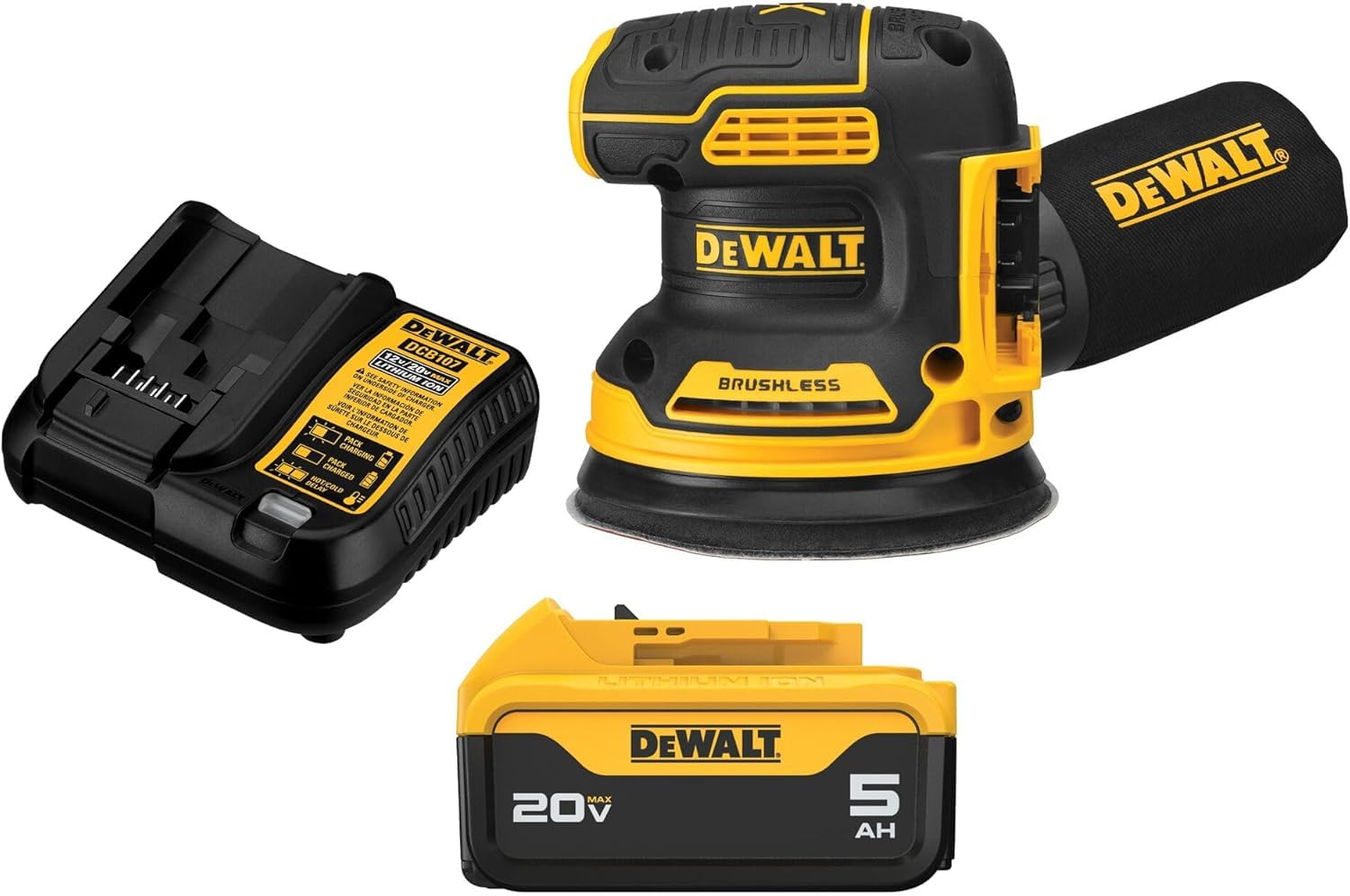
2. DEWALT 20V MAX Random Orbital Sander (DCW210P1)
The cordless option that finally delivers the runtime and power to replace your corded sander.
If you hate untangling cords and dragging extension leads around the shop, the brushless motor here provides running time and efficiency to get the job done without the constant drag of a cable. The variable-speed control lets you adjust from 8,000 to 12,000 OPM, so you can slow down for a delicate finish or speed up for stock removal. The weight of the 20V MAX battery actually helps balance the tool and reduce vibration, which owners say cuts down on fatigue during longer sessions.
The included kit comes with the battery and charger, making it a true ready-to-work package. It features a replaceable 8-hole hook-and-loop sanding pad for quick paper changes and a dust-sealed switch to protect against dust ingestion. Owners mention it stops instantly when turned off — a huge upgrade over models that keep spinning for 10-15 seconds — and the spring-loaded dust canister works effectively. For intricate work like epoxy, resin, and tabletops, owners find it works great with both fine and coarse grits.
The main compromise is battery life. While highly praised for power and portability, the battery lasts about two hours of use, according to several reports. The battery and dust canister also protrude slightly, which can limit access in tight corners — a small price to pay for the freedom of going cordless.
Why Go Cordless
- Perfect balance and powerful brushless motor
- Stops instantly when turned off for safety and cleanliness
- Includes battery, charger, and bag in the kit
The Catch
- Battery runtime is around two hours
- Bulky battery and canister can block tight corner access
Reach for this if: You already own DEWALT 20V tools and want the convenience of sharing batteries without cords.
Look elsewhere if: You routinely do marathon sanding sessions where a corded tool’s unlimited power is a must.
3. Dong Cheng 5-Inch Random Orbital Sander
A heavy-duty kit that punches far above its budget tier with pro-level quality and extras.
This sander delivers a serious 380W motor that spins between 8,000 and 12,800 OPM across 6 variable speeds, giving you the range to handle both quick material removal and fine finishing. The 5-inch (125mm) pad with hook-and-loop design makes swapping sandpaper fast, and the internal ventilation design helps with both dust collection and heat dissipation. At 3.1 lbs, the balanced weight and ergonomic rubber handle give you solid control whether you sand horizontally or vertically.
The value here is staggering. The kit includes 20 sanding discs spanning grits from 80 to 320, a detachable dust box, a pair of carbon brushes, and a heavy-duty nylon tool bag — everything you need to start working immediately. Owners have put it through 6+ months of heavy-duty adhesive removal on stucco without failure, and guitar builders rate the quality as rivaling far more expensive name brands. The consistent praise for build quality and dust collection makes it the clear value champion.
The honest downsides are minor. The included dust bag is small and fills up quickly, requiring frequent emptying, and some owners note the vacuum adapter mentioned in the listing wasn’t actually in the box. For the money, though, it’s a bargain that outperforms its price point in real-world conditions.
Why It Impresses: The combination of a powerful 380W motor, 6 speed settings, and a full accessories kit makes this the smartest money-saving choice for serious DIYers.
4. NARBELL Orbital Sander (NT50001)
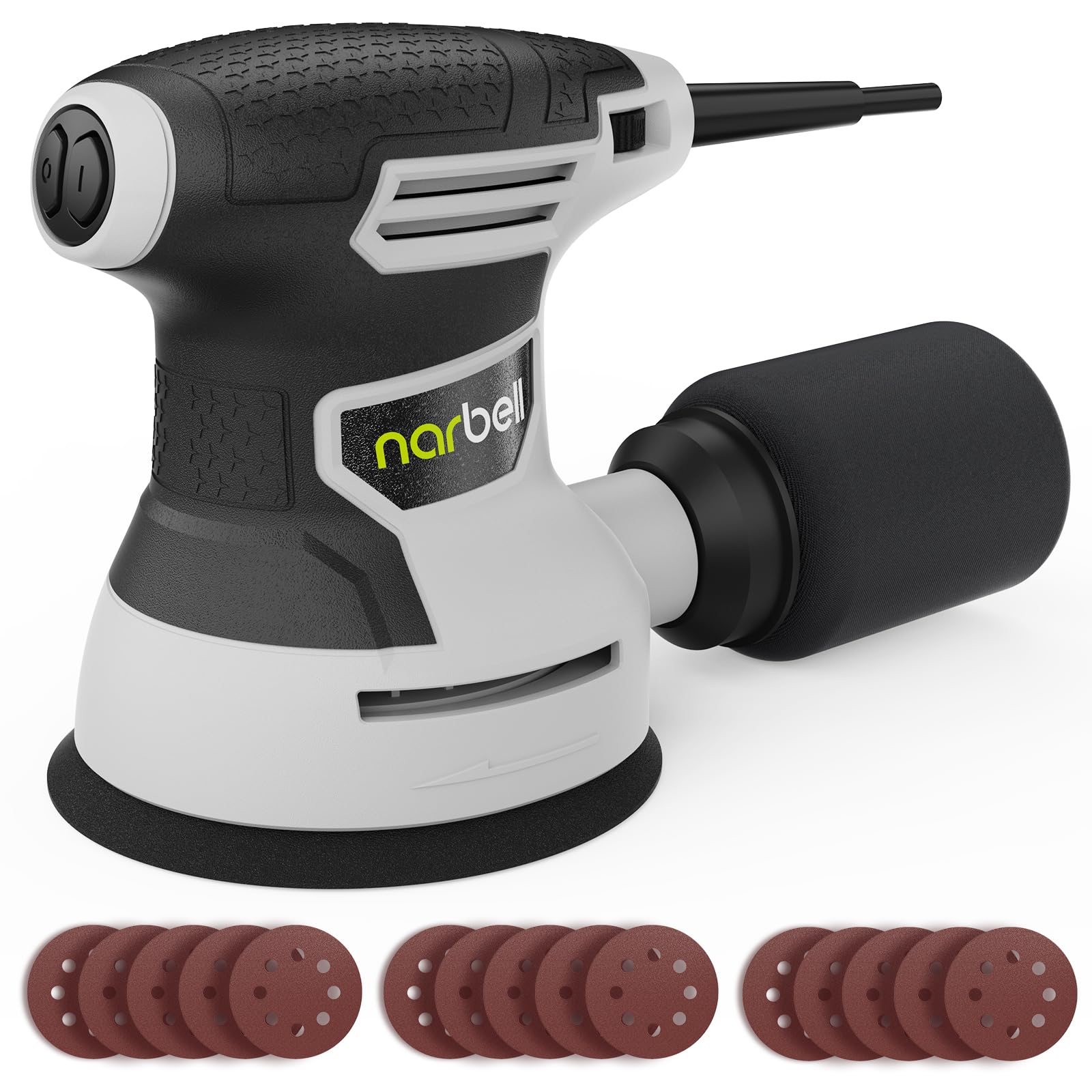
Boasts the fastest free-spin speed on this list at 14,000 RPM, making quick work of tough sanding jobs.
At its top speed, this sander hits 14,000 RPM — 17% faster than the DEWALT DWE6421K’s 12,000 OPM — so you remove material quicker when you need it. The 3.0 amp solid copper motor delivers 360W of power with less friction loss, which the brand says extends motor life. The 5-inch pad on this lightweight, mini handheld design keeps vibration low and control high, according to owners.
Variable speed is the standout feature. The 6-speed dial (from 6,000 to 14,000 RPM) lets you tailor the aggression to the task, whether you’re smoothing a live-edge oak mantle or prepping auto body panels. The through-the-pad dust collection system works well, routing debris into the included bag or connecting to a vacuum adapter for a cleaner workspace. The kit includes 15 sandpapers in 60, 80, and 120 grits to get you started.
Owners praise its low vibration and smooth finish with minimal swirl marks on hardwood and painted surfaces. You should know the dust collection gets mixed reviews depending on the material, and you’ll need to empty the bag promptly for best results. There’s also no carrying case included, which is a minor annoyance. The rubber on/off switch requires a firm press, which some find slightly awkward.
Speed Demon: The 14,000 RPM top speed and 6-speed dial make this the choice for users who want maximum control over their sanding pace.
5. Autolock 6 Inch Air Random Orbital Sander

An all-in-one air sander kit that arrives ready to work with every accessory you could need.
This pneumatic dual-action sander is easy to handle in the palm, with a lightweight, low-height design and low vibration for greater comfort and control. The precision-balanced motor runs smoothly, and the built-in regulator lets you adjust the speed up to a free speed of 12,000 RPM. For auto body, furniture, wood, and metal, it handles sanding, grinding, polishing, and waxing. The 6-inch pad is a 20% larger diameter than the 5-inch pads on the NARBELL and DEWALT models, meaning it covers more surface area per pass.
The included accessory kit is genuinely impressive: 7 pieces of 120-grit sandpaper, 3 sponge pads, 2 microfiber cloths, a washing mitt, a wrench, and a quick connector for your air hose. Customers note it’s “powerful, easy to handle, and delivers smooth, professional-looking results,” with build quality earning strong praise. For a beginner getting into auto work, this is a low-cost way to experience the benefits of a pneumatic tool.
The reality of budget air tools is the durability. This is best viewed as a starter unit to learn on, not a daily professional workhorse. It also requires an air compressor, so factor that into your setup costs.
Everything Included
- Comes with sandpaper, sponge pads, cloths, and wrench
- 6-inch pad covers more area than 5-inch sanders
- Low vibration for comfortable one-handed use
Know Before You Buy
- Durability concerns — some units fail after a few hours
- Requires a suitable air compressor to operate
Best for the curious: A feature-packed, budget-friendly way to try air-powered sanding without a huge investment.
Not for heavy use: Professional auto body shops will wear this out quickly and should look at higher-end pneumatic options.
6. Gedu Professional Air Random Orbital Palm Sander

A smooth, quiet, and light pneumatic sander that owners say rivals professional units costing five times more.
The difference in feel is immediate. The Gedu features a low center of gravity design with a perfectly balanced sanding pad, which translates to a swirl-free finish without the hand fatigue of cheaper DA sanders. The enhanced heat-treated cast steel cylinder provides high hardness and power strength, while the lighter air-motor assembly makes it ideal for vertical and overhead sanding applications where a heavy tool is a liability. The 6-inch pad spins up to 12,000 RPM for fast, smooth surface prep.
Owners have compared it directly to a 3M sander after 15 hours of hard auto body use on paint, bondo, and fiberglass, noting the low vibration and efficient air use. It’s also been praised for being far smoother, quieter, and less vibration-prone than a Harbor Freight DA, with some reporting 20-30 hours of flawless operation. The quality of the finish and the comfort during use are the standout features that keep professionals coming back.
The trade-offs are few. The air adjustment knob is easy to move accidentally, and the durability story is mixed — some units have held up to weeks of continuous use, while others have failed after two months. One long-term owner reported over 3 years of heavy student abuse without ever oiling it, which is a strong durability signal. Check your air compressor’s capacity to ensure it can keep up.
Workshop Favorite
- Ultra-low vibration for comfortable, precise work
- Lightweight assembly is perfect for overhead sanding
- Comparable feel to premium units
The Caveat
- Air adjustment dial can be bumped accidentally
- Durability varies between individual units
Your best bet: You are a serious auto body or furniture finisher who values a smooth, quiet, professional-feeling tool.
Think twice if: Your air compressor is undersized, or you want the simplicity of a corded electric tool.
7. Chicago Pneumatic CP870 Air Sander

A time-proven industrial design that excels at aggressive paint and rust removal on large surfaces.
This isn’t a finishing sander — it’s a paint-stripping workhorse. The Chicago Pneumatic CP870 is a general-duty sander with both rotary and random orbital options, making it excellent for blending filler, feather edging, and pre-paint preparation. The free speed of 10,000 RPM is lower than some finishing sanders, but the power delivery and 6-inch pad are tune for removing material quickly. The insulated grip and lock-off throttle prevent accidental startups, and the power regulator gives you precise control at the trigger.
In commercial settings, this tool has proven its worth. A sign shop replaced a sander of similar design with this model for sanding aluminum sheets and awning frames, noting it works great. Owners stripping peeling paint on cars praise its effectiveness on large surfaces. The time-proven design and sturdy metal construction give it a professional feel that’s often missing in this price range.
The key demand is air volume — it consumes an average of 5 CFM, and owners warn you need a large enough compressor to keep it running. There’s also a mixed verdict on build quality, with some finding it well-built and others describing it as cheaply made. An occasional unit lets water out of the exhaust, which may be an issue with the compressor’s moisture separator rather than the sander itself. This is a specialist tool for heavy material removal, not delicate finish work.
Material Stripper: If you need to remove multiple layers of paint or rust fast, the CP870’s aggressive action and rotary option stand out in this lineup.
8. Ingersoll Rand 311A Dual-Action Air Sander
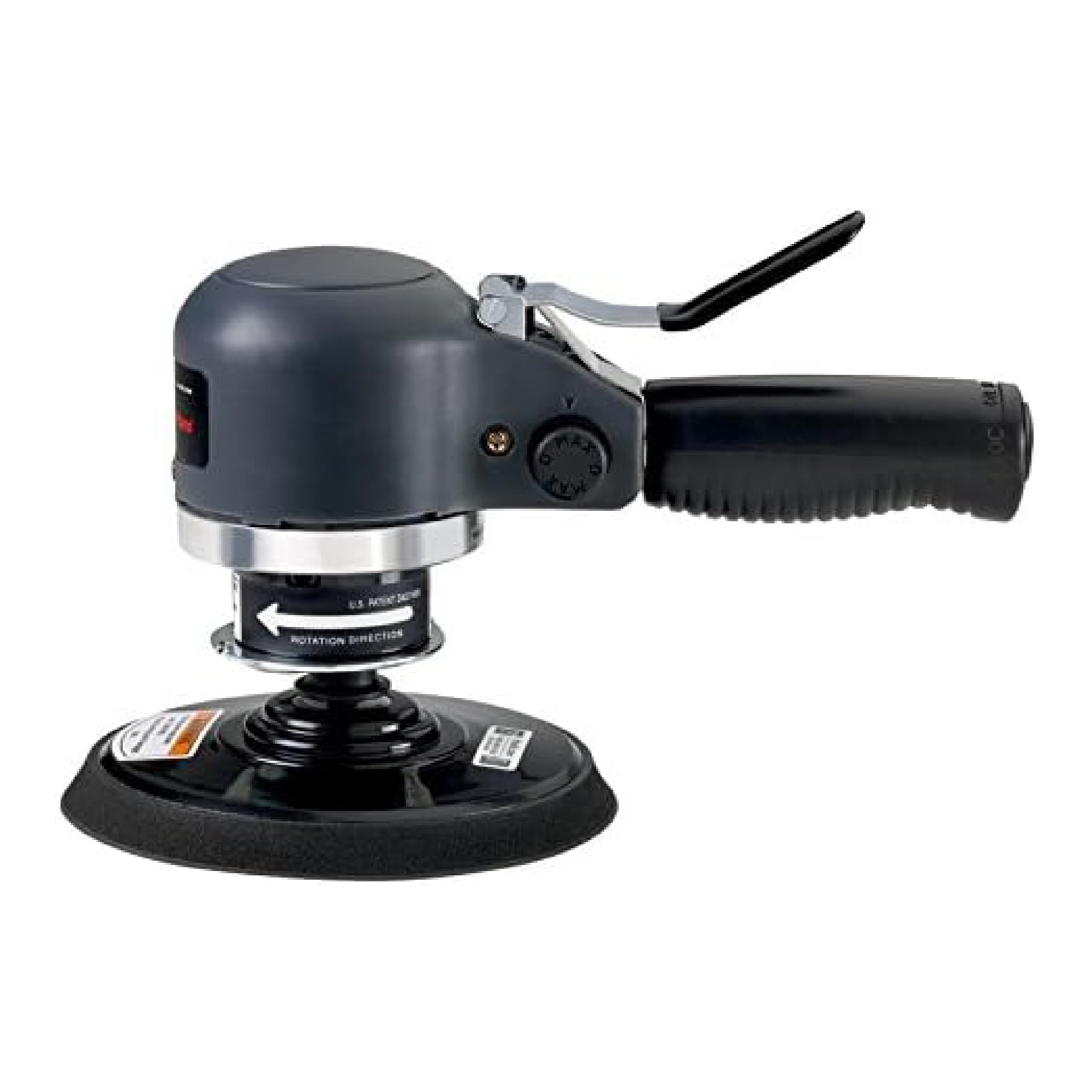
The quietest air sander here, with a built-in silencer that makes long sessions far more bearable.
If you’ve worn ear protection for hours while sanding, the 311A’s built-in silencer is a relief. This dual-action sander delivers 0.25 hp and 12,000 rpm through its 6-inch pad for swirl-free finishes, but the reduced noise is what separates it. The compact size reaches tight spaces, and the built-in adjustable regulator gives you speed control right on the tool. It’s great for feather edging, metal preparation, and finish work on body filler.
Everything about the construction speaks to longevity. The balanced ball-bearing construction improves stability and reduces vibration as you work, and the heavy-duty build is a hallmark for the brand’s 160-year legacy. Owners describe it as a “pleasure to use,” noting it does a great job when you have enough air supply. The 4.2 lbs weight is solid but manageable, and the lock-off throttle prevents accidental start-ups.
Like all pneumatic tools, air consumption is the critical factor. The 311A has an air consumption at free speed of 17 cfm — a substantial demand that owners say can stress even 60-80 gallon compressors. Some have found it simply too powerful for smaller 8lb compressors. The weight also gets mixed feedback, with some finding it well-balanced and others noting heaviness during extended use. You need a serious air system to run this tool properly.
The Silent Advantage
- Built-in silencer dramatically reduces noise levels
- Ball-bearing construction for stability and less vibration
- Compact size reaches tight spaces effectively
Air Hog Warning
- Consumes 17 cfm — demands a large, powerful compressor
- 4.2 lbs weight feels heavy in extended overhead work
Reach for this if: You have a workshop air system and want a quieter, smoother alternative to your current DA sander.
Look elsewhere if: You’re relying on a small portable compressor that can’t keep up with the 17 cfm air appetite.
9. Ingersoll Rand 300G EDGE Series Air Sander

A featherweight composite design under 2 lbs that makes marathon finishing sessions feel easy.
Weight is everything on this pick. The composite design keeps the 300G lighter than 2 lbs, dramatically reducing fatigue during long days of sanding. The powerful 0.2 HP motor spins the 6-inch pad at 10,000 rpm for fast, smooth surface preparation, and the contoured grip fits your hand naturally. The 360-degree swivel vacuum adaptor keeps the hose out of your way, and the diffused rear exhaust directs air away from the work surface. It’s a tool designed for a professional auto body technician who spends all day with a sander in hand.
The value proposition is striking. Owners have compared it directly to a Snap-On sander that cost almost, finding it looks and works just as well. A professional auto body technician comments that while it requires a high air volume, it’s lightweight and reduces fatigue, making it great for finishing, prep, and light body work. For the price, it’s widely considered the smart alternative to overpriced truck-brand tools.
The lack of adjustment is the main complaint. There’s no built-in air adjustment or speed control, so you’ll need to add an inline regulator if you want variable speed. It also requires a good-size compressor to reach full power, and a Velcro pad isn’t included. For pure finishing work with a vacuum hooked up, the lightweight comfort is a standout.
Comfort Champion: The featherlight design and swivel vacuum adaptor make this the pick for professionals doing hours of fine finishing work with minimal fatigue.
Understanding the Specs
OPM vs RPM
OPM (orbits per minute) measures how many times the sanding pad completes its circular motion in a minute, which is the key metric for a dual action sander. RPM (revolutions per minute) measures the rotational speed of the motor or pad. A higher OPM generally means faster material removal, but the best results come from a balance of speed and pad orbit size.
Pad Size and Hook-and-Loop
Common pad sizes are 5-inch and 6-inch. A 5-inch pad is lighter and more maneuverable for detail work, while a 6-inch pad covers more surface area for large panels. Hook-and-loop (also called Velcro) pads allow you to stick sandpaper discs on and peel them off quickly without tools, making changes fast and easy.
FAQ
What is the difference between a dual action sander and a regular orbital sander?
Should I get a corded, cordless, or air-powered dual action sander?
What size air compressor do I need for a pneumatic sander?
How do I prevent swirl marks when using a dual action sander?
How often should I change the sandpaper on my sander?
Can I use a dual action sander for polishing my car?
What is a PSA pad and how is it different from a hook-and-loop pad?
Why is my dual action sander’s dust collection not working well?
Is a brushless motor worth the extra cost in a cordless sander?
Final Thoughts: The Verdict
For most buyers, the best dual action sander winner is the DEWALT DWE6421K because it delivers the best balance of power, comfort, and reliable dust collection for a vast range of projects. If you want the freedom of a cordless tool with premium performance, grab the DEWALT DCW210P1. And for the best value without sacrificing pro-level quality, the Dong Cheng is the one to reach for.
How We Picked
We do not accept paid placement. Every pick is matched to a real buyer and a real use-case; we do not hands-on test units.
Sources & Methodology
Specifications: manufacturer listings and product documentation. Review insights: verified customer reviews, as of August 2026. Pricing: not shown on this page (it changes often); check the current price via the retailer link.
As an Amazon Associate, WellFizz earns from qualifying purchases. This does not affect which products we feature.
Related Guides

Mo Maruf
I created WellFizz to bridge the gap between vague wellness advice and actionable solutions. My mission is simple: to decode the research and give you practical tools you can actually use.
Beyond the data, I am a passionate traveler. I believe that stepping away from the screen to explore new environments is essential for mental clarity and physical vitality.