Our readers keep the lights on and my smoothie glass nicely filled. As an Amazon Associate, I earn from qualifying purchases.
Specs are compiled from manufacturer listings and verified buyer reviews and can change over time — please confirm the key details on the product page before buying.
Nature doesn’t pose. That deer slipping through the fog, the eagle diving for a fish, the sudden break of light across a canyon — you get one chance. Most people think the answer is a huge telephoto lens, but the real difference-maker is the body underneath it: how fast it focuses in low light, how much detail the sensor retains in deep shadows, and whether it can keep shooting without stuttering when the action spikes. This guide cuts through the noise to find the body that delivers when the light is gone and the subject is moving.
I’m Mohammad Maruf — the founder and writer behind WellFizz. This guide is built by comparing the manufacturers’ published specifications and the patterns across verified customer reviews, so you get each pick’s real strengths and trade-offs instead of marketing spin.
Whether you are stalking elk at dawn or chasing macro shots of dew-laced leaves, the right dslr for nature photography makes the difference between a blurry memento and a wall-hanger — and this list shows you exactly which ones earn their place in the field.
Our Picks at a Glance


How To Choose The Best DSLR For Nature Photography
Nature photography demands a camera that focuses in twilight, survives rain, and fires fast enough to catch a bird taking off. You need a body that focuses in twilight, survives rain, and fires fast enough to catch a bird taking off. Here is what matters most.
Autofocus System Depth
A 9-point autofocus system works fine for a static flower. For a running fox or a BIF (bird-in-flight) shot, you need at least 51 points with cross-type sensors and 3D tracking. The number of points tells you how much of the frame the camera can lock onto — more points mean the focus stays glued to the subject even when it strays to the edge of the viewfinder.
Sensor Resolution vs. Low-Light Handling
High megapixel counts (above 30MP) give you cropping freedom, which is a superpower when the animal is far away. But more pixels per square inch can mean more noise in dim conditions. A 20.9MP sensor with excellent dynamic range often beats a 45.7MP sensor if your shooting happens in deep forest shade or at twilight. Know your primary light before chasing resolution.
Durability and Weather Sealing
Dust, drizzle, and bumps are part of the job. Look for bodies that say “weather-sealed” or have a monocoque construction. That seals out the grit that would kill a cheaper camera on a dusty trail. A body with a bright optical viewfinder also helps when the sun is harsh and a rear LCD washes out.
Burst Rate and Buffer
Continuous shooting at 7 to 9 frames per second lets you capture the exact wing position or paw lift. But the buffer matters even more — a camera that stops after 10 JPEGs is a liability. Look for bodies that can shoot 50+ consecutive frames so you don’t miss the action waiting for the card to catch up.
Quick Comparison
| Model | Best For | Resolution (MP) | Autofocus Points | Max Burst (fps) | Amazon |
|---|---|---|---|---|---|
| Canon 5D Mark IV★ Best Overall | Full-frame all-rounder | 30.4 | 61 | 7.0 | Amazon |
| Nikon D850Top Performer | Ultra-high resolution wildlife & landscape | 45.7 | 153 | 9.0 | Amazon |
| Nikon D7500Enthusiast Pick | Enthusiast mid-range workhorse | 20.9 | 51 | 8.0 | Amazon |
| Canon Rebel T7 (Bundle) | Budget entry-level | 24.1 | 9 | 3.0 | Amazon |
| Canon Rebel T7 (Kit) | Beginner-friendly bundle | 24.1 | 9 | 3.0 | Amazon |
| Canon Rebel T7 Double Zoom | Best starter telephoto reach | 24.1 | 9 | 3.0 | Amazon |
| Nikon D5600 (Renewed) | Versatile dual-lens value | 24.2 | 39 | 5.0 | Amazon |
| Nikon D3300 Kit | Astrophotography & beginner | 24.2 | 11 | 5.0 | Amazon |
| Nikon D7500 Mega Bundle | Super-telephoto reach | 20.4 | 51 | 8.0 | Amazon |
| Nikon D7500 Pro Bundle | Full accessory kit | 20.9 | 51 | 8.0 | Amazon |
| Nikon D780 | Hybrid DSLR/mirrorless experience | 24.5 | 51 | 7.0 | Amazon |
In‑Depth Reviews
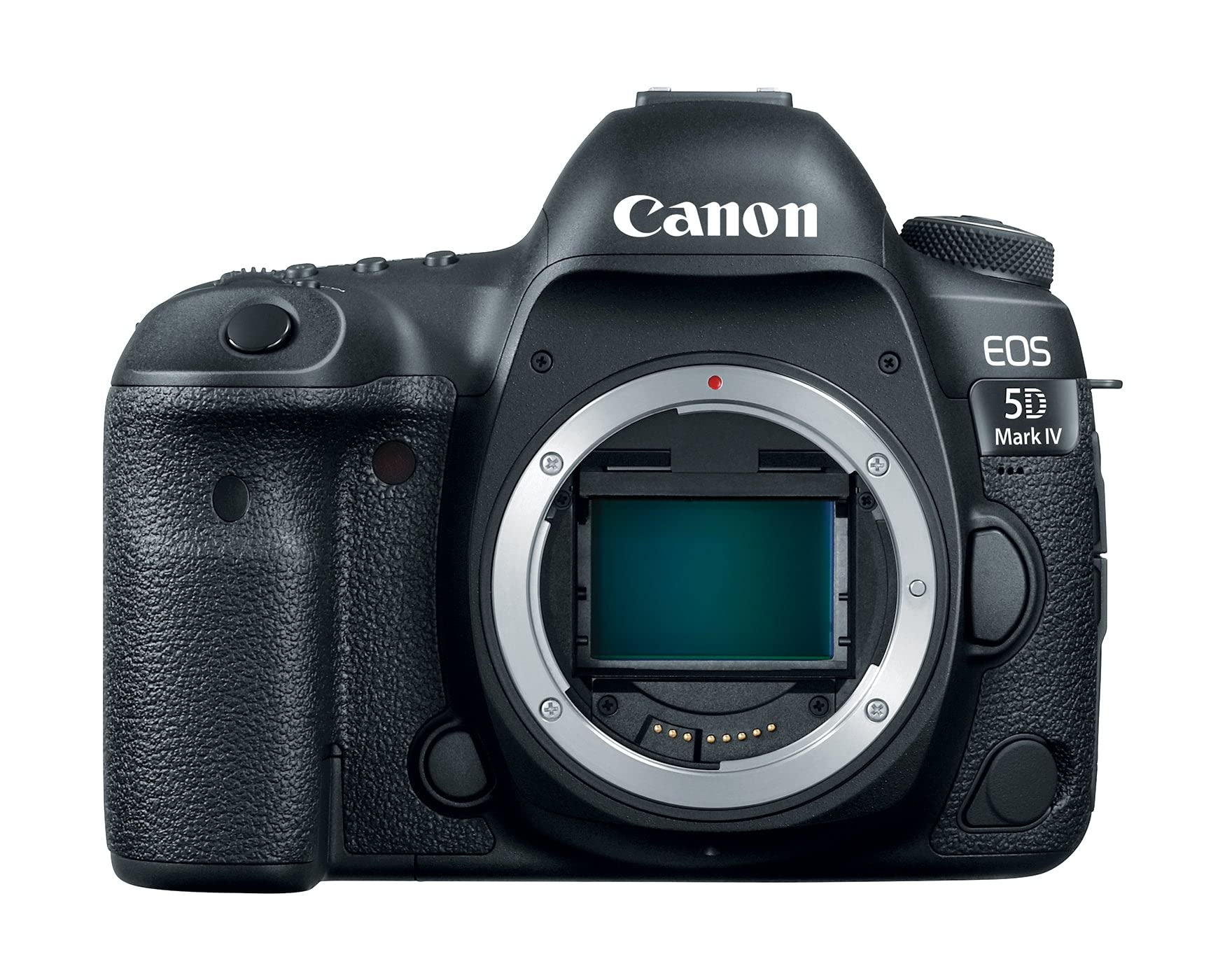
1. Canon EOS 5D Mark IV
Our pick — over 4.5★ from 850+ verified ratings; the strongest balance of quality and price.
The full-frame sensor that turns twilight into daylight.
This is the camera that makes nature photography feel almost unfair. Its 30.4 megapixel full-frame CMOS sensor pairs with the DIGIC 6+ processor to handle ISO up to 32,000 natively (expandable to 102,400), meaning you can shoot a rustling bush at dusk and still hold detail. The 7.0 fps continuous shooting might not sound blistering, but with a 61-point autofocus system and Dual Pixel CMOS AF, every frame arrives in focus — even when a hawk cuts across a cluttered background.
What owners really celebrate is the dynamic range. As the consensus notes, it is “improved, near Sony, behind Nikon D810 but excellent in low light/high ISO.” The 14-bit depth means your post-processing holds rich shadow gradations without banding. The touchscreen is also a welcome upgrade from earlier 5D bodies, making menu navigation feel modern. The catch is the LCD is fixed — no fold-out articulation — so ground-level frog shots or low-angle flower compositions demand more physical contortion.
The 5D Mark IV has 61 autofocus points, versus the 9 points on the Rebel T7 bodies further down this list. When tracking a running coyote across a field, that density matters: the camera can lock on and stay locked.
Why it dominates
- 30.4MP full-frame sensor with outstanding dynamic range for landscape recovery
- Quality earns 75 positive mentions from owners — the single most-praised aspect
- 61-point AF with Dual Pixel CMOS AF locks fast-moving wildlife
- Touchscreen and built-in Wi-Fi for quick sharing in the field
One real-world compromise
- Fixed LCD screen means you can’t tilt or flip it for awkward ground-level angles
- 4K video is Motion JPEG, which creates enormous file sizes
Ideal for: The serious enthusiast or pro who needs a single body that handles landscapes, wildlife, and portraits without compromise.
If you are on a strict budget: The body-only form means you need good glass — and good EF lenses are not cheap. Stick with it only if you already own Canon glass or are ready to invest.
2. Nikon D850
The 45.7MP sensor that lets you crop like you zoomed.
If you have ever framed a distant mountain goat and wished you could bring it closer without losing resolution, the D850 is your answer. Its 45.7-megapixel back-side illuminated (BSI) full-frame sensor delivers a staggering amount of detail — owners call it “studio quality” even in the field — and crops with virtually no risk of moiré noise. The autofocus system is a monster: 153 points derived from the flagship D5, capable of tracking a pronghorn sprinting through tall grass at 9 fps with full AF performance.
Low-light praise is a recurring theme. Buyers report that ISO 3200 to 12,800 remains highly usable, which is almost unheard of at this resolution. The BSI sensor design helps — it gathers light more efficiently than traditional sensors, so your pre-dawn landscapes hold shadow detail without turning muddy. The tilting touchscreen is a practical boon for low-angle wildflower shots, and the built-in intervalometer makes focus-shift shooting a one-button affair.
Where the D850 gets honest pushback is on video autofocus — it is poor enough that owners recommend manual focus for 4K work. And the SnapBridge Wi-Fi connection requires a firmware update to make it convenient. But for pure photography, owners call it “the best of the DSLR” and “near-perfect.”
Resolution crown
- 45.7MP BSI sensor with no optical low-pass filter — immense cropping latitude
- Image quality is the most-discussed aspect with 143 positive owner mentions
- 153-point AF system inherited from the Nikon D5 flagship
- 9 fps burst with full AF, 4K time-lapse in-camera
A known gap
- Video autofocus is weak; manual focus recommended for 4K work
- SnapBridge connection is cumbersome until a firmware update adds Wi-Fi control
Who should reach for it: Landscape purists and wildlife shooters who need extreme detail for large prints or heavy cropping — and who already have, or are ready to buy, high-quality Nikon F-mount glass.
Pick something else if: You shoot more action video than stills, or you need a lighter carry for long hikes. This body is a tank.
3. Nikon D7500
The DX-format body that borrows autofocus and processing from the pro D500.
Do not let the 20.9 megapixel count fool you. The D7500 uses the same 51-point autofocus system (with 15 cross-type sensors) and the EXPEED 5 processor found in the award-winning D500. The result is a camera that feels like a pro tool in a mid-range shell. The 8 fps continuous shooting (up to 100 consecutive JPEGs) is fast enough to catch a woodpecker mid-flight, and the native ISO range goes all the way to 51,200 — expandable to 1,640,000 in a pinch.
Quality dominates the conversation among owners, with 41 positive mentions. The included 18-140mm VR lens is “sharp at all focal lengths” according to the reviews, and the weather-resistant construction means you can shoot through a drizzle without panicking. The 3.2-inch tilting touchscreen is a smart addition for low-angle compositions in the mud. The viewfinder is excellent — bright and large for its class — and battery life is a strong point for all-day treks.
The 4K video is good but capped at 30p, and the body is noticeably heavier than entry-level options like the D3300 or Rebel T7. On the plus side, the 14-bit bit depth gives you more latitude in post than the 12-bit found in those entry-level bodies. It is not a full-frame camera, but at this price point, the D7500 punches well above its weight.
Mid-range muscle
- 51-point AF system with group-area AF tracks erratic subjects
- 8 fps burst with deep buffer — 100 consecutive JPEGs
- Weather-sealed body for reliable field use
- 18-140mm VR kit lens is sharp across the zoom range
Honest limits
- DX sensor crops the field of view; you lose the full-frame advantage for wide landscapes
- Heavier than entry-level bodies, so add it to your pack weight budget
Grab this for: The hobbyist who wants professional-level autofocus and speed without a professional price tag — especially if you shoot fast-moving birds or mammals.
Look elsewhere if: You need the shallow depth-of-field control of a full-frame sensor for environmental portraits or wide landscapes.
4. Nikon D780
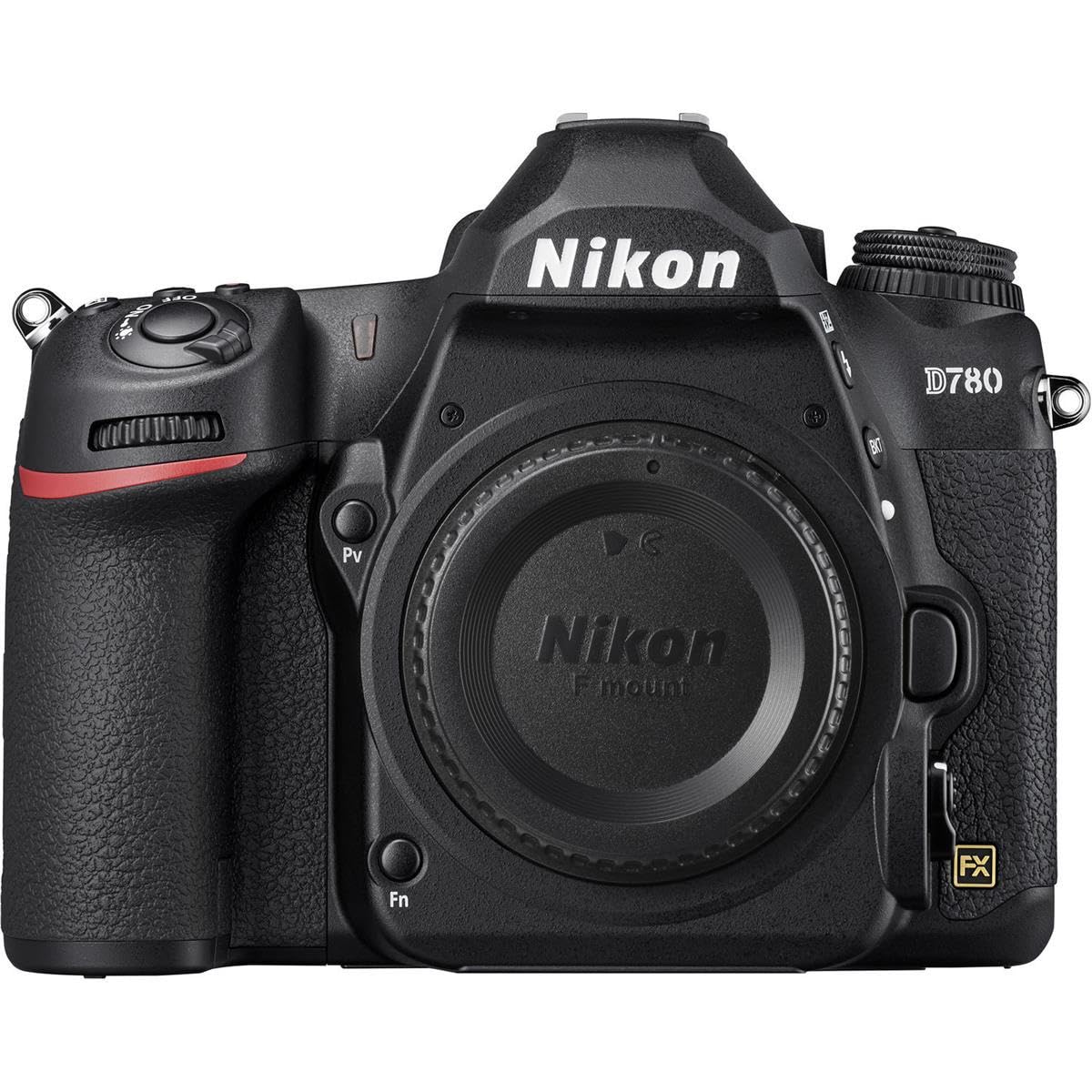
The DSLR that uses mirrorless-derived live-view autofocus for accurate tracking.
The D780 is what happens when Nikon stuffs a modern EXPEED 6 processor into a familiar full-frame DSLR chassis. At 24.5 megapixels, it sits below the D850 in resolution but above almost every other body here in low-light autofocus performance. The 51-point AF system works via phase detection in the viewfinder, but switch to live view and you get contrast detection that is fast and accurate enough to track a running dog. Owners call it “a low light beast” — one notes it is “near noiseless at ISO 22,000.”
The SnapBridge app makes wireless transfers simple, and the body is lighter than the D850, which matters when you are hiking miles. Two SD card slots let you shoot RAW on one and JPEG on the other — a practical setup for field work. The 7 fps burst rate is steady but not class-leading; it matches the Canon 5D Mark IV rather than the 9 fps of the D850.
The mixed reviews around low-light performance come mostly from a few units with shutter reliability quirks. Owners consistently praise it as “one of the best DSLR made” and note that it uses cheaper SD cards than the D850’s XQD slot, which reduces cost per shoot.
Best for travelers: A 24.5MP full-frame body that handles low light impressively well, paired with a lighter frame and dual SD slots. The crowd favorite — over 200 owners rate it near-perfect. If you shoot at dusk more than dawn, this is your pick.
Ideal travel partner: The D780 is for the photographer who wants full-frame quality, modern connectivity, and excellent low-light performance in a lighter package than the D850 — and who values SD cards over expensive XQD media.
Skip if: You need the extreme cropping power of 45+ megapixels for distant wildlife. The 24.5MP sensor leaves less room for heavy crops.
5. Nikon D5600 (Renewed)

The dual-lens kit that covers both landscape and wildlife reach.
If you are stepping up from a phone or a point-and-shoot, this is the kit that gives you everything you need to explore nature photography without blowing your budget. The 24.2MP DX-format sensor is sharp, and the two included lenses — an 18-55mm VR for sweeping landscapes and a 70-300mm ED for wildlife — mean you can walk out the door and shoot both a mountain vista and a distant eagle on the same trip. The 39-point autofocus system is a huge step up from the 9-point systems on entry-level Canons.
The vari-angle touch LCD is a major advantage for nature shooting: you can flip it out and up for low-angle flower shots or overhead forest canopy compositions. SnapBridge (Bluetooth + Wi-Fi) keeps your phone in sync for quick social sharing. Owners find it “user-friendly, high quality” and report great results for soccer games and sports, which transfers directly to wildlife action. The 5 fps burst rate is modest, but sufficient for most non-BIF scenarios.
Being a “renewed” unit means a 90-day warranty rather than full coverage. Some units arrive with minor cosmetic issues. And the 1080p video (no 4K) feels dated if you plan to shoot much footage. On balance, the bundle value is tough to beat for someone entering the field.
Smart starter package
- Two-lens kit covers wide landscapes to wildlife telephoto
- Vari-angle touch LCD for awkward field angles
- 39-point AF system tracks moving subjects effectively
- Excellent image quality — the most-praised aspect by owners
Renewed realities
- Refurbished unit with limited 90-day warranty
- No 4K video; capped at 1080p
- Plastic build feels less rugged for rough field conditions
Perfect for: The budget-conscious beginner who wants both a wide-angle and a telephoto lens in one purchase to explore different nature genres.
Move up if: You need 4K video, extreme durability, or a full-frame sensor for professional-grade low-light work.
6. Nikon D3300 Kit

The entry-level body that punches above its weight for astrophotography.
The D3300 has a dedicated following among beginners, and for good reason. Its 24.2MP CMOS DX-format sensor delivers crisp, vibrant images, and the ISO range of 100-12,800 (expandable to 25,600) performs respectably in low light. Owners specifically call it out as “excellent for astrophotography” — the Milky Way and moon craters are within reach with a tripod and the kit lenses. The 11-point autofocus system with 3D tracking works reliably in good light, though it struggles in complete darkness (manual focus is the workaround).
The kit includes two lenses — an 18-55mm VR II and a 55-200mm VR II — plus a carrying case. The 5 fps burst rate is slow by modern standards but perfectly adequate for landscape and slow-moving wildlife. The 3-inch LCD has 921,000 dots and is bright enough for field review. The camera is lightweight and comfortable for small hands, making long hikes less of a burden.
Autofocus fails in the dark, which is a genuine limitation for night landscapes. The kit does not include a memory card or lens filters, both of which you will need. And the 11 AF points, while decent for a beginner body, are a far cry from the 51 or 153 points on higher-tier cameras. It is a fantastic starting point, but you will grow past it quickly if nature photography becomes a serious hobby.
Best for the budget stargazer: A lightweight, easy-to-use body with strong low-light capabilities and dual zoom lenses. The 5 fps burst is enough for static subjects, and the build is durable enough for daily use. Owners note that the auto mode produces “stunning results, even in low light” and that the child setting captures action well — proof of its all-around beginner-friendliness.
Ideal first camera: If you are completely new to DSLRs and want an affordable kit that covers landscapes, daytime wildlife, and even some astro, the D3300 is a proven starting point with a massive user community.
Outgrow it if: You plan to shoot fast-moving birds, need 4K video, or want professional-level autofocus for wildlife action. The 11-point system will frustrate you within a year.
7. Nikon D7500 Mega Bundle

The D7500 with a super-zoom lens that reaches distant animals.
This bundle takes the already impressive D7500 body (20.4MP, 51-point AF, 8 fps burst) and pairs it with a 420-800mm super zoom lens — a range that puts distant wildlife within frame without requiring a second mortgage. The included 128GB memory card and photo backpack make it a ready-to-go field kit. The D7500 body itself is built for speed: 8 fps continuous shooting with a deep buffer, and the 51-point AF system with group-area AF is ideal for erratic bird flight paths.
The 3.2-inch tilting touchscreen helps compose low-angle shots of ground-dwelling animals. The body is weather-sealed in its own construction, which is a comfort for dusty or damp environments. Owners use it for “capturing sporting events with our grandchildren” and praise it as an “amazing camera” with dependable performance. One reviewer noted the professional-level feature set was initially overwhelming but rewarding after watching tutorials.
There is one notable complaint: the camera can shut down when a large telephoto lens is attached, and a seller charged a restocking fee on a return. This seems to be an accessory-power compatibility issue rather than the body itself. The 420-800mm lens is an extreme telephoto that is demanding on the mount and battery. Also, the 20.4MP resolution is lower than the standard D7500’s 20.9MP — a minor difference but note if you crop heavily.
One-stop field kit: You get the D7500’s pro-speed DNA plus a truly long telephoto lens that normally costs a bundle on its own. The 128GB card and bag mean you are ready to head out. The trade-off is a slight resolution dip (20.4MP vs 20.9MP) and a lens that demands careful handling.
Reach for it if: You need a long telephoto lens without spending thousands, and you want the D7500’s fast AF and burst rate for birds and mammals at a distance.
Be cautious if: You need guaranteed reliability with heavy telephoto lenses. The occasional power issue with very large glass is a known edge case.
8. Nikon D7500 Pro Bundle

The D7500 with every accessory you need for a season of field work.
Where the standard D7500 is a bare body-plus-lens kit, this bundle floods the box with extras that matter in the field: a 64GB Extreme PRO memory card, a mini LED video light for macro work, three filter kits (UV, CPL, graduated color), a wide-angle lens, a telephoto lens, extra batteries, a card reader, and Corel photo editing software. The camera itself is the same D7500 that owners love — 20.9MP DX sensor, EXPEED 5 processor, 8 fps burst, and 51-point AF that “captured fast-moving subject” easily.
The native ISO range of 100-51,200 (expandable to 1,640,000) means you can shoot in dense forest shade without flash. The 3.2-inch tilting touchscreen works well for awkward angles, and the weather-sealed construction gives you confidence in light rain. Owners say it “takes amazing quality pictures and videos” and describe it as easy to use for the quality it produces. The 4K UHD video at 30 fps is a clear benefit over older models like the D3300.
The honest feedback is that the bundled accessories — the tripod, flash, and some filters — are not professional grade. One owner replaced the tripod immediately and noted the filters only work well in controlled lighting. The camera body itself is worth the price; think of the accessories as starter gear that gets you out the door. A few users also missed the bundle’s smaller items or found the packaging messy.
Everything but the kitchen sink
- Full D7500 body with excellent low-light and speed performance
- Includes extra batteries, an LED light, and lens filters for field versatility
- Corel photo editing software included — ready to post-process
- SnapBridge Bluetooth/Wi-Fi for easy phone transfers
Accessory quality gap
- Tripod and filters are entry-level; upgrade them as your skills grow
- Packaging can be inconsistent — some items may arrive loose or incomplete
Best for the all-in shopper: If you want a single purchase that includes a pro-speed camera body plus enough gear to last through your first few nature trips, this bundle delivers. The D7500 alone is a star; the extras are a bonus, not the main event.
Skip if: You already own filters, batteries, and a tripod. In that case, buy the body-only or the standard kit to avoid paying for gear you will replace.
9. Canon Rebel T7 Double Zoom Kit
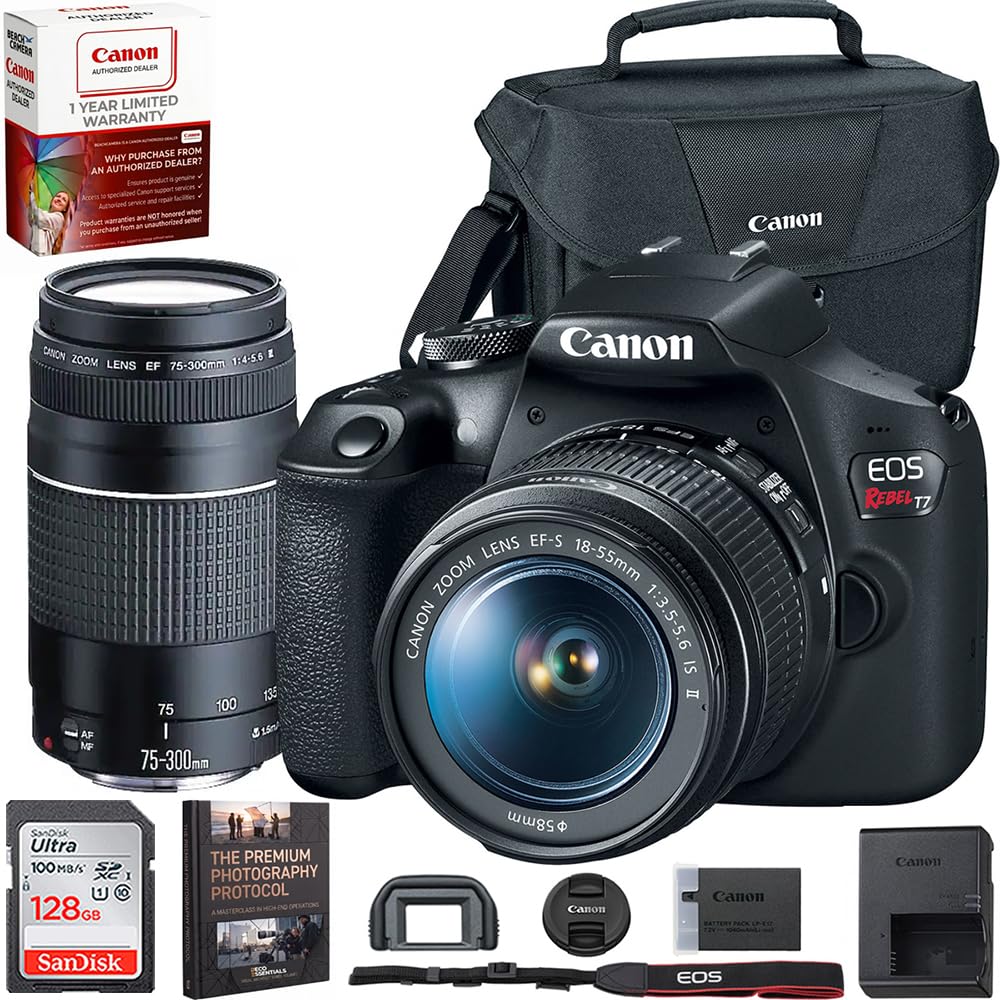
The two-lens Canon kit that gets you into telephoto range on day one.
This is the best-selling Canon starter bundle for a reason: it gives you both a standard zoom (18-55mm f/3.5-5.6 IS II) for sweeping landscapes and a dedicated telephoto (75-300mm f/4-5.6 III) for reaching wildlife. The 24.1MP APS-C CMOS sensor paired with the DIGIC 4+ processor produces sharp, vibrant images that owners describe as “great pictures” and “wonderful photos.” The 9-point autofocus system with AI Servo AF keeps up with moving subjects, and the built-in Wi-Fi/NFC lets you share shots from the field via the Canon Camera Connect app.
With 87 positive mentions for quality and 43 for value for money, owners clearly feel this is a smart purchase. The bundle includes a 128GB memory card and a camera bag, making it a true out-of-the-box solution. A few owners note that the 75-300mm telephoto lens is a basic design — it works well in good light but struggles in low light compared to faster, more expensive glass. The 14-bit depth on this model is a step up from the 12-bit depth on the standard T7 kit, giving you slightly better editing flexibility.
The 3.0-inch 920k-dot LCD is fine for framing, though it is fixed (not tilting), which makes ground-level shots difficult. The 3 fps burst rate is slow for action, so bird-in-flight photography will test your timing. But the Canon EF/EF-S lens mount gives you a massive upgrade path: hundreds of lenses to grow into.
Starter telephoto advantage
- Two-lens kit covers wide landscapes and moderate wildlife reach
- Quality is the most-praised aspect with 87 owner mentions
- 128GB card and bag included — shoot immediately
- Canon lens ecosystem is vast for future upgrades
Where it cuts corners
- Only 9 autofocus points limit tracking of fast-moving wildlife
- Fixed LCD — no tilting for awkward angles
- 3 fps burst rate is slow for action shots
Perfect for the Canon-curious beginner: If you want an affordable way to get both a standard zoom and a telephoto lens in one box, this kit gives you the tools to explore landscape and wildlife photography and then build out from the EF lens lineup.
Look elsewhere if: You are already committed to Nikon or need faster autofocus and burst rates for serious wildlife action.
10. Canon Rebel T7 Kit
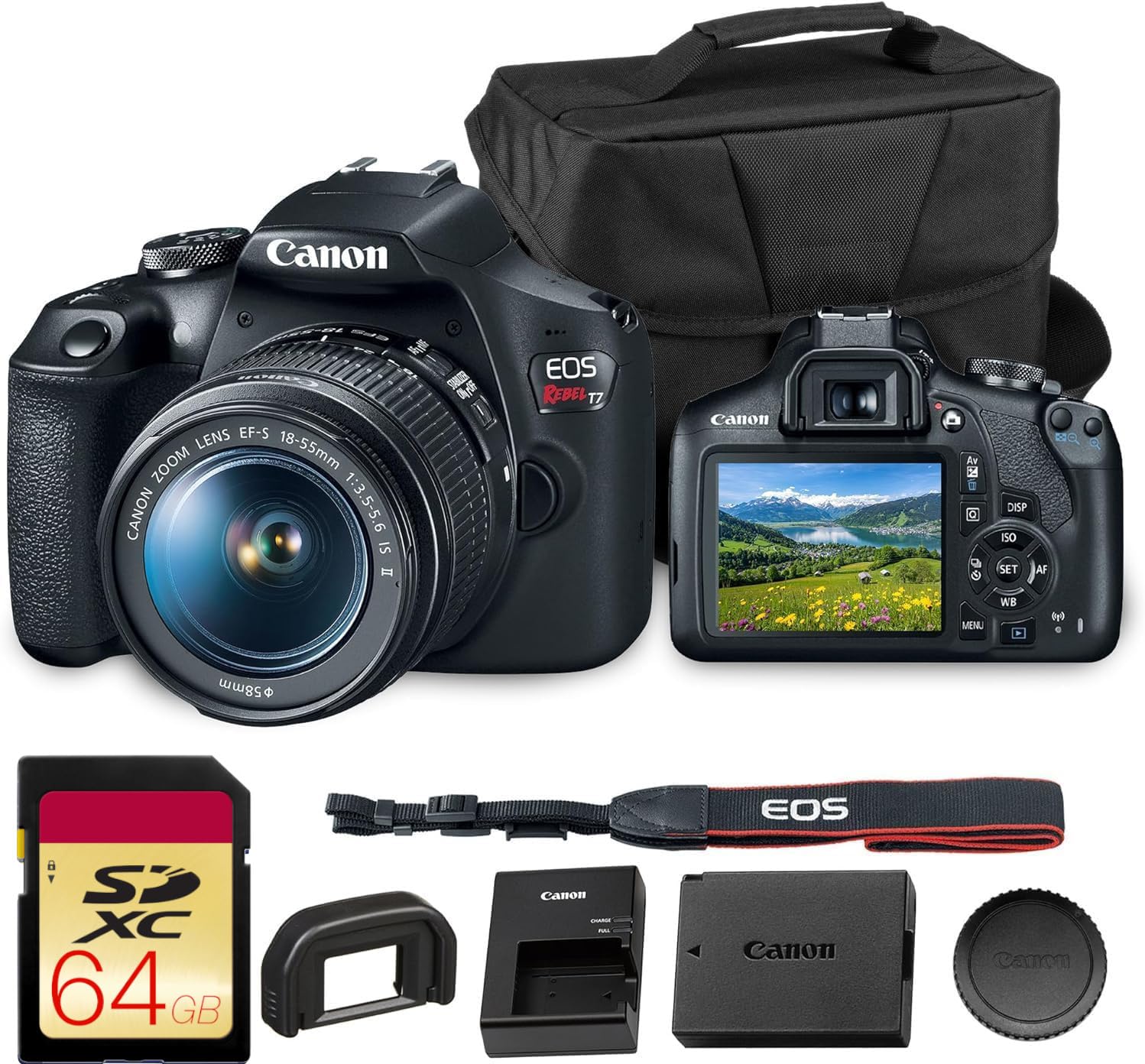
The simplest path into DSLR nature photography for absolute beginners.
If you have never used a DSLR, this is the kit that makes it easy. The 24.1MP APS-C CMOS sensor and DIGIC 4+ processor work together to produce vibrant, clear images in auto mode — owners say it is “so easy to use” and that “both still pictures and video clear.” The 9-point autofocus is basic but functional for static nature subjects like flowers, trees, and posed animals. The built-in Wi-Fi and NFC let you transfer photos to your phone directly from the field, skipping the cable step.
The bundle includes a 64GB memory card and a shoulder bag, so you are ready the moment the box opens. The 18-55mm lens covers wide-angle landscapes well, and the 3.0-inch LCD is responsive for reviewing shots. Owners specifically call out the video stabilizer as a plus. Quality earns 62 positive mentions from owners, with picture quality at 30 and value for money at 27. The compatibility with the vast Canon EF/EF-S lens lineup means you can grow into better glass as your skills advance.
The 9 autofocus points are the biggest limitation; the 5D Mark IV has 61 autofocus points. You will miss action shots that require constant tracking. The 12-bit depth is also lower than the 14-bit found on the D7500 or D850, giving you less room to recover shadows in post. The camera does not include an external microphone input, so audio quality for video recording is limited. Still, for a budget-friendly entry point into DSLR nature photography, it is a capable and well-loved choice.
Best for true beginners: A lightweight, user-friendly body with simple controls that produce great results from the start. The app and Wi-Fi connectivity are “perfect to connect with family” and make sharing easy. If you are teaching yourself nature photography from scratch, this is a patient teacher.
Ideal learning tool: The Rebel T7 is for the absolute beginner who wants a reliable, no-fuss DSLR to learn the basics of aperture, shutter speed, and composition on static nature subjects.
You will hit its ceiling quickly if: You plan to shoot moving wildlife, need rugged weather sealing, or want professional low-light performance. This is a stepping stone, not a destination.
11. Canon Rebel T7 Bundle (Renewed)

The cheapest way into the Canon ecosystem with a full accessory stack.
This renewed bundle is exactly what it sounds like: a Canon EOS 2000D (Rebel T7) body with the EF-S 18-55mm lens, plus a SanDisk 32GB card, tripod, camera case, and wide-angle lenses — all at a price point that makes DSLR ownership accessible. The 24.1MP APS-C sensor delivers the same core imaging quality as the new Rebel T7, and the built-in Wi-Fi with NFC lets you control the camera remotely from your phone and transfer shots instantly.
The 9-point autofocus is basic, and the 12-bit depth is a step below the 14-bit you would find on higher-end bodies, but for learning the fundamentals of exposure and composition on landscapes, flowers, and daytime wildlife, it gets the job done. Owners say it is “amazing” and “simple to use, easy to understand” — the camera does not get in your way. The bundle includes a tripod and extra lenses that are not professional-grade but let you experiment with different focal lengths and angles immediately.
Functionality and compatibility both receive mixed reviews. The entry-level body has no weather sealing, so keep it dry. The tripod and accessory lenses are basic; you will outgrow them quickly. The 32GB card is small by modern standards — you may want a larger card for high-volume shoots. But for a sub- investment that introduces you to the Canon system and includes a full accessory set, this is a compelling starting point.
Unbeatable entry price
- Most affordable path into the Canon DSLR ecosystem
- Includes tripod, case, extra lenses, and memory card — no extra purchases needed
- Built-in Wi-Fi and NFC for remote control and sharing
- 24.1MP sensor produces good daytime image quality
Renewed realities
- No weather sealing — use with care in damp conditions
- 9 autofocus points and 12-bit depth limit flexibility in low light and action
- Bundle accessories are entry-level quality; you will want to upgrade them
- 32GB card fills up fast with RAW images
Reach for this if: Your budget is tight and you want a full DSLR kit — camera, lenses, case, tripod — to start learning nature photography on landscapes and daytime wildlife.
Plan your upgrade path: This is a learning tool, not a long-term body. The accessory glass and small card will be the first things you replace. But it gets you in the game.
Understanding the Specs
Autofocus Points and Why They Matter
Autofocus points are like tiny sensors across the viewfinder that tell the camera where to lock focus. A 9-point system (found on the Canon Rebel T7 line) works fine for a stationary flower. A 51-point or 153-point system (like the D7500 or D850) can track a bird zig-zagging through branches because it covers much more of the frame and uses cross-type sensors that detect contrast in any direction. For nature photography, more points equal fewer missed shots.
Sensor Size: Full-Frame vs. APS-C (DX)
Full-frame sensors (like the 30.4MP in the Canon 5D Mark IV or the 45.7MP in the Nikon D850) capture a wider field of view per lens and perform significantly better in low light because each pixel is larger. APS-C / DX sensors (in the Rebel T7, D5600, D3300, and D7500) are smaller, which gives you a 1.5x “crop factor” —crop factor” — your 200mm lens acts like a 300mm, which is actually an advantage for wildlife reach on a budget. The trade-off is more noise in low light and less dynamic range for landscape edits.
FAQ
Do I need a full-frame camera for nature photography?
How many autofocus points do I need for wildlife?
Is 24 megapixels enough for nature photography?
What is the crop factor and how does it affect my lens choice?
Does weather sealing matter for outdoor photography?
Can I use my existing lenses on a new DSLR body?
What is the difference between bit depth 12-bit and 14-bit for nature photos?
How important is frame rate (fps) for wildlife?
What memory card type should I use for nature photography?
Should I buy a kit with extra lenses or body only?
Final Thoughts: The Verdict
For the majority of shoppers, the dslr for nature photography winner is the Canon EOS 5D Mark IV because it combines a proven full-frame sensor, blazing-fast autofocus, and the deepest owner satisfaction in this list. If you want the extreme resolution and cropping power for distant wildlife and large prints, grab the Nikon D850. And for a fast, rugged mid-range body that punches above its weight in speed and autofocus, the Nikon D7500 is the one to reach for. Your choice depends on one question: what kind of light and subject do you shoot most?
How We Picked
We do not accept paid placement. Every pick is matched to a real buyer and a real use-case; we do not hands-on test units.
Sources & Methodology
Specifications: manufacturer listings and product documentation. Review insights: verified customer reviews, as of July 2026. Pricing: not shown on this page (it changes often); check the current price via the retailer link.
As an Amazon Associate, WellFizz earns from qualifying purchases. This does not affect which products we feature.
Related Guides

Mo Maruf
I created WellFizz to bridge the gap between vague wellness advice and actionable solutions. My mission is simple: to decode the research and give you practical tools you can actually use.
Beyond the data, I am a passionate traveler. I believe that stepping away from the screen to explore new environments is essential for mental clarity and physical vitality.