Our readers keep the lights on and my smoothie glass nicely filled. As an Amazon Associate, I earn from qualifying purchases.
Stepping into a dedicated camera for the first time means leaving auto mode behind. A true beginner’s DSLR needs to deliver clear, crisp images straight out of the box while hiding advanced controls just beneath the surface for when you’re ready to experiment with aperture and shutter speed. The wrong choice buries you in menus; the right one hands you a tool that feels familiar from the first frame.
I’m Mohammad Maruf — the founder and writer behind WellFizz. I have spent years filtering through technical spec sheets, comparing sensor resolutions, autofocus point counts, and optical viewfinder coverage to separate entry-level winners from marketing fluff.
After examining dozens of models across both new and factory-renewed inventory, the dslr camera for beginners that balances user-friendly controls, solid image quality, and a clear path for skill growth stands out from the pack.
How To Choose The Best DSLR Camera For Beginners
The first DSLR purchase is a gateway to understanding exposure triangle fundamentals. Three factors separate a device that teaches well from one that frustrates: sensor performance in everyday light, autofocus speed for moving subjects, and the ecosystem of affordable glass you can grow into.
Sensor Size and Megapixel Reality
An APS-C sensor around 24 megapixels is the sweet spot for entry-level bodies. Above that mark, image files get large without visible detail gains — below it, you lose cropping flexibility. More important than pixel count is the absence of an optical low-pass filter, which lets the sensor resolve sharper detail at the cost of potential moiré patterns that rarely appear in real-world shooting.
Autofocus System Depth
Entry-level DSLRs typically carry 9 to 11 autofocus points with a single cross-type sensor in the center. This covers basic portrait and landscape scenarios well. However, cameras with 19 or 51 points — even on older models — offer better subject tracking for pets, kids, or casual sports. The difference becomes apparent the first time you try to lock focus on a moving target in continuous AF mode.
Optical Viewfinder vs Live View
A true DSLR’s pentamirror or pentaprism viewfinder shows you the exact scene through the lens with zero lag. This is the defining advantage over smartphone photography. Look for a viewfinder with at least 95% frame coverage so you get what you see without surprise cropping around the edges.
Quick Comparison
On smaller screens, swipe sideways to see the full table.
| Model | Category | Best For | Key Spec | Amazon |
|---|---|---|---|---|
| Nikon D7500 | Premium | Skill growth & action | 51-point AF / 8 fps burst | Amazon |
| Canon EOS RP | Premium | Full-frame entry | 26.2MP full-frame sensor | Amazon |
| Canon T7 + 75-300mm Bundle | Mid-Range | Telephoto versatility | Two-lens kit (18-55 + 75-300) | Amazon |
| Canon Rebel T7 Kit | Mid-Range | Complete starter bundle | 24.1MP / built-in Wi-Fi | Amazon |
| Canon EOS R100 | Mid-Range | Compact mirrorless | 143 AF zones / eye detect | Amazon |
| Canon T7 Double Zoom Bundle | Mid-Range | Travel & wildlife starter | 18-55mm + 75-300mm + 500mm | Amazon |
| Canon EOS 2000D Kit (Renewed) | Value | Large accessory bundle | 24.1MP / 128GB SD card | Amazon |
| Canon EOS 2000D Double Lens Bundle | Value | Dual lens budget kit | 18-55mm + 75-300mm + flash | Amazon |
| Canon 2000D + Telephoto Bundle | Value | Long reach on a budget | 18-55mm + 75-300mm + 500mm | Amazon |
| Nikon D3400 (Renewed) | Value | Entry-level sharpness | 24.2MP / no low-pass filter | Amazon |
| EOS 4000D Bundle | Value | Budget-friendly kit | 18MP sensor / 19-point AF | Amazon |
In‑Depth Reviews
1. Nikon D7500 + 18-140mm VR Lens

The D7500 is a semi-professional body that beginners can grow into for years. Its 20.9MP sensor inherits image processing from Nikon’s D500 flagship, delivering clean JPEGs straight out of camera with minimal noise up to ISO 6400. The 51-point autofocus system with 15 cross-type sensors covers the frame much more generously than entry-level 9-point systems, making it far easier to track a running child or a dog at the park.
The bundled 18-140mm f/3.5-5.6 VR lens is the star of this kit. It replaces the need for two separate lenses by covering wide-angle to medium telephoto in one barrel, and the optical Vibration Reduction steadies handheld shots at slower shutter speeds. The 3.2-inch tilting touchscreen is responsive and makes low-angle or overhead composition simple without contorting your spine.
At roughly 640 grams for the body alone, this is a heavier kit than entry-level options. The trade-off is weather sealing, a deeper grip, and a pentaprism viewfinder that shows 100% frame coverage. If your budget allows and you are serious about learning photography beyond auto modes, this body eliminates the need for an upgrade two years down the line.
Why it’s great
- Pro-grade 51-point AF system tracks moving subjects with confidence
- 18-140mm lens covers wide to telephoto without swapping glass
- Weather-sealed body for outdoor shooting in light rain or dust
Good to know
- Body weight may feel substantial compared to compact mirrorless options
- Single UHS-I SD card slot limits backup flexibility for paid work
2. Canon EOS RP + RF 24-105mm

A full-frame camera at an entry-level price point changes the game for depth of field and low-light performance. The EOS RP’s 26.2MP sensor delivers noticeably shallower background blur than any APS-C body, even with the kit lens, and its noise profile remains clean at ISO 3200 — ideal for indoor family gatherings or evening street photography without a flash.
The RF 24-105mm f/4-7.1 IS STM lens is a versatile walk-around companion. The optical image stabilization offers up to 5 stops of shake correction, which means sharp handheld shots at 1/15 second are achievable with steady technique. The Dual Pixel CMOS AF system covers the frame edge-to-edge with fast, silent phase detection — a huge leap over the contrast-detect systems in older entry-level DSLRs.
Battery life is the primary concession here. CIPA-rated at roughly 250 shots per charge, you will want at least one spare LP-E17 battery for a full day out. The body itself is the lightest full-frame mirrorless Canon makes at just 440 grams, making it genuinely travel-friendly. Beginners who prioritize image quality over burst speed will find this a rewarding first serious camera.
Why it’s great
- Full-frame sensor provides superior low-light performance and bokeh
- Compact body at 440g pairs well with travel and day bags
- Dual Pixel AF with eye detection locks focus reliably on faces
Good to know
- Kit lens aperture closes to f/7.1 at the telephoto end, limiting low-light reach
- Battery life requires spares for all-day outings
3. Canon T7 + 18-55mm IS II & 75-300mm Bundle
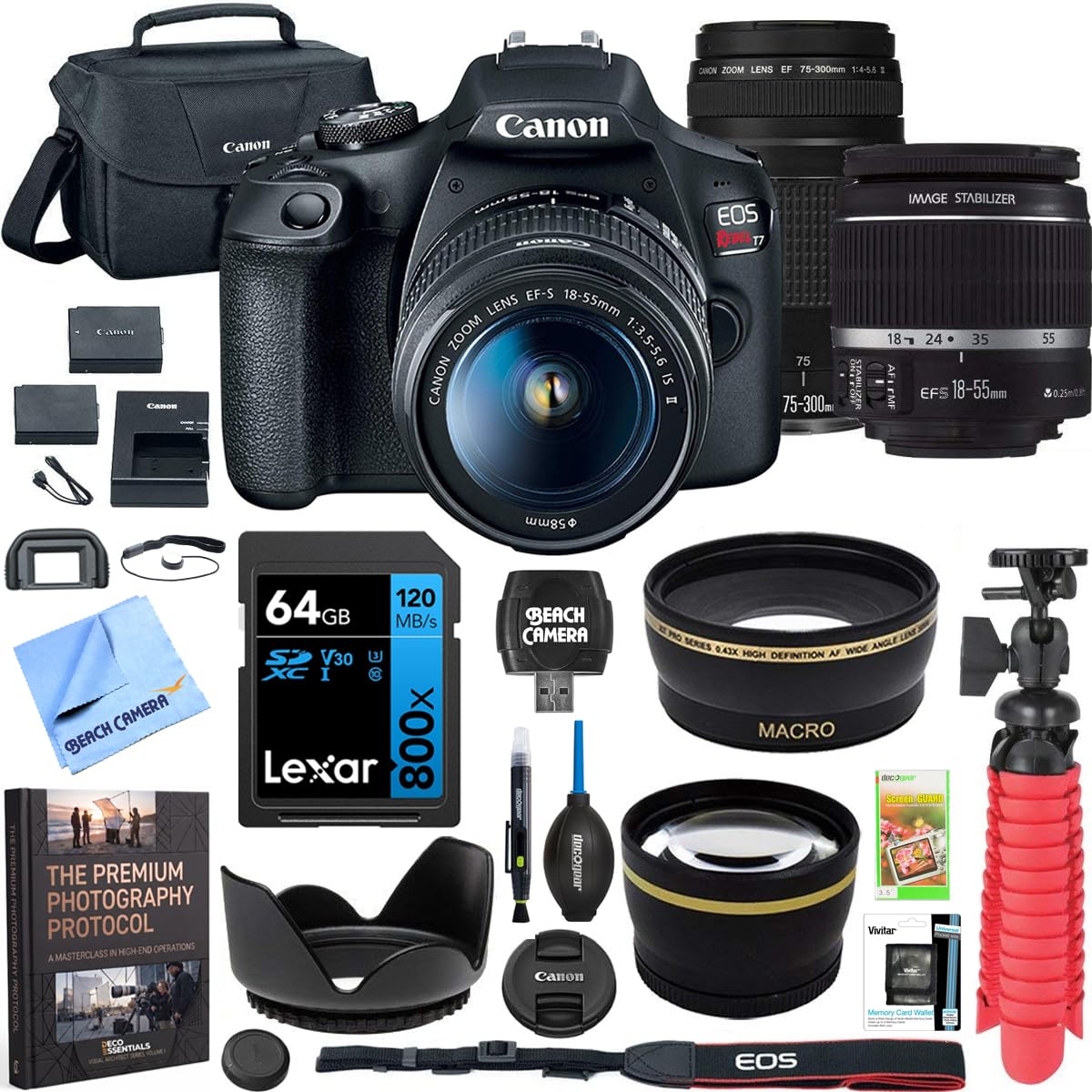
This bundle delivers the Canon T7 body with both the standard 18-55mm IS II zoom and a 75-300mm telephoto lens, giving beginners instant access to portrait compression and wildlife reach without buying additional glass. The 24.1MP APS-C sensor with DIGIC 4+ processor captures colorful, detailed images that outclass any smartphone in optical depth and dynamic range.
Built-in Wi-Fi and NFC allow quick transfers to the Canon Camera Connect app, so you can review shots on your phone and share them to social media minutes after capture. The optical viewfinder offers 95% frame coverage, letting you frame accurately without the lag of electronic displays. The 9-point AF system with a center cross-type sensor handles static subjects well, though tracking fast action requires careful pre-focus.
The accessory bundle adds a 64GB SD card, tabletop tripod, filter kit, and cleaning tools — everything you need except a larger bag. The second LP-E10 battery is a thoughtful inclusion since the stock battery lasts about 500 shots per charge. For the price of a mid-range compact, you get a complete system that covers most beginner scenarios out of the box.
Why it’s great
- Two-lens kit covers 18mm wide to 300mm telephoto for versatile shooting
- Wi-Fi and NFC enable instant image sharing to a smartphone
- Bundle components like extra battery and tripod add real starter value
Good to know
- 9-point AF system limits tracking performance for fast-moving subjects
- Included bag may feel cramped with both lenses and accessories loaded
4. Canon EOS Rebel T7 Complete Kit
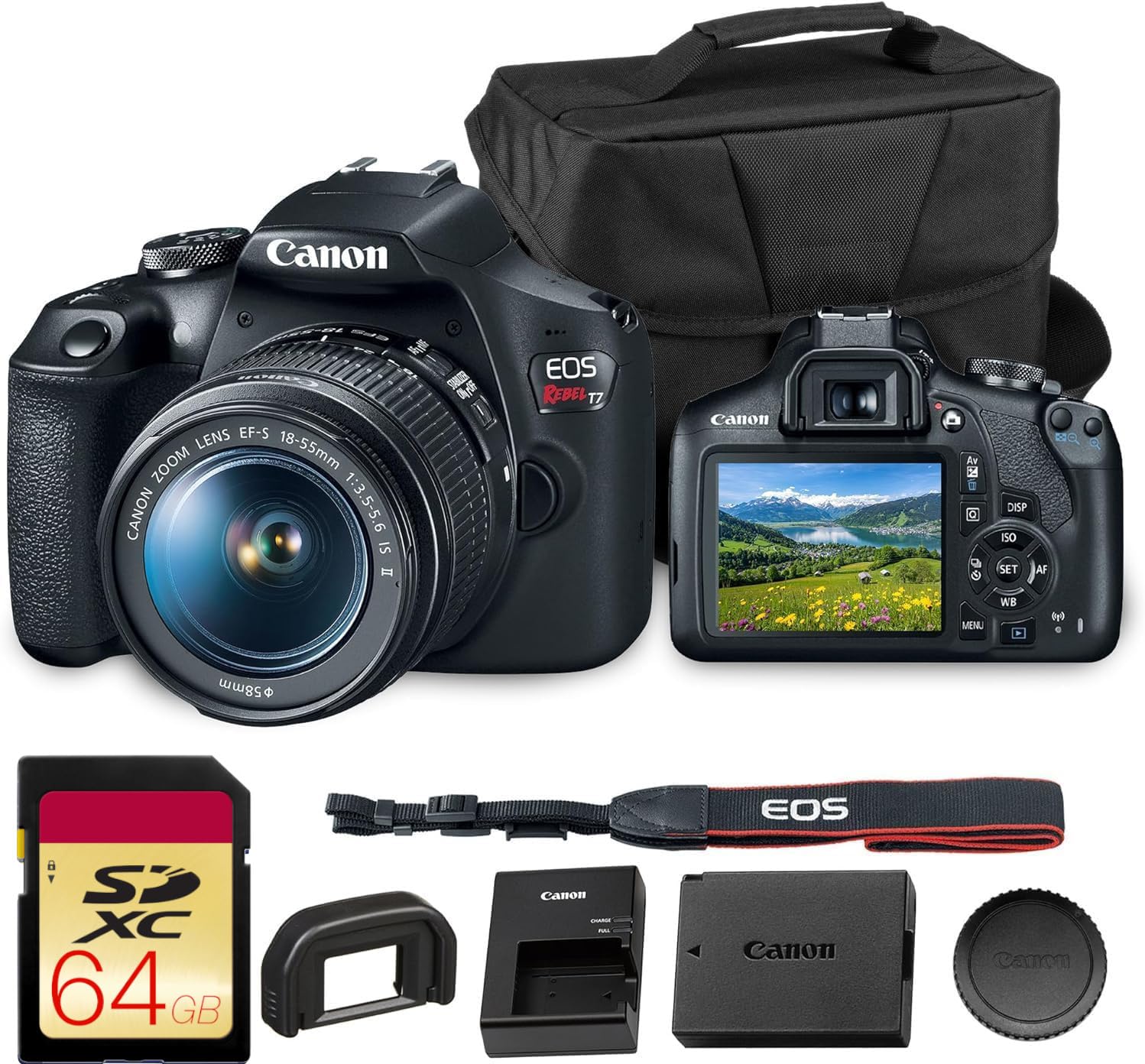
The factory-fresh Rebel T7 kit is Canon’s most straightforward entry point. The 24.1MP APS-C sensor paired with the DIGIC 4+ processor produces vibrant JPEG colors that require little to no post-processing — a major confidence booster for someone who has only ever used a phone camera. The included 18-55mm f/3.5-5.6 IS II lens provides optical image stabilization that reduces blur in handheld shots.
Scene Intelligent Auto mode analyzes the scene and selects the appropriate settings automatically, while Creative Auto mode lets you adjust background blur and brightness without learning aperture and shutter speed jargon. The on-board Feature Guide explains each setting in plain language, turning the camera into a teaching tool. The 3.0-inch LCD with 920k dots is bright enough for outdoor review.
The kit also includes a 64GB SD card and a branded shoulder bag, removing two accessory guesswork items. Wi-Fi connectivity works reliably with the Canon app for remote capture and file transfer. The 9-point AF system and 3 fps continuous shooting are dated by modern standards, but for family portraits, vacation landscapes, and learning the exposure triangle, this bundle simplifies the first step.
Why it’s great
- Scene Intelligent Auto mode makes first-time use intuitive and successful
- On-board Feature Guide teaches exposure concepts without a manual
- Includes bag and 64GB card for immediate out-of-box use
Good to know
- DIGIC 4+ processor shows its age in burst speed and noise handling
- 3 fps continuous shooting struggles with fast action sequences
5. Canon EOS R100 + RF-S 18-45mm

For beginners drawn to mirrorless size but wanting DSLR-type controls, the EOS R100 is the lightest and smallest body in Canon’s EOS R series. The 24.1MP APS-C sensor with DIGIC 8 processor supports 4K video at 24 fps and a 6.5 fps burst rate in One-Shot AF mode. The retractable RF-S 18-45mm kit lens collapses flush with the body for jacket-pocket storage.
Autofocus is where this camera punches above its entry-level price. The Dual Pixel CMOS AF system covers 143 zones with human face and eye detection, so portraits are consistently sharp without manual focus adjustments. Animal and vehicle detection modes are also available, making this an excellent travel camera for zoo trips or scenic drives.
The compact body does make some ergonomic compromises. The grip is shallow, and the single control dial requires diving into menus for aperture or shutter changes in manual mode. Battery life is roughly 400 shots per charge. For a beginner who values portability and modern AF technology over traditional DSLR heft, the R100 is a satisfying gateway into interchangeable-lens photography.
Why it’s great
- Dual Pixel CMOS AF with 143 zones enables reliable face and eye tracking
- Retractable kit lens produces an ultra-compact carry size
- 4K video recording expands creative options beyond stills
Good to know
- Single control dial makes manual exposure adjustments less fluid
- Shallow grip may feel insecure with heavier telephoto lenses
6. Canon T7 Double Zoom + 500mm Bundle
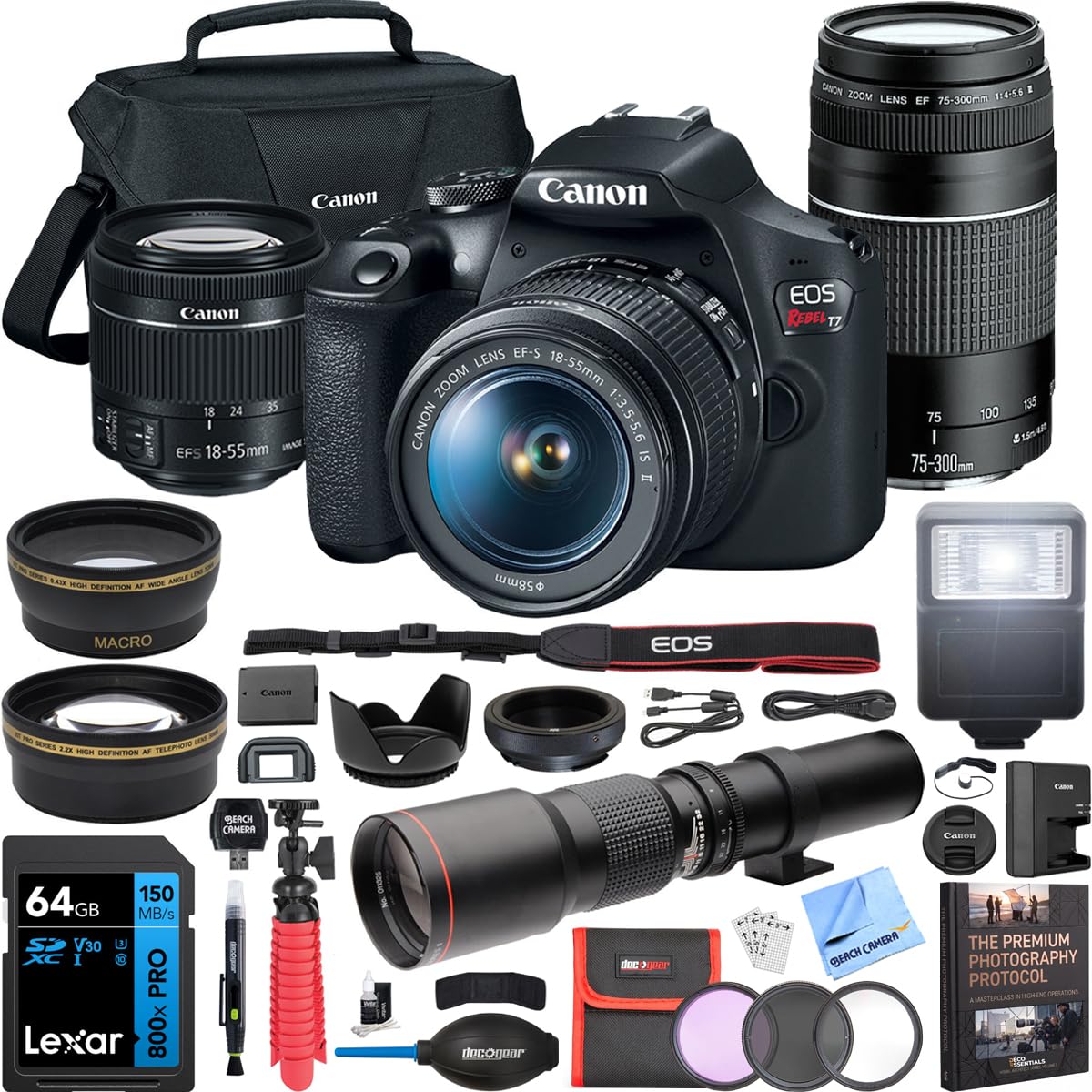
This 13-item bundle takes the standard T7 formula and adds a 500mm preset telephoto lens for extreme reach. The 24.1MP sensor and DIGIC 4+ engine remain the same reliable core, producing the same sharp 1080p video and vibrant JPEGs. What changes is the ability to photograph distant birds, moon craters, or stage performances without a second mortgage on lens glass.
The 500mm f/8 preset lens is a manual-focus-only optic with a fixed aperture. It requires good light and steady hands — or the included tabletop tripod — to get sharp results. The 0.43x wide-angle and 2.2x telephoto screw-on adapters add further versatility, though optical quality drops at the extremes. The included flash unit provides fill light for indoor events.
The 64GB Lexar 800x SD card and card reader are quality inclusions, and the memory card storage case keeps spares organized. The bag, as with many bundles, is functional but snug once you add the 500mm lens and flash. For a beginner who knows they want to shoot distant subjects from day one, this bundle removes the need for an immediate lens upgrade.
Why it’s great
- 500mm preset lens provides moon and wildlife reach on a first budget
- Full Canon USA warranty on the camera body and main lenses
- 13-piece kit includes flash, tripod, and high-speed memory card
Good to know
- 500mm lens requires manual focus and bright daylight for usable results
- Bag is too small to comfortably hold all bundle components at once
7. Canon EOS 2000D (Rebel T7) 3-Lens Kit Renewed

The 2000D is essentially the same camera as the Rebel T7 but sold under the international model number. This renewed kit adds a wide-angle adapter and a telephoto adapter that screw onto the front of the standard 18-55mm lens, giving beginners a taste of different perspectives without buying additional dedicated glass. The 24.1MP sensor with DIGIC 4+ delivers the same image quality as the factory-fresh T7.
The 128GB memory card is a generous inclusion — enough for thousands of RAW+JPEG pairs before needing replacement. The 9-point AF system with a center cross-type point handles stationary subjects reliably, and Scene Intelligent Auto mode does a solid job balancing exposure in mixed lighting. The 3.0-inch 920k-dot LCD is adequate for composition and playback.
As a renewed unit, cosmetic condition varies, and the battery may show reduced capacity. The included flash, filter kit, and tripod pad out the kit, though the tripod is best suited for tabletops rather than full-height use. For a sub- entry point into the Canon EF-S ecosystem, this bundle offers the most storage and lens accessories per dollar.
Why it’s great
- 128GB card provides massive storage for extended shooting sessions
- Wide-angle and telephoto adapters introduce different focal lengths cheaply
- Renewed pricing drops the entry barrier below equivalent new kits
Good to know
- Screw-on lens adapters reduce optical quality compared to true lenses
- Renewed battery may need replacement sooner than a new unit
8. Canon EOS 2000D Double Lens Bundle Renewed

This 21-piece renewed bundle pairs the Canon 2000D body with the EF-S 18-55mm f/4-5.6 and EF 75-300mm f/4-5.6 III lenses, giving beginners a proper wide-to-telephoto range without relying on screw-on adapters. The 24.1MP sensor and DIGIC 4+ processor remain unchanged from the T7, so image quality is predictable and solid for an entry-level APS-C camera.
The ZeeTech accessory bundle adds a full-size tripod, 58mm filter kit, tulip lens hood, ultra-bright slave flash, and a 64GB SanDisk memory card. The camera backpack accommodates the body and both lenses comfortably, which is a step up from the shoulder bags found in cheaper bundles. Wi-Fi and NFC are built-in, allowing wireless image transfer to the Canon app.
The slave flash is a noticeable upgrade over the built-in flash, providing bounce capability for softer indoor lighting. The 9-point AF system is the same limitation as all T7 variants — adequate for static scenes but not for action. Renewed condition may show minor scuffs, and the aftermarket tripod is functional but not stable enough for heavy telephoto lenses.
Why it’s great
- Two genuine Canon lenses provide true optical quality across zoom range
- Slave flash adds bounce lighting capability for indoor portraits
- Camera backpack carries body and lenses conveniently compared to strap bags
Good to know
- 9-point AF system limits continuous tracking for moving subjects
- Aftermarket tripod is not sturdy enough for heavy telephoto lens use
9. Canon 2000D + 500mm Preset Lens Bundle Renewed

This renewed kit bundles the Canon 2000D body with the standard 18-55mm IS II kit lens, a 75-300mm telephoto, and a 500mm preset telephoto lens. The 500mm f/8 lens is a prime-style preset optic with no autofocus — you pre-focus at a set distance and move to compose. In good daylight, it delivers usable results for birds and distant architecture at a fraction of the cost of a genuine 500mm lens.
The 24.1MP sensor with DIGIC 4+ processor supports Full HD video and has built-in Wi-Fi for smartphone image transfer. The included monopod is essential for managing the 500mm lens’s weight and preventing camera shake. A 32GB memory card and filter kit round out the bundle, making it ready for outdoor shooting immediately.
The 9-point AF system and 3 fps burst speed are the same limitations found across the T7 platform. Renewed quality can be inconsistent, with some units arriving in like-new condition and others showing wear. This is a niche pick for a beginner who knows they want extreme reach on a tight budget and is comfortable with manual focus techniques.
Why it’s great
- 500mm preset lens provides super-telephoto reach at entry-level pricing
- Monopod included helps stabilize long glass for sharper results
- Wi-Fi connectivity enables easy sharing from the field
Good to know
- 500mm preset lens requires manual focusing and abundant light
- Renewed condition may vary between units
10. Nikon D3400 + 18-55mm VR Renewed

The D3400 uses a 24.2MP DX-format sensor that omits the optical low-pass filter, giving it a measurable sharpness advantage over many entry-level competitors at the same price point. The EXPEED 4 processor delivers fast start-up and snappy menu navigation. The 18-55mm VR kit lens provides vibration reduction that compensates for shaky hands at moderate focal lengths.
SnapBridge Bluetooth connectivity automatically transfers 2MP versions of each shot to your smartphone for quick sharing, though the full-res transfer is manual. The battery life is rated at roughly 1200 shots per charge — best-in-class for this tier — meaning fewer mid-outing recharge anxiety. The 11-point autofocus system with a single cross-type sensor is basic but reliable in good light.
As a renewed model, this D3400 often arrives in near-mint condition but may include a generic battery rather than the original Nikon LP-E10. The absence of a standard USB charging port means you need the dedicated charger. For a beginner who wants the sharpest possible images at the lowest possible entry point and does not need built-in Wi-Fi, this is a formidable starting point.
Why it’s great
- No OLPF sensor resolves finer detail than typical entry-level cameras
- 1200-shot battery life surpasses most mirrorless options by a wide margin
- VR kit lens reduces blur in common handheld shooting scenarios
Good to know
- SnapBridge only transfers 2MP previews by default, not full resolution
- Renewed unit may arrive with a generic battery instead of original Nikon
11. Canon EOS 4000D + 18-55mm III Bundle Renewed

The EOS 4000D is Canon’s most stripped-down DSLR, using a 18MP APS-C sensor that is lower resolution than any other camera in this roundup. However, that 18MP sensor still has 19 times more surface area than a typical smartphone sensor, producing significantly better low-light performance and depth of field. The DIGIC 4+ processor handles the lower data load efficiently, resulting in snappy menu browsing.
The Pixi Advanced bundle includes a wide-angle adapter, a 2.2x telephoto adapter, a tripod, a UV filter, and a cleaning kit. In live view mode, autofocus is noticeably slower than higher-end Canon models, but the optical viewfinder offers instant response for framing.
The 2.7-inch LCD screen with 230k dots is the most obvious downgrade — it is dimmer and less detailed than the 920k-dot screens on T7-series cameras. No memory card is included, so factor that into your initial purchase. For absolute entry on a constrained budget, this bundle gets you into the Canon EF/EF-S ecosystem with the lowest possible outlay, though the image quality ceiling is lower than the other options here.
Why it’s great
- Lowest entry cost into Canon’s EF/EF-S lens ecosystem
- 19-point AF system offers more coverage than some higher-priced models
- Bundle includes tripod, filter kit, and cleaning accessories
Good to know
- 18MP sensor offers less resolution and cropping flexibility than 24MP competitors
- 2.7-inch 230k-dot LCD is noticeably low-resolution and dim for review
FAQ
Should I buy a DSLR or a mirrorless as a beginner in 2025?
Does a higher megapixel count always mean better image quality?
What lens should I buy after the kit lens for beginners?
How important is image stabilization (VR / IS) in a camera body or lens?
Final Thoughts: The Verdict
For most users, the dslr camera for beginners winner is the Nikon D7500 because its 51-point AF system, 8 fps burst rate, and weather-sealed body provide room to grow into semi-professional work without an immediate upgrade. If you want full-frame image quality and a compact body for travel photography, grab the Canon EOS RP. And for the best value-to-accessory ratio straight out of the box, nothing beats the Canon T7 Two-Lens Bundle.

Mo Maruf
I created WellFizz to bridge the gap between vague wellness advice and actionable solutions. My mission is simple: to decode the research and give you practical tools you can actually use.
Beyond the data, I am a passionate traveler. I believe that stepping away from the screen to explore new environments is essential for mental clarity and physical vitality.