Our readers keep the lights on and my smoothie glass nicely filled. As an Amazon Associate, I earn from qualifying purchases.
Specs are compiled from manufacturer listings and verified buyer reviews and can change over time — please confirm the key details on the product page before buying.
If your dryer is suddenly taking two cycles to actually dry a load, the problem is probably hiding behind the machine — a crushed, kinked, or lint-choked vent hose. This guide compares the top dryer vent hose options on the market, breaking down the real specs and owner experiences so you can pick the one that fits your space and keeps your dryer working at full power. We’re digging into length, layer construction, heat ratings, and connector styles to make the decision clear.
I’m Mohammad Maruf — the founder and writer behind WellFizz. This guide is built by comparing the manufacturers’ published specifications and the patterns across verified customer reviews, so you get each pick’s real strengths and trade-offs instead of marketing spin.
The perfect dryer vent hose balances flexibility with heavy-duty layers to prevent kinks, keep heat in check, and move lint efficiently without leaks.
Our Picks at a Glance

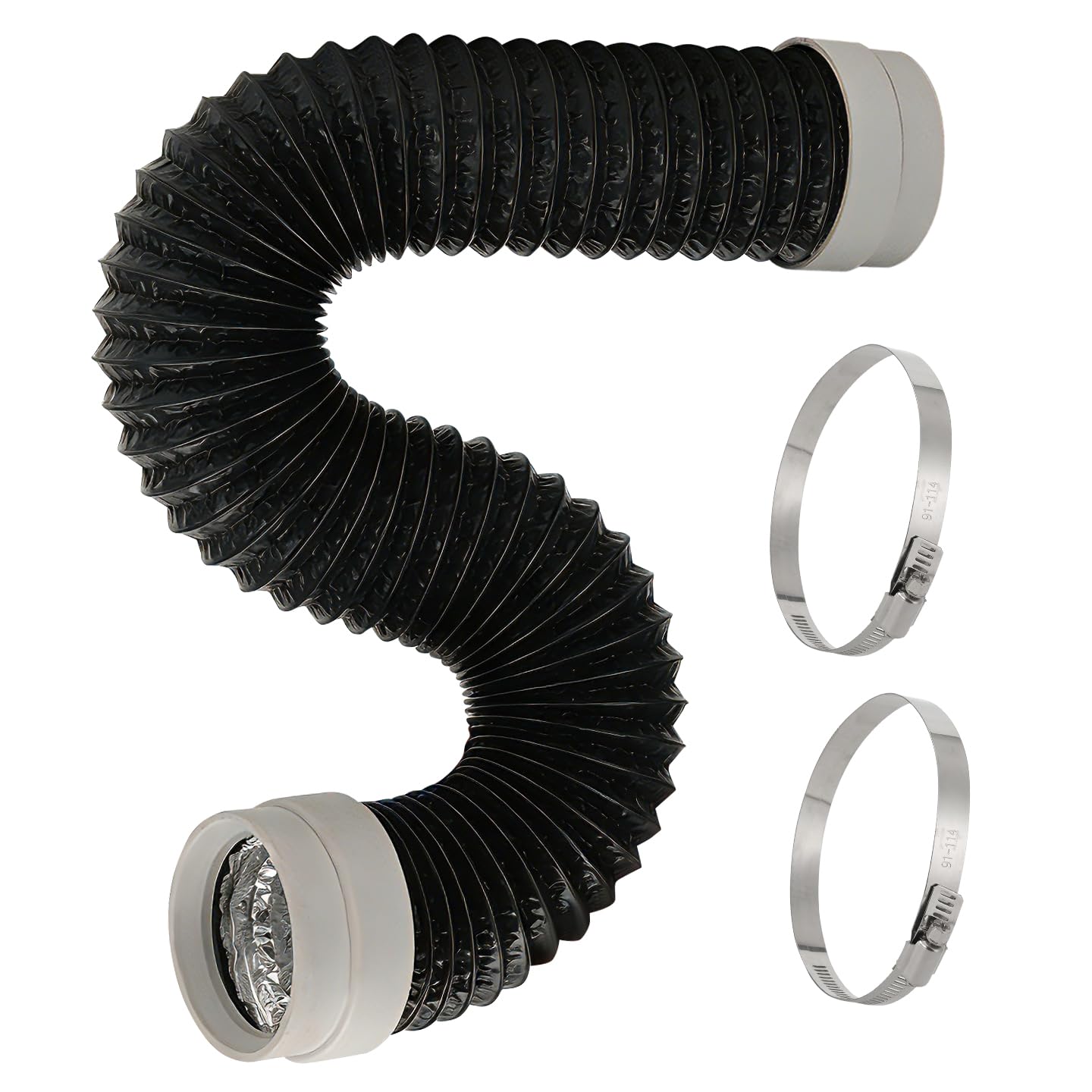
How To Choose The Best Dryer Vent Hose
A dryer vent hose does one job — carry hot, moist air and lint from your dryer to the outside. If it can’t do that cleanly, you get longer drying times, higher energy bills, and a fire risk in your laundry room. The right hose resists crushing, handles heat, and fits your exact layout without kinking.
Match the length to your dryer’s location
Measure the actual distance from your dryer’s exhaust port to the wall vent before you buy. Too short a hose means a stretched, strained connection that can pull loose. Too long a hose means extra length that can sag and collect lint. Flexible hoses can compress and extend, so buy slightly longer than your measurement and leave a little slack for when the dryer vibrates or gets pushed back.
Look at the layer construction for durability
Cheaper hoses use a single foil layer that tears easily and collapses under the weight of the machine. Better hoses build up multiple layers — typically 2 layers of aluminum foil, a few layers of PET, a steel wire spiral, and a PVC coating. The steel wire is what keeps the hose from crushing flat when your dryer is pushed tight against the wall. The PVC outer layer adds protection against punctures and helps muffle the noise of the air rushing through.
Check the heat resistance rating
Dryer exhaust gets genuinely hot, especially in tight spaces where heat builds up. Look for a hose with a clear temperature rating — many of the best on the market are rated up to 212°F, which covers standard dryer operation. Semi-rigid aluminum options can go even higher, sometimes up to 482°F, because they’re built for maximum fire safety. If your dryer is up against drywall, a well-insulated hose that doesn’t transfer heat to its outer surface is worth the extra cost.
Quick Comparison
| Model | Best For | Length | Heat Rating | Layer Count | Amazon |
|---|---|---|---|---|---|
| YIJUHOU 26FT★ Best Overall | Long runs and whole-duct replacement | 26 feet (312 in) | -22 to 260°F | 4 (2 foil + PVC + wire) | Amazon |
| REKCKRUL 8FTPremium Pick | Tight spaces with drywall nearby | 8 feet | Up to 212°F | 6 (2 foil + 2 PET + wire + PVC) | Amazon |
| MatEwork 8FT | Replacing old collapsed hoses | 8 feet (96 in) | Up to 212°F | 6 (2 foil + 2 PET + wire + PVC) | Amazon |
| Nxpceay 8FT | Easy push-on installation | 8 feet | Up to 212°F | 6 (2 foil + 2 PET + wire + PVC) | Amazon |
| Binazon 8FT | A snug, no-leak fit firm | 8 feet | Up to 212°F | 6 (foil + PET + wire + PVC) | Amazon |
| Hon&Guan 8FT | Maximum fire safety | 8 feet (96 in) | -22 to 482°F | Semi-rigid aluminum | Amazon |
| Zonon 100FT | Large projects and custom cuts | 100 feet (2 x 50 ft lengths) | -22 to 302°F | Aluminum foil + steel wire | Amazon |
In-Depth Reviews
1. YIJUHOU 26FT Flexible Aluminum Duct
Our pick — over 4.5★ from 650+ verified ratings; the strongest balance of quality and price.
The long-run champion that swaps out a whole rigid duct system in one single pull.
When a 30-year-old metal duct is 40% blocked with lint, the fix is usually a messy multi-piece replacement job. This 26-foot hose (312 inches long) eliminates most of those joints by letting you run one continuous length from the dryer all the way to the wall. Buyers report it “worked great” for exactly that — tearing out the old rigid pipe and replacing it “in one go” with no seams for lint to snag on.
Your dryer’s heat is the real test, and this hose handles a range of -22 to 260°F (-30 to 107°C). That thermal endurance comes from a 4-layer build: 2 layers of aluminum foil, a black PVC film that blocks light and cuts noise, and a steel wire core that lets the duct compress and bend freely without collapsing. At 0.88 kg, it’s noticeably heavier than shorter 8-foot options — the trade-off for all that extra reach.
You get a full 26 feet of coverage at a mid-range price, making this the best value in the lineup. The included stainless steel clamps earn consistent praise for making the connection solid, and one long-time reviewer says the rugged plastic outer layer is “going to keep it alive for years.”
Why owners are happy
- Full 26-foot length means fewer joints and fewer places for lint to hide
- Handles heat up to 260°F safely
- Stainless steel clamps with thumb screws are easy to tighten
The honest trade-offs
- Heavier than shorter 8-foot hoses at 0.88 kg
- The PVC outer layer can be compressed if you push the dryer too hard against it
Reach for this if: you want a single continuous duct for a long run or a whole-system replacement.
Look elsewhere if: your dryer sits right against the wall and you need a compact, flexible 8-foot option instead.
2. REKCKRUL 8FT Heavy Duty 6-Layer Duct
The insulated shield that keeps your drywall cool even when the dryer is inches away.
If your dryer is close enough to the wall that the heat worries you, this 8-foot hose is the answer. The exterior surface doesn’t retain heat — owners mention that where a standard foil vent left the drywall “scorching,” this one stays merely warm thanks to an outer PVC coating that creates a thermal barrier. That’s a real safety win for tight laundry rooms.
The 6-layer construction (2 aluminum foil + 2 PET + steel wire + PVC coating) is tear-resistant and puncture-proof, with an embedded 1mm steel wire that prevents collapse while still bending easily. The rubber seal connectors are the standout feature here — you just push them onto any 4-inch vent pipe for a tool-free, airtight fit, with clamps included for extra security. It’s rated for heat up to 212°F.
Fit and elasticity get consistent praise, with owners noting the rubber ends stretch to accommodate washing machine connections without a fight. This is the highest-rated 8-foot option in the lineup, which tells you it gets the everyday details right.
Why it stands out
- Outer coating stays cool against drywall
- Push-on rubber seals mean no tools needed
- 6-layer build resists tears and punctures
The honest trade-offs
- At 8 feet, it’s not for long runs
- The rubber ends can be a snug fit that takes some patience to push on
Buy it for: a safe, well-insulated connection in a cramped laundry area where heat buildup is a concern.
Consider another if: you need to span more than 8 feet between your dryer and the wall vent.
3. MatEwork 8FT Heavy Duty 6-Layer Duct
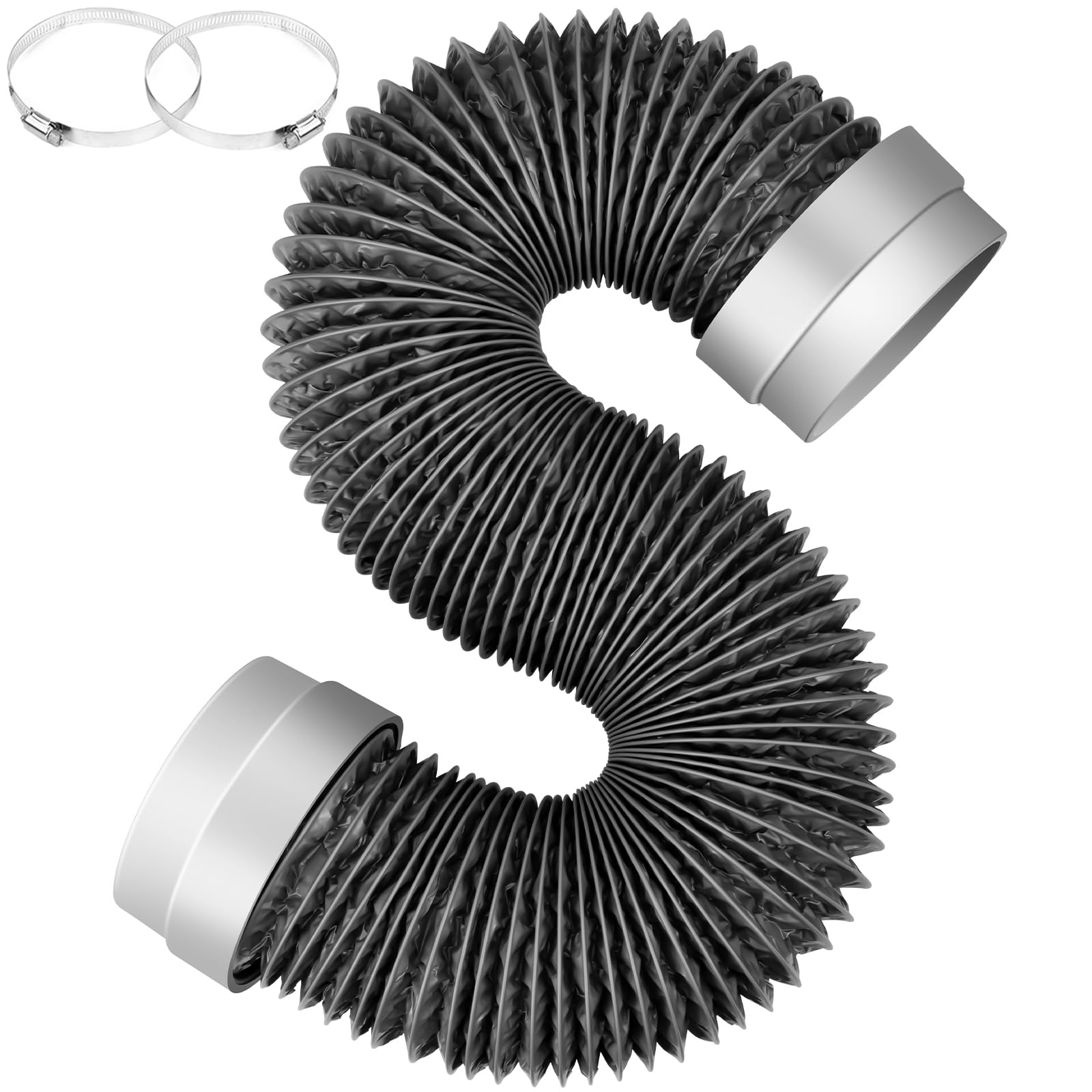
The flexible fix for a collapsed aluminum hose that was letting lint pile up at the connection.
Quality is the first thing owners mention about this 8-foot duct — over 80 buyers single out the build quality as the reason they’d recommend it, and the installation process earns a strong second wave of praise. The rubber fittings at both ends create an airtight seal, and customers note it’s “much better than the thin standard vent hoses” that tend to collapse and cause dust buildup from loose connections.
Like the REKCKRUL above, it uses a 6-layer aluminum build (2 foil + 2 PET + steel wire + PVC) with a 1mm steel wire core and a 212°F heat rating. The key difference is weight — at 0.69 kg it’s noticeably lighter and more maneuverable than the YIJUHOU’s 0.88 kg, which owners actually prefer for routing. It stretches to 8 feet (96 inches) while keeping a full 4-inch diameter for maximum airflow, and it retracts neatly when you push the dryer back into place.
One owner tip worth noting: buy slightly longer than you think you need, because the hose compresses down significantly when the dryer is pushed back. The recurring gripe is that the rubber cuffs can be too tight for some house duct connections — a fitment issue to check if your wall vent is unusually large.
Why it wins owners over
- Rubber fittings create an airtight, leak-proof seal
- Lighter than the YIJUHOU at 0.69 kg, so it’s easier to route
- Retracts smoothly when the dryer is pushed back
What to watch for
- Rubber ends may be too snug for some house duct connections
- Only 8 feet long — not for long runs
Grab this if: you’re replacing an old crushed hose and want a flexible, airtight upgrade that’s easy to install.
Step back if: your wall vent connection is larger than standard and the rubber cuffs won’t fit.
4. Nxpceay 8FT Heavy Duty 6-Layer Duct
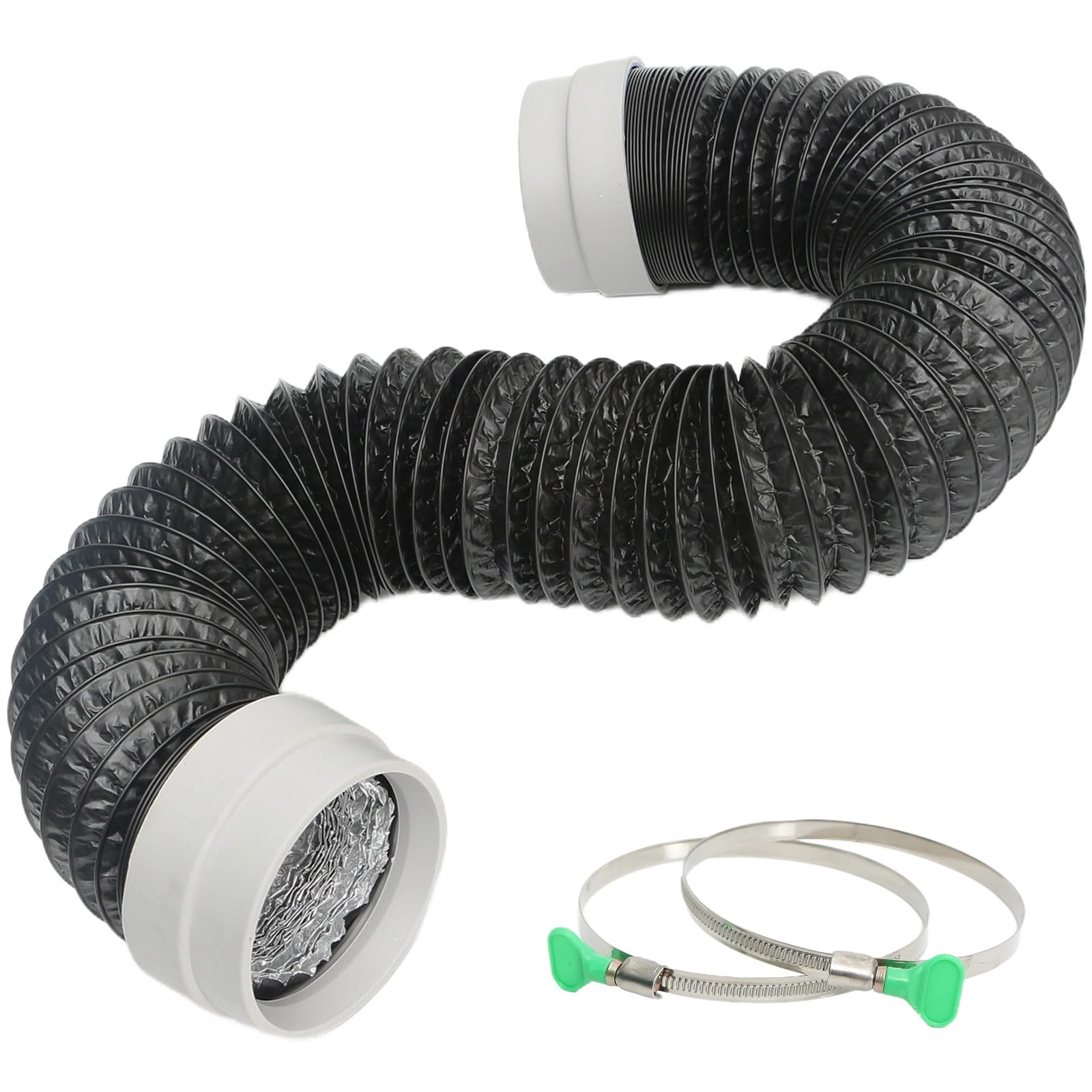
The no-fight installation hose with rubber ends that grip tight and slip on easy.
Fit and installation are the two things owners consistently praise here — the rubber interface ends fit vents from 3.95 to 4.15 inches, and you simply push the hose over the dryer’s exhaust port. “No fighting with spiral wire and material tearing,” is how one satisfied review describes the experience, and the included key hose clamps secure everything firmly once it’s in place.
The 6-layer construction mirrors the other premium options: 2 layers of aluminum foil, 2 layers of PET, a 1mm steel wire for shape retention, and a PVC outer layer for insulation and noise reduction. It’s rated for heat up to 212°F and sits at 0.75 kg — right in the middle of the weight range. The “double wall” construction gets a specific shout-out for pushing heat out efficiently.
The one honest fit note: the wing nuts on the clamps can be hard to turn by hand, so keep a screwdriver or pliers handy. That’s a minor gripe against an otherwise smooth installation experience.
What makes it easy
- Rubber ends slip right on without tools
- 6-layer build resists tearing and crushing
- Grip is solid once the clamp is tightened
The minor annoyances
- Wing nuts on clamps are hard to turn by hand
- Rubber tips are tight, so connecting takes a little patience
Choose it for: a tool-free, push-on installation where you want a secure grip without wrestling with foil.
Think twice if: you want a hose with smoother clamp hardware that’s easier to adjust.
5. Binazon 8FT Flexible 6-Layer Duct
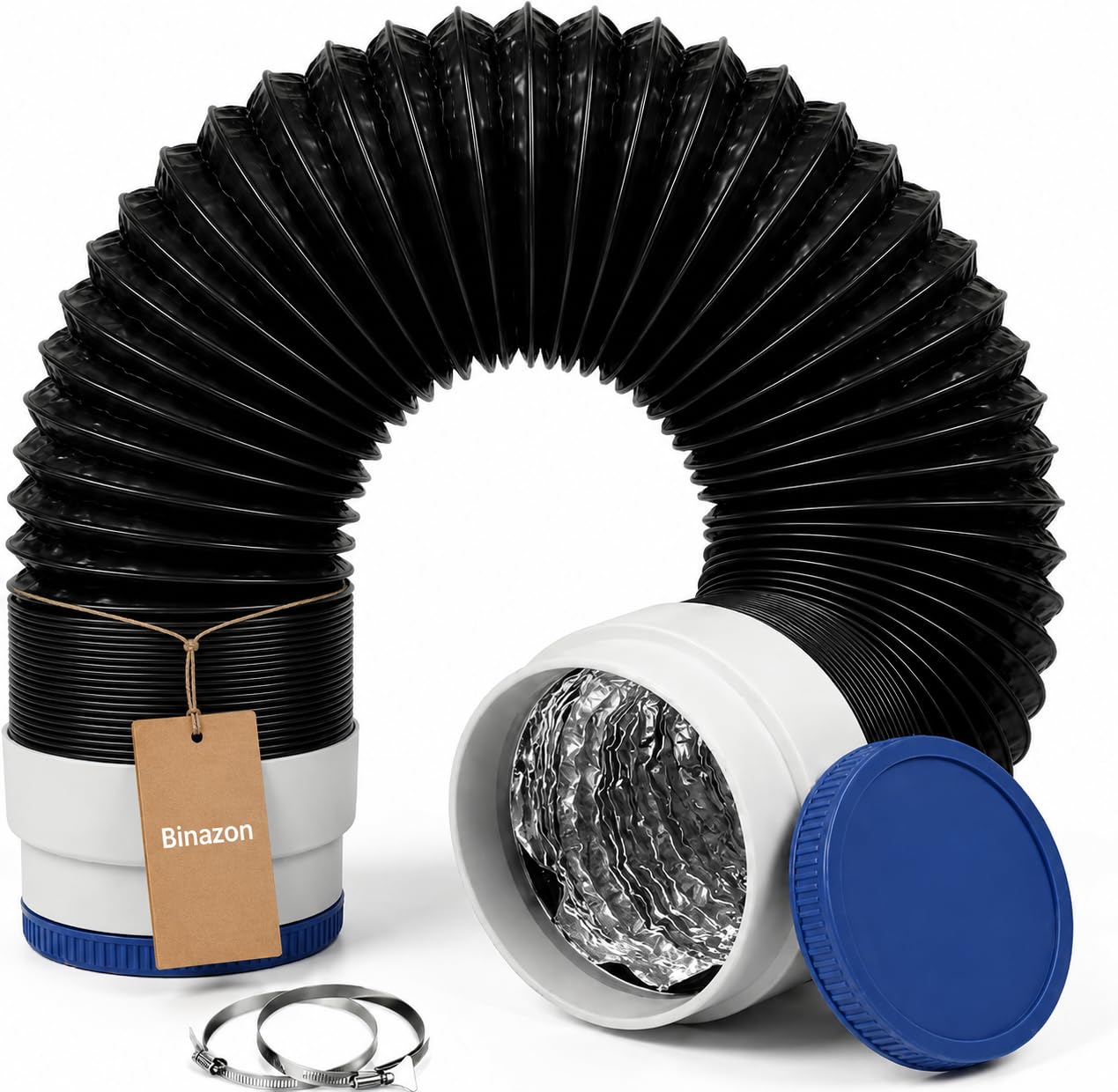
The leak-proof connection that “no sliding off, no air leaks” — just a snug, perfect fit.
Owners are emphatic about the fit of this 8-foot hose. “No sliding off. No air leaks. Snug fit. Just. Perfect,” is how one enthusiastic review describes the rubber-sealed connection. The built-in steel wire helps the hose hold its shape during daily use, and the 6-layer build resists tears and punctures for long-term reliability.
Like its 8-foot siblings, it’s rated for heat up to 212°F with a PVC coating that reduces noise and blocks light. It’s designed for dryer vents but also handles bathroom venting, stove exhausts, and greenhouse air circulation — a genuinely versatile duct kit that includes two heavy-duty clamps.
One practical pro tip from the reviews: applying a little liquid dish soap to the hose lip and the dryer vent edge makes the tight rubber ends much easier to slip on. The tight fit is exactly what you want once it’s connected — it’s just the pushing-on that needs a helping hand.
What owners rave about: the construction quality and the tight, leak-proof fit — both are the most-praised aspects of this hose.
The one tip: use a drop of dish soap for lubrication, and the snug rubber ends go on without a fight.
6. Hon&Guan 8FT Semi-Rigid Aluminum Duct

The fireproof semi-rigid duct that holds its shape, rated to 482°F for maximum safety.
If you take dryer fire safety seriously, this hose is for you. It’s tested and rated as Class “0” for fire resistance, meaning it’s designed to prevent flame and smoke spread within a temperature range of -22°F to 482°F — a far higher ceiling than the 212°F rating on the flexible foil hoses above. The semi-rigid aluminum construction holds its shape and extends fully, so it’s easier to slide over the duct.
The 4-inch inside diameter stays smooth even when compressed or bent at a 90-degree angle, which keeps airflow efficient. It comes with two stainless steel 201 hose clamps plus a roll of aluminum foil tape for sealing the connections. At 1.3 pounds, it’s heavier than the flexible options, and the semi-rigid nature means it takes up a bit more space between the dryer and the wall.
The trade-off is real: some owners find it more rigid than they expected, and it can dent if you press hard on it. But the quality is consistent, and the included accessories are genuinely useful for a smooth, secure installation.
Why it’s the safety pick
- Class “0” fire resistance rating up to 482°F
- Smooth interior keeps airflow efficient when bent
- Includes clamps and aluminum foil tape for sealing
The honest trade-offs
- More rigid than flexible foil hoses — takes up more space
- Can dent under firm pressure
Pick this if: you prioritize fire safety and want a semi-rigid duct that holds its shape in tight, floor-level spaces.
Pass on it if: you need a soft, highly flexible hose that takes up minimal space behind a cramped dryer.
7. Zonon 100FT Flexible Aluminum Ducting
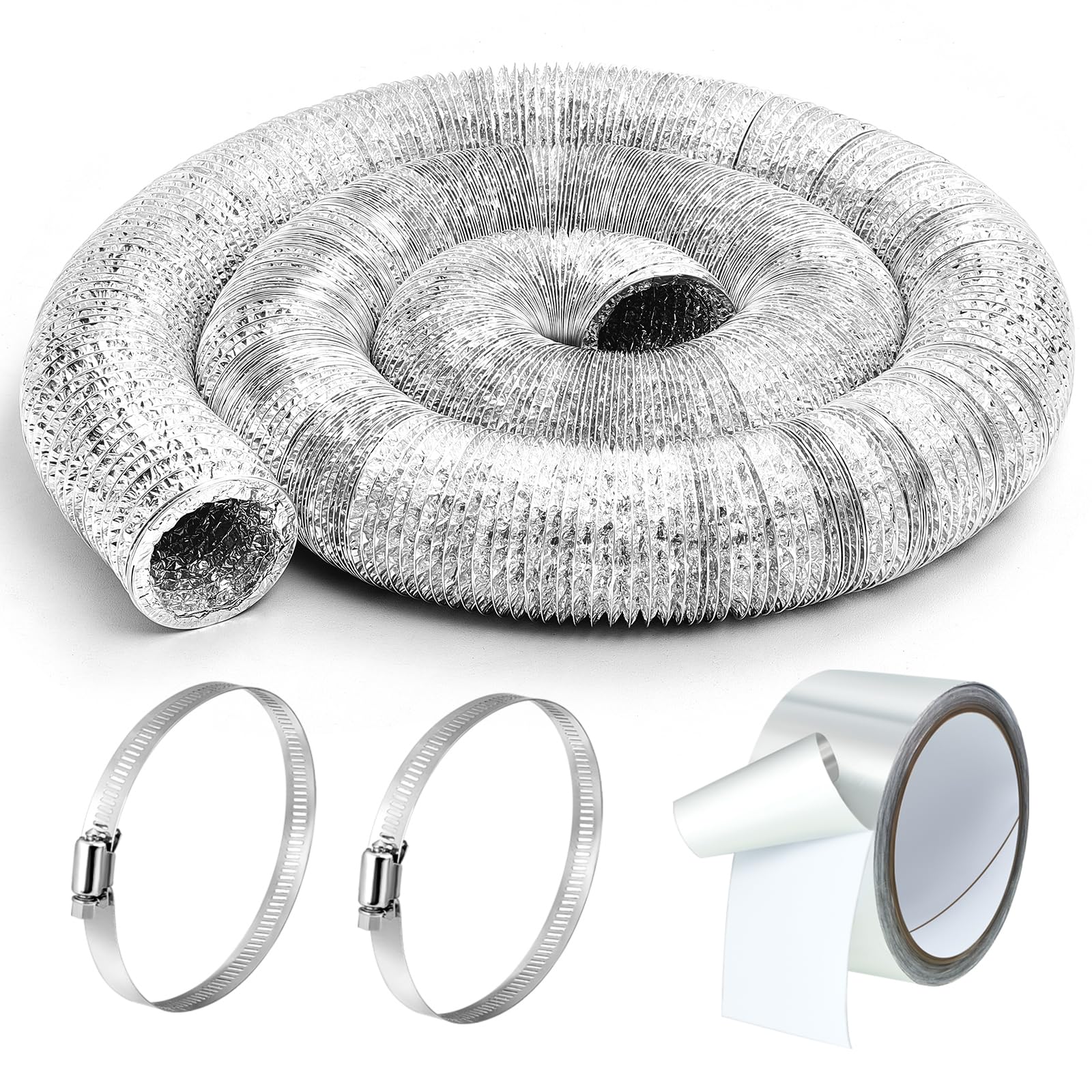
The bulk roll for big projects — cut any length you need from 100 feet of duct.
This isn’t a typical single-run dryer hose — it’s a contractor-grade bulk pack of two 50-foot rolls (100 feet total) of 4-inch aluminum foil ducting, plus 4 stainless steel clamps and 2 rolls of aluminum foil tape. If you’re venting a workshop, fixing camper furnace ductwork, or running a 3D printer exhaust, you can cut exactly the length you need and use the rest on the next job.
The flame-retardant aluminum build handles a temperature range of -22 to 302°F, with a corrosion-resistant steel wire spiral running through it for shape support. Owners consistently note it’s “thicker than others” and that the clamps and tape are both good quality — one even uses it to vent a 3D printer and says it would work great in an industrial setting.
It’s the right choice if you actually need 50 or 100 feet — not if you just need one 8-foot run. For that, the shorter hoses above are the smarter buy.
The big-project value: two 50-foot rolls with clamps and tape included mean you can cut custom lengths for multiple jobs.
Who it’s not for: anyone with a standard dryer-to-wall run — an 8-foot hose is cheaper and easier to handle.
Understanding the Specs
Layer Count and Steel Wire
The number of material layers is the single biggest predictor of how long a dryer vent hose will last. A basic 4-layer hose (2 foil + PVC + steel wire) is fine for most homes. A 6-layer build adds 2 layers of PET, which makes it tear-resistant and puncture-proof. The embedded steel wire — often 1mm thick — is what keeps the hose from collapsing flat when your dryer is pushed tight against the wall. More layers and a thicker wire mean better shape retention and longer life.
Heat Resistance Ratings
Your dryer exhaust gets genuinely hot, especially in tight spaces where heat builds up. Standard flexible foil hoses are typically rated up to 212°F, which safely covers normal dryer operation. Semi-rigid aluminum options go higher — the fire-rated option on this list handles up to 482°F because it’s built with a Class “0” fire-resistance rating. If your dryer sits right against drywall, an insulated outer layer that keeps the exterior surface cool is worth prioritizing.
Rubber Seal Connectors
Traditional foil hoses need foil tape and clamps to seal. Newer designs use flexible rubber rings at both ends that you simply push onto the dryer’s exhaust port for a tool-free, airtight fit. These rubber seals minimize air leakage, which boost dryer efficiency. They also stretch to accommodate slight variations in pipe size — most fit vents in the 3.95 to 4.25-inch range. The trade-off is that snug rubber ends can take some patience to push on.
Length and Flexibility
Measure the distance from your dryer to the wall vent, then add a little slack for vibration and pushing the dryer back. Flexible hoses compress and extend, so a good rule is to buy slightly longer than your measurement. Keep in mind that a hose which retracts to a third of its extended length means you lose effective coverage — one owner advises buying longer than needed for this reason. Longer runs (over 10 feet) need a full 26-foot hose like the YIJUHOU to avoid multiple joints.
FAQ
How long can a dryer vent hose be?
Is a 4-layer or 6-layer dryer vent hose better?
What is the difference between flexible foil and semi-rigid dryer vent hoses?
Are rubber seal connectors worth it over traditional clamps?
How hot does a dryer vent hose get?
How do I know if my dryer vent hose is clogged?
What is the ideal diameter for a dryer vent hose?
Will a longer dryer vent hose reduce drying performance?
Can I cut a dryer vent hose to a custom length?
Is it safe to use a dryer vent hose for other applications like grow tents or HVAC?
Final Thoughts: The Verdict
For most people, the dryer vent hose winner is the YIJUHOU 26FT because a single continuous 26-foot run eliminates the joints where lint collects and airflow slows — at a mid-range price that undercuts shorter premium options. If you want a safer connection in a tight space, grab the REKCKRUL 8FT for its insulating outer coating that keeps drywall cool. And for maximum fire safety with a smooth interior that holds its shape, the Hon&Guan Semi-Rigid is the one to reach for, rated up to 482°F.
How We Picked
We do not accept paid placement. Every pick is matched to a real buyer and a real use-case; we do not hands-on test units.
Sources & Methodology
Specifications: manufacturer listings and product documentation. Review insights: verified customer reviews, as of August 2026. Pricing: not shown on this page (it changes often); check the current price via the retailer link.
As an Amazon Associate, WellFizz earns from qualifying purchases. This does not affect which products we feature.
Related Guides

Mo Maruf
I created WellFizz to bridge the gap between vague wellness advice and actionable solutions. My mission is simple: to decode the research and give you practical tools you can actually use.
Beyond the data, I am a passionate traveler. I believe that stepping away from the screen to explore new environments is essential for mental clarity and physical vitality.