Our readers keep the lights on and my smoothie glass nicely filled. As an Amazon Associate, I earn from qualifying purchases.
Tiny tablets that don’t trigger nausea, softgels packed with DHA that skip the fishy breath, and caplets that keep iron levels steady without wrecking your stomach — that is the real brief when shopping for a prenatal you actually want to swallow daily. The drugstore aisle is a maze of bold claims and bright bottles, but the real difference between a supplement you stick with and one you abandon by week two comes down to three things: swallowability, stomach tolerance, and the specific methylated form of folate used.
I’m Mohammad Maruf — the founder and writer behind WellFizz. I’ve spent hundreds of hours cross-referencing independent lab results, parsing ingredient labels for unnecessary fillers, and analyzing consumer feedback patterns to isolate which prenatal formulations actually deliver on their promises without demanding you choke down a horse pill.
Whether you are preparing for conception, already expecting, or navigating postpartum recovery, choosing the right supplement directly impacts both your energy and your baby’s foundational development. This guide breaks down the five most reliable options to help you identify the best drugstore prenatal vitamins that fit your body’s actual needs.
How To Choose The Best Drugstore Prenatal Vitamins
Drugstore prenatals sit in a sweet spot — they are accessible, affordable, and regulated for quality, but the sheer variety can be overwhelming. The difference between a great prenatal and a mediocre one often hides in the fine print: the form of folate, the inclusion of DHA, the source of iron, and the absence of artificial additives. Focus on these three factors to cut through the noise.
Folate Form — Methylfolate vs. Folic Acid
Your body cannot directly use folic acid — it must convert it into the active form, methylfolate, through a multi-step process. A significant portion of women carry a genetic variation (MTHFR) that makes this conversion inefficient. Prenatals that contain methylfolate skip the conversion entirely, delivering usable folate immediately. If you have a known MTHFR mutation or simply want the most bioavailable option, prioritize labels that list methylfolate or 5-MTHF.
Pill Size and Coating — The Nausea Factor
Pregnancy often amplifies gag reflexes and triggers nausea at the worst possible moments. A large, uncoated tablet can be a dealbreaker within three days. Look for softgels or miniature tablets, which slide down easier and often have a smoother outer coating. Some brands add a light orange scent to mask any unpleasant vitamin odor, which can make a meaningful difference for morning-sickness-prone women.
DHA and Iron Balance
DHA directly supports fetal brain and eye development, yet many basic drugstore prenatals skip it entirely. Aim for at least 200 mg of DHA per serving. Iron is equally critical to prevent maternal anemia, but it can also cause constipation and stomach upset. If you already eat an iron-rich diet or struggle with digestive issues, consider a formula with a lower iron dose or one that pairs iron with gentle ingredients to reduce side effects.
Quick Comparison
On smaller screens, swipe sideways to see the full table.
| Model | Category | Best For | Key Spec | Amazon |
|---|---|---|---|---|
| FREEDA Mini Prenatal | Mini Tablet | Nausea-prone women | 2 tiny tablets daily; kosher certified | Amazon |
| Nature Made Prenatal + DHA | Softgel | One-a-day convenience | 110-count; 200 mg DHA per softgel | Amazon |
| One A Day Pregnancy Planning | Tablet | Pre-conception support | Methylfolate + folic acid blend | Amazon |
| GNC Prenatal with Iron | Caplet | Iron deficiency support | 18 mg iron; 1000 mcg folic acid | Amazon |
| Nature’s Truth Prenatal + DHA | Softgel | Budget-friendly DHA option | 120 softgels; 4-month supply | Amazon |
In‑Depth Reviews
1. FREEDA Mini Prenatal Vitamin
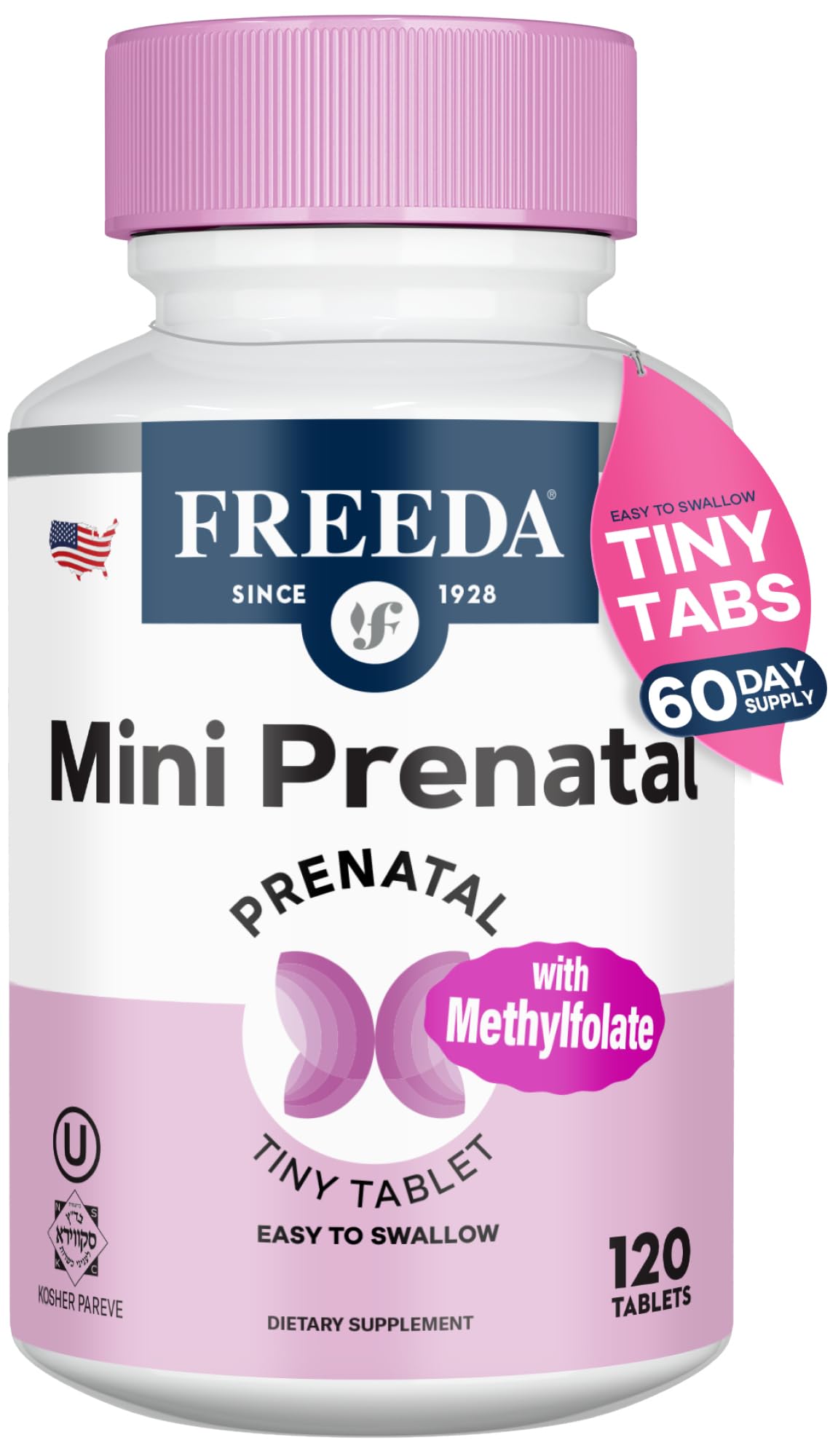
The FREEDA Mini Prenatal is a standout because it solves the two biggest complaints about drugstore prenatals simultaneously: pill size and stomach tolerance. Each serving is just two tiny tablets — smaller than an Advil — which makes swallowing almost effortless even when morning sickness is at its peak. The formulation includes methylated folate (as folate rather than plain folic acid), plus a full spectrum of vitamins A, C, D, E, B-complex, calcium, iron, magnesium, zinc, and copper. The fact that it is kosher, vegan, and free of gluten, lactose, artificial colors, and animal derivatives adds a layer of quality control that rivals specialty boutique brands.
Customer feedback consistently highlights the absence of nausea compared to larger alternatives. One reviewer noted that switching to FREEDA eliminated the gagging she experienced with standard tablet prenatals. Another mentioned that the two-tablet regimen delivers the same nutrition as a giant horse pill without the struggle. The manufacturer, Freeda, has been operating since 1928 and produces in a GMP-certified facility in the USA, which provides a level of transparency many mass-market brands lack.
The only tradeoff is that the tablets have a mild vitamin taste that lasts a few seconds, though reviewers emphasize it is not unpleasant and passes quickly. If daily compliance is your biggest challenge during pregnancy, this is the prenatal that removes the physical barrier to consistency.
Why it’s great
- Extremely small tablets eliminate swallowing difficulty
- Contains methylated folate for better absorption
- Kosher, vegan, and free of common allergens and artificial additives
Good to know
- Requires two tablets per serving rather than one
- Mild aftertaste that dissipates quickly
2. Nature Made Prenatal Vitamins with Folic Acid + DHA
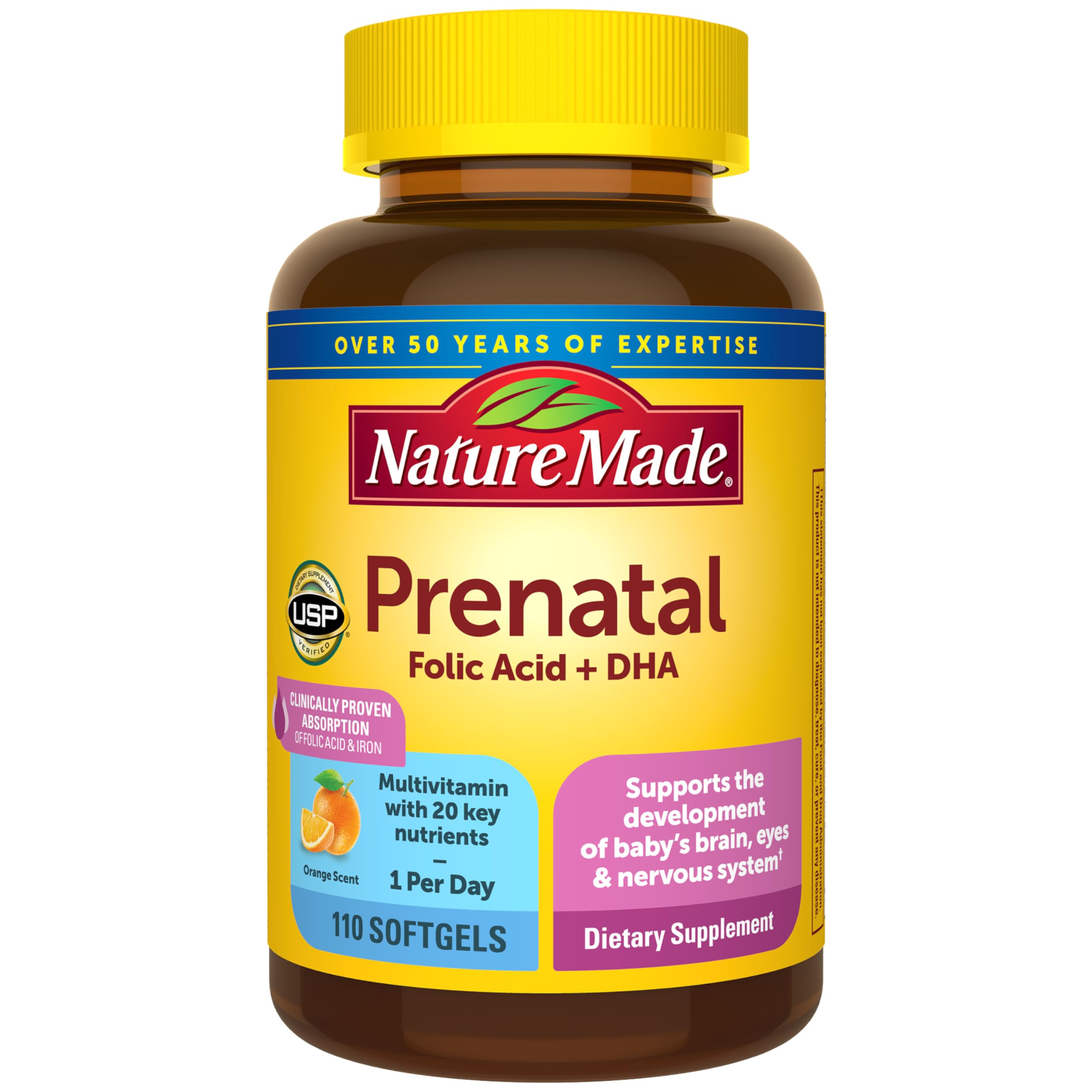
Nature Made is the most recognized prenatal brand in drugstores, and this 110-count softgel bottle justifies that reputation. Each softgel delivers 200 mg of DHA alongside folic acid, magnesium, and all eight B vitamins — including biotin — in a single daily dose. The softgel format is significantly easier to swallow than a compressed tablet, and the orange scent added to the capsule masks the typical vitamin odor that triggers nausea in sensitive women. The U.S. Pharmacopeia (USP) verification means the label claims match the actual contents — a certification many competitors skip.
User reviews emphasize the absence of fishy burps, a common complaint with DHA-containing prenatals. One reviewer who switched from Olly found Nature Made to have fewer additives while delivering the same nutrient density. Another reviewer, who was not pregnant but had vitamin deficiencies, reported improved energy and reduced body aches after starting this supplement. The one-a-day dosing simplifies routines, and the 110-count bottle stretches to a three-and-a-half-month supply for most users.
The softgel is notably larger than a standard pill — roughly the size of a fish oil capsule — which could be a hurdle if your gag reflex is extremely sensitive. The inclusion of iron may also cause constipation for some women, though pairing it with fiber-rich foods typically resolves that issue. For a mainstream brand with rigorous third-party testing, this is a strong daily driver.
Why it’s great
- USP verified for accurate ingredient labeling
- Orange-scented softgel reduces nausea triggers
- Contains 200 mg DHA plus complete B-vitamin profile
Good to know
- Softgel is larger than average; may challenge some users
- Iron content can cause constipation without dietary fiber
3. One A Day Pregnancy Planning Prenatal Multivitamin
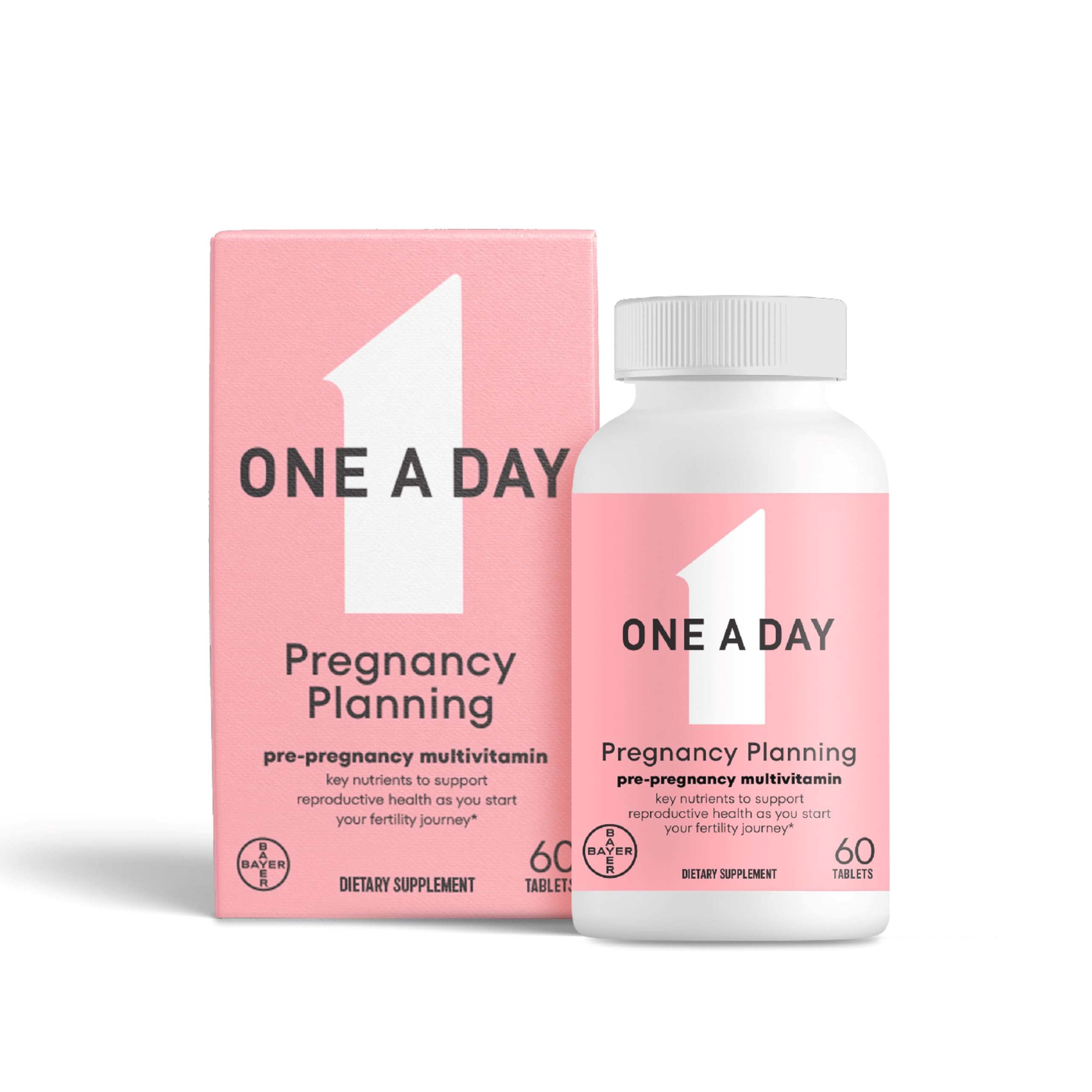
One A Day’s Pregnancy Planning formula is distinct because it targets the pre-conception phase specifically, rather than covering pregnancy only. The formula integrates both folic acid and methylfolate — a dual-source approach that ensures women with MTHFR variations still receive usable folate while women without the mutation get the standard protective dose. Zinc and vitamin B12 are included at levels that support reproductive health and early implantation, and vitamin D contributes to overall hormone balance. This is the only product on this list formulated specifically for the fertility journey rather than for already-pregnant women.
Bayer, the manufacturer, subjects this formula to over 100 quality checks and holds the claim of being the number one OB-GYN-recommended OTC prenatal brand. Reviewers consistently note that the tablet itself is manageable in size, though some experience mild nausea if taken on an empty stomach. One reviewer who paired these with other supplements appreciated the moderate iron content, which avoided overloading her system with the mineral. Another reviewer connected her pregnancy success to using these vitamins during her trying-to-conceive window.
The exacting quality standards come with a tradeoff: the tablet contains a small amount of iron that can cause mild stomach upset for sensitive users. Taking it with a meal significantly reduces this effect. If you are still in the planning stage and want a prenatal that bridges fertility support and early-pregnancy nutrition, this is the most targeted option available.
Why it’s great
- Dual-source folate (folic acid + methylfolate) for broad compatibility
- OB-GYN recommended brand with extensive quality testing
- Optimized for pre-conception and early pregnancy stages
Good to know
- May cause nausea if taken without food
- Iron dose can be an issue for those with sensitive stomachs
4. GNC Women’s Prenatal Multivitamin Formula with Iron
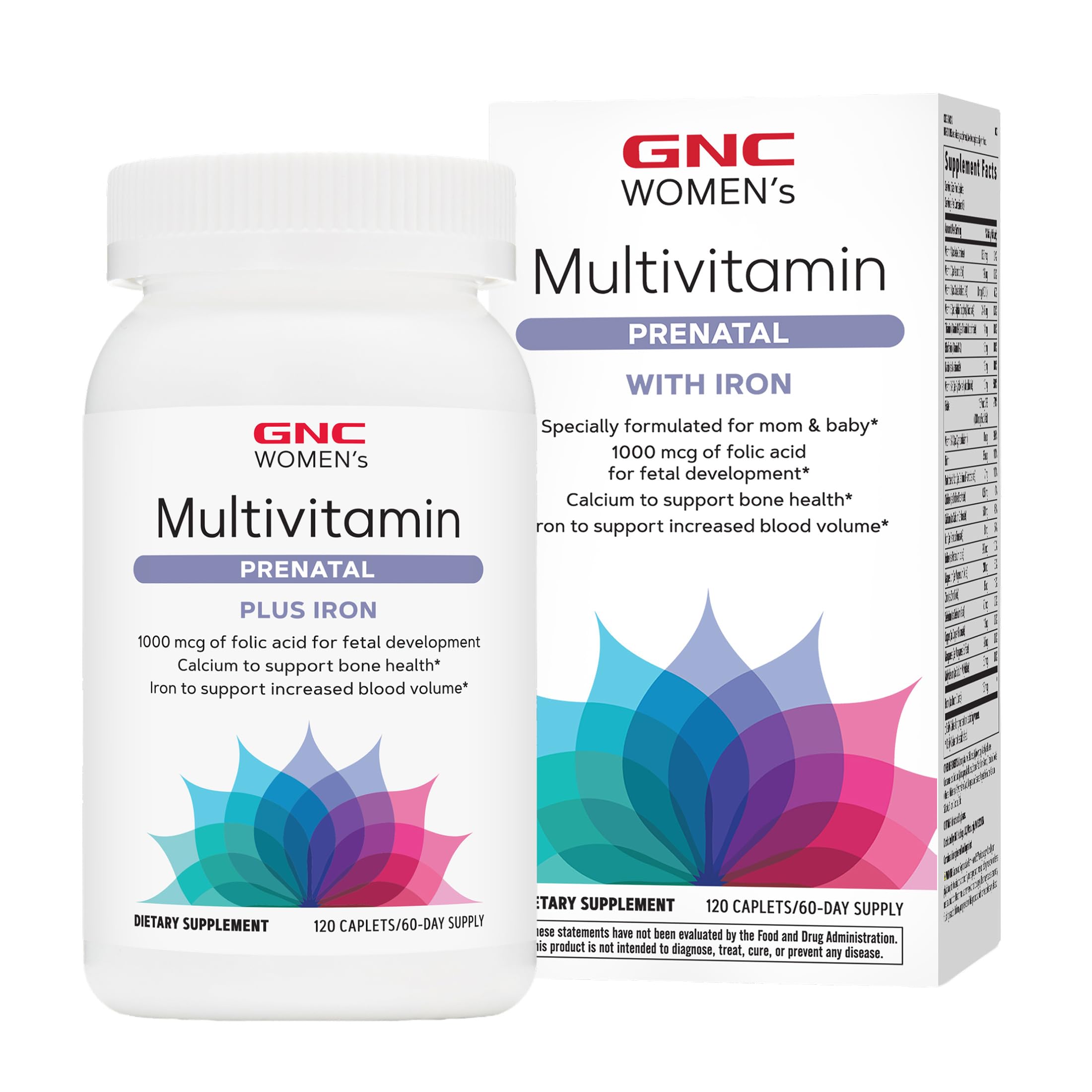
GNC’s prenatal caplet delivers one of the most generous iron doses on this list — 18 mg per serving — making it a strong candidate for women prone to anemia or who experience fatigue during pregnancy. The formula also includes 1000 mcg of folic acid, 600 mg of calcium for bone support, and 15 mg of zinc to support cell division and immune function. The caplet format is designed to be easy to swallow, and the time-release coating helps reduce the metallic aftertaste that often accompanies iron-rich supplements.
Long-term users report consistent satisfaction across multiple pregnancies. One reviewer used GNC’s prenatal through three full pregnancies and breastfeeding, noting it was the only formula her stomach could tolerate. Another praised the 120-caplet bottle for its cost-effectiveness compared to boutique organic prenatals. The inclusion of iron in a time-release matrix appears to minimize the digestive upset that some women experience with standard iron supplements. GNC’s reputation as a dedicated supplement retailer adds confidence that the manufacturing standards are higher than typical grocery-store vitamins.
The catch is that the daily dose requires two caplets rather than one — though reviewers generally find the caplets easy to swallow individually. Some women still report mild queasiness, particularly when they take the caplets without enough food. If iron supplementation is a priority for you and you want a trusted drugstore brand with a proven track record, this GNC formula delivers.
Why it’s great
- 18 mg iron per serving supports energy and prevents anemia
- Time-release coating reduces metallic aftertaste
- 120-caplet bottle offers strong value
Good to know
- Requires two caplets per daily dose
- May cause queasiness on an empty stomach
5. Nature’s Truth Prenatal Vitamin for Women
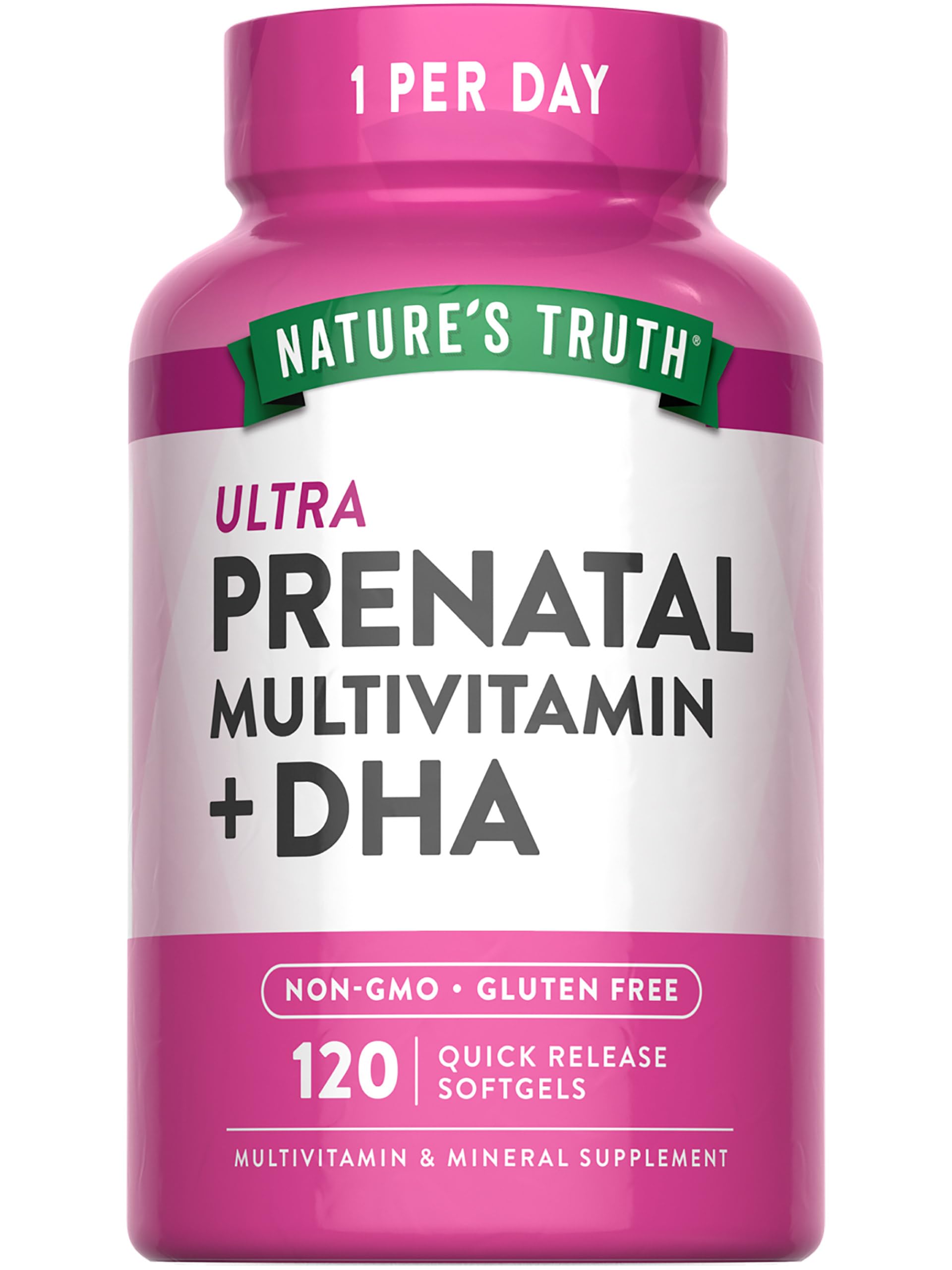
Nature’s Truth offers the most cost-effective entry point into the DHA-containing prenatal segment. Each softgel contains a meaningful DHA dose alongside folic acid, all in a one-a-day format that stretches to a four-month supply with the 120-count bottle. The manufacturer emphasizes a formula free of gluten, wheat, yeast, milk, lactose, artificial sweeteners, and flavors — and the Non-GMO Project verification adds a layer of ingredient transparency that budget options often lack.
Customer reviews highlight the high DHA content as a primary reason for choosing this brand, with several users noting that the softgel consistently boosts iron levels without requiring separate iron pills — a significant savings. One reviewer who was prone to acid reflux reported that the softgel caused little to no heartburn compared to other prenatals she had tried. Another reviewer appreciated that the four-month supply eliminated the need for monthly reordering, which saved both money and mental energy during an already busy pregnancy schedule.
The softgel is large — comparable to the Nature Made softgel — and has a noticeable black licorice-like smell that some users find off-putting, though reviews are unanimous that the smell does not translate into taste. The occasional user mentions the size being a challenge to swallow, so this is best suited for women who are comfortable with larger capsules. For the price per dose, this is the most economical way to get DHA and folate together in a clean formula.
Why it’s great
- 120 softgels provide a full four-month supply
- Non-GMO and free of common allergens and artificial ingredients
- High DHA content supports brain and eye development
Good to know
- Noticeable black licorice smell from the softgel
- Large capsule size may be a challenge for some women
FAQ
When should I start taking prenatal vitamins if I am trying to conceive?
Do drugstore prenatals contain enough DHA for fetal brain development?
Can the iron in prenatal vitamins cause constipation?
Final Thoughts: The Verdict
For most users, the best drugstore prenatal vitamins winner is the FREEDA Mini Prenatal because it eliminates the two biggest barriers to compliance — pill size and stomach irritation — while delivering methylated folate for superior absorption. If you want a one-a-day softgel with USP verification, grab the Nature Made Prenatal + DHA. And for a targeted pre-conception formula that bridges fertility and early pregnancy, nothing beats the One A Day Pregnancy Planning.

Mo Maruf
I created WellFizz to bridge the gap between vague wellness advice and actionable solutions. My mission is simple: to decode the research and give you practical tools you can actually use.
Beyond the data, I am a passionate traveler. I believe that stepping away from the screen to explore new environments is essential for mental clarity and physical vitality.