Our readers keep the lights on and my smoothie glass nicely filled. As an Amazon Associate, I earn from qualifying purchases.
Keeping your lawn alive through a dry summer often feels like a battle against the elements. Water restrictions, scorching heat, and patchy brown spots can turn a once-proud yard into a source of frustration. The right seed choice changes everything — it transforms how your turf holds up when rain is scarce and the sun is relentless.
I’m Mohammad Maruf — the founder and writer behind WellFizz. I’ve spent hundreds of hours analyzing grass seed formulations, coating technologies, and germination data to help homeowners make an informed choice among the many drought-resistant blends on the market.
This guide breaks down the top performers, explains the key specs that separate survival from lush growth, and delivers a clear verdict on best drought resistant grass seed so you can stop second-guessing and start growing.
How To Choose The Best Drought Resistant Grass Seed
Not all grass seed labeled “drought-resistant” performs the same way. The difference comes down to species composition, coating technology, and whether the blend matches your region and lawn conditions. Here’s what to look for.
Focus on Grass Species, Not Just Marketing Claims
Tall fescue and fine fescue varieties (hard fescue, chewing fescue, creeping red) have deeper root systems that access moisture deep in the soil, making them naturally drought-tolerant. Kentucky bluegrass goes dormant and browns quickly in dry heat but can recover when watered. Perennial ryegrass germinates fast but has shallow roots, so it needs more consistent irrigation. For a truly drought-resistant lawn, prioritize blends where tall fescue or fine fescue makes up 50% or more of the mix.
Look for Advanced Coating Technologies
Seed coatings like Moisture Boost Plus (absorbs more water on contact) and OptiGrowth Coating (infused with nutrients and kelp) improve seed-to-soil contact and speed up root establishment. These coatings reduce the total water needed during the critical germination window and help young seedlings survive dry periods. Uncoated seeds often wash away or fail in crusted soil — coated seeds give you a measurable advantage in tough conditions.
Match Coverage and Application to Your Yard Size
Check the bag’s new lawn and overseeding coverage numbers, not just the weight. A 3-pound bag of a premium coated blend may cover 2,100 square feet for overseeding, while a 10-pound basic bag might only cover 2,000 square feet. Higher coating density and species composition directly affect coverage. For patch repair, smaller bags work fine. For full lawns, calculate coverage requirements before buying.
Quick Comparison
On smaller screens, swipe sideways to see the full table.
| Model | Category | Best For | Key Spec | Amazon |
|---|---|---|---|---|
| Jonathan Green Black Beauty Sun & Shade | Premium Blend | Deep-rooted drought resistance & dark color | 4 cool-season grass families | Amazon |
| X-Seed Quick and Thick Lawn Seed Mixture | Premium Blend | Fast germination with Moisture Boost | 3 lb covers 2,100 sq. ft. overseeding | Amazon |
| Outsidepride Legacy Fine Fescue Mix | Fine Fescue Blend | Shade tolerance & low maintenance turf | OptiGrowth Coating with nutrients | Amazon |
| Scotts Turf Builder Sunny Mix | Mid-Range Mix | Full sun & spring/fall overseeding | Root-Building Nutrition formula | Amazon |
| Pennington Annual Ryegrass Seed | Budget Option | Fast fill for winter overseeding | 10 lb covers 2,000 sq. ft. | Amazon |
In‑Depth Reviews
1. Jonathan Green (12005) Black Beauty Sun & Shade Grass Seed

The Jonathan Green Black Beauty Sun & Shade blend is the top performer in this lineup for a reason: it combines four distinct cool-season grass families — turf-type tall fescue, Kentucky bluegrass, perennial ryegrass, and fine fescues — into a single bag. That diversity creates a lawn that stays dark green and dense through heat stress, foot traffic, and partial shade. The 7-pound bag seeds up to 2,625 square feet for a new lawn or 5,250 for overseeding, giving you excellent coverage for the premium tier.
Customer reports consistently highlight faster germination than standard big-box brands — half the time in some cases — with thick, lush growth emerging within 10 to 14 days when watered consistently. The deep root system of the tall fescue component is the key drought-resistant advantage here, pulling moisture from deeper soil layers while the finer-bladed fescues fill in the canopy. One reviewer noted 95% lawn improvement after three weeks of daily watering on prepared soil.
The drawback is that establishment requires discipline: consistent watering for the first few weeks and good topsoil preparation. A small number of users reported that a portion of the blend (likely the ryegrass component) grew faster and lighter in color, creating a slightly uneven look until mowing blends it in. If you want the most drought-hardy root system and richest color, this is the blend to beat.
Why it’s great
- Four grass families for broad adaptability to sun and shade
- Darker green color than most blends
- Fast germination compared to commodity brands
Good to know
- Requires consistent watering during establishment
- Some fast-growing ryegrass can look uneven initially
- Premium tier pricing reflects the quality
2. X-Seed Ultra Premium Quick and Thick Lawn Seed Mixture
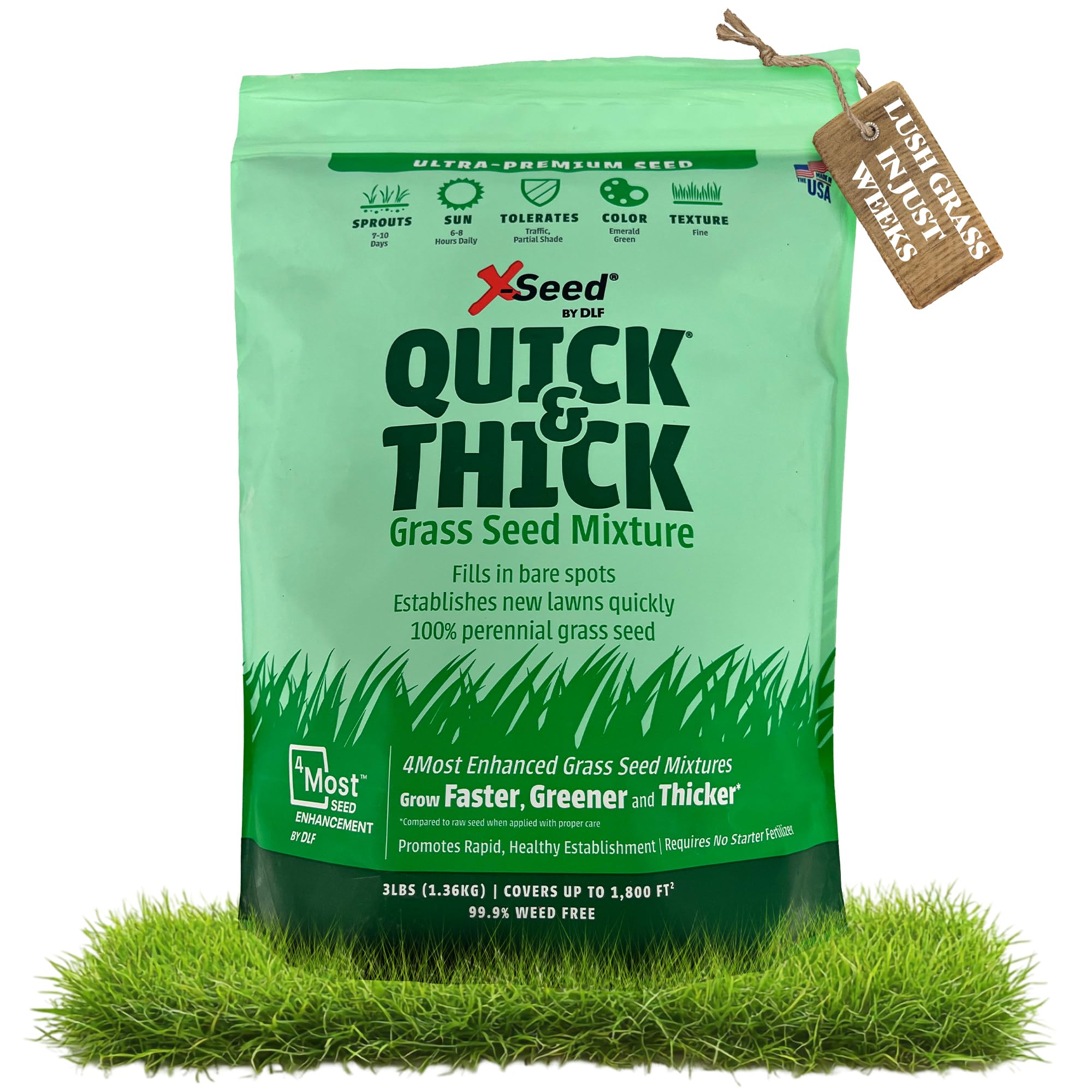
The X-Seed Quick and Thick mixture sets itself apart with Moisture Boost Plus coating technology, which absorbs 50% more water than uncoated seed — a critical advantage during dry germination windows. The blend combines perennial ryegrass, fine fescue, and Kentucky bluegrass to produce a dense, carpet-like lawn that handles both full sun and shade. A 3-pound bag covers 2,100 square feet for overseeding and 1,050 square feet for new lawns, making this an efficient choice for medium to large yards.
Positive customer reviews dominate, with many describing the resulting turf as “super thick, lush and green” and growing “like a carpet.” The fast germination speed is a consistent theme, with visible growth in under two weeks even on sandy soil. The moisture-boosting coating also helps reduce seed washout during unexpected rain, and the 99.9% weed-free guarantee means less time pulling unwanted plants.
A small but notable set of users reported poor germination, patchy coverage, and seeds washing away despite following instructions. The discrepancy may be due to extreme weather events (heavy rain shortly after seeding) or soil preparation issues. The blend’s ryegrass component also means it needs more consistent water than a pure fescue mix once established, so true drought resistance is moderate rather than top-tier.
Why it’s great
- Moisture Boost coating absorbs more water for faster germination
- 99.9% weed-free guarantee
- Dense, carpet-like turf appearance
Good to know
- Some users experienced patchy results in adverse conditions
- Ryegrass component reduces long-term drought tolerance
- Coating adds weight to bag so coverage differs by weight vs. volume
3. Outsidepride Legacy Fine Fescue Grass Seed Mix
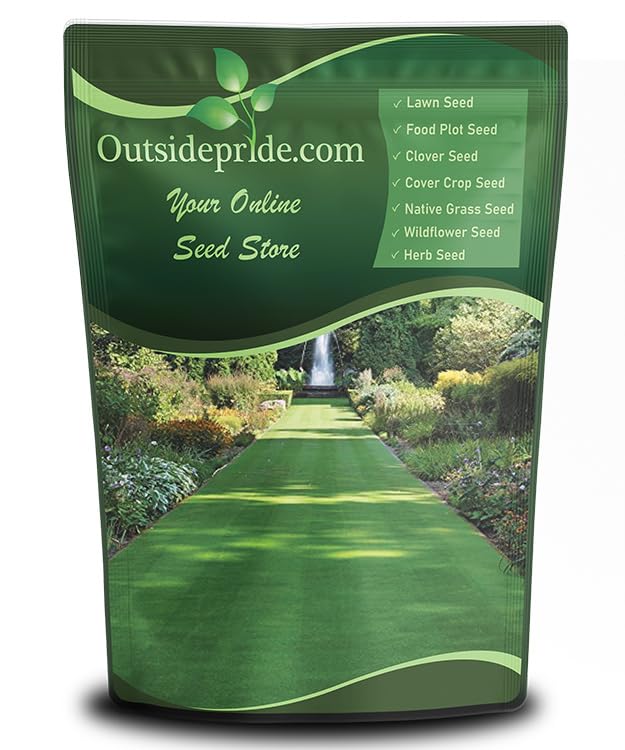
For areas where other grasses struggle — deep shade, poor soil, and dry slopes — the Outsidepride Legacy Fine Fescue Mix is a specialist that delivers. This blend is 100% fine fescue: 20% hard fescue, 40% chewings fescue, and 40% creeping red fescue. These species have the finest leaf blades of any cool-season grass, creating a soft, luxurious texture that looks almost like a ground cover. The 5-pound bag uses OptiGrowth Coating infused with zinc, phosphorus, nitrogen, and Elko kelp to accelerate root establishment.
Customers praise the beautiful dark-green texture and shade tolerance, with one user describing it as “luxurious” grass that “topples like Korean grass.” The seed established well in shady areas and required minimal water once the root system developed — a hallmark of fine fescue’s natural drought resistance. Germination in two weeks or less was reported in good conditions with proper topsoil preparation and daily watering.
The big concern is mixed germination reliability. Several reviews report only 10–20% germination, and the company’s customer service has been criticized for refusing refunds by blaming application methods. Fine fescue is slow to establish compared to ryegrass, so patience is essential. This mix is best for homeowners willing to prepare soil carefully and wait for a high-end, low-maintenance turf rather than a quick green fix.
Why it’s great
- Excellent shade and drought tolerance once established
- Very fine, soft texture — visually luxurious
- OptiGrowth Coating includes essential nutrients
Good to know
- Slow germination compared to ryegrass blends
- Inconsistent germination reported by some buyers
- Customer support issues noted for poor results
4. Scotts Turf Builder Grass Seed Sunny Mix
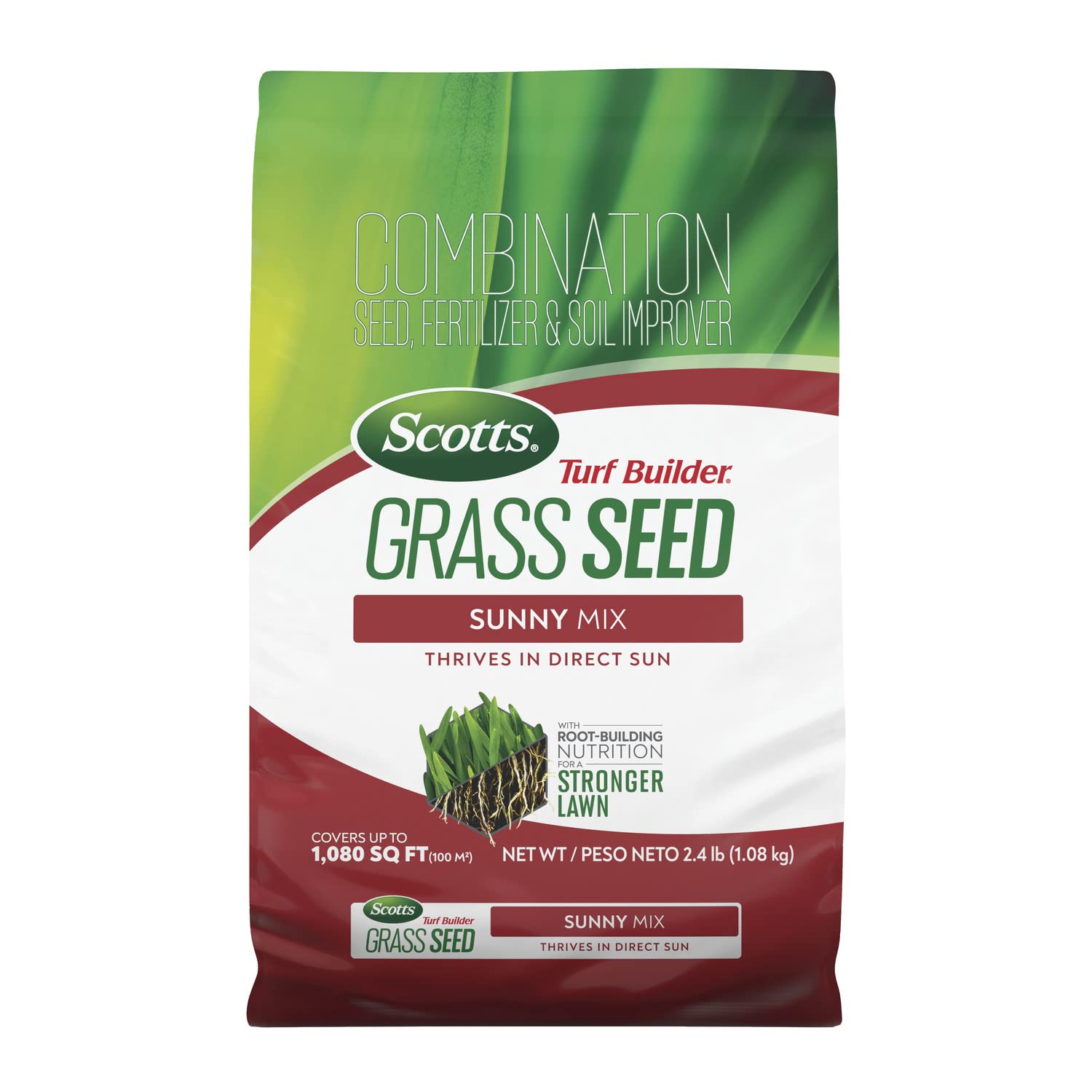
Scotts Turf Builder Sunny Mix is designed for one specific scenario: full sun with moderate foot traffic. It combines seed, fertilizer, and soil improver into a single product, simplifying the seeding process for homeowners who want a “all-in-one” solution. The bag specifically notes medium to high drought resistance and medium to high durability, meaning it performs better than basic ryegrass but isn’t as deep-rooted as a pure tall fescue blend. The 2.4-pound bag covers 360 square feet for new lawns or 1,080 for overseeding — best for smaller patches or targeted repair.
Customer feedback is largely positive, with comments like “grew fast” and “works as advertised” appearing frequently. One user reported that the grass handled a drought well and remained green when other lawns browned, and another noted that a single bag covered a 60-by-25-foot area with sturdy, functional turf. The Root-Building Nutrition formula is the key differentiator here, encouraging deeper root growth than standard seed alone.
The main limitation is coverage: at 2.4 pounds, this bag is small compared to the 7 to 10 pound bags from other brands. If you’re reseeding an entire lawn, you’ll need multiple bags, which adds up quickly. Also, the fertilizer component means you’re paying for nutrients that you may already have in your soil — some experienced lawn owners prefer separate seed and fertilizer for more control.
Why it’s great
- Seed, fertilizer, and soil improver in one bag
- Good drought resistance for a mid-range mix
- Fast germination in full sun conditions
Good to know
- Small bag size limits coverage for large lawns
- Fertilizer component reduces customization
- Not as drought-hardy as fescue-dominant blends
5. Pennington Annual Ryegrass Seed

Pennington Annual Ryegrass is not a drought-resistant grass in the traditional sense, but it earns a spot in this guide for its specific use case: rapid winter overseeding of warm-season lawns like Bermuda and Zoysia. Annual ryegrass germinates in as little as 3 to 7 days, providing quick green color and soil stabilization during the dormant season. The 10-pound bag covers up to 2,000 square feet, making it a budget-friendly choice for temporary coverage or erosion control on bare patches.
Customer reviews consistently praise the speed — “visible growth in 2 days, fully thick and green by day 4” is a common pattern. Users also note its ability to hold up under foot traffic and resist disease during the cooler months. One reviewer in zone 8 reported the grass still looked good in mid-May after a December sowing, indicating longer-lasting green than expected from an annual variety.
The trade-off is that annual ryegrass dies out in summer heat and must be reseeded each year. It also has a coarser texture and lighter color than perennial blends, so it’s not ideal for a permanent lawn. If you need a cheap, fast-growing filler for winter or a temporary lawn on a construction site, this works perfectly. For long-term drought resistance, look elsewhere.
Why it’s great
- Germinates in 3 to 7 days — fastest option here
- Good foot traffic and disease resistance
- Low cost per pound for large area coverage
Good to know
- Annual — dies in summer heat, must be reseeded
- Coarser texture and lighter color than blends
- Not a permanent drought-resistant solution
FAQ
Which grass species is the most drought resistant for a permanent lawn?
Can I use annual ryegrass for drought resistance?
Final Thoughts: The Verdict
For most users, the best drought resistant grass seed winner is the Jonathan Green Black Beauty Sun & Shade because its four-species blend provides the deepest root system, richest color, and best adaptability across sun and shade. If you want the fastest germination with a moisture-boosting coating, grab the X-Seed Quick and Thick. And for deep shade or a low-maintenance, fine-textured lawn, nothing beats the Outsidepride Legacy Fine Fescue Mix.

Mo Maruf
I created WellFizz to bridge the gap between vague wellness advice and actionable solutions. My mission is simple: to decode the research and give you practical tools you can actually use.
Beyond the data, I am a passionate traveler. I believe that stepping away from the screen to explore new environments is essential for mental clarity and physical vitality.