Our readers keep the lights on and my smoothie glass nicely filled. As an Amazon Associate, I earn from qualifying purchases.
After a stroke, nerve injury, or a diagnosis like peripheral neuropathy, that sudden drop of the forefoot on every swing phase turns every sidewalk crack into a hazard. A proper orthosis doesn’t just hold your foot up; it retrains a heel-to-toe gait while fitting discreetly inside your regular shoe, eliminating the bulky, clunky stride of outdated splints.
I’m Mohammad Maruf — the founder and writer behind WellFizz. I’ve spent dozens of hours analyzing the biomechanical specs, tension systems, and integration points that separate a durable, daily-wear brace from a device that ends up gathering dust in the closet.
This guide breaks down the construction, sizing, and real-world performance of the seven most compelling models on the market today, helping you find the best drop foot brace for walking that fits your specific recovery stage and footwear needs.
How To Choose The Best Drop Foot Brace For Walking
Choosing the right brace depends on the severity of your foot drop, your activity level, and the shoe types you plan to wear. A brace that works for a morning stroll around the block may not hold up for a full workday on hard floors. Matching the brace’s rigidity, attachment style, and tension range to your specific condition prevents frustration and skin irritation.
Rigid AFO vs. Soft Dorsiflexion Assist
A rigid ankle-foot orthosis (AFO) made of polypropylene or carbon fiber is the gold standard for severe drop foot — it immobilizes the ankle and locks the foot at a near-90-degree angle, completely eliminating toe drag. A soft dorsiflexion assist brace, typically made of neoprene or fabric with elastic tension cords, is better suited for mild drop foot or early-stage recovery, because it allows some ankle movement and feels much less restrictive under pants. Selecting the wrong rigidity level either fails to lift the foot or creates unnecessary restriction that tires the leg muscles.
Attachments: Shoe Integration and Closure
Half-sole braces that curve under the metatarsal heads let your toes bend naturally during push-off and fit inside standard-width sneakers. Full-foot high-top designs often require sizing up by half a shoe size. For closure, look for either a D-ring and velcro system that can be tightened with one hand (critical for stroke survivors with limited hand strength) or an elastic cord that hooks directly into the shoe’s lace holes for a low-profile, external attachment that doesn’t crowd the shoe’s interior at all.
Tension Adjustability
Your ankle circumference and the amount of foot swelling can change noticeably over a single day. A brace with multi-level tension hooks or a bungee-cord indexing system lets you increase lift for longer walks and dial it back for seated rest. Static tension braces with a single fixed strap may feel fine in the morning but become either too loose or too tight by evening, reducing both safety and comfort for daily wear.
Quick Comparison
On smaller screens, swipe sideways to see the full table.
| Model | Category | Best For | Key Spec | Amazon |
|---|---|---|---|---|
| Core Products FootFlexor | Premium | Natural gait with adjustable lift | 4-level flexible tubing tension | Amazon |
| Orthomen AFO Brace | Mid-Range | Discreet everyday walking | Anatomical half-sole design | Amazon |
| Dosh AFO Foot Drop Brace | Premium | Soft, all-day & night support | One size unisex, 3.75 oz | Amazon |
| Pozpo Tech AFO Brace | Mid-Range | Adjustable lift with 5-tension hooks | 5-hook elastic tension system | Amazon |
| BraceAbility AFO Brace | Mid-Range | Mild to moderate daily support | Adjustable bungee cord system | Amazon |
| Komzer AFO Brace | Mid-Range | Post-stroke gait retraining | 4-level manual tension system | Amazon |
| Omeer Drop Foot Brace | Budget | Cost-effective all-day wear | Machine-washable neoprene | Amazon |
In‑Depth Reviews
1. Core Products FootFlexor Foot Drop Brace

The FootFlexor is a soft ankle-foot orthosis that uses four levels of flexible tubing tension to lift the toe during the swing phase of gait. Instead of a rigid plastic shell, it relies on a fabric boot with a spring-loaded mechanism, which allows natural ankle flexion while still preventing toe drag. Users with Charcot-Marie-Tooth disease, post-stroke hemiplegia, and multiple sclerosis report that this design eliminates the stiff, clunky feeling of traditional AFOs without sacrificing lift.
The brace attaches externally to lace-up shoes via metal hooks and elastic cord, meaning it doesn’t crowd the toe box or require sizing up. The open heel design further reduces bulk, making it nearly invisible under standard trousers. Assembly is USA-based, and replacement parts (elastic cord and hooks) are available separately, extending the brace’s life beyond the initial purchase.
A few users note the hooks can be difficult to attach to very small or oddly spaced shoe eyelets. One reviewer replaced the included metal hooks with larger key rings to make daily application easier. The brace requires a helper if the wearer has limited hip or trunk flexibility. For those with moderate to severe drop foot who want a natural walking motion, this is the most thoughtfully engineered option available in this tier.
Why it’s great
- Four tension levels allow fine-tuning for morning vs. evening swelling
- Spring-loaded design feels lighter and more natural than rigid AFOs
- External attachment leaves full shoe volume for the foot
Good to know
- Hooks can be tricky to attach to small shoe eyelets
- Requires assistance to put on for users with limited hip mobility
2. Orthomen AFO Brace for Foot Drop
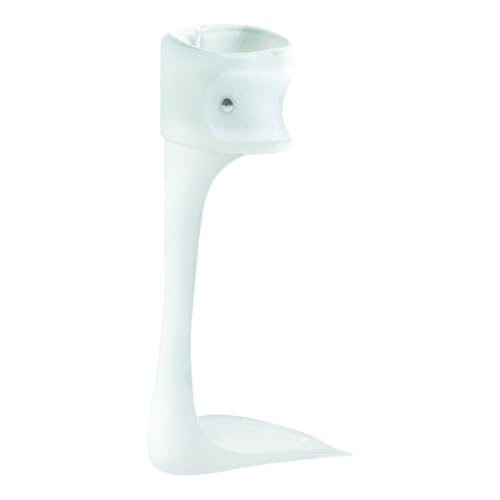
Orthomen’s design breaks from the full-footplate standard by using an anatomical half-sole that terminates at the metatarsal heads. This allows the toes to flex naturally during push-off, which is critical for retraining a fluid, organic gait after a stroke or MS flare-up. The brace is injection-molded polyethylene with a dual D-ring and Velcro closure system that can be cinched single-handedly in under 30 seconds, making it a practical daily option for users with limited dexterity.
The removable terry-cloth liner is machine-washable, which directly addresses the hygiene complaints common with foam-lined braces. The low-profile shell slides into regular tennis shoes and loafers without forcing the wearer to buy oversized footwear. The heel cup is reinforced to resist varus/valgus rolling, providing lateral stability that many soft braces lack entirely.
One review warns that the plastic shell can dig into the ankle bone if the fit is not precise, and a customer with very narrow heels found the heel pocket too tight. The brace runs large relative to the size chart — several users advise ordering one size down. When the fit is right, this is one of the most discreet and functional AFOs available, combining real biomechanical support with a machine-washable comfort layer.
Why it’s great
- Half-sole permits natural toe flexion during push-off
- Single-hand D-ring closure for users with limited grip strength
- Machine-washable liner prevents odor and skin irritation
Good to know
- Plastic edge can dig into the ankle if sizing is off
- Runs large — size down from your typical shoe size
3. Dosh AFO Foot Drop Brace
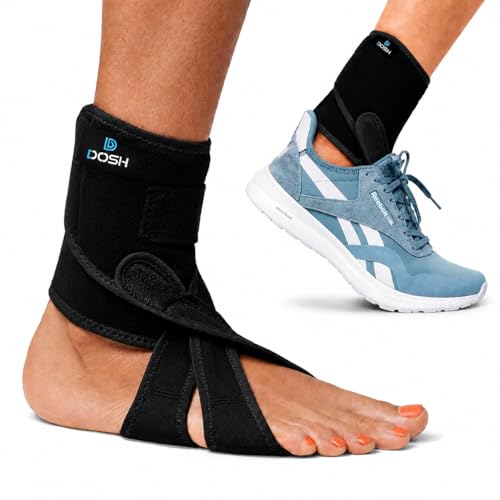
The Dosh brace is a neoprene boot with non-rigid dorsiflexion support, weighing just 3.75 ounces. It’s designed for mild drop foot where the goal is to prevent toe drag without the restriction of a plastic shell. Users report wearing it inside shoes, with socks, and even overnight, because the soft material conforms to the foot without creating pressure points. The closure uses hook-and-loop straps that wrap around the calf and ankle, providing lateral compression that stabilizes the joint.
One of the most praised features is how discreet the brace remains under socks and trousers. Several reviewers mention that this brace replaced a custom carbon-fiber AFO costing thousands of dollars, and they found the walking assistance comparable. The brace is one-size-fits-most with left/right variants, which simplifies ordering. It also functions as a sleeping brace for those who experience foot drop while lying on their side.
The Velcro straps can lose gripping power after six to eight months of daily use, and the rubber sole does not provide slip resistance on hardwood floors when worn barefoot. The brace offers no adjustable tension levels — the lift is fixed by the neoprene’s elasticity. For those with stable, mild drop foot who prioritize comfort and low profile over granular adjustability, the Dosh delivers a compelling, lightweight package.
Why it’s great
- Extremely lightweight and discreet under clothing
- Can be worn for sleep without discomfort
- Cost-effective alternative to custom carbon-fiber orthotics
Good to know
- Velcro straps may weaken after 6–8 months of daily use
- Fixed tension — no way to increase or decrease lift level
4. Pozpo Tech AFO Foot Drop Brace Splint
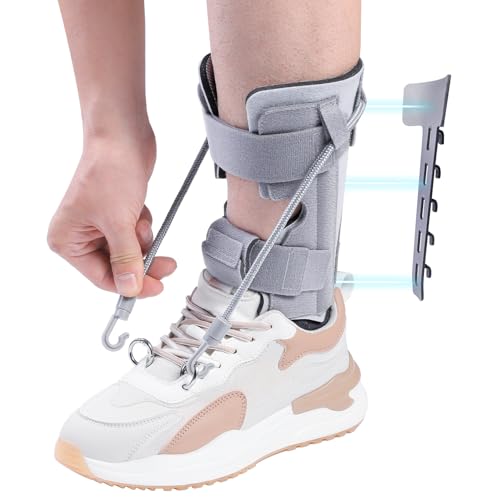
Pozpo Tech’s brace solves the issue of shoe compatibility with an external design that attaches directly to the shoe’s lace holes using metal rings and an elastic cord. The brace includes five hooks on the back panel, allowing the user to adjust tension by hooking the cord into different positions. This indexing system accommodates varying degrees of lift needed for different activities, from strolling to climbing stairs.
Two built-in high-elastic support strips run along both sides of the ankle, providing mediolateral stability that many soft braces lack. The brace itself is a lightweight polyester boot that fits both left and right feet. Users with MS, stroke-related drop foot, and nerve damage report that the external attachment saves them from having to buy oversized shoes — they wear their regular sneakers and dress shoes without modification.
The plastic adjustment bracket has been reported to crack on both sides after a few months of daily use. One reviewer experienced the clip breaking off twice. The elastic cord is replaceable, but the plastic housing failure is a design limitation. For users who need fine tension control and prefer external shoe integration, this brace offers the most adjustable lift at a moderate cost, provided they are willing to monitor the bracket for stress fractures.
Why it’s great
- Five hook positions for granular lift adjustment
- External attachment avoids shoe volume conflicts
- Built-in ankle support strips for lateral stability
Good to know
- Plastic adjustment bracket may crack after several months
- Not compatible with slip-on shoes or sandals without laces
5. BraceAbility AFO Foot Drop Brace

The BraceAbility brace uses an adjustable bungee cord system routed through a plastic hook at the shoe’s lace cleat to pull the toes upward. The system is straightforward: wrap the ankle strap, hook the cord, and walk. It’s available in two sizes (S/M and L/XL) based on ankle circumference, and the tension can be fine-tuned by moving the cord to a different shoe lace position for more or less lift.
Users with Charcot-Marie-Tooth disease and post-stroke foot drop report that the brace effectively prevents toe stubbing and tripping. The neoprene and fabric construction is breathable and feels less intrusive than a full plastic shell. The ankle strap uses hook-and-loop fasteners and does not have a pull tab, which some reviewers found awkward to remove. The brace works best inside lace-up tennis shoes and is barely noticeable under wider-cut pants.
The bungee cord has been reported to snap after a few weeks to a month of use, and the elastic outer cover that holds the cord in place can pull out of the plastic hook within days. While the cord itself can be tied as a quick fix, the durability concern is significant for daily walking. For those willing to replace the cord periodically or use a backup brace, the BraceAbility offers a low-cost entry point into active foot drop management.
Why it’s great
- Simple bungee system is easy to put on and adjust
- Breathable fabric is comfortable for all-day wear
- Two sizes based on measured ankle circumference
Good to know
- Bungee cord may snap after a few weeks of regular use
- No pull tab on ankle strap makes removal frustrating
6. Komzer AFO Drop Foot Brace
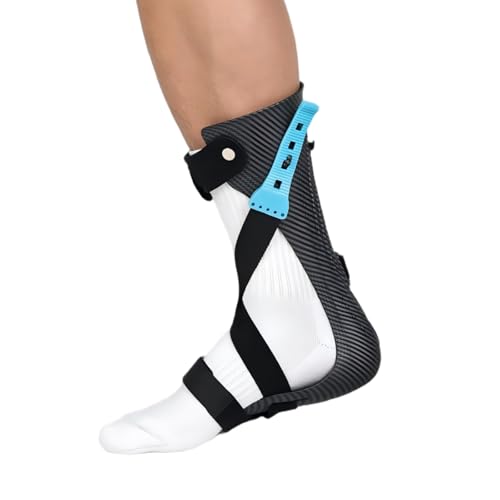
The Komzer brace offers a semi-footplate design that provides a stabilization barrier without the full rigid shell of a classic AFO. It uses a four-level manual tension system — adjustable straps that let the user increase or decrease lift intensity as swelling or walking demands change throughout the day. The open-heel polypropylene shell is low-profile enough to fit inside standard athletic sneakers without requiring a wider shoe.
Reviewers with sudden-onset bilateral foot drop reported finding the brace snug and supportive immediately, with no break-in period. The included terry cloth calf padding helps reduce pressure on the posterior calf, which is a common complaint with shorter-footplate designs. The ambidextrous format means one unit can be adapted to either foot, though ordering the correct left/right version is recommended for best strap alignment.
The heel area is narrow — a reviewer who ordered the correct size noted the heel pocket felt tight and uncomfortable before even wearing the brace. Another user with larger calves found the edge of the shell dug into the calf muscle, although the padding helped mitigate the problem. The tension system works well for mild to moderate drop foot but may lack the lift strength needed for severe, flaccid foot drop. For active gait retraining, especially post-stroke, the Komzer delivers a good balance of adjustability and comfort.
Why it’s great
- Four-level tension accommodates daily swelling changes
- Low-profile shell fits inside standard athletic shoes
- Terry cloth padding reduces calf pressure
Good to know
- Heel pocket runs narrow
- May dig into larger calves despite included padding
7. Omeer Right Foot AFO Drop Foot Brace

The Omeer brace is a neoprene boot with four adjustable straps and a non-slip rubber sole. The one-size-fits-most design uses hook-and-loop fasteners, and the rubber outsole allows the brace to be worn without shoes on hardwood or tile without the user sliding. It is machine-washable (cold, air dry), which addresses hygiene issues for those who wear the brace all day and night.
Users recovering from back injuries and knee replacements report that the brace immediately corrected foot drop and prevented falls, restoring a normal walking pattern. The four-strap system allows a customized fit around the calf and ankle, and the brace can be left on while sleeping for those who experience foot drop during side-sleeping. One reviewer noted that the brace is the most comfortable they’ve tried, but they replace every three months because the Velcro degrades.
The Velcro is the weak link — reviewers consistently report that the straps begin to lose grip after three to six months, and by seven months the brace cannot hold the foot up reliably. Applying the brace while keeping the foot flat is required, which can be awkward for users with limited mobility. For a budget-friendly solution that prioritizes initial comfort and washability over long-term durability, the Omeer is a strong entry-level choice.
Why it’s great
- Machine-washable for daily hygiene
- Non-slip rubber sole allows safe walking without shoes
- Very comfortable with a short break-in period
Good to know
- Velcro straps lose holding strength after 3–6 months
- One-size design may not fit very large or small ankles
FAQ
Can I wear a drop foot brace with sandals or open-back shoes?
How do I know if I need a rigid AFO or a soft dorsiflexion brace?
Why does my brace dig into my ankle or calf after a few hours?
Final Thoughts: The Verdict
For most users, the drop foot brace for walking winner is the Core Products FootFlexor because its spring-loaded flexible tubing system delivers a natural gait cycle, adjustable lift with four tension levels, and discreet external attachment that works with your existing shoes. If you want an ultra-thin profile with a machine-washable liner for daily hygiene, grab the Orthomen AFO Brace. And for a soft, lightweight brace that can be worn all day and even while sleeping, nothing beats the Dosh AFO Foot Drop Brace.

Mo Maruf
I created WellFizz to bridge the gap between vague wellness advice and actionable solutions. My mission is simple: to decode the research and give you practical tools you can actually use.
Beyond the data, I am a passionate traveler. I believe that stepping away from the screen to explore new environments is essential for mental clarity and physical vitality.