Our readers keep the lights on and my smoothie glass nicely filled. As an Amazon Associate, I earn from qualifying purchases.
Chasing the perfect barrel shot means battling salt spray, gusty onshore winds, and a subject that moves faster than any tripod can follow. A standard drone simply won’t cut it when the camera is fighting sudden gusts, corrosive mist, and the need for precise framing over a dynamic, reflective surface. The real challenge isn’t just getting airborne — it’s keeping the surfboard centered in the frame while maintaining stability over shifting water.
I’m Mohammad Maruf — the founder and writer behind WellFizz. I’ve spent countless hours cross-referencing transmission ranges, gimbal stabilization algorithms, and wind resistance ratings to find the machines that can actually deliver usable footage for surf photography.
This buying guide breaks down the specific flight specs, camera hardware, and durability features that matter most when shooting over open water. After analyzing over a dozen models, I’ve narrowed the market down to the best drones for surf photography available right now.
How To Choose The Best Drones For Surf Photography
Selecting a drone for surf photography requires a different checklist than a standard landscape or travel drone. The ocean introduces variables — moving water, high humidity, reflective glare, and unpredictable gusts — that demand specific hardware priorities. Here are three areas to focus on before making your decision.
Gimbal Type and Stabilization Quality
A three-axis mechanical gimbal is non-negotiable for surf footage. Electronic stabilization alone (EIS) can introduce jello effects or crop the frame when compensating for rapid lateral movements. A 3-axis gimbal physically counteracts the drone’s pitch and roll, keeping the horizon level even when the drone banks to follow a surfer down the line. Look for gimbals with smooth, responsive pan rates and the ability to tilt up for catching the lip of a wave.
Wind Resistance and Coastal Environmental Tolerance
Coastal winds shift direction without warning and often exceed 20 mph near the shore. A drone rated for Level 5 or Level 6 wind resistance (23–31 mph) will hold position better when you’re trying to frame a surfer at the peak of a set. Heavier frames and more powerful brushless motors provide the stability needed to resist being pushed off course. Also consider any environmental sealing that could protect internal components from salt spray.
Transmission Range and Battery Endurance
You will almost never launch directly above the surf lineup — you’ll be standing on a cliff, a jetty, or a stretch of beach set back from the water. A transmission range of at least 6 km (roughly 4 miles) ensures you can reach the breaking waves without losing the live feed or control signal. Battery life is equally critical: expect to burn power fighting wind, and account for the return flight. A minimum of 30 minutes of real-world flight time per battery gives you enough window to wait for the right wave set without rushing the shot.
Quick Comparison
On smaller screens, swipe sideways to see the full table.
| Model | Category | Best For | Key Spec | Amazon |
|---|---|---|---|---|
| DJI Mini 5 Pro (Plus Combo) | Premium | All-around surf tracking with obstacle avoidance | 1‑inch CMOS, 52‑min battery (Plus) | Amazon |
| Autel Robotics EVO 2 PRO V3 | Premium | Low‑light and 6K footage over water | 6K HDR, Moonlight Algorithm 2.0 | Amazon |
| Antigravity A1-360 | Premium | Immersive 360° FPV capture | 8K 360 video, goggles included | Amazon |
| Holy Stone HS600D Sentinel | Mid-Range | Steady footage in coastal winds | Level‑6 wind, 3‑axis gimbal + EIS | Amazon |
| Potensic ATOM 2 | Mid-Range | Long flight time for extended sessions | 96‑min total (3 batteries, 1.3h charge) | Amazon |
| HOVERAir X1 PRO | Mid-Range | Hands‑free solo surf sessions | 42 km/h follow speed, OmniTerrain | Amazon |
| DCX Volo X EZ AI | Mid-Range | Beginner surfers needing obstacle avoidance | 360° LiDAR, 45‑min flight | Amazon |
| Bwine F7MINI 4K | Mid-Range | Beach session with built‑in controller screen | 5.5″ 1080P screen, 64‑min total flight | Amazon |
| Ruko U11MINI 4K | Mid-Range | No‑phone portable setup over sand | Under 249g, 5.5″ touchscreen RC | Amazon |
| K600PRO GPS Drone | Mid-Range | Budget‑friendly aerial tracking | 15 km FPV, EIS 4K, 55‑min flight | Amazon |
| DJI Mini 5 Pro (Standard) | Premium | Compact surf drone with night vision | Omnidirectional avoidance, 1‑inch CMOS | Amazon |
In‑Depth Reviews
1. DJI Mini 5 Pro Fly More Combo Plus
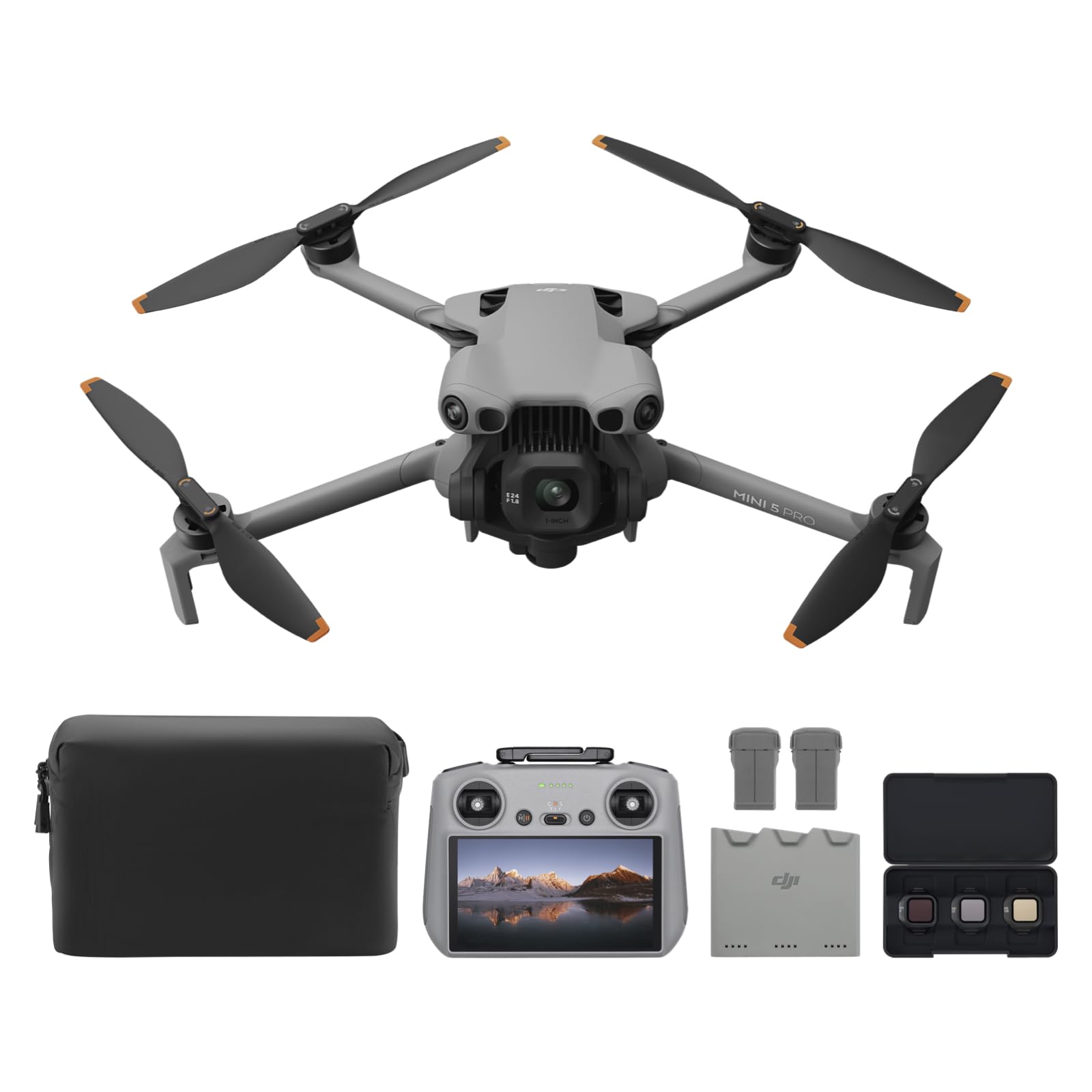
The Fly More Combo Plus package bundles three Intelligent Flight Batteries Plus that push total flight time near the full session length you need for a multi-hour surf shoot. The 1-inch CMOS sensor captures 4K/60fps HDR video with enough dynamic range to handle the harsh contrast between bright white foam and dark wave faces. True Vertical Filming and a 225° gimbal rotation let you frame a surfer dropping into a barrel without awkward digital cropping.
Nightscape Omnidirectional Obstacle Sensing is a genuine safety net when shooting early morning or late evening swells. The forward-facing LiDAR and vision sensors track obstacles in all directions and enhance the return-to-home safety margin over unpredictable water. ActiveTrack 360° keeps the subject framed even through sharp turns and cutbacks, reducing the manual stick work needed to follow a surfer.
The DJI RC 2 controller includes a bright built-in screen that remains fully readable in direct beach sunlight. At about 250 grams, the drone avoids most FAA registration requirements, though the larger batteries can push the weight over that threshold depending on local regulations. This kit delivers professional-grade results without needing a separate tablet or smartphone mount.
Why it’s great
- 52-minute battery means fewer mid-session swaps on the sand
- 225° gimbal rotation captures unique barrel-angle shots
- Omnidirectional sensing provides confidence over open water
Good to know
- Battery Plus kit pushes weight over 250g requiring FAA registration in the US
- No US warranty available for DJI Care Refresh due to regional restrictions
2. Autel Robotics EVO 2 PRO V3
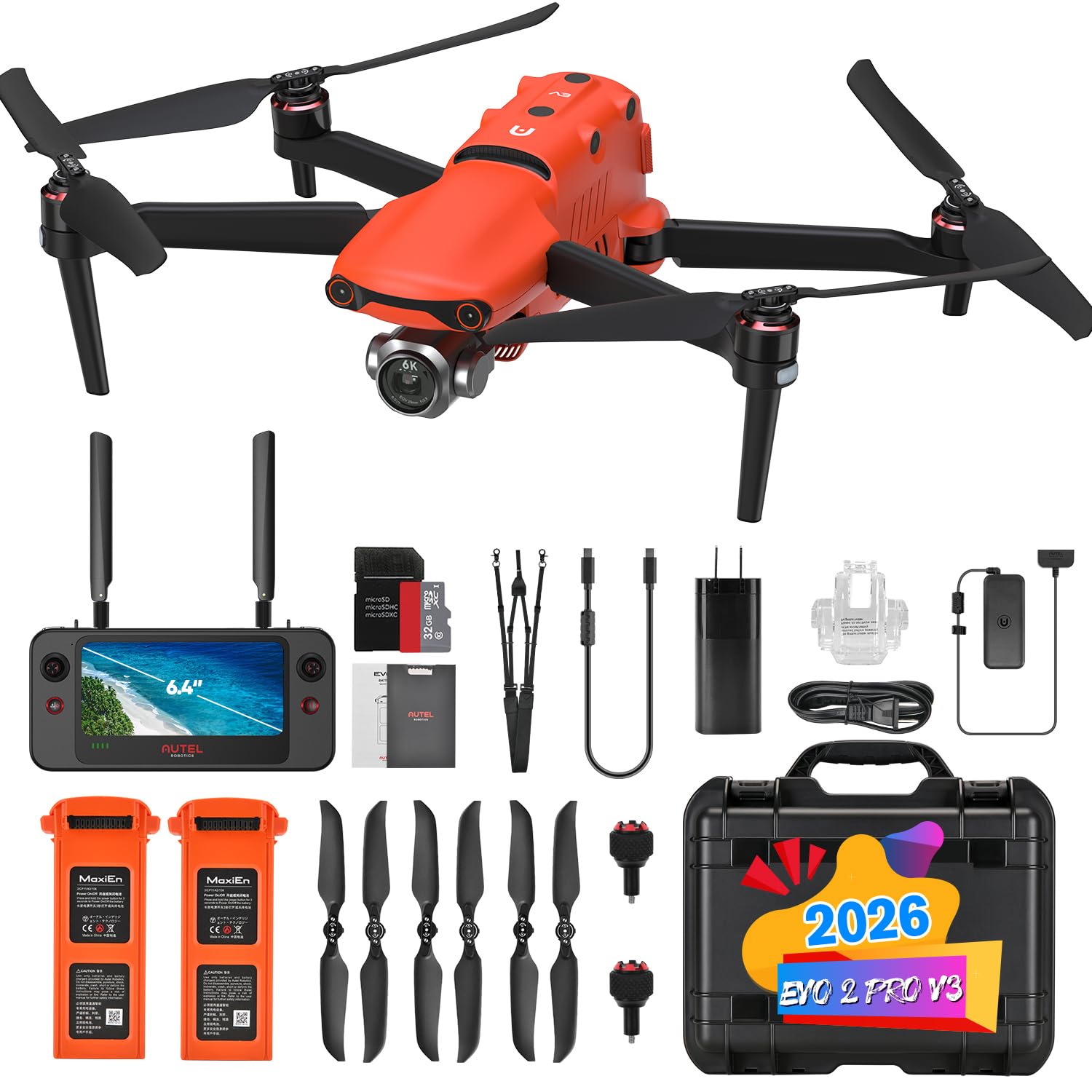
The Autel EVO 2 Pro V3 elevates surf photography with a native 6K HDR sensor that records 12-bit color, giving you 64 times the color data of standard 10-bit footage. This matters most during golden hour shoots, where the subtle gradients in the sky and the reflective quality of the water demand high dynamic range. The Moonlight Algorithm 2.0 pushes maximum ISO to 44000, making it possible to film surf sessions in low light without introducing prohibitive noise levels.
The adjustable aperture range (F/2.8 to F/11) lets you dial in the perfect exposure for bright, overhead noon conditions without needing an ND filter. Omnidirectional obstacle avoidance employs 12 visual sensors that create a protective bubble around the aircraft — particularly useful when flying between rock formations or low over a jetty to get a closer shot of the break. The 40-minute flight time is realistic for real-world wind conditions, and the 27 mph maximum wind resistance keeps the drone steady during strong sea breeze events.
SkyLink 2.0 video transmission stretches to 15 km using tri-band frequency hopping (2.4 GHz, 5.8 GHz, and 900 MHz), which reduces signal dropout when flying around coastal cliffs or behind dunes. The included Smart Controller SE features a 6.4-inch OLED touchscreen that maintains visibility in bright daylight. This drone offers the most flexible color grading pipeline of any option in this price tier.
Why it’s great
- 6K HDR 12-bit footage delivers unmatched post‑production flexibility
- Adjustable aperture eliminates mid‑flight filter swaps
- Tri‑band transmission stays locked over complex coastal terrain
Good to know
- Premium price puts it out of reach for casual weekend shooters
- Battery charger may require multiple restart attempts to initiate charging
3. Antigravity A1-360
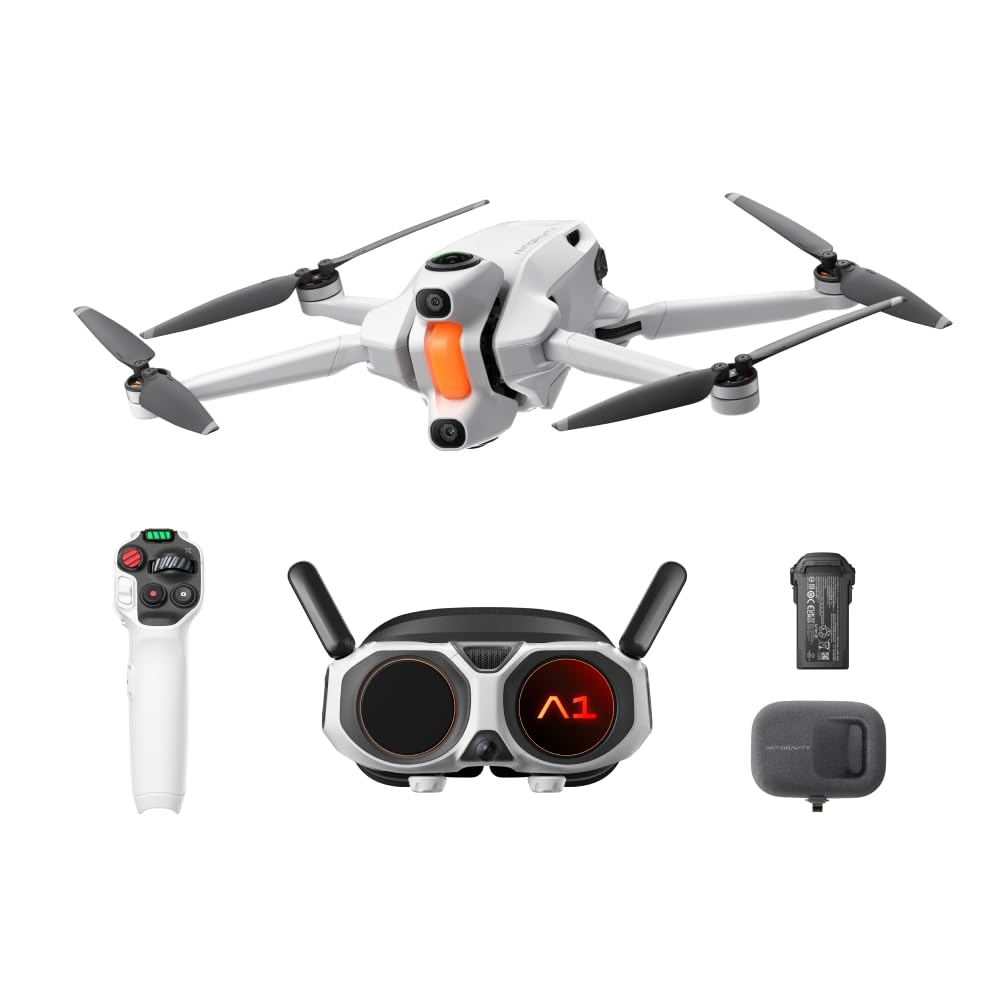
The Antigravity A1-360 is a category-defining tool for surf photographers who want to capture every angle of a single wave in a single pass. The 360-degree camera records 8K video that lets you reframe the footage after the flight — you never miss a shot because the surfer was off-center. The included Vision Goggles with dual 1-inch Micro-OLED displays and a 90° field of view create an FPV experience that feels like you are riding alongside the surfer instead of watching from above.
The FreeMotion Mode uses a point-to-fly motion controller that removes the learning curve of dual-stick piloting. For experienced pilots, FPV Mode provides wrist-based directional control that mirrors traditional drone handling. The 360 capture allows you to rewind and reframe the footage during editing — essentially giving you a second chance to nail the hero shot after the flight ends. The built-in Auto Editing 2.0 automatically reframes the 360 footage into cinematic shots with music syncing, reducing post-production workload.
Omnidirectional obstacle avoidance fuses 360 sensing with binocular vision sensors to detect obstacles from every direction. The standard battery keeps the drone under 250 grams for easy travel compliance, while the high-capacity option extends flight to 39 minutes. Sky Path and Virtual Cockpit features add gamified flight modes that keep sessions engaging between wave sets.
Why it’s great
- 8K 360 capture eliminates the need to frame the shot mid‑flight
- FPV goggles create an immersive surf‑level perspective
- Auto Editing turns raw footage into shareable content instantly
Good to know
- High price positions it as a specialized tool rather than an everyday drone
- 360 video workflow demands more storage and editing time than flat footage
4. Holy Stone HS600D Sentinel

The Holy Stone HS600D is engineered specifically for coastal conditions. The reinforced 603-gram frame provides the heft needed to resist strong sea breezes, and the Level 6 wind resistance rating means it can maintain a stable hover in winds up to 31 mph. The combination of a 3-axis mechanical gimbal and electronic image stabilization (EIS) produces footage that stays level even when the drone is fighting crosswinds near the shoreline break.
The Sony 1/2-inch CMOS sensor with an F/1.8 aperture captures 4K HDR video and 48-megapixel photos. The wired relay remote controller replaces unstable Wi-Fi links, providing a low-latency, interference-resistant HD feed — essential when flying near reflective water surfaces that can degrade wireless signals. The 80-minute total flight time from two batteries allows you to stay airborne through multiple tides without returning to base.
Multi-sensor safety integrates TOF, GPS, and optical flow positioning to improve low-altitude stability, reducing the risk of drift-induced collisions. The beginner mode and automatic altitude limits make this a less intimidating choice for surfers who want to capture their own sessions without extensive piloting experience. The remote controller has a built-in screen, removing the need for a phone mounting setup.
Why it’s great
- Level 6 wind resistance keeps footage steady in real onshore gusts
- Wired relay eliminates Wi‑Fi dropout over reflective water
- Built‑in controller screen works without a phone tether
Good to know
- 603g weight exceeds the 250g threshold for FAA registration
- No RAW photo mode limits post‑processing options
5. Potensic ATOM 2

The Potensic ATOM 2 addresses the single biggest limiting factor for surf photography — battery life. The Fly More Combo includes three batteries and a parallel charging hub that fully charges all three packs in 1.3 hours, giving you 96 total minutes of flight time. This means you can stay airborne through an entire morning tide cycle without interrupting the shoot to recharge.
The included ND and CPL filter set is a practical addition that photographers normally must purchase separately. The ND filter provides 1-to-5 stop light reduction for controlling exposure in bright overhead sun, while the CPL filter cuts non-metallic reflections from the water surface, improving the clarity of the wave face and the surfer’s board. The 1/2-inch Sony CMOS sensor captures 48-megapixel photos and 4K/30fps HDR video through a 3-axis gimbal that handles moderate wind conditions well.
AI-powered subject tracking (Spotlight, Follow, and Parallel modes) keeps the surfer framed during unpredictable line changes. The drone weighs under 250 grams, so it does not require FAA registration. PixSync 4.0 transmission technology provides a 10 km control range. The vertical shooting mode and QuickShot presets help you capture social-media-ready content without manual gimbal adjustments.
Why it’s great
- 96 minutes of total flight with rapid 1.3‑hour full recharge
- ND+CPL filters included for glare‑free water shots
- Under 249g avoids FAA registration
Good to know
- No built‑in obstacle avoidance system
- Transmission may drop in heavy coastal interference zones
6. HOVERAir X1 PRO

The HOVERAir X1 PRO is designed for solo surfers who want to film their own sessions without a dedicated pilot. It launches from your hand via a single button press or voice command and requires no controller or smartphone connection to begin tracking. The OmniTerrain system enables flight over snow, water, and cliffs without altitude drift, making it a reliable tool for surf photography where the ground is shifting water.
The follow speed reaches 42 km/h (26 mph) in standard tracking mode with a burst capability up to 60 km/h, which is sufficient to keep a surfer cutting down the face of a fast-breaking wave in frame. The upgraded aerodynamic design reduces drag, allowing the drone to accelerate quickly to match the surfer’s speed. The two-axis gimbal combined with EIS and horizon leveling keeps the footage stable during the rapid pitch and roll changes that come with close-proximity following.
The rear ToF proximity sensor provides rear active collision detection, braking before obstacles up to 1.5 meters per second. The foldable, fully enclosed design uses aerospace-grade HEM material for the propeller guards, which reduces the risk of damage if the drone drops into foam or onto sand. The internal 32GB storage plus the external SD card slot gives you enough capacity for a full session without needing to offload footage mid-battery.
Why it’s great
- Hands‑free launch and track for solo surf filming
- 42 km/h follow speed matches fast wave conditions
- Fully enclosed design survives sand and minor impacts
Good to know
- No traditional remote control for manual flight
- 2‑axis gimbal may struggle with aggressive roll maneuvers
7. DCX Volo X EZ AI
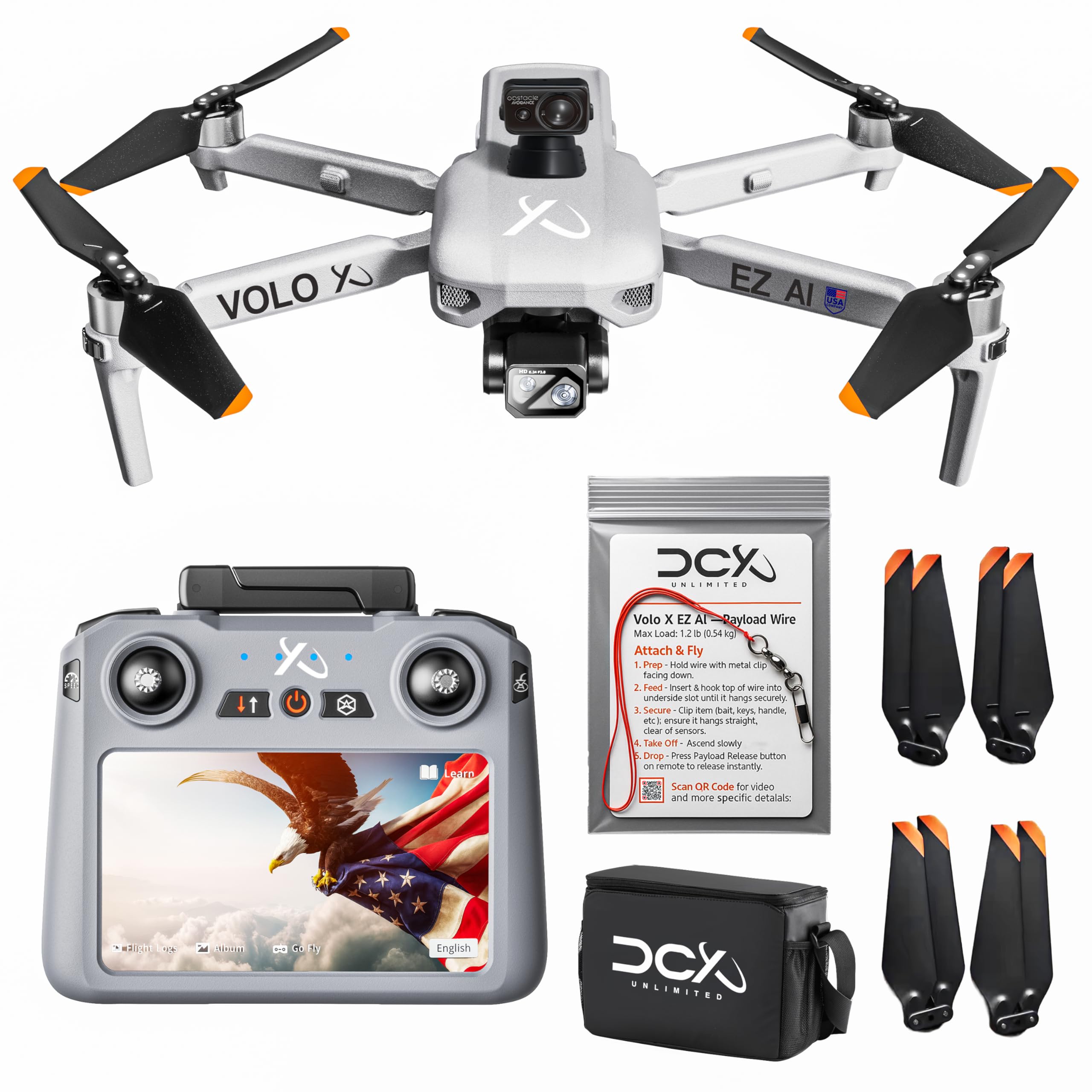
The DCX Volo X EZ AI brings a full obstacle avoidance system built on LiDAR sensors that detect objects in 360 degrees around the aircraft. Over water, where visual sensors can be confused by glare and moving reflections, LiDAR provides more reliable collision data. The drone is FAA Remote ID compliant and includes no geofencing limits, so you can fly over remote breaks without encountering no-fly zone restrictions.
The 4K camera sits on a 3-axis gimbal with electronic image stabilization, producing usable footage for social media and personal archives. The 45-minute flight time and 4-mile range give you enough runway to find the best angle on an unfamiliar beach before the battery runs low. The AI-assisted Follow Me mode tracks a moving subject automatically, while the Precision Return-to-Home function brings the drone back to the exact launch point — a useful feature when flying from a crowded stretch of sand.
Smart Night Mode and an LED spotlight extend the usable shooting window into dusk hours. A unique Payload Release system can carry and drop a small weight of up to 1.2 pounds, which could be used for marking a surf zone or delivering a floatation device in emergency scenarios. The included carrying case, spare propellers, and phone holder make this a ready-to-travel package for weekend surf trips.
Why it’s great
- 360° LiDAR obstacle avoidance works reliably over reflective water
- No geofencing limits for off‑the‑grid surf breaks
- 45‑minute flight covers extended beach sessions
Good to know
- Controller power‑on sequence is multi‑step and can slow rapid launches
- Camera resolution is consumer‑grade rather than professional 6K/8K
8. Bwine F7MINI 4K (RC3)
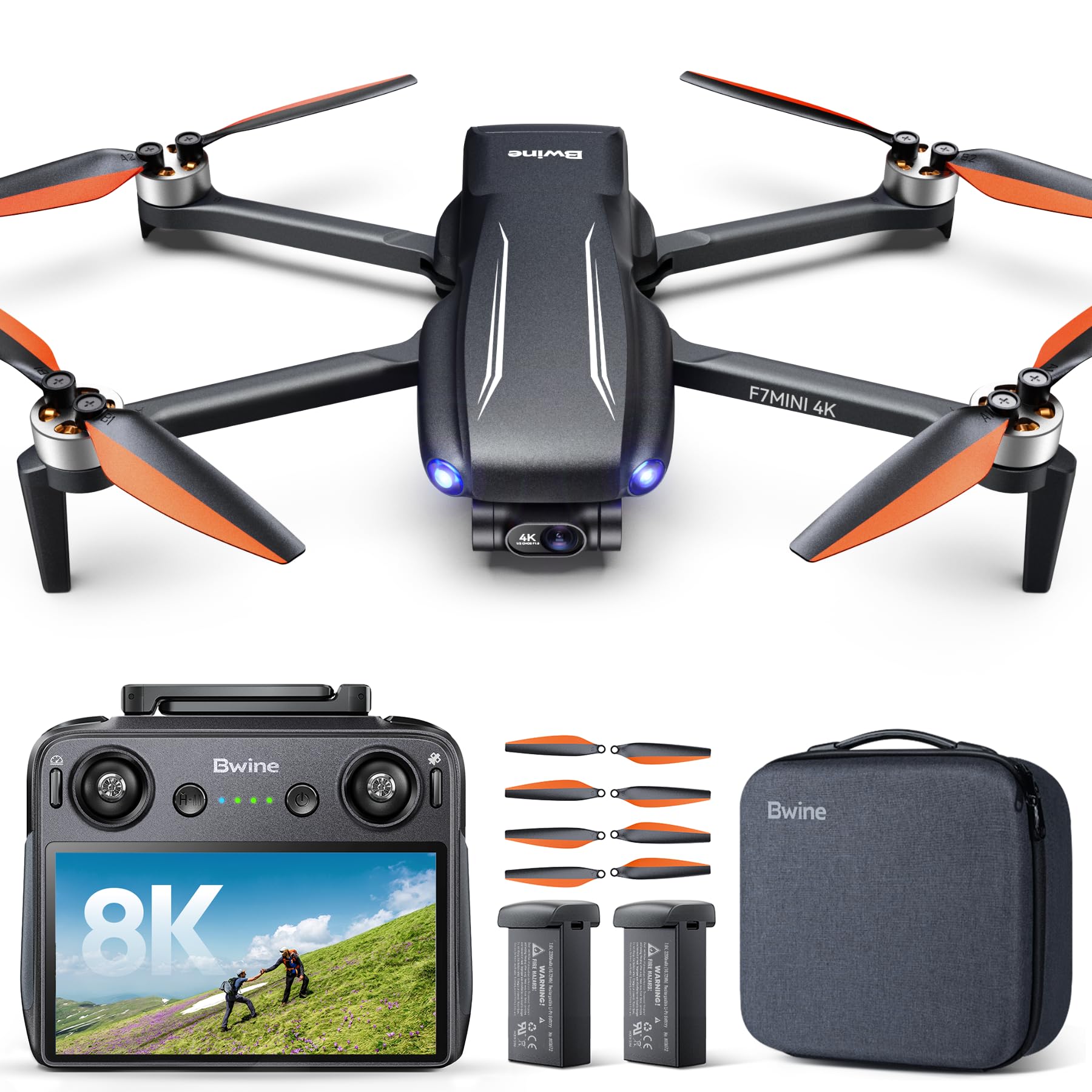
The Bwine F7MINI 4K (RC3) delivers a practical all-in-one solution for surf photographers who prefer a dedicated controller screen over a phone mount. The 5.5-inch 1080P display runs at 60 Hz with 500 nits of brightness, remaining readable in the direct beach sun that washes out smartphone screens. The remote controller provides 3 hours of battery life, so you won’t be scrambling for a charge mid-session.
The camera captures 8K photos and 4K UHD video through a 3-axis brushless gimbal that maintains stability during moderate coastal winds. The active track function follows a subject with half-meter accuracy, keeping the surfer centered even through cutbacks. The dynamic home point feature updates the return-to-home location to follow the controller’s GPS position, which is useful when you are walking along the shoreline to reposition between waves.
Weighing under 250 grams, the drone is exempt from FAA registration. Two included batteries provide 64 total minutes of flight time, and the PD 3.0 fast charging support reduces downtime between sessions. The drone locator buzzer (120 dB) activates via the app, helping you find the aircraft if it lands out of sight in tall beach grass or behind a dune. A 2-year warranty and lifetime firmware updates back the purchase.
Why it’s great
- 5.5″ 500‑nit screen stays visible in harsh beach sunlight
- Dynamic home point follows your walking shoreline position
- Under 249g with full FAA exemption
Good to know
- No mechanical obstacle avoidance system
- Photo transfer from controller to phone can be slow
9. Ruko U11MINI 4K (RC3)
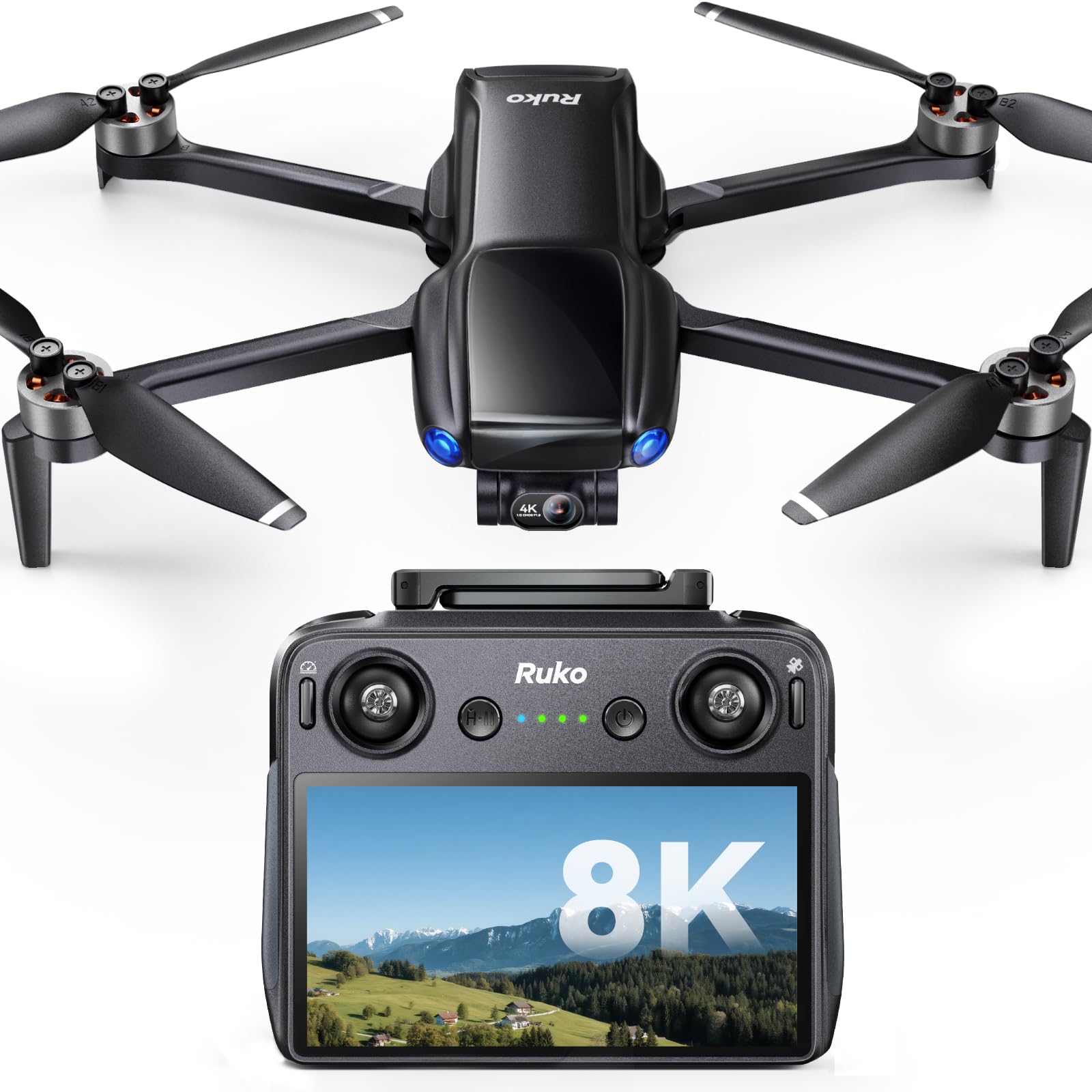
The Ruko U11MINI 4K (RC3) competes directly with the Bwine F7MINI by offering a similar integrated touchscreen controller at the same sub-250-gram weight class. The 5.5-inch 1080P touchscreen eliminates phone tethering, which is a practical advantage when the beach Wi-Fi is weak and phone brightness can’t compete with tropical sunlight. The R2 digital transmission system delivers a stable live feed up to 20,000 feet without relying on standard Wi-Fi bands that may experience interference near crowded beaches.
The 1/2-inch CMOS sensor outputs 8K photos and 4K/30fps video. The 3-axis mechanical brushless gimbal filters out the vibration and micro-jitters that commonly appear in consumer-level drone footage over choppy water. The RK3.0 smart charging system supports PD 3.0 fast charging, allowing you to power both batteries in a single hub setup without waiting for sequential charges. The 64-minute total flight time covers two full batteries worth of shooting.
Quadruple positioning (GPS, barometric, TOF, and optical flow) provides reliable low-altitude stability when hovering near the surf zone. The precision hover function locks altitude within a small tolerance, which helps maintain a consistent distance from the wave face during tracking shots. A built-in beeper and home point refresh function assist with drone retrieval if you land off-target in shifting sand.
Why it’s great
- Integrated touchscreen RC avoids phone‑mount hassles on the beach
- Quadruple positioning ensures stable hover over moving water
- PD 3.0 fast charging reduces between‑session downtime
Good to know
- Some units experience slow firmware download times
- Photo transfer from controller to phone can be slow
10. K600PRO GPS Drone
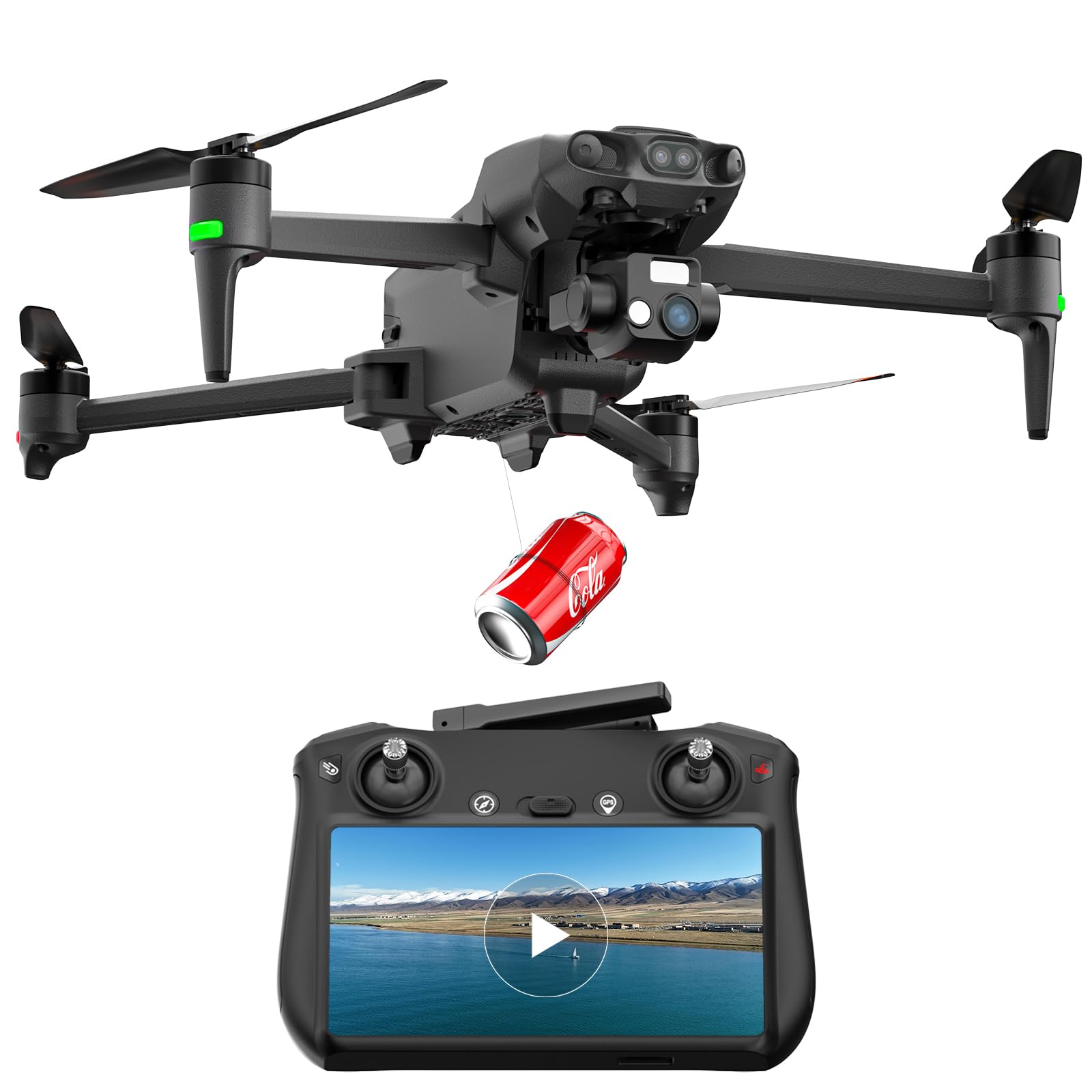
The K600PRO GPS Drone offers an entry point for budget-conscious surf photographers who still need long-range capability. The 15 km HD FPV transmission range is one of the longest in the mid-tier segment, letting you launch from a distant parking lot or cliff viewpoint and still maintain a live feed to the break. The 5.5-inch touchscreen on the controller eliminates the need for a phone mount, keeping the setup minimal on a windy beach.
The 4K camera with electronic image stabilization produces usable footage for sharing on social media and personal archives. The 3-axis gimbal provides mechanical stabilization that smooths out the high-frequency vibrations common during wind fighting. The 55-minute flight time from the included battery gives you enough airborne endurance to wait out lulls between wave sets. The Follow Me mode locks onto a moving subject automatically, which is useful for tracking a surfer down the line.
TOF sensors combined with 6 high-precision GPS sensors improve low-altitude flight stability by reducing drift during slow tracking shots. The brushless motor design delivers quieter operation, which matters when flying close to the water to get a lower angle on a wave. One-key takeoff and auto-return functions make this a low-stress entry point for pilots who are new to flying over water.
Why it’s great
- 15 km range covers long distances from elevated launch points
- 55‑minute flight time for extended beach sessions
- Built‑in screen keeps setup simple in windy conditions
Good to know
- Electronic image stabilization may crop the frame in strong winds
- Camera lacks the dynamic range of larger‑sensor models
11. DJI Mini 5 Pro (Standard)
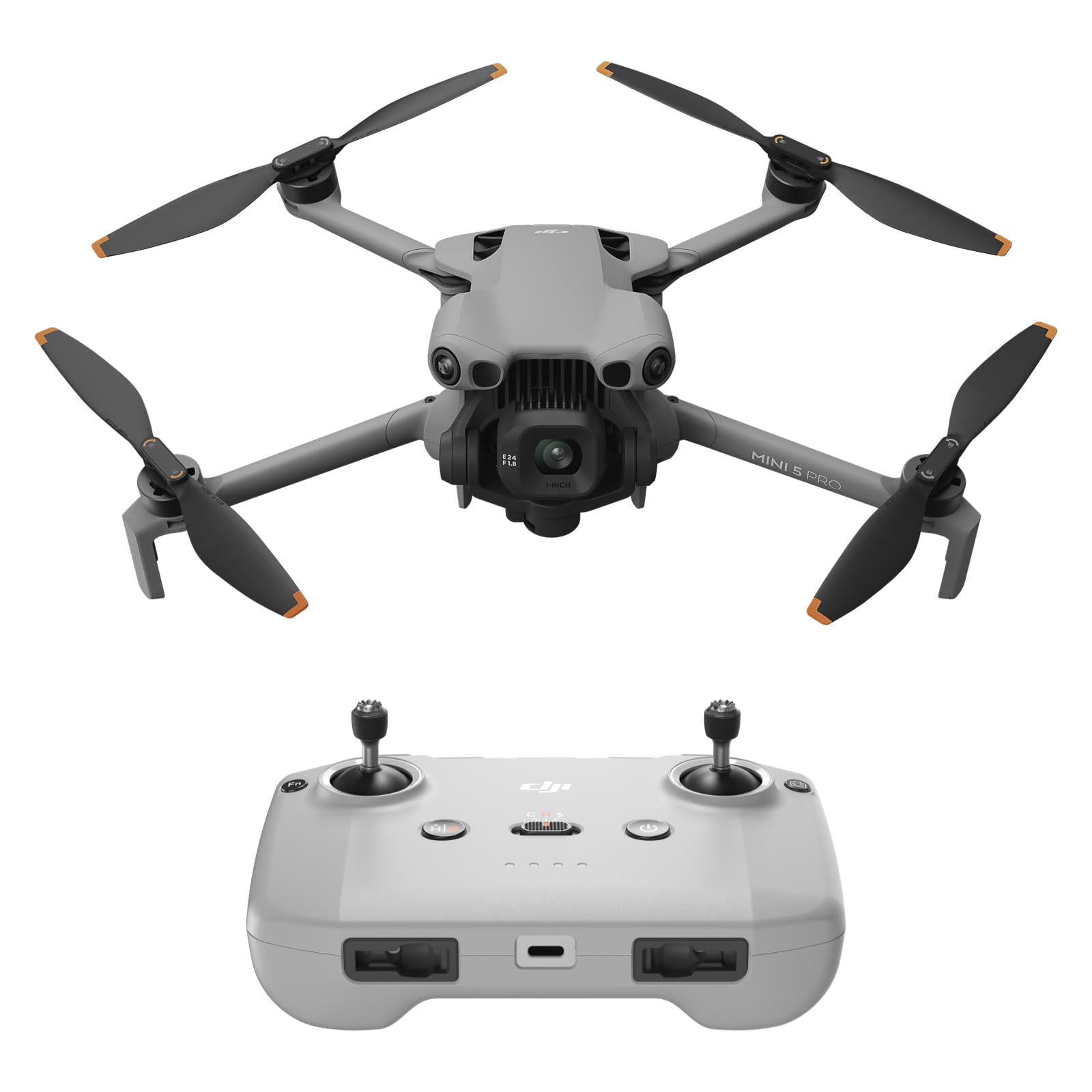
The standard DJI Mini 5 Pro offers the same 1-inch CMOS sensor and 4K/60fps HDR video capability as the Fly More Combo but in a single-battery, lower-cost configuration. The 20 km video transmission range is the longest in the sub-250 gram category, giving you the freedom to launch from a distant perch and still receive a crisp live feed from the surf zone. The Nightscape Omnidirectional Obstacle Sensing system uses forward-facing LiDAR and vision sensors that remain effective in low-light conditions near dusk.
The 225° gimbal rotation enables true vertical filming without digital cropping, preserving full resolution for vertical social media formats. ActiveTrack 360° provides customizable tracking modes that keep the subject centered during rapid direction changes. The gimbal’s 225° roll rotation allows for creative Dutch-angle shots that add visual interest to surf edits. The 36-minute battery life is adequate for a focused session, though you may need to carry a spare battery for extended shooting.
The foldable design packs into a pocket-sized form factor that is convenient for surf trips where gear space is limited. The 42 GB of internal storage provides enough capacity for a full day of 4K footage without needing an SD card. The DJI Fly app includes cinematic presets like Dronie and Rocket that automate dynamic surf shots with a single tap.
Why it’s great
- 1‑inch CMOS delivers professional dynamic range in a 249g body
- Longest transmission range for spot‑and‑shoot from distant launch points
- Omnidirectional obstacle avoidance works in low‑light surf sessions
Good to know
- Single battery limits total session time to about 30 minutes of real use
- DJI Care Refresh not available in the US
FAQ
Can you fly a drone over the ocean for surf photography without losing it?
What is the best gimbal type for tracking moving surfers?
Do I need ND filters for shooting surf from a drone?
How far can I stand from the surf break and still get usable footage?
What is the main risk of drone surfing photography over saltwater?
Final Thoughts: The Verdict
For most users, the best drones for surf photography winner is the DJI Mini 5 Pro Fly More Combo Plus because it combines the proven 1-inch sensor image quality with the longest practical battery endurance and a gimbal system that handles the demands of surf tracking. If you want the highest color depth and flexible aperture for golden-hour shoots, grab the Autel Robotics EVO 2 PRO V3. And for solo surfers who want to film their own sessions without a pilot, nothing beats the HOVERAir X1 PRO for its hands-free tracking capability over water.

Mo Maruf
I created WellFizz to bridge the gap between vague wellness advice and actionable solutions. My mission is simple: to decode the research and give you practical tools you can actually use.
Beyond the data, I am a passionate traveler. I believe that stepping away from the screen to explore new environments is essential for mental clarity and physical vitality.