Our readers keep the lights on and my smoothie glass nicely filled. As an Amazon Associate, I earn from qualifying purchases.
A professional drone is less a gadget and more a production tool — a flying camera system that sits between you and the shot that pays the invoice. Whether you’re inspecting transmission lines, mapping construction sites, surveying real estate, or capturing cinematic B-roll, the tolerances for instability, poor dynamic range, and weak transmission are zero. Every second of flight time is billable, every frame of footage must cut into a timeline without recovery work. The market now spans from sub-250g marvels with omnidirectional sensing to heavy-lift platforms that carry bait or cinema lenses. Sorting through the noise requires separating genuine sensor upgrades from spec-sheet inflation.
I’m Mohammad Maruf — the founder and writer behind WellFizz. I’ve spent hundreds of hours cross-referencing manufacturer specifications, real-world customer field reports, and independent benchmark data to identify which models actually deliver on their professional promises and which ones fold under the pressure of daily commercial use.
This guide breaks down the strongest options across every serious use case, from compact travel companions to rugged workhorses. After weeks of comparison, these are the best drones for professionals that earn their place in a real kit bag.
How To Choose The Best Drones For Professionals
Professional drone buyers share one trait: time is money. Choosing the wrong platform means missed deadlines, re-shoots, or equipment failure mid-project. Focus on the specifications that directly affect your deliverable quality and operational reliability.
Sensor and Camera Core
The camera defines the drone. A 1-inch or larger CMOS sensor (Four Thirds or APS-C) delivers the dynamic range and low-light performance required for commercial work. Resolution claims like 8K can be misleading if the sensor is tiny and the bitrate is low. Look for adjustable aperture — F/2.8 to F/11 gives you creative and exposure control that fixed-lens drones lack. Log color profiles (D-Log, A-Log) are non-negotiable for color grading in post.
Obstacle Sensing and Autonomous Flight
Omnidirectional obstacle avoidance is the difference between a confident autonomous flight and a crash. Forward, backward, upward, downward, and lateral sensors create a safety bubble that allows ActiveTrack, Point of Interest, and Waypoint missions to run without constant pilot intervention. For night operations, ensure the drone has low-light or LiDAR-based sensing — standard vision sensors fail in dark environments.
Transmission System and Range
Video transmission technology (OcuSync, SkyLink, O4+) determines how far and how reliably you can fly. A professional drone should deliver a stable 1080p or higher live feed at distances of 10 km or more in open air. More important than raw range is anti-interference performance in urban and industrial zones — triple-band frequency hopping (2.4 GHz, 5.8 GHz, 900 MHz) provides the strongest link resilience.
Flight Time and Battery Ecosystem
Every minute in the air matters. Aim for 30+ minutes of real-world flight time per battery. A hot-swappable battery system with a multi-charging hub reduces downtime between flights. For extended shoots, a minimum of three batteries is standard. Some high-end models offer high-capacity batteries that push flight time past 50 minutes but may push the drone over the 250g registration threshold.
Portability and Build Quality
Professionals travel. A foldable design that fits into a carry-on bag without sacrificing camera quality or sensor array is ideal. Build materials matter — carbon fiber arms, magnesium alloy frames, and IP-rated water resistance (IP67) separate field-ready tools from fragile consumer toys. Weight class (sub-250g vs. heavier) determines whether FAA registration and Remote ID are required.
Quick Comparison
On smaller screens, swipe sideways to see the full table.
| Model | Category | Best For | Key Spec | Amazon |
|---|---|---|---|---|
| DJI Mavic 4 Pro Fly More Combo | Flagship | Cinematic Production | 100MP 4/3 CMOS Hasselblad | Amazon |
| Autel EVO 2 PRO V3 | Pro Imaging | Low-Light & Surveying | 1″ CMOS, 6K HDR, ISO 44000 | Amazon |
| DJI Mavic 2 Pro | Hasselblad | Photo-First Workflow | 20MP 1″ CMOS, Adjustable Aperture | Amazon |
| DJI Mini 4 Pro | Sub-250g | Travel & Vlogging | 4K/60fps HDR, Under 249g | Amazon |
| DJI Mini 5 Pro | Compact Pro | On-the-Go 4K | 1-Inch CMOS, 52-min Flight | Amazon |
| Antigravity A1 Infinity | 360 Immersive | FPV & Reframing | 8K 360 Video, Vision Goggles | Amazon |
| Antigravity A1-360 | Entry 360 | Beginner Immersion | 8K 360, 249g Standard Battery | Amazon |
| HOVERAir X1 PRO | Action Cam | Sports & Selfie Flying | 4K@60fps, 42 KM/H Follow | Amazon |
| DJI Mini 3 + RC | Beginner Pro | First Professional Camera Drone | 4K HDR, True Vertical Shooting | Amazon |
| Bingchat AE86 Pro Max | Tablet Remote | Payload Release & Thermal | 90 Mins Flight, 6 Miles Range | Amazon |
| Bingchat AE Pro | Tablet Remote | Long Range & Rainproof | 84 Mins Flight, 5 Miles Range | Amazon |
| Karuisrc K600PRO | Screen Controller | Budget All-in-One | 5.5″ Touchscreen, 55 Min Flight | Amazon |
| SwellPro FD2 Fisherman MAX | Heavy Lift | Fishing & Payload Delivery | 7.0 LBS Bait Capacity, IP67 | Amazon |
In‑Depth Reviews
1. DJI Mavic 4 Pro Fly More Combo

The Mavic 4 Pro represents the current ceiling of consumer-prosumer drone technology. Its 4/3 CMOS Hasselblad main sensor captures 100MP still images and 6K/60fps HDR video with color science that reduces grading time. The 360° Infinity Gimbal allows camera movement that was previously locked to gimbal operators with a separate rig, enabling orbital and hyperlapse shots without digital cropping.
Nightscape omnidirectional obstacle sensing at 0.1 Lux means you can fly with confidence during golden hour and twilight commercial shoots. The O4+ video transmission system pushes 10-bit HDR feeds up to 30 km, a useful margin for large-scale real estate or infrastructure inspections. The 51-minute max flight time with the standard battery is best-in-class, though real-world endurance settles around 38-42 minutes under typical load.
The Fly More Combo includes three batteries, a parallel charging hub, and four spare propeller sets. The RC 2 remote with a built-in screen eliminates phone dependency. Professional shooters will appreciate that the Mavic 4 Pro ships with D-Log color and HLG support baked in.
Why it’s great
- 4/3 CMOS sensor delivers class-leading dynamic range and color depth.
- 360° gimbal provides cinematic camera movement without digital cropping.
- Effective 30 km transmission with strong anti-interference.
Good to know
- 6K 100MP stills require significant storage and post-processing power.
- Weight above 250g mandates FAA registration and Remote ID.
2. Autel EVO 2 PRO V3
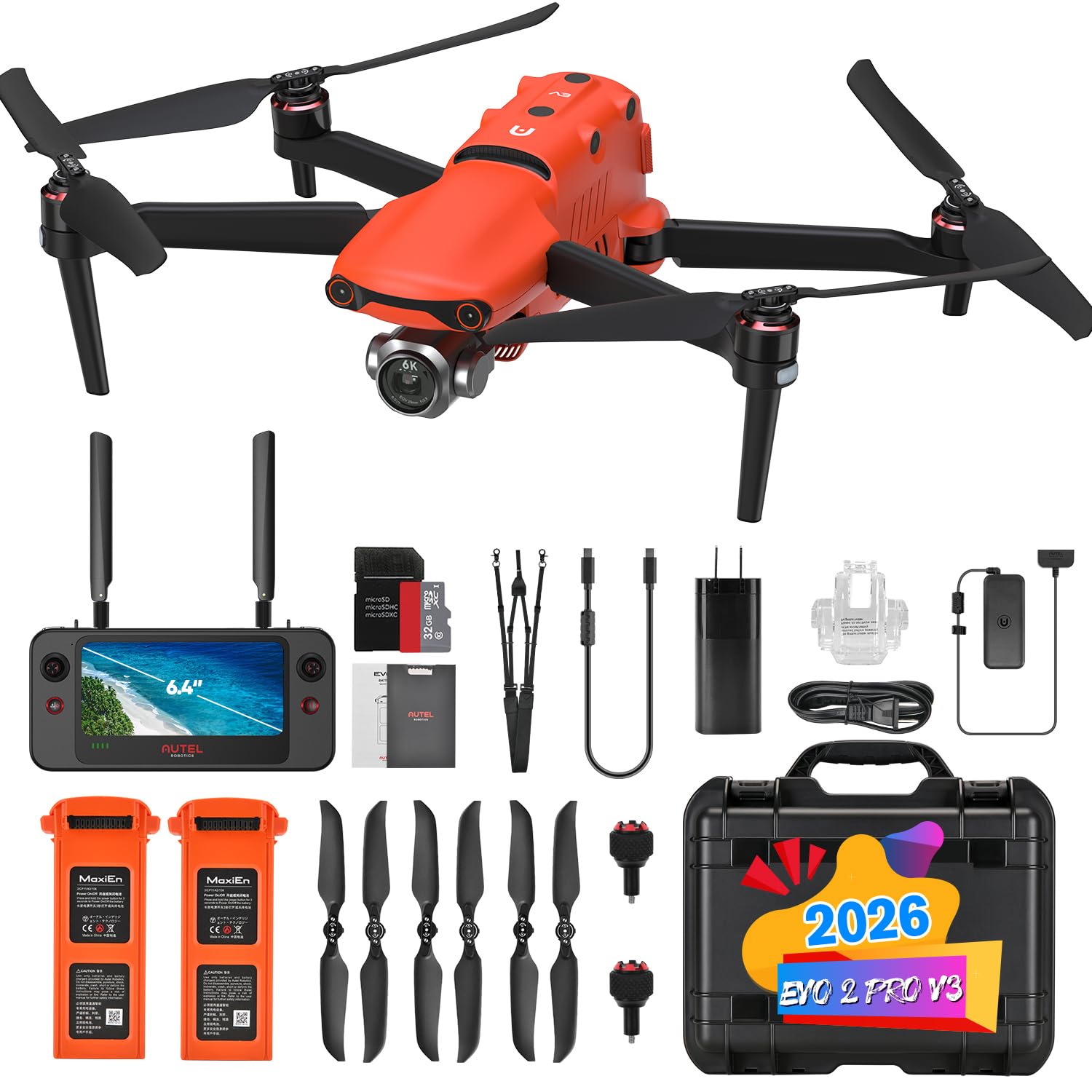
Autel’s EVO 2 PRO V3 is the professional’s alternative to the DJI ecosystem, and it earns its spot through sensor performance and freedom from geofencing. The 1-inch CMOS sensor with adjustable aperture (F/2.8 to F/11) records 6K HDR video and 20MP stills at ISO up to 44000, a number made viable by the Moonlight Algorithm 2.0 that suppresses noise in night scenes. Real estate photographers who shoot twilight exteriors will see the difference immediately.
The SkyLink 2.0 transmission system uses tri-band frequency hopping (2.4 GHz, 5.8 GHz, 900 MHz) to maintain a 2.7K live feed at 15 km. In congested urban and industrial zones, the triple-band design outmatches dual-band systems. The 360° obstacle avoidance system uses 12 visual sensors and 19 groups of total sensors, creating a full sphere of awareness that makes autonomous Waypoint missions safer.
The Smart Controller SE has a 6.4-inch OLED screen and an IP43 rating for all-weather field use. The Rugged Bundle includes a spare battery, protector case, and RC lanyard. The absence of mandatory geofencing is a significant advantage for commercial operators who need to fly in authorized zones without software roadblocks.
Why it’s great
- 6K HDR with adjustable aperture for precise exposure control.
- Moonlight Algorithm 2.0 delivers usable images up to ISO 44000.
- No enforced geofencing for approved commercial flights.
Good to know
- Customer support response times can be inconsistent.
- App interface differs between Smart Controller and mobile.
3. DJI Mavic 2 Pro

The Mavic 2 Pro remains a reference point for aerial photography, thanks to its Hasselblad L1D-20c camera with a 20MP 1-inch CMOS sensor and a true adjustable aperture. The F/2.8-F/11 range gives you real exposure control without needing ND filters, which matters when you are switching between bright daylight and shadowed interiors during a single real estate shoot. The 3-axis gimbal delivers the steady frame that editors expect.
Flight performance is still competitive with a 31-minute flight time, 44 mph top speed, and omnidirectional obstacle sensing that covers forward, backward, and downward axes. ActiveTrack 2.0 keeps subjects centered during dynamic shots, and Hyperlapse mode processes time-lapses in-camera. The 8GB internal storage plus SD card support up to 128 GB gives you margin on longer flights.
The Mavic 2 Pro uses the standard RC controller with up to 135 minutes of battery life, relying on your smartphone for the display. The image pipeline supports D-Log color and 10-bit DNG-M raw photos, which means you can push highlights and shadows in post without banding. It is an older platform, but for photo-first workflows, the Hasselblad color science is still competitive.
Why it’s great
- Hasselblad natural color reproduction straight out of camera.
- Mechanical adjustable aperture for precise exposure without ND filters.
- Proven reliability and strong third-party accessory ecosystem.
Good to know
- 31-minute flight time is below modern flagships.
- No upward-facing obstacle sensors.
4. DJI Mini 4 Pro Fly More Combo
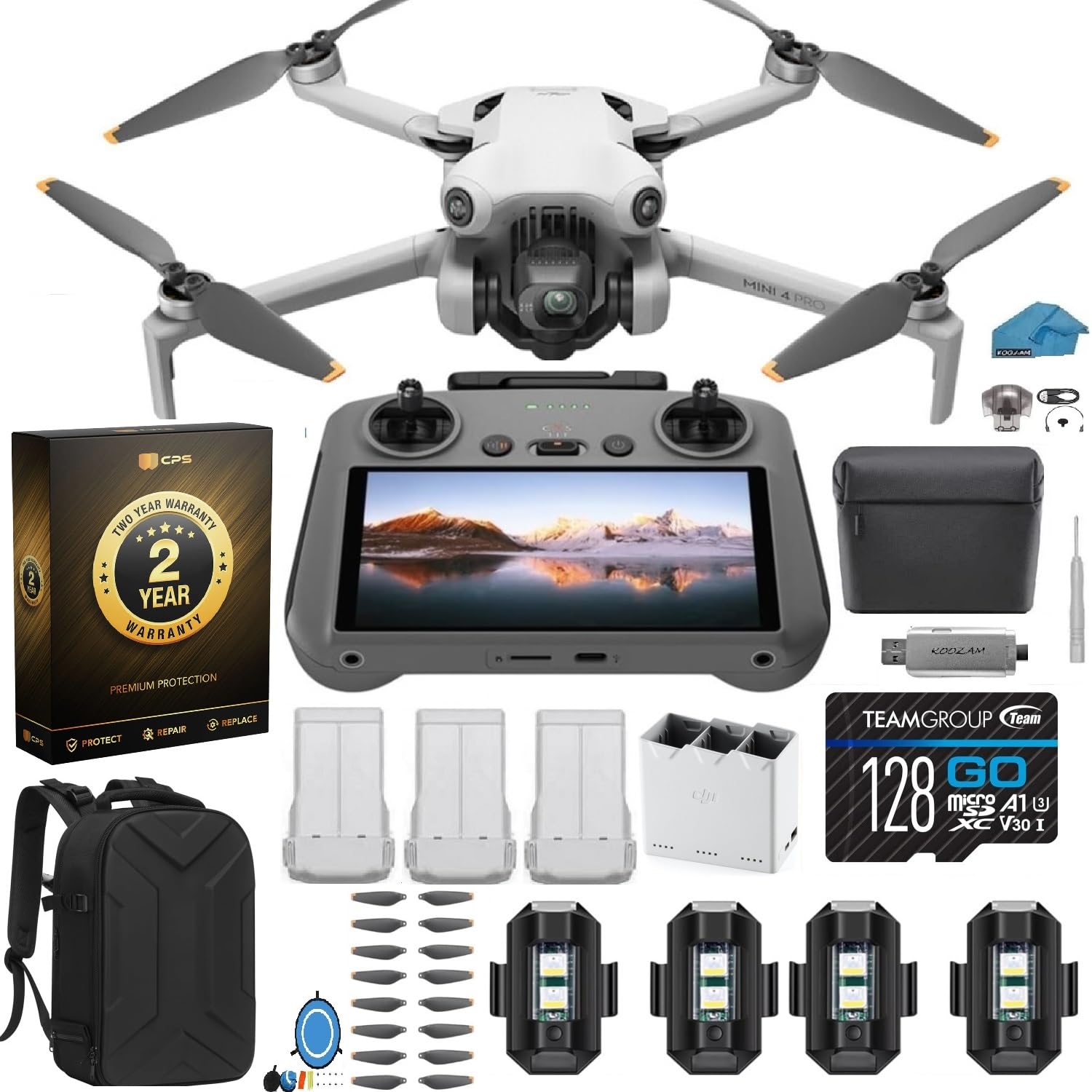
The Mini 4 Pro shrinks nearly the entire DJI flagship feature set into a sub-250g airframe that requires no FAA registration for recreational use. The 4K/60fps HDR vertical video recording — native, not cropped — is a game-changer for social media content creators and commercial workflows requiring vertical deliverable formats. The 1/1.3-inch sensor produces footage that grades surprisingly well given the size constraint.
Omnidirectional obstacle sensing with binocular vision covers all six directions — forward, backward, upward, downward, and both lateral sides — which is unprecedented in this weight class. ActiveTrack 360° and the broader intelligent flight suite function nearly identically to the Mavic series, making this a legitimate B-camera for professional shoots. The RC 2 remote with a built-in screen eliminates phone tethering.
Fly More Combo includes three batteries, a two-way charging hub, a shoulder bag, and a set of strobe lights for visibility. The 34-minute max flight time (real-world ~28 minutes) is adequate but requires the multi-battery kit for extended days. The 128 GB SD card and card reader included in this bundle ensure you can shoot all day without offloading mid-flight.
Why it’s great
- Omnidirectional obstacle sensing in a sub-250g frame.
- True vertical 4K/60fps HDR for social media deliverables.
- RC 2 with built-in screen — no phone required.
Good to know
- Battery life is closer to 28-30 minutes in real-world conditions.
- No upward gimbal tilt for architectural shots.
5. DJI Mini 5 Pro Fly More Combo
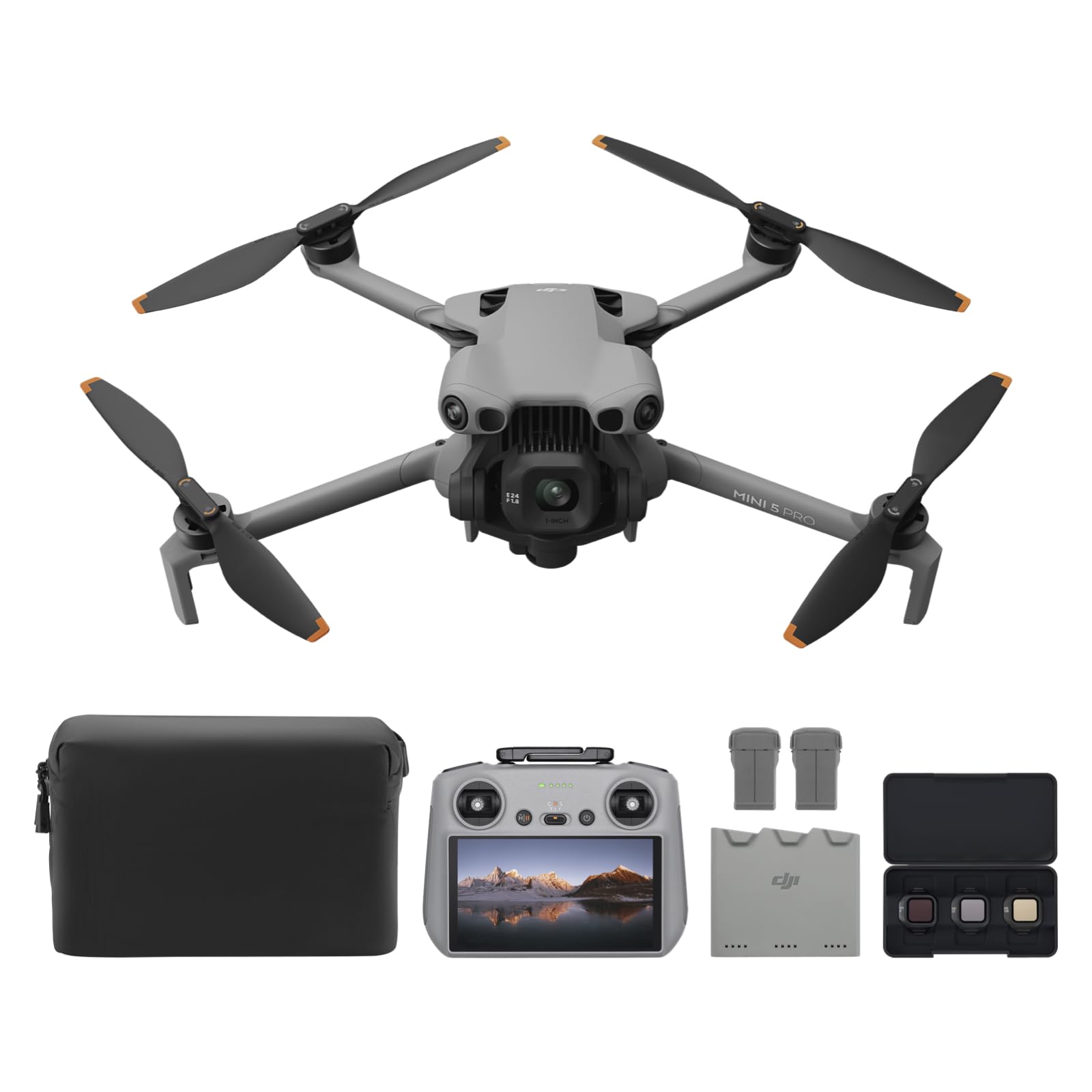
The Mini 5 Pro graduates from the Mini line’s traditional sensor to a true 1-inch CMOS, capturing 4K/60fps HDR video and 50MP stills with a level of detail that was previously impossible in the sub-250g form factor. The 225° flexible gimbal rotation enables true vertical filming without any digital crop — a first for the weight class. The Nightscape omnidirectional obstacle sensing uses forward-facing LiDAR and vision sensors to detect obstacles in all directions, including in low light.
ActiveTrack 360° has been reworked for this platform with customizable tracking modes that handle cyclists and vehicles with better stability than the Mini 4 Pro. The Intelligent Flight Battery Plus extends flight time up to 52 minutes, though the larger battery pushes the drone over 250g, requiring FAA registration. The Fly More Combo includes three of these extended batteries and a charging hub that recharges all three in about 193 minutes.
The DJI RC 2 remote with a built-in screen comes in the package, and the drone includes 42 GB of internal storage. This eliminates the need for an SD card for most flights. Professionals who need to travel without registration paperwork can use the standard (smaller) battery to stay under 250g and swap to the Plus battery for maximum endurance during critical missions.
Why it’s great
- 1-inch CMOS sensor in a sub-250g airframe (with standard battery).
- 225° gimbal for true vertical filming.
- LiDAR-based night obstacle sensing included.
Good to know
- Fly More Plus batteries push weight over 250g, requiring Remote ID.
- D-Log footage requires color grading skill in post.
6. Antigravity A1 Infinity Bundle
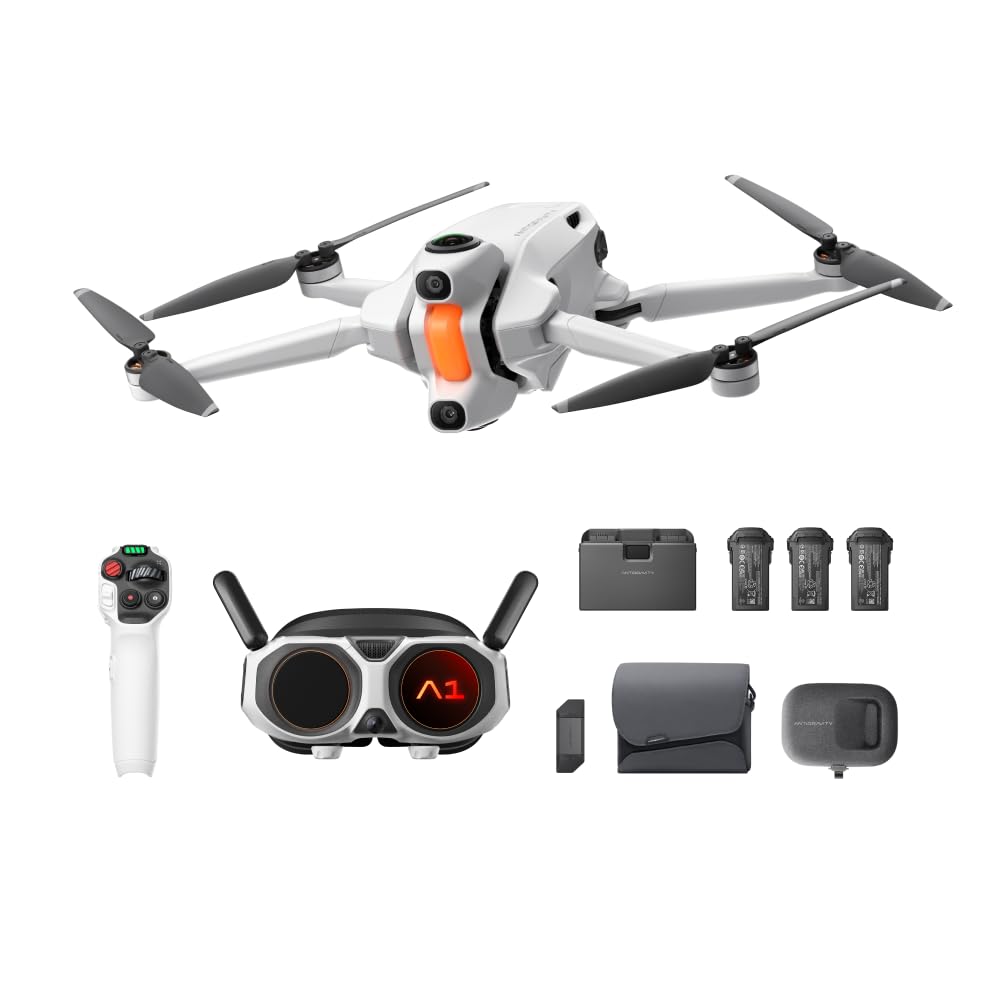
The A1 Infinity Bundle is the first consumer drone that makes 360° capture the primary feature rather than a gimmick. It records 8K 360 video using Insta360’s proprietary stitching, allowing you to fly first and frame the shot later — a workflow that saves significant time when the subject is moving unpredictably. The Vision Goggles with dual 1-inch Micro-OLED panels and a 90° field of view create an immersive FPV experience that feels distinct from traditional camera drones.
The point-to-fly motion control using the Grip Controller makes this unusually accessible for professional videographers who are not skilled FPV pilots. Sky Path and Virtual Cockpit modes add a gamification layer that, while not serious, helps clients visualize shots. The 10 km transmission range is sufficient for covered shoots. The Infinity Bundle includes three high-capacity batteries plus a charging hub and a second carry case, extending your field time significantly.
The drone can operate at sub-250g with the standard battery — useful for travel. With the high-capacity battery, you get up to 39 minutes of flight time. The Auto Edit 2.0 feature automatically reframes 360 footage into cinematic sequences, which is a genuine time-saver for clients who need fast turnaround social content.
Why it’s great
- 8K 360 capture allows reframing in post — no missed angles.
- Vision Goggles with diopter adjustment for glasses users.
- Point-to-fly motion control reduces piloting learning curve.
Good to know
- 360 workflow requires more storage and post-production time.
- Some users report connection loss issues in early firmware versions.
7. Antigravity A1-360 Drone
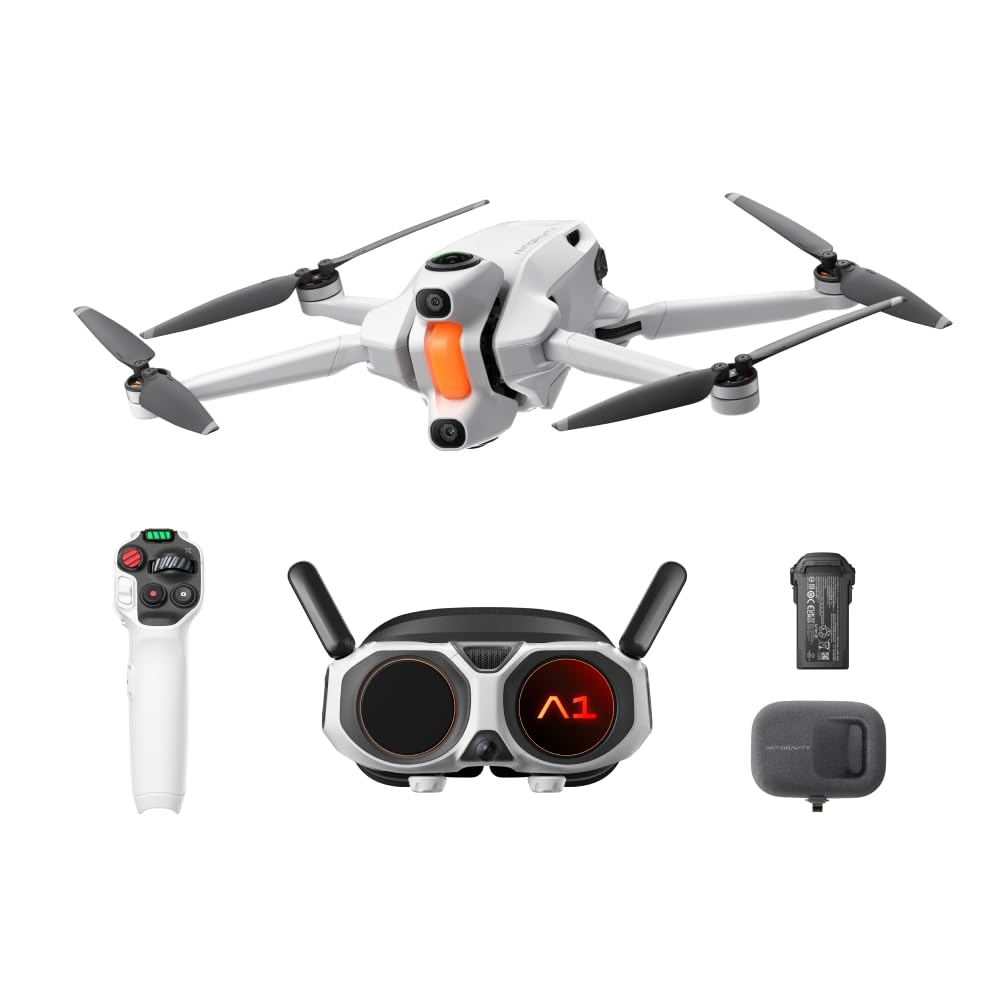
The standard A1-360 bundle provides the same 8K 360 capture and Vision Goggles as the Infinity version but with a single standard battery, making it the more accessible entry point for professionals curious about immersive 360 footage. The core tech — dual 1-inch Micro-OLEDs, Pancake optics, Omnidirectional Obstacle Avoidance, and Deep Track — is identical. The difference is field endurance: you get one standard battery instead of three high-capacity units.
The 249g weight with the standard battery means no FAA registration or Remote ID is needed, which simplifies legal logistics when traveling between jobs. The goggles’ built-in diopter adjustment (-8.00 to +2.00) means you do not need to wear glasses underneath, a comfort advantage for long flights. The FreeMotion Mode with point-to-fly control is genuinely intuitive for non-pilot clients who want to capture their own B-roll.
Auto Return-to-Home and Sky Genie maneuvers ensure the drone can handle itself if you lose orientation. The Auto Edit 2.0 software automatically creates shareable clips from 360 footage, which is useful for quick-turnaround projects. If you are evaluating 360 drones for commercial use, this single-battery bundle is a lower-risk entry point before investing in the Infinity package.
Why it’s great
- Same 8K 360 sensor and goggles as the Infinity bundle.
- Sub-250g with standard battery — no FAA registration.
- Motion control is intuitive for non-pilot collaborators.
Good to know
- Only one battery in the box — extension required for full-day shoots.
- Narrow FOV reported by some pilots during flight.
8. HOVERAir X1 PRO

The HOVERAir X1 PRO redefines what a hands-free action-follow drone can do. Its follow speed of 42 KM/H (top burst of 60 KM/H) matches the pace of a professional cyclist or skier, making it the primary choice for action sports cinematography. The OmniTerrain system enables stable flight over snow, water, and cliffs without the need for GPS lock — the drone tracks via visual and ToF sensors, keeping the subject centered in the frame.
The 15+ fully automatic flight modes include Hover, Zoom Out, Follow, Dolly Track, and Orbit. You do not need a controller or even a smartphone; the drone launches from the palm of your hand with a single click or voice command. The rear Active Collision Detection uses a Time-of-Flight proximity sensor to brake before collisions at speeds up to 1.5 m/s, which is essential for tree-lined trails and indoor action sequences.
The Skiing Combo includes Thermo Batteries and a PowerCase that keeps the batteries operational at temperatures as low as -20°C (-4°F). The drone weighs 192g and is fully foldable, fitting into the included combo case. The absence of FAA registration is an advantage for international travel. The 4K@60fps footage with SmoothCapture 2.0 stabilization is genuinely usable for broadcast-level B-roll.
Why it’s great
- 42 KM/H follow speed for fast-action sports.
- OmniTerrain enables flight over snow, water, and cliffs.
- Thermo batteries function at -20°C for winter sports.
Good to know
- No manual piloting controls — fully autonomous flight only.
- Limited to 12 MP effective still resolution.
9. DJI Mini 3 + RC Smart Controller

The Mini 3 bundle with the RC Smart Controller is the most cost-effective entry point into professional-grade aerial imaging. The 1/1.3-inch sensor records 4K HDR video with dual native ISO, producing clean footage across day and night scenes. The true vertical shooting gimbal rotates the camera 90°, delivering native 9:16 footage without any cropping — essential for Reels, TikTok, and Instagram Story deliverables that clients increasingly demand.
The extended battery option pushes flight time to 51 minutes (real-world ~34 minutes with the Plus battery), and the 10 km O2 transmission system keeps the feed stable at distance. Under 249g, the Mini 3 requires no FAA registration in most regions, which simplifies commercial operations across state lines. The RC Smart Controller with its built-in screen eliminates the need for a phone, a reliability upgrade for field work.
This bundle includes the Fly More Kit with three batteries, a two-way charging hub, a Deco Gear backpack, and a 32GB SD card. The 38-minute standard battery life is adequate for a single flight, but the three-battery setup allows for a full shoot day. QuickShots and Panorama modes handle automated capture, leaving you free to compose the scene rather than pilot the drone.
Why it’s great
- True vertical shooting for native social media content.
- Dual native ISO for clean low-light footage.
- Under 249g — no FAA registration required.
Good to know
- No obstacle avoidance sensors — collisions are pilot-dependent.
- Controller screen size is smaller than newer RC 2 models.
10. Bingchat AE86 Pro Max (2026 Upgrade)
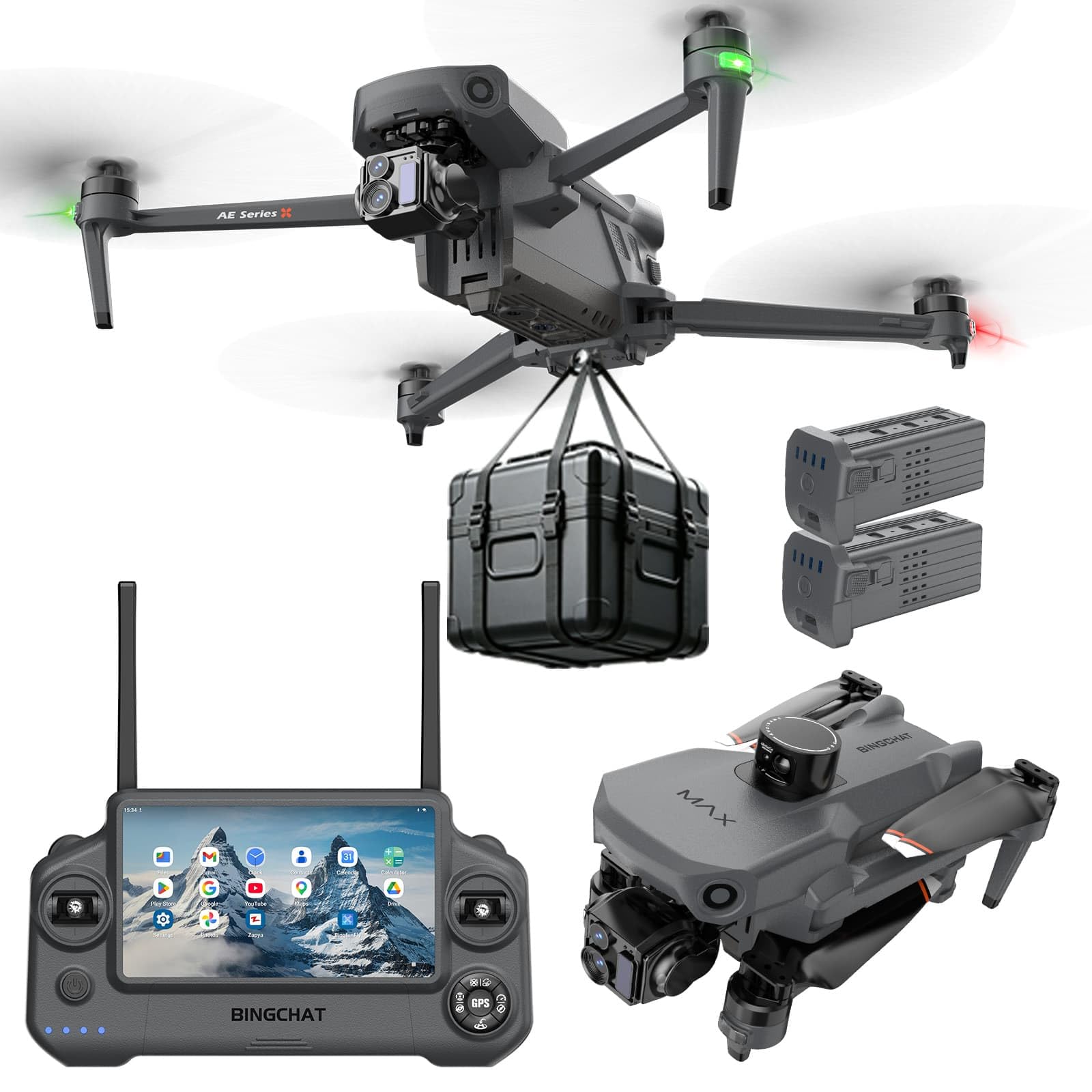
The Bingchat AE86 Pro Max is a feature-dense platform targeting professionals who need long flight endurance, heavy payload capacity, and a tablet-based controller. The total advertised flight time of 90 minutes across two batteries (approximately 45 minutes each) is generous, and real-world reports confirm over 40 minutes per battery under normal flying conditions. The built-in liftable 360° laser obstacle avoidance is unique at this tier, offering automated multi-directional sensing that can be raised during flight for full coverage.
The 4K HD camera with 3-axis gimbal and EIS anti-shake records stable footage during high-wind conditions, and the bottom-facing camera provides an alternate viewing angle for precision landing. The payload release function allows the drone to carry and drop small packages, which opens possibilities for delivery, search and rescue, or fishing bait placement. The thermal mode and fill-light night mode are functional additions for night operations.
The large tablet controller runs on Android with full Google Play access, functioning as a standalone device that can run third-party mapping or inspection apps. The FAA certification compliance means you can operate within US regulations without legal concerns. The IP43 rating and Level 7 wind resistance make this a genuine all-weather tool for construction site inspection and agricultural surveying.
Why it’s great
- 90-minute total flight time with two included batteries.
- Built-in payload release and thermal mode.
- Large tablet controller runs Google Play apps.
Good to know
- Build quality may not match top-tier DJI or Autel standards.
- Customer support communication can vary.
11. Bingchat AE Pro (2026)
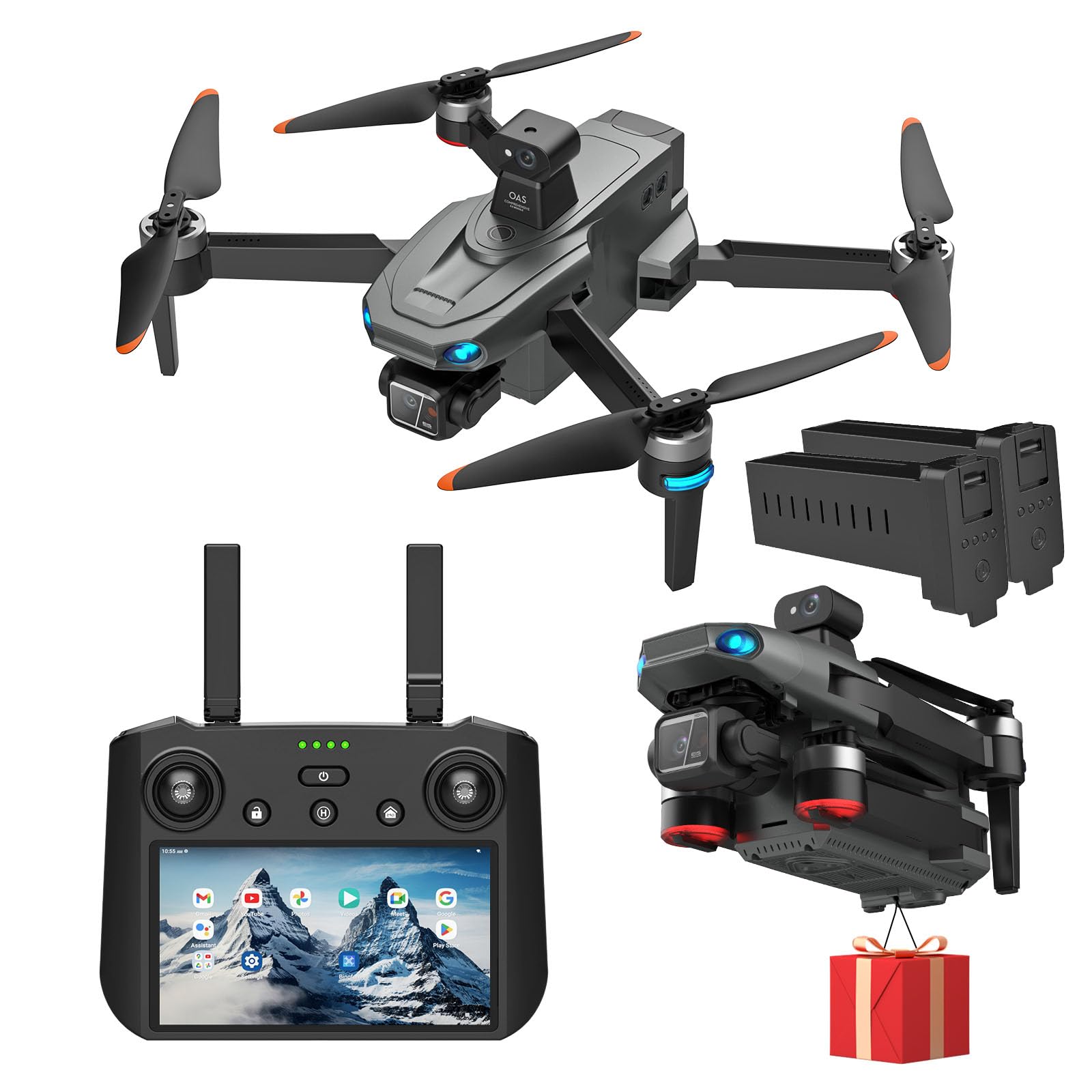
The Bingchat AE Pro is a slightly more value-focused variant of the AE86, sharing the same carbon fiber sticker design and tablet-based touch screen controller with Android and Google Play support. The key difference is the battery configuration: two extended batteries provide a total of 84 minutes of flight time (42 minutes per battery), which is still class-leading for this price tier. The 5-mile transmission range is sufficient for most professional surveying and inspection flights.
The 3-axis gimbal with EIS anti-shake and 50x digital zoom provides flexibility for distant subject capture. The 360° laser obstacle avoidance is included, as is the payload release mechanism. The Level 7 wind resistance rating means the drone can fly safely in winds up to 40 mph, which is critical for coastal or mountain operations. The 2624-foot height ceiling gives you room for high-altitude landscape work.
The touch screen controller functions as a standalone tablet, which reduces the need for carrying a separate device. This is particularly useful for on-site inspections where you need to reference blueprints or maps while flying. The drone has completed FAA compliance certification, so operators face no legal hurdles in US airspace. For operators on a budget who need long flight times and safety features, the AE Pro is a strong value proposition.
Why it’s great
- 84 minutes of total flight time across two batteries.
- Tablet controller with full Android app support.
- Payload release and 360° obstacle avoidance included.
Good to know
- Downward camera for alternate angles — not used for obstacle avoidance.
- Warranty claims require email-based support process.
12. Karuisrc K600PRO
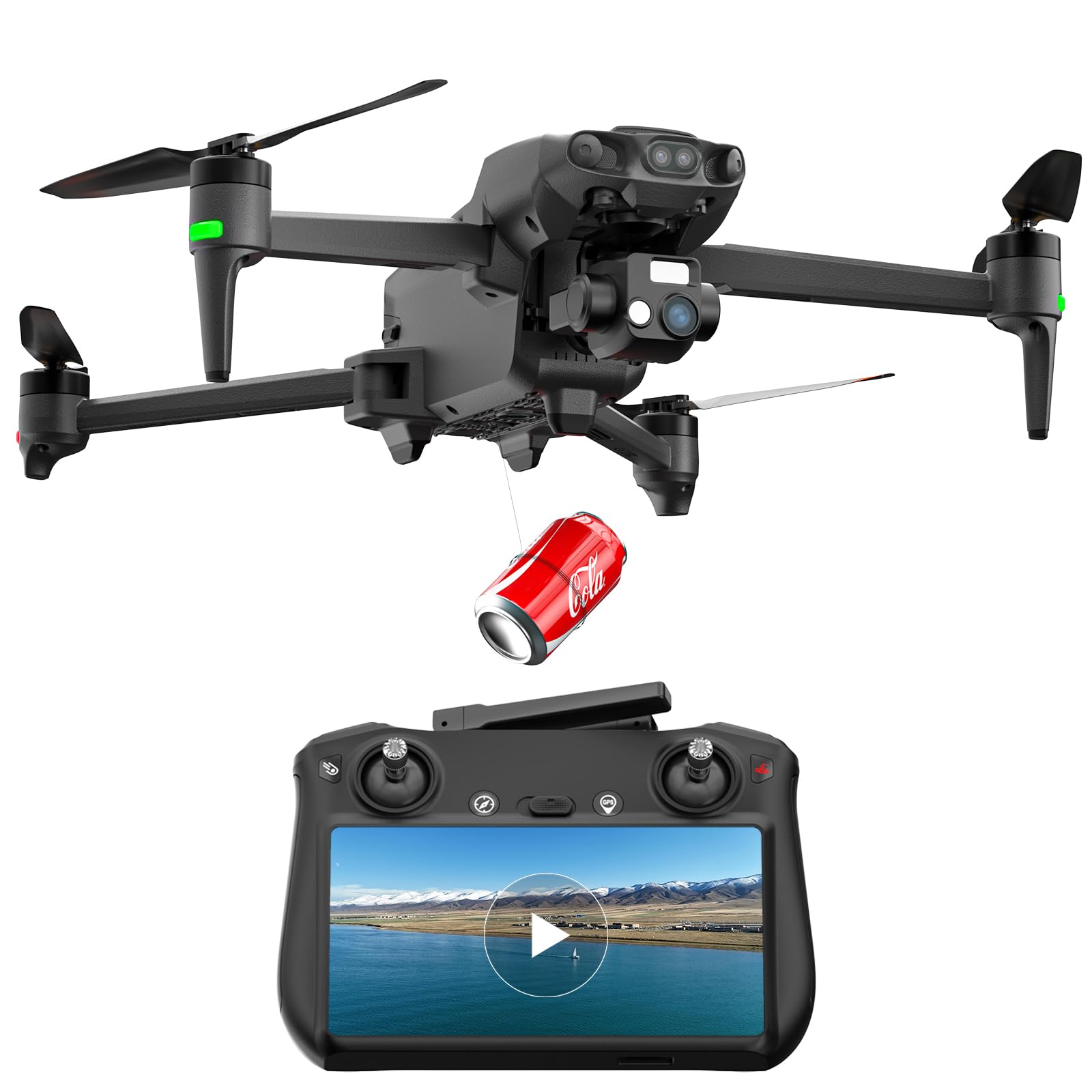
The K600PRO is a purpose-built all-in-one system that integrates the 5.5-inch LCD touchscreen directly into the controller, eliminating the need for a phone. The 4K camera with EIS stabilization and 3-axis gimbal captures smooth footage, and the 50x digital zoom gives you reach for distant subjects. The 15 km FPV transmission range is ambitious for this price tier, and real-world performance holds up well in open areas with clear GPS satellite signals.
GPS auto-return, Follow Me mode, and orbit flight are all onboard. The TOF sensors and six high-precision GPS modules improve low-altitude hover stability by 200% compared to GPS-only systems. The brushless motor and 11.1V 3500mAh battery deliver up to 55 minutes of hover time — though real-world flight closer to 25-30 minutes. The Type-C charging is convenient for field charging via a power bank.
Beginner-friendly features like one-key takeoff, auto-return, and beginner flight mode make this an accessible entry point for professionals who need to train new team members. The foldable design and 0.73 kg weight make it easy to transport. The integrated screen receiver means no phone pairing issues during critical flights.
Why it’s great
- 5.5-inch controller screen eliminates phone dependency.
- TOF sensors improve low-altitude stability.
- Type-C charging for power bank compatibility.
Good to know
- Real-world flight time is significantly less than advertised hover time.
- Wi-Fi connectivity is more limited than OcuSync or SkyLink.
13. SwellPro FD2 Fisherman MAX
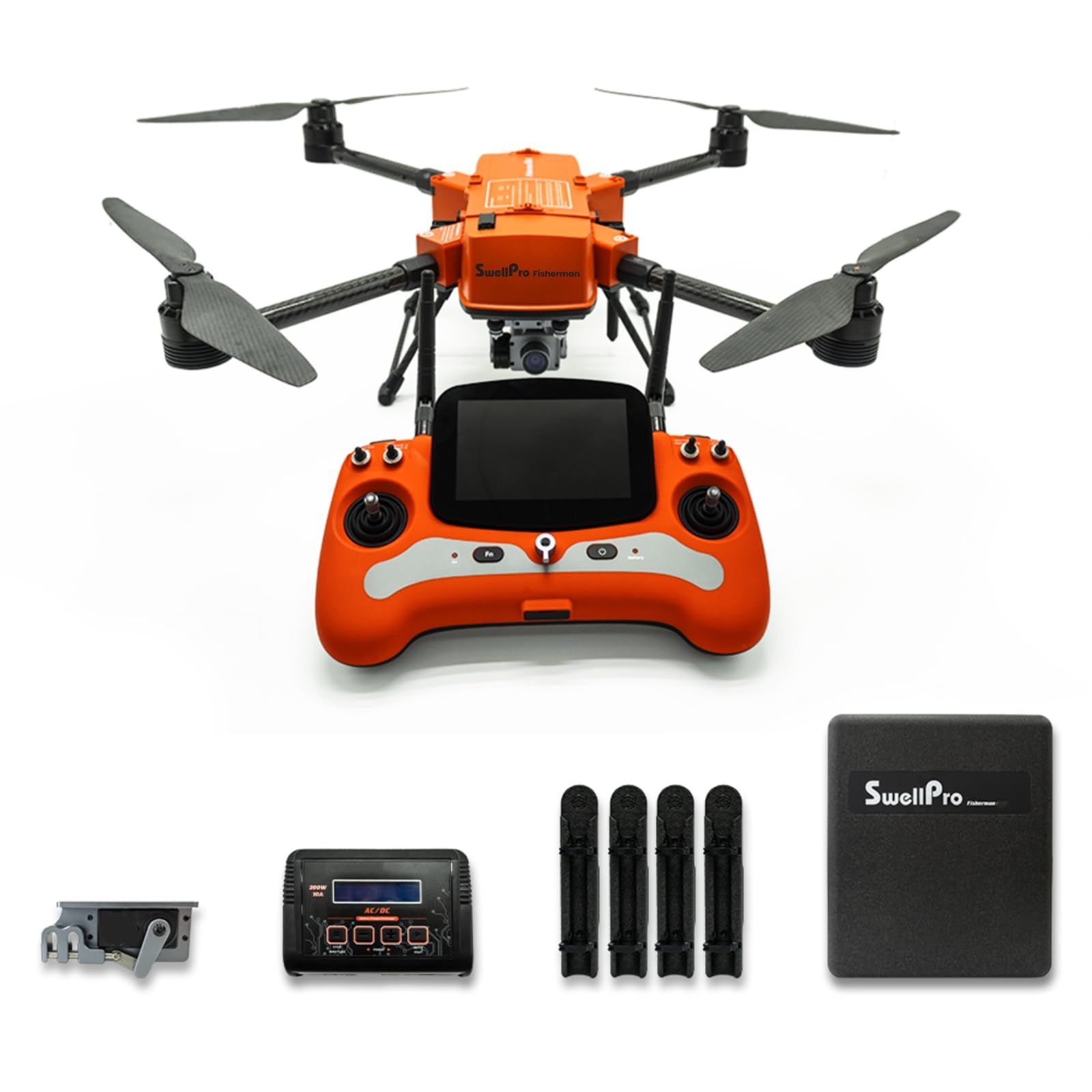
The FD2 Fisherman MAX is a specialized heavy-lift drone designed for a single professional task: carrying bait over water. The IP67 waterproof rating means the entire aircraft can survive submersion — essential for saltwater fishing operations. The heavy-lift capacity of 7.0 lbs (3.2 kg) allows you to fly large live bait or chunks of meat to specific GPS coordinates, dramatically expanding your fishing range beyond what a kayak or paddle can achieve.
The 1.5 km one-mile casting range is triple the reach of the best fishing kayak casts, and the Level 6 wind resistance (40 mph) keeps the drone stable in ocean breezes. The 4K camera provides a real-time view of the water below via the multi-color LCD display remote, helping you spot fish and release your line with precision. The auto-return function ensures the drone comes back to shore if the battery drops below threshold or signal is lost.
The drone includes a dual bait release mechanism, a floating device for landing on water, and a carry case. The 4500 mAh battery provides about 20-25 minutes of flight time under the heavy payload, which is acceptable for multiple drops per battery. The foldable design makes storage and transport manageable despite the large airframe. For professional fishing guides and commercial anglers, the FD2 MAX is a workflow-changing tool.
Why it’s great
- IP67 waterproof — fully submersible, ideal for saltwater.
- 7.0 lb bait capacity for large live or chunk baits.
- 1.5 km casting range triples standard reach.
Good to know
- Short flight time (20-25 min) under heavy payload.
- Accessories and replacement parts are expensive and ship from overseas.
FAQ
What camera specs matter most for professional drone footage?
Is a sub-250g drone good enough for professional work?
How important is video transmission range for professional pilots?
Do I need a Part 107 license to use a professional drone commercially?
What does omnidirectional obstacle sensing cover?
Final Thoughts: The Verdict
For most users, the best drones for professionals winner is the DJI Mavic 4 Pro because its 4/3 CMOS sensor, 360° gimbal, and omnidirectional night obstacle sensing create the most complete imaging platform available today. If you want a commercial-grade alternative without geofencing restrictions, grab the Autel EVO 2 PRO V3. And for action sports and hands-free filming, nothing beats the HOVERAir X1 PRO.

Mo Maruf
I created WellFizz to bridge the gap between vague wellness advice and actionable solutions. My mission is simple: to decode the research and give you practical tools you can actually use.
Beyond the data, I am a passionate traveler. I believe that stepping away from the screen to explore new environments is essential for mental clarity and physical vitality.