Our readers keep the lights on and my smoothie glass nicely filled. As an Amazon Associate, I earn from qualifying purchases.
The moment a drone drifts behind a tree line or a power line appears from around a hillside, your pulse quickens. Obstacle avoidance is no longer a luxury feature reserved for professional cinematographers — it is the single most important safety system determining whether your investment survives its first season of flying. Unlike basic altitude hold or GPS return-to-home, genuine collision detection uses an array of sensors, LiDAR, and binocular vision to map the environment in real time, giving you the confidence to focus on composition rather than constant panic over branches and buildings.
I’m Mohammad Maruf — the founder and writer behind WellFizz. My research for this guide involved cross-referencing technical datasheets, analyzing hundreds of verified buyer reports, and comparing sensor configurations across eleven distinct models to determine which systems actually prevent crashes rather than merely alerting you after impact.
This guide breaks down the sensor types, flight algorithms, and real-world performance of the top-rated options to help you choose the best drone with obstacle avoidance that matches your flying style, budget, and tolerance for risk.
How To Choose The Best Drone With Obstacle Avoidance
Obstacle avoidance technology varies wildly between price tiers. A single forward-facing ultrasonic sensor is not the same as an omnidirectional vision-and-LiDAR array. Understanding the layers of protection helps you decide where to spend and where to compromise.
Sensor Type and Coverage
The most basic systems use a single downward-facing ToF sensor to prevent ground collision during landing. Mid-range models add forward binocular vision that can detect obstacles at distances of 15 to 30 meters. Premium drones pack omnidirectional coverage — forward, backward, upward, downward, and side-facing sensors — that lets you fly backward or sideways without worrying about lateral obstructions. High-end units such as the DJI Mavic 3 Classic combine wide-angle vision sensors with APAS (Advanced Pilot Assistance Systems) that plot a smart path around objects rather than simply stopping.
Speed and Environmental Limitations
Obstacle avoidance is not a magic shield. Most systems work reliably only below certain speeds — typically 10 to 15 m/s — and can struggle with thin objects like power lines, bare tree branches, or reflective surfaces. Night performance depends heavily on whether the drone uses active LiDAR (which emits its own light pulses) versus passive binocular vision that needs ambient light. The DJI Mini 5 Pro addresses this with forward-facing LiDAR that maintains obstacle detection even in darkness.
Behavior When an Obstacle Is Detected
Some drones simply brake and hover, leaving you to figure out the next move. More advanced systems, like DJI’s APAS 5.0 or Holy Stone’s multi-sensor fusion, will calculate an alternative trajectory and smoothly navigate around the obstacle before resuming the original flight path. This distinction matters enormously for cinematic tracking shots, where a sudden stop can ruin the footage. Pay attention to whether the drone also adjusts its avoidance behavior when using Follow Me or Waypoint modes.
Quick Comparison
On smaller screens, swipe sideways to see the full table.
| Model | Category | Best For | Key Spec | Amazon |
|---|---|---|---|---|
| DJI Mini 5 Pro Fly More Combo Plus | Omnidirectional | Night-safe tracking | Forward LiDAR + Vision | Amazon |
| Antigravity A1-360 | 360 Omnidirectional | Immersive 360 filming | 360 Sensing + Binocular | Amazon |
| DJI Mavic 3 Classic | Omnidirectional | APAS 5.0 path planning | Omnidirectional APAS 5.0 | Amazon |
| Holy Stone Sentinel HS600D | Multi-Sensor | Low-altitude stability | TOF + GPS + Optical Flow | Amazon |
| HOVERAir X1 PROMAX | Rear ToF | High-speed action tracking | Rear ToF + Visual | Amazon |
| Potensic ATOM 2 Fly More | GNSS + Vision | Sub-249g travel drone | GNSS + Visual Positioning | Amazon |
| K600PRO GPS Drone | GPS + TOF | Touchscreen beginner | TOF + 6 GPS Sensors | Amazon |
| Bwine F7GB2 Pro | GPS + Barometer | High-altitude flying | GPS + Compass + Gyro | Amazon |
| Bwine F7MINI | GPS + Optical Flow | FAA-exempt beginner | GPS + Optical Flow | Amazon |
| Ruko 4K UHD Drone | GPS + TOF | Beginner safety kit | GPS + TOF + Optical | Amazon |
| Holy Stone HS790 | GPS + RID | Long-range exploration | GPS + Altitude Hold | Amazon |
In‑Depth Reviews
1. DJI Mini 5 Pro Fly More Combo Plus
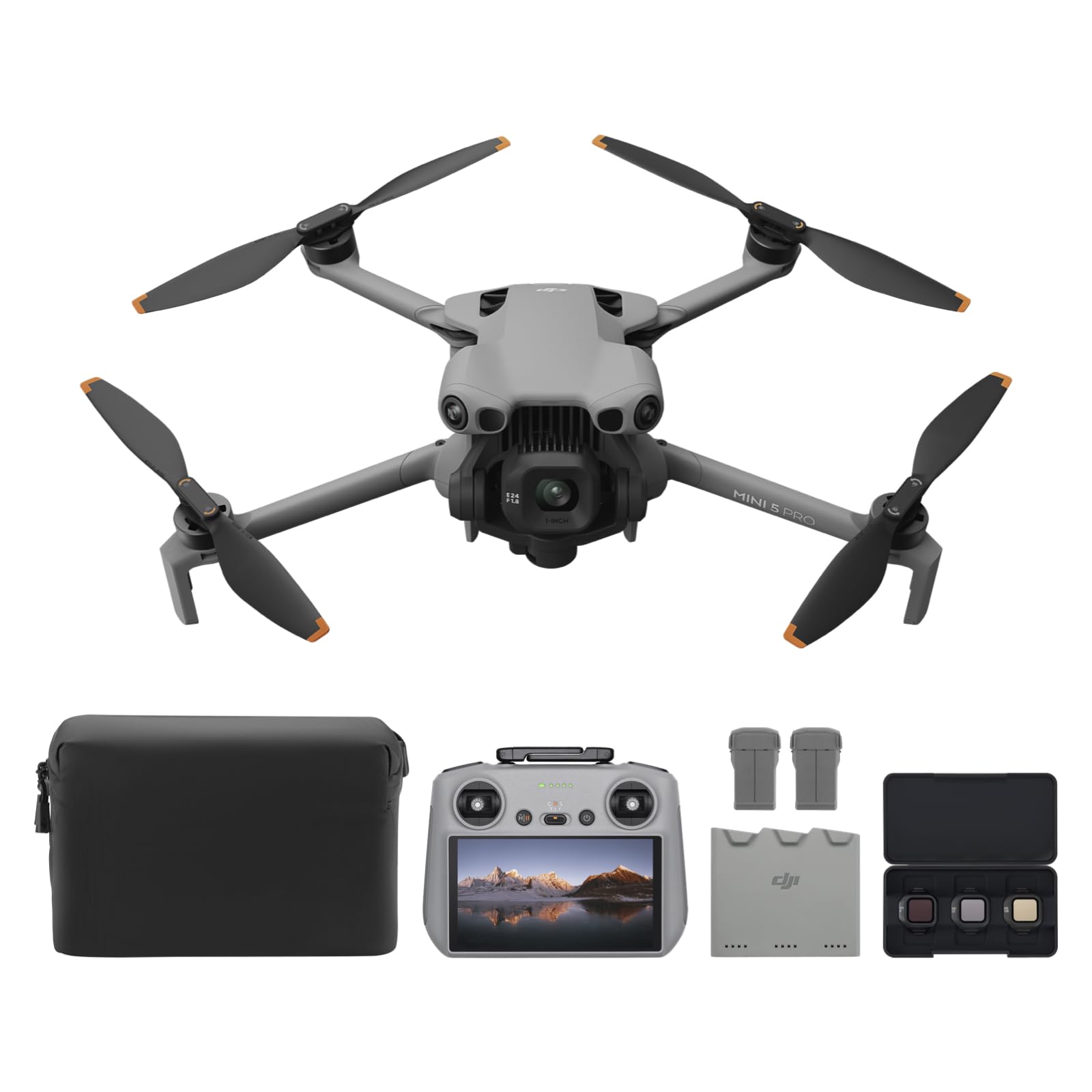
The DJI Mini 5 Pro integrates a forward-facing LiDAR sensor with a multi-directional vision array, giving it the ability to detect obstacles in low-light environments where passive cameras fail. This Nightscape Omnidirectional Obstacle Sensing is a genuine safety leap for pilots who fly at dawn or dusk. The 1-inch CMOS sensor captures 4K/60fps HDR video, and the 225-degree gimbal rotation enables true vertical filming without cropping — a major advantage for social media creators.
ActiveTrack 360° now supports customizable tracking modes that keep a subject centered even during aggressive maneuvers, making it viable for cyclists and runners. The Fly More Combo Plus includes three batteries that each deliver up to 52 minutes of flight time, though the larger battery pushes the drone past the 249-gram threshold, requiring FAA Remote ID setup. The DJI RC 2 controller features a bright built-in display that remains readable under direct sunlight.
Build quality is characteristically tight — foldable arms lock securely, and the included ND filter set helps manage exposure in bright conditions. The obstacle avoidance system brakes before obstacles in most scenarios, but advanced path-planning around objects is handled by the onboard software rather than brute-force stopping. This is the most complete sub-250g-class drone for anyone who prioritizes collision safety without sacrificing image quality.
Why it’s great
- Night-capable LiDAR avoids obstacles in darkness
- 1-inch sensor delivers professional-grade HDR video
- 225-degree gimbal enables vertical shots without crop
Good to know
- Fly More Plus batteries require FAA Remote ID due to weight
- No dedicated DJI Care Refresh warranty for US customers
- Adding accessories pushes weight over 250g
2. Antigravity A1-360
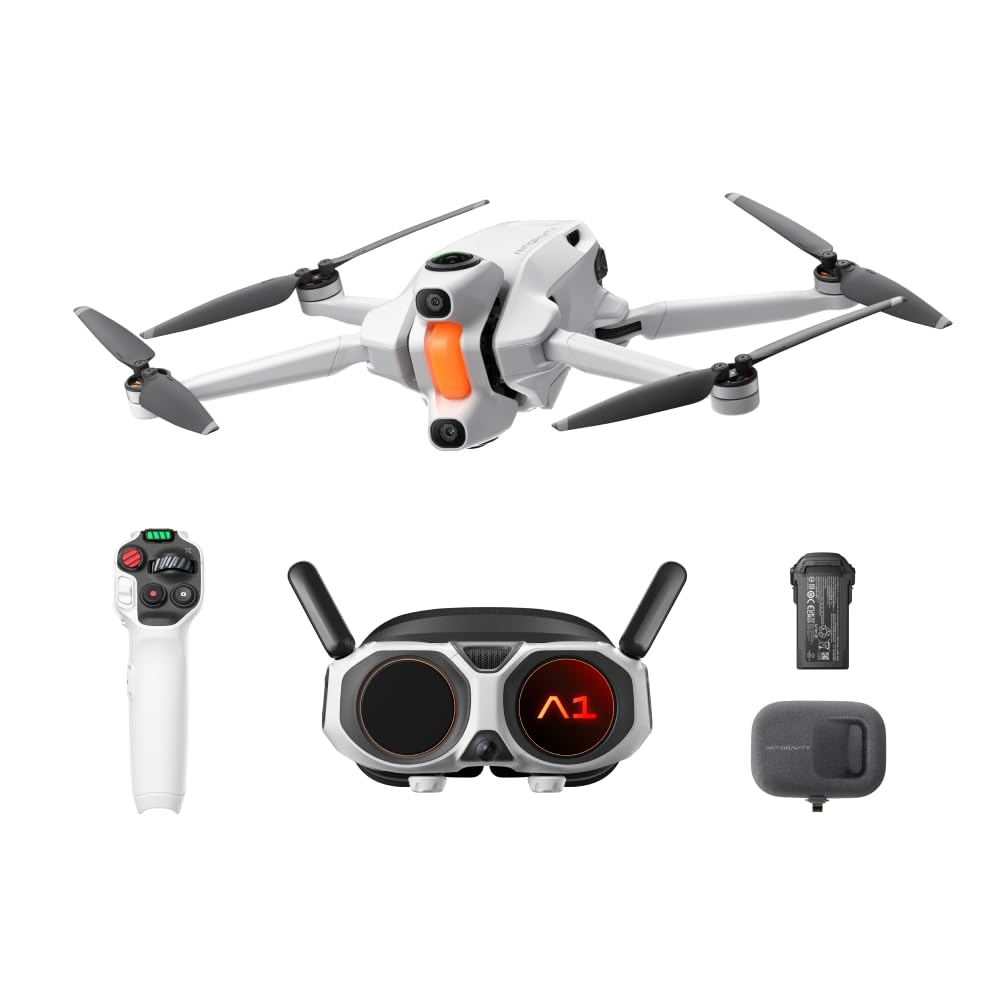
The Antigravity A1-360 redefines obstacle avoidance by combining 360-degree sensing with front and downward binocular vision, covering every angle simultaneously. This drone is built around 8K 360-degree video capture, meaning you never need to aim the camera — you reframe the footage after landing. The included Vision Goggles provide a 90-degree FOV with dual 1-inch Micro-OLED displays, turning every flight into a fully immersive FPV experience without requiring a separate headset.
Standard battery keeps the drone under 249 grams, making it FAA registration-exempt. Swapping to the high-capacity battery extends flight to 39 minutes. The FreeMotion Mode uses a point-to-fly motion controller that requires almost no learning curve — point where you want to go and the drone handles the rest, automatically avoiding obstacles. Deep Track keeps subjects locked in the center of the 360 sphere.
Auto Editing 2.0 processes the 360 footage into conventional cinematic clips with music syncing, removing the need for desktop editing software. The omnidirectional obstacle system works reliably in most outdoor conditions, though thin branches and power lines remain a challenge for all wide-angle sensor arrays. The A1-360 is a unique hybrid of action camera and safety-first drone, best suited for content creators who want to capture everything and edit later.
Why it’s great
- 360 sensing covers every angle with binocular backup
- Immersive goggles eliminate need for phone or monitor
- Auto editing creates shareable clips without computer
Good to know
- 360 video workflow requires post-flight reframing
- Standard battery limits flight to ~20 minutes
- Motion controller takes practice for precise directional control
3. DJI Mavic 3 Classic

The Mavic 3 Classic pairs a 4/3 CMOS Hasselblad L2D-20c camera with omnidirectional obstacle sensing powered by APAS 5.0. This system doesn’t just stop when it sees an object — it calculates an alternative flight path and smoothly navigates around the obstruction before resuming the original trajectory. The 5.1K video resolution and 46-minute flight time make it a top choice for professional aerial cinematographers who need both imaging performance and collision safety.
FAA Remote ID compliance is built in, and the Advanced RTH function optimizes the return route based on obstacle data gathered during the flight. The DJI RC controller includes a 5.5-inch display that performs well in bright sunlight. Waypoint Flight allows the drone to automatically repeat precise routes, which is useful for construction site monitoring or real estate flyovers where consistent framing matters.
Build quality is rugged — the 895-gram frame feels solid in hand, and the low-noise propellers reduce the signature whine. APAS 5.0 can be disabled in Sport Mode, which unlocks higher speeds but removes all collision protection. The sensor suite also provides Vision Assist, showing a live feed from four directions to help pilots manually avoid obstacles. This is the definitive drone for anyone who treats obstacle avoidance as essential infrastructure, not a bonus feature.
Why it’s great
- APAS 5.0 actively routes around obstacles instead of stopping
- Hasselblad 4/3 CMOS delivers class-leading dynamic range
- Advanced RTH uses obstacle data for safe return
Good to know
- 895g weight requires FAA registration in all cases
- Extra batteries cost over each
- No true vertical shooting option without cropping
4. Holy Stone Sentinel HS600D

The HS600D uses a multi-sensor safety net — TOF (Time of Flight) sensor, GPS, and optical flow positioning — that dramatically improves low-altitude stability and reduces collision risk near the ground. The 603-gram frame has reinforced motors and a 3-axis gimbal with EIS that keeps footage smooth in Level-6 wind conditions. The Sony 1/2-inch CMOS sensor captures 8K photos and 4K HDR video with an f/1.8 aperture that handles low light better than typical mid-range sensors.
Beginner-friendly features include one-button takeoff, intelligent beginner mode, automatic altitude limits, and a dedicated controller with a built-in screen — no phone required. The relay-based digital transmission system delivers a stable HD feed up to 20,000 feet by replacing unreliable Wi-Fi with wired tethering. Follow Me, Smart Tracking, Time-Lapse, and Panorama modes are all accessible through the controller.
Battery life averages 28 minutes per charge, and the kit includes two batteries plus a carrying case. The obstacle sensing here is less about omnidirectional detection and more about stable low-altitude operation — the TOF sensor prevents ground strikes during landing, while optical flow keeps position hold indoors or when GPS is weak. It is a solid choice for beginners who want a stable platform with basic collision safeguards rather than full path-planning autonomy.
Why it’s great
- Multi-sensor fusion (TOF + GPS + optical flow) prevents ground collision
- No-phone controller with built-in screen simplifies flight
- Sony CMOS with f/1.8 aperture performs well in low light
Good to know
- No RAW photo output or manual ISO/exposure time control
- Compass can drift if powered on near iron surfaces
- Controller screen hard to see in direct sunlight
5. HOVERAir X1 PROMAX
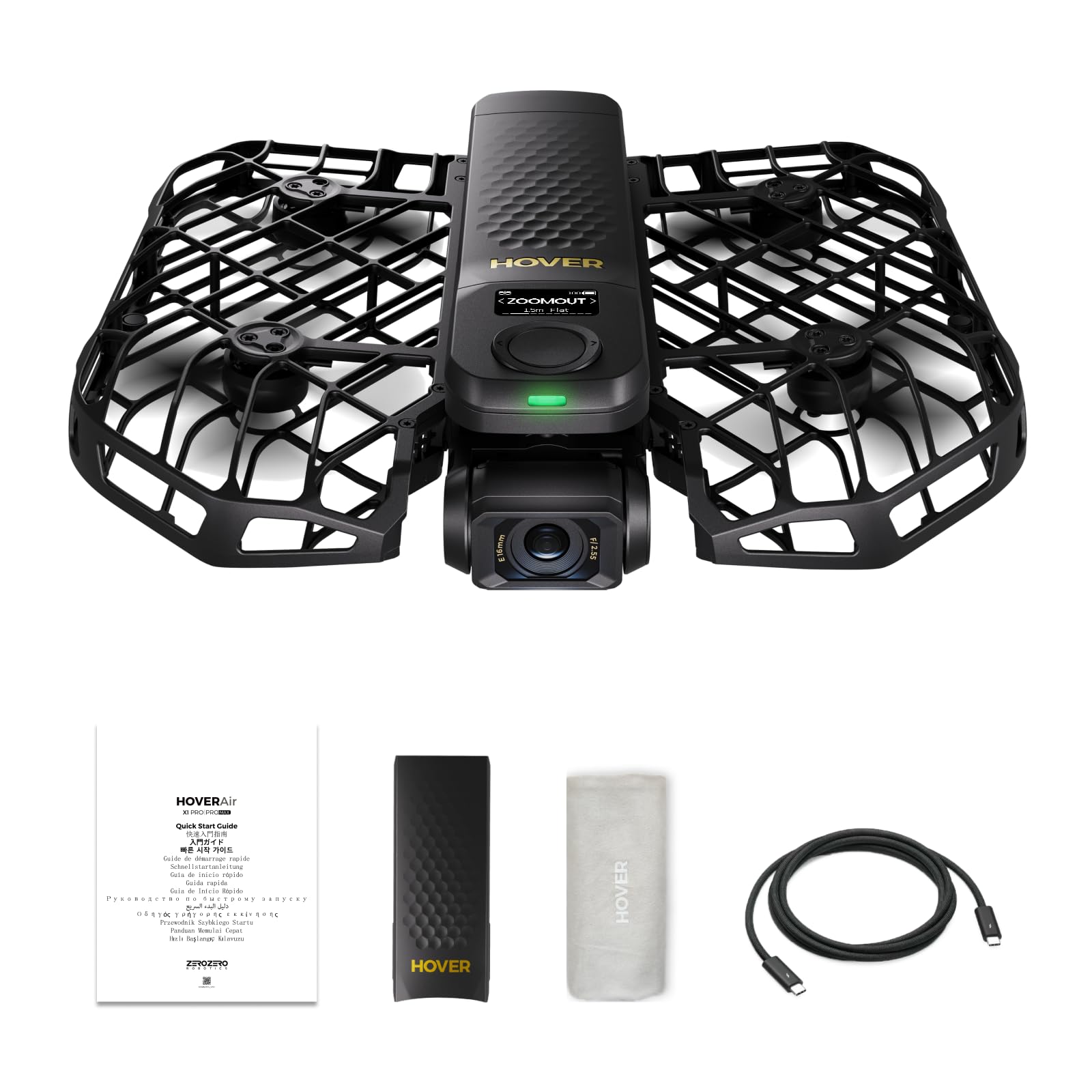
The HOVERAir X1 PROMAX is a 192-gram flying action camera with a rear-facing ToF proximity sensor and visual sensor that supports braking before collisions at speeds up to 3 m/s. The obstacle avoidance here is deliberately rear-focused — the drone follows behind the user during action sports, and the collision detection prevents it from crashing into obstacles while tracking backward. The two-axis gimbal with EIS and horizon leveling keeps footage stable even during rapid acceleration.
It captures 8K@30fps horizontally and 4K@30fps vertically, making it ready for both wide-screen cinema and social media reels without reshooting. The top burst speed of 60 km/h and follow speed of 42 km/h suit cycling, skiing, and running. Ten fully automatic flight modes — including Zoom Out, Dolly Track, and Bird’s Eye — eliminate the need for a controller, though a dedicated joystick is available for manual control.
OmniTerrain technology allows flight over snow, water, and uneven ground while maintaining stable altitude. The foldable enclosed design uses aerospace-grade HEM material for the propeller guards, which adds durability without weight. Rear-only obstacle detection means the front and sides remain uncovered, so the user must ensure the flight path ahead is clear. This is an excellent companion drone for athletes who want automated tracking with basic rear collision safety.
Why it’s great
- Rear ToF sensor brakes before collisions during backward tracking
- 8K capture in a 192g frame with no FAA registration needed
- Handsfree operation with voice or hand-launch control
Good to know
- Front and side obstacle detection not available
- Battery discharges faster when idle — check before flying
- App connectivity can be inconsistent without joystick controller
6. Potensic ATOM 2 Fly More Combo

The ATOM 2 weighs under 249 grams and uses precise GNSS positioning combined with optical flow for stable hover and basic obstacle awareness. It does not include forward-facing obstacle avoidance sensors — the collision prevention relies on the pilot using the customizable Home Point and Smart Return-to-Home to avoid getting into dangerous positions. The 1/2-inch Sony CMOS sensor captures 48MP photos and 4K/30fps HDR video through a 3-axis gimbal.
The Fly More Combo includes three batteries with a parallel charging hub that charges all three in 1.3 hours, providing 96 minutes of total flight time. The updated remote controller uses PixSync 4.0 technology for a 10-kilometer transmission range with 1080p/30fps live feed. AI Track modes — Spotlight, Follow, and Parallel — keep subjects locked in frame without manual joystick input.
Vertical shooting, Dolly Zoom, Slow Motion, and QuickShots add creative flexibility. The absence of dedicated obstacle detection sensors means this drone demands careful piloting near trees and structures, but the weight exemption from FAA registration and the compact foldable design make it an excellent travel companion. For pilots who fly in open areas and want professional-quality imaging at a mid-range price, the ATOM 2 delivers on the core experience.
Why it’s great
- Sub-249g weight avoids FAA registration requirements
- Fast charging hub powers three batteries in 1.3 hours
- Sony CMOS sensor delivers 4K HDR with strong dynamic range
Good to know
- No forward or side obstacle detection sensors
- Flight speed feels slower than competition in Sport Mode
- Batteries drain noticeably when stored idle
7. K600PRO GPS Drone
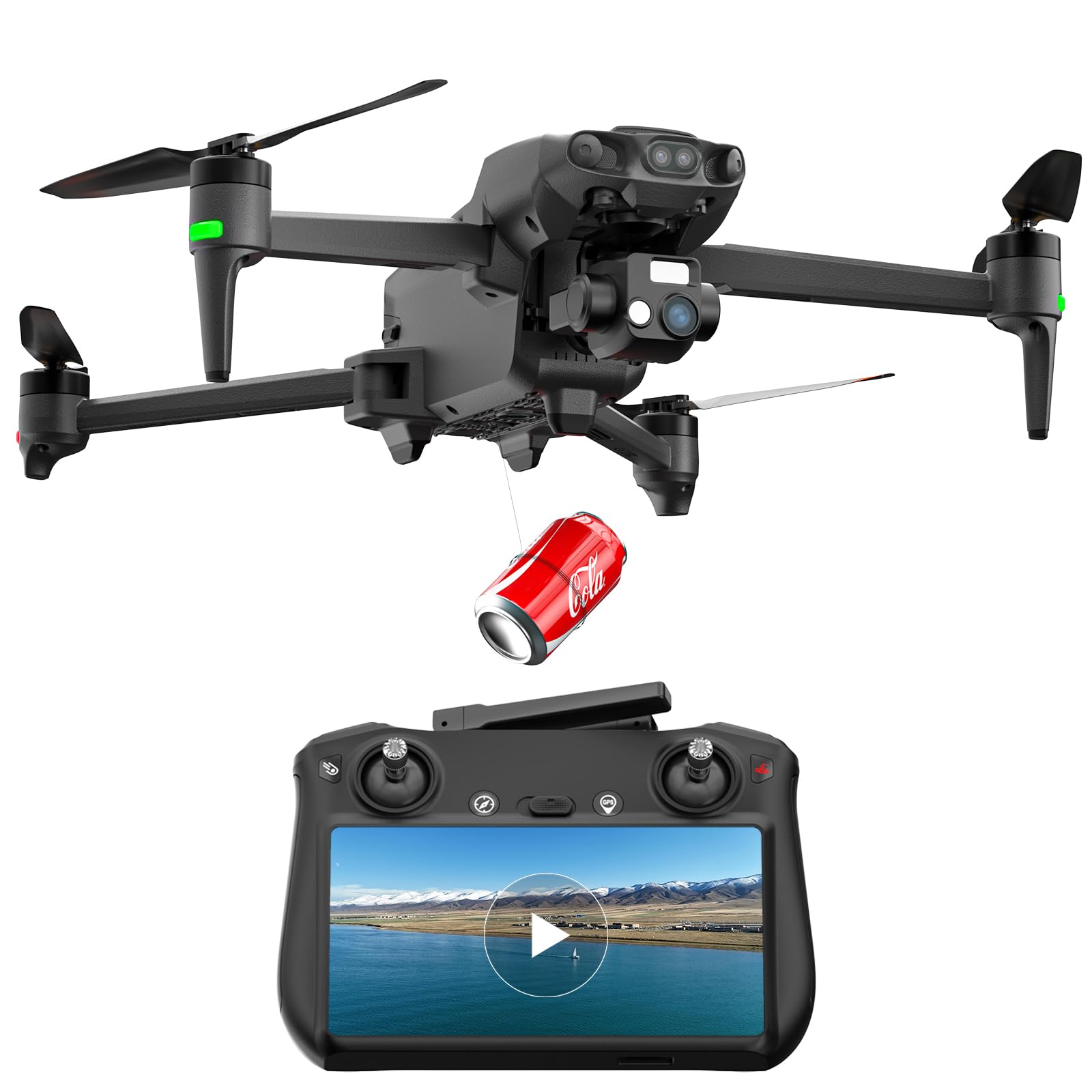
The K600PRO stands out with a 5.5-inch touchscreen built directly into the controller, eliminating the need to mount a smartphone. It uses a TOF sensor combined with 6 high-precision GPS modules to improve low-altitude flight stability by 200% according to the manufacturer. The 3-axis gimbal with EIS captures 4K video with 50x digital zoom, and the 15-kilometer transmission range supports long-distance FPV flying.
GPS-based smart flight modes include Follow Me, Orbit, and Waypoint. The Auto Return function engages when the signal is lost or battery runs low, and the dedicated beginner flight mode limits altitude and speed to prevent loss of control. The brushless motor and 3500mAh battery deliver 55 minutes of flight time on a single charge, which is long for this weight class.
The obstacle avoidance system is primarily downward-facing — the TOF sensor prevents hard landings and helps maintain altitude over uneven terrain, but forward collision detection is not present. This is a capable GPS drone for beginners who want the convenience of a large controller screen and stable hovering, but it should not be considered a full obstacle-avoidance platform. Fly with awareness of your forward environment.
Why it’s great
- 5.5-inch touchscreen controller removes need for phone
- TOF sensor with 6 GPS modules improves low-altitude stability
- 55-minute flight time with 3500mAh battery
Good to know
- Forward obstacle detection not included
- Digital zoom degrades image quality at 50x
- Controller size may feel bulky for small hands
8. Bwine F7GB2 Pro

The F7GB2 Pro relies on a combination of GPS, compass, gyroscope, and barometer for position hold and flight stability rather than vision-based obstacle detection. Its 1806 brushless motors and Level-6 wind resistance certification allow it to fly at altitudes up to 2000 meters, making it one of the few drones in this list designed specifically for mountain and farm patrol use. The 3-axis gimbal holds a 4K camera with 120-degree FOV and 5x digital zoom.
Three 2600mAh batteries deliver 75 minutes of total flight time, and the battery system meets UL 2054 safety standards for peace of mind. The FAA Declaration of Compliance is completed, with a Remote ID QR code printed on the drone arm. The controller display shows real-time telemetry overlays, helping the pilot monitor battery level and signal strength at a glance.
GPS smart features include Follow Me, Waypoint, and Circle Fly. The Auto Return function is conservative — it triggers early to ensure safe recovery. Obstacle awareness is limited to the GPS-based position hold; there is no electronic sensor for detecting trees, wires, or buildings in the flight path. This drone is best for experienced pilots flying in open high-altitude environments where the primary risk is wind and distance rather than collision with objects.
Why it’s great
- Certified for 2000m altitude flight with Level-6 wind resistance
- UL 2054 safety-certified battery system
- FAA Remote ID compliance with QR code on airframe
Good to know
- No obstacle detection sensors beyond GPS positioning
- Controller screen hard to read in sunlight
- Camera distorts slightly during fast turns
9. Bwine F7MINI
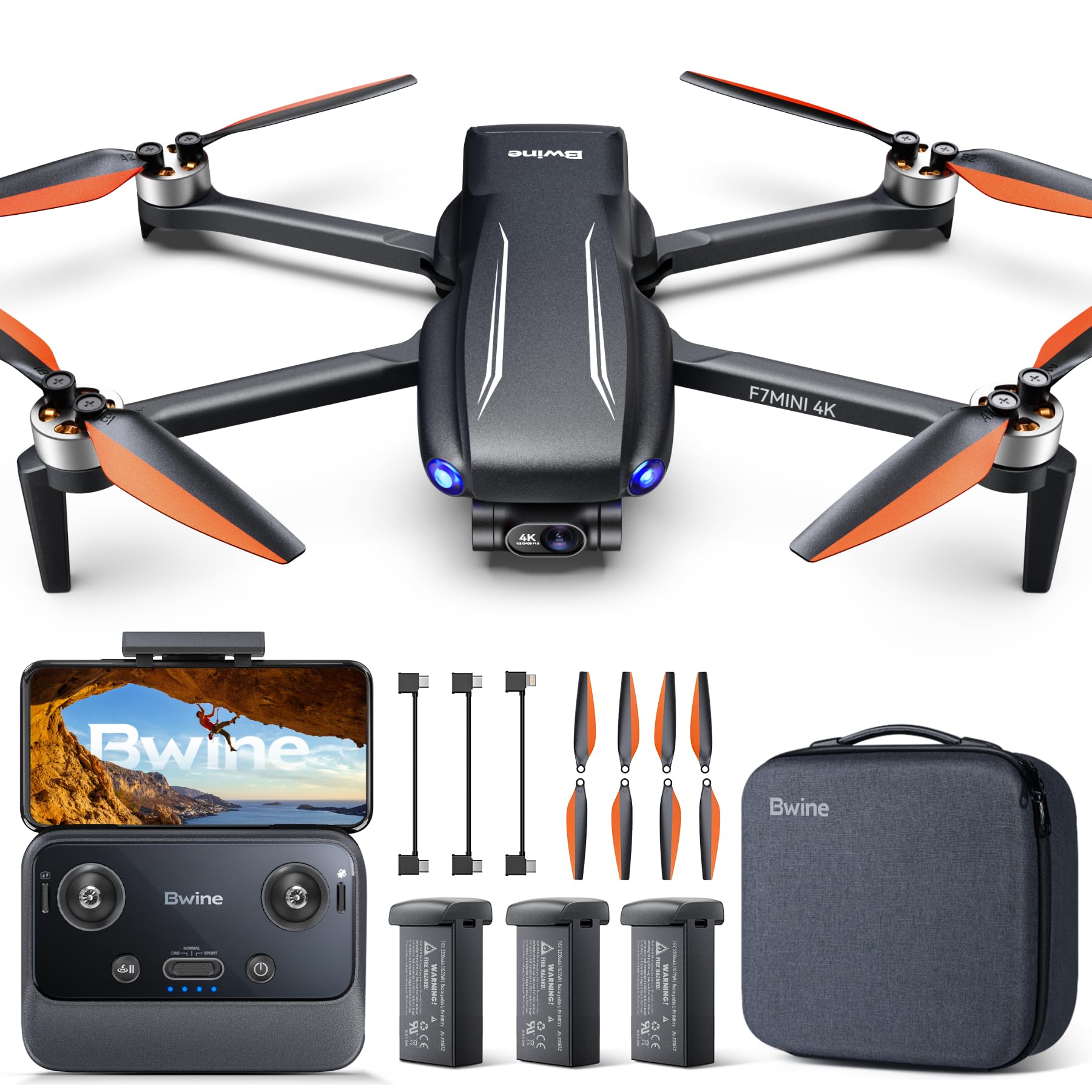
The F7MINI weighs exactly 249 grams, sidestepping FAA registration while still packing a 3-axis gimbal with EIS for stable 4K/30fps video. The obstacle prevention strategy here is multi-layered: optical flow positioning for indoor stability, GPS for outdoor position hold, a 120dB locator buzzer for retrieval, and Smart Return-to-Home that updates the home point dynamically. It does not include forward-facing electronic obstacle sensors.
The 8K photo mode uses a 48MP 1/2-inch CMOS sensor with f/1.8 aperture. The controller features a built-in 5.5-inch touchscreen, removing the phone from the equation. Three 2200mAh batteries provide 96 minutes of total flight time with PD 3.0 fast charging support. The 20,000-foot wired digital transmission system provides zero-latency feed with strong interference rejection — no Wi-Fi dropout issues.
Intelligent GPS modes include Auto Cruise, Follow (0.5m accuracy), Orbit, and Waypoint. The AI Takeoff and Landing system automates the most stressful moments of flight. Like other drones in this tier without vision-based obstacle avoidance, the F7MINI requires the pilot to scan the environment manually. It is best for recreational flyers and farm patrols who operate in open spaces and want the convenience of a built-in screen without the weight of registration.
Why it’s great
- 249g weight means no FAA registration required
- Built-in 5.5-inch controller screen eliminates phone dependency
- 120dB locator buzzer helps recover lost drone
Good to know
- No vision-based obstacle detection for forward flight
- File transfer from controller to phone is slow
- One battery pre-installed in drone — check before first flight
10. Ruko 4K UHD Drone

The Ruko drone uses quadruple intelligent positioning — GPS, barometric altitude hold, TOF, and optical flow — to create a safety net that prevents drifting and ground collision. Weighing 248 grams, it qualifies for FAA exemption while offering a 3-axis brushless gimbal with EIS for stable 4K/30fps video. The 48MP sensor captures 8K stills with vivid color reproduction.
Three 2200mAh batteries provide 96 minutes of flight time, and the 20,000-foot R2 digital transmission system avoids Wi-Fi interference common in cheaper drones. The controller supports one-button takeoff/landing and three Auto Return modes — one-click, low battery, and signal loss. A built-in beeper helps locate the drone if it lands out of sight.
The AI Takeoff and Landing system automates the entire flight start and end sequence. Obstacle detection is limited to the TOF sensor for ground proximity and optical flow for indoor positioning — there is no forward-facing collision avoidance. Customer service is responsive, with multiple reports of replacements for defective batteries and crash damage. This is a reliable starter drone for beginners who prioritize flight time and ease of use over advanced collision sensors.
Why it’s great
- Quad positioning system prevents drift and ground strikes
- 248g weight class avoids FAA registration
- 96-minute total flight time with three batteries
Good to know
- No forward obstacle detection sensors
- Joysticks are sensitive — takes time to dial in
- No audio recording in video footage
11. Holy Stone HS790
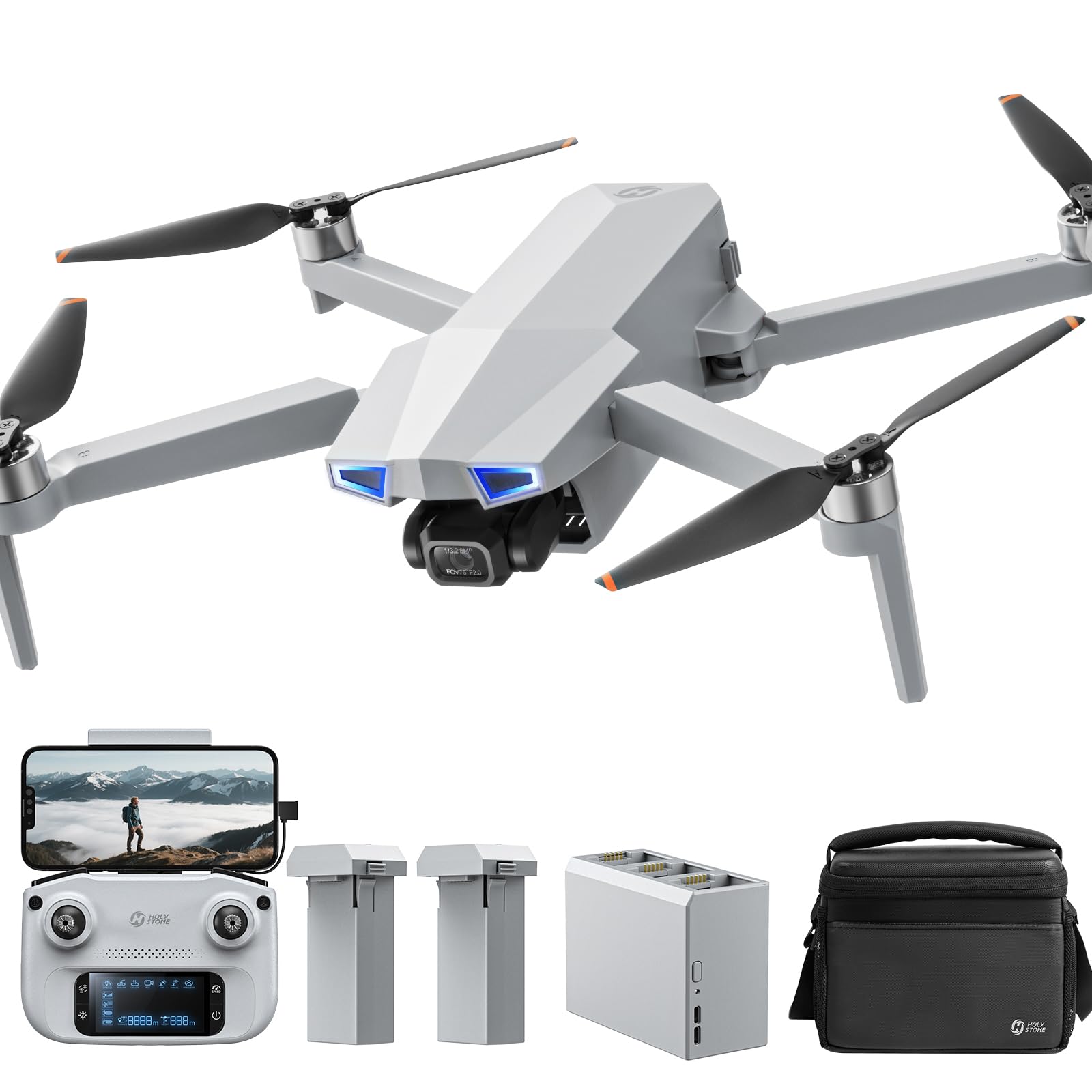
The HS790 focuses on long-range stability and GPS-based safety rather than vision obstacle sensors. Its 30,000-foot Wi-Fi Repeater transmission system delivers low-latency 4K FPV video over extreme distances. The 3-axis brushless gimbal captures smooth 4K/30fps footage, and the 6K photo mode provides high-resolution stills. Two 3200mAh batteries offer 60 minutes of flight time, with a Smart PD Charging Hub that doubles as a power bank.
Built-in Remote ID (RID) ensures FAA compliance without external modules. GPS functions include Auto Return to Home, Follow Me, and Waypoint Flight. The Night Mode enhances visibility during twilight flights, and the beginner-friendly features — Altitude Hold, Headless Mode, and Speed Adjustment — make it accessible to new pilots. The HS790 weighs 375.5 grams, so it requires FAA registration.
Obstacle avoidance is limited to GPS position hold and altitude hold — no electronic collision detection. The app has been reported as buggy; experienced users recommend the HT FLY app as a replacement. FPV lag is noticeable during fast directional changes, and the gimbal can struggle with rapid turns. This drone is best for pilots who want maximum transmission range for exploration in open environments and are comfortable relying on situational awareness for obstacle avoidance.
Why it’s great
- 30,000ft transmission range for long-distance exploration
- Built-in Remote ID meets FAA compliance
- Smart PD Charging Hub doubles as power bank
Good to know
- No forward obstacle detection sensors
- App stability issues — alternative HT FLY app recommended
- Gimbal struggles with rapid directional changes
FAQ
Does obstacle avoidance work at night?
Can obstacle avoidance prevent crashes with power lines?
Why does obstacle avoidance turn off in Sport Mode?
Final Thoughts: The Verdict
For most users, the best drone with obstacle avoidance winner is the DJI Mini 5 Pro Fly More Combo Plus because its forward LiDAR and omnidirectional vision system provide collision detection even in low light, combined with a 1-inch sensor that produces professional-grade video in a portable sub-250g frame. If you want integrated FPV goggles with 360-degree obstacle sensing for immersive flying, grab the Antigravity A1-360. And for professional cinematography where APAS 5.0 actively routes around obstacles rather than simply stopping, nothing beats the DJI Mavic 3 Classic with its Hasselblad 4/3 CMOS camera.

Mo Maruf
I created WellFizz to bridge the gap between vague wellness advice and actionable solutions. My mission is simple: to decode the research and give you practical tools you can actually use.
Beyond the data, I am a passionate traveler. I believe that stepping away from the screen to explore new environments is essential for mental clarity and physical vitality.