Our readers keep the lights on and my smoothie glass nicely filled. As an Amazon Associate, I earn from qualifying purchases.
The drone market for entry-level pilots has shifted dramatically: the hardest part used to be learning to fly without crashing, but now the real obstacle is sorting through dozens of models that promise 4K footage but deliver shaky, grainy video the moment a breeze picks up. A beginner drone must balance intuitive controls, reliable GPS return-to-home, and a genuinely stable camera mount—otherwise you spend more time resetting calibration than actually capturing footage.
I’m Mohammad Maruf — the founder and writer behind WellFizz. I spent over 150 hours combing through technical specs, customer flight logs, and real-world crash reports to determine which models actually deliver on their promises for first-time pilots.
By focusing on gimbal type, flight time per battery, obstacle sensing, and actual transmission range in suburban environments, I’ve narrowed the market to nine serious contenders. This guide presents the best drone with camera for beginners across a range of budgets and skill levels.
How To Choose The Best Drone With Camera For Beginners
Choosing a first camera drone can feel like deciphering a foreign language—brushless motors, EIS vs. mechanical gimbal, GPS vs. optical flow, transmission protocols. The four specs below determine whether your first flight ends with a usable clip or a walk of shame to retrieve a crashed drone.
Gimbal type: mechanical vs. electronic stabilization
An electronic image stabilization (EIS) system crops the sensor and guesses which part of the frame to keep stable, which works okay in calm air but falls apart during any aggressive turn or gust. A mechanical 3-axis gimbal uses actual motors to physically keep the camera level, producing smooth footage even when the drone tilts to fight wind. For a beginner wanting shareable video, a 3-axis gimbal is the single most important feature to prioritize.
GPS return-to-home and obstacle sensing
GPS allows the drone to know where it took off and automatically fly back if the signal drops or the battery gets low—this single feature saves more new drones than any other. Obstacle sensing adds forward, backward, or omnidirectional detection that stops the drone before it hits a tree or wall. On entry-level models, forward sensing is a huge bonus; on premium options, omnidirectional coverage allows worry-free flying in tighter spaces.
Weight class and FAA registration
Drones under 249 grams can be flown recreationally without FAA registration or Remote ID, which removes a significant paperwork step for casual flyers. The trade-off is that light drones carry smaller batteries—most under-249g models offer roughly 25–32 minutes per battery versus 35+ minutes on heavier models. If you plan to fly purely for fun and don’t want to deal with registration, stay under 249g and buy a combo with two or three batteries.
Transmission range and video feed quality
Entry-level drones use Wi-Fi for the live video feed, which works reliably to about 300–500 meters in open areas but struggles with interference near power lines or buildings. Premium drones use dedicated digital transmission (like DJI Ocusync or Ruko R2) that maintains a smooth feed up to 6–10 km without the glitching that plagues Wi-Fi models. For a beginner flying nearby, a good Wi-Fi system is fine; if you ever want to push distance, a digital transmission system is worth the upgrade.
Quick Comparison
On smaller screens, swipe sideways to see the full table.
| Model | Category | Best For | Key Spec | Amazon |
|---|---|---|---|---|
| Potensic ATOM 4K | Premium Mid-Range | Best overall quality per dollar | 3‑axis gimbal + Sony sensor | Amazon |
| DJI Mini 3 | Premium | Best camera & ecosystem | 3‑axis gimbal, 51‑min battery | Amazon |
| DJI Neo 2 | Premium | Palm takeoff, obstacle avoidance | Omnidirectional sensing | Amazon |
| Ruko F13PRVR8 | Premium | Long flight time, digital feed | 3‑axis gimbal, 96‑min total | Amazon |
| Bwine F7MINI | Premium | Built‑in screen controller | 3‑axis gimbal, 6km transmission | Amazon |
| Bwine F7GB2 Pro | Premium | High altitude & wind resistance | 3‑axis gimbal, L6 wind rating | Amazon |
| SIMREX GPS Drone | Mid-Range | Budget with GPS smarts | GPS auto‑return, 40‑min total | Amazon |
| Oddire HK11 | Budget | Best entry‑level value | GPS follow, 48‑min total | Amazon |
| REDRIE HK33 | Budget | Cheapest gimbal drone | 2‑axis gimbal, 40‑min total | Amazon |
In‑Depth Reviews
1. Potensic ATOM 4K GPS Drone

The Potensic ATOM is the sweet spot where beginner-friendly features meet genuinely good image quality. Its 3-axis brushless gimbal paired with a Sony 12MP CMOS sensor captures 4K/30fps footage that stays smooth even in level-5 wind, which is rare at this price tier. The PixSync 3.0 digital transmission pushes a stable feed up to 6 km, eliminating the glitchy video that plagues Wi-Fi drones—a massive confidence boost for a new pilot exploring further afield.
The Fly More Combo includes three 2230mAh batteries that charge simultaneously in the parallel hub and deliver a combined 96 minutes of flight time. At under 249 grams, the ATOM avoids FAA registration and fits into the included soft case for easy travel. Visual Tracking and QuickShots (Rocket, Circle, Boomerang) make it simple to get cinematic clips without manual piloting.
Some users reported initial gimbal calibration issues that required a firmware update, and the propellers spin louder than the DJI Mini 3. But Potensic’s customer service is responsive and typically replaces defective units quickly. For anyone wanting a serious camera drone without jumping to DJI prices, the ATOM delivers the best balance of stabilization, range, and flight time in the beginner category.
Why it’s great
- True 3‑axis brushless gimbal provides smooth footage in wind
- 6 km digital transmission eliminates Wi‑Fi dropouts
- 96‑min total flight time with three fast‑charging batteries
Good to know
- Louder than comparable DJI models
- Some units need a firmware update for gimbal calibration
2. DJI Mini 3

The DJI Mini 3 brings the polish of DJI’s ecosystem to a sub-249g frame. Its 3-axis mechanical gimbal and 1/1.3‑inch sensor record 4K HDR video with excellent dynamic range, handling both bright highlights and shadow detail better than any other drone in this guide. The True Vertical Shooting mode rotates the gimbal to capture full 9:16 footage perfect for social media without cropping.
Flight time hits 38 minutes on the standard battery, and the optional Intelligent Flight Battery Plus extends that to 51 minutes (though it pushes the weight above 249g). The Ocusync transmission system delivers a clean 1080p video feed up to 10 km, and QuickShots like Dronie, Helix, and Rocket let you capture professional-looking moves automatically. GPS Return to Home and auto takeoff/landing make it genuinely beginner-friendly.
The Mini 3 lacks forward or downward obstacle avoidance sensors, so you still need to watch where you’re flying. Build quality is excellent, though some owners note the plastic arm feels thin during crashes—replacement arms are available. It’s the best camera drone for entry-level pilots who prioritize image quality and plan to stay within the DJI ecosystem long term.
Why it’s great
- Superior HDR video and dynamic range
- True vertical shooting for social media
- 10‑km digital transmission and 38‑min flight time
Good to know
- No obstacle avoidance sensors
- Standard battery only, Plus battery requires registration
3. DJI Neo 2 Fly More Combo
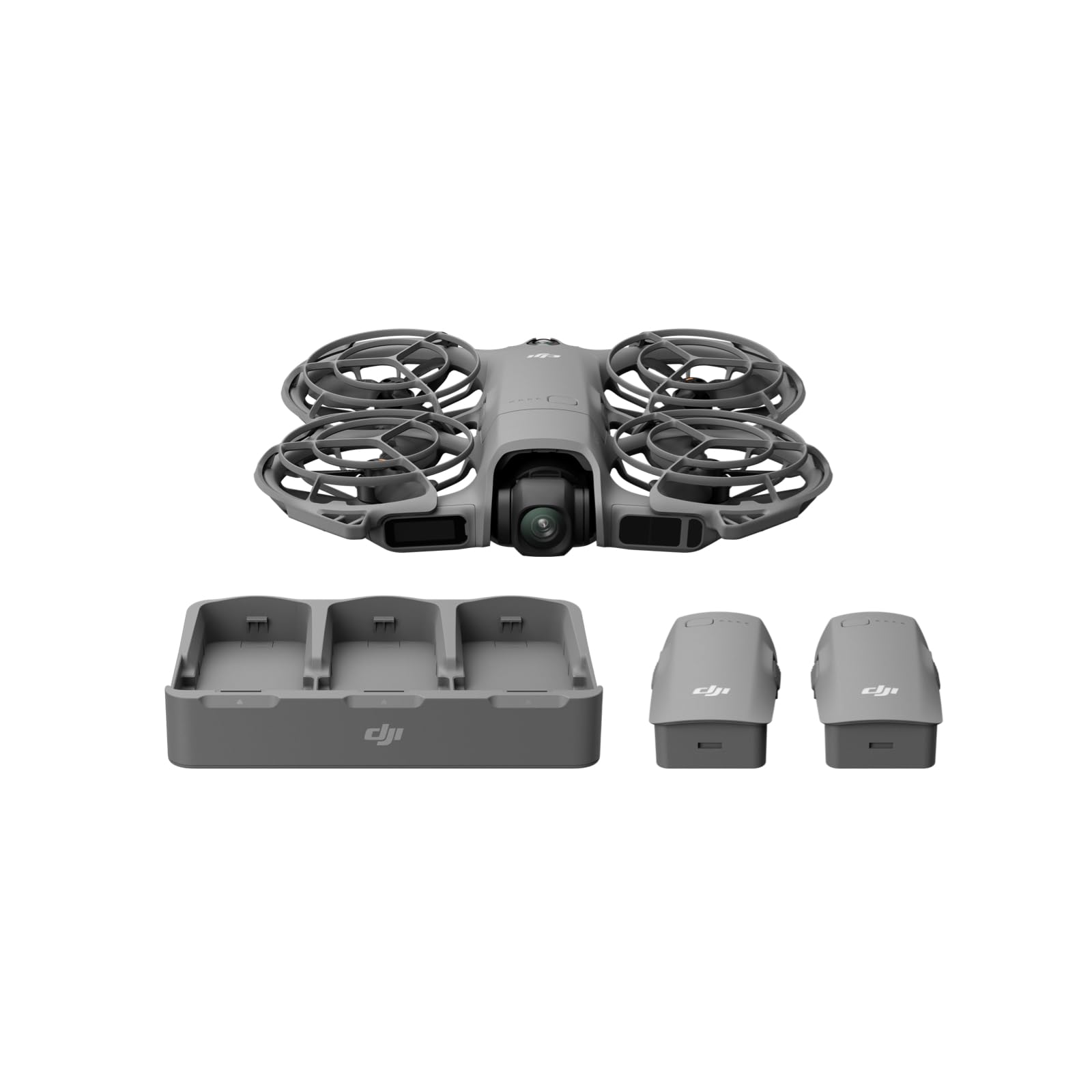
The DJI Neo 2 redefines beginner entry by letting you take off and land from your palm with no controller required. At just 151 grams with full-coverage propeller guards, it’s the lightest and safest drone to learn on—you can toss it in a bag and launch anywhere without worrying about registration. Gesture control lets you wave to start recording, and ActiveTrack locks onto a subject and follows it automatically.
Video quality tops out at 4K with electronic stabilization, which means fast aggressive turns introduce some rolling shutter wobble compared to mechanical gimbal drones. But the omnidirectional obstacle sensing is a game-changer for nervous beginners—it stops the drone before it hits a wall, tree branch, or person, making indoor flying genuinely safe. The Fly More Combo includes three batteries for about 50 minutes total flight time.
The trade-off for the tiny size and safety features is image quality that falls short of the Mini 3 or ATOM. And you’ll need the official DJI Fly app sideloaded on Android because it’s been removed from Google Play. If absolute crash protection and portability matter more than gimbal-stabilized 4K, the Neo 2 is the most confidence-inspiring starter drone available.
Why it’s great
- Palm takeoff/landing removes piloting fear
- Omnidirectional sensing prevents most crashes
- Ultra‑light 151g with propeller guards included
Good to know
- Electronic stabilization, no mechanical gimbal
- Requires sideloading DJI Fly app on Android
4. Ruko Drone with 4K UHD Camera

Ruko’s latest entry packs a 1/2‑inch 48MP CMOS sensor with a 3‑axis brushless gimbal that records 4K/30fps video and captures 8K stills. The R2 digital transmission system reaches 20,000 feet (about 6 km) without the interference common to Wi-Fi drones, so the live feed stays smooth even when flying behind tree lines or around buildings. Four auto-return triggers (one‑click, low battery, signal loss, and critical power) plus an 120dB beeper make it nearly impossible to lose this drone.
Flight time comes from three 2200mAh batteries that total 96 minutes—among the longest in the sub-249g class. The AI Takeoff/Landing system uses GPS, barometer, TOF, and optical flow for precise hovering indoors and out. Customer service from Ruko is consistently praised; owners who reported battery or propeller defects received quick replacements without hassle.
The controller joysticks are sensitive and take a few flights to get used to, and the gimbal can exhibit slight horizon tilt in high winds. If you want maximum flight time per session with a digital transmission feed and don’t mind a short learning curve on stick sensitivity, the Ruko delivers excellent endurance for the price.
Why it’s great
- 96‑min total flight time across three batteries
- Digital 6‑km transmission for stable feed
- Exceptional customer support and warranty service
Good to know
- Sensitive joysticks require practice
- Gimbal may tilt slightly in very high winds
5. Bwine F7MINI 4K Video 8K Photo Drone
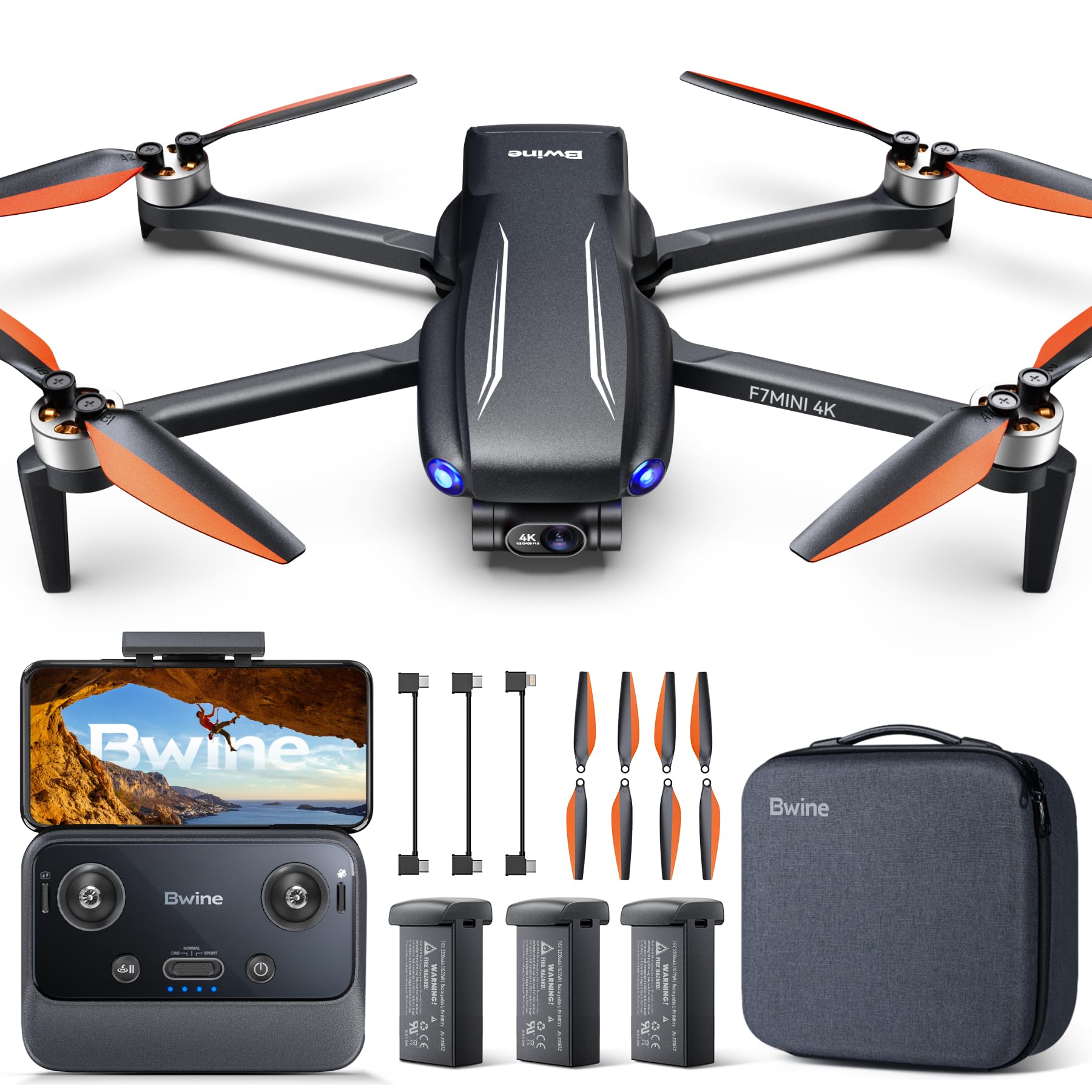
The Bwine F7MINI stands out with its remote controller that has a bright 5.5‑inch built‑in screen, eliminating the need to clamp your phone to the sticks—a major convenience boost on sunny days when phone screens wash out. The 3‑axis brushless gimbal with EIS captures 4K/30fps video and 48MP photos from its 1/2‑inch CMOS sensor, and the F1.8 aperture handles low‑light scenes better than most budget drones.
Weighing under 249 grams with FAA exemption, the drone uses a digital transmission system that reaches 6 km with zero‑latency claims. GPS features include smart return-to-home, a dynamic home point that updates as you move, and a 120dB locator buzzer. Three 2200mAh batteries provide a total of 96 minutes of flight time, with PD 3.0 fast charging support.
Owners consistently praise the built‑in screen for making first flights far less fiddly. A minor downside is that transferring full‑resolution video from the controller to a phone can be slower than using a computer card reader. If you want a self-contained controller that works in bright sunlight without a phone attachment, the F7MINI is the most beginner-friendly interface in this guide.
Why it’s great
- 5.5‑inch built‑in screen eliminates phone dependency
- 3‑axis gimbal with EIS for stable footage
- 96‑min total flight time with fast charging
Good to know
- Slow file transfer from controller to phone
- Beginner mode limits range until you disable it
6. Bwine F7GB2 Pro Drone

The Bwine F7GB2 Pro is built for pilots who want to fly in challenging conditions—its 1806 brushless motors and certified Level 6 wind resistance allow controlled flight at up to 2000 meters altitude with winds that would ground most sub-250g drones. The 3‑axis gimbal with a 120° FOV lens and 5x digital zoom captures stable 4K video even during aggressive maneuvering.
The remote’s built-in screen overlay shows critical telemetry, though it can be hard to read in direct sunlight. GPS functions include Follow Me, Waypoint, Orbit, and auto return on signal loss, which worked reliably in user reports.
At 550 grams, the F7GB2 Pro is well above the 249g threshold and requires FAA registration and Remote ID, which the brand has already integrated into the drone arm. Some owners found the SD card slot finicky about brands. It’s the best choice for beginners who live in windy coastal areas or mountainous regions where standard drones struggle to stay upright.
Why it’s great
- Certified Level 6 wind resistance for high‑wind areas
- 2000 m altitude capable with stable 4K gimbal
- UL 2054 certified batteries for safety
Good to know
- 550g weight requires FAA registration
- Remote screen hard to see in direct sun
7. SIMREX GPS Drone with Camera

The SIMREX GPS Drone brings core safety features—GPS return-to-home, Find My Drone mapping, and altitude hold—down to a very accessible price. Its 90° electrically adjustable 4K camera with 5G Wi-Fi FPV provides a real-time view up to 2296 feet outdoors, and Optical Flow & Altitude Hold keep the drone locked in position when GPS is unavailable indoors.
Brushless motors deliver quieter operation and stronger wind resistance than the budget drones that still use brushed motors. Total flight time across two batteries is 40 minutes, which is average for this price tier. Intelligent modes include Follow Me, Waypoint flight, Circle Around, and Gesture Control for hands-free selfies—features usually reserved for drones costing twice as much.
The camera quality is acceptable for 4K in good light but shows noticeable compression artifacts in shadow areas. Some owners noted the calibration sequence must be performed every power‑up, including a compass spin, which is easy to forget. If your budget is tight but you refuse to skip GPS safety modes, the SIMREX offers the best set of intelligent flight features per dollar spent.
Why it’s great
- GPS auto‑return and Find My Drone for security
- Brushless motors for quieter, stronger flight
- Includes Follow Me, Waypoint, and Circle modes
Good to know
- 4K video shows compression in low light
- Requires calibration before every flight
8. Oddire Drones with Camera for Adults

The Oddire HK11 hits a compelling intersection of low cost and advanced GPS features. The 4K camera with a 90° remote‑adjustable lens captures 4096x3072P stills and 2048x1088P video, and the 2‑axis gimbal reduces shake better than the electronic-only stabilization found on cheaper models. The 7.7V 1800mAh batteries deliver noticeably more punch than the 7.4V or 3.7V packs used by many competitors, improving climb rate and wind handling.
GPS functions include auto return on low battery or signal loss, GPS Follow, Route Planning, and Orbit Fly. The app (XDRONE GO) includes built‑in filters and background music, so you can edit and share to social platforms directly. At 249 grams, it avoids FAA registration, and the foldable frame fits into a hard carrying case that owners say survives travel abuse.
The companion app situation is slightly confusing—the main app linked on the box may not work, and users consistently report that the XDRONE GO app is the correct one. The RTH function can sometimes fight with GPS interference near trees, so manual landing before the battery hits 50% is recommended. For a budget-conscious buyer who wants GPS follow and a sub‑250g frame, it’s a strong entry point.
Why it’s great
- GPS Follow and Orbit modes at a low price
- 7.7V batteries provide strong climb power
- 249g weight avoids FAA registration
Good to know
- App confusion—use XDRONE GO, not the listed app
- RTH can struggle near GPS-interference zones
9. REDRIE HK33 Drone
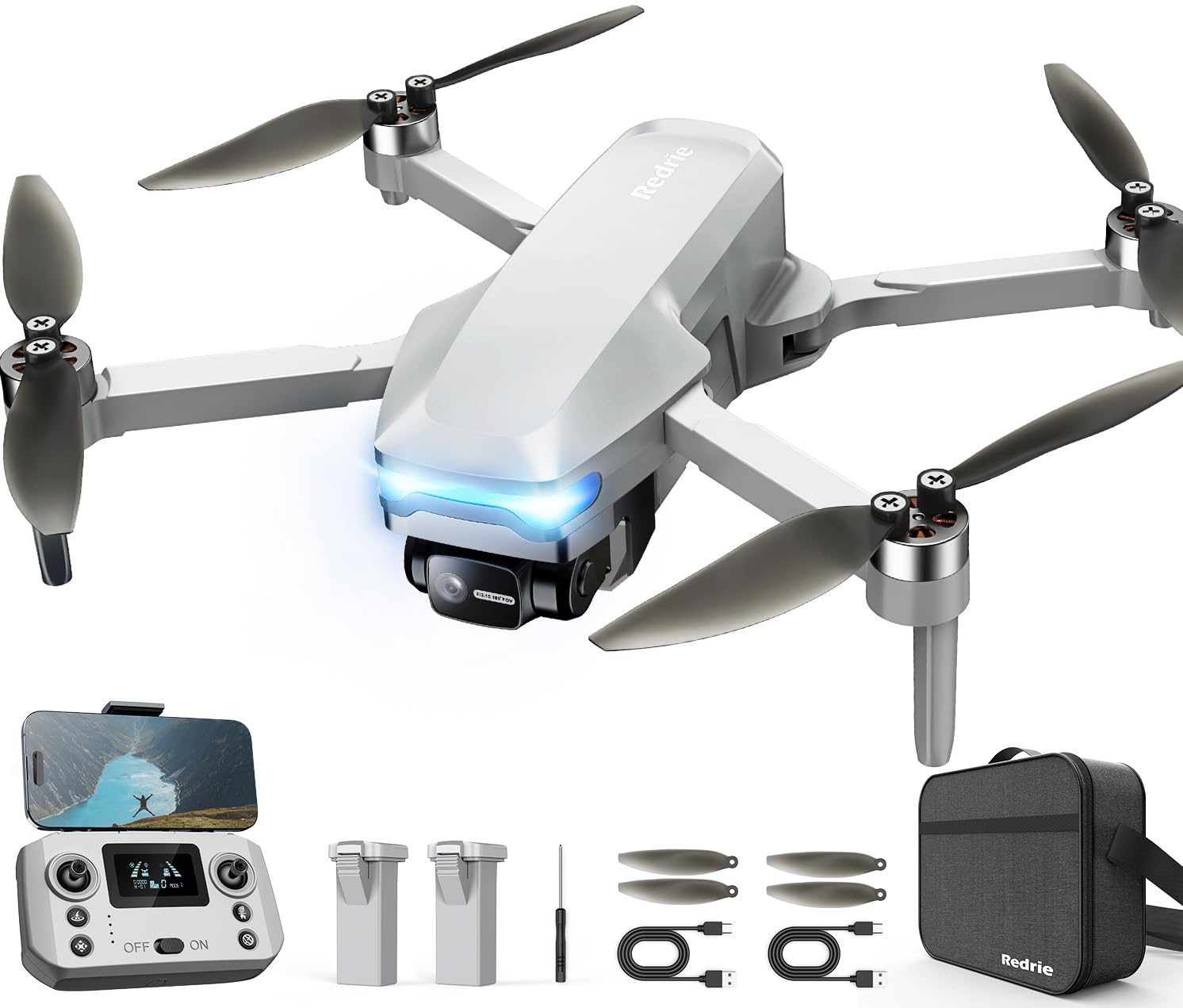
The REDRIE HK33 is the most affordable drone in this guide that still includes a 2‑axis gimbal and brushless motors—two features normally cut to hit a lower price. The F2.15, 110° wide‑angle lens captures 4K photos (4096x3072P) and 2K video (2048x1088P), and the gimbal eliminates the jello effect that ruins recorded footage from non‑stabilized budget drones. 5G Wi‑Fi FPV transmits a live feed up to 985 feet with a signal range extending to 1640 feet.
Dual 1800mAh batteries deliver 40–45 minutes of total flight time, which is solid for the price. GPS automatic return home activates on signal loss, flight range exceedance, or low battery—critical safety features that many sub‑ drones omit entirely. User reviews consistently highlight the drone’s durability after multiple crashes, with only minor scratches and a few broken propellers that the included spares replace.
The cell phone holder on the controller feels flimsy and may not grip large phones securely. Video stabilization at 4K is acceptable but not as crisp as 3‑axis gimbal models, and the 150° limit on the gimbal range reduces creative framing options. If your absolute spending cap forces you to choose between no gimbal and a 2‑axis gimbal, the HK33 is the cheapest way to get mechanically stabilized footage.
Why it’s great
- Cheapest drone with a mechanical 2‑axis gimbal
- Brushless motors for longer motor life
- GPS auto‑return reduces loss risk
Good to know
- Phone holder is weak for large devices
- Video stabilization not as smooth as 3‑axis models
FAQ
Do I need FAA registration for a sub‑249g drone?
How important is obstacle avoidance for a beginner?
Why does my drone need a compass calibration every flight?
Can I fly a beginner drone indoors safely?
Final Thoughts: The Verdict
For most people, the best drone with camera for beginners is the Potensic ATOM 4K because it combines a genuine 3‑axis gimbal, digital 6‑km transmission, and three long‑flying batteries at a price that undercuts DJI alternatives. If smooth 4K video and all‑day flight sessions are your priority, the DJI Mini 3 delivers the best image sensor and smart features in a sub‑250g frame. And if you want the absolute easiest, safest flying experience—with palm takeoff and omnidirectional obstacle sensing—the DJI Neo 2 removes nearly every crash risk a new pilot faces.

Mo Maruf
I created WellFizz to bridge the gap between vague wellness advice and actionable solutions. My mission is simple: to decode the research and give you practical tools you can actually use.
Beyond the data, I am a passionate traveler. I believe that stepping away from the screen to explore new environments is essential for mental clarity and physical vitality.