Our readers keep the lights on and my smoothie glass nicely filled. As an Amazon Associate, I earn from qualifying purchases.
The challenge with shopping for a sub-$250 quadcopter is filtering real flight stability from spec-sheet hype. Many models claim 4K capture and GPS features, but actual wind resistance, gimbal stabilization, and battery endurance vary wildly. You need a drone that delivers reliable auto-return, smooth video, and enough flight time to make the investment worthwhile.
I’m Mohammad Maruf — the founder and writer behind WellFizz. I have spent countless hours analyzing market data, cross-referencing technical specifications, and studying real user feedback to separate the genuinely capable drones from the marketing claims.
This guide breaks down the top contenders for the best drone under $250, comparing flight performance, camera quality, GPS reliability, and battery life to help you make a confident choice.
How To Choose The Best Drone Under $250
Finding a capable drone under this ceiling means prioritizing the features that directly impact flight experience and footage quality. The market is crowded with options that look similar on paper but perform very differently in the air.
Prioritize GPS and Auto-Return
Without GPS, a drone drifts and requires constant correction. GPS enables precise hovering, waypoint navigation, and — most importantly — automatic return-to-home when the battery runs low or the signal drops. This single feature prevents flyaways and is the biggest safety net for beginners.
Evaluate Camera Stabilization, Not Just Resolution
A 4K resolution label means little if the footage is shaky. Look for Electronic Image Stabilization (EIS) or a physical 2-axis or 3-axis gimbal. EIS crops the frame to smooth out vibrations, while a gimbal physically stabilizes the camera. Both are preferable to a fixed-angle lens, which captures every wobble.
Check Battery Voltage and Capacity
Flight time is relative. A 7.7V or higher voltage battery provides more consistent power to brushless motors, resulting in steadier climbs and better wind handling. Advertised flight times are often combined from multiple batteries — pay close attention to the individual battery capacity (1800mAh, 2250mAh, or 2700mAh) and voltage rating.
Quick Comparison
On smaller screens, swipe sideways to see the full table.
| Model | Category | Best For | Key Spec | Amazon |
|---|---|---|---|---|
| CHUBORY G9 | Premium | All-in-One Screen Setup | 90 Min (3x 30 Min Batteries) | Amazon |
| Karuisrc K600GPS | Premium | Controller Screen & EIS | EIS Stabilization | Amazon |
| Punieayi GPS Drone | Premium | Large 5-Inch Display | 60 Min (2x 2700mAh) | Amazon |
| Specta Mini Drone | Premium | 3-Axis Gimbal Stability | 3-Axis Mechanical Gimbal | Amazon |
| PLEGBLE PL-715 | Mid-Range | High Capacity Batteries | 46 Min (2x 2700mAh) | Amazon |
| Oddire HK11 | Mid-Range | Durable Build & Value | 48 Min (2x 1800mAh 7.7V) | Amazon |
| NAFYRE N11 Pro | Mid-Range | Budget 3-Battery Bundle | 66 Min (3 Batteries) | Amazon |
| X9 4K GPS Drone (suangrc) | Budget | Entry-Level with Screen | 18 Min Battery Life | Amazon |
| REDRIE HK33 | Budget | 2-Axis Gimbal on Budget | 2-Axis Gimbal | Amazon |
In‑Depth Reviews
1. CHUBORY G9 GPS Drone
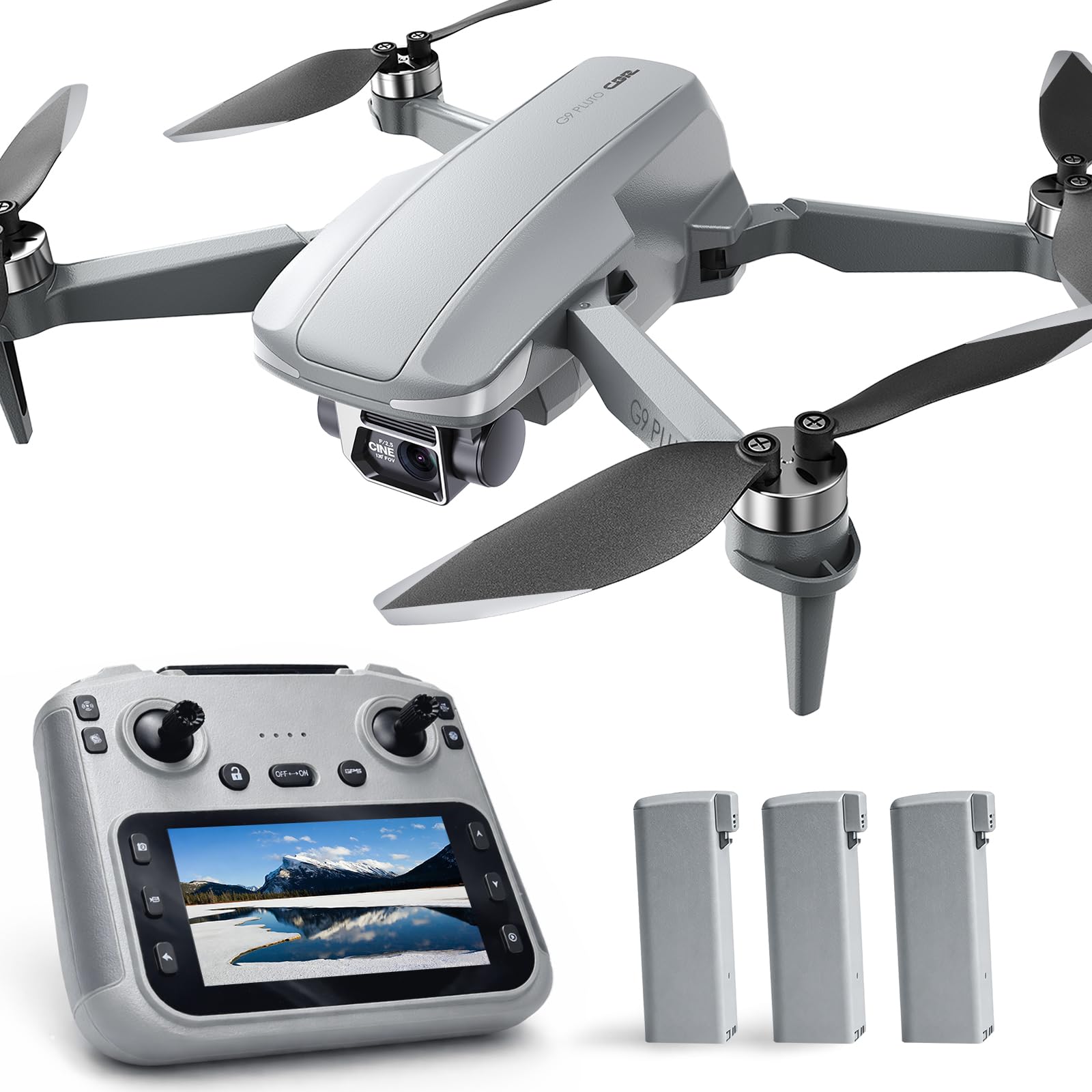
The CHUBORY G9 stands out by integrating a 4.5-inch HD screen directly into the controller, which means you do not need to mount your phone for a live feed. It also ships with a pre-installed 32GB SD card, so you can start recording immediately. The 4K camera features Electronic Image Stabilization (EIS) to smooth out vibrations, producing noticeably cleaner footage than unfiltered sensors at the same resolution.
This model comes with three batteries, each delivering roughly 30 minutes of flight time, for a combined total of 90 minutes of airborne operation. The GPS system supports auto-return, follow-me mode, and circle fly, while the brushless motors handle moderate wind admirably. At just 235 grams, it remains under the FAA registration threshold.
The EIS is effective but not as smooth as a mechanical gimbal — you will still see some jello effect in aggressive turns. The controller screen is non-touch, so adjusting settings requires the physical buttons. Overall, this is the most complete package for someone who wants extended flight sessions without constantly swapping phones.
Why it’s great
- Built-in 4.5″ screen eliminates phone dependency
- 90 minutes of total flight with 3 batteries
- EIS delivers stable 4K video
Good to know
- Non-touch controller screen limits navigation
- EIS not as smooth as a 3-axis gimbal
2. Karuisrc K600GPS Drone
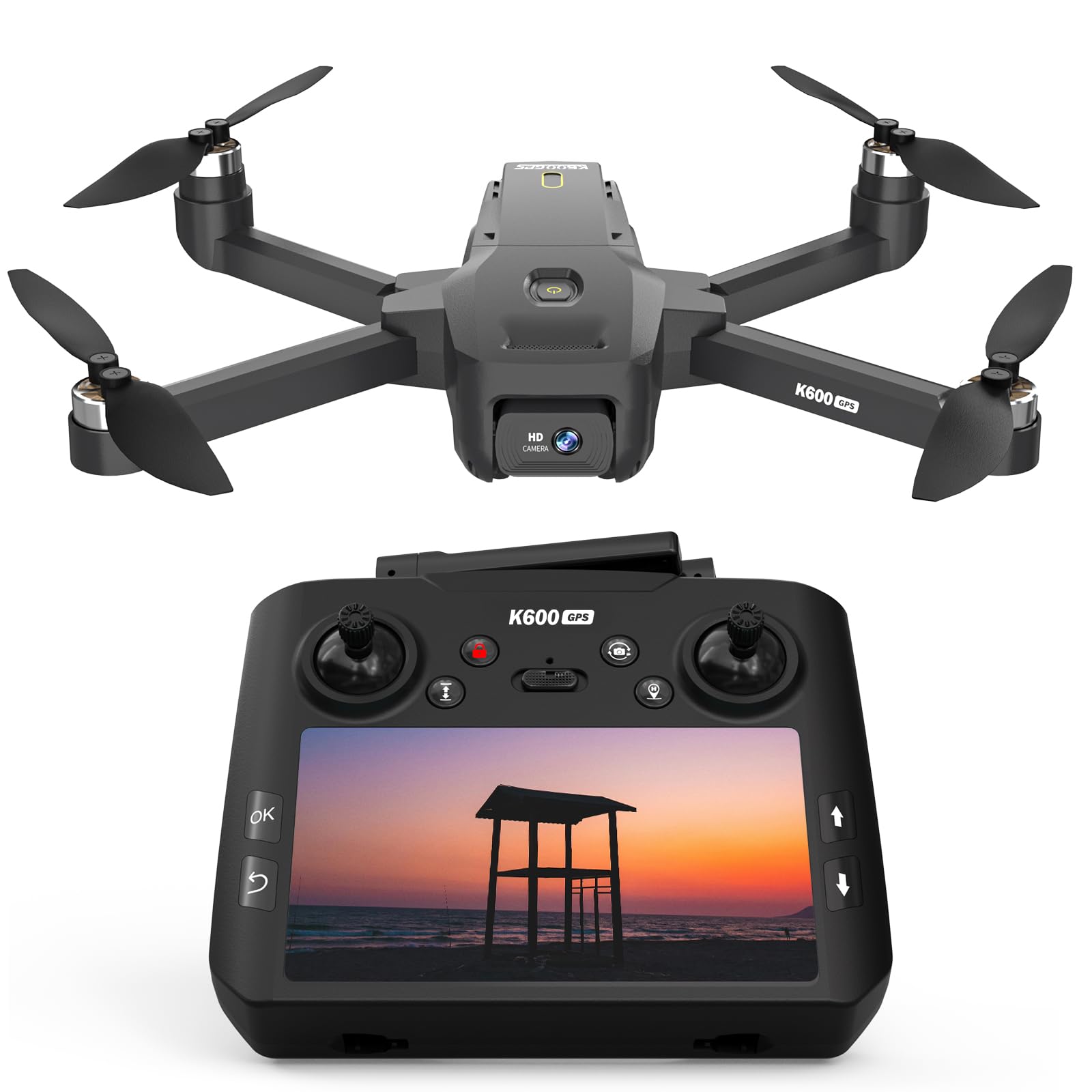
The Karuisrc K600GPS is engineered for beginners who want a controller screen without paying a premium. The 4.5-inch display provides real-time FPV video, and the 1080P camera (with 90-degree remote tilt) captures decent footage for casual flying. The big draw here is the EIS system, which reduces the shakiness common in fixed-lens drones, resulting in more watchable video.
Brushless motors rated at 12,000 RPM give this drone solid wind resistance and quieter operation compared to brushed alternatives. The GPS suite includes auto-return, follow-me, and waypoint flight. Weighing 195 grams, it is one of the lightest GPS-enabled models available and completely avoids FAA registration.
The 1080P resolution is a step down from native 4K cameras, and the EIS works best in calm conditions — wind gusts can still introduce wobble. The included support for TF cards (up to 32GB) allows direct onboard storage. This is a reliable entry point for those who prioritize simplicity over maximum resolution.
Why it’s great
- Very lightweight at 195g for easy portability
- EIS provides smoother footage than most at this tier
- Dedicated controller screen is beginner-friendly
Good to know
- Only 1080P resolution, not true 4K
- Camera lacks a physical gimbal
3. Punieayi GPS Drone with 4K Camera
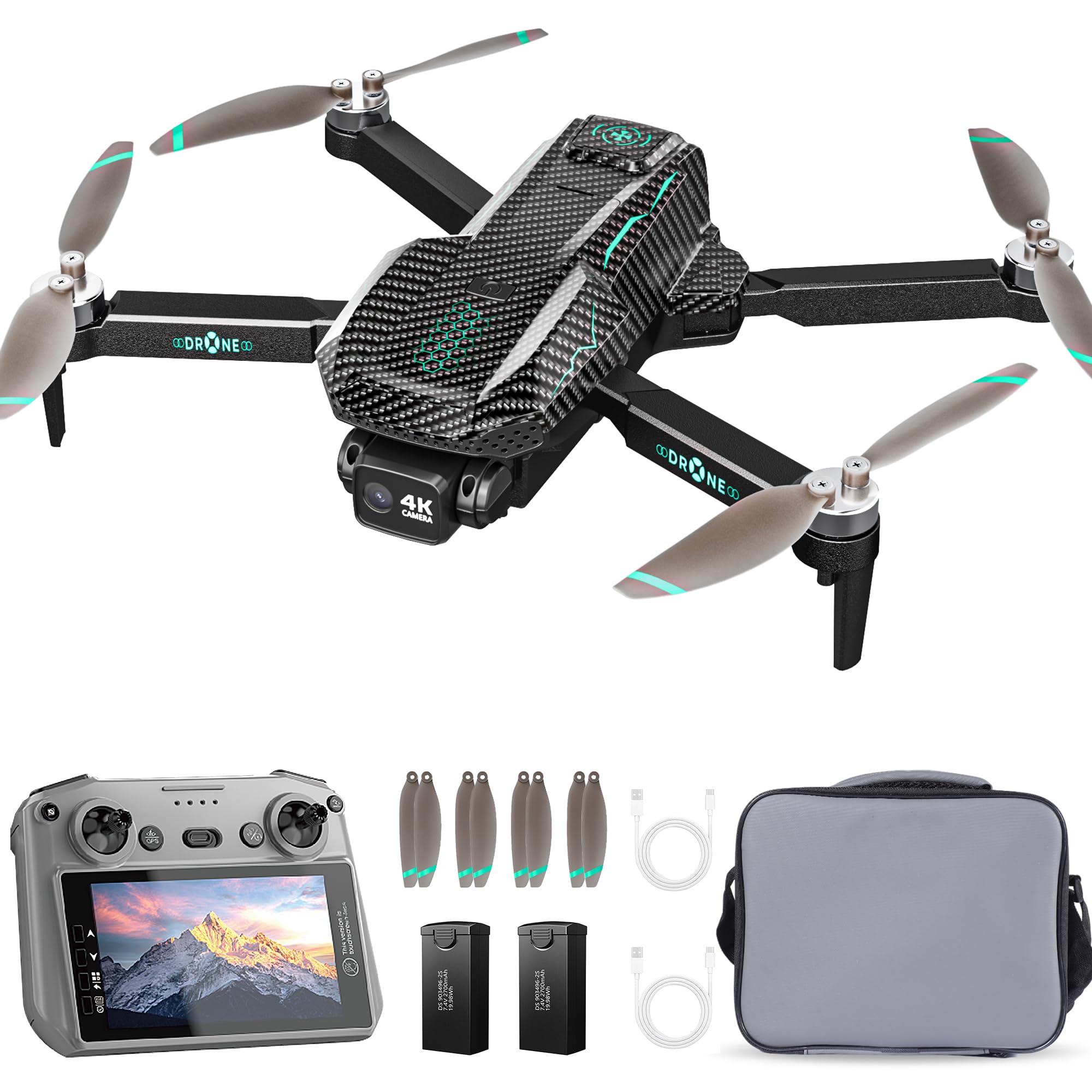
The Punieayi GPS drone differentiates itself with a non-touch 5-inch HD screen built into the controller, offering the largest integrated display in this price bracket. The 4K camera has a 90-degree adjustable lens and captures 8 MP stills. The 5,000-foot control range is among the longest here, letting you explore further before losing signal.
It ships with two 2700mAh 7.4V batteries that provide a combined 60 minutes of total flight. The brushless motor setup handles level-4 winds with stability, and the GPS auto-return function activates on low battery or signal interruption. The included 8GB microSD card lets you record footage directly, bypassing phone storage limits.
The large screen is a non-touch display, which means you navigate menus using controller buttons — this takes some getting used to. The EIS works for gentle flights but shows limitations in faster maneuvers. For pilots who want a big, bright screen and long transmission range, this is a compelling option.
Why it’s great
- Largest 5-inch built-in controller screen
- Up to 5,000 feet of control range
- Long 60-minute total flight time with 2 batteries
Good to know
- Non-touch screen requires button navigation
- EIS struggles in fast or windy flight
4. Specta Mini Drone with 4K Camera
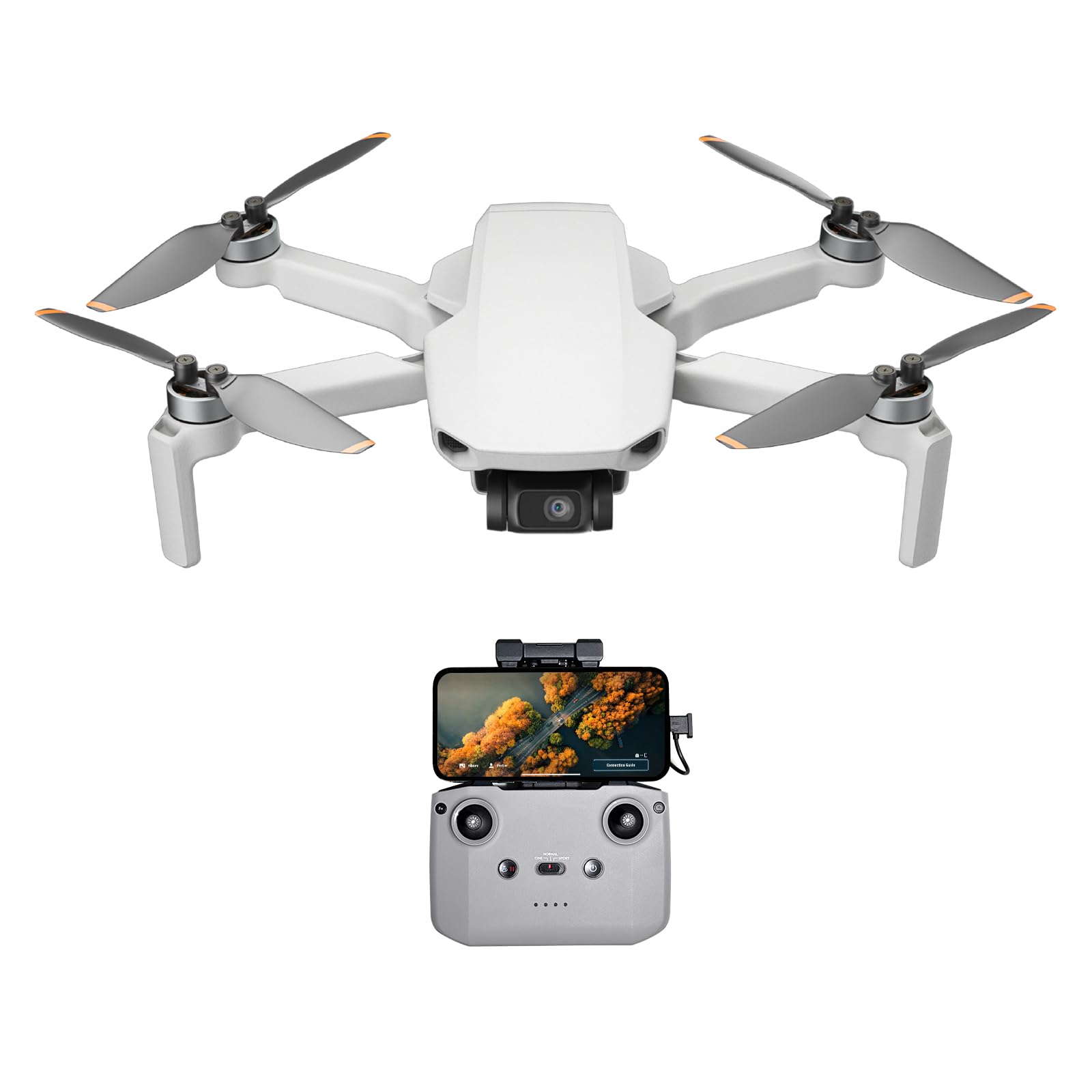
The Specta Mini Drone is the only model in this guide equipped with a true 3-axis mechanical gimbal, which physically stabilizes the camera independently of the drone’s movement. This results in buttery-smooth 4K video at 30fps — footage that looks closer to what DJI Mini-series drones produce, without the premium branding.
The drone weighs under 249 grams and is rated for level-5 wind resistance, meaning it holds position in breezy conditions where budget drones typically drift. The 2250mAh battery delivers up to 31 minutes of flight, and the 10-kilometer (32,800-foot) video transmission range is impressive for this price point, though real-world range depends on line-of-sight conditions.
The gimbal is its standout feature, but replacement batteries are expensive, and the lack of a carrying case in the box is a minor oversight. The propeller material feels less durable than the composite blades on competitors. For buyers who prioritize silky footage over extra accessories, the Specta is the clear winner.
Why it’s great
- True 3-axis mechanical gimbal for pro-level stabilization
- 31 minutes per battery charge
- 10km video transmission range
Good to know
- No carrying case included
- Replacement batteries are costly
5. PLEGBLE PL-715 GPS Drone
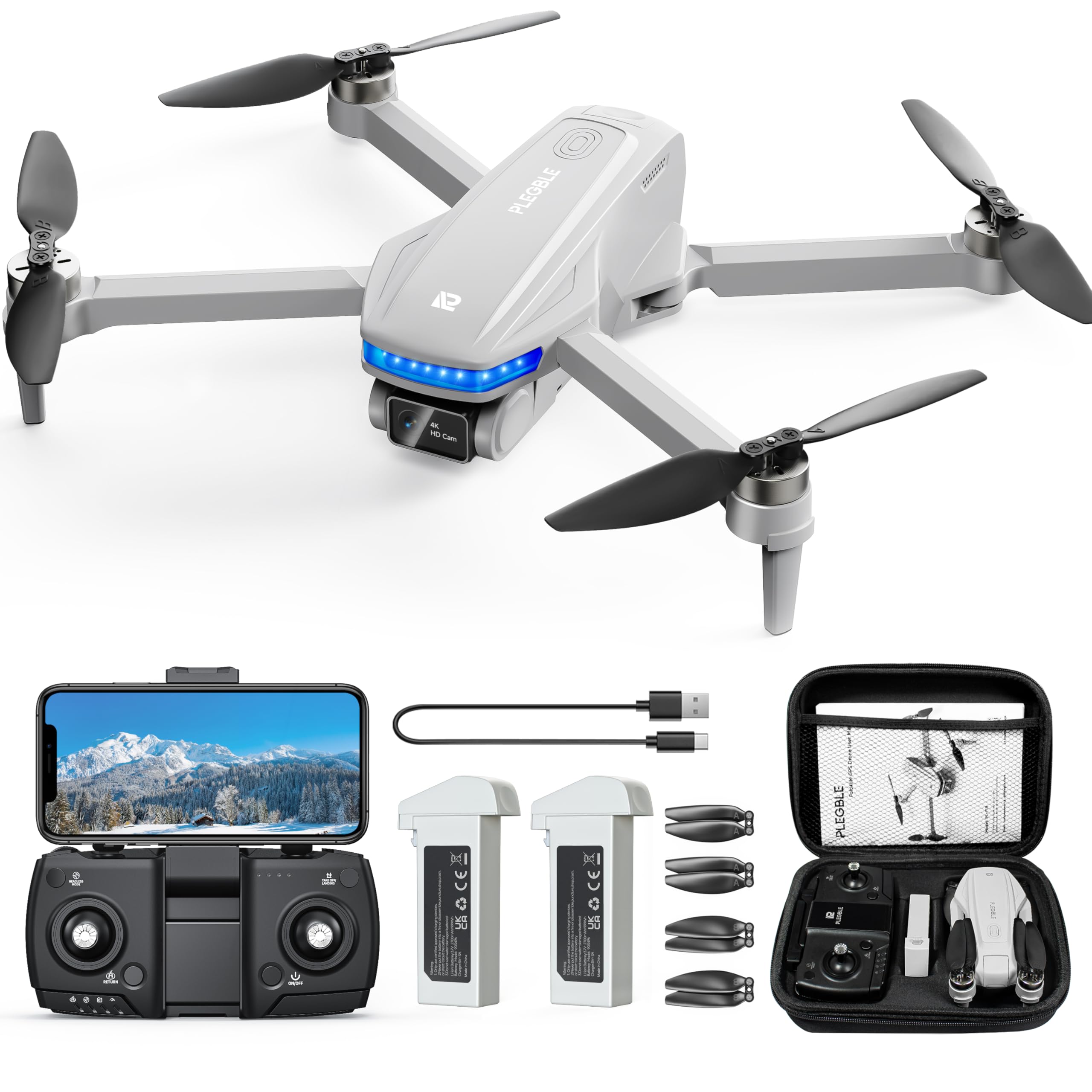
The PLEGBLE PL-715 uses two 2700mAh intelligent batteries to deliver 46 minutes of total flight time, with each battery lasting about 23 minutes. The 4K camera features a 120-degree wide-angle lens and a 90-degree adjustable tilt. The 5GHz FPV transmission provides smooth real-time feed up to 1,968 feet, giving you plenty of room to explore.
GPS functions include auto-return, follow-me, waypoint, and circle fly. The drone has a beginner mode that limits the flight radius to 30 meters, which is useful for practicing in a confined space. The altitude hold system maintains the drone’s height in moderate wind, reducing pilot workload.
The camera lacks stabilization beyond standard EIS, so footage in gusty conditions will show some shake. The controller uses an app-based interface, requiring a phone mount. This is a solid mid-range drone with generous flight times and reliable GPS, but the stabilization could be better.
Why it’s great
- Two large 2700mAh batteries for extended flying
- Beginner mode limits range for safe practice
- Wide 120-degree field of view
Good to know
- No onboard gimbal stabilization
- Requires phone mount for FPV
6. Oddire HK11 GPS Drone

The Oddire HK11 uses two 7.7V 1800mAh batteries, which provide noticeably more consistent power than the common 7.4V packs, resulting in steadier climbs and better wind handling. The combined flight time is 48 minutes. The 4K camera (4096x3072P stills) is adjustable within 90 degrees via remote or app, and the 5G WiFi transmission keeps the feed stable up to 1,640 feet.
It includes GPS follow, waypoint planning, and circle fly. The drone survives crashes remarkably well — users report it landing on concrete with minimal damage. Weighing exactly 249 grams, it skirts FAA registration requirements. The brushless motors are quiet and efficient, and the included carrying case adds to its travel readiness.
The companion app (XDRONE GO) is required for advanced features, and some users find the initial compass calibration tedious. The camera quality is good for the price but struggles in low light. This is a rugged choice for beginners who expect a few rough landings.
Why it’s great
- Higher voltage 7.7V batteries for stable power delivery
- Very durable construction for crash-prone pilots
- Excellent wind resistance for its size
Good to know
- Requires XDRONE GO app, not the default App Store listing
- Compass calibration needed at every boot
7. NAFYRE N11 Pro GPS Drone

The NAFYRE N11 Pro packs three 2000mAh batteries into the box, providing a combined flight time of approximately 66 minutes. This is the highest total flight duration of any model in this guide. The HD camera has a 90-degree adjustable wide-angle lens, and the 5G FPV feed streams directly to your phone or the included remote screen.
Brushless alloy motors provide quiet, wind-resistant performance. The dual-positioning system uses optical flow for indoor stability and GPS for outdoor precision. GPS functions include follow-me, tap fly, and point of interest. At 180 grams, it is one of the lightest options, making it extremely portable.
The camera resolution is lower than true 4K competitors — it captures quality HD footage but won’t match the detail of models with native 4K sensors. There is no memory card slot, so all footage is stored on your phone. This is a good pick for pilots who value maximum flight time over maximum video resolution.
Why it’s great
- Excellent 66-minute total flight time with 3 batteries
- Lightest option at 180 grams
- Optical flow positioning aids indoor flying
Good to know
- HD camera, not native 4K resolution
- No onboard memory card slot
8. X9 4K GPS Drone (suangrc)
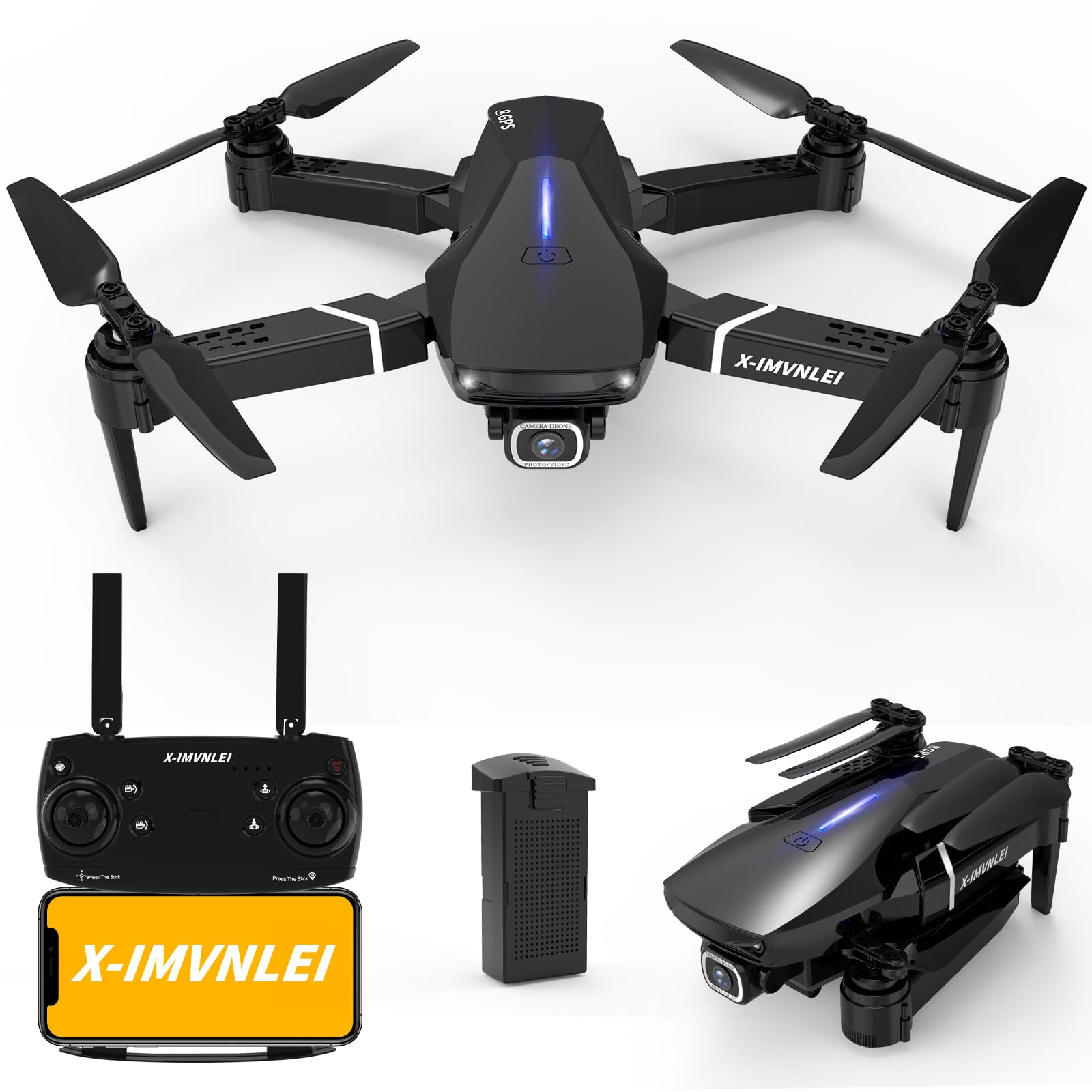
The X9 from suangrc provides a surprisingly polished experience for its price tier. The controller features a 4.5-inch LCD screen that eliminates the need for phone mounting, and the 4K UHD camera with a 110-degree adjustable lens captures solid daylight footage. The GPS system includes auto-return, follow-me, and trajectory flight — features usually found on more expensive models.
Weighing 249 grams, it fits under the FAA threshold. The brushless motors offer decent lift and the foldable design makes it easy to pack. It includes an 8GB microSD card for onboard storage, and the gesture control feature allows hands-free selfies. The overall build quality feels reassuring for a budget drone.
The battery is the main weakness — a single 1200mAh pack provides only about 18 minutes of total flight, which is short compared to the competition. Some units experience voltage drop issues that cause premature emergency landings. This is a solid starter drone, but the limited battery life will frustrate longer sessions.
Why it’s great
- Controller has built-in 4.5″ screen
- Includes 8GB microSD card for storage
- Gestures and 3D flips add fun
Good to know
- Short 18-minute total flight time
- Some units experience voltage drop issues
9. REDRIE HK33 Drone
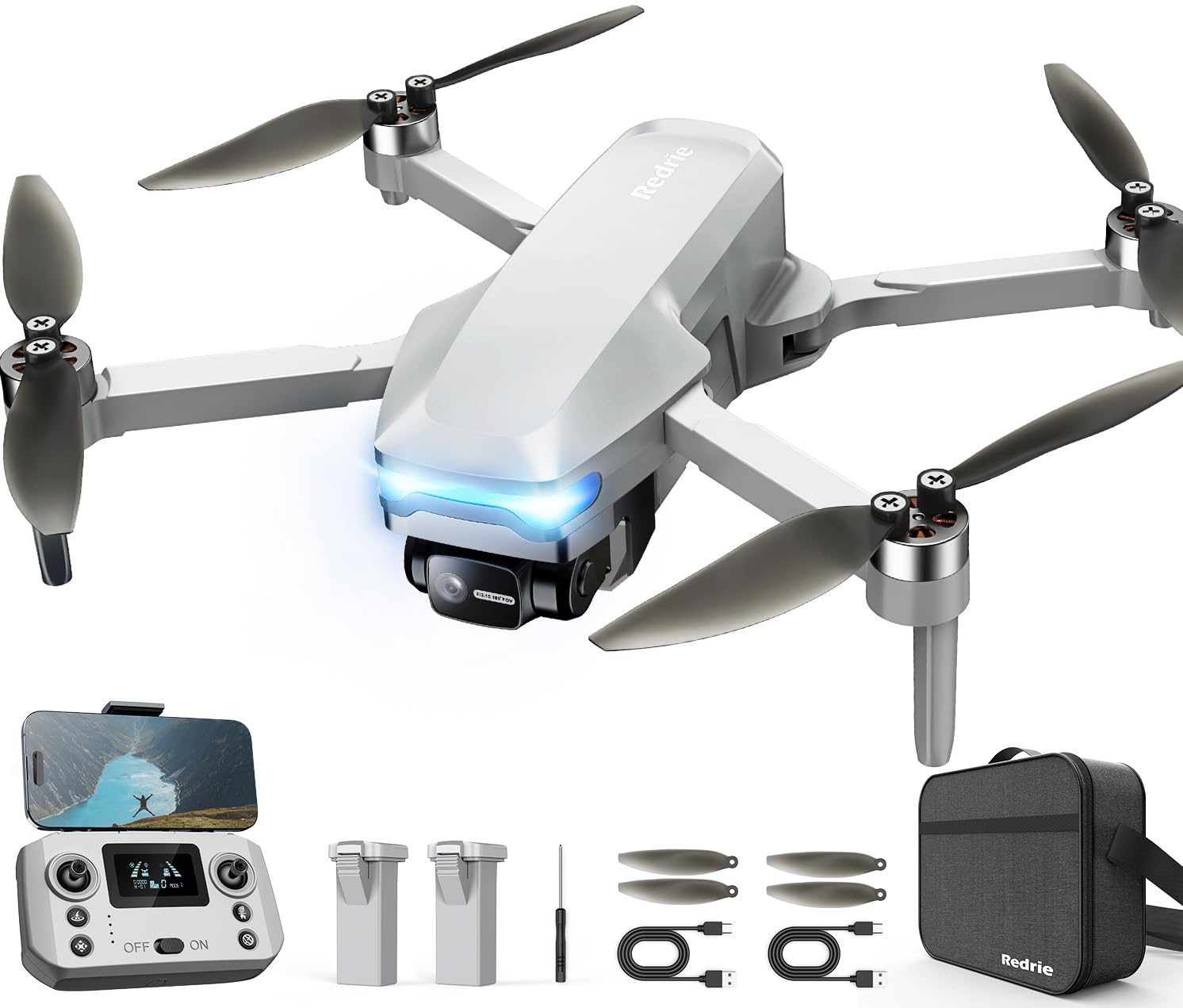
The REDRIE HK33 is noteworthy for including a 2-axis mechanical gimbal at a very accessible price point. This physically stabilizes the camera on the pitch and roll axes, producing smoother video than EIS-only drones. The 4K UHD camera with an F2.15 aperture and 110-degree ultra-wide lens captures detailed landscapes, and the 90-degree remote tilt lets you adjust framing mid-flight.
It comes with two 1800mAh batteries for a total flight time of 40 to 45 minutes. The brushless motors handle level-5 winds, and the 5G WiFi transmission stays stable up to 985 feet. GPS functions include auto-return on signal loss, GPS follow, route planning, and fly-around modes. At under 250 grams, FAA registration is not required.
The 2-axis gimbal cannot compensate for yaw (side-to-side rotation), so fast panning shots may still show slight wobble. The cell phone holder on the controller is flimsy, and some users find the app setup unintuitive. This drone offers the best stabilization-to-price ratio in the guide, making it a top pick for video quality on a tight budget.
Why it’s great
- True 2-axis gimbal for stable footage
- Handles level-5 winds with brushless motors
- Generous 40-45 minute total flight time
Good to know
- Cell phone holder feels cheap
- Gimbal lacks yaw stabilization
FAQ
Do I need FAA registration for a drone under 250 grams?
What does GPS auto-return home actually do?
Can I fly a sub-$250 drone in windy conditions?
Is a controller screen better than using my phone?
Why do some drones require compass calibration before every flight?
Final Thoughts: The Verdict
For most users, the best drone under $250 winner is the CHUBORY G9 because it bundles a built-in controller screen, EIS-stabilized 4K video, and three batteries for 90 minutes of flight, offering the most complete out-of-box experience. If you want gimbal-smooth footage without spending extra, grab the Specta Mini Drone with its 3-axis mechanical gimbal. And for durability and consistent power on a budget, nothing beats the Oddire HK11 with its higher voltage 7.7V batteries and crash-resistant frame.

Mo Maruf
I created WellFizz to bridge the gap between vague wellness advice and actionable solutions. My mission is simple: to decode the research and give you practical tools you can actually use.
Beyond the data, I am a passionate traveler. I believe that stepping away from the screen to explore new environments is essential for mental clarity and physical vitality.