Our readers keep the lights on and my smoothie glass nicely filled. As an Amazon Associate, I earn from qualifying purchases.
Finding a capable flyer that sidesteps FAA registration requirements while still delivering crisp aerial footage is the central challenge for new pilots. The 249-gram weight limit creates a specific design space where every gram of battery, motor, and camera sensor must earn its place. The result is a market packed with compromises — and a few standouts that get the balance exactly right.
I’m Mohammad Maruf — the founder and writer behind WellFizz. My focus is on dissecting the real-world trade-offs inside each drone’s specs, from gimbal axis counts to transmission range, to help you find the sub-250g model that actually fits your flying style.
After comparing nine models across multiple price tiers, I’ve identified the top performers for this specific class. This guide covers everything you need to confidently choose a drone under 250 grams that matches your skill level and shooting goals.
How To Choose The Best Drone Under 250 Grams
Selecting the right sub-250g drone means weighing camera quality against flight stability, transmission range, and battery endurance. The weight ceiling forces manufacturers to make trade-offs, so knowing which specs to prioritize saves you from a frustrating purchase.
Camera and Gimbal Stabilization
The camera sensor and gimbal setup determine whether your footage looks cinematic or shaky. A 3-axis mechanical gimbal physically counteracts drone movement, producing smooth video even in moderate wind. Electronic image stabilization (EIS) can smooth out footage in post-processing but struggles with rapid movements and often crops the frame. For 4K video, look for at least a 2-axis gimbal or better — a fixed camera on a budget drone will deliver jello-like footage.
Flight Time and Battery System
Battery capacity directly impacts how long you can stay in the air. Sub-250g drones typically offer 20 to 40 minutes per battery. Multiple batteries in the kit extend total session time but add weight to the carrying case. Intelligent batteries with real-time voltage monitoring and over-discharge protection are safer and last longer than generic cells. Fast-charging hubs that double as power banks add convenience for travel.
Transmission Range and Technology
The connection between your remote and the drone dictates how far you can fly reliably. Digital transmission systems (like DJI OcuSync or Ruko’s R2) provide longer range and superior interference resistance compared to standard Wi-Fi links. A Wi-Fi repeater can extend range to 3,000-9,000 feet, but expect occasional lag and dropped frames. For consistent FPV flying beyond 1,000 feet, a digital system is the better investment.
GPS Features and Safety
GPS modules enable automatic return-to-home, precise hovering, follow-me, and waypoint navigation — features that dramatically reduce the risk of losing a drone. Models with multi-constellation support (GPS, GLONASS, Galileo) lock satellites faster and maintain position more reliably. A loud buzzer or beeper helps locate the drone if it lands in tall grass or brush. Optical flow sensors provide indoor position holding when GPS signals are unavailable.
Build Quality and Portability
A sub-250g drone should be compact enough to slip into a jacket pocket or a small padded case. Look for foldable arms and a rigid frame that doesn’t flex under load. Brushless motors are standard at this weight — they run cooler, quieter, and last longer than brushed alternatives. Propeller guards are useful for beginners flying indoors or near obstacles, but they add drag and reduce flight time.
Quick Comparison
On smaller screens, swipe sideways to see the full table.
| Model | Category | Best For | Key Spec | Amazon |
|---|---|---|---|---|
| DJI Flip (RC-N3) | Premium | Best Overall | 1/1.3-inch CMOS, 4K/60fps HDR, 13km transmission | Amazon |
| DJI Flip Fly More Combo (RC 2) | Premium | Extended Flight & Screen Controller | 3 batteries, 93-min total, RC 2 built-in screen | Amazon |
| Bwine F7MINI | Premium | Built-In Screen Controller | 5.5-inch screen, 8K photo, 20,000ft transmission | Amazon |
| Holy Stone HS790 | Mid-Range | Long Range & Night Flying | 30,000ft transmission, 60-min flight, 3-axis gimbal | Amazon |
| Ruko F13 | Mid-Range | All-Day Shooting (3 Batteries) | 96-min total, 3-axis gimbal, AI takeoff/landing | Amazon |
| Bwine F7GB2 Pro | Mid-Range | High Altitude Flying | 2000m altitude, L6 wind resistance, 75-min flight | Amazon |
| Potensic ATOM LT | Mid-Range | Entry-Level With GPS | 40-minute battery, 4KM PixSync 2.0 transmission | Amazon |
| Karuisrc GPS Drone | Budget | Built-In 4.5-inch Controller Screen | 4.5-inch FPV screen, EIS camera, 2200mAh battery | Amazon |
| REDRIE HK33 | Budget | Best Value for Beginners | 2-axis gimbal, 4K photo, 500m range, 2 batteries | Amazon |
In‑Depth Reviews
1. DJI Flip (RC-N3)

The DJI Flip nails the core equation for a sub-250g drone: a larger 1/1.3-inch CMOS sensor paired with a 3-axis mechanical gimbal delivers 4K/60fps HDR footage that rivals much heavier models. The full-coverage carbon fiber propeller guards add safety without pushing the weight over the limit — a clever design choice that makes this drone exceptionally beginner-friendly while keeping the FAA paperwork off your desk.
Transmission range hits 13 kilometers using DJI’s digital system, which maintains a stable, low-latency feed well beyond what Wi-Fi-based drones can manage. The 31-minute max flight time is solid for the weight class, though the single battery in the base kit means you will want extras for longer sessions. Palm takeoff and intelligent subject tracking turn the Flip into a nearly autonomous aerial cinematographer.
One trade-off is the lack of rear obstacle sensors — only forward-facing avoidance is included — so beginners should still fly cautiously. The RC-N3 controller requires a smartphone for the live feed, which works fine but adds a step compared to screen-equipped remotes. For pure image quality and flight stability under 250 grams, the DJI Flip is the current benchmark.
Why it’s great
- Best-in-class 1/1.3-inch sensor with 4K/60fps HDR video
- 3-axis mechanical gimbal for rock-steady footage
- 13km digital transmission with low latency
- Integrated propeller guards for safe indoor flying
Good to know
- Only forward obstacle avoidance, no rear sensors
- Single battery included in base kit
- Requires phone for live view (RC-N3 model)
2. DJI Flip Fly More Combo (RC 2)
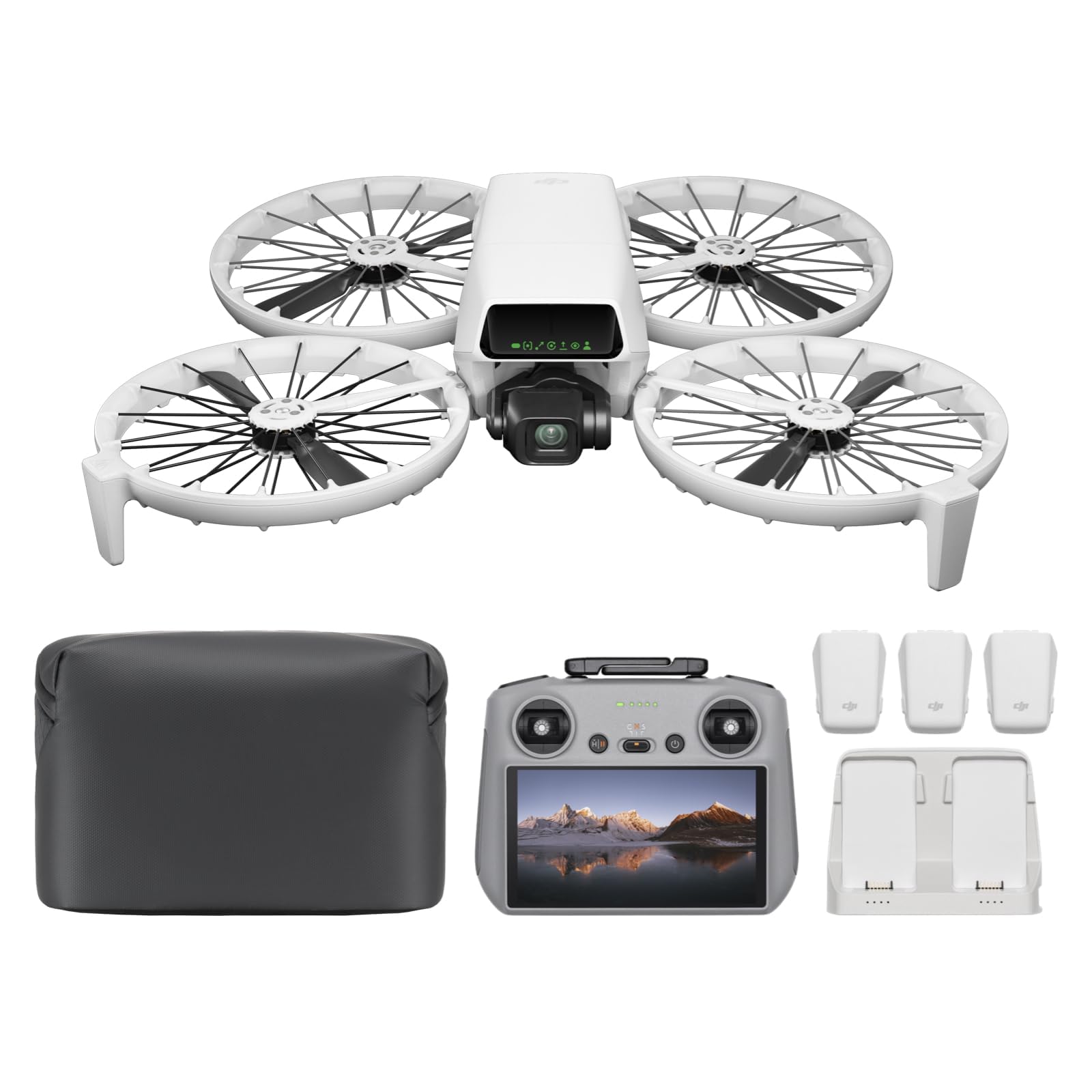
This Fly More Combo transforms the DJI Flip from a capable starter drone into a serious travel companion. Three intelligent batteries push total airtime to 93 minutes, and the parallel charging hub refuels them faster than cycling through individual chargers. The RC 2 remote controller with its built-in high-brightness screen eliminates the need to attach your phone — you get an instant, glare-resistant view of the camera feed in direct sunlight.
Every core advantage of the base Flip carries over: the 1/1.3-inch sensor delivers vivid 4K/60fps HDR video, the 3-axis gimbal cancels out vibration, and the 13km OcuSync transmission keeps you connected across vast distances. The full-coverage propeller guards remain, making this combo equally safe for flying near people or inside structures.
The shoulder bag included in the kit fits everything neatly, which matters when you are hiking to a launch spot. The main caveat is that the RC 2 transmitter adds cost, but the convenience of skipping a phone connection and the extended battery runtime justify the premium for regular flyers. This is the sub-250g setup that asks the fewest compromises.
Why it’s great
- 93-minute total flight time with three batteries
- RC 2 built-in screen controller — no phone required
- Parallel charging hub for faster refueling
- Travel-friendly shoulder bag included
Good to know
- Higher upfront investment
- 100W fast charger sold separately
- Front obstacle avoidance only
3. Bwine F7MINI
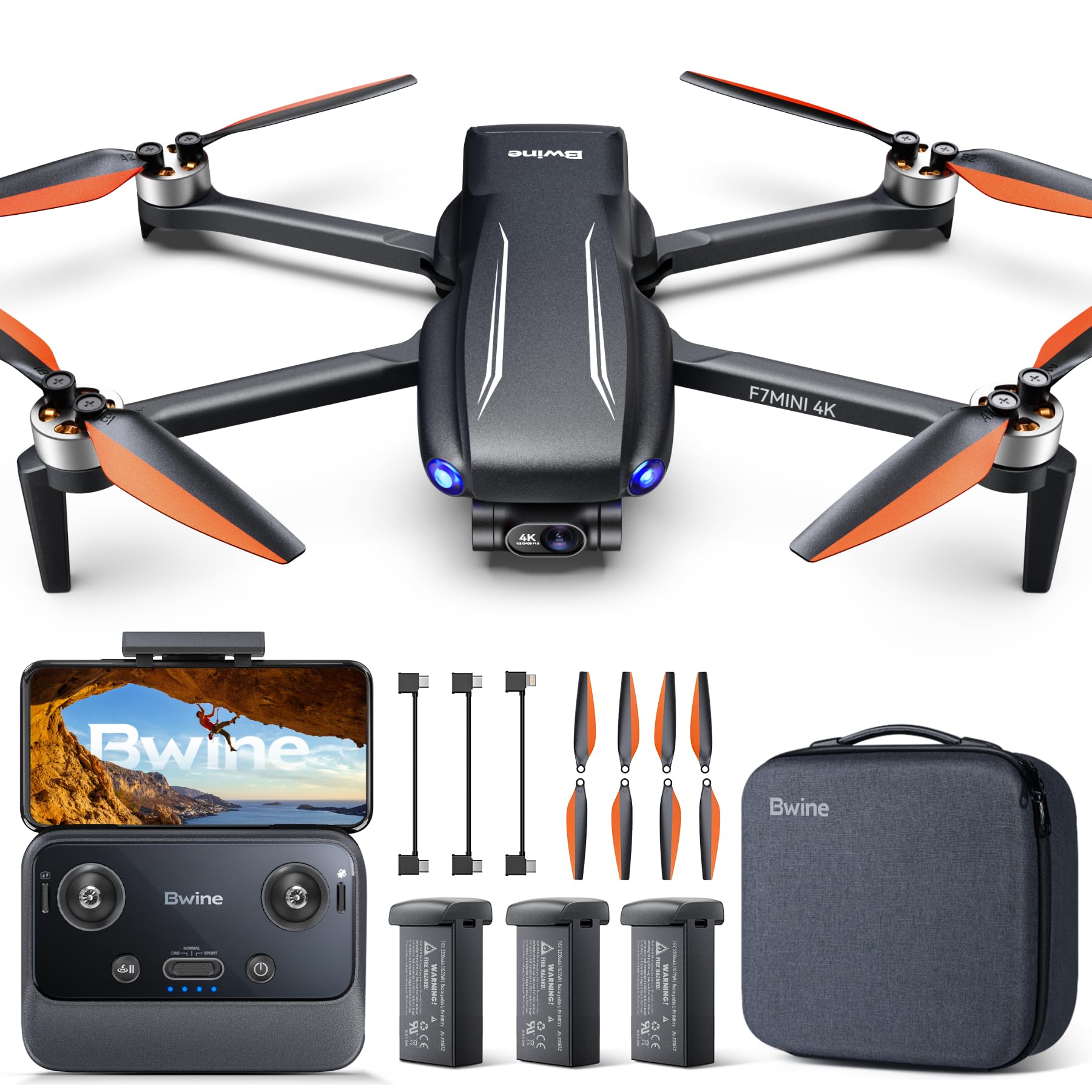
The Bwine F7MINI stands out with its 5.5-inch built-in screen on the remote controller — a feature typically reserved for much more expensive models. This eliminates the fiddly phone-mount process and gives you a bright, dedicated display for FPV flying even under harsh sunlight. The drone itself hits 249 grams exactly, keeping it FAA-exempt, while the 48MP 1/2-inch CMOS sensor captures 8K stills and 4K/30fps video.
Stabilization comes from a 3-axis mechanical gimbal, and Bwine claims Level 5 wind resistance from the 1503 brushless motors. In practice, that means stable footage in breezy conditions up to about 25 mph. The 20,000-foot digital transmission range (about 6 km) uses a wired digital link rather than Wi-Fi, significantly reducing interference in crowded areas.
The three-battery setup provides 96 minutes of total flight time, and each 2200mAh pack supports PD 3.0 fast charging. GPS features include auto return, follow-me, waypoint, and orbit modes, plus a 120dB locator buzzer for finding the drone if it lands out of sight. The only real drawback is that the camera, while good for the price, does not match the dynamic range of the DJI Flip’s larger 1/1.3-inch sensor in challenging lighting.
Why it’s great
- Built-in 5.5-inch FPV screen on controller
- 3-axis mechanical gimbal for smooth video
- 96-minute total flight with three batteries
- 20,000ft digital transmission (no Wi-Fi)
Good to know
- Camera sensor smaller than DJI Flip’s 1/1.3-inch
- No obstacle avoidance sensors
- App download speeds from controller can be slow
4. Holy Stone HS790
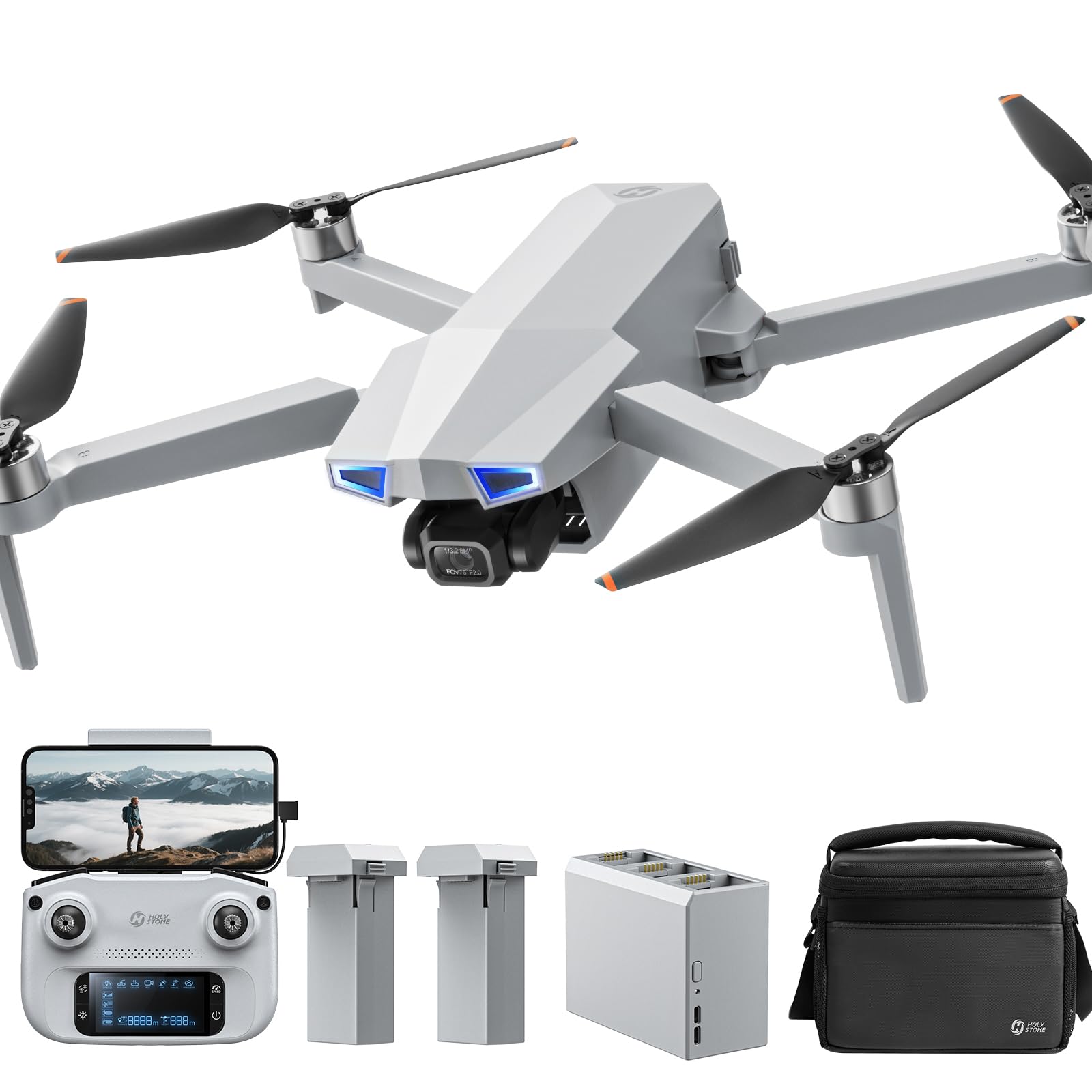
The Holy Stone HS790 pushes transmission range to an impressive 30,000 feet (9 km) using a Wi-Fi repeater system, making it one of the longest-reaching sub-250g drones available. The 3-axis brushless gimbal keeps 4K/30fps footage stable in moderate wind, and the 6K photo mode extracts extra detail from the sensor. A dedicated Night Mode with improved navigation lights extends flying into twilight hours.
Two intelligent batteries with a smart PD charging hub deliver 60 minutes of total flight time, and the hub doubles as a power bank for charging phones or tablets on the go. GPS features include auto return, follow-me, and waypoint navigation. Built-in Remote ID compliance means the HS790 meets FAA requirements for drones that do exceed 250g — though it actually stays under the limit, the inclusion adds peace of mind.
The app interface has been reported as occasionally glitchy, and the Wi-Fi-based transmission, while long-range, can suffer from interference in urban environments. The camera performance is solid for the price but lacks the sensor size of premium competitors. For budget-conscious pilots who need maximum range and a 3-axis gimbal, the HS790 delivers exceptional value.
Why it’s great
- 30,000ft transmission range with repeater
- 3-axis brushless gimbal for stable 4K video
- Smart PD charging hub doubles as power bank
- Night flying mode with enhanced visibility
Good to know
- Wi-Fi transmission can lag in crowded areas
- App interface has occasional stability issues
- Gimbal struggles during fast turns
5. Ruko F13

The Ruko F13 packs three intelligent batteries into the box for a total of 96 minutes of flight time — one of the highest totals in the sub-250g category. Each 2200mAh cell is managed by a smart charging system, and the drone supports 4K/30fps video from a 1/2-inch 48MP CMOS sensor paired with a 3-axis brushless gimbal. The combination of mechanical stabilization and EIS produces noticeably smooth footage even in breezy conditions.
Transmission uses Ruko’s R2 digital system, which avoids the interference issues common with Wi-Fi-based links, providing a solid 20,000-foot (6 km) range with minimal latency. AI-assisted takeoff and landing simplify the launch process, and quadruple positioning (GPS, barometric altitude hold, TOF, and optical flow) keeps the drone locked in place indoors and out. The built-in beeper helps locate the drone if it lands out of sight.
Reviewers consistently praise Ruko’s customer service, which is a meaningful consideration for first-time drone buyers who might need support. The joysticks are quite sensitive, requiring a gentle touch, and the 8K photo mode uses software interpolation rather than native resolution. For flyers who prioritize extended airtime and a stable gimbal over raw camera specs, the Ruko F13 is a compelling mid-range option.
Why it’s great
- 96-minute total flight with three smart batteries
- 3-axis brushless gimbal with EIS for smooth footage
- 20,000ft digital transmission (no Wi-Fi interference)
- AI takeoff/landing and quadruple positioning
Good to know
- Sensitive joysticks require careful control
- 8K photo is software-upscaled, not native
- No obstacle avoidance sensors
6. Bwine F7GB2 Pro

The Bwine F7GB2 Pro is engineered for pilots who fly at elevation. Its 1806 brushless motors and barometric sensor allow takeoffs from 2,000-meter peaks, and the L6 wind resistance rating keeps the drone stable in conditions that would ground lighter models. The 4K camera uses a 120-degree FOV lens with a larger CMOS sensor for better low-light performance, mounted on a 3-axis gimbal with 5x digital zoom.
Three 2600mAh batteries deliver 75 minutes of total flight time, and each cell meets UL 2054 safety standards — an important certification for lithium packs. The transmission range is rated at 10,000 feet (3 km) under ideal conditions, and the dedicated remote includes an LCD overlay for telemetry data. Auto return, follow-me, waypoint, and orbit modes are all GPS-driven and reliable.
That said, Bwine has completed the Remote ID certification for this model, and the QR code on the drone arm simplifies compliance. The remote screen can be hard to read in direct sunlight, and the camera distorts slightly during fast turns. This is the right choice for high-altitude shooters who accept the FAA paperwork trade-off.
Why it’s great
- Certified for 2,000-meter altitude takeoffs
- 3-axis gimbal with 5x digital zoom
- UL 2054 certified batteries
- FAA Remote ID compliance completed
Good to know
- Weighs 550g — requires FAA registration
- Remote screen hard to see in bright sunlight
- Camera distorts during high-speed turns
7. Potensic ATOM LT

The Potensic ATOM LT is positioned as an entry-level GPS drone that prioritizes flight time and ease of use. The 3000mAh intelligent batteries deliver a genuine 40 minutes per charge — one of the highest per-battery figures in this class — and two are included for 80 minutes of total airtime. The PixSync 2.0 transmission system provides a stable 4 km (13,123 ft) video feed with minimal latency, a strong achievement at this price point.
The 2.5K EIS camera uses a Sony sensor with ShakeVanish 2.0 stabilization to smooth out vibration. It is not true 4K, but the 2560×1440 resolution is clean and detailed in good lighting. The 118-degree FOV with vertical tilt from +20 to -90 degrees allows flexible framing. Quad-constellation GPS (GPS, GLONASS, Galileo, BeiDou) ensures fast satellite locks and reliable auto-return functions.
Flyers should note that the ATOM LT operates in GPS mode only — it needs open sky to initialize and will not fly indoors. The camera lacks a true mechanical gimbal, so footage in wind will show some shake that EIS cannot fully correct. For a beginner who wants a reliable GPS drone with outstanding battery life and modern transmission tech, the ATOM LT is a smart starting point.
Why it’s great
- 40 minutes per battery — class-leading runtime
- 4KM PixSync 2.0 digital transmission
- Quad-constellation GPS for fast satellite locks
- Excellent value for a GPS-equipped drone
Good to know
- 2.5K EIS camera, not true 4K
- GPS mode only — requires open sky
- No mechanical gimbal; EIS only
8. Karuisrc GPS Drone
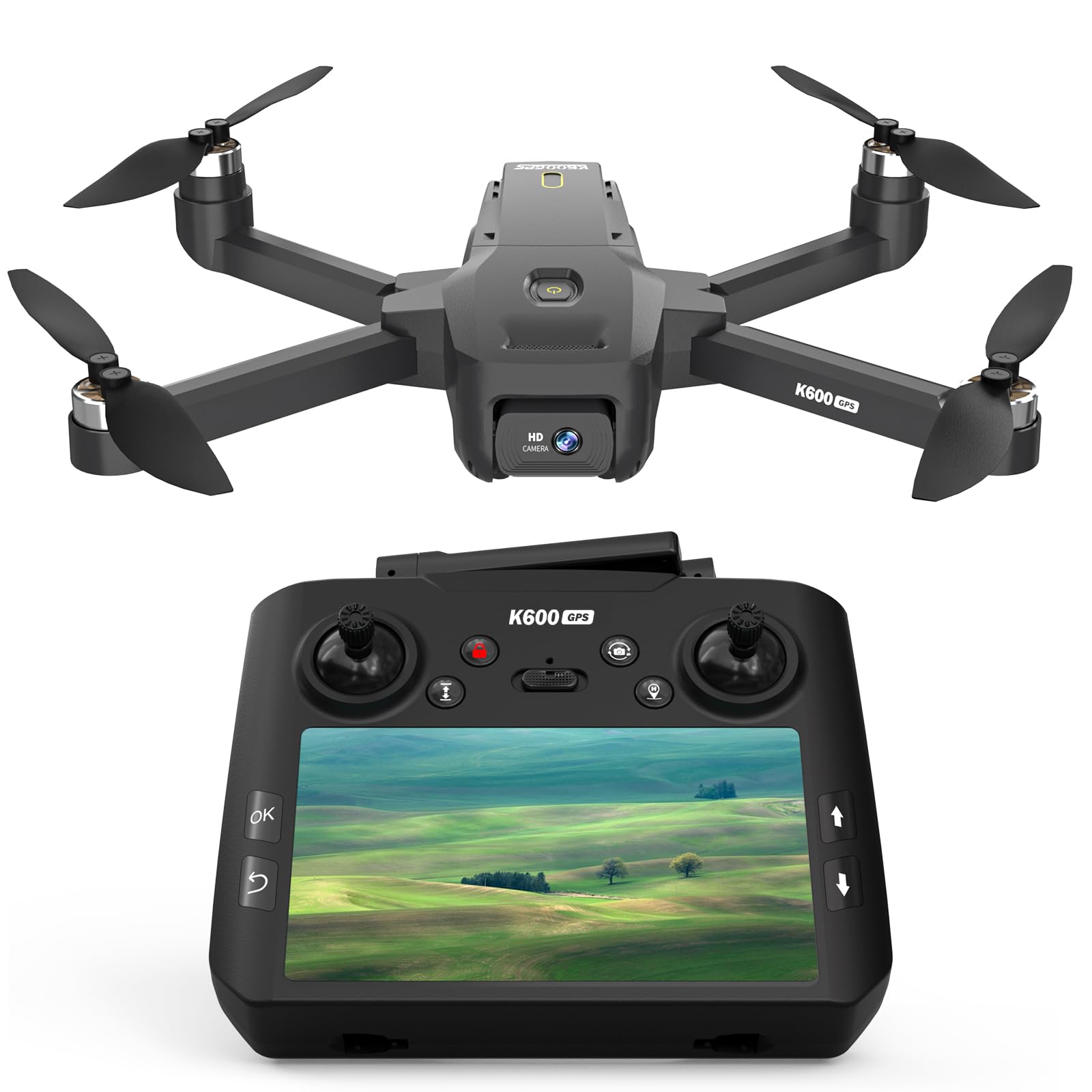
The Karuisrc GPS Drone brings a 4.5-inch HD screen directly into the remote controller, giving you a dedicated FPV display without needing to mount your phone. The 205-gram weight keeps it FAA-exempt, and the 2200mAh battery provides enough flight time for casual sessions. An EIS camera captures stable footage, while brushless motors ensure quiet, reliable performance in light winds.
GPS features include auto return, follow-me, waypoint navigation, and orbit mode — all of which work reliably based on user feedback. The transmission range is rated at 400 meters for control and 250 meters for video mapping, which is modest compared to premium options but adequate for neighborhood flying. The remote’s screen brightness is usable in overcast conditions but can wash out in direct sun.
This model is best suited for beginners who want a self-contained system without the hassle of phone pairing. The camera quality is good for social media sharing but won’t satisfy serious photographers. For the price, the built-in screen and brushless motors represent solid value, though more experienced pilots will quickly outgrow its range and stabilization limits.
Why it’s great
- Built-in 4.5-inch FPV screen — no phone needed
- Brushless motors for quiet, stable flight
- GPS auto return and follow-me modes
- Easy setup and intuitive controls
Good to know
- Limited 400m control range
- Screen glare in bright sunlight
- EIS only — no mechanical gimbal
9. REDRIE HK33
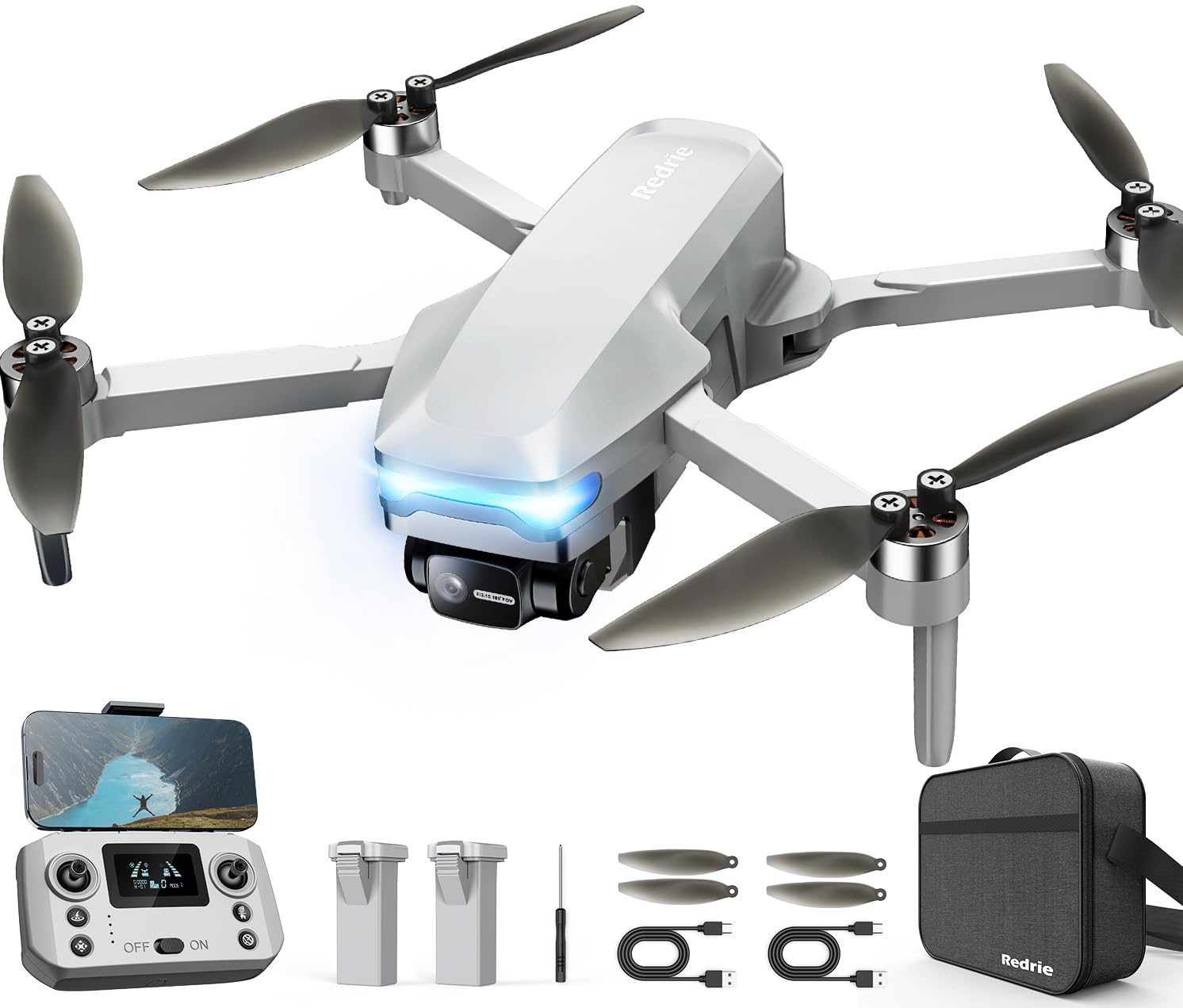
The REDRIE HK33 is the most affordable entry in this guide, designed for absolute beginners who want to learn flying without a big investment. It includes a 2-axis mechanical gimbal — rare at this price — which provides noticeable stabilization over fixed-camera budget drones. The 4K photo mode (4096×3072) and 2K video capture are sufficient for social media and family memories, though the footage is not as sharp as true 4K video streams from more expensive models.
Two 1800mAh batteries deliver a combined 40-45 minutes of flight time, which is competitive for the entry tier. Brushless motors, GPS auto return, follow-me, and route planning modes are all included — features that were unheard of at this price point just a couple of years ago. The 500-meter signal range is fine for learning in open fields but limits exploration.
Build quality is plastic but durable — multiple reviewers reported surviving crashes with no damage. The cell phone holder on the remote is flimsy, and the Wi-Fi-based FPV feed can lag at longer distances. For under , the HK33 offers a surprisingly complete feature set for a beginner to practice with before upgrading to a premium model.
Why it’s great
- 2-axis mechanical gimbal at an entry-level price
- Brushless motors for durability and quiet operation
- GPS auto return and beginner-friendly modes
- Includes carrying case and extra battery
Good to know
- 2K video, not true 4K video stream
- Wi-Fi FPV lags beyond 300 feet
- Cheap phone holder on remote
FAQ
Do I need an FAA license to fly a drone under 250 grams?
What is the difference between a 2-axis and 3-axis gimbal in a sub-250g drone?
Can I fly a sub-250g drone in windy conditions?
How important is the camera sensor size in a sub-250g drone?
Final Thoughts: The Verdict
For most users, the drone under 250 grams winner is the DJI Flip (RC-N3) because its larger 1/1.3-inch sensor, 3-axis mechanical gimbal, and 13 km digital transmission deliver the best image quality and flight stability in the weight class. If you want extended airtime and a built-in screen that eliminates phone pairing, grab the Bwine F7MINI. And for beginners on a strict budget who still want GPS features and a mechanical gimbal, nothing beats the value of the REDRIE HK33.

Mo Maruf
I created WellFizz to bridge the gap between vague wellness advice and actionable solutions. My mission is simple: to decode the research and give you practical tools you can actually use.
Beyond the data, I am a passionate traveler. I believe that stepping away from the screen to explore new environments is essential for mental clarity and physical vitality.