Our readers keep the lights on and my smoothie glass nicely filled. As an Amazon Associate, I earn from qualifying purchases.
Shark fishing from the shore demands more than just heavy tackle—it requires a precise, reliable method to place a heavy bait beyond the breakers where the big fish actually patrol. Tossing bait from a kayak is slow, dangerous, and often illegal, while a surf launch limits your range to the first sandbar. A purpose-built aerial platform solves both problems: it flies a chunk of bunker or a whole jack past the wave zone, drops it with surgical accuracy, and returns to your hand ready for the next cast.
I’m Mohammad Maruf — the founder and writer behind WellFizz. I’ve spent countless hours analyzing flight logs, payload specs, wind-resistance data, and release mechanisms to separate the few machines that can handle a heavy bait in ocean wind from the many that belong on a picnic table.
This guide focuses on the real-world parameters that matter when you’re standing wet‑suit deep at sunrise with a 7‑foot rod and a live eel. Read on for the only best drone for shark fishing recommendations backed by lift capacity, waterproofing, and casting range data.
How To Choose The Best Drone For Shark Fishing
Shark fishing with a drone is not like shooting vacation video over a park. The drone must carry a heavy, often wet payload, operate over salt water, deal with sudden coastal gusts, and release the bait on command without tangling in the props. Here’s what to look at first.
Payload capacity is the non-negotiable number
A flying bait platform is only useful if it can lift your chosen bait. Fresh bunker chunks, mackerel heads, or a 2‑pound slab of bonita all weigh between half a pound and 3 pounds. The drone’s rated maximum takeoff weight minus its own weight gives you the true bait budget. For medium sharks you want at least 2‑pound lift ability; for larger targets or live baits, 5‑pound capacity is the real threshold. Light consumer drones that quote “payload” based on hanging a tiny GoPro will fall short here.
Water resistance separates coast‑ready from park‑ready
Salt spray, a rogue wave, or morning dew can destroy a non‑sealed drone mid‑flight. An IP67 rating means the aircraft can survive full submersion up to 1 meter for 30 minutes, which is the gold standard for surf work. A lower rating like IPX4 or no rating at all forces you to fly on calm, dry days. For shore‑based shark fishing you will eventually get salt on the frame, so look for corrosion‑treated motors and a sealed battery compartment.
Wind resistance determines whether the bait reaches the right zone
Coastal winds build quickly, and a drone carrying a heavy bait in a 20‑mph gust must hold position without drifting. Look at the wind‑tolerance spec, not the speed of the drone in calm conditions. A Level 6 wind resistance (about 25‑30 mph) is the realistic minimum for a dedicated fishing drone. Lighter models often state Level 5, which is 19‑24 mph, and those can be too unstable with a payload on a typical beach afternoon.
Release mechanism design matters more than you think
A bait release is a small servo that opens a latch at the press of a button on the remote. The release must be positioned so the bait line clears the propellers and the drone’s belly. A poorly placed release fouls the line during descent or triggers accidentally during the flight out. Some kits come with a dual‑release for dropping two separate rigs. If you plan to fish with slides or live bait, the release should hold a bait line snug without slipping before you arrive at the drop zone.
Quick Comparison
On smaller screens, swipe sideways to see the full table.
| Model | Category | Best For | Key Spec | Amazon |
|---|---|---|---|---|
| SwellPro FD2 Fisherman MAX | Field‑Proven | Heavy‑bait shark hunting | 7.0‑lb payload & IP67 | Amazon |
| Bingchat 2026 Professional | All‑in‑One | Long‑range bait runs | 5‑mile range & rainproof | Amazon |
| Potensic ATOM 3 Fly More | Mid‑Range | Beach reconnaissance | 16‑km range & 120‑min flight | Amazon |
| Potensic ATOM 2 Fly More | Value‑Packed | Budget aerial scouting | 10‑km transmission & 96‑min flight | Amazon |
| SKYROVER X1 Fly More | Entry‑Level | Spotting structures from above | 9.32‑mi range & 96‑min flight | Amazon |
| DJI Mini 4K Combo | Budget Scouting | Light‑weight aerial survey | Sub‑249g & 4K camera | Amazon |
| Chasing Dory Underwater | Sub‑Surface | Scouting underwater structure | 49‑ft dive depth & 1080p | Amazon |
| HOVERAir X1 PROMAX | Pocket AV | Capturing bait‑drop footage | 8K recording & 42‑km/h follow | Amazon |
| Chasing Gladius MINI S | Pro ROV | Underwater bait inspection | 330‑ft dive & 4‑hour battery | Amazon |
| FIFISH V-EVO | High‑End ROV | Deep‑drop survey & retrieval | 330‑ft dive & robotic arm | Amazon |
In‑Depth Reviews
1. SwellPro FD2 Fisherman MAX
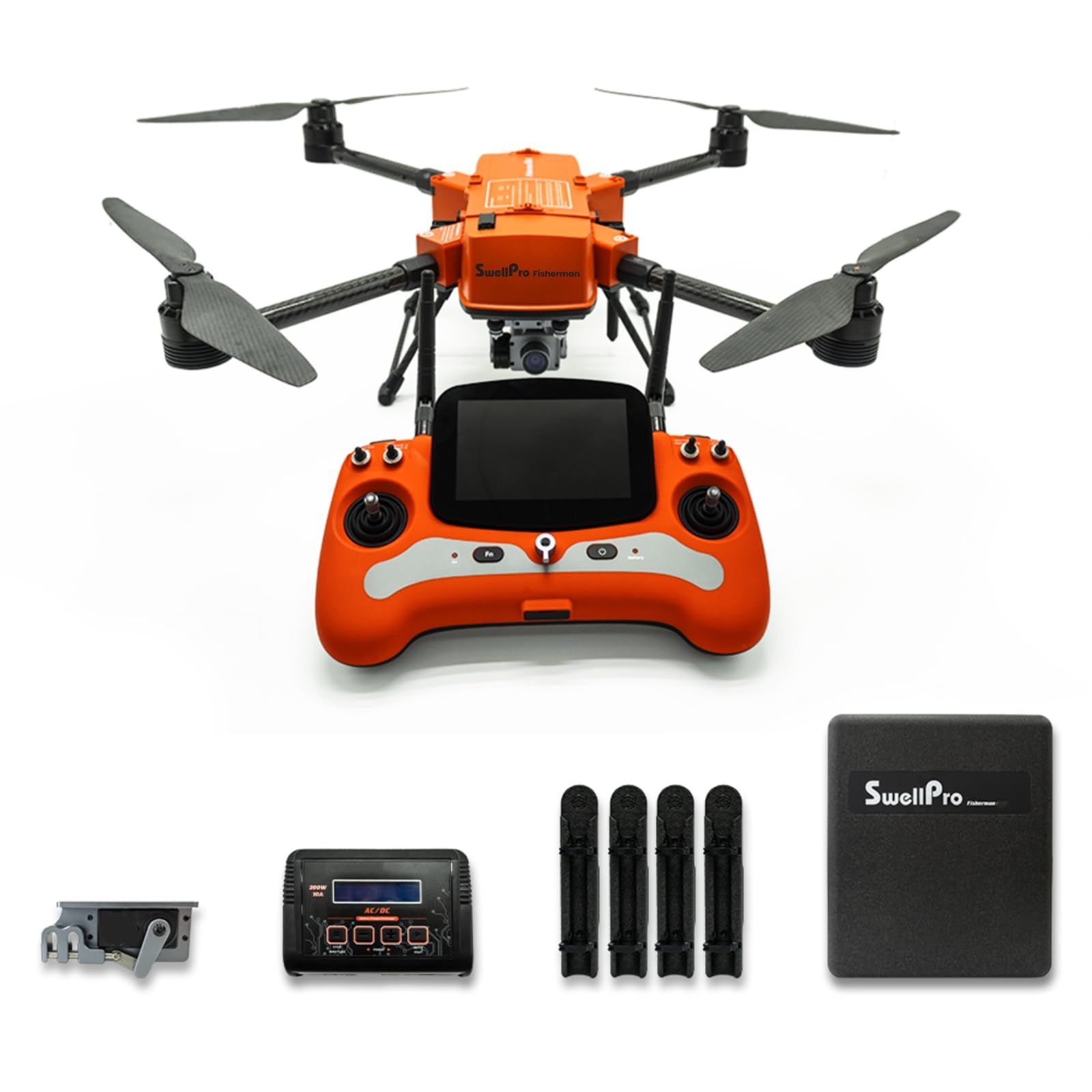
The FD2 Fisherman MAX is the only drone in this list built from the ground up for fishing, not retrofitted with a release hook. Its 7.0‑pound bait capacity means you can fly a whole bonita or a four‑pound chunk of tuna without worrying whether the motors can handle the return trip into a headwind. The IP67 waterproof rating goes beyond typical consumer claims — the aircraft can handle salt spray, a dunk in the wash, and heavy coastal dew without corrosion or short circuits.
Range lands at 1.5 kilometers, which is enough to drop bait past the outer bar where larger sharks cruise. The 4K camera feeds a multi‑color LCD remote display so you can see exactly where the bait is over the water before you release. Real owners confirm it stays rock‑steady with a heavy payload and handles 25‑mph gusts with authority. The dual‑bait release system comes standard, and the included floating device helps you recover the drone if it gets swamped.
The trade‑off is the premium price tag and a learning curve with the remote sequence — it requires a specific long‑press pattern to arm. Accessories ship directly from China, so plan your propeller and battery replacements ahead. Check local regulations: some states have restricted drone‑delivered bait for shark fishing, and this drone’s effectiveness means enforcement is real.
Why it’s great
- True 7.0‑lb bait lift capacity — no other consumer drone comes close
- IP67 hull survives ocean splashes and full submersion
- 1.5‑km range reaches beyond the outer surf zone
Good to know
- Premium investment; budget‑conscious anglers may look elsewhere
- Remote arming sequence takes practice to master
- Accessories shipped from China, not local warehouses
2. Bingchat 2026 Professional Drone
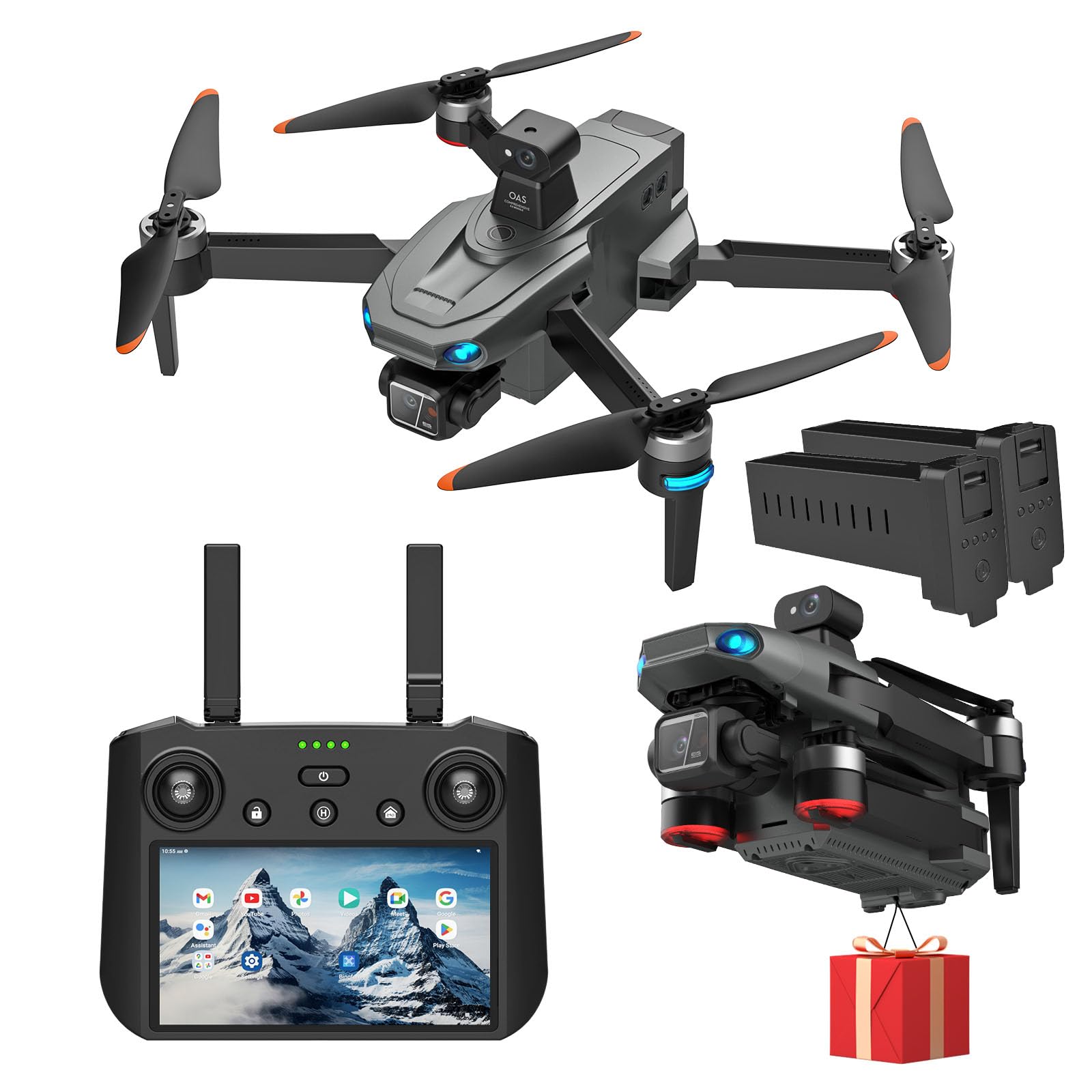
The Bingchat 2026 offers a 5‑mile transmission range that puts the farthest sandbars and offshore weed lines within your bait‑drop zone. The rainproof claim and Level 7 wind resistance mean it stays stable in the kind of coastal conditions that ground most lightweight consumer drones. The 84‑minute total flight time (two batteries) gives you enough endurance for multiple bait runs before rotating packs.
The payload release is built into the frame and works with the included touch‑screen remote that runs on Android with Google Play, so you can use standard navigation and tracking apps. Real flight reports from owners describe steady 4K video and a responsive follow‑me function that can track your boat or truck along the beach. The laser obstacle avoidance provides an extra safety net when you are flying low over water with a bait line trailing.
This model is heavier than the sub‑250‑gram class (over 1.3 pounds), so you must register with the FAA before flying. The build quality from Bingchat is decent but not at the SwellPro level, and some users report that the release mechanism works best after a break‑in period of several flights. The price is mid‑range, making it a solid alternative if the FD2 is beyond your budget and you need that 5‑mile reach.
Why it’s great
- 5‑mile range reaches offshore fish‑holding structure
- Rainproof shell handles coastal spray and drizzle
- Obstacle avoidance reduces crash risk near the waterline
Good to know
- Heavy weight requires FAA registration
- Release mechanism may need a few flights to loosen
- Build quality not as refined as dedicated fishing drones
3. Potensic ATOM 3 Fly More Combo
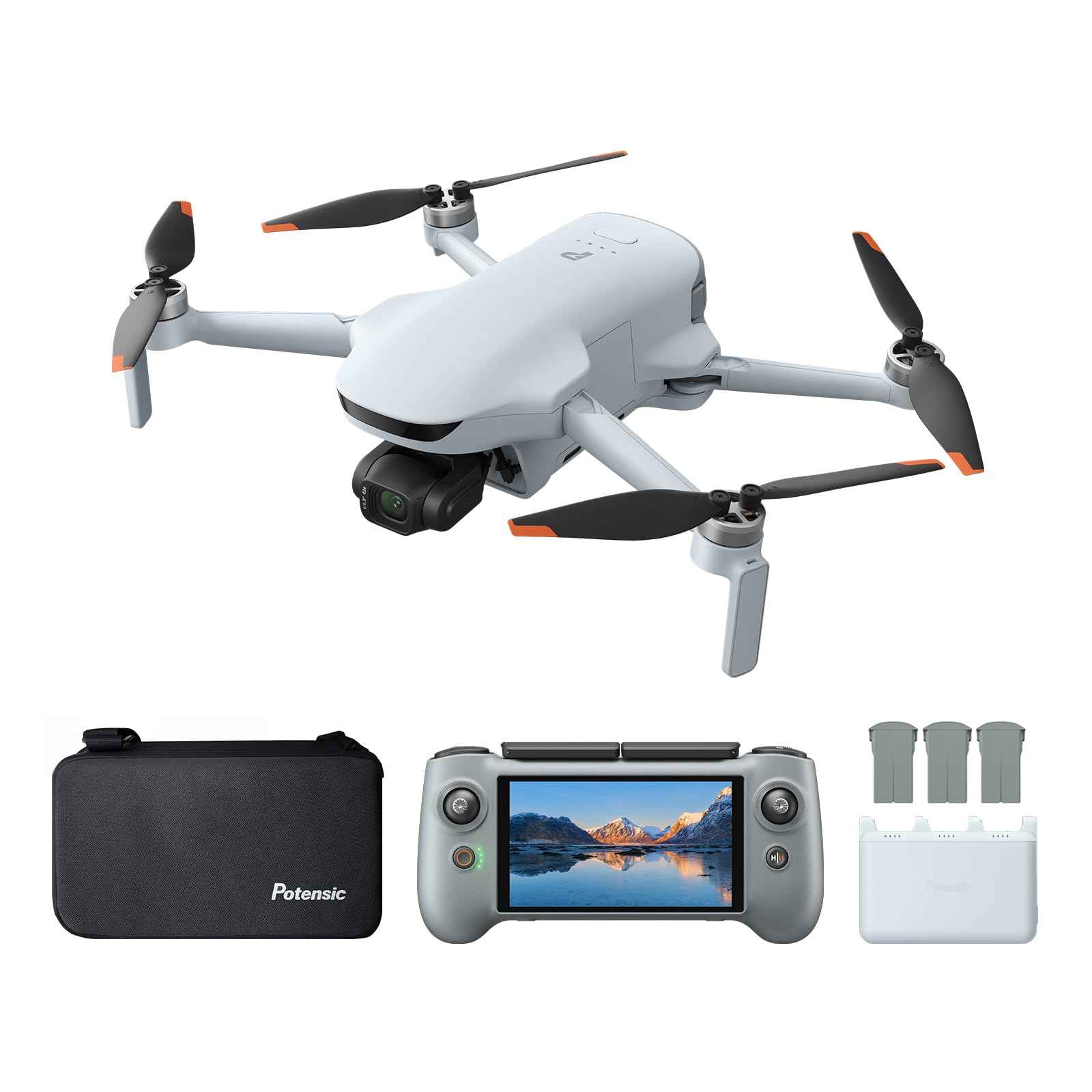
The ATOM 3 is not a payload‑carrying fishing drone, but it is an outstanding aerial scout for shark fishermen. The 16‑kilometer transmission range and 120‑minute total flight time (three batteries) let you cover miles of coastline in a single session to spot bait pods, sandbars, and cruising sharks. The 5.5‑inch FHD touchscreen on the PTD 2 remote delivers 900 nits of brightness, which stays readable in direct beach sunlight — a huge advantage over phone‑tethered controllers that wash out under glare.
The 1/1.3‑inch CMOS sensor records 4K 60fps HDR video with a 3‑axis gimbal, so any structure, fish, or current line you spot is captured in smooth, detailed footage you can review later for patterns. The AI Tracking 2.0 can follow your truck, boat, or even a running friend along the sand, keeping the camera locked on the target without manual stick inputs. The 249‑gram weight keeps it FAA‑registration‑free if used for recreational scouting.
Use it to find the zone, then switch to a dedicated heavy‑lift rig like the SwellPro for the actual drop. The price sits in the upper mid‑range, reasonable for the scouting capability it brings to a serious shore‑fishing setup.
Why it’s great
- 16‑km range covers miles of beach in one flight
- 120‑min total flight time with the three‑battery combo
- 900‑nit remote screen readable in full sun
Good to know
- No payload release or bait‑carrying ability
- Not waterproof — avoid salt spray
- Scouting tool only; requires separate fishing drone
4. Potensic ATOM 2 Fly More Combo
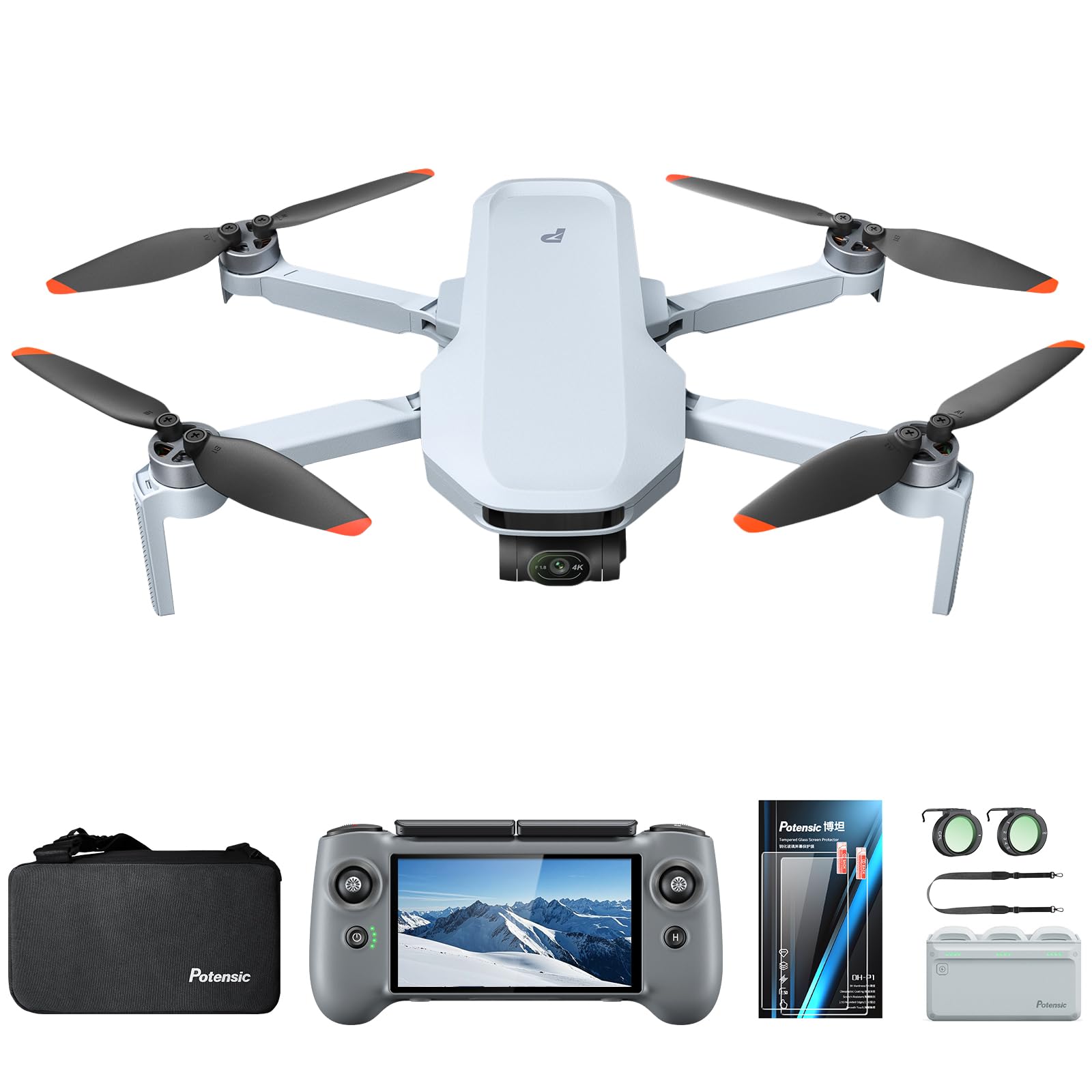
The ATOM 2 steps down slightly in range and flight time from the ATOM 3 but keeps the same AI‑driven tracking and the built‑in display remote that frees you from phone clips. The 10‑kilometer PixSync 4.0 transmission gives you enough cushion to fly a mile offshore and maintain a stable live‑feed video for spotting bait schools and surface activity. The 96‑minute total flight time from three quick‑charging batteries supports a full morning of reconnaissance without waiting for charges.
The 1/2‑inch Sony CMOS sensor with an F1.8 aperture and 3‑axis gimbal captures clean 4K HDR footage, and the included ND and CPL filters let you cut glare off the water for clearer spotting of submerged structure. The combined weight of 245 grams keeps it under the FAA registration threshold for recreational use. Owners consistently report that the built‑in display eliminates the screen‑brightness battle that plagues phone controllers on the beach.
Like the ATOM 3, this is strictly a scouting platform — it lacks a bait release and is not waterproof. If your primary need is visual coverage of your fishing zone and you don’t need the extra range of the ATOM 3, the ATOM 2 delivers identical image quality and reliable tracking for a lower entry price.
Why it’s great
- Built‑in display remote solves sun‑glare issues on the beach
- ND and CPL filters reduce water glare for better spotting
- 10‑km range covers most coastal fishing zones
Good to know
- No bait‑carrying or release capability
- Not designed for salt‑water proximity
- Firmware updates required before first flight
5. SKYROVER X1 Fly More Combo

The SKYROVER X1 matches the sub‑249‑gram weight class and delivers a 9.32‑mile transmission range with a responsive 1080p live view that stays clear well beyond the typical beach fishing zone. Its 96‑minute total flight time from three batteries supports repeated scouting passes across your target area without rushing. The 360‑degree obstacle avoidance gives you an extra layer of safety when you are flying low over dunes or near piers trying to spot holding water.
The camera captures 4K HDR video at 60fps with a 1/1.32‑inch CMOS sensor that pulls good detail even in the low light of early morning or dusk — prime shark‑feeding windows. The included AI night mode actually improves low‑light performance, making it useful for scouting after dark with a headlamp on the drone. The bright yellow body helps with visual orientation against a gray surf background.
The X1 is not waterproof and cannot carry a payload, but it is one of the most capable scouting drones in the budget range. Some users note that the obstacle avoidance sensors work best in moderate light and that the touch interface on the controller can lag when switching flight modes quickly. Still, for pure aerial reconnaissance at a friendly price, the X1 is hard to beat.
Why it’s great
- Sub‑249g and FAA‑registration‑free
- 360‑degree obstacle avoidance adds safety in complex terrain
- AI night mode helps scouting in low‑light dawn/dusk
Good to know
- No payload release or water resistance
- Obstacle avoidance quality drops in low light
- Controller interface can feel sluggish in rapid‑mode changes
6. DJI Mini 4K Camera Drone Combo

The DJI Mini 4K is the most portable scouting drone you can bring to the beach — 246 grams, no FAA registration, and it folds into a shoulder bag that fits next to your surf rod. The 10‑kilometer HD video transmission is more than enough for coastal scouting, and the 4K camera with a 3‑axis gimbal delivers cinematic‑quality footage of the water and structure. The 62‑minute total flight time from two batteries covers a full scouting session before you need to swap packs.
The Level 5 wind resistance (38 kph) means it can handle moderate beach breezes, but it will struggle in the heavy gusts common at exposed shorelines. The GPS return‑to‑home and one‑tap takeoff make it beginner‑friendly, and the QuickShots modes (Helix, Dronie, Rocket) let you record automated passes over your fishing zone to inspect water color and surface activity. Owners praise the reliability and the easy DJI Fly app interface.
The Mini 4K has no payload release, no water‑sealing, and no bait‑carrying capability. It is strictly an aerial camera for scouting — and it does that job with the polish and support network that only DJI offers. If you need a lightweight reconnaissance tool to complement your dedicated fishing drone, this is the safest and most user‑friendly choice.
Why it’s great
- Extremely portable and flyable without FAA registration
- Famous DJI gimbal stabilization for smooth scouting footage
- Reliable GPS return‑to‑home and beginner‑friendly controls
Good to know
- No payload or bait‑release option
- Struggles in coastal wind above 15 mph
- Not salt‑water proof — wipe down after use
7. Chasing Gladius MINI S Underwater Drone

The Gladius MINI S is a fully‑tethered underwater ROV, not an aerial drone, but it solves a problem that aerial scouts can’t touch: verifying the exact underwater terrain and fish‑holding structure where you plan to drop your bait. Its 330‑foot dive depth and 660‑foot horizontal reach let you inspect the bottom profile, locate reef edges, and see if sharks are holding on a specific wreck or ledge — all from the shore or a boat. The 4K camera with EIS anti‑shake delivers clear footage even in moderate currents.
The built‑in dual 4800‑mAh batteries deliver a 4‑hour runtime, giving you plenty of time to methodically scan a large underwater area. The included mechanical arm lets you retrieve snagged lures or move small debris that could tangle your line. The removable SD card means you can pull the footage quickly without extracting the whole unit from its tether.
The learning curve for the remote control is real — it takes several sessions to become comfortable with the 4‑axis movement and the wired signal management. The tether cable also limits maneuverability around jetties and rock fields. But for the angler who wants to know exactly what is happening beneath the surface before committing a bait, the Gladius MINI S is an unmatched tool.
Why it’s great
- 330‑ft dive depth reveals exact bottom structure
- 4‑hour battery for extended underwater surveys
- Mechanical arm for line‑snag retrieval
Good to know
- Tethered operation limits lateral mobility in tight spots
- Remote control takes practice to master
- Storage bag is tight for all accessories
8. FIFISH V-EVO 4K60FPS Underwater Drone
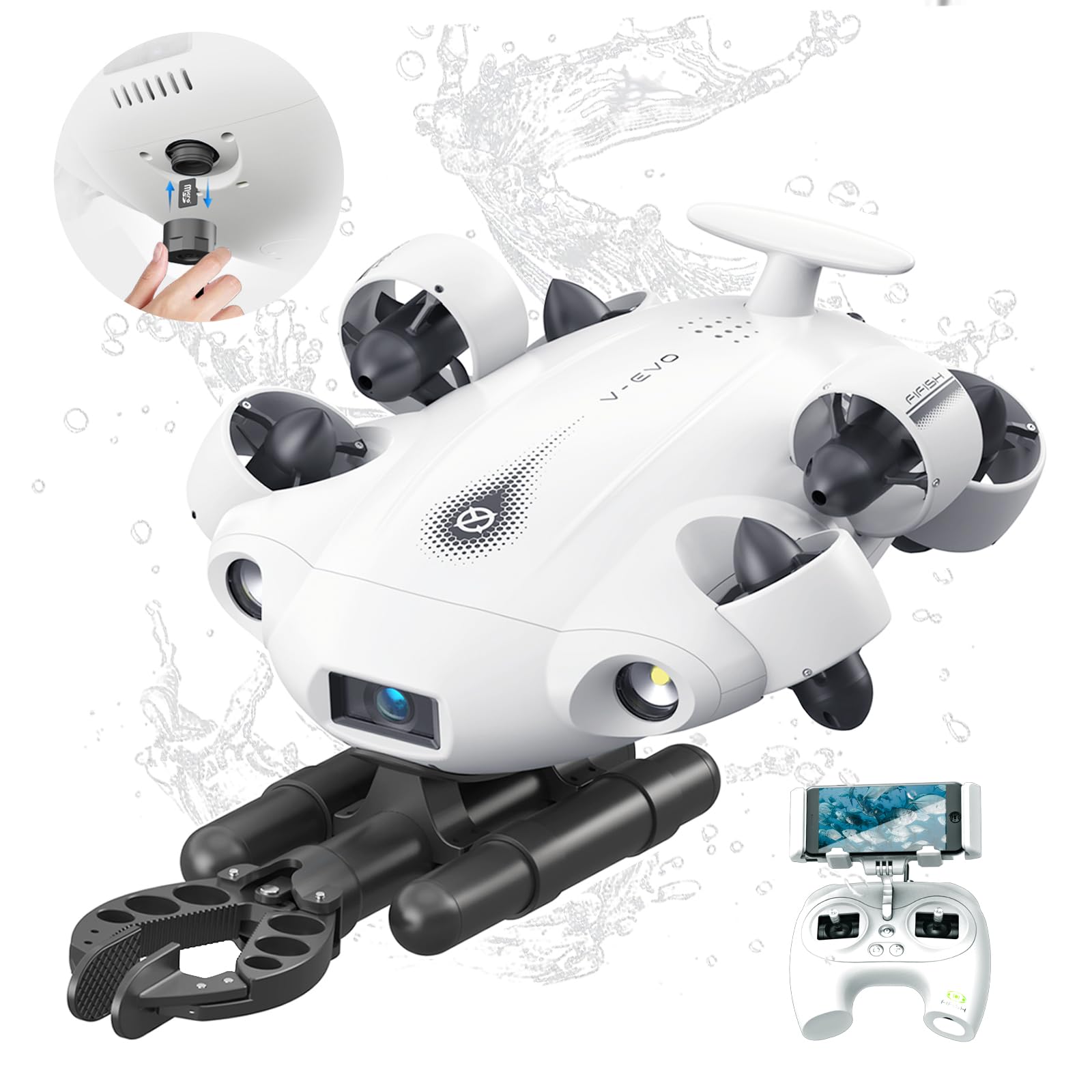
The FIFISH V-EVO pushes underwater inspection further with 4K 60fps video, a 166‑degree ultra‑wide lens, and 360‑degree omnidirectional mobility that makes it far more maneuverable than tethered ROVs of the past. The 5,000‑lumen LED array cuts through murky estuary water — the kind of low‑visibility environment where sharks often stage before a pass. The robotic arm adds the capability to move small obstructions, retrieve lost gear, or gently reposition a bait that landed in an off spot.
The removable SD card is a welcome upgrade over onboard storage that requires a cable transfer, and the hydrodynamic droplet‑shaped hull reduces drag in current. Real users describe clear video down to 40 feet in low visibility and a responsive control system that becomes intuitive after a few dives. The FIFISH brand has built a reputation for solid customer support, with owners reporting quick replacements for missing items or minor defects.
The price is higher than the Gladius MINI S, and this model is also tethered, so you must manage the cable in strong current. Some users noted that the app interface can crash occasionally, and the lack of a dedicated 24fps cinematic mode is a minor frustration. For the serious angler who wants the most capable underwater viewing platform, the V‑EVO is a top‑tier investment.
Why it’s great
- 5,000‑lumen LEDs cut through murky in‑shore water
- 166‑degree wide lens captures more underwater context
- Robotic arm for light retrieval and repositioning
Good to know
- App can crash occasionally during dives
- Tethered — cable management in current is a chore
- Premium price range
9. Chasing Dory Underwater Drone
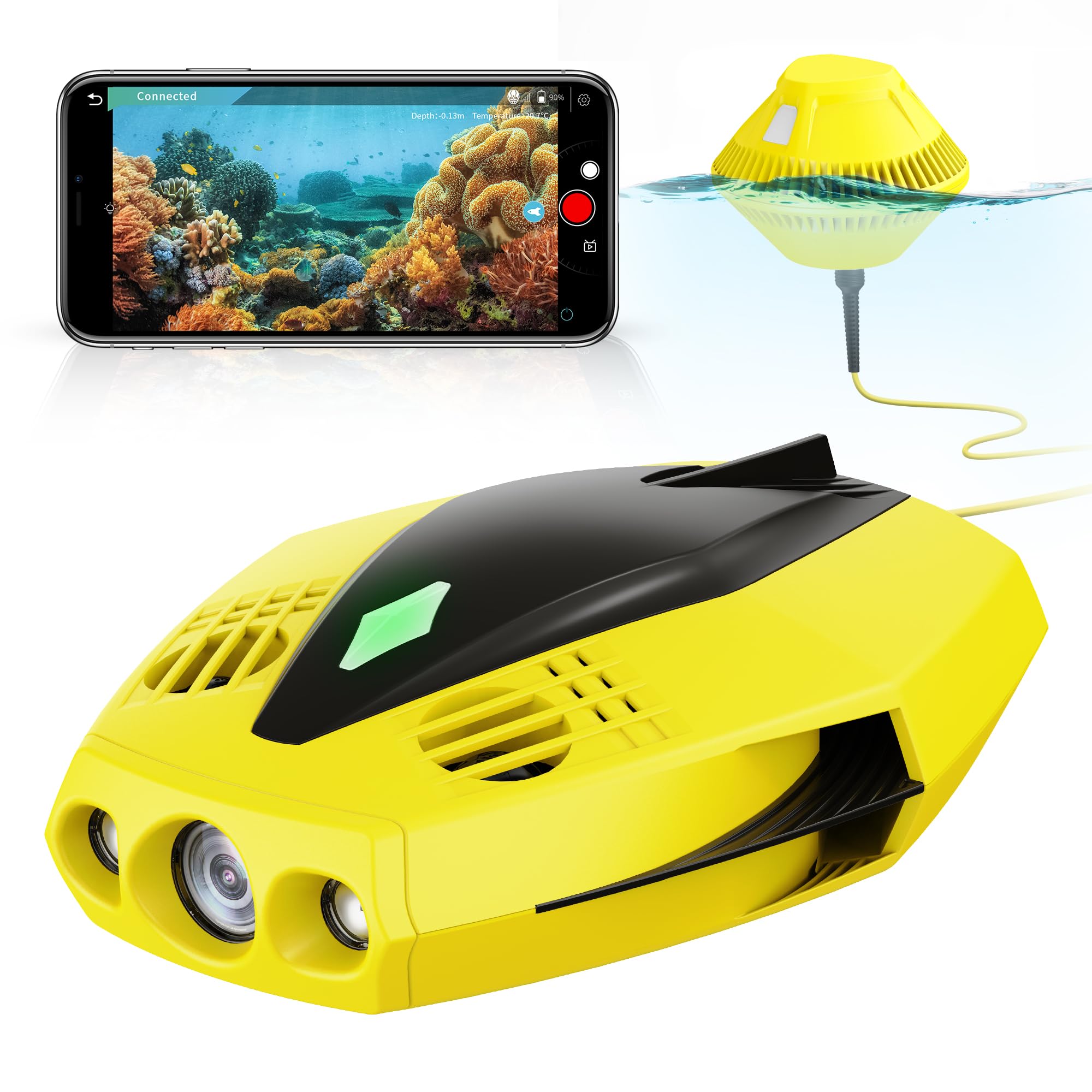
The Chasing Dory is the most portable underwater tool you can pack — palm‑sized, weighing under 2.5 pounds, and fitting into a tackle box or backpack. Its 49‑foot dive depth and 1080p F1.6 camera with 250‑lumen headlights are sufficient for scouting the immediate inshore zone where you would drop a bait from the beach. The WiFi buoy tether streams 720p live video to your phone via the CHASING GO2 app, giving you a real‑time view of the sandy bottom, rocks, and any fish holding near the drop.
The setup is truly plug‑and‑play: deploy the buoy, connect your phone, and start looking. Dual‑play mode lets a buddy watch the feed on their own device while you pilot. Owners of the Dory confirm it works well for bank fishing, pool inspection, and checking dock pilings. The true‑color restoration algorithm helps in the greenish coastal water common on the Atlantic seaboard.
The 49‑foot depth limit means it cannot reach deeper offshore structures, and the tether length is fixed at the same 49 feet, so you are confined to shore‑accessible water. The lights are only useful for close‑range inspection (2‑3 feet), and the camera’s auto‑focus can hunt when pointed at uniform sand. Still, for the price and pocket size, the Dory is an excellent quick‑toss scouting device.
Why it’s great
- Fits in a tackle box — true portability
- Simple plug‑and‑play setup with phone app
- Inexpensive way to see underwater structure near the shore
Good to know
- Limited to 49‑ft depth and fixed tether
- Lights only illuminate close subjects
- Auto‑focus struggles on blank bottom terrain
10. HOVERAir X1 PROMAX 8K Flying Camera
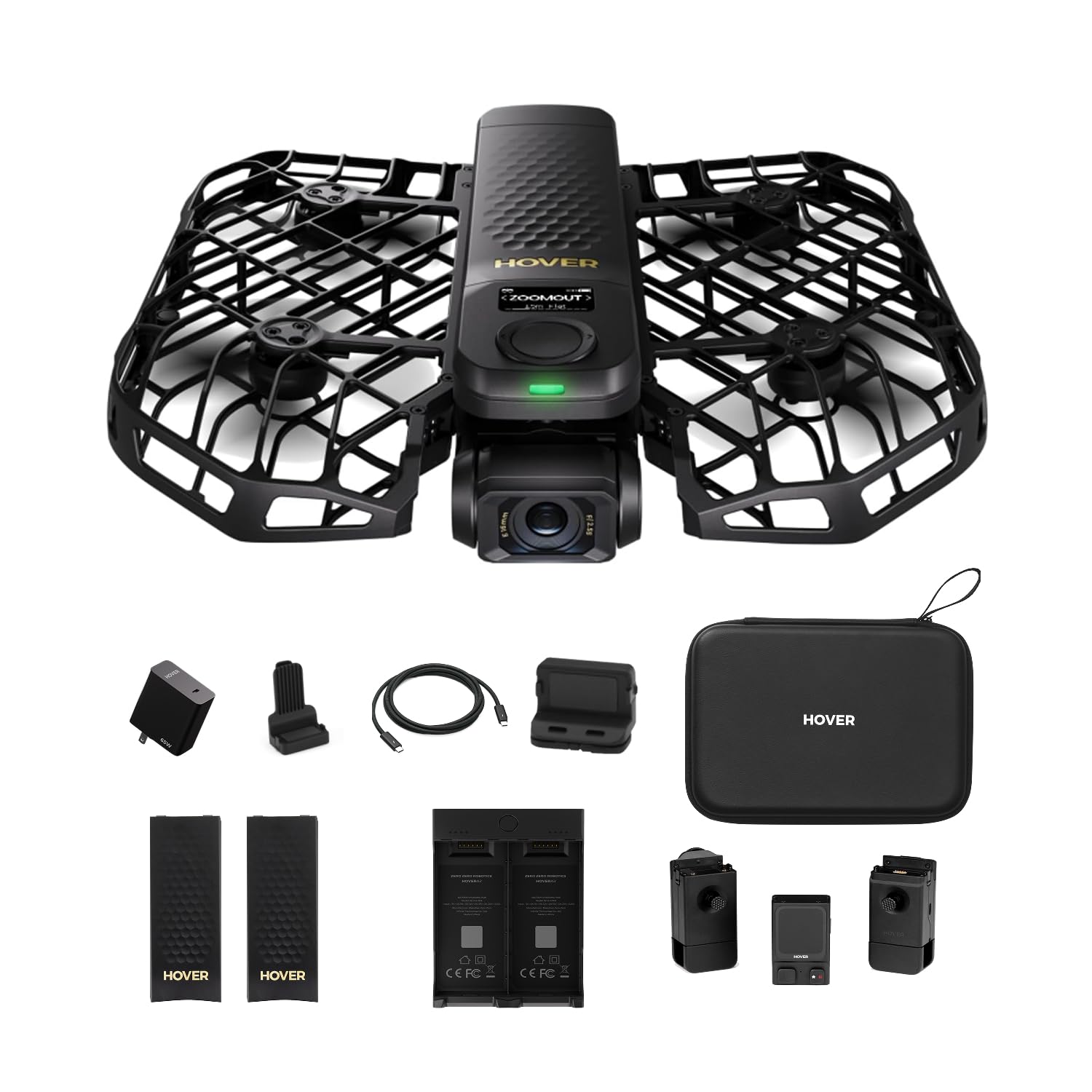
The HOVERAir X1 PROMAX is a hands‑free flying action camera, not a bait carrier, but its unique value for shark fishermen lies in capturing the drop sequence and the hit from a perspective no boat can give. The 8K recording and 42‑km/h follow speed let it track you as you wade out to release your bait, capturing the entire launch, flight, splash, and the first run. The voice‑command launch means you can start recording while holding a rod and a bait bucket.
The OmniTerrain system allows it to fly over water, sand, and even snow without altitude drift, and the rear ToF obstacle sensor prevents collisions when flying backward during a tracking shot. The foldable, fully enclosed design with HEM aerospace‑grade prop guards packs into a small combo case. The 64GB internal storage plus an SD card slot give you plenty of room for long takes.
It is not a fishing drone — it cannot carry anything and has no bait release. The 8K files are large and require a fast computer to edit, and battery life is limited to about 15‑18 minutes per charge. But as a creative tool to document your fishing successes and study your own technique, the X1 PROMAX is unlike anything else on this list.
Why it’s great
- 8K footage captures bait drop and strike in stunning detail
- Hands‑free launch and voice control keep your hands on the gear
- OmniTerrain system handles water, sand, and dunes smoothly
Good to know
- No payload capacity or bait‑release function
- Short battery life per charge (18 min max)
- Large 8K files need a powerful editing machine
FAQ
Can I use a regular DJI drone to drop bait for shark fishing?
What distance can a fishing drone cast bait offshore?
Is it legal to fish with a drone in my state?
Do I need an underwater drone if I already have an aerial drone?
How much does a shark fishing drone battery weigh and how long does it last?
Final Thoughts: The Verdict
For most users, the best drone for shark fishing winner is the SwellPro FD2 Fisherman MAX because it combines a class‑leading 7.0‑pound bait capacity with an IP67 waterproof hull and 1.5‑km range — everything a dedicated bait‑dropping machine needs. If you want a premium scouting drone to spot fish from the air before you commit a bait, grab the Potensic ATOM 3 Fly More Combo for its massive 16‑km range and bright display remote. And for inspecting the underwater structure where sharks actually hold, nothing beats the Chasing Gladius MINI S with its 330‑foot dive, 4‑hour battery, and integrated mechanical arm.

Mo Maruf
I created WellFizz to bridge the gap between vague wellness advice and actionable solutions. My mission is simple: to decode the research and give you practical tools you can actually use.
Beyond the data, I am a passionate traveler. I believe that stepping away from the screen to explore new environments is essential for mental clarity and physical vitality.