Our readers keep the lights on and my smoothie glass nicely filled. As an Amazon Associate, I earn from qualifying purchases.
A cracked tile, a patch of moss, or a hidden valley flashing can turn a minor roof issue into a costly interior repair—unless you catch it early. Climbing a ladder for a visual check is dangerous, time-consuming, and rarely reveals the full picture. A specialized quadcopter equipped with a stabilized camera and obstacle sensors lets you inspect every shingle, gutter, and seam from the safety of the ground, delivering high-resolution evidence before a contractor ever sets foot on the job.
I’m Mohammad Maruf — the founder and writer behind WellFizz. I’ve spent hundreds of hours cross-referencing technical specifications, reading real-world user flight logs, and analyzing the image stabilization, transmission range, and flight-time data that separate a capable inspection drone from a toy that will drift into a tree.
This guide walks through the key specs—gimbal stability, sensor quality, flight time, and safety features—that determine whether a drone can reliably document a roofline. Whether you are a homeowner checking for storm damage or a contractor providing quotes, this breakdown of the drone for roof inspections market will help you pick the right tool for the job.
How To Choose The Best Drone For Roof Inspections
Selecting a drone for roof work means prioritizing stability, camera quality, and safety features over pure speed or cinematic flair. A few core specs separate a reliable inspection tool from a frustrating flyaway risk.
Gimbal Stabilization is Everything
A 3-axis brushless gimbal mechanically counteracts the drone’s pitch, roll, and yaw movements. Without this, wind gusts on a ridge line will turn your 4K footage into a dizzying blur. Look for a mechanical gimbal—electronic image stabilization alone struggles to keep the horizon level when the drone is buffeted by rooftop thermals.
Camera Resolution and Sensor Size
For identifying cracked flashing or missing shingles, a 4K video resolution with a 12MP or higher still photo mode is the baseline. A larger 1/2-inch or 1-inch CMOS sensor captures more light, which helps reveal subtle damage in shadowed valleys or early morning inspections. Avoid drones that only stream low-resolution video to your phone—you need the recorded file on the SD card to zoom in later.
Flight Time and Battery Redundancy
A single battery lasting 20–30 minutes may not cover a full inspection, especially on a multi-story home or commercial flat roof. Kits that include two or three intelligent batteries, ideally with a parallel charging hub, let you stay in the air long enough to document every section without a mid-job recharge break. Budget-friendly models often cut battery count, so check the included package carefully.
Transmission Range and Reliability
Roof inspections often require the drone to fly behind chimneys or over ridge lines that block line-of-sight. A digital transmission system rated for 6,000 feet or more provides a safety buffer, and wired relay systems (tethered to the remote) resist interference better than standard Wi-Fi links. A stable 1080p live feed at that range is crucial for spotting anomalies in real time.
GPS Return-to-Home and Safety Nets
When flying near structures, signal loss or a sudden low-battery warning can happen fast. A reliable GPS return-to-home (RTH) function, along with a locator buzzer, gives you peace of mind. Obstacle avoidance sensors—even forward-facing only—add an extra layer of security when maneuvering close to walls, vents, or satellite dishes.
Quick Comparison
On smaller screens, swipe sideways to see the full table.
| Model | Category | Best For | Key Spec | Amazon |
|---|---|---|---|---|
| Potensic ATOM 2 Fly More Combo | Premium | Comprehensive inspections with a bright built-in screen | 10KM transmission; 3-axis gimbal; 96 min total flight | Amazon |
| DJI Mini 5 Pro | Premium | Omnidirectional safety and 1-inch sensor clarity | Omnidirectional obstacle sensing; 1-inch CMOS; 36 min flight | Amazon |
| DJI Flip (RC-N3) | Premium | Ultra-portable with subject tracking for follow-along shots | Under 249g; full-coverage prop guards; 31 min flight | Amazon |
| Holy Stone Sentinel HS600D | Mid-Range | Level-6 wind resistance for exposed roof lines | Level-6 wind resistance; 80 min flight; 8K photo | Amazon |
| Bwine F7MINI | Mid-Range | FAA-exempt under 249g with a 3-axis gimbal | Under 249g; 6KM transmission; 96 min total flight | Amazon |
| Bwine F7GIM | Mid-Range | Industrial aesthetics and TOF low-altitude stability | TOF sensor; 10,000ft transmission; 70 min flight | Amazon |
| Ruko F11PRO 2 | Mid-Range | Beginner-friendly with a 3-axis gimbal for smooth video | 3-axis mechanical gimbal; 10,000ft transmission; 70 min flight | Amazon |
| Veeniix V11PRO | Mid-Range | 8K stills with a 3-axis gimbal for detailed photo captures | 8K image; 6KM transmission; 80 min flight | Amazon |
| Holy Stone HS790 | Mid-Range | Long-range 9KM transmission with built-in Remote ID | 9KM/30,000ft transmission; 60 min flight; 6K photo | Amazon |
| Ruko F11PRO 2 (Basic Bundle) | Entry-Level | Entry-level stable flight for small residential roofs | 3-axis gimbal; 70 min flight; 10,000ft transmission | Amazon |
| Potensic ATOM 4K GPS Drone | Entry-Level | Budget-friendly entry for basic roof checks | Under 249g; 3-axis gimbal; 96 min total flight | Amazon |
In‑Depth Reviews
1. Potensic ATOM 2 Fly More Combo with RC PTD 1
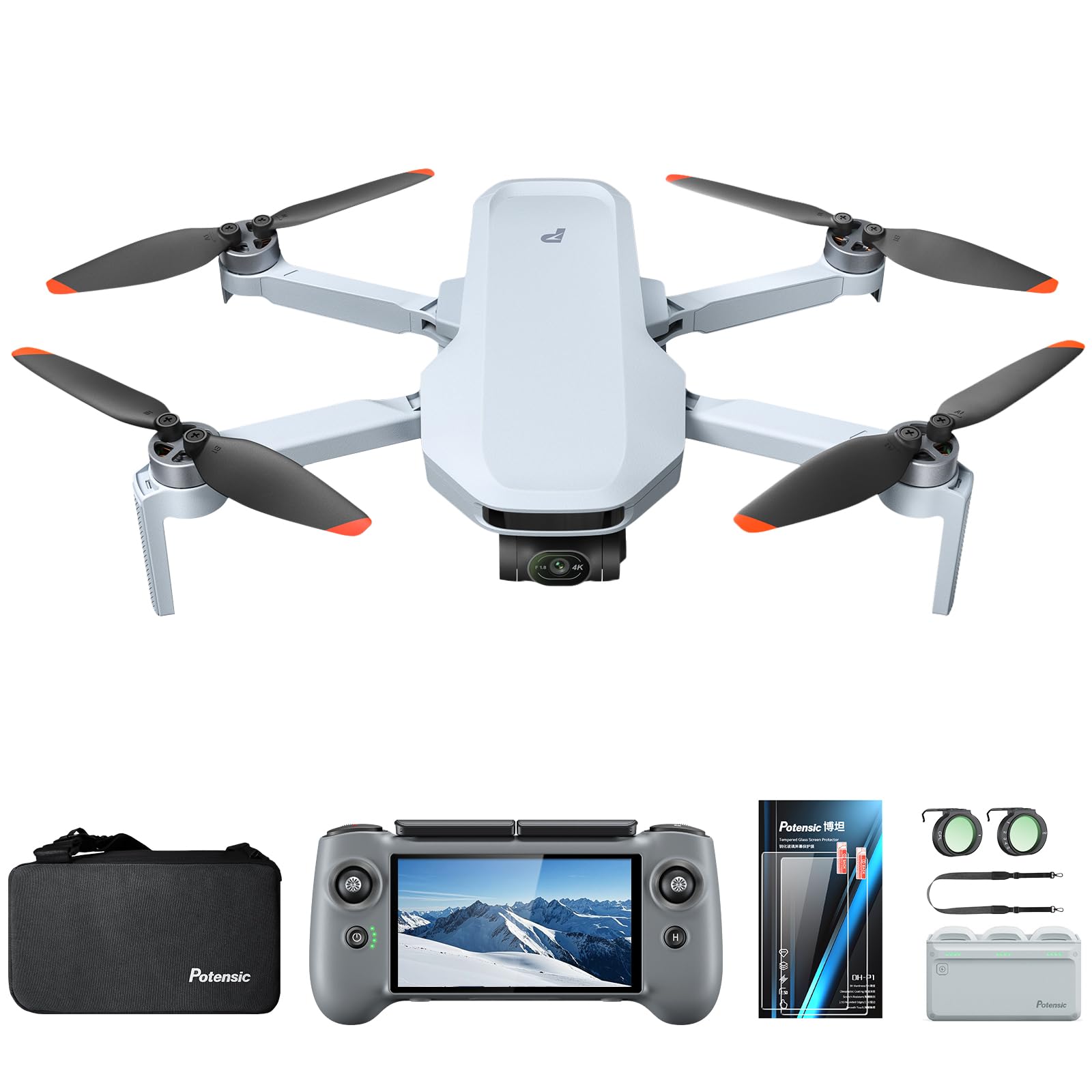
The ATOM 2 Fly More Combo is the standout choice for roof inspection work because it packs a dedicated remote controller with a 5.5-inch 700-nit FHD screen—no phone required. That means no incoming call interruptions and no screen glare washing out your live feed when you are trying to spot a hairline crack on a sunlit south-facing slope. The PixSync 4.0 transmission reaches up to 10 kilometers, giving you ample buffer for large commercial roofs or multi-building properties.
The 1/2-inch Sony CMOS sensor captures 48MP photos and 4K HDR video through a 3-axis gimbal, and the included ND and CPL filters let you cut glare from wet shingles or reduce reflections off metal standing seams. With three batteries charging fully in 1.3 hours via the parallel hub, you get 96 minutes of total flight time—enough to thoroughly document a 40-square roof in one session. The AI Night Shot mode also helps when you need to inspect after dusk or in low-light attic vents.
Weighing in at under 249 grams, this drone is FAA-exempt and does not require Remote ID registration, which simplifies pre-flight paperwork for small contracting operations. The SmartTransfer function at 25 MB/s speeds up file delivery to your client’s email. For a serious inspection tool that combines a bright built-in screen, long flight time, and professional-grade stabilization, this is the package to beat.
Why it’s great
- Built-in 5.5-inch FHD controller avoids phone dependency and glare issues
- 10KM digital transmission provides a strong safety margin for large properties
- Includes ND and CPL filters for glare-free roof surface detail
- Under 249g, FAA-exempt, no Remote ID hassle
Good to know
- The controller screen is glossy and may need a matte protector in extreme side-angle sunlight
- Requires firmware updates to unlock full AI tracking features
2. DJI Mini 5 Pro
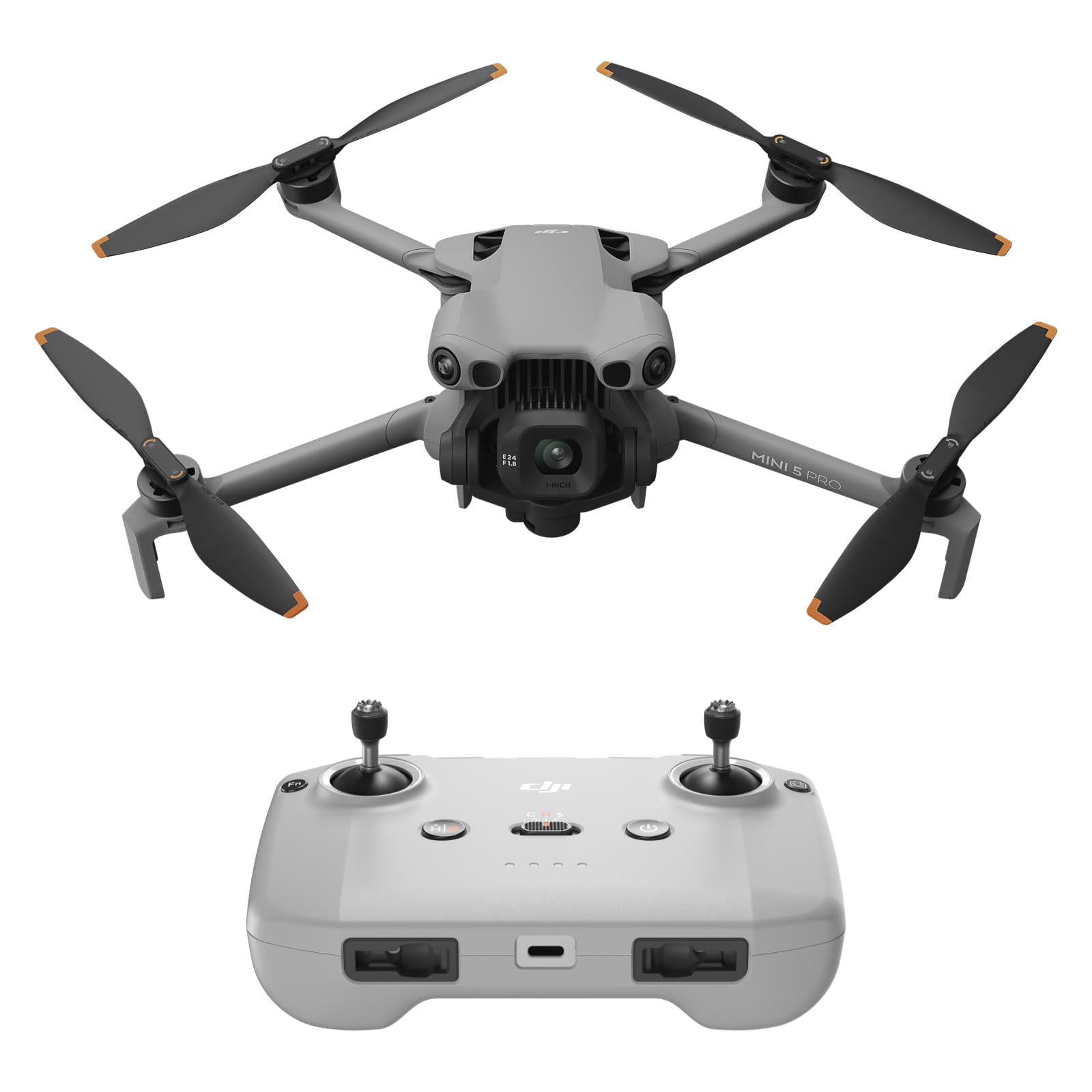
The DJI Mini 5 Pro brings a 1-inch CMOS sensor and omnidirectional obstacle sensing to a sub-250-gram frame. For roof inspectors, the forward-facing LiDAR combined with downward and rear vision sensors provides a critical safety net when maneuvering around chimneys, skylights, and vent pipes. The 225-degree gimbal rotation means you can tilt the camera straight up to inspect soffits and fascia without repositioning the entire drone.
The larger 1-inch sensor captures significantly more light and detail than the typical 1/2.3-inch or 1/2-inch sensors found in most sub- drones. This translates to sharper stills for zooming into potential hail damage or deteriorated flashing. Video resolution hits 4K at 60fps with HDR, which smooths out the harsh contrast between sunlit roof sections and deep shadowed valleys. Flight time reaches 34 minutes per battery, and the Intelligent Flight Battery can be fast-charged to 90% in about 85 minutes.
Obstacle avoidance coupled with ActiveTrack 360° means the drone can autonomously follow a defined path along your roofline while you focus on the live feed. The only missing piece for a pure inspection setup is a built-in controller screen—you will need to use the DJI RC-N3 with your phone or invest in the optional RC 2 controller. For inspectors who prioritize safety and image quality above all else, this is the premium choice.
Why it’s great
- 1-inch CMOS sensor delivers superior detail for zooming into cracks and damage
- Omnidirectional obstacle sensing reduces collision risk near complex rooflines
- 225-degree gimbal allows inspection of soffits and vertical surfaces
- ActiveTrack 360° can autonomously trace roof edges
Good to know
- Requires a smartphone or additional controller with built-in screen for live view
- At 249g, it is FAA-exempt but still requires Remote ID compliance in some regions
3. DJI Flip (RC-N3)

The DJI Flip is a unique offering for roof inspectors who want maximum portability without sacrificing stabilization. Its full-coverage carbon fiber propeller guards make it safe to launch from a patio or even a gloved hand—useful when you need to deploy quickly on a tight worksite without finding a clear landing pad. The 1/1.3-inch CMOS sensor captures 4K video at 60fps with HDR, providing good latitude for handling the bright reflective surfaces of a metal or tile roof.
The 3-axis mechanical gimbal keeps the horizon steady during routine roof flyovers, and subject tracking can lock onto a specific roof feature for a closer look. Transmission range is rated at 44,000 feet, though real-world inspection scenarios rarely exceed 300–600 feet of distance. The key advantage here is the palm takeoff and landing capability—if you are on a ladder or scaffolding, you can deploy and retrieve the drone without needing a flat surface. Flight time is 31 minutes per battery, adequate for a single-story home but requiring a spare battery for larger buildings.
The trade-off is that the Flip has only front-facing obstacle avoidance, so you must stay aware of obstacles behind and to the sides during intricate maneuvers near vents and ridge vents. The RC-N3 controller requires your phone for a display, and the 4K 60fps HDR mode is only available when using the controller (not via phone-only mode). For contractors who need a grab-and-go drone that fits in a small case and can be launched from the job site tailgate, the Flip is a very practical option.
Why it’s great
- Full-coverage prop guards enable safe hand launch and landing in tight spaces
- Palm takeoff and landing simplifies deployment on ladders or uneven ground
- Lightweight and foldable for easy transport in a work bag
- 4K/60fps HDR video handles high-contrast roof surfaces well
Good to know
- Only forward-facing obstacle avoidance limits awareness on complex rooflines
- Requires a smartphone display in the standard RC-N3 package
- 31-minute flight time may require a spare battery for larger inspections
4. Holy Stone Sentinel HS600D

Roof inspections often happen in breezy conditions—rooftops are inherently exposed, and wind speeds can be 10–15 mph stronger than ground level. The Holy Stone HS600D is rated for Level-6 wind resistance, meaning it holds stable in gusts around 25–31 mph. The 603-gram reinforced frame and 3-axis gimbal paired with EIS keep the video smooth even when the drone is fighting to maintain position against a crosswind on a ridge line.
Image quality comes from a 1/2-inch Sony CMOS sensor with an f/1.8 aperture, producing 8K still photos and 4K HDR video. The relay remote controller uses a wired tether instead of Wi-Fi, which reduces interference and lag when you are flying behind a chimney or around a dormer. Total flight time reaches 80 minutes with the included two 3500mAh batteries, giving you enough airtime to inspect a multi-wing commercial roof or several residential homes in one outing.
The HS600D also supports Follow Me, Smart Tracking, Time-Lapse, and Panorama modes. While these are more cinematic tools, the Follow Me function can be useful for automatically tracking a defined roof edge as you walk the perimeter with the controller. The controller itself has a built-in screen, which eliminates phone connectivity struggles. For inspectors dealing with gusty conditions and large roof areas, this drone delivers the wind performance and battery endurance needed.
Why it’s great
- Level-6 wind resistance keeps the drone stable in windy roof conditions
- Wired relay transmission reduces signal loss around roof structures
- 80 minutes of total flight time with two included batteries
- Built-in controller screen avoids phone connectivity issues
Good to know
- Weighs 603g, requiring FAA registration and Remote ID
- Some users report overexposure in bright conditions with no adjustable ISO in the app
5. Bwine F7MINI
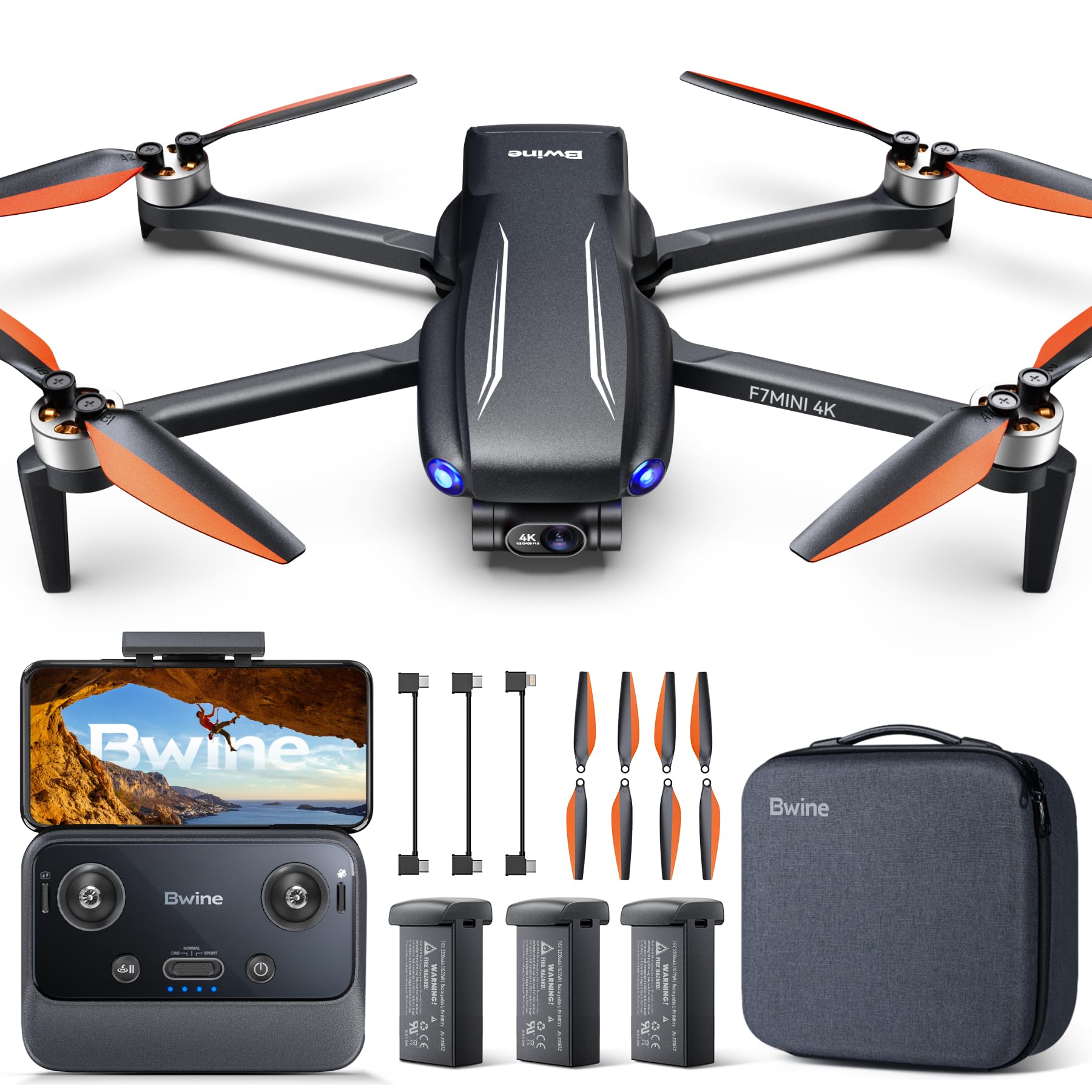
The Bwine F7MINI hits a sweet spot for inspectors who want FAA-exempt status (under 249 grams) without giving up a 3-axis gimbal. The 48MP 1/2-inch CMOS sensor with an f/1.8 aperture captures 8K stills and 4K video, and the gimbal provides Level-5 wind resistance, enough to handle moderate breezes on a typical residential roof. The wired digital transmission system reaches up to 20,000 feet, far beyond what is needed for a standard home inspection but providing a robust signal buffer when you circle around a large house.
The kit includes three high-density batteries that deliver a combined 96 minutes of flight time, with PD 3.0 fast charging support. A built-in 5.5-inch screen controller means you do not have to rely on your smartphone, which can overheat in direct sunlight on a roof. The 120dB locator buzzer is a thoughtful addition—if the drone lands in a gutter or behind a bush, you can find it quickly. Smart RTH and dynamic home point ensure the drone returns safely even if you move the controller to a different vantage point.
The F7MINI also features Optical Flow positioning for stable indoor flight when GPS is unavailable—helpful for inspecting attic spaces or large warehouse roofs. The AI Follow and Orbit modes are useful for automatically circling a specific roof feature like a skylight or AC unit. For a sub-250-gram drone that offers a complete package with a built-in screen controller and long flight time, this is a compelling value for small inspection businesses and homeowners.
Why it’s great
- Under 249g, FAA-exempt, removes pre-flight paperwork
- Built-in screen controller works without a phone in direct sunlight
- 96 minutes total flight from three fast-charging batteries
- 120dB locator buzzer helps recover the drone on cluttered roofs
Good to know
- Level-5 wind resistance may struggle in strong coastal or mountain gusts
- Some users note the camera distorts slightly on fast turns in sport mode
6. Bwine F7GIM
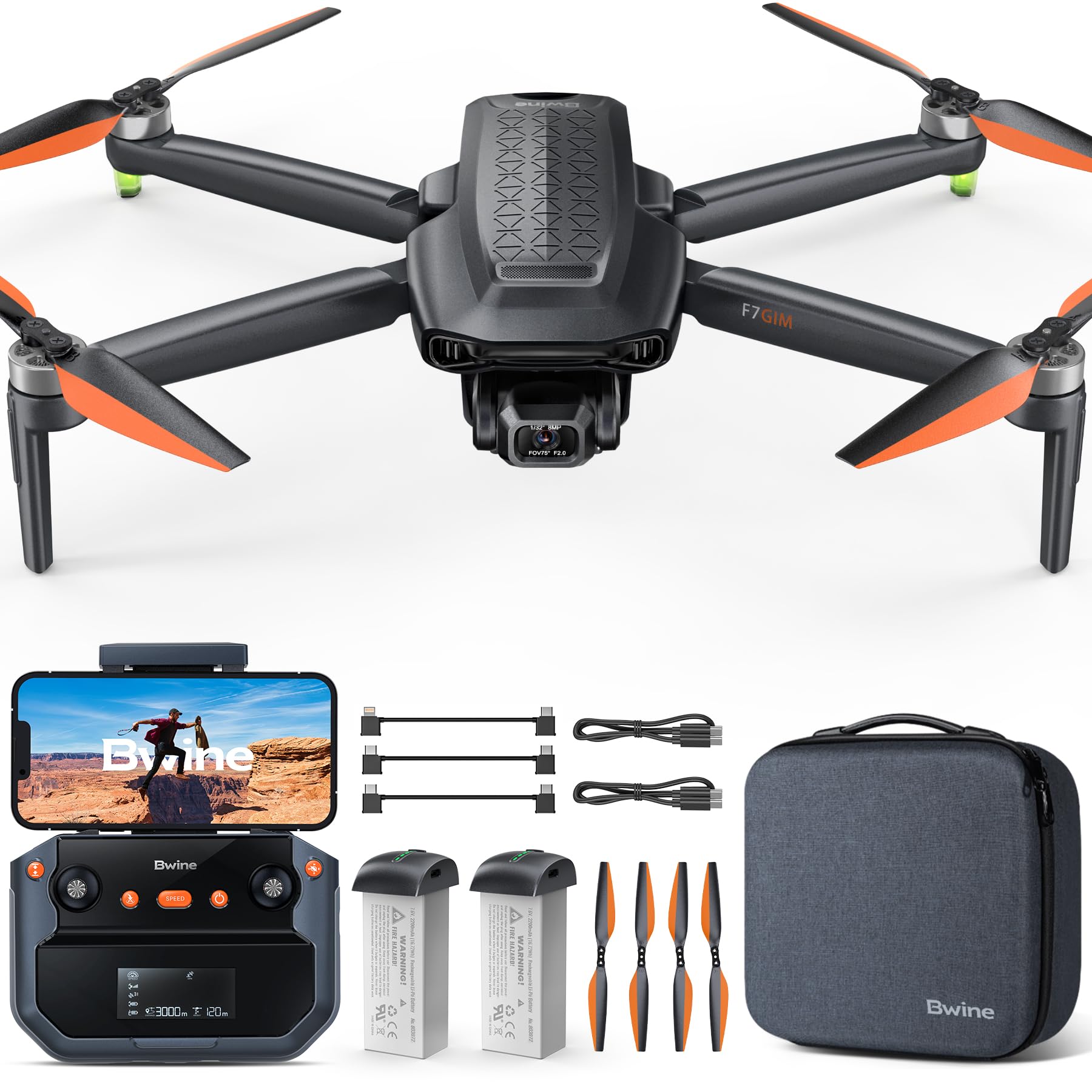
The Bwine F7GIM is built around low-altitude stability, making it a strong candidate for close-in roof work. It uses a TOF (Time-of-Flight) sensor combined with GPS and optical flow positioning to maintain steady hover at low heights—critical when you are trying to hold position two feet above a ridge line to capture a detailed photo of flashing. The 3-axis brushless gimbal is paired with an 18MP sensor that records 6K photos and 4K/30fps video, with a claimed 200% improvement in low-altitude stability over previous models.
Flight time reaches 70 minutes from two intelligent batteries (35 minutes each), and the transmission system provides a stable 4K real-time feed up to 10,000 feet. The wired digital transmission is not Wi-Fi-based, so you get less interference around metal roof surfaces and satellite dishes. The body features an industrial aesthetic with orange propellers that are easy to spot against a dark roof. The included carrying case is a hard-shell, water-resistant option that protects the drone on job sites.
The Night Mode 2.0 reduces image noise by 90% for low-light inspections, and the Follow, Orbit, and Waypoint modes automate some of the repetitive passes needed for a thorough survey. The remote control has a phone-holder with a USB-C cable stored inside—a small but clever detail. The only downside is the weight, which at 357 grams requires FAA registration. For inspectors who need rock-solid low-altitude hover and a clear night inspection mode, the F7GIM is a well-engineered tool.
Why it’s great
- TOF sensor and optical flow provide excellent low-altitude hover stability
- Wired digital transmission resists interference near metal roofs
- 70-minute flight time from two batteries covers most residential inspections
- Night Mode 2.0 produces usable footage in low-light conditions
Good to know
- Weighs 357g, requires FAA registration and Remote ID
- Camera may show distortion on aggressive turns in sport mode
7. Ruko F11PRO 2

The Ruko F11PRO 2 is built for inspectors who value simplicity. It features a 3-axis mechanical gimbal that delivers smooth 4K/30fps video and 6K photos, and the GPS Auto Return-to-Home function provides a solid safety net for first-time drone pilots. The dedicated Beginner Mode limits altitude and speed, making it a low-stress way to learn roof inspection flight paths without worrying about sudden drifts.
Flight time totals 70 minutes from two 3200mAh batteries, and the transmission range is rated at 10,000 feet—adequate for residential and small commercial roofs. The included carrying case is a hard shell that protects the drone during transport, and the gimbal cover is a reminder to remove it before powering on (a common oversight). The remote controller is rechargeable, so you do not need to stock AA batteries.
The F11PRO 2 also supports GPS Follow, Waypoint Flight, Cruise Control, and Orbit Mode. These smart modes help automate the inspection process, especially the Orbit mode for circling a chimney or vent to capture a full 360-degree view. A common piece of feedback from users is that the GPS pairing can be tricky for beginners—follow the calibration steps carefully. The camera quality is solid for the price range, though stills are slightly behind a 48MP phone sensor. For a turnkey inspection drone with a forgiving flight envelope, this is a smart starting point.
Why it’s great
- Beginner Mode reduces speed and altitude for safe learning flights
- 3-axis mechanical gimbal keeps video steady in moderate wind
- GPS Auto Return and low battery RTH protect against flyaways
- Orbit Mode automates 360-degree views of roof features
Good to know
- GPS calibration can be confusing for first-time users
- Camera stills are good but not on par with higher-end sensors for severe detail
- Weighs 357g, requiring FAA registration
8. Veeniix V11PRO
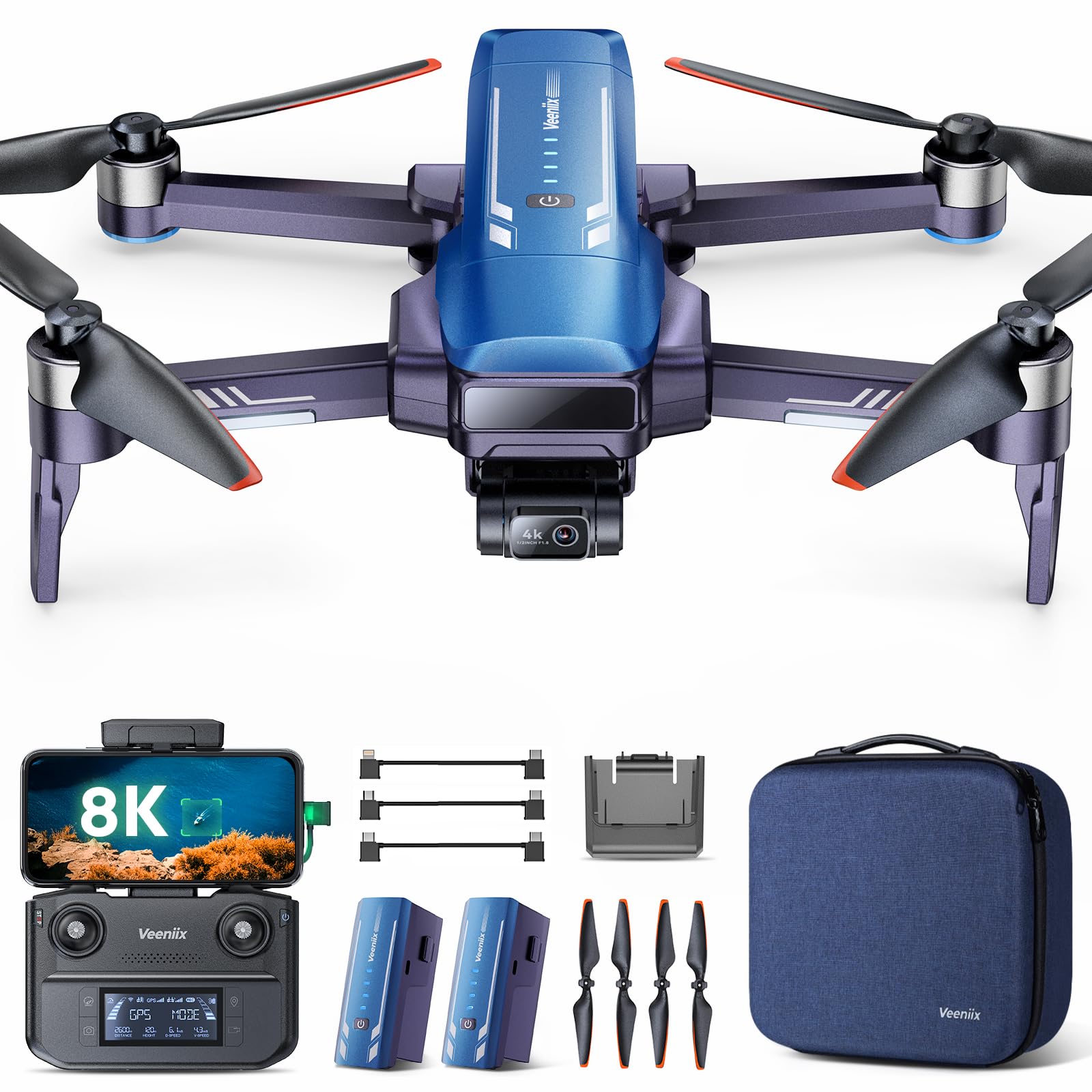
The Veeniix V11PRO focuses on still image quality, capturing 8K photos via a 1/2-inch CMOS sensor with a digital 5x zoom. For roof inspectors, the ability to zoom into an 8K image after the flight to examine a weather-damaged area or a popped nail is a significant advantage. The 3-axis gimbal with EIS ensures those high-resolution stills remain sharp even when the drone is buffeted by wind during the capture.
Transmission range hits 6 kilometers using a digital transmission system, and the 80-minute total flight time from two 3500mAh batteries covers extensive inspection sessions. The batteries support PD 3.0 fast charging and automatically discharge after 48 days of non-use to preserve cell health. The app enables Cruise Control, Waypoint Flight, and Point of Interest modes, which help you program a consistent roof survey path without manual stick input.
Users frequently praise the robust build quality and the effective customer support—common praise points for a mid-range model. The carrying case is well-padded, and the manual is detailed. The main limitation is that the effective transmission range in real-world conditions, especially around trees or buildings, is often around 2,500 feet before signal degradation, which still covers most residential roof inspection scenarios. For professionals who need high-resolution stills for detailed reporting, the V11PRO is a strong contender.
Why it’s great
- 8K still images allow deep zoom-in post-flight to examine fine roof details
- 80-minute total flight time from two fast-charging batteries
- 3-axis gimbal with EIS keeps footage stable in windy conditions
- Robust customer service and responsive support team
Good to know
- Real-world transmission range is shorter than advertised in tree-dense areas
- Lacks forward obstacle detection, requiring careful manual piloting near roof features
9. Holy Stone HS790
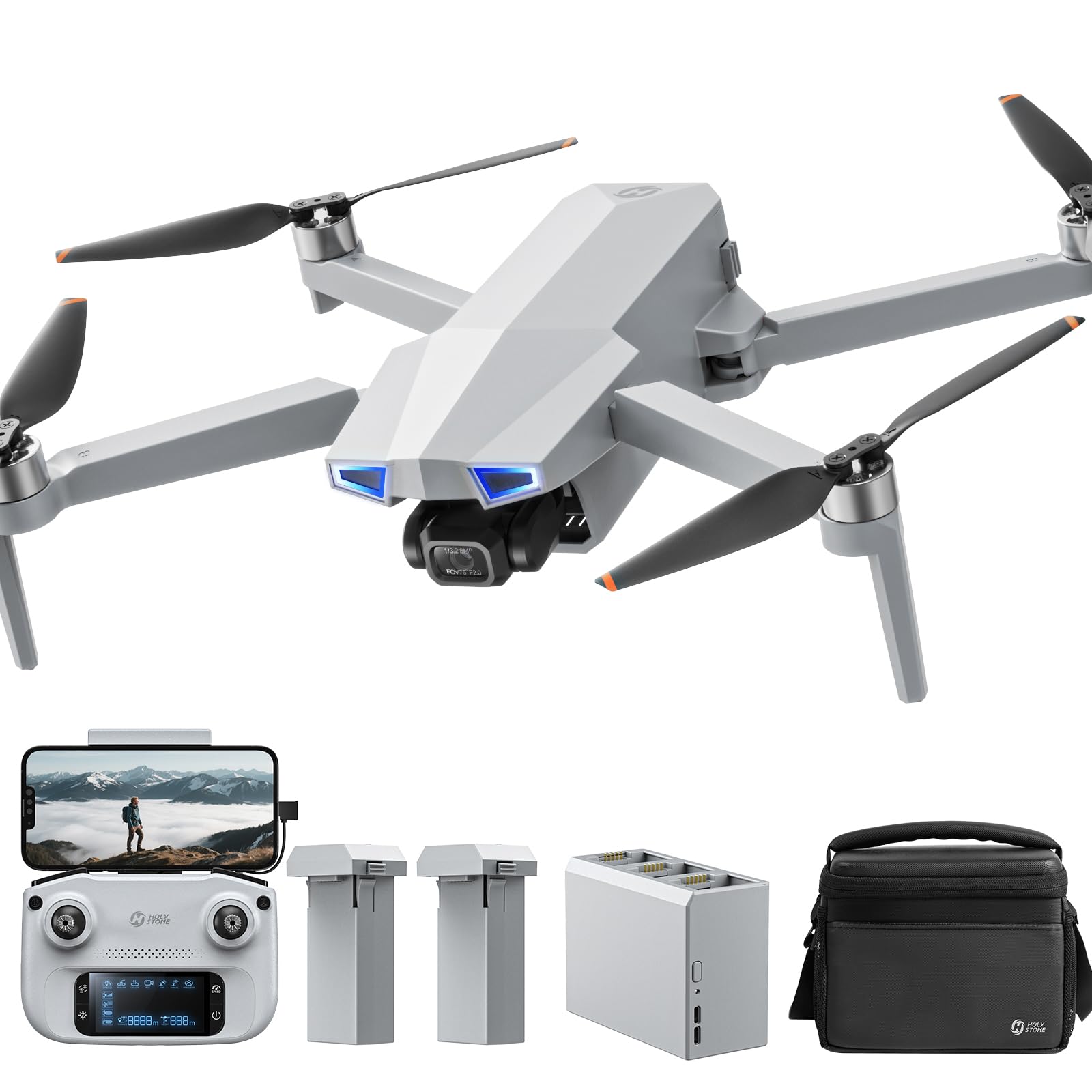
The Holy Stone HS790 is designed for long-range transmission, advertising up to 9 kilometers (30,000 feet) via an advanced Wi-Fi repeater system. For inspectors working on large commercial roofs, expansive ranch buildings, or solar farm arrays, this range provides the confidence to fly the entire perimeter without losing the video feed. The 3-axis mechanical gimbal captures 4K/30fps video and 6K photos, and the included Smart PD Charging Hub also doubles as a power bank for mobile devices.
Flight time reaches 60 minutes from two intelligent batteries, and the drone comes with built-in Remote ID (RID) compliance, so you do not need an external module. The Night Mode is a welcome feature for early morning or late afternoon inspections when shadows can hide damage. Beginner-friendly features like One-Key Takeoff and Altitude Hold make this drone accessible even for contractors who have not flown before.
The HS790 weighs 375 grams, so it requires FAA registration. Some users report the companion app has occasional bugs—Holy Stone recommends using the HT FLY app instead of the legacy app. The gimbal also struggles slightly during fast yaw turns, but for a slow, methodical roof survey, this is rarely an issue. For inspectors who prioritize range and RID compliance out of the box, the HS790 is a capable choice.
Why it’s great
- 9KM transmission range covers large commercial or ranch properties
- Built-in Remote ID compliance eliminates separate module purchase
- Smart PD Charging Hub works as a power bank for field charging
- Night Mode enhances visibility for early/late day inspections
Good to know
- Weighs 375g, requiring FAA registration and sticker
- App experience may have bugs; recommended to use HT FLY app
- Gimbal may lag during fast turns but is fine for slow inspection passes
10. Ruko F11PRO 2 (Basic Bundle)
This entry-level bundle of the Ruko F11PRO 2 provides the same core hardware—3-axis gimbal, 4K/30fps video, 6K photos, and 10,000ft transmission—at a lower price point, making it accessible for homeowners or small contractors looking to add a drone to their inspection toolkit without a large upfront investment. The two 3200mAh batteries deliver a combined 70-minute flight time, enough to inspect a typical 30-square residential roof in a single session.
The beginner-friendly flight modes, including One-Key Takeoff and GPS RTH, remove a lot of the anxiety around flying near expensive roofing materials. The hard shell case protects the drone during transport, and the included spare propellers and screwdriver mean field repairs are straightforward. User feedback consistently highlights the sturdy build—the drone survived several crashes with only minor prop damage, which speaks to its durability for training flights.
The camera quality is adequate for identification of major damage like missing shingles or large cracks, though it lacks the finer detail of higher-end sensors for detecting hairline fractures or subtle granule loss. The controller uses a phone holder, which can be awkward in bright sunlight. For a budget-friendly entry into roof inspections that still maintains the essential 3-axis gimbal stability, this bundle is a practical starting point.
Why it’s great
- 3-axis gimbal at an accessible price point maintains steady footage
- 70-minute total flight time covers a full residential roof inspection
- GPS RTH and low-battery RTH prevent accidental damage or loss
- Durable build survives crashes and hard landings
Good to know
- Camera detail is sufficient for major damage but not for micro-cracks
- Phone-based controller display can be hard to read in direct sunlight
- Weighs 357g and requires FAA registration
11. Potensic ATOM 4K GPS Drone

The Potensic ATOM 4K GPS Drone is the most budget-friendly option that still includes a 3-axis brushless gimbal. Weighing under 249 grams, it is FAA-exempt and does not require Remote ID registration—a significant convenience for occasional users. The Sony CMOS sensor records 4K/30fps video with solid stabilization, and the SurgeFly PixSync 3.0 transmission provides a range of up to 6 kilometers, though most inspection users will operate well within a few hundred feet.
The Fly More Combo includes three batteries that provide a combined 96 minutes of flight time, with a parallel charging hub that charges all three in 1.3 hours. The lightweight design (under 249g) makes it easy to carry on a ladder or in a small backpack, and the storage bag is compact. Visual Tracking and QuickShots like Pull-Away and Circle are useful for capturing consistent footage around a specific roof feature.
The trade-off at this entry-tier price is that the camera sensor is smaller than premium models, so fine detail like granule loss on asphalt shingles may not be as clear. The wind resistance is rated at Level-5, which handles moderate breezes but will struggle in exposed conditions. Signal range in semi-urban areas may drop to around 1,500 feet. For homeowners who want a no-registration drone to perform a quick visual check of their own roof before calling a contractor, this is the most practical and affordable option.
Why it’s great
- FAA-exempt sub-249g weight means no registration required
- Three batteries provide 96 minutes of total flight time
- 3-axis gimbal delivers stable 4K video for the price
- Compact and portable with a storage bag for easy ladder carry
Good to know
- Smaller sensor limits fine detail capture for severe damage assessment
- Level-5 wind resistance may not hold steady in strong gusts
- Real-world transmission range is shorter than advertised in built-up areas
FAQ
Do I need a license to fly a drone for roof inspections?
What camera resolution is sufficient for spotting roof damage?
How important is wind resistance for roof inspection flying?
Final Thoughts: The Verdict
For most users, the drone for roof inspections winner is the Potensic ATOM 2 Fly More Combo because its built-in 700-nit screen controller, 10KM transmission, and 96-minute total flight time deliver a complete, phone-free inspection experience in a lightweight, FAA-exempt package. If you need the absolute best obstacle avoidance and 1-inch sensor image quality, grab the DJI Mini 5 Pro. And for a rugged wind-fighter that can handle exposed roof lines and large commercial jobs, nothing beats the Holy Stone Sentinel HS600D.

Mo Maruf
I created WellFizz to bridge the gap between vague wellness advice and actionable solutions. My mission is simple: to decode the research and give you practical tools you can actually use.
Beyond the data, I am a passionate traveler. I believe that stepping away from the screen to explore new environments is essential for mental clarity and physical vitality.