Our readers keep the lights on and my smoothie glass nicely filled. As an Amazon Associate, I earn from qualifying purchases.
Shooting the night sky from a drone requires more than just a bright LED and a high ISO setting. The combination of a large sensor, a wide aperture lens, and a gimbal stable enough to handle long exposures without introducing motion blur separates a true night photography tool from a toy that simply records darkness. Without the right sensor technology and noise management, your shots of city lights or star trails will look like a grainy mess — and a wobbly gimbal will ruin every long exposure frame you attempt.
I’m Mohammad Maruf — the founder and writer behind WellFizz. I’ve spent hundreds of hours analyzing sensor specs, gimbal stabilization systems, and low-light algorithms across the entire drone market to pinpoint exactly which models deliver usable night imagery instead of just marketing fluff.
This guide breaks down eleven of the most capable aerial platforms for shooting after sunset, evaluating them on sensor size, aperture, noise suppression, and flight stability to help you find the best drone for night photography at every price level.
How To Choose The Best Drone For Night Photography
Flying at night introduces unique challenges — reduced contrast for the obstacle avoidance system, thermal noise in the sensor, and the need for slower shutter speeds that amplify any gimbal instability. Choosing the right drone means focusing on four specific capabilities rather than general specs.
Sensor Size and Native ISO Handling
A 1‑inch CMOS sensor (found on premium models) captures significantly more light per pixel than a 1/2.3‑inch sensor. This translates directly to cleaner night footage at higher ISO values. Look for drones that advertise dedicated low‑light algorithms or “night” modes — these are typically applying multi‑frame noise reduction or pixel‑binning to preserve detail.
Adjustable Aperture vs Fixed f/1.8
An adjustable aperture (f/2.8 to f/11) gives you control over depth of field and exposure in bright city lights. A fixed f/1.8 lens is excellent for pure darkness but can overexpose neon signs and street lamps. For city night photography, adjustable aperture avoids clipping highlights.
Gimbal Architecture and Stabilization
Three‑axis mechanical gimbals provide the steady platform needed for long‑exposure photos. Some drones rely heavily on electronic image stabilization (EIS) combined with a two‑axis gimbal, which can introduce micro‑judders during night shots if the software overcorrects. For stills, prioritize a full 3‑axis gimbal.
Low‑Light Obstacle Avoidance
Standard visual sensors become nearly blind below 1 lux. Premium drones now use low‑light fisheye sensors or forward‑facing LiDAR that remain effective in near‑pitch‑black environments. This is critical for safe operations after sunset when you cannot visually judge distances to trees or power lines.
Quick Comparison
On smaller screens, swipe sideways to see the full table.
| Model | Category | Best For | Key Spec | Amazon |
|---|---|---|---|---|
| DJI Mavic 4 Pro | Premium | Professional night cinematography | 100MP / 6K60 HDR / 0.1‑lux sensors | Amazon |
| Autel EVO 2 Pro V3 | Premium | Moonlight Algorithm 2.0 / ISO 44000 | 1‑inch CMOS / 6K HDR / f/2.8‑f/11 | Amazon |
| DJI Mavic 3 Pro | Premium | Hasselblad 4/3 CMOS night color | 4/3 CMOS / 12.8 stops DR / 50MP | Amazon |
| Antigravity A1 Explorer | Premium | 360° immersive night capture | 8K 360 / Micro‑OLED goggles | Amazon |
| Potensic ATOM 2 Fly More | Mid-Range | AI Night Shot + ND/CPL filters | 1/2″ Sony CMOS / f/1.8 / 48MP | Amazon |
| K600PRO GPS Drone | Mid-Range | Beginner night flying with GPS | 3‑axis gimbal / 50x zoom / 55 min | Amazon |
| Veeniix V11PRO RC2 | Mid-Range | Sony 1/2″ CMOS night color | 8K photo / 4K30 / 80‑min flight | Amazon |
| DCX Volo X EZ AI | Mid-Range | LiDAR night obstacle avoidance | 4K / 45‑min flight / 4‑mi range | Amazon |
| HOVERAir X1 PROMAX | Mid-Range | 8K pocket night action cam | 8K30 192g / 2‑axis gimbal + EIS | Amazon |
| Bwine F7MINI 4K RC3 | Budget | Entry‑level night with 3‑axis gimbal | 48MP photo / f/1.8 / 64‑min flight | Amazon |
| Ruko U11MINI 4K RC3 | Budget | FAA‑exempt night flyer | 1/2″ CMOS / 8K photo / 64‑min | Amazon |
In‑Depth Reviews
1. DJI Mavic 4 Pro Fly More Combo
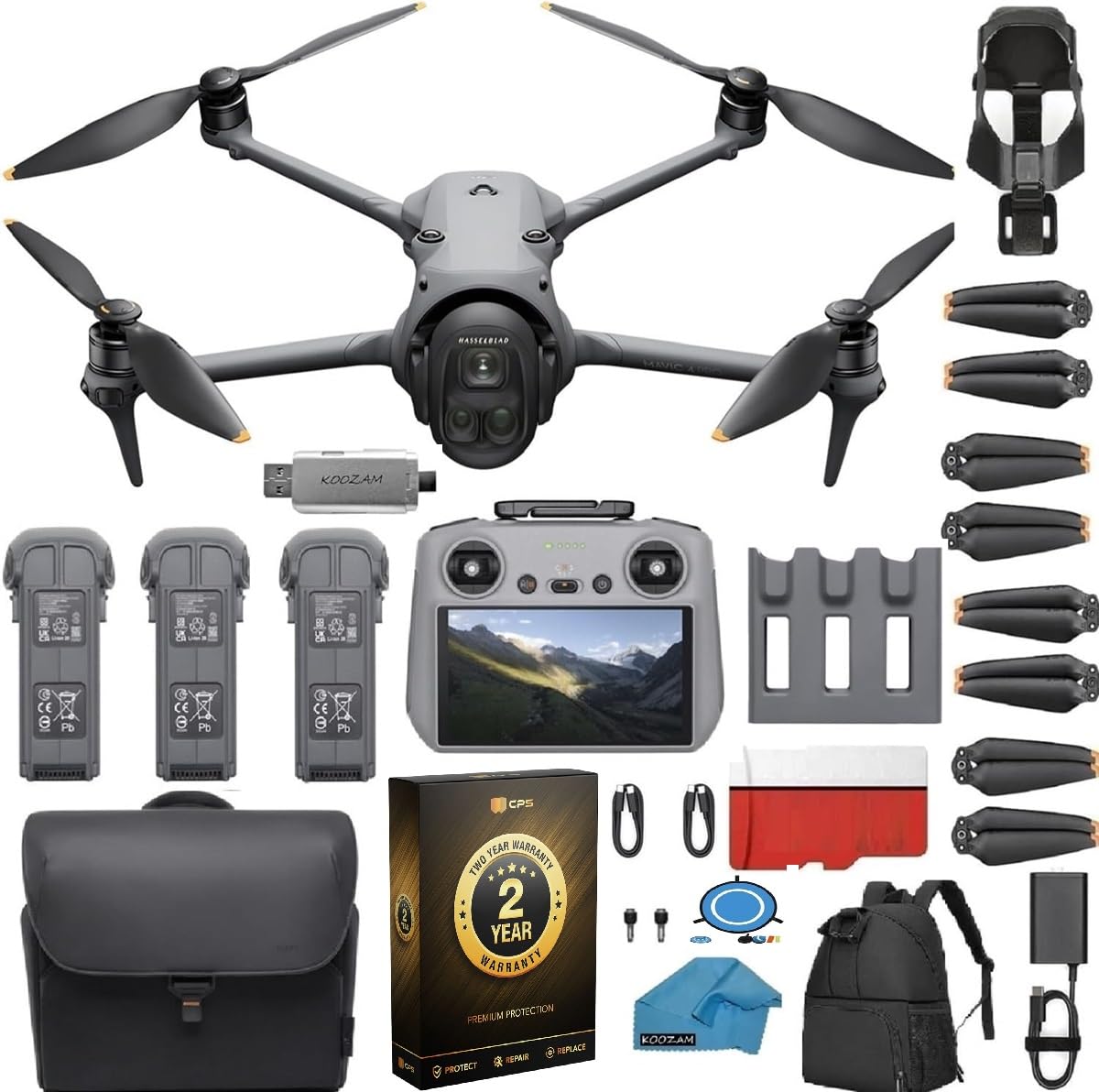
The Mavic 4 Pro’s Infinity Gimbal triple‑camera system is built for low‑light mastery. The 100MP Hasselblad wide‑angle lens captures 6K60 HDR video with dual native ISO fusion, meaning the sensor reads each pixel at two gain levels simultaneously to preserve shadow detail without blowing out bright city lights. The medium tele and tele lenses also support 10‑bit D‑Log M for flexible color grading in post.
ActiveTrack 360 now works autonomously at night — the drone makes navigation decisions on its own, tracking subjects under streetlight or twilight. Six low‑light fisheye sensors deliver 0.1‑lux sensitivity for omnidirectional obstacle avoidance at speeds up to 40 mph. Forward‑facing LiDAR adds another safety layer when ambient light drops below 0.1 lux, enabling braking even in pitch‑black conditions.
The 51‑minute max flight time and included 128GB memory, landing pad, and backpack make this a complete professional night cinematography kit. The only real consideration is the premium investment — this is built for serious creators who need the absolute best low‑light performance available in a consumer drone.
Why it’s great
- Triple‑camera with 100MP Hasselblad for unmatched night detail
- 0.1‑lux obstacle sensors + forward LiDAR for safe night flight
- 51‑min flight time covers extended shooting sessions
- ActiveTrack 360 works autonomously in low light
Good to know
- Premium price point reflects professional‑grade hardware
- Included backpack is functional but basic for the kit size
2. Autel Robotics EVO 2 Pro V3
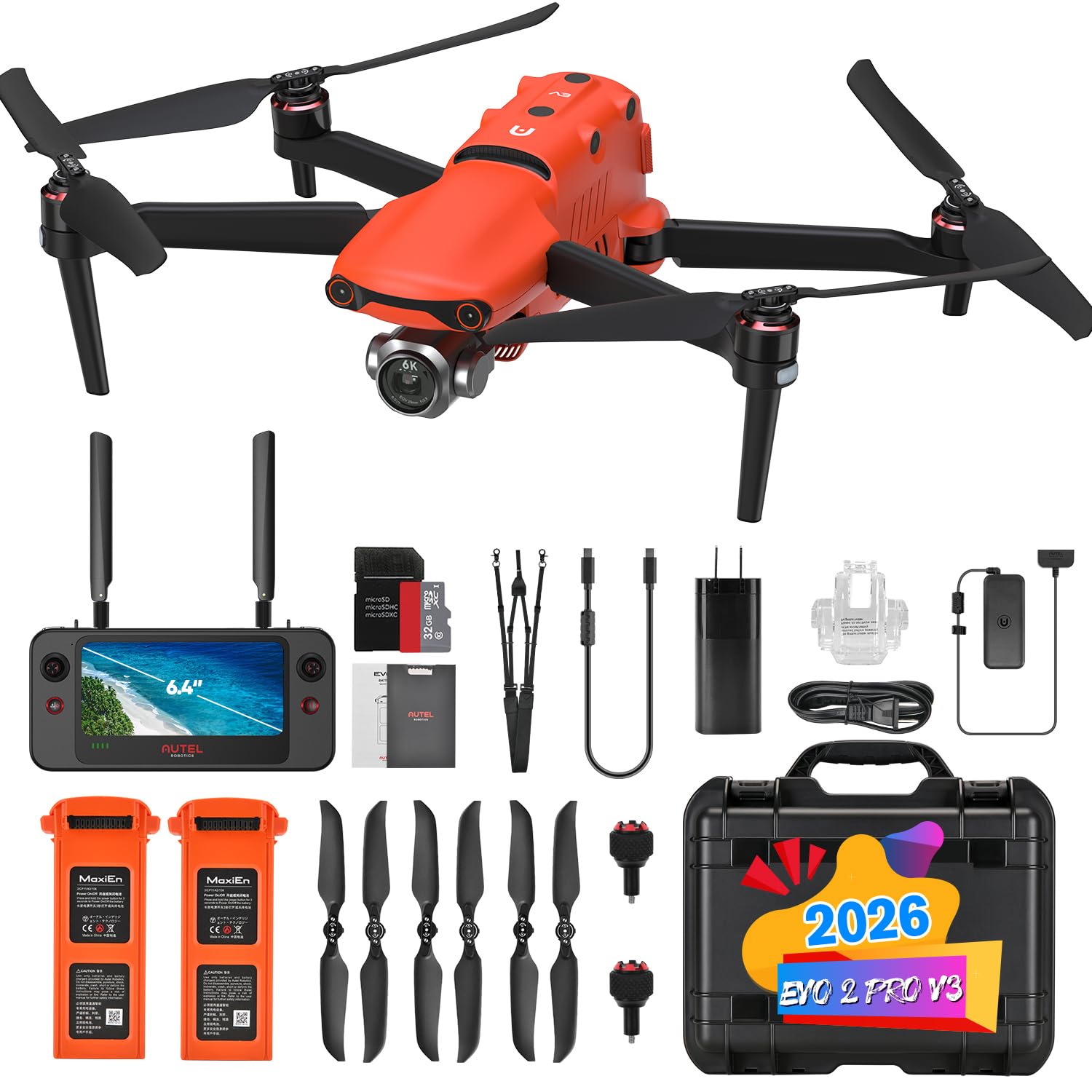
The Autel EVO 2 Pro V3 is one of the few drones that genuinely excels at night photography through hardware rather than software tricks. Its 1‑inch CMOS sensor captures 6K HDR video with 12‑bit DNG photos — that’s 68.6 billion colors with 64 times the color rendering power of a 10‑bit sensor. The adjustable aperture (f/2.8 to f/11) lets you dial in exposure precisely for cityscapes with mixed lighting.
Autel’s Moonlight Algorithm 2.0 pushes the native ISO to 44000, applying intelligent multi‑frame noise reduction that preserves sharpness in deep shadow. The 3‑axis gimbal is rock‑solid for long‑exposure stills, while SkyLink 2.0 provides up to 15 km of 2.7K video transmission on tri‑band frequencies (2.4/5.8/900 MHz), ensuring you maintain a clear feed even in RF‑crowded urban night environments.
The Rugged Bundle includes a protective case, spare battery, and the 6.4‑inch OLED Smart Controller SE with an IP43 rating. This is the best choice for anyone who needs a dedicated night photography drone without the Hasselblad ecosystem lock‑in — and the adjustable aperture is a genuine advantage for shooting cities at twilight.
Why it’s great
- 1‑inch CMOS with adjustable f/2.8‑f/11 for precise night exposure
- Moonlight Algorithm 2.0 delivers ISO 44000 with minimal noise
- 12‑bit DNG photos for massive post‑production flexibility
- No geofencing restrictions for commercial night work
Good to know
- Battery charging sometimes requires multiple restarts to initiate
- Controller menus can be less intuitive than phone app interface
3. DJI Mavic 3 Pro with RC

The Mavic 3 Pro’s 4/3 CMOS Hasselblad sensor is the largest sensor on any consumer drone, and that physical size directly translates to superior low‑light performance. The main camera shoots 20 MP RAW photos with a dynamic range of 12.8 stops, meaning the difference between the darkest shadow and brightest highlight in a night scene is captured without clipping. The f/2.8‑f/11 adjustable aperture gives the same exposure control as the Autel in a more refined flight platform.
DJI O3+ transmission pushes a stable 1080p feed to the RC controller at up to 15 km. The 43‑minute flight time is generous for night shoots, and the eight vision sensors with APAS 5.0 provide omnidirectional obstacle sensing — although the system is less reliable below 1 lux than the Mavic 4 Pro’s dedicated night sensors. For twilight and well‑lit urban night scenes, it’s still very capable.
The firmware now supports 10‑bit D‑Log M and HLG on the 70mm medium tele camera, broadening your color‑grading options for night footage. The standard RC controller has a 700‑nit screen, bright enough for night use. This is an excellent mid‑premium choice if you prioritize raw sensor quality over the latest obstacle‑avoidance tech.
Why it’s great
- 4/3 CMOS Hasselblad sensor is the largest in a consumer drone
- Adjustable aperture f/2.8‑f/11 for mixed lighting control
- 12.8 stops dynamic range captures rich night detail
- 43‑min flight time supports complex shooting sequences
Good to know
- Obstacle avoidance less reliable in near‑pitch‑black conditions
- Warranty support can be inconsistent per some user reports
4. Antigravity A1 Explorer Bundle
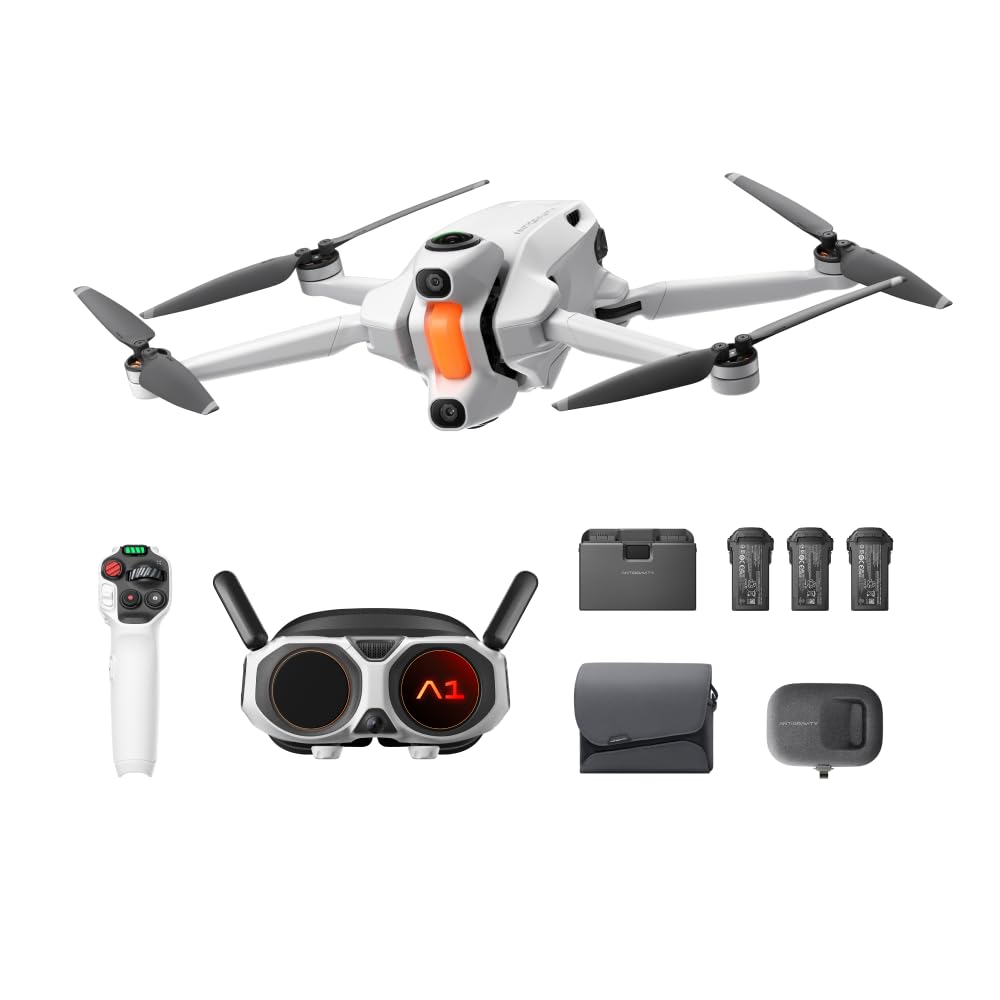
The Antigravity A1 is the world’s first 360‑degree drone for consumers, and this has real implications for night photography. Because the 8K 360 camera captures every angle in a single take, you can reframe the footage after landing — meaning you never miss a low‑light composition because the drone was pointed the wrong way. The invisible stitching is powered by a decade of Insta360’s software, and it works well in both daylight and night conditions.
The Vision Goggles offer a 90° FOV with dual 1‑inch Micro‑OLED and Pancake optics for a deeply immersive FPV night flight experience. The drone itself weighs 249g to stay FAA‑exempt, but you can swap to a high‑capacity battery for 39 minutes of flight time. Omnidirectional obstacle avoidance fuses 360 sensing with front and downward binocular vision, though the system is best suited to twilight rather than complete darkness.
The Auto Editing 2.0 app automatically reframes your 360° night footage with cinematic maneuvers — a huge time saver. This is the most unique tool on the list for night content creators who want to capture everything and frame it later, but the image quality from the 360 sensor won’t match a dedicated 1‑inch CMOS camera for pure noise performance.
Why it’s great
- 8K 360 capture lets you reframe night shots after landing
- Vision Goggles with Micro‑OLED offer deep immersion
- Under 249g with standard battery for FAA‑exempt night flying
- Auto Editing app saves time on night footage assembly
Good to know
- 360 sensor can’t match a 1‑inch CMOS for pure low‑light detail
- Expensive for the resolution trade‑off compared to traditional drones
5. Potensic ATOM 2 Fly More Combo
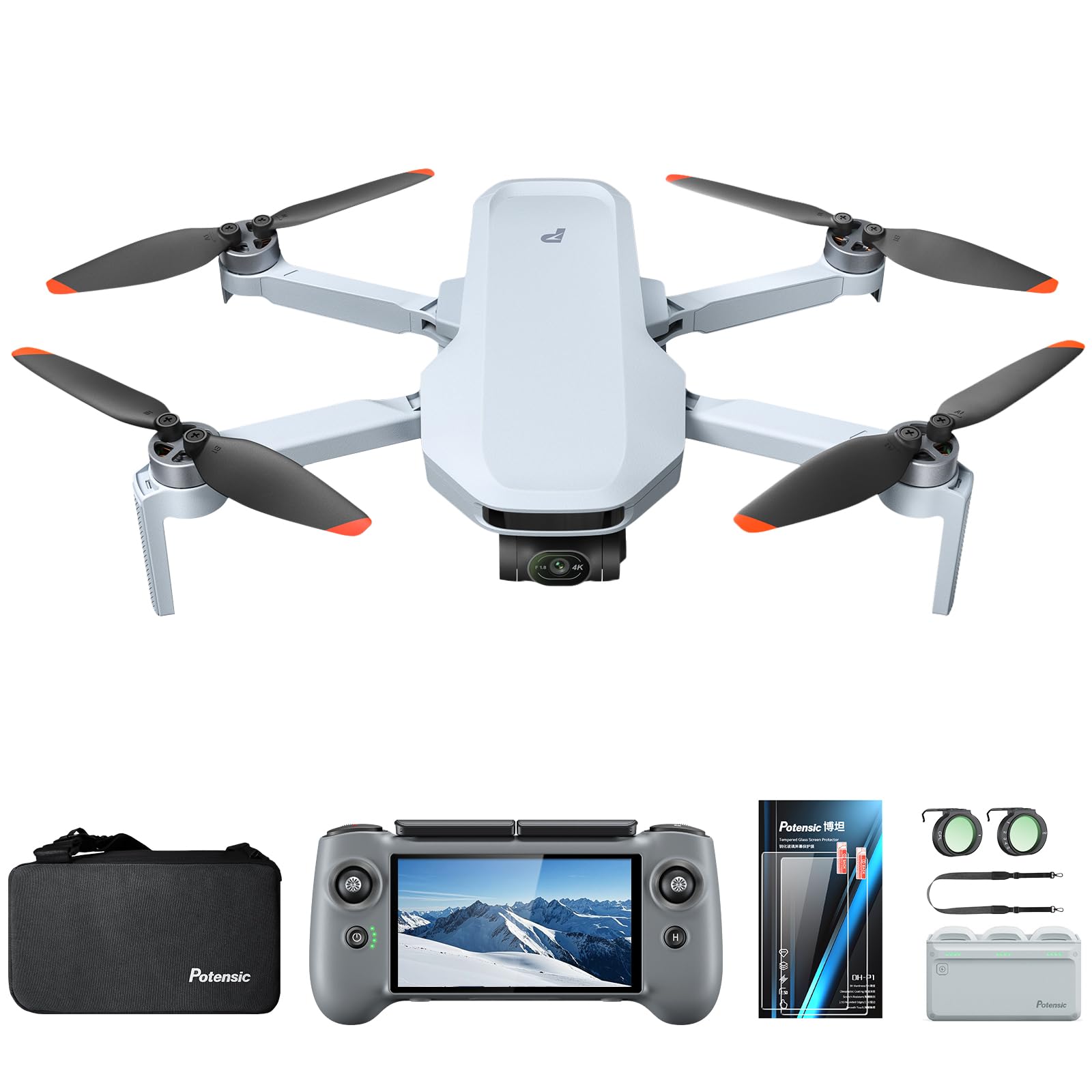
The Potensic ATOM 2 punches well above its price class for night work. The 1/2‑inch Sony CMOS sensor with f/1.8 aperture captures 48MP photos and 4K/30fps HDR video, and the 4‑in‑1 pixel binning improves low‑light sensitivity by grouping pixels into larger light‑catching units. The included ND and CPL filters give you 1‑5 stop light reduction and cut non‑metallic reflections — useful for balancing city lights and dark sky in a single frame.
Potensic’s own AI model powers Spotlight, Follow, and Parallel tracking modes, and the AI Stunning Night Shot mode makes it easy to capture crisp night videos without manual tuning. The PTD 1 remote has a 5.5‑inch 1920×1080 FHD touchscreen at 700 nits — bright enough to see your night composition clearly even under ambient street light. The PixSync 4.0 transmission reaches 10 km with 1080p/30fps live video.
The Fly More Combo gives you three batteries charged simultaneously in 1.3 hours for a total 96 minutes of flight time. The 249g weight means no FAA registration is needed. For the price, this is the strongest mid-range option for nighttime hobbyists who want good low‑light capability without jumping to a premium platform.
Why it’s great
- Sony 1/2″ sensor with pixel binning for better night sensitivity
- Dedicated AI Stunning Night Shot for automatic night exposure
- ND + CPL filters included for controlled light in cityscapes
- 96‑min total flight with quick‑charge hub
Good to know
- Fixed f/1.8 aperture can overexpose bright night lights
- Mid‑range sensor won’t match 1‑inch performance in deep darkness
6. K600PRO GPS Drone
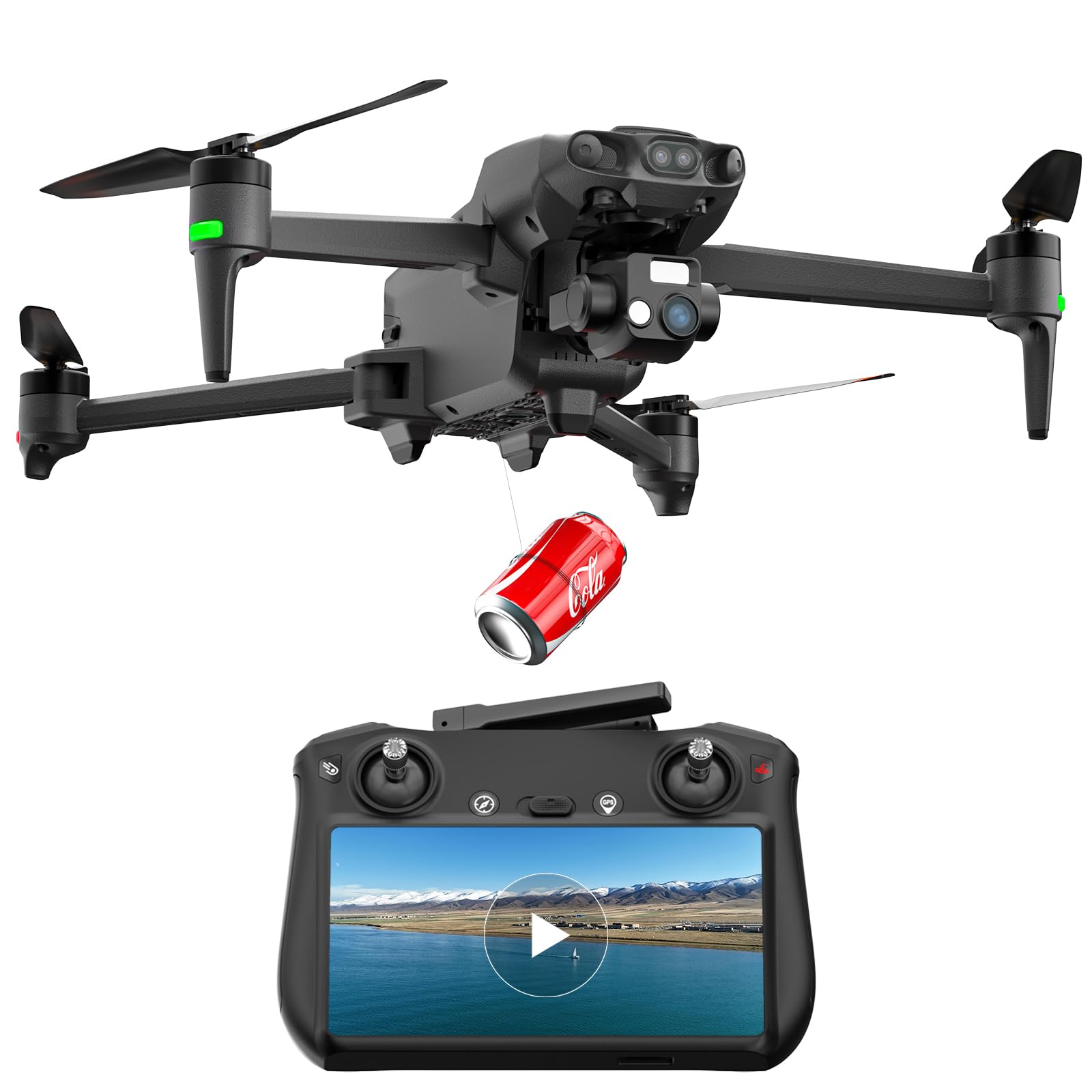
The K600PRO is designed for beginners who want to attempt night photography without a steep learning curve. Its 5.5‑inch touchscreen on the controller eliminates the need for a phone, keeping the setup simple. The 3‑axis gimbal with EIS handles basic night stabilization, and the 4K camera with 50x zoom gives you framing flexibility from a safe distance after dark.
The GPS system includes follow‑me, orbit, and point‑of‑interest modes that work in low light, and the auto‑return function provides peace of mind when flying at dusk or night. The TOF sensor combined with six GPS sensors improves low‑altitude stability by 200% according to the manufacturer, which helps when shooting close to ground subjects at night. The 55‑minute flight time (single battery) is generous for the category.
This is not a drone for serious night photography — the camera lacks the sensor size and dynamic range of premium options — but it is a capable, confidence‑building platform for beginners who want to practice night flying and capture basic night scenes without risking a major investment.
Why it’s great
- Beginner‑friendly with built‑in touchscreen and GPS safety features
- Long 55‑min flight time for extended night practice
- 3‑axis gimbal provides stable night footage at entry level
- TOF sensor improves low‑altitude stability in dim conditions
Good to know
- Smaller sensor struggles with noise in true low‑light environments
- Not suitable for professional or high‑ISO night work
7. Veeniix V11PRO RC2
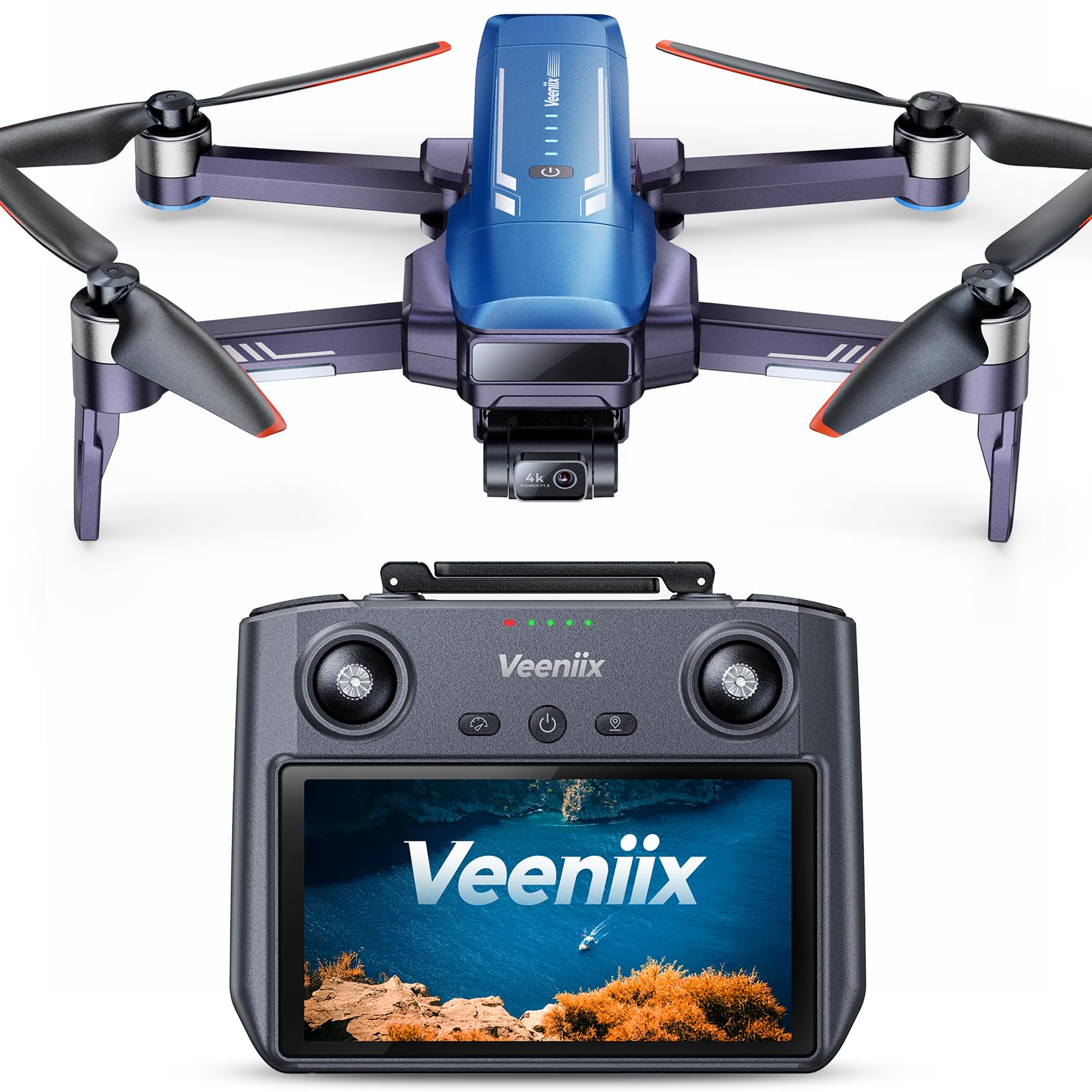
The Veeniix V11PRO RC2 uses a Sony 1/2‑inch CMOS sensor that produces 8K photos and 4K/30fps video with natural color reproduction. The 3‑axis gimbal paired with EIS keeps night footage smooth, though the fixed aperture lens means you need to rely on shutter speed adjustments for exposure control in bright city lights. The 5.5‑inch 1920×1080 HD touchscreen controller is bright and responsive without needing a phone connection.
Flight time is a strong point — two 3500mAh batteries provide a combined 80 minutes of airtime, and they support PD 3.0 fast charging. The digital transmission system claims 6 km range with stable FPV, but real‑world range in wooded or urban night environments can be shorter. The TOF sensor and vision system help with stable hovering during night shots, and the auto‑return function activates on low battery or signal loss.
Customer support is consistently praised in user reviews, with one user receiving a free replacement drone after a weekend support call. This is a solid mid‑range choice for night shooters who value battery endurance and a Sony sensor for natural low‑light color rendition, but it lacks the adjustable aperture and low‑light obstacle avoidance of premium options.
Why it’s great
- Sony 1/2″ CMOS delivers natural night color and 8K photos
- 80‑min total flight from two quick‑charge batteries
- Responsive customer support with replacement options
- TOF sensor improves night hovering stability
Good to know
- No adjustable aperture for controlling city light exposure
- Signal range drops in wooded areas, triggering auto‑return
8. DCX Volo X EZ AI
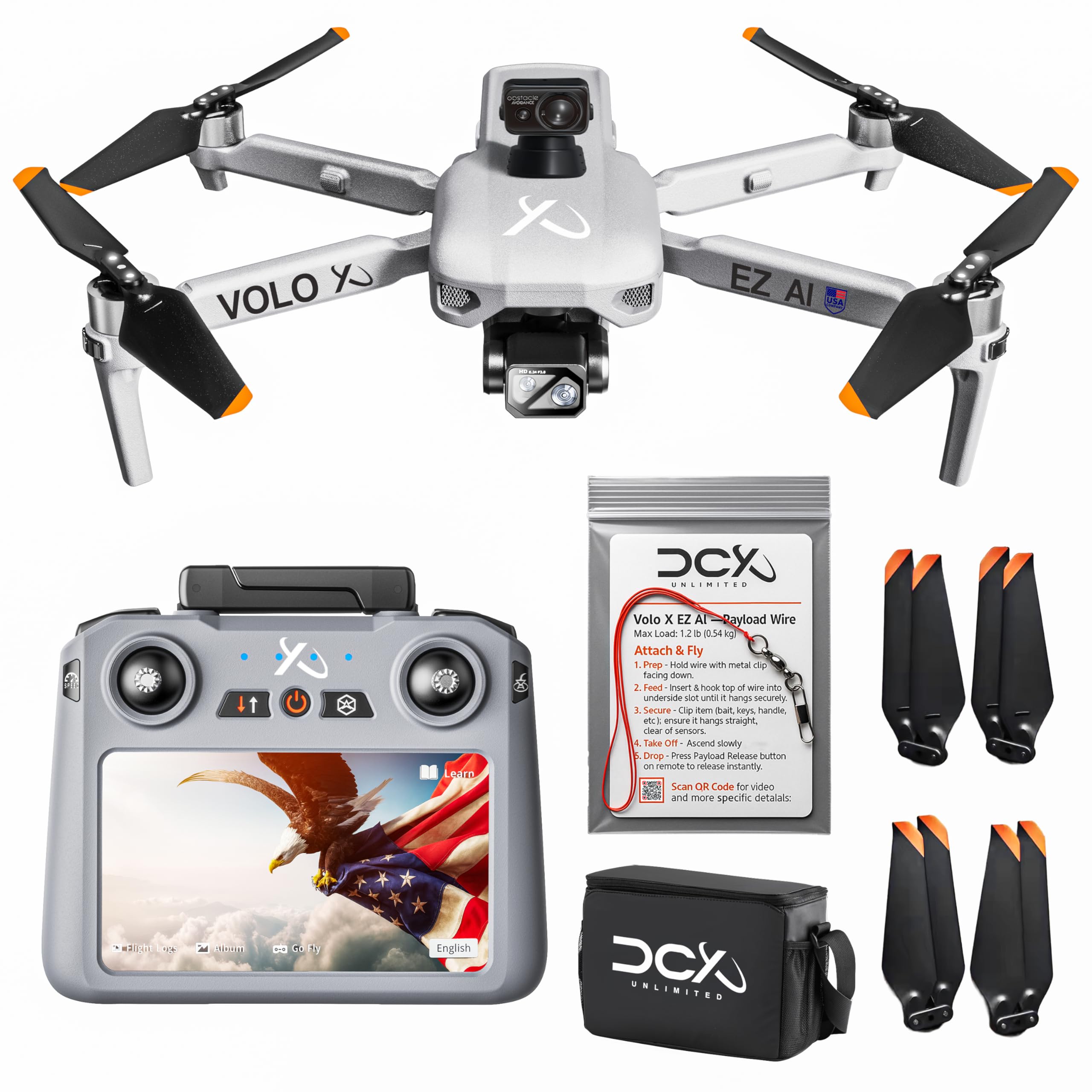
The DCX Volo X EZ AI stands out in the mid‑range for its 360° obstacle detection powered by LiDAR sensors — a technology typically reserved for premium drones. This makes it one of the safer options for night flying, as LiDAR works independently of ambient light. The Smart Night Mode and integrated LED spotlight improve visibility for both the pilot and the camera during twilight and night operations.
The 4K camera with a 3‑axis gimbal and Electronic Image Stabilization delivers stable footage, though the 12 MP effective still resolution is lower than competing models. The 45‑minute flight time and 4‑mile range are competitive for the price tier. The built‑in payload release mechanism (up to 1.2LB) is a unique addition for dropping small items during night operations, and there are no geofencing or height limits imposed by the manufacturer.
As a US‑based company with American customer support, the Volo X offers easy warranty access and FAA Remote ID compliance. The LiDAR system is the primary reason to choose this drone for night work — it provides real collision avoidance that standard visual sensors cannot match in darkness. The camera resolution is a compromise, but the safety feature set is compelling for night flyers.
Why it’s great
- 360° LiDAR obstacle avoidance works in total darkness
- Smart Night Mode and LED spotlight for improved night visibility
- No geofencing or altitude restrictions for night exploration
- Dedicated US‑based customer support and FAA compliant
Good to know
- 12 MP effective still resolution is below mid‑range average
- Controller sync issues reported by some users
9. HOVERAir X1 PROMAX
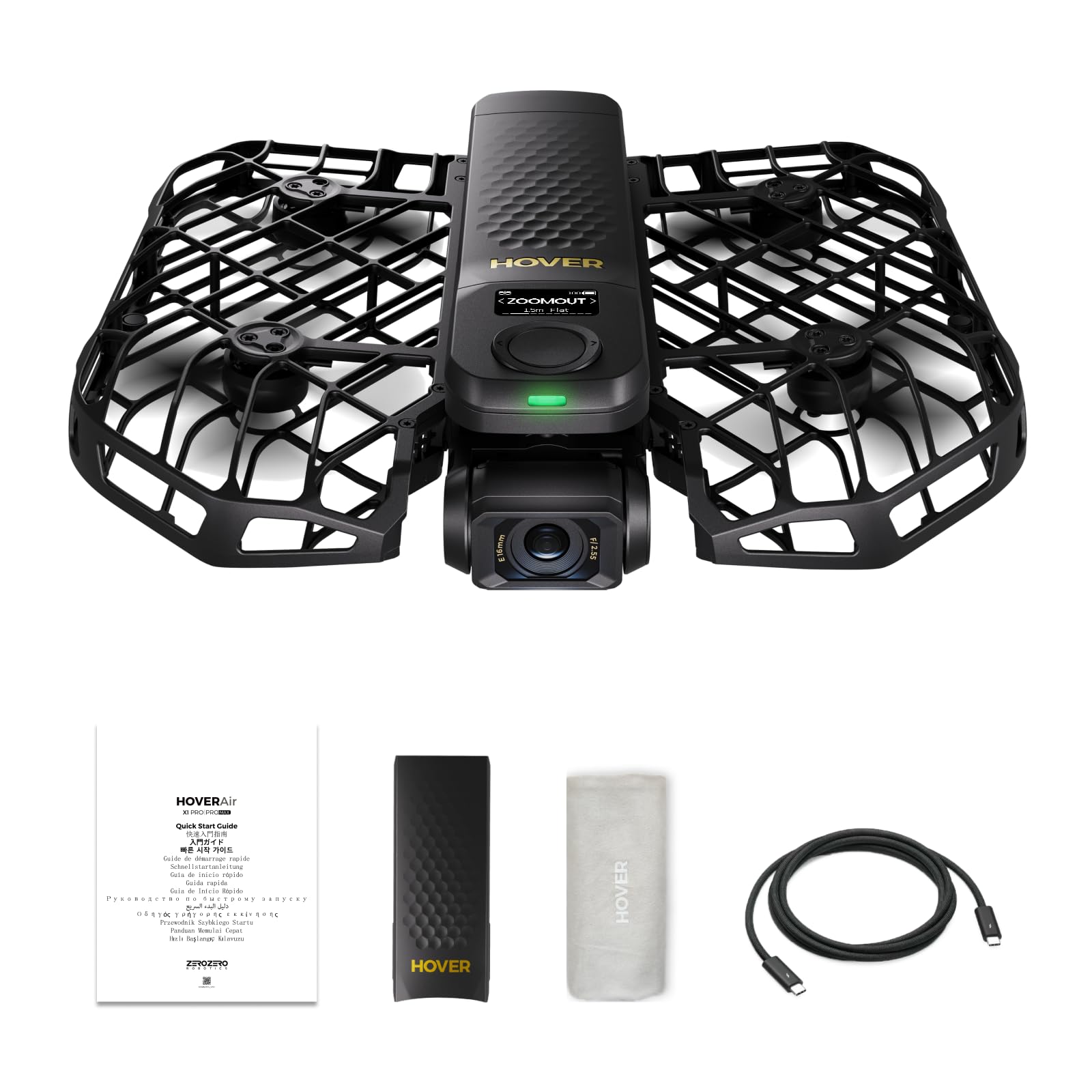
The HOVERAir X1 PROMAX defines a new category — a pocket‑sized 192g flying action camera that shoots 8K@30fps video. Its 2‑axis gimbal combined with EIS and horizon leveling produces usable night footage, though the lack of a full 3‑axis mechanical gimbal means micro‑vibrations can appear in long exposures. The 107° FOV lens captures wide night landscapes effectively.
The OmniTerrain system allows flight over snow, water, and cliffs — all relevant if you’re shooting night landscapes near reflective surfaces. The rear ToF proximity sensor and visual sensor provide braking before collisions up to 3m/s in low light, which is better than nothing but not as robust as full omnidirectional LiDAR. The 42 km/h follow speed and 60 km/h burst speed are sufficient for tracking moving subjects in twilight.
With no remote control required (hand launch and voice commands), this is the most portable night photography option. The 64GB internal storage (expandable to 1TB) and 4K vertical video mode make it ideal for social‑first content creators. However, the small sensor and 2‑axis gimbal mean this is best for well‑lit night scenes or twilight rather than true darkness.
Why it’s great
- Ultra‑portable 192g design for night travel and hiking
- 8K30 video with vertical 4K mode for quick social sharing
- Hand launch and voice control simplify night setup
- Rear ToF sensor provides basic low‑light obstacle braking
Good to know
- 2‑axis gimbal with EIS can show micro‑judder in long exposures
- Small sensor limited for deep night or high‑ISO shooting
10. Bwine F7MINI 4K RC3
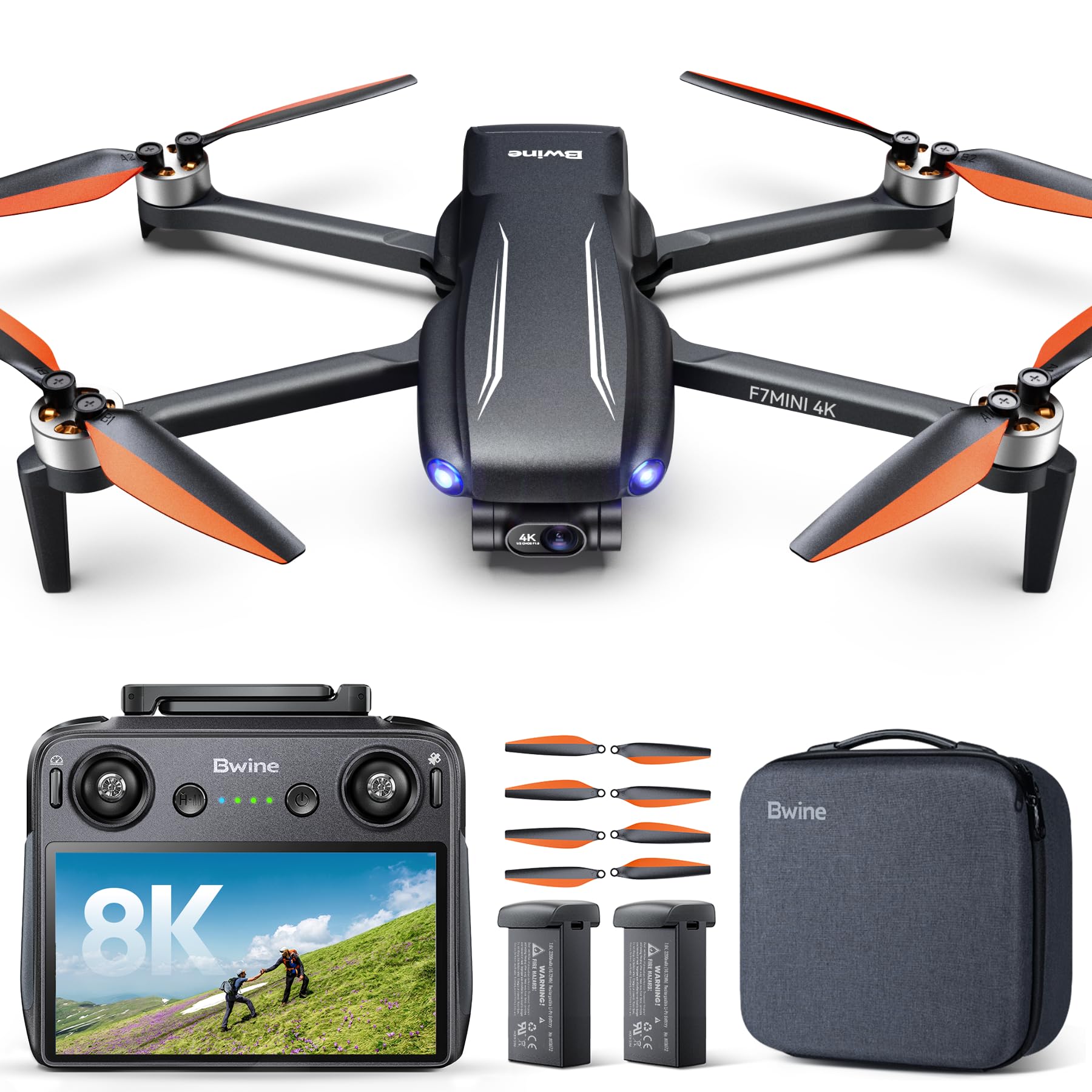
The Bwine F7MINI 4K RC3 is the most affordable drone on this list with a 3‑axis mechanical gimbal — a crucial feature for night still photography. The 48MP sensor with f/1.8 aperture captures decent low‑light detail when lighting conditions are favorable (cityscapes, well‑lit landmarks). The 5.5‑inch 1080P controller screen eliminates phone tethering and includes 32GB internal storage for quick review of night shots.
Under 249g, this drone requires no FAA registration, making it a worry‑free entry point for night flying. The 20,000ft real‑time transmission range is generous at this price, and the active track, cruise control, orbit, and waypoint planning modes all function in twilight conditions. The GPS return‑to‑home with dynamic home point updates provides safety during night operations when visual orientation is harder.
The two batteries provide a combined 64 minutes of flight time, and the included carrying case makes transport simple. The camera lacks the dynamic range and noise handling of larger sensors, so night photos require careful exposure and post‑processing, but for the price, the 3‑axis gimbal alone makes this a compelling starter night photography drone.
Why it’s great
- 3‑axis mechanical gimbal at entry‑level price for stable night shots
- Under 249g — no FAA registration needed for night flying
- Built‑in 5.5‑inch screen with 32GB storage for easy night review
- GPS safety features (dynamic RTH) aid night navigation
Good to know
- Small sensor struggles with noise in true low‑light conditions
- Fixed f/1.8 aperture can overexpose bright night elements
11. Ruko U11MINI 4K RC3
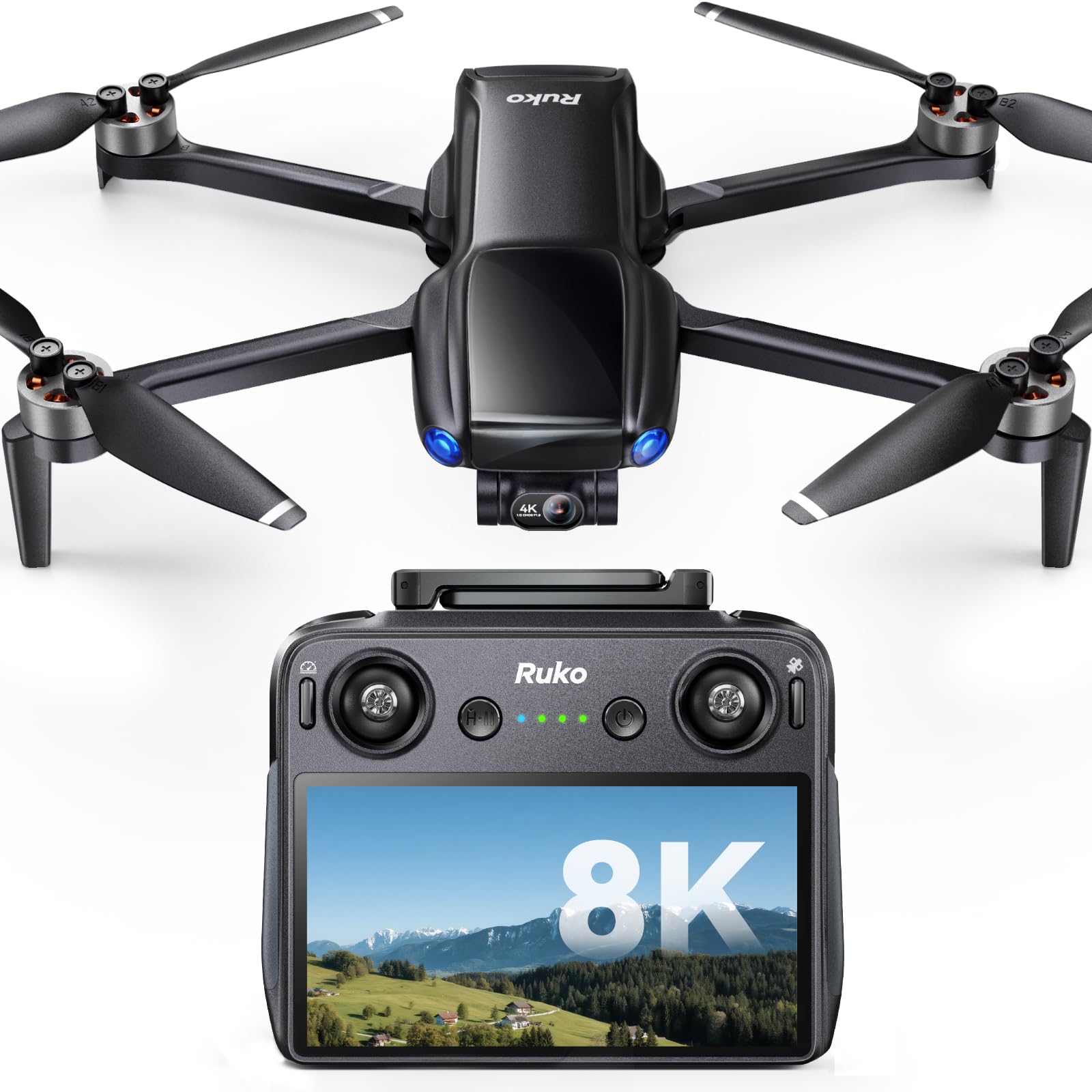
The Ruko U11MINI 4K RC3 shares DNA with the Bwine F7MINI — it’s another FAA‑exempt sub‑249g drone with a 1/2‑inch CMOS sensor, 8K photos, 4K/30fps video, and a 3‑axis mechanical gimbal. The integrated 5.5‑inch 1080P touchscreen controller works without a phone, and the AI takeoff and landing functions make night flight initiation simpler for beginners.
Quadruple positioning (GPS, Barometric, TOF, Optical Flow) provides precise hovering control in low light, and the one‑key return with failsafe activation on low battery or lost signal adds a safety net for night operations. The two 2200mAh batteries deliver a combined 64 minutes of flight time, and PD 3.0 fast charging keeps downtime short between night sessions.
Like the Bwine, the camera is the limiting factor — the 1/2‑inch sensor and fixed aperture cannot match the noise handling of a 1‑inch CMOS at high ISO. However, for the budget tier, the combination of a 3‑axis gimbal, sub‑249g weight, and screen controller makes this a viable entry point for learning night aerial photography without a major financial commitment.
Why it’s great
- 3‑axis gimbal at budget price for shake‑free night video
- Under 249g with quadruple positioning for stable night hover
- Phone‑free touchscreen simplifies night flight setup
- Failsafe return‑to‑home for safe night recovery
Good to know
- 1/2‑inch sensor limited for deep night or star photography
- Firmware download and video transfer speeds are slow
FAQ
What sensor size do I need for night drone photography?
Can any drone fly safely in complete darkness?
Is an adjustable aperture important for night cityscapes?
Do I need FAA registration for a night drone?
Why is a 3‑axis gimbal better for night photography than a 2‑axis gimbal with EIS?
Final Thoughts: The Verdict
For most users, the best drone for night photography winner is the Autel EVO 2 Pro V3 because it combines a 1‑inch CMOS with the Moonlight Algorithm 2.0, adjustable aperture, and no geofencing locks — delivering the best balance of low‑light image quality and operational freedom. If you want the absolute largest sensor and can work within DJI’s ecosystem, grab the DJI Mavic 3 Pro. And for safe night flying with true low‑light obstacle avoidance, nothing beats the DJI Mavic 4 Pro.

Mo Maruf
I created WellFizz to bridge the gap between vague wellness advice and actionable solutions. My mission is simple: to decode the research and give you practical tools you can actually use.
Beyond the data, I am a passionate traveler. I believe that stepping away from the screen to explore new environments is essential for mental clarity and physical vitality.