Our readers keep the lights on and my smoothie glass nicely filled. As an Amazon Associate, I earn from qualifying purchases.
Drilling out a lock demands a unique combination of hardness, heat resistance, and precise geometry from your drill bit. A standard hardware-store bit will glaze over or snap the moment it meets a hardened steel pin or a brass tumbler, turning a simple five-minute job into a frustrating project.
I’m Mohammad Maruf — the founder and writer behind WellFizz. My research into this guide involved combing through customer test reports and analyzing the material composition, point geometry, and real-world failure modes of over a dozen bit sets to find the ones that actually survive a lock-picking bypass.
Whether you are a locksmith, a automotive technician, or a DIYer facing a stuck padlock, choosing the right tool makes all the difference — here is my analysis of the very best drill bits for drilling out locks.
How To Choose The Best Drill Bits For Drilling Out Locks
Drilling out a lock means you are cutting through hardened steel pins, brass plug bodies, and often a hardened steel bible or housing. The wrong bit overheats, walks off center, or shatters. Focus on these three factors to get through the job without burning up your drill or your patience.
Material Composition: Cobalt Content is King
Standard high-speed steel (HSS) hits a ceiling around 65 Rockwell hardness. Lock components routinely exceed that. M35 cobalt steel (5% cobalt) maintains its temper at higher cutting temperatures, which matters when you are applying sustained pressure to a 1/4-inch section of a deadbolt. For repeated lock drilling, M42 (8% cobalt) performs even better, but M35 hits the value sweet spot without the brittleness of higher-cobalt alloys.
Point Geometry: The 135-Degree Split Point Advantage
A 135-degree split point is almost mandatory for lock work. The self-centering tip prevents the bit from skittering across the curved face of a lock cylinder. It also reduces the pressure required to initiate the cut, which keeps your drill from stalling out under load. A standard 118-degree point works on wood and soft metal but will skate off a hardened steel pin.
Shank Design: Stopping the Slippage
The shank is the interface between your drill chuck and the cutting edge. A three-flat shank, as seen on higher-end step bits, grips much better than a fully round shank. When you are applying heavy axial force to a lock cylinder, a round shank can spin inside the chuck jaws, ruining the cut and damaging the bit. Look for M35 or M2 step bits that explicitly mention a three-flat or hex shank.
Quick Comparison
On smaller screens, swipe sideways to see the full table.
| Model | Category | Best For | Key Spec | Amazon |
|---|---|---|---|---|
| WildBossy M35 20-Piece Set | Cobalt Jobber Set | Versatile lock work with multiple sizes | 67 Rockwell hardness rating | Amazon |
| DelitonGude M35 3/16″ (10-Pack) | Cobalt Twist Bit | Precision drilling of hardened lock pins | 5% Cobalt M35 steel | Amazon |
| LU&MN M35 Cobalt Jobber (10-Pack) | Cobalt Twist Bit Set | Hardened steel drilling with self-centering | 135° split point, titanium coating | Amazon |
| Jerax Step Bit (1/4″ to 3/4″) | M2 HSS Step Bit | Enlarging shear line holes through lock bodies | M2 HSS with nitride treatment | Amazon |
| Jerax Step Bit (7/8″ to 1-3/8″) | M2 HSS Large Step Bit | Bypassing large padlock or cabinet lock bodies | Max cutting diameter 1.38 inches | Amazon |
In‑Depth Reviews
1. WildBossy M35 Cobalt Drill Bit Set 20PCS

This 20-piece set from WildBossy covers every common diameter from 1/16-inch up to 1/2-inch, making it the most versatile option for a locksmith or serious DIYer. The M35 cobalt formulation pushes the bit to a 67 Rockwell hardness, meaning it can handle the hardened steel pins and cylinder bodies that destroy standard HSS bits in seconds. The 135-degree split point gives you a reliable center start on the curved face of a lock cylinder.
Real-world user reports confirm these bits cut through hardened taps and studs, with one reviewer stating they “drill like butter” through broken fasteners. The three-flat shank on the larger bits provides excellent grip in a standard 3/8-inch or 1/2-inch drill chuck, eliminating the frustration of a spinning shank at the worst moment. The included plastic storage case keeps the set organized for field work.
Several users noted that a few bits in the set arrived with slightly dull edges, but the majority reported excellent cutting performance on thin stainless steel and hardened automotive components. For lock drilling, the 1/4-inch, 5/16-inch, and 3/8-inch bits are the most frequently used sizes, and this set gives you two duplicates of the smaller diameters to account for the inevitable break that happens with high-torque work.
Why it’s great
- 20-piece range covers all common lock-drilling diameters.
- M35 cobalt with 67 HRC rating handles hardened lock pins.
Good to know
- Some users reported occasional dull bits out of the box.
- Bits under 1/8-inch are delicate and can snap under heavy side load.
2. DelitonGude M35 3/16″ Cobalt Twist Drill Bits (10-Pack)
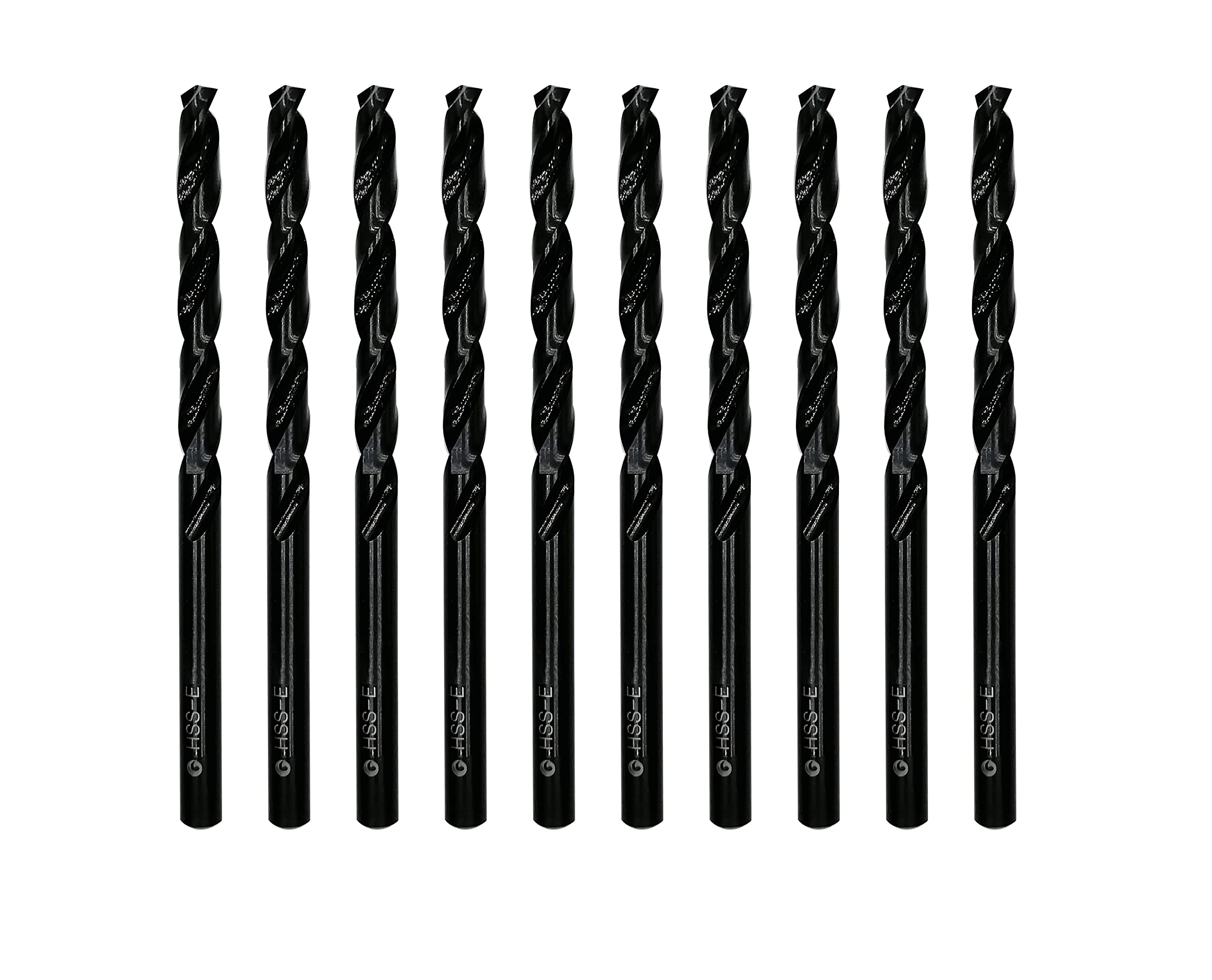
This 10-pack of 3/16-inch M35 cobalt bits is purpose-built for the single most common lock-drilling scenario: punching through a deadbolt or padlock cylinder. At 3/16-inch, the diameter is wide enough to shear the pins and break the housing, yet narrow enough to fit into most keyway profiles. The full-grinding nitriding finish provides excellent wear resistance, and the 135-degree split point self-centers reliably.
Multiple customer reviews highlight this bit’s ability to cut through bronze and metal studs where premium brands like Milwaukee titanium bits failed. One user specifically noted drilling through hardened T-posts (80+ Rockwell) — a close analogue to lock hardness — and while the smaller bits wore faster, the value of the pack means you can afford to treat them as consumables. The 50mm working length is adequate for most lock bodies.
The M35 composition with 5% cobalt keeps the edge cool during sustained drilling. A few users found that the 3/16-inch size was not ideal for very small diameter locks or for precise work on soft brass, but for the majority of padlock and deadbolt jobs, this is a straightforward, effective solution. Pair it with cutting oil and a medium drill speed for best results.
Why it’s great
- Ten bits per pack provide plenty of spares for heavy use.
- Survived drilling hardened T-post steel in real-world tests.
Good to know
- Limited to 3/16-inch diameter — not a full size range.
- Requires cutting oil for best performance on steel.
3. LU&MN M35 Cobalt Jobber Drill Bits (10-Pack)
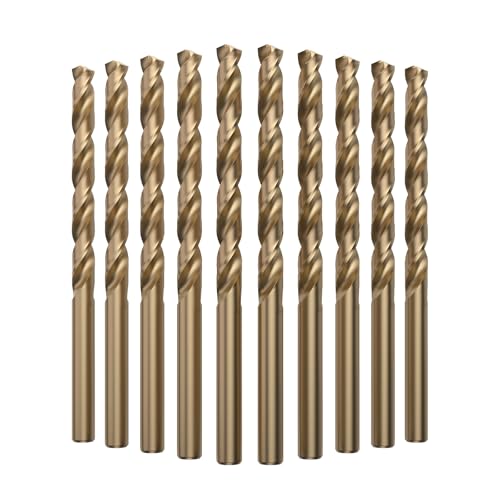
The LU&MN 1/4-inch cobalt jobber bits add a titanium nitride finish to the standard M35 formula, giving them an extra layer of surface hardness and reduced friction. This coating is especially useful when drilling through hardened steel lock components that generate a lot of heat. The 135-degree split point is sharp out of the box and prevents the walking issue that plagues standard bits on the smooth face of a lock cylinder.
Customer reports show these bits cut through quarter-inch steel plate with ease, and one user drilled eight holes in a John Deere bucket (hardened steel) with a single bit that remained sharp. That kind of durability translates directly to lock drilling, where you might need to punch through multiple pins and a hardened bible. The fully ground flute design efficiently evacuates brass and steel chips, keeping the bore clear for deeper penetration.
A small number of users experienced the smallest bit breaking quickly under heavy pressure, which is a risk with any 1/4-inch bit in a high-torque scenario. The titanium nitride coating can wear off the cutting edge after several uses, but the underlying M35 steel remains effective. For a 10-pack at a entry-level price, this set delivers reliable performance for repeated lock-out jobs.
Why it’s great
- TiN coating reduces friction and heat buildup during drilling.
- Excellent edge retention on steel up to quarter-inch thick.
Good to know
- Smallest bit can snap under heavy axial pressure.
- Coating may wear off the cutting edge over time.
4. Jerax Step Drill Bit (1/4″ to 3/4″)

This step bit from Jerax tools uses M2 high-speed steel with nitride surface hardening, making it significantly tougher than generic step bits when you need to enlarge a pilot hole through a lock body. The nine marked sizes from 1/4-inch to 3/4-inch allow you to drill a small centering hole and then step up to a diameter that shears the lock mechanism entirely — a common bypass technique for deadbolts and drawer locks.
The polished steps with size highlights let you see the target diameter while drilling, which saves a chore of stopping mid-cut to measure. Users have successfully drilled through 3mm stainless steel repeatedly, with the bit remaining sharp after ten holes. The 1/4-inch hex shank is compatible with impact drivers, giving you more torque options when facing a particularly stubborn lock cylinder.
Some users noted a slight drop in cutting performance after four holes on thicker stainless, and the bit is best used with cutting oil and moderate speed. The M2 material is a step up from standard HSS but does not match the cobalt content of M35 for extreme hardness. For most lock drilling applications where you are working with brass and medium-hard steel, this bit provides outstanding value.
Why it’s great
- Nine hole sizes in one tool eliminate constant bit changes.
- Hex shank works with impact drivers for extra torque.
Good to know
- Can dull slightly after multiple holes in thick stainless steel.
- Limited to materials up to 2.7mm thickness for stainless.
5. Jerax Step Drill Bit (7/8″ to 1-3/8″)

When the job calls for destroying a padlock shackle or reaming out a large cabinet lock body, the 7/8-inch to 1-3/8-inch step bit from Jerax is the tool to reach for. The M2 HSS construction with nitride hardening allows this bit to cut through stainless steel sink flanges in under a minute — a good proxy for the hardest lock bodies you will encounter. The double-fluted straight groove design clears chips efficiently at large diameters.
Professional electricians and locksmiths have reported months of heavy use without dulling, provided the bit is run at a steady speed with adequate pressure. The color-coded depth rings make it easy to track your progress when drilling blind into a lock housing. One user specifically praised its performance on a stainless steel sink flange after other bits failed, noting it “cuts like butter.”
The five marked sizes (7/8″, 1-1/8″, 1-7/32″, 1-1/4″, 1-3/8″) cover the range needed for large padlock bypasses and cabinet lock removal. The main limitation is the starter diameter of 7/8-inch, which requires a pre-existing hole or a center punch to keep the bit from walking. For lock drilling, use this bit after a smaller pilot bit has opened the initial passage.
Why it’s great
- Covers large diameters needed for padlock and cabinet bypass.
- Reported to cut stainless steel sink flanges in under one minute.
Good to know
- Starter size is 7/8-inch — requires a pilot hole for stable starts.
- Not ideal for precision work on small lock cylinders.
FAQ
What size bit do I need to drill out a standard deadbolt lock?
Can I use a carbide tipped bit for drilling locks?
Why does my drill bit keep snapping when I try to drill out a lock?
Do I need cutting oil when drilling out a lock?
How many holes will a single M35 cobalt bit drill before it dulls?
Final Thoughts: The Verdict
For most users, the drill bits for drilling out locks winner is the WildBossy M35 Cobalt 20-Piece Set because it covers every common diameter from 1/16-inch to 1/2-inch with a 67 Rockwell hardness rating that handles hardened lock pins and cylinder bodies. If you want a focused, consumable-friendly solution, grab the DelitonGude M35 3/16-inch 10-Pack for reliable lock work on a budget. And for large padlock or cabinet lock bypass jobs, nothing beats the Jerax 7/8-inch to 1-3/8-inch Step Bit for clean, fast cuts at wide diameters.

Mo Maruf
I created WellFizz to bridge the gap between vague wellness advice and actionable solutions. My mission is simple: to decode the research and give you practical tools you can actually use.
Beyond the data, I am a passionate traveler. I believe that stepping away from the screen to explore new environments is essential for mental clarity and physical vitality.