Our readers keep the lights on and my smoothie glass nicely filled. As an Amazon Associate, I earn from qualifying purchases.
Drilling into fiber-cement siding like Hardie Board is a unique challenge that standard twist bits simply cannot handle. The abrasive silica in the material dulls regular steel in seconds, leading to chipped edges, wandering holes, and far too many trips back to the hardware store.
I’m Mohammad Maruf — the founder and writer behind WellFizz. My background in market research and product analysis means I’ve spent countless hours dissecting the specifications and real-world performance data of carbide and diamond-tipped bits specifically for abrasive materials like Hardie Board.
This guide cuts through the marketing to find the actual tools that deliver clean, accurate holes without the struggle, presenting the definitive best drill bit for hardie board based on real user results and critical specs.
How To Choose The Best Drill Bit For Hardie Board
Choosing a bit for fiber cement isn’t about brand loyalty; it’s about material science. The key is matching the bit’s cutting edge to the hardness of the siding. A general-purpose masonry bit might get you partway, but it will wear out fast. You need a bit with a tip hardness that exceeds the silica in the board.
Carbide Tips vs. Diamond Grit: The Core Battle
For precision holes under 1/2-inch, a carbide-tipped masonry drill bit with a hex shank is your best bet. The hex shank prevents slipping in your drill’s chuck, and the carbide tip withstands the abrasion. For larger holes (like for vents or lights), you need a carbide-grit or diamond-impregnated hole saw. These use a continuous rim of hard particles to grind through the material, rather than cutting teeth that could catch and chip the board.
Shank Type and Drill Compatibility
The shank is the connection point, and it needs to be secure. Hex shanks are superior because they provide a positive lock in the chuck, virtually eliminating the slippage that ruins bits and frustrates users. Round shanks can spin if you apply too much pressure. For hole saws, ensure the arbor (the shaft) fits your drill’s chuck—typically 1/2-inch is the standard for heavy-duty cordless drills.
Cutting Depth and Cooling
Hardie Board is typically 5/16-inch thick, but you often drill through it into sheathing or studs. Ensure your drill bit or hole saw has a cutting depth of at least 1 inch to clear the siding. For diamond-grit hole saws, look for built-in wax cores or side slots for cooling and chip removal. Dry-running ability is a huge plus, as using water on a vertical exterior wall is impractical.
Quick Comparison
On smaller screens, swipe sideways to see the full table.
| Model | Category | Best For | Key Spec | Amazon |
|---|---|---|---|---|
| PLG2SUPT Carbide Hole Saw (4″) | Hole Saw | Large clean holes in Hardie Plank | 2.36″ Cutting Depth | Amazon |
| PLG2SUPT Carbide Grit Hole Saw (4″) | Hole Saw | Stucco and fiber cement siding | 1.5″ Cutting Depth | Amazon |
| GRENPRO 12PCS Carbide Set | Drill Bit Set | Small anchor and screw holes | YG6X Carbide Tip | Amazon |
| WildBossy 10PCS Carbide Set | Drill Bit Set | General masonry and tile drilling | 135° Split Point | Amazon |
| BGTEC 10pcs Diamond Core Bits | Diamond Core Set | Precise 1/4″ holes in tile & hardie | Vacuum Brazed Diamond | Amazon |
In‑Depth Reviews
1. PLG2SUPT 4″ Deep Hole Saw Carbide
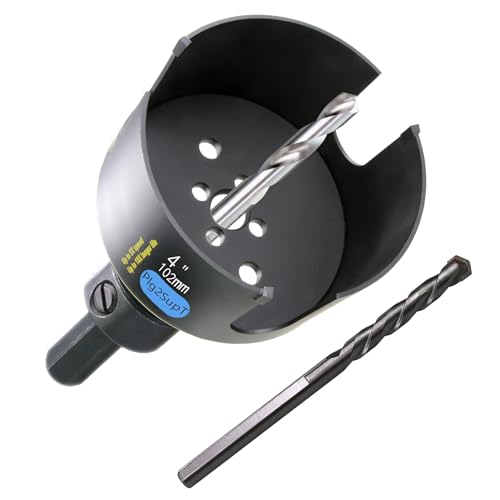
This is the top-tier hole saw designed specifically for the tough job of cutting large-diameter holes in Hardie Plank. Its carbide-tipped teeth boast a hardness exceeding HRC 80, which translates directly into longevity—users report getting ten times more cuts compared to standard bi-metal saws. The 2.36-inch cutting depth gives you ample clearance to punch through the siding and the sheathing behind it without binding.
The big slot design is a practical touch that makes plug removal quick and frustration-free, something every contractor will appreciate on a busy job site. It comes with a dedicated carbide-tipped pilot bit for stone and fiber cement, as well as a standard HSS pilot bit for wood, making it a versatile kit for multi-material drilling. The saw is designed for standard rotary drills, not hammer mode.
Reviewers consistently praise its clean, fast cuts through Hardie board and drywall, with many noting it outperforms other hole saws they’ve used for decades. While the pilot bit can occasionally loosen over time, this is a minor concern given its exceptional cutting speed and durability.
Why it’s great
- Up to 10x more cuts than standard bi-metal saws on hardie plank.
- Includes both carbide and HSS pilot bits for different materials.
- Deep 2.36″ cutting depth clears siding and sheathing.
Good to know
- The pilot bit set screw can loosen during use; check periodically.
- Not suitable for use in hammer mode.
2. PLG2SUPT 4″ Carbide Grit Hole Saw

While its sibling uses carbide teeth, this model employs a continuous carbide grit edge, making it the ideal choice for materials that are brittle or prone to chipping, like stucco, plasterboard, and fiber cement siding. The grit edge grinds away the material rather than cutting it, producing a smoother, more controlled hole that is less likely to crack the surrounding board.
The maximum cutting depth of 1.5 inches is slightly shallower than the tooth version, but it is more than adequate for standard Hardie Plank and backer board applications. The kit includes a mandrel for a 1/2-inch chuck and two carbide-tipped pilot drill bits to get you started, ensuring you have a spare when the first one wears down.
User feedback highlights its exceptional performance on stucco, with many noting it “cuts like butter” through that tough material. The carbide grit shows minimal wear even after multiple holes in abrasive surfaces. A common point to address is that the set screw holding the pilot bit can be weak, so checking it before each use is recommended
Why it’s great
- Carbide grit edge is ideal for brittle materials like stucco and fiber cement.
- Included two spare pilot bits add long-term value.
- Produces smooth, chip-free holes in Hardie board.
Good to know
- Set screw for pilot bit is known to be defective in some units.
- Not designed for cutting wood or metal.
3. GRENPRO 12PCS Concrete Carbide Drill Bits
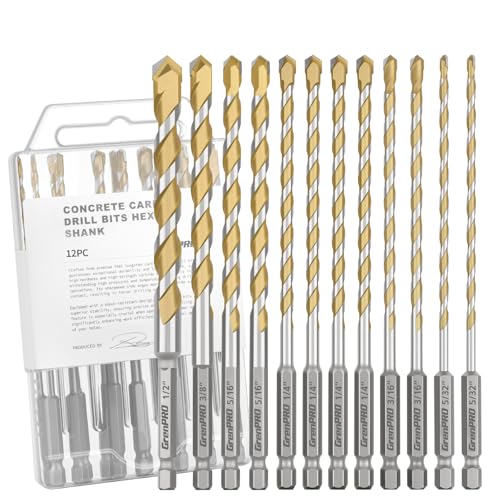
For drilling small pilot holes or anchor holes into Hardie Board, a dedicated set of carbide-tipped masonry bits is the most practical solution. The GRENPRO set offers a comprehensive range of 12 bits across six common sizes (5/32″ to 1/2″), with multiple duplicates of the high-use 1/4-inch size ensuring you have a backup when one dulls. This selection covers almost every standard fastener you’d need for siding installation or repair.
The bits feature premium YG6X carbide tips that are engineered to resist chipping and wear, a critical factor when dealing with the silica-laden dust of fiber cement. The 40Cr steel shank is heat-treated to HRC 50 hardness, which prevents the shank from twisting or breaking under high torque. The hex shank design locks securely into your drill, eliminating the spin-out that round shanks can suffer from.
After two months of daily use, reviewers noted the bits held up exceptionally well, drilling into concrete block walls with ease. They are versatile enough for brick, tile, and glass, making them a solid investment for any DIYer’s toolbox. A few users noted that while they are good bits, the cutting speed on extremely hard concrete could be marginally improved.
Why it’s great
- Comprehensive 12-piece set with duplicates of common sizes.
- Hex shank provides a secure, slip-free connection in the drill.
- Heat-treated 40Cr steel shank resists bending under heavy load.
Good to know
- Cutting speed on very hard concrete could be faster.
- Not designed for use in hammer mode on ceramic tile.
4. WildBossy 10PCS Carbide Drill Bit Set
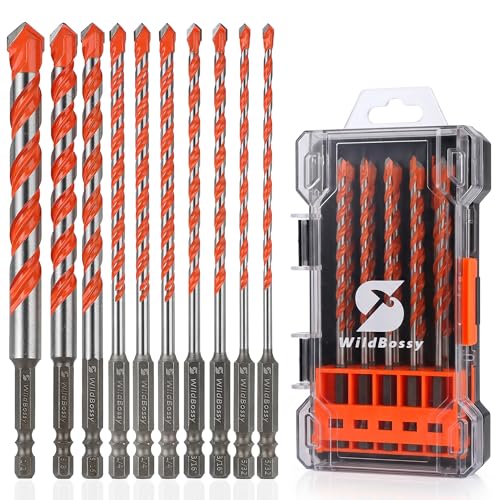
This 10-piece set from WildBossy presents a strong entry-level option for homeowners who need to drill into Hardie Board without breaking the bank. The bits feature a 135-degree split point, which is a significant design advantage—it helps the bit center itself on the material and reduces “walking” on smooth surfaces like painted siding or tile. This geometry makes starting your hole much more accurate.
Constructed with tungsten steel carbide tips, these bits are designed to handle concrete, brick, cement, and ceramic tile alongside fiber cement. The hex shank is a welcome inclusion at this price point, offering that anti-slip security that is often missing in budget sets. The instruction to start at low speed on smooth surfaces and avoid hammer mode on tile is sound advice that will extend the life of the bits.
Users have praised the durability and reliability of these bits for home projects, noting they drill concrete and tile with “no issues.” A recurring observation is that the actual cut diameter is slightly smaller than the size stated on the bit, which could be an issue for precise fitments. This is a common manufacturing tolerance, but worth considering if you need exact hole sizes.
Why it’s great
- 135-degree split point reduces bit walking for accurate starts.
- Hex shank provides good grip in standard drill chucks.
- Excellent value for a 10-piece set covering common sizes.
Good to know
- Some bits cut slightly smaller than labeled size.
- Not recommended for use in hammer drills on tile.
5. BGTEC 10pcs Diamond Drill Bit Set

When you need a clean 1/4-inch hole in Hardie Board, and especially when the board is backed by ceramic tile or granite, this vacuum-brazed diamond core set from BGTEC is the specialist’s choice. The diamond particles are permanently bonded to the steel body, offering a cutting life far beyond standard carbide bits for small-diameter holes. The wax core built into each bit provides internal cooling and lubrication, which is essential for dry drilling.
A smart design feature is the hole and groove on the side of the bit that helps clear stone dust and chips, preventing the bit from binding. The instruction to use water for extended drilling is practical, but the bits are designed to run dry for shorter jobs, making them convenient for outdoor work. The kit includes 10 bits, acknowledging that these are consumable items for precision drilling.
Users confirm these bits are “incredible for the price,” effectively drilling through hard porcelain tile with patience and a pilot hole. A single bit can complete up to five holes in 1/2-inch tile, which is excellent performance. The learning curve involves holding the bit steady to prevent “walking” on the smooth surface, and using a spray bottle with water to cool the bit and control dust.
Why it’s great
- Vacuum-brazed diamond edge provides superior durability on abrasives.
- Built-in wax core allows for dry drilling without overheating.
- Side slot for chip removal prevents bit binding.
Good to know
- Pilot hole is recommended to prevent the bit from wandering.
- Each bit is best used for a limited number of holes (around 2-5) for optimal performance.
FAQ
Can I use a standard wood drill bit on Hardie Board?
What is the best speed to drill Hardie Board?
Do I need to use water when drilling Hardie Board?
Final Thoughts: The Verdict
For most users, the best drill bit for hardie board winner is the PLG2SUPT 4″ Deep Hole Saw Carbide because of its unmatched combination of cutting speed, depth, and tenfold longevity over standard saws for large holes. If you need small, precise anchor holes, grab the GRENPRO 12PCS Set for its secure hex shank and versatile size range. And for drilling through ceramic tile or granite that backs your Hardie, nothing beats the BGTEC 10pcs Diamond Core Set for precision and clean edges.

Mo Maruf
I created WellFizz to bridge the gap between vague wellness advice and actionable solutions. My mission is simple: to decode the research and give you practical tools you can actually use.
Beyond the data, I am a passionate traveler. I believe that stepping away from the screen to explore new environments is essential for mental clarity and physical vitality.