Our readers keep the lights on and my smoothie glass nicely filled. As an Amazon Associate, I earn from qualifying purchases.
The wrong piece of wood can cloud your tank, spike tannins until the water looks like tea, or even rot and introduce fungus that harms your fish. Real driftwood is a biologically active material — it releases acids that soften water, provides essential hiding spots for shy species, and serves as a natural anchor for moss and ferns. But every species of wood behaves differently underwater: some sink immediately, while others need weeks of weighing down, and still others break down into sludge after a month.
I’m Mohammad Maruf — the founder and writer behind WellFizz. I’ve spent dozens of hours combing through customer feedback and technical specs to understand how water hardness, tannin release rates, wood density, and pre-treatment methods affect real-world aquarium setups.
Whether you are setting up a planted tank, a blackwater biotope, or a reptile terrarium, choosing the right wood comes down to grain density, shape structure, and tannin content. This guide breaks down the five most reliable options available now, so you can find the ideal driftwood for aquarium without the guesswork or wasted prep time.
How To Choose The Best Driftwood For Aquarium
Aquarium wood is not just a decoration — it is a functional part of your ecosystem. The wrong choice can release excessive tannins that drop your pH dangerously low, or worse, rot and introduce pathogens. Here are the critical factors to evaluate before you buy.
Wood Density and Waterlogging Speed
Dense wood like mopani or manzanita sinks naturally after a short soak. Lighter woods like spider wood or azalea root often require prolonged boiling or weighting with rocks to stay submerged. If you want a piece that sinks within hours, look for woods labeled as mopani or ironwood. For temporary setups or lightweight scapes, spider wood works but expect a longer preparation cycle.
Tannin Release and Water Chemistry Impact
All natural driftwood releases tannins — organic compounds that lower pH and soften water. Blackwater species like tetras and angelfish thrive in tannin-stained water, but if you keep hardwater fish like livebearers or African cichlids, choose wood that has been pre-leached or plan for extra soaking. Some woods release tannins for months, so know your target water parameters before committing.
Shape Structure and Aquascaping Potential
Branching shapes with multiple forks offer excellent surfaces for attaching moss and ferns. Solid root forms work better as centerpiece anchors. Consider whether you need to create a tree-like structure, a cave system for bottom dwellers, or a simple background accent. The physical dimensions of the wood must also account for the footprint of your tank — a 16-inch piece dominates a 20-gallon tank but looks small in a 55-gallon setup.
Pre-Treatment Effort and Safety
Some sellers pre-boil and dry their wood so it sinks quickly and stains less. Others ship raw wood that requires boiling for 3-4 hours plus days of soaking. Raw wood carries a higher risk of introducing fungus or bacteria. Always read whether the product mentions pre-treatment. For beginners, pre-treated or pre-leached wood saves time and reduces the chance of creating a bacterial bloom in a new tank.
Quick Comparison
On smaller screens, swipe sideways to see the full table.
| Model | Category | Best For | Key Spec | Amazon |
|---|---|---|---|---|
| Tfwadmx 2-Piece Mopani | Premium | Medium to large planted tanks | 3.43 lb dense mopani wood | Amazon |
| Hiwzitar 3-Piece Mopani | Premium | Large scapes and reptile enclosures | 7-11 inch heavy mopani pieces | Amazon |
| Azil Natural Driftwood Root | Mid-Range | Single centerpiece in smaller tanks | 0.38 lb, 14-16 inch root wood | Amazon |
| Hamiledyi 5-Piece Spider Wood | Mid-Range | Aquascaping with moss or ferns | 7-9 inch azalea root branches | Amazon |
| Vmiapxo 5-Piece Spider Wood | Budget | Small tanks and micro enclosures | 6-8 inch lightweight branches | Amazon |
In‑Depth Reviews
1. Tfwadmx 2-Piece Natural Mopani Driftwood
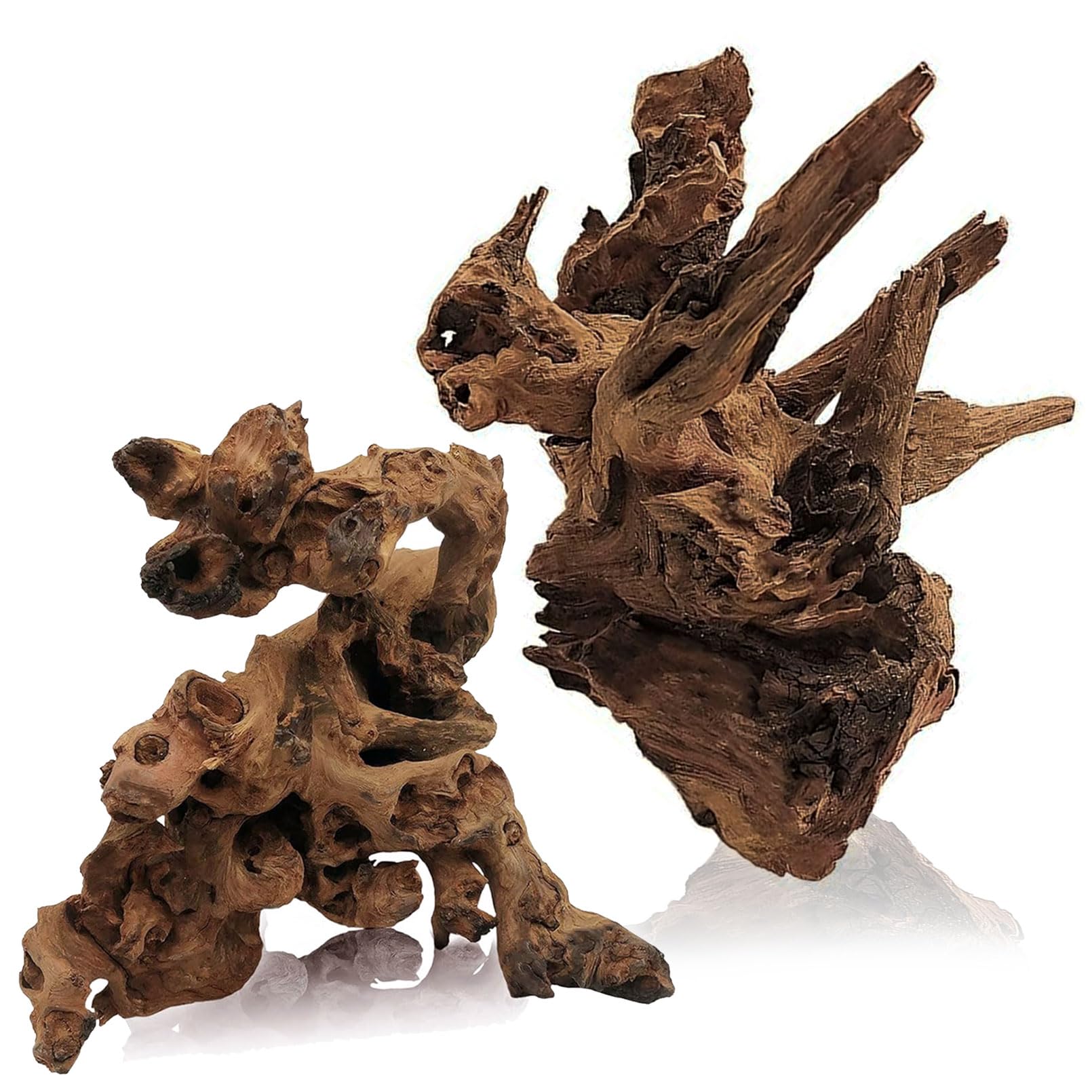
This mopani wood set delivers two large, dense pieces weighing over three pounds combined. Mopani is one of the heaviest woods available for aquarium use — it sinks naturally after a short soak without requiring constant weighting. Each piece measures between 8.5 and 12 inches, making this pair suitable for 20-gallon tanks and larger scapes where you want a substantial root-like structure. The wood releases tannins gradually, which helps soften water and create a natural blackwater environment that tetras and shrimp love.
Customers consistently report that the pieces arrive with interesting knots and twisted textures that mimic real underwater roots. The natural variation means no two sets look identical, which works well for hobbyists who want a unique centerpiece. Users note that a hot water soak with daily changes over one to two weeks removes most tannins, leaving the water clear while retaining the beneficial wood acids. The density also makes this wood ideal for attaching moss with glue or fishing line — it stays put without floating up during maintenance.
Some pieces arrive with surface dirt that needs brushing before use, and the tannin leaching can tint water for several weeks in smaller tanks. A few users report that individual pieces require longer boiling to reach full saturation. For a pair of heavy, natural mopani branches that add immediate visual weight and biological function to a medium or large aquarium, this set provides excellent value.
Why it’s great
- Very heavy mopani sinks quickly without rock anchoring
- Large size suitable for 20-gallon tanks and above
- Unique twisted shapes with grip for moss attachment
Good to know
- Requires soaking for up to two weeks to fully leach tannins
- Pieces may arrive with surface grit needing brushing
2. Hiwzitar 3-Piece Mopani Driftwood
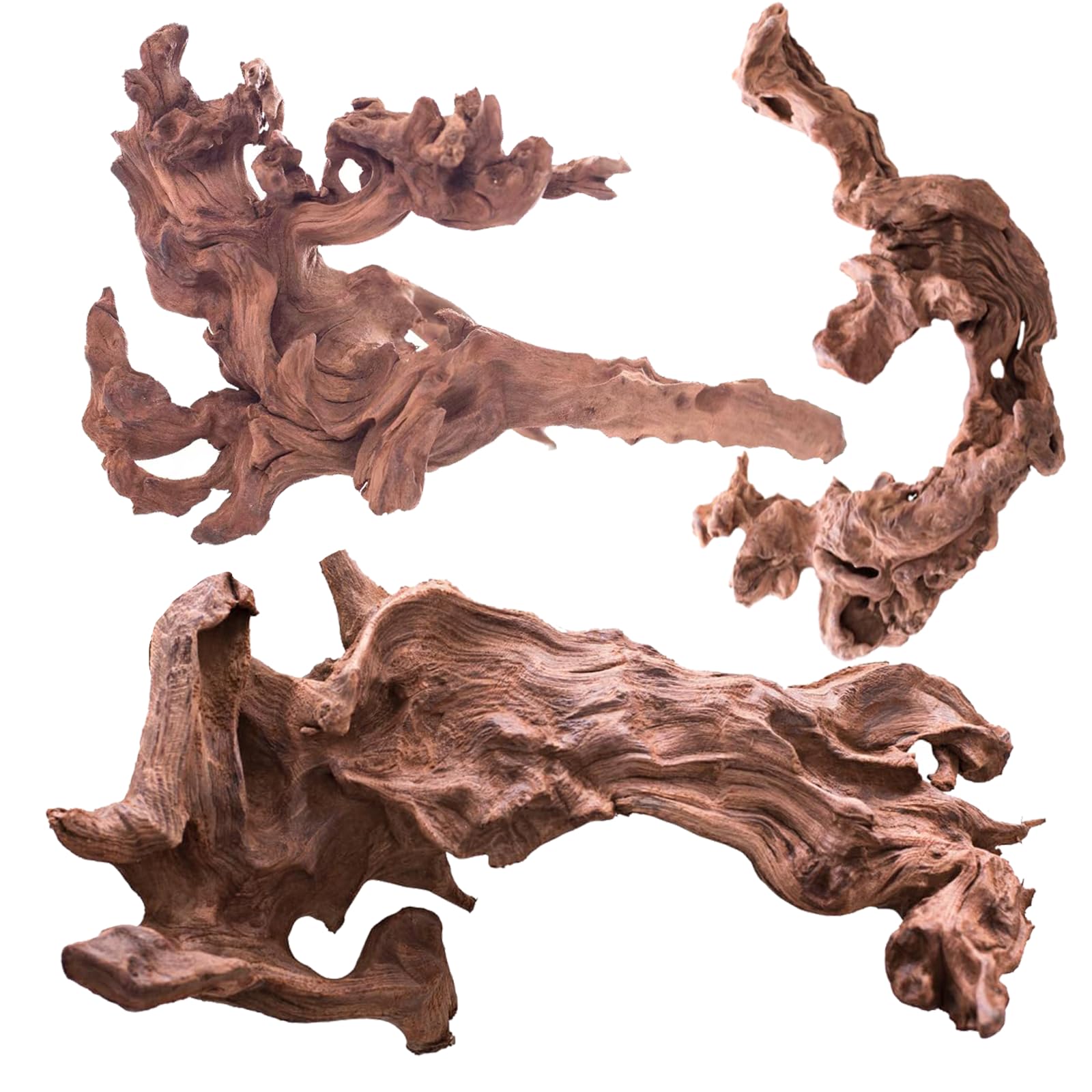
With three pieces ranging from 7 to 11 inches, this mopani set gives you enough wood to build a layered aquascape or decorate a reptile enclosure. Each branch has its own textured grain and natural curves, so you can create depth by positioning pieces at different heights. The wood is dense enough to sink after a standard boil-and-soak routine, and customers confirm that it stays submerged without floating back up. The set works especially well in 30- to 55-gallon tanks where you need multiple focal points rather than one single centerpiece.
Buyers highlight the heavy, solid feel of each branch — these are not lightweight spider wood sticks that snap under pressure. The irregular shapes include nooks and crevices that make excellent hiding spots for shrimp and small fish. For reptile keepers, the 6-inch pieces fit well in leopard gecko enclosures as climbing structures. The wood responds well to boiling, with most users reporting that a few hours of simmering followed by a cool soak removes the bulk of the tannins. Once prepped, the wood holds its color and does not leach for months.
The main drawback is the strong tannin release in smaller tanks — several customers caution against using these pieces in tanks under 20 gallons because the water turns brown for up to two months. The set is also smaller than some photos suggest, so measure your tank footprint before ordering. For anyone setting up a medium to large tank or a terrarium that needs heavy, durable wood, this three-pack delivers plenty of material.
Why it’s great
- Three-piece set offers flexible layout options for large tanks
- Very dense mopani stays submerged and resists rot
- Natural crevices provide ideal shrimp and fish hiding spots
Good to know
- Strong tannin release can discolor small tanks for weeks
- Actual size may run slightly smaller than online listing suggests
3. Azil Natural Aquarium Driftwood Root

This single piece of natural root wood spans 14 to 16 inches and weighs just under half a pound, making it ideal for a 6- to 10-gallon tank where you want one statement piece without overcrowding. The wood comes pre-treated to reduce premature clouding, and multiple buyers confirm that it sinks faster than expected for a lightweight root. The branching structure creates natural arches and tunnels that bettas and shrimp swim through immediately after placement. Unlike chunkier mopani, this root wood has a thin, organic silhouette that mimics the look of submerged tree roots.
Customers who reordered this product mention that the fish behavior improved noticeably — shy bottom dwellers came out more often because the wood provided cover without blocking the entire tank. The wood releases tannins at a gentle pace, softening water without turning it dark overnight. Some users report that the piece floats initially and requires a few days of weighting with substrate or a rock, but once waterlogged it settles well. The natural variation means every piece has a slightly different curve, which adds to the uniqueness of each setup.
The biggest limitation is the weight — at only 0.38 pounds, it sits lighter in the tank and can shift during water changes if not anchored. The size also limits its use to smaller tanks; a 14-inch root might look small in a 55-gallon scape. For a clean, natural-looking root that arrives pre-cleaned and sinks reasonably fast, this is a solid pick for nano tanks and desktop aquariums.
Why it’s great
- Pre-treated to reduce water clouding and speed up sinking
- Branching arch creates tunnels that fish love to explore
- Gentle tannin release ideal for smaller tanks
Good to know
- Lightweight and may float until fully waterlogged
- Limited to tanks under 20 gallons due to size
4. Hamiledyi 5-Piece Spider Wood

This five-piece set uses azalea root, a hard-tissued wood that takes on the classic spider wood look — thin, twisting branches that spread out like roots reaching through water. Each branch measures roughly 7 to 9 inches, and the variety in shape means you can glue several together to build a moss tree or arrange them as separate accent pieces. The wood is light but sturdy, and customers report that it sinks dependably after boiling for one to three hours followed by a day of soaking. The branches offer excellent surface area for attaching Java moss or Anubias using cyanoacrylate glue.
Buyers note that the wood arrives clean and well-packed, with a mix of light and medium-toned pieces that create visual contrast in a planted tank. The roots are dense enough to stay intact underwater for months. Some users mention that boiling darkens the color of the wood, turning it into a rich brown that matches natural river wood. The set works well in 10- to 20-gallon tanks where you want multiple branching elements without one massive chunk dominating the space.
The primary concern is durability — a small number of customers report that the wood broke down or turned soft after a few weeks despite proper boiling. The sharp protruding tips can also scratch silicone seals if handled roughly during placement. For hobbyists who want a classic spider wood look with multiple build options, this set offers good variety at a reasonable entry point.
Why it’s great
- Five-piece set allows custom gluing and positioning
- Hard azalea root holds moss and ferns securely
- Sinks well after standard boiling and soaking
Good to know
- Some pieces may rot or soften after extended submersion
- Sharp tips require careful handling during installation
5. Vmiapxo 5-Piece Spider Wood
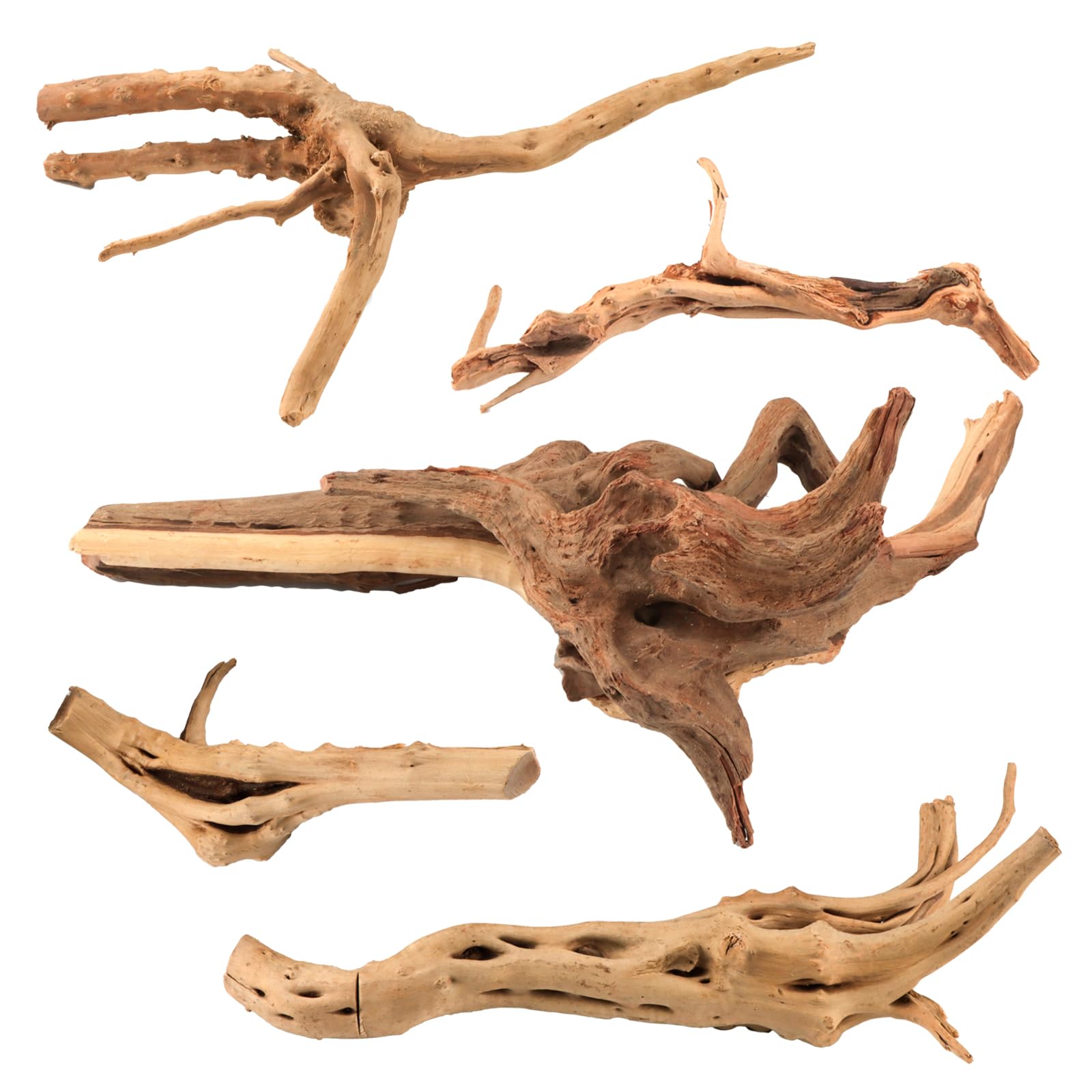
This pack of five spider wood branches focuses on small-scale scaping — each piece measures between 6 and 8 inches, making the entire bundle compact enough to fit in one hand. The branches are thin but surprisingly durable, and customers use them to create root illusions in 5-gallon tanks, micro aquascapes, and even tarantula enclosures. The wood is lightweight, so it requires thorough soaking before it stops floating. Most users report that a rinse and brief soak are enough for immediate use, though the wood can fade slightly when first submerged.
Many buyers appreciate the value of getting five distinct pieces in one order — they use separate branches to build depth instead of relying on one bulkier log. The natural shapes work well with Dragon Stone to create layered, realistic riverbed scenes. For beta tanks specifically, several customers report buying this set multiple times because the branches provide gentle cover that improves fish confidence. The wood can also be glued together with cyanoacrylate to form a larger custom structure.
The common complaint is that the pieces are smaller than some buyers expect — they are best suited for tanks under 10 gallons or for accent details within larger scapes. A few customers also note that the wood is thin enough to break if dropped. For micro aquascapes, desktop nano tanks, or reptile enclosures where you need lightweight, low-profile branches, this set offers a practical solution.
Why it’s great
- Five pieces give maximum layout flexibility for small tanks
- Thin branches work well for micro scapes and beta tanks
- Durable enough for repeated gluing and repositioning
Good to know
- Pieces are small and best suited for tanks under 10 gallons
- Lightweight construction requires weighted soaking to sink
FAQ
Does all driftwood release tannins that turn water brown?
How long does it take for driftwood to sink completely?
Can driftwood grow mold or fungus in my aquarium?
Final Thoughts: The Verdict
For most users, the driftwood for aquarium winner is the Tfwadmx 2-Piece Mopani because it provides heavy, dense wood that sinks quickly, releases tannins at a manageable rate, and works for tanks from 20 gallons up to 55 gallons. If you want a three-piece set for larger scapes and reptile enclosures, grab the Hiwzitar 3-Piece Mopani. And for a nano tank or a single centerpiece root that is pre-treated for easy setup, nothing beats the Azil Natural Driftwood Root.

Mo Maruf
I created WellFizz to bridge the gap between vague wellness advice and actionable solutions. My mission is simple: to decode the research and give you practical tools you can actually use.
Beyond the data, I am a passionate traveler. I believe that stepping away from the screen to explore new environments is essential for mental clarity and physical vitality.