Our readers keep the lights on and my smoothie glass nicely filled. As an Amazon Associate, I earn from qualifying purchases.
A bed sore that won’t heal is not just painful—it creates a cycle of frustration, risk of infection, and expensive supply runs that never seem to end. The right dressing changes everything by maintaining a moist wound environment, absorbing excess fluid, and allowing fragile tissue to regenerate without being torn apart at every change.
I’m Mohammad Maruf — the founder and writer behind WellFizz. I have spent weeks analyzing the real-world performance data, customer feedback, and material science behind hundreds of wound care products to identify which dressings actually deliver on their claims for bed sore management.
Whether you are caring for a loved one at home or stocking a facility, finding truly effective dressings for bed sores means looking past the marketing to foam density, silver concentration, and absorbency rates that match the wound’s exudate level.
How To Choose The Best Dressings For Bed Sores
Choosing the wrong dressing leads to macerated skin, bacterial colonization, and painful removal that undoes any healing progress. The right choice depends entirely on the wound’s depth, drainage level, and location on the body. Here are the critical factors to consider before making your selection.
Match the Material to the Exudate Level
Lightly draining sores benefit from hydrocolloid or thin foam dressings. Moderately draining wounds need alginate dressings derived from seaweed fiber that forms a soft gel on contact with fluid. Heavy exudate demands foam dressings with a superabsorbent polymer core that locks moisture away from the periwound skin to prevent breakdown.
Silver Content for Infection Control
Chronic bed sores are prone to biofilm formation and bacterial colonization. Silver-infused dressings release ionic silver in the presence of wound fluid, creating a broad-spectrum antimicrobial barrier. Look for dressings specifying silver concentration in parts per million—15000 ppm is a benchmark for clinical effectiveness without cytotoxicity.
Silicone Adhesion for Fragile Skin
Elderly and immobile patients often have paper-thin skin that tears with adhesive removal. Silicone-based contact layers adhere to dry surrounding skin but do not stick to the moist wound bed, allowing painless repositioning and removal. This feature alone can mean the difference between compliant care and traumatic dressing changes.
Size and Conformability
Sacral sores, heel ulcers, and trochanteric wounds each require different shapes and sizes. Large square dressings work for flat surfaces, while contoured or bordered pads conform better to curved body areas. A dressing that shifts or bunches creates pressure points that worsen the sore rather than heal it.
Quick Comparison
On smaller screens, swipe sideways to see the full table.
| Model | Category | Best For | Key Spec | Amazon |
|---|---|---|---|---|
| LotFancy Calcium Alginate | Alginate Pad | Moderate to heavy exudate | 20x absorbency vs gauze | Amazon |
| Dimora Ag Silver Sacrum Foam | Silver Foam | Sacral pressure ulcers Stage 1-4 | 0.25-0.35 mg/cm² silver | Amazon |
| EVERLIT Silver Calcium Alginate | Silver Alginate | Diabetic ulcers and infected wounds | 15000 ppm ionized silver | Amazon |
| Niceful Silicone Super Absorbent | Silicone Foam | Large incisions and heavy drainage | 20x fluid absorption capacity | Amazon |
| NeuHeils Silicone Adhesive Foam | Silicone Foam | Sensitive skin and chronic wounds | Repositionable silicone layer | Amazon |
In‑Depth Reviews
1. LotFancy Calcium Alginate Wound Dressing
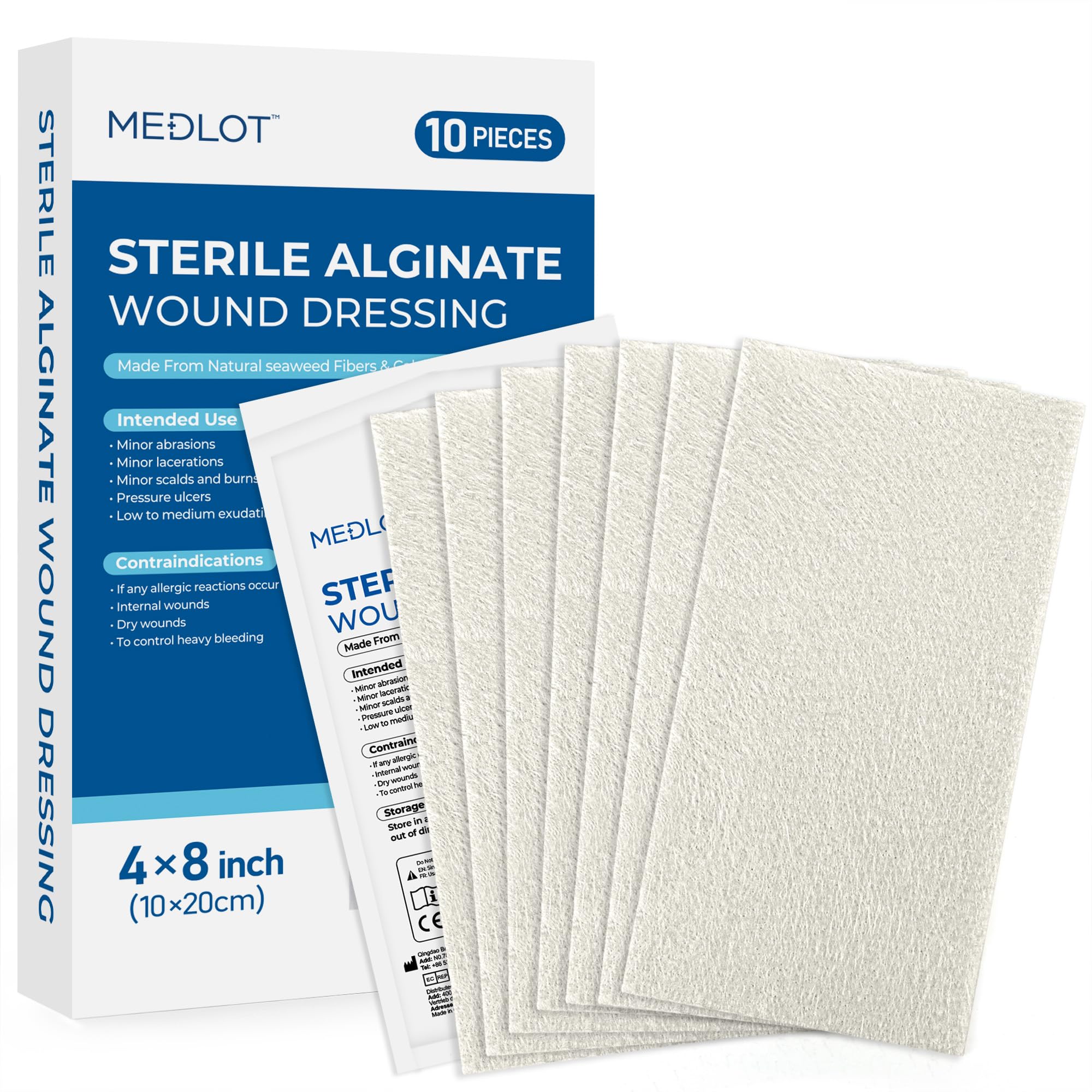
This calcium alginate dressing uses natural seaweed fiber combined with calcium ions to create a hydrophilic gel on contact with wound fluid, maintaining an optimal moist healing environment without sticking to the wound bed. The 4×8 inch size is large enough to cover most bed sores while remaining flexible enough to conform to body contours like the sacrum or heel. Customers consistently report that this dressing is noticeably thicker and more absorbent than competing alginate pads, reducing the frequency of changes needed.
Unlike many alginate dressings that disintegrate when saturated, the LotFancy pad holds together structurally even when fully wet, which prevents fiber shedding into the wound. The sterile individual wrapping ensures each dressing stays contamination-free until use, and the material is latex-free for sensitive patients. Multiple reviewers note that this product outperforms dressings from medical supply stores that cost significantly more after insurance copays.
For moderate to heavily exudating bed sores, this dressing excels by absorbing up to 20 times its weight while forming a cohesive gel that can be removed in one piece. It is indicated for pressure ulcers, diabetic ulcers, leg ulcers, and post-operative wounds. The only limitation is that alginate dressings require a secondary cover or tape to hold them in place on highly mobile areas.
Why it’s great
- Exceptional absorbency reduces dressing change frequency
- Painless removal without sticking to wound tissue
- Thicker construction than most competitors
- Individually wrapped sterile packaging
Good to know
- Requires secondary tape or cover to secure on mobile areas
- Packaging transition to MEDLOT sub-brand may cause confusion
2. Dimora Ag Silver Sacrum Foam Wound Dressing

Specifically shaped for the sacrum, this 7×7 inch bordered foam dressing contains silver at 0.25-0.35 mg per square centimeter to provide antimicrobial protection directly within the foam core. The silicone adhesive contact layer solves the dual problem of staying attached to dry skin while not adhering to the moist wound bed, minimizing trauma during dressing changes. A semipermeable PU film outer layer is waterproof yet breathable, allowing oxygen and water vapor exchange while blocking external contaminants.
The foam core absorbs up to 15 times its weight in exudate while a superabsorbent layer locks fluid away from the periwound skin to prevent maceration. This dressing is indicated for Stage 1 through Stage 4 pressure ulcers, making it versatile enough for early-stage prevention as well as established wounds. The border design eliminates the need for tape, which is especially valuable on the sacrum where traditional tape can damage fragile skin.
Users recovering from tailbone injuries and sacral pressure sores report that this dressing stays securely in place even during prolonged sitting or lying down, while the gentle silicone border allows repositioning without pain. Some customers note that delivery times can be inconsistent, but the clinical performance in wound healing improvement is consistently praised by both home caregivers and facility nurses.
Why it’s great
- Self-adhesive border eliminates need for tape
- Silver provides antimicrobial protection in the wound bed
- Waterproof outer layer allows bathing without removal
- Cushioning foam reduces pressure on sacral area
Good to know
- Premium pricing reflects the silver and foam technology
- Delivery can be slow with rescheduling reported
3. EVERLIT Silver Calcium Alginate Wound Dressing

Combining two active mechanisms—alginate fiber gelling and 15000 ppm ionized silver—this dressing attacks wound bioburden while managing exudate. The alginate component derived from seaweed forms a soft cohesive gel on contact with wound fluid, creating a moist environment that supports autolytic debridement. Meanwhile, the high silver concentration establishes a broad-spectrum antimicrobial barrier that remains active as long as wound fluid is present to release the silver ions.
Clinical users including nursing teams have selected this dressing as their preferred silver alginate product after evaluating seven to eight competing options in the same range. The 4×4 inch size is ideal for focused coverage on diabetic foot ulcers and pressure sores that need both infection control and fluid management. The dressing conforms intimately to body contours without sticking to the wound, making removal painless and reducing the risk of disturbing new tissue growth.
A particular strength of this dressing is its performance on diabetic ulcers, where infection risk is highest and healing rates are slowest. Customers report significantly faster wound closure when using this silver alginate compared to plain alginate or gauze. The sterile individual packaging maintains aseptic conditions until the moment of application, which is critical for patients with compromised immune systems.
Why it’s great
- High silver concentration for robust antimicrobial action
- Forms cohesive gel for one-piece removal
- Preferred by nursing teams against multiple competitors
- Individually wrapped sterile packaging
Good to know
- May require additional tape to secure on highly mobile areas
- 4×4 size may be small for larger sacral wounds
4. Niceful Silicone Super Absorbent Wound Dressing

This 4×8 inch silicone foam dressing uses a superabsorbent polymer core that locks fluid away from the skin while maintaining a moist wound environment for accelerated healing. The self-adhesive border eliminates the need for tape or secondary dressings, which is a major convenience for caregivers managing multiple wounds or awkward locations like the back or heel. The silicone contact layer is soft and breathable, designed specifically to avoid sticking to the wound bed and prevent secondary injury during removal.
What sets this dressing apart is its versatility across wound types—it handles pressure ulcers, venous ulcers, diabetic foot ulcers, first and second degree burns, and long surgical incisions from procedures like knee replacement or abdominal surgery. The SAP polymer core delivers 20 times absorption capacity without leakage, keeping the surrounding skin dry and reducing the risk of maceration. Users recovering from major surgery report that these dressings stay on beautifully through multiple days and remove easily with just a little water.
For bed sores that require large coverage areas, this dressing’s size is a practical advantage over smaller pads that need to be tiled together. The adhesive border is strong enough to stay on through movement but gentle enough to remove without tearing fragile skin. Some users note that the absorbency is so effective that they rarely need to change the dressing more than once every few days, reducing wound disturbance and supply costs.
Why it’s great
- Large 4×8 size covers extensive wounds in one piece
- SAP core locks fluid away to prevent maceration
- Self-adhesive border removes need for tape
- Excellent for post-surgical incisions as well as bed sores
Good to know
- Premium pricing reflects advanced polymer technology
- May be too large for small localized sores
5. NeuHeils Silicone Adhesive Foam Dressing 6×6

This 6×6 inch bordered foam dressing features a gentle silicone contact layer specifically designed for fragile, elderly skin that cannot tolerate aggressive adhesives. The silicone allows the dressing to be repositioned during application without losing its adhesive properties, a feature that is uniquely valuable for caregivers who need to align the dressing precisely over a wound. The hypocellular foam pad absorbs and locks exudate while providing cushion to redistribute pressure away from the sore.
The waterproof outer film maintains an optimal moist wound environment while blocking external dirt and liquid, allowing patients to bathe or be cleaned without removing the dressing. This dressing is indicated for bed sores, pressure ulcers, leg ulcers, diabetic foot ulcers, surgical wounds, burns, abrasions, and skin tears. Users with diabetic leg ulcers report that their wound clinic nurses specifically recommend this product, reflecting its acceptance in clinical settings.
One notable aspect is that the dressing shapes are not pre-contoured as depicted on the box, meaning some users need to cut them to fit specific areas like the heel. However, the lightweight material and easy stick make them functional for a range of wound locations. For patients with multiple pressure points, this dressing offers a balance of protection, absorbency, and skin safety that reduces the trauma of daily dressing changes.
Why it’s great
- Repositionable silicone ideal for fragile skin
- Waterproof barrier allows bathing without removal
- Recommended by wound clinic nurses
- Good pressure redistribution from thick foam core
Good to know
- Shapes may differ from box image, requiring cutting for heels
- Higher price point than standard foam dressings
FAQ
How often should I change a dressing on a bed sore?
Can I use silicone dressings on infected bed sores?
What is the difference between a bordered and non-bordered dressing?
Do alginate dressings hurt when removed?
Final Thoughts: The Verdict
For most users, the dressings for bed sores winner is the LotFancy Calcium Alginate because it delivers exceptional absorbency at an accessible price point, forming a protective gel that accelerates healing without sticking to the wound. If you need silver-based infection control for a chronic or diabetic ulcer, grab the EVERLIT Silver Calcium Alginate. And for fragile skin on the sacrum where gentle adhesion and waterproof protection matter most, nothing beats the Dimora Ag Silver Sacrum Foam.

Mo Maruf
I created WellFizz to bridge the gap between vague wellness advice and actionable solutions. My mission is simple: to decode the research and give you practical tools you can actually use.
Beyond the data, I am a passionate traveler. I believe that stepping away from the screen to explore new environments is essential for mental clarity and physical vitality.