Our readers keep the lights on and my smoothie glass nicely filled. As an Amazon Associate, I earn from qualifying purchases.
A poorly fitted downhill ski boot turns every run into a battle against numbness, heel lift, and lost energy transfer. The difference between a day of pure carving and a day of regret is measured in millimeters of shell fit and degrees of flex — not brand hype or price tag.
I’m Mohammad Maruf — the founder and writer behind WellFizz. I’ve spent hundreds of hours analyzing liner materials, shell geometries, and closure systems across the full spectrum of downhill ski boots to separate genuine performance upgrades from marketing weight.
This guide breaks down the measurable specs and real-world fit characteristics that define the best downhill ski boots for every foot shape and skiing style.
How To Choose The Best Downhill Ski Boots
Selecting the right downhill ski boot starts with understanding how your foot shape interacts with the shell and liner. The boot is the single most critical interface between your body and the skis — a mismatch here ruins technique regardless of ski quality.
Flex Index and Skill Level
The flex index, typically ranging from 60 to 130, dictates how much resistance the boot provides when you press forward. Beginners and intermediate skiers benefit from a softer flex (60-90) that forgives minor movements. Advanced skiers need stiffer flex ratings (100-130) for precise power transmission at speed. A boot that is too stiff will punish developing technique; one that is too soft will feel vague and unresponsive on steep terrain.
Last Width and Foot Volume
The last width measures the internal width of the forefoot. Narrow lasts (around 97-99mm) suit low-volume feet with skinny heels and narrow toes. Wider lasts (100-104mm) accommodate medium to high-volume feet, including those with wider forefeet or high insteps. A 102mm last, featured on several models in this guide, provides a balance that fits most medium-width skiers without requiring aggressive punching or grinding from a bootfitter.
Liner Construction and Warmth
Liners range from basic foam that packs out quickly to heat-moldable options that conform to the unique shape of your foot. Natural cork liners, like those found on premium models, offer superior thermal insulation and retain their shape longer than standard foam. Integrated lacing systems within the liner add heel hold and prevent slippage, which directly translates to more precise edge control.
Quick Comparison
On smaller screens, swipe sideways to see the full table.
| Model | Category | Best For | Key Spec | Amazon |
|---|---|---|---|---|
| Nordica HF 110 | Rear-Entry | Ease and comfort | 102mm last, 3D Cork Liner | Amazon |
| Dalbello (120 Flex) | Overlap | High-performance all-mountain | My Fit shell, 40mm Power Strap | Amazon |
| FISCHER RC One 8.5 | Overlap | Advanced/Expert precision | 8.5 HV fit, PU shell | Amazon |
| Nordica Sportmachine 3 80 | Overlap | Intermediate high-volume feet | 80 flex, 102mm last | Amazon |
| Burton Moto BOA | Snowboard Boot | Entry-level snowboarders | BOA closure, Imprint 1+ liner | Amazon |
| KULKEA Thermal Trekker | Boot Bag | Heated transport/storage | 62L capacity, 3 heat settings | Amazon |
| Alpinestars SMX S | Motorcycle Boot | Motorcycle riding | Microfiber upper, rubber sole | Amazon |
In‑Depth Reviews
1. Nordica Men Hf 110 Boots
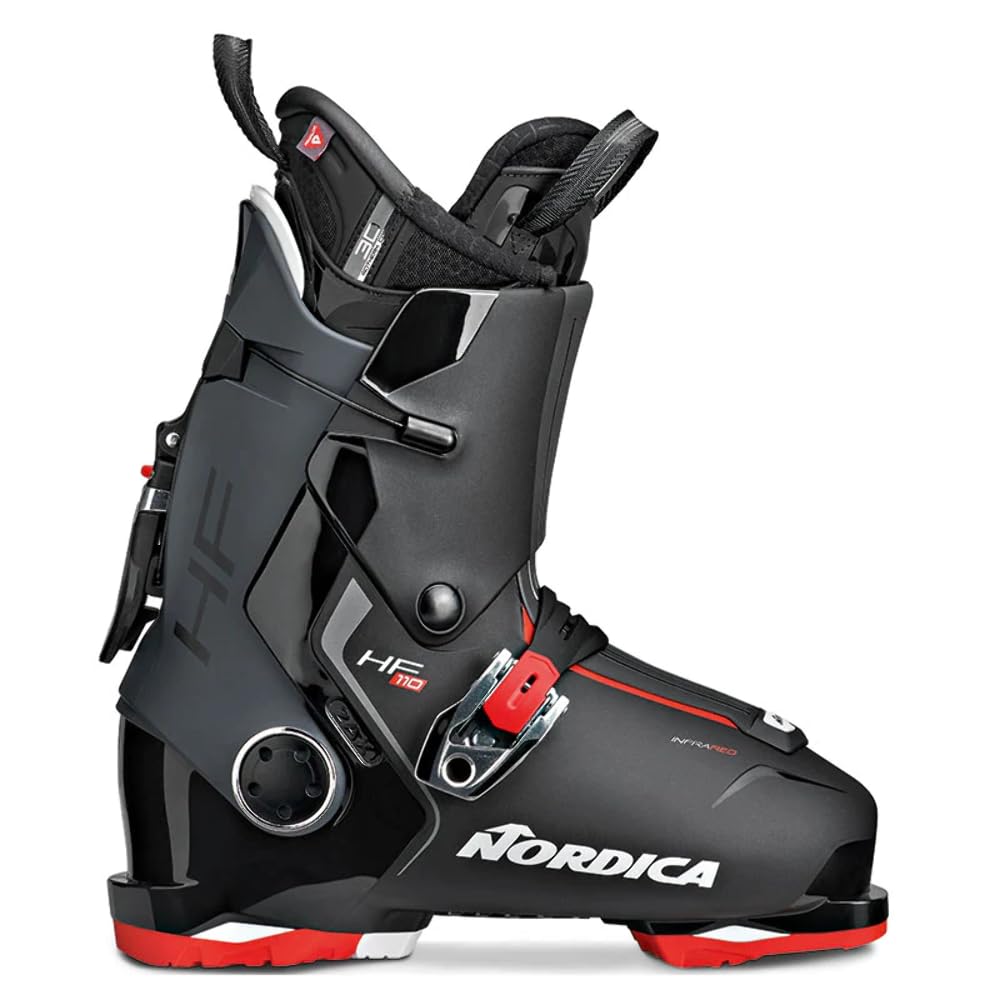
The Nordica HF 110 redefines what a premium rear-entry boot can deliver. Its 102mm last accommodates medium-wide feet without slop, while the responsive 110 flex index provides enough stiffness for advanced carving without overwhelming intermediate skiers. The 3D Cork Fit PrimaLoft liner not only molds to your foot for a personalized heel lock but also uses natural cork material for exceptional thermal regulation — your feet stay warm even on single-digit mornings.
The GripWalk soles are a practical upgrade that makes walking across icy parking lots feel stable, and the integrated Power Shift Spoiler lets you tweak the stance angle without visiting a shop. The wide-mouth opening eliminates the struggle of squeezing into an overlap boot, making it a strong candidate for skiers with ankle injuries or limited flexibility who refuse to sacrifice performance.
Some testers note that the single Velcro strap over the instep requires retightening after the liner settles. Despite that, the HF 110 earns its spot as the top all-rounder because it combines genuine rear-entry convenience with a flex and liner quality that rival traditional four-buckle designs.
Why it’s great
- Rear-entry design for effortless on/off without sacrificing performance.
- 3D Cork liner provides excellent warmth and shape retention.
- GripWalk soles improve safety and comfort outside the bindings.
Good to know
- Single instep strap may need adjustment during the first few days.
- Not designed for aggressive racing or extreme forward lean angles.
2. Dalbello (120 Flex)

The Dalbello with its 120 flex index is a true all-mountain performer that bridges the gap between expert-level power and everyday comfort. The My Fit shell system allows the lower shell and cuff to be adjusted independently, which means you can fine-tune the volume around your calf and forefoot without buying a second boot. The 40mm power strap locks in your shin for immediate energy transfer, while the Power Cage reinforcement adds torsional rigidity that keeps the boot stable over hardpack and through uneven moguls.
Reviewers consistently praise how comfortable this 120 flex boot feels straight out of the box — a rare achievement for a boot in this stiffness range. The medium-width forefoot fits most standard feet well, and the polypropylene shell offers good vibration damping without adding excessive weight. Several users report zero pressure points after the third day, which is the benchmark for a well-designed overlap boot.
The only hesitation comes from skiers with very wide calves, who may find the cuff adjustment range insufficient. For advanced skiers who want a responsive 120 flex that walks well in the parking lot and charges hard on the groomers, this Dalbello is a compelling choice.
Why it’s great
- 120 flex delivers precise edge control for advanced skiing.
- My Fit shell allows independent volume customization of shell and cuff.
- Break-in period is minimal for a boot of this stiffness.
Good to know
- Calf volume adjustment may not satisfy skiers with very large lower legs.
- Model is from a previous season, so size availability may vary.
3. FISCHER Rc One 8.5 Alpine Skis Boots
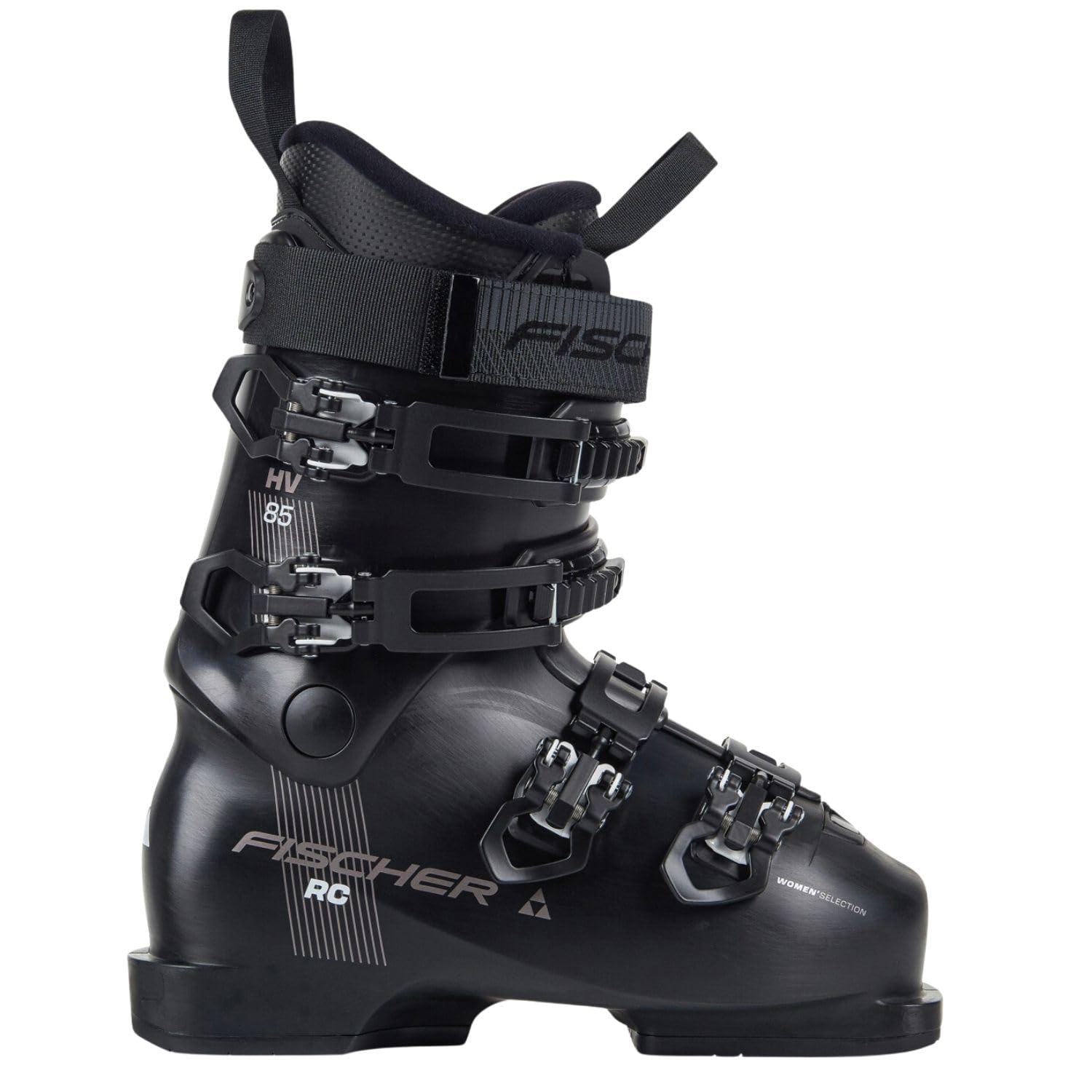
The Fischer RC One 8.5 is engineered for advanced and expert skiers who demand absolute precision from every turn. The 8.5 HV (High Volume) designation means the last is wider and the instep is taller than standard race lasts, so skiers with higher-volume feet don’t have to endure the cramped fit typical of performance boots. The polyurethane shell provides excellent dampening properties, absorbing chatter at speed while maintaining a direct line of communication with the ski.
The customizable liner interior softens after a few hours of heat molding, hugging the heel and ankle without creating dead spots. The adjustable forward lean and canting allow a bootfitter to dial in your alignment, which is critical for skiers who are building a precise biomechanical setup. The 8.5 flex index sits at the firm end of the mid-range spectrum, giving aggressive intermediates room to grow without feeling overbooted.
One minor complaint is the initial entry — the throat of the overlap design is snug, and some users report needing a boot horn for the first several wears. But once on, the heel hold is rock solid, and the power transmission through the cuff makes every edge engagement feel deliberate. This is a boot for skiers who prioritize control over convenience.
Why it’s great
- High-volume fit accommodates wider feet without slop.
- PU shell delivers excellent vibration dampening at speed.
- Fully customizable alignment features for advanced biomechanics.
Good to know
- Snug entry throat may be difficult for those with high insteps.
- Heat molding is recommended for optimal heel lock.
4. NORDICA Men’s Sportmachine 3 80 Ski Boots

The Nordica Sportmachine 3 80 is purpose-built for the intermediate skier who values comfort as much as capability. With a forgiving 80 flex index, this boot absorbs beginner mistakes while still delivering enough feedback to progress toward parallel carving. The 102mm last is generous enough for high-volume feet and those who need a bit more room for thicker socks without feeling vague or loose.
The 3D cork liner is the standout feature at this price tier — natural cork provides superior thermal insulation compared to standard foam liners, keeping your feet warmer throughout the day without added bulk. The 3 Force technology channels energy from your leg into the shell with improved efficiency, so you don’t waste effort fighting a soft boot. Soft plastic inserts integrated into the throat make stepping in and out noticeably easier than traditional overlap boots.
Some users report that the boots arrive with cosmetic wear if purchased from certain third-party sellers, so inspect upon delivery. For the intermediate skier on a budget who wants a boot that fits wider feet comfortably and won’t punish technique mistakes, the Sportmachine 3 80 is a solid investment.
Why it’s great
- 80 flex is ideal for progressing intermediates building their technique.
- 102mm last accommodates high-volume feet without pinch.
- 3D cork liner adds warmth and long-term shape retention.
Good to know
- Some reports of cosmetic scuffs on delivery.
- Not stiff enough for aggressive or expert skiers.
5. Burton Moto BOA Mens Snowboard Boots
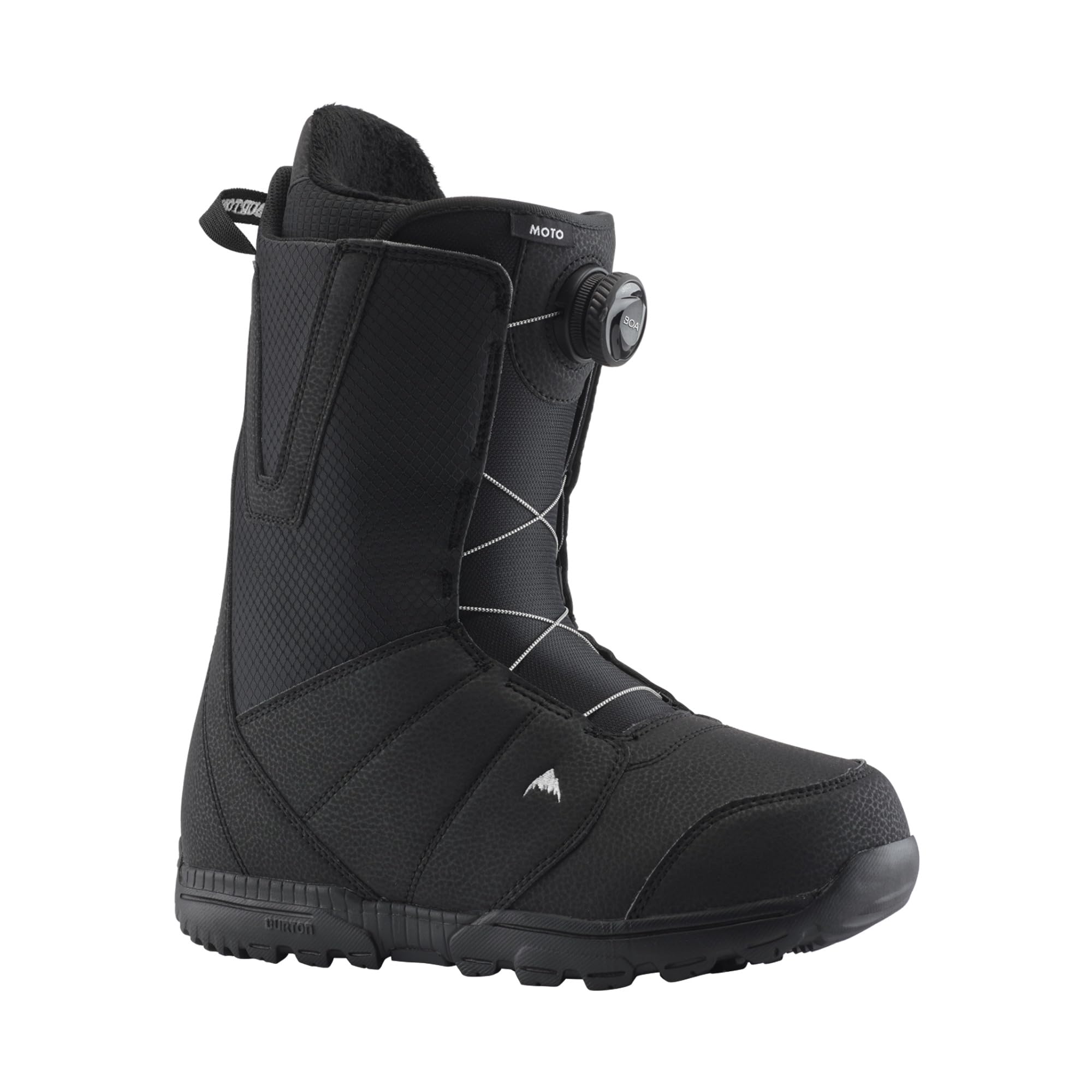
The Burton Moto BOA is an entry-level snowboard boot designed for beginners and casual riders who want the convenience of a BOA lacing system without spending premium-tier money. The single-zone BOA dial allows for quick, precise tightening, and the Imprint 1+ heat-moldable liner conforms to the foot over time, reducing the need for an aggressive break-in period. The Total Comfort Construction delivers a soft, forgiving feel from the very first ride.
The DynoLITE outsole provides decent board feel for a budget boot, and the reflective foil underfoot helps trap warmth on cold chairlift rides. The 1:1 soft flex PowerUp tongue creates a secure wrap around the shin without digging in, which is important for riders still learning weight transfer. Sizing runs about a full size small, so ordering a half to full size up from your street shoe is recommended by multiple verified purchasers.
This is not a stiff, performance-oriented boot — the soft flex is limiting for advanced snowboarding or aggressive carving. For the new rider or occasional resort guest who wants reliable warmth and easy lace adjustment at a reasonable price, the Burton Moto BOA fits the brief.
Why it’s great
- BOA system provides quick, tool-free micro-adjustment.
- Imprint 1+ liner heat-molds for a custom feel.
- Reflective foil underfoot improves warmth retention.
Good to know
- Soft flex limits performance for advanced riders.
- Runs small — size up 0.5 to 1 full size from street shoe.
6. KULKEA Thermal Trekker Heated Ski Boot Backpack
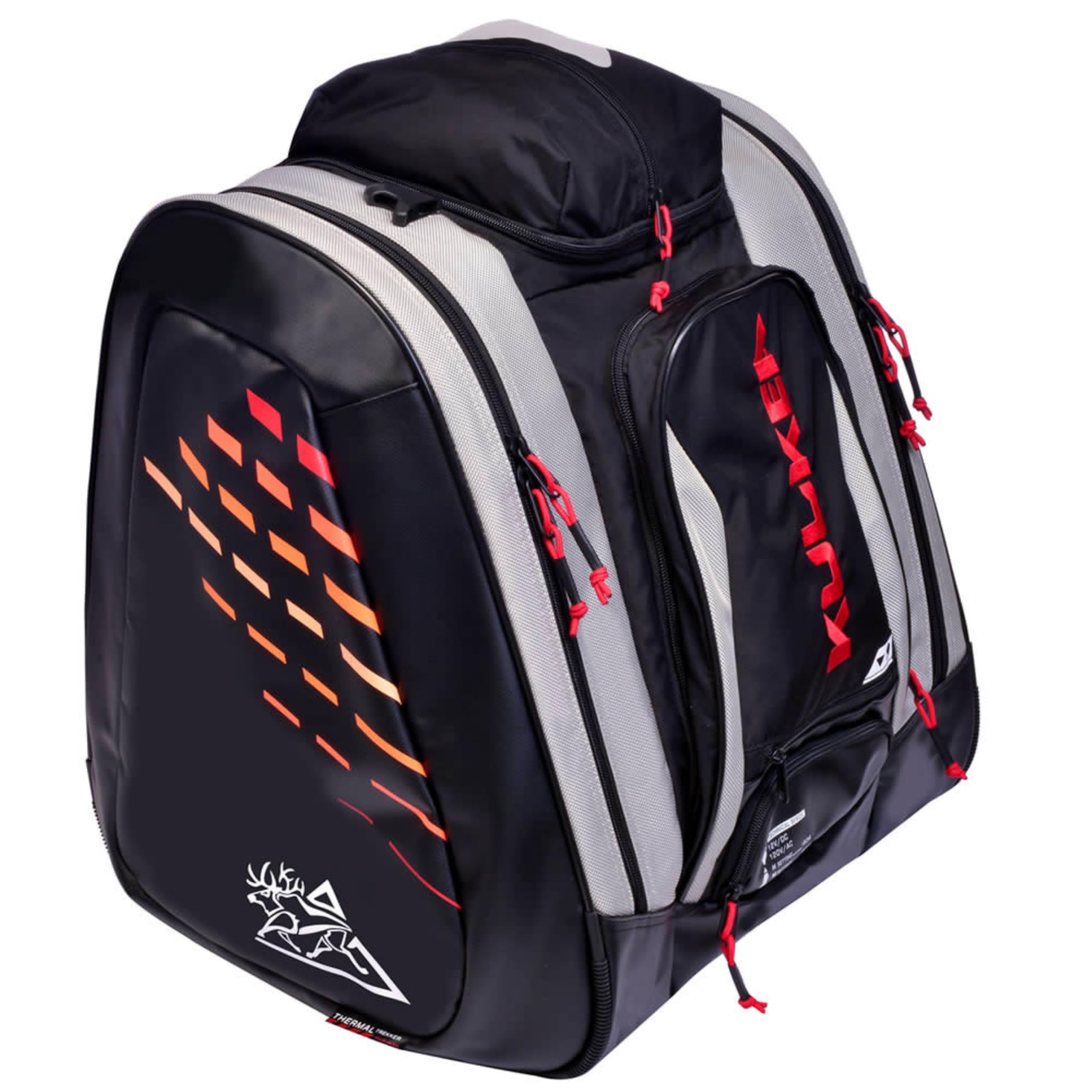
The KULKEA Thermal Trekker is not a ski boot itself — it is the most thoughtfully designed heated boot bag we have evaluated. The advanced thermal conduction system delivers heat to both sides and the bottom of each boot, raising the internal temperature to a maximum of 140°F within about 90 minutes. This means you plug the bag into your car’s 12V outlet during the drive, and your boots are warm and pliable when you arrive — no more fighting stiff plastic in a cold parking lot.
The 62-liter capacity easily swallows a full day’s gear including helmet, goggles, jacket, and lunch, with separate heated boot pockets that keep the weight distribution balanced. The backpack-grade suspension system uses padded shoulder straps and a sternum strap to make a fully loaded bag manageable on longer walks from the car to the base lodge. Three heat settings allow you to adjust intensity based on outside temperature and boot material thickness.
The only structural gripe is that some race-helmet shapes don’t fit inside the main compartment, and the helmet sling buckle has been reported to fail under tension. For skiers and riders who struggle with cold boots or stiffness, the Thermal Trekker solves a real daily problem that no boot upgrade alone can fix.
Why it’s great
- Direct thermal conduction heats boots in about 90 minutes.
- 62L capacity holds all resort gear except skis and poles.
- Car 12V and wall plug compatibility for flexible use.
Good to know
- Oversized race helmets may not fit in the main compartment.
- Helmet sling buckle durability is a known weak point.
7. Alpinestars SMX S Boots Men’s
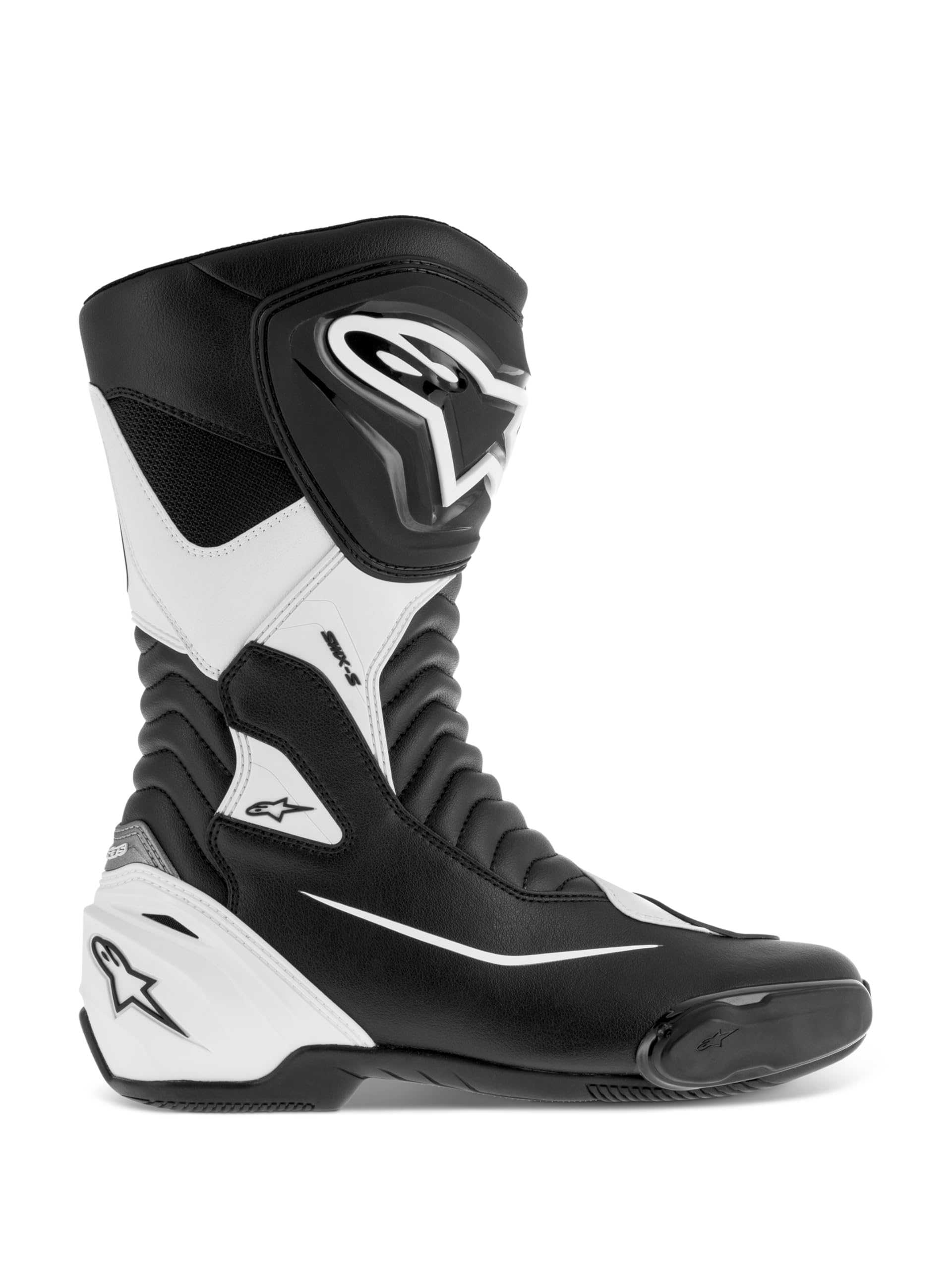
The Alpinestars SMX S is a motorcycle riding boot, not a downhill ski boot, but it appears in this search context because of general boot interest overlap. It features a durable microfiber upper that resists abrasion and an exclusive rubber compound sole designed for grip on motorcycle pegs. The fit is athletic and protective, with reinforced toe boxes and ankle armor built into the structure.
For riders who also ski, this boot can double as a cold-weather walking boot for aprés-ski scenarios, but it has no place on the ski slope. The sole design does not interface with alpine ski bindings and offers zero forward flex for skiing. The sizing runs true to street shoe size, and the break-in period is moderate for a motorcycle boot, requiring about 3-4 rides to soften the leather and microfiber panels.
It is included here to help readers distinguish between equipment categories — if you are looking for skiing performance, this is not your product. For the motorcyclist who wants a well-made sport boot with good protection and a reasonable price, the SMX S delivers.
Why it’s great
- Microfiber upper is durable and abrasion-resistant.
- Protective toe and ankle reinforcement for motorcycle riding.
- True-to-size fit with a good overall balance of protection and comfort.
Good to know
- Not designed for alpine skiing — incompatible with ski bindings.
- Velcro closures may wear over time with heavy use.
FAQ
Should I buy a downhill ski boot with a 100 flex as an intermediate skier?
What does the 102mm last width mean for a skier with wide feet?
Can a heat-moldable liner make a poorly fitting shell comfortable?
Final Thoughts: The Verdict
For most users, the best downhill ski boots winner is the Nordica HF 110 because it fuses rear-entry convenience with a 110 flex that satisfies advanced intermediates, all wrapped in a warm 3D cork liner. If you want a high-performance overlap boot that charges hard and features a customizable fit, grab the Dalbello. And for skiers with higher-volume feet who demand precision without narrow-shell pressure, nothing beats the FISCHER RC One 8.5.

Mo Maruf
I created WellFizz to bridge the gap between vague wellness advice and actionable solutions. My mission is simple: to decode the research and give you practical tools you can actually use.
Beyond the data, I am a passionate traveler. I believe that stepping away from the screen to explore new environments is essential for mental clarity and physical vitality.