Our readers keep the lights on and my smoothie glass nicely filled. As an Amazon Associate, I earn from qualifying purchases.
The real challenge with staying warm at home or in a tent isn’t the temperature outside—it’s the cold seeping up through a thin sole or the down shifting into a lumpy mess by morning. A slipper built around real insulation changes that equation, transforming tile floors and frozen ground into something you can actually stand on without clenching your toes. The difference between a bag of loose feathers and a precision-engineered bootie is the difference between waking up warm and waking up annoyed.
I’m Mohammad Maruf — the founder and writer behind WellFizz. I’ve spent countless hours analyzing fill powers, shell fabrics, outsole materials, and real-world warmth retention data to separate the truly warm from the merely puffy.
With so many styles claiming to deliver cozy heat, finding the right pair means understanding what best down slippers actually prioritize: fill power, outsole duty, and the durability of the insulation under daily compression.
How To Choose The Best Down Slippers
Not every fluffy shoe performs the same. The warmth you get depends on the loft (fill power), what covers the bottom (insulated sole vs. bare fabric), and how the down holds up after weeks of compression. Choosing wrong means cold floors migrating through the sole or down clumping into cold spots.
Fill Power and Insulation
Fill power measures how many cubic inches one ounce of down displaces—higher numbers (700+) trap more dead air for the same weight. For slippers, 600–700 FP goose down is the sweet spot. Duck down packs slightly warmer per ounce at a lower cost but may compress faster over repeated use. Never buy a “down” slipper that doesn’t list a fill power; generic fill often means feather quills and inconsistent loft.
Outsole and Traction
If you plan to step onto tile, laminate, pavement, or snow, rubber or EVA outsoles prevent cold from conducting through the bottom and give grip on wet surfaces. Fabric-only booties (often called down socks) feel lighter and pack smaller but transfer cold upward after minutes on a hard floor. Decide your primary surface before picking an outsole type.
Closure and Fit
Drawstring closures, elastic bands, or full collars each affect heat retention differently. A snug ankle seal prevents warm air from escaping upward, but an opening that’s too narrow can make the slipper frustrating to pull on. Look for adjustable closures if you have high-volume feet or plan to wear thick socks underneath.
Quick Comparison
On smaller screens, swipe sideways to see the full table.
| Model | Category | Best For | Key Spec | Amazon |
|---|---|---|---|---|
| UGG Women’s Tasman II | Shearling Slipper | Indoor-outdoor lounging | 17mm sheepskin lining + rubber outsole | Amazon |
| UGG Men’s Tasman II | Shearling Slipper | Everyday indoor-outdoor wear | 17mm sheepskin lining + EVA outsole | Amazon |
| UGG Women’s Coquette Slipper | Shearling Slide | Quick slip-on around the house | Sheepskin lining + ridged rubber outsole | Amazon |
| THE NORTH FACE Men’s Thermoball Traction Mule V | Synthetic Mule | Outdoor trips and rough terrain | ThermoBall synthetic insulation + rubber outsole | Amazon |
| Rab Down Hut Slipper | Down Bootie | Camp and sleeping bag warmth | Goose down fill + fabric outsole | Amazon |
| Naturehike Ultralight Goose Down Booties | Goose Down Bootie | Ultralight backpacking and sleeping | 700 FP goose down + nylon shell | Amazon |
| Lixada Ultralight Duck Down Booties | Duck Down Bootie | Budget-friendly camp insulation | Duck down fill + fabric bottom | Amazon |
In‑Depth Reviews
1. UGG Women’s Tasman II
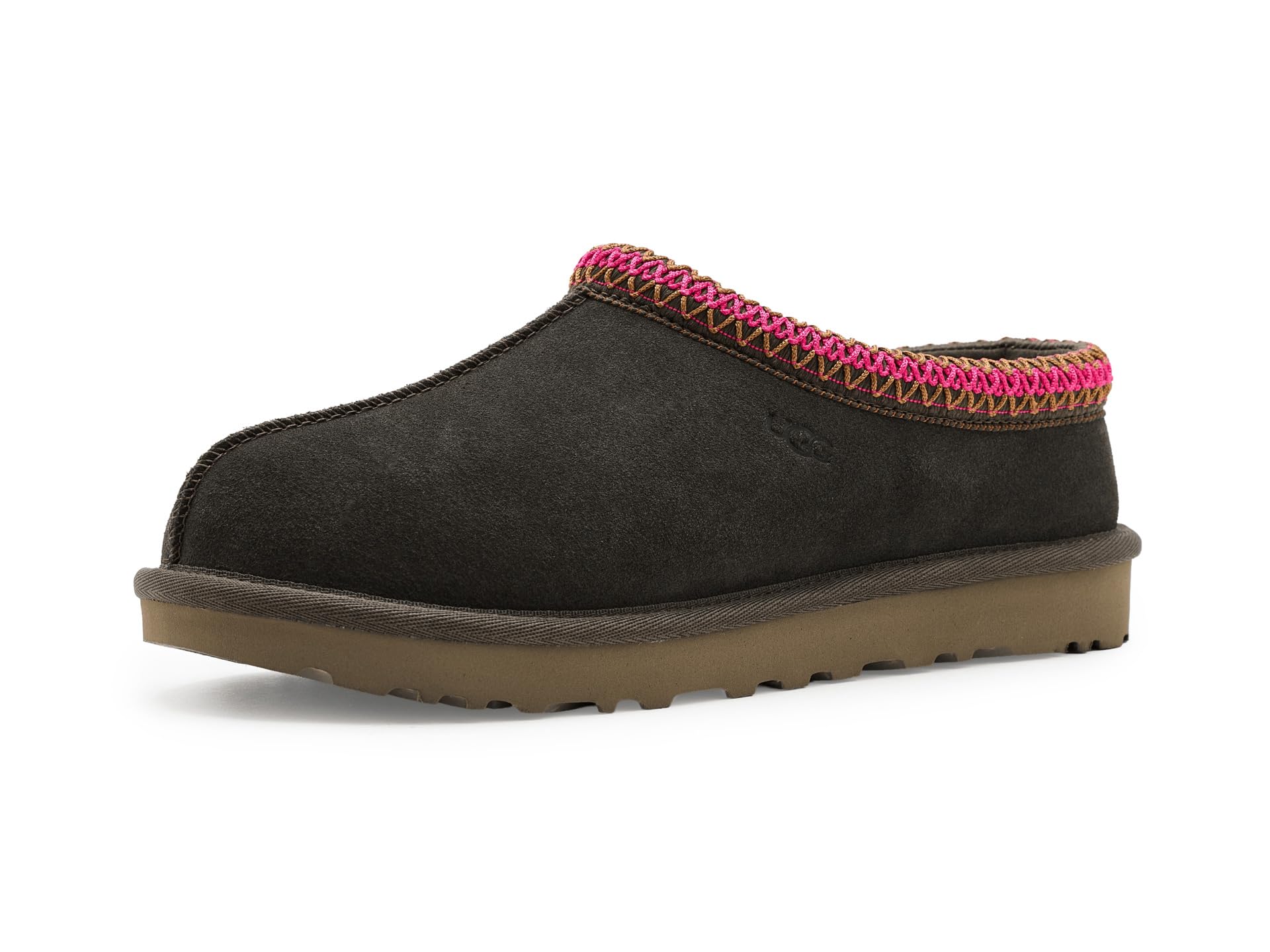
The Tasman II balances luxury warmth with genuine walkability. The 17mm sheepskin lining wraps the foot in soft insulation that regulates temperature without causing sweat buildup—a common complaint with synthetic fuzz. The rubber outsole is thick enough for quick trips across damp pavement or gravel, and the suede exterior hides scuffs better than the originals.
Owners consistently report that the heel initially feels snug but breaks in perfectly after a few days, meaning sizing up is only necessary for borderline half-sizes. After months of daily wear, the sheepskin does flatten slightly but retains its insulating properties better than down alternatives that shift over time.
The braided stitching adds durability at stress points, and the slip-on design works well for quick errands without sacrificing heel hold. For someone who wants one slipper to wear from the couch to the mailbox, this is the top-tier choice.
Why it’s great
- Thick 17mm sheepskin provides consistent warmth without overheating
- Durable rubber outsole handles wet outdoor surfaces safely
Good to know
- Sheepskin flattens gradually with heavy daily use
- Sizing up recommended if you are between half-sizes
2. UGG Men’s Tasman II

The men’s version of the Tasman II shares the same 17mm sheepskin lining and Premium suede construction as the women’s, but the fit runs slightly narrower through the instep. The lightweight EVA outsole provides solid traction on wet sidewalks and doesn’t track debris indoors, making it a true crossover shoe for lounging and short errands.
Reviews highlight that the interior feels exceptionally plush from the first wear, and multiple owners report buying second pairs after realizing how often they reach for this slipper over traditional shoes. The braided stitching around the heel and upper holds up well against repeated slip-on friction.
One consistent note: men with wider feet should size up a full size to avoid pressure across the midfoot. The sheepskin does mold to your foot over time, but the initial break-in period can be tight for high-volume feet.
Why it’s great
- 17mm sheepskin stays warm even in damp conditions
- EVA outsole offers good traction without adding bulk
Good to know
- Runs narrow; men with wider feet should size up a full size
- Sheepskin flattens slightly over extended daily wear
3. UGG Women’s Coquette Slipper

The Coquette Slipper strips down the Tasman silhouette into a slide format, making it the easiest to slip on and off during quick trips around the house. The sheepskin lining is just as thick as the Tasman’s, providing the same warm footbed, but the open-back design means less heat retention around the heel—a trade-off worth considering if you have chronically cold heels.
The ridged rubber outsole is surprisingly aggressive for a slide, offering real grip on damp patios and driveways. Owners frequently mention that these slippers last for years without the lining wearing thin, even with daily indoor-outdoor use.
The fit runs true to size, though the sheepskin does compress about a quarter size over the first month, so borderline half-sizes should size down. The main downside is the lack of a heel collar, which means some heat escapes upward, but for warm lounging with easy access, it’s hard to beat.
Why it’s great
- Thick sheepskin lining stays soft and warm for years
- Ridged rubber sole provides reliable outdoor grip
Good to know
- Open-back design allows some heat loss at the heel
- Sheepskin compresses slightly after the first month
4. THE NORTH FACE Men’s Thermoball Traction Mule V

The Thermoball Traction Mule V replaces natural down with synthetic ThermoBall insulation, which retains heat even when wet—a genuine advantage for beach trips, damp campground mornings, or snowy driveways. The rubber outsole is deeply lugged, providing traction on loose gravel and wet pavement that no fabric-bottom slipper can match.
Owners report that the cloud-like cushioned footbed stays comfortable over long standing periods, and the elastic heel collar bounces back without losing tension. After five years of consistent wear, many users note that the outsole shows only minor wear and the insulation hasn’t shifted or compressed significantly.
The ThermoBall material is slightly bulkier than goose down, so this slipper has a more substantial feel on the foot. For someone who needs one piece of footwear for cabin trips, quick outdoor walks, and house lounging, the Traction Mule delivers durability that down-only booties can’t offer.
Why it’s great
- Synthetic ThermoBall insulation stays warm when wet
- Deeply lugged rubber outsole handles rough outdoor terrain
Good to know
- Bulker than down booties; not packable for ultralight trips
- May feel too warm for indoor use in moderate climates
5. Rab Down Hut Slipper
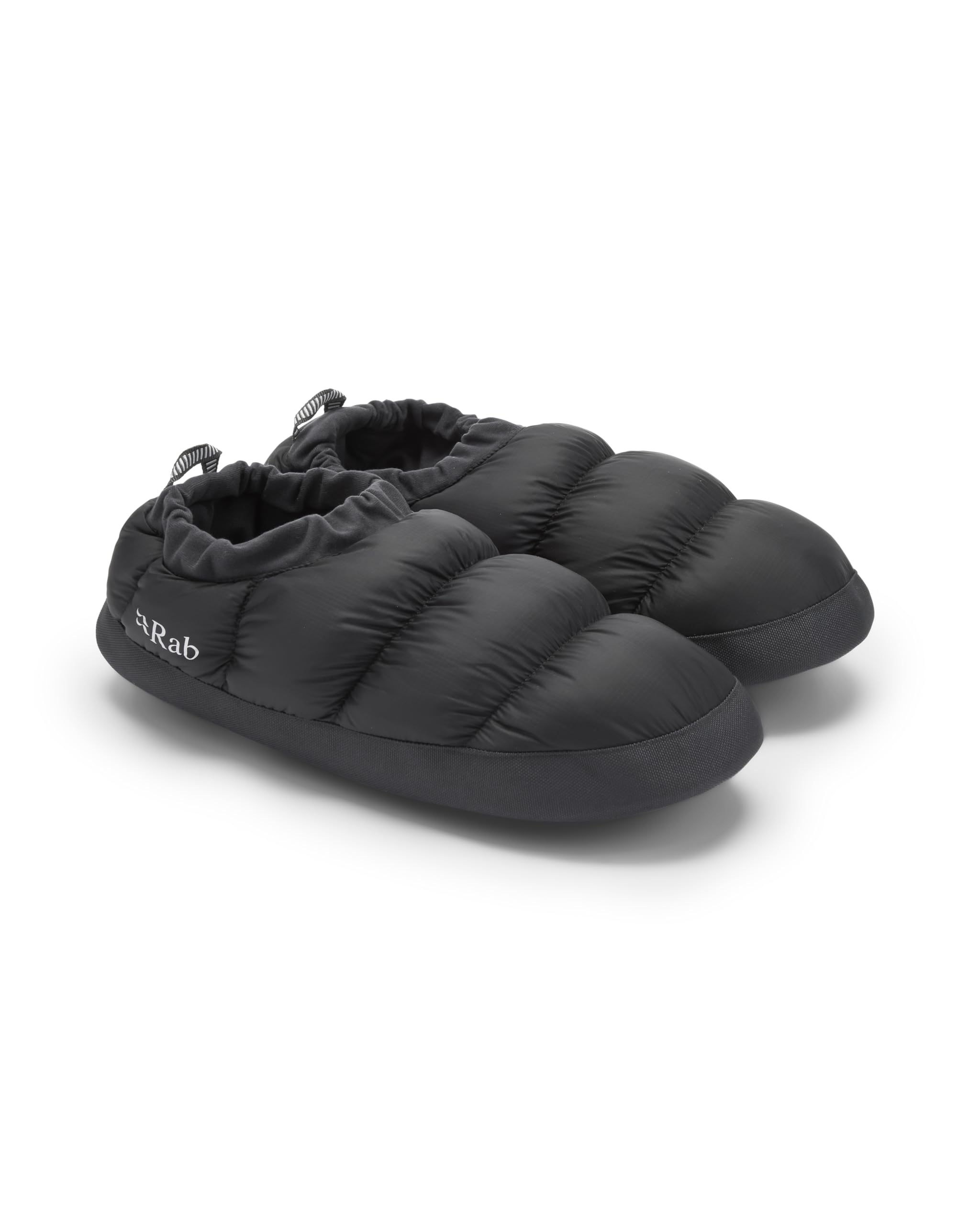
The Rab Down Hut Slipper is a true mountaineering-style down bootie built for extreme camp comfort. The goose down fill traps heat effectively inside a sleeping bag, and the fabric outsole reduces weight while providing enough insulation to stand on cold tent floors briefly. The drawstring closure at the top seals warmth in effectively, but the opening is notably small.
Owners with poor circulation report that these slippers keep toes toasty in sub-freezing conditions, and the lightweight construction (around 7 ounces) makes them easy to pack. The insole provides enough cushion to take pressure off joints while moving around camp.
The main trade-off is the fabric outsole: on frozen ground or hard-packed snow, cold seeps through faster than a rubber-soled slipper. The small ankle opening also makes them difficult to put on with thick socks, so consider sizing up if you plan to wear heavy expedition-weight socks underneath.
Why it’s great
- Goose down fill provides excellent warmth-to-weight ratio for camp
- Drawstring closure seals in heat effectively inside a sleeping bag
Good to know
- Fabric outsole transfers cold from hard-packed ground quickly
- Small ankle opening can be tight with thick expedition socks
6. Naturehike Ultralight Goose Down Booties

The Naturehike booties prioritize packability above all else, using 700 fill power goose down compressed into a 20D nylon shell that weighs just over 80 grams per pair. They stuff down to roughly the size of a soda can, making them a prime candidate for backpackers who count every ounce. The adjustable elastic closure at the top seals warmth effectively inside a sleeping bag.
Users report that these booties deliver dependable warmth between 32°F and 59°F, but below 25°F the sole begins to feel cold through the thin fabric bottom. The down is protected by a water-resistant coating, but extended exposure to damp tent floors can reduce loft.
The durability concern is real: several owners report down leaking through tears after the return window closes, particularly if the booties are used for walking rather than sleeping. Treat these as sleeping bag accessories rather than walking slippers, and they’ll serve well for ultralight trips.
Why it’s great
- 700 FP goose down provides excellent warmth for only 80 grams
- Compresses to a very small size for ultralight backpacking
Good to know
- Fabric sole allows cold to seep through below 25°F
- Several reports of down leaking through seams over time
7. Lixada Ultralight Duck Down Booties
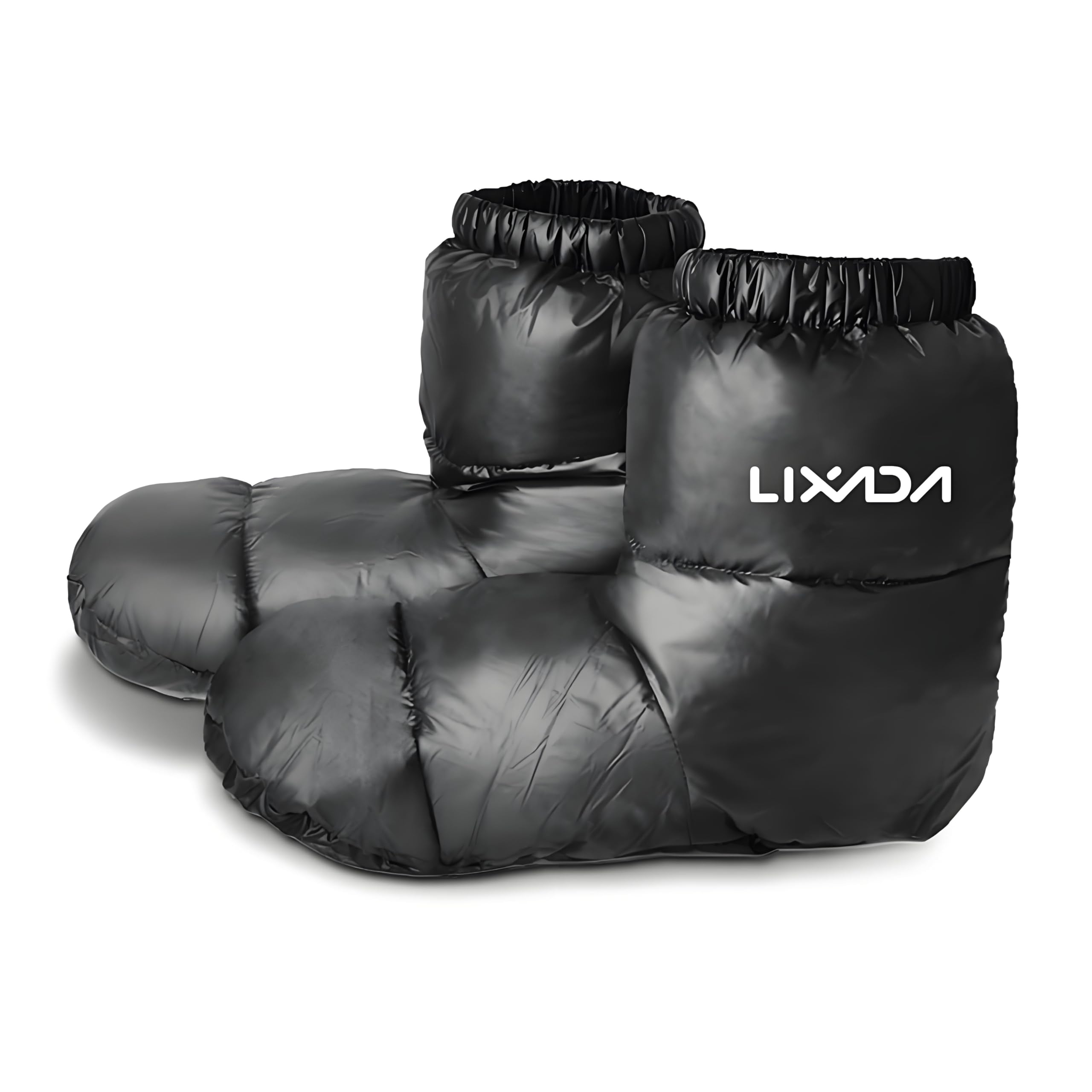
The Lixada booties use duck down instead of goose down, which offers similar warmth per ounce but tends to compress faster and lose loft with repeated packing. The fabric shell has a cloud-like texture that owners love, and the included stuff sack makes them easy to pack for camp use. The bottom is fabric-only, so these are strictly for sleeping bag or tent-floor use.
Users report that these booties perform well in the 0–30°F range when used inside a sleeping bag, and the simple design keeps the weight low enough to justify carrying on multi-day treks. The elastic cuff helps retain heat, but the down filling can shift into clumps after shipping compression—manual fluffing is often required before first use.
The durability matches the price point: the outer fabric is thin, and the down migration means warmth can become uneven over time. For a budget-friendly entry into down camp booties, they work well for occasional trips, but frequent users will find the loft degrades faster than higher-end competitors.
Why it’s great
- Duck down offers good warmth at a low cost for camp use
- Lightweight and packs into a small included stuff sack
Good to know
- Down filling can shift into clumps after shipping compression
- Thin fabric and down migration reduce long-term durability
FAQ
How long does down insulation last in slippers before it compresses?
Can down slippers be worn outside on wet pavement?
How do I clean down slippers without damaging the insulation?
Final Thoughts: The Verdict
For most users, the best down slippers winner is the UGG Women’s Tasman II because it combines thick 17mm sheepskin insulation with a durable rubber outsole that works both indoors and outdoors without sacrificing warmth or comfort. If you want a synthetic option that stays warm when wet, grab the THE NORTH FACE Men’s Thermoball Traction Mule V. And for ultralight backpacking where every gram counts, nothing beats the packability of the Naturehike Ultralight Goose Down Booties.

Mo Maruf
I created WellFizz to bridge the gap between vague wellness advice and actionable solutions. My mission is simple: to decode the research and give you practical tools you can actually use.
Beyond the data, I am a passionate traveler. I believe that stepping away from the screen to explore new environments is essential for mental clarity and physical vitality.