Our readers keep the lights on and my smoothie glass nicely filled. As an Amazon Associate, I earn from qualifying purchases.
A down ski jacket has one job: trap your body heat without turning you into a marshmallow on the slopes. The problem is that most buyers confuse raw loft with warmth, ending up with a puffy shell that overheats on the chairlift and compresses to nothing after one season. The real test isn’t how thick the jacket looks—it’s the fill power, the water resistance of the shell, and whether the baffles keep the down exactly where you need it, not bunched at your shoulders.
I’m Mohammad Maruf — the founder and writer behind WellFizz. I’ve spent hundreds of hours combing through fill-power specs, denier ratings, baffle construction, and real-user feedback to separate the jackets that actually move heat from those that just look warm in a product photo.
This guide breaks down nine of the strongest contenders on the market, with a sharp focus on warmth-to-weight ratio, durability, and real-world slope performance, to help you pick the best down ski jacket for your specific winter activity.
How To Choose The Best Down Ski Jacket
Not all down jackets are built for skiing. A resort jacket faces wet snow, wind, and variable activity levels that a casual puffer never sees. You need to match fill power to your climate, check whether the shell can repel moisture, and confirm the cut allows layering without restricting arm movement during a pole plant. Here are the three specs that separate a slope-ready down jacket from a city coat that will soak through by lunch.
Fill Power and Down Quality
Fill power measures how many cubic inches one ounce of down occupies. A 700-fill jacket traps more air per gram than a 600-fill jacket, meaning you get equal warmth from less bulk. For resort skiing in temperatures between 10°F and 30°F, 700-fill is the practical minimum. For backcountry touring or alpine starts where packability matters, step up to 800-fill. Anything below 600-fill is too heavy and slow to loft for serious ski use.
Shell Fabric and Water Resistance
Down loses almost all insulating value when wet. The shell fabric must have a durable water repellent (DWR) coating and a tight weave—look for a 20-denier minimum on the face fabric. A 30- or 40-denier shell adds weight but survives tree branches and ski edges far better. Some jackets use Pertex Quantum or similar fabrics that are lightweight yet highly water-resistant. If you ski in wet snow or spring conditions, consider a jacket that pairs down with a waterproof membrane rather than relying solely on DWR.
Baffle Construction and Fit for Movement
Box baffles keep down from shifting into cold spots, while sewn-through baffles are lighter but prone to heat loss at the stitch lines. A ski jacket needs articulated arms and a longer back hem so the jacket stays tucked when you bend forward. Check for a powder skirt that cinches tight—without it, snow will work its way up the jacket on every fall. A helmet-compatible hood with a stiffened brim is non-negotiable for lift-served skiing; a snug hood works for resort use but won’t fit over a helmet.
Quick Comparison
On smaller screens, swipe sideways to see the full table.
| Model | Category | Best For | Key Spec | Amazon |
|---|---|---|---|---|
| Rab Electron Pro | Premium | Backcountry climbing & mountaineering | 800-fill down | Amazon |
| Helly Hansen LIFALOFT | Premium | Resort skiing in deep cold | LIFALOFT synthetic insulation | Amazon |
| North Face McMurdo Bomber | Premium | Extreme cold & daily winter wear | Waterfowl down insulation | Amazon |
| Obermeyer Womens Tuscany II | Mid-Range | All-day resort skiing | Waterproof breathable shell | Amazon |
| Rab Microlight Alpine | Mid-Range | Hiking & multi-day treks | 700-fill down | Amazon |
| Marmot Zeus Jacket | Mid-Range | Packable travel & layering | 700-fill down | Amazon |
| North Face Aconcagua 3 | Mid-Range | Resort & casual cold weather | Wind & water resistant shell | Amazon |
| Cotopaxi Fuego Down | Budget | Light hiking & everyday warmth | Packs into its own pocket | Amazon |
In‑Depth Reviews
1. Rab Men’s Electron Pro 800-Fill Down Hooded Jacket
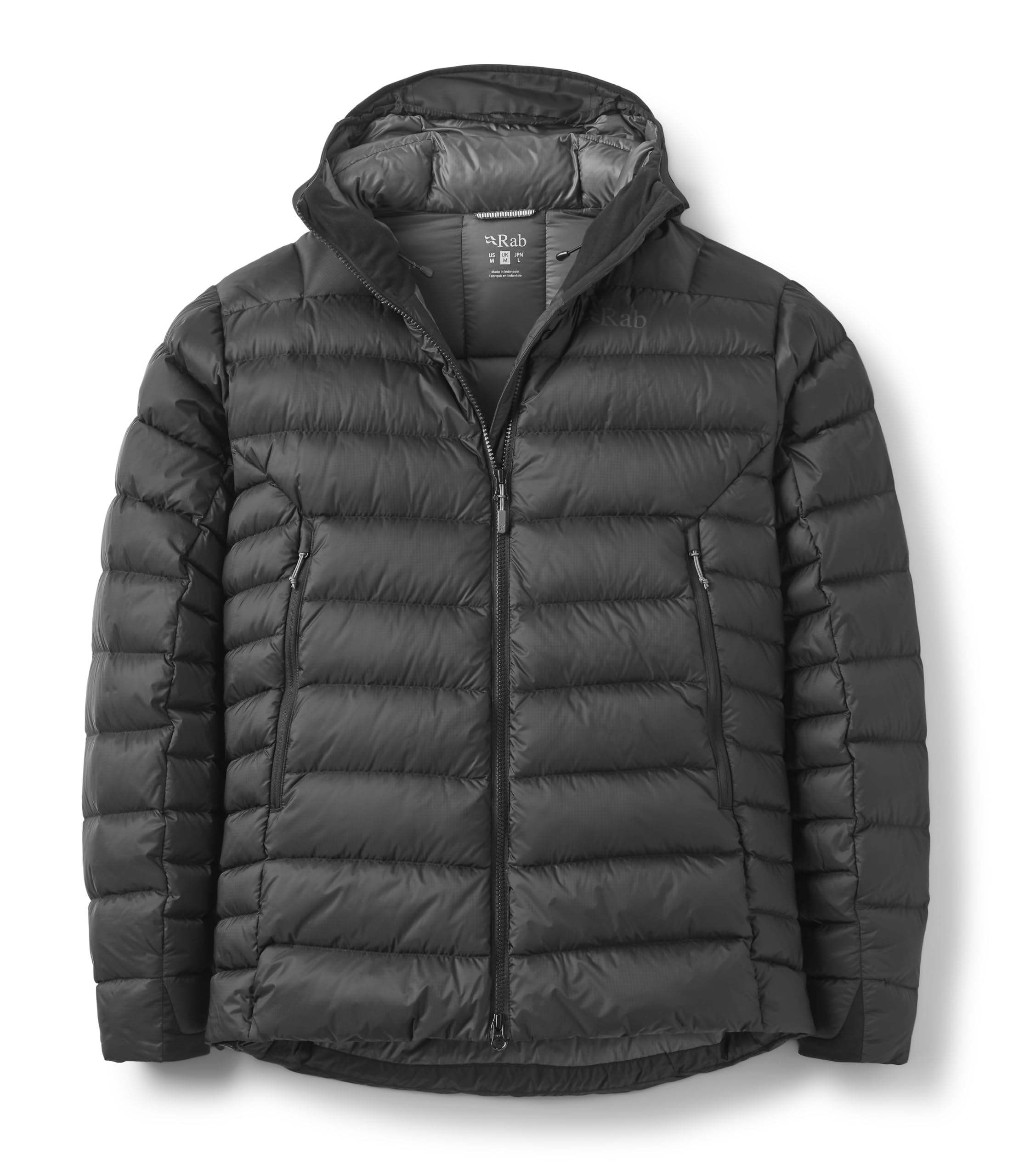
The Rab Electron Pro uses 800-fill European goose down with a Pertex Quantum Pro outer fabric that provides exceptional wind resistance while maintaining breathability. The box-wall baffle construction eliminates cold spots, and the slim athletic cut layers neatly under a hardshell without excess fabric bunching around the waist. Owners consistently report that this jacket stays warm in a T-shirt down to 20°F and with a fleece layer at 0°F, making it one of the most thermally efficient jackets in its weight class.
The helmet-compatible hood with a stiffened wire brim holds its shape in gusty wind, and the elasticated cuffs seal heat in without restricting wrist movement for climbing or ski pole work. At just over a pound, this jacket packs down smaller than most 700-fill competitors, which matters when you need to stash it in a summit pack during an alpine start. The trade-off is a slimmer fit that may not accommodate a thick mid-layer for extremely broad-shouldered users.
The Rab Electron Pro is a premium technical tool for skiers and mountaineers who prioritize warmth-per-ounce above all else. The 800-fill down, combined with the Pertex shell and meticulous baffle design, delivers reliable heat retention in deep cold without the bulk that slows you down on the ascent.
Why it’s great
- Superior 800-fill down provides unmatched warmth-to-weight ratio
- Pertex Quantum Pro shell blocks wind and resists light moisture
- Box-wall baffles prevent down migration and cold spots
Good to know
- Slim athletic fit may be too tight for heavy layering
- Elastic cuffs could be tighter for some users
2. Helly Hansen LIFALOFT Insulated Ski Jacket
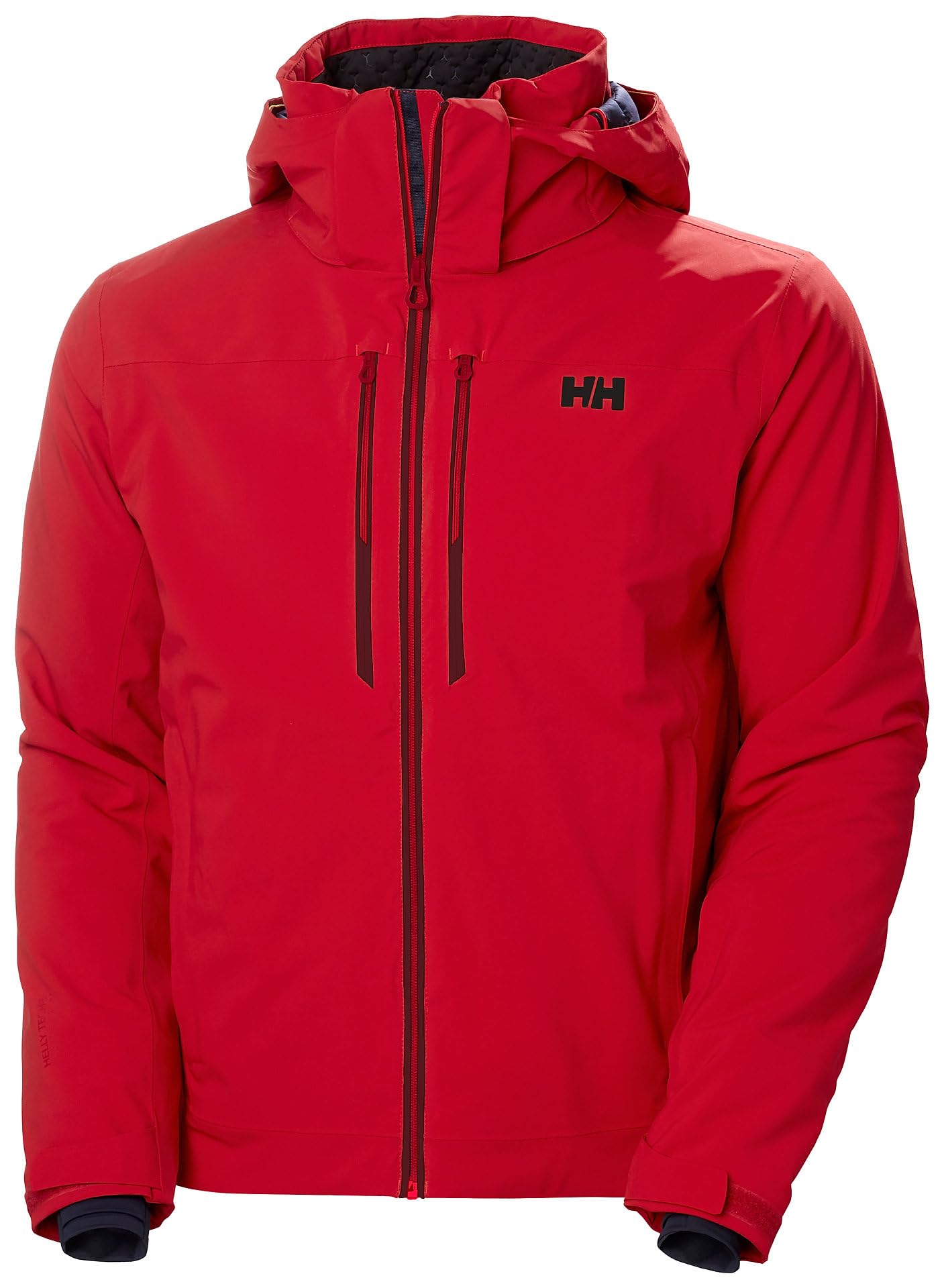
The Helly Hansen LIFALOFT jacket uses a proprietary synthetic insulation that mimics the warmth of high-fill down while retaining its loft when wet—a critical advantage in wet snow conditions. The outer shell features a 2-layer waterproof construction with fully sealed seams, and the jacket comes loaded with ski-specific details: a silicone-printed powder skirt, a goggle pocket with a microfiber wiper, and an internal battery-saver pocket for your phone. Reviewers consistently praise its warmth in the 10°F to 32°F range with just a merino base layer underneath.
Unlike many down jackets that require careful washing and drying cycles to maintain loft, LIFALOFT dries quickly and can be machine-washed without special detergents. The cut is trim without being restrictive, and the hood fits comfortably over a ski helmet while still offering good peripheral vision. The main drawback is that the sleeves and shoulders can become saturated in prolonged wet snow, though the body stays warm thanks to the insulation’s hydrophobic nature.
The Helly Hansen LIFALOFT is the best choice for resort skiers who face variable weather—especially those who ski in regions where freezing rain and wet snow are common. It delivers consistent warmth without the dry-cleaning anxiety that comes with genuine down, and the ski-specific pocket layout proves itself after a full day on the mountain.
Why it’s great
- LIFALOFT insulation stays warm when wet, unlike traditional down
- Waterproof shell with sealed seams handles heavy precipitation
- Ski-specific features include a pass pocket, goggle wiper, and powder skirt
Good to know
- Sleeves can absorb water in very wet snow conditions
- Fit runs slightly slim for thicker mid-layers
3. THE NORTH FACE Men’s McMurdo Bomber Jacket
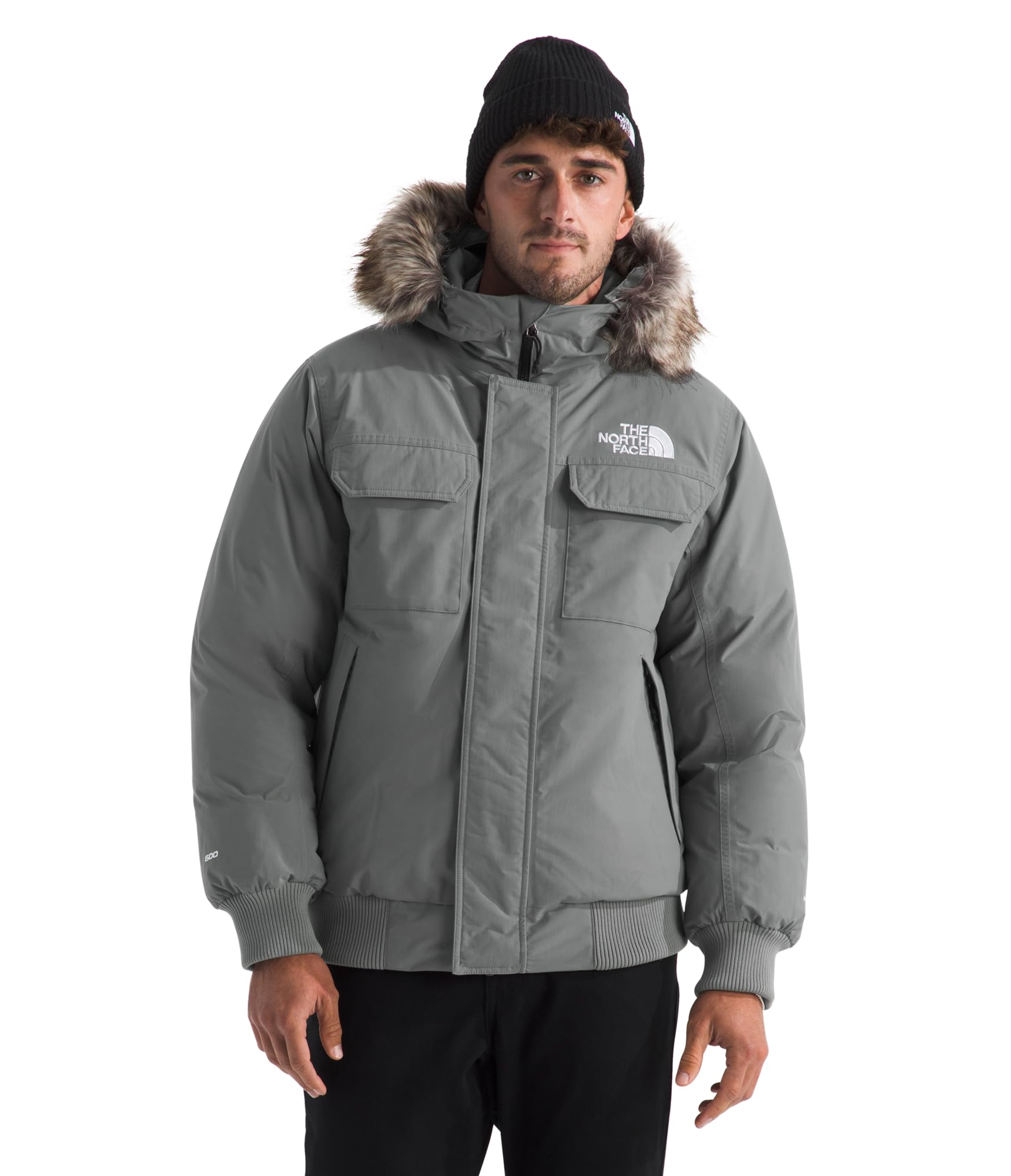
The North Face McMurdo Bomber is a heavyweight winter coat built around waterfowl down insulation and a fully waterproof DryVent outer shell. This is not a lightweight backcountry piece—it weighs nearly three pounds—but it delivers uncompromising warmth for the coldest resort days and everyday winter commutes. The removable faux-fur ruff on the hood traps heat around the face, and the internal gasket at the cuffs prevents cold air from sneaking up the sleeves. Users in lake-effect snow regions report staying comfortable even in single-digit temperatures with only a light sweater underneath.
The bomber cut provides excellent coverage, with a longer hem that seals out wind when you’re walking or standing on a chairlift. Pockets are generous and thoughtfully placed: a media pocket with a headphone exit, an internal chest pocket with a zip, and handwarmer pockets lined with microfleece. The trade-off is bulk—this jacket will not compress into a backpack easily, and it runs large enough that sizing down may be necessary for a trim fit.
The McMurdo Bomber is the go-to choice for skiers who need one coat that handles both the mountain and the city. It sacrifices packability and lightweight mobility for bombproof warmth and a premium look, making it ideal for lift-served skiing in harsh winter climates.
Why it’s great
- Waterfowl down insulation with a fully waterproof shell
- Removable faux-fur ruff and internal cuffs seal out cold
- Excellent coverage and pocket layout for resort use
Good to know
- Very bulky; not packable for backcountry use
- Runs large; may need to size down for a trim fit
4. Obermeyer Womens Tuscany II Winter Jacket
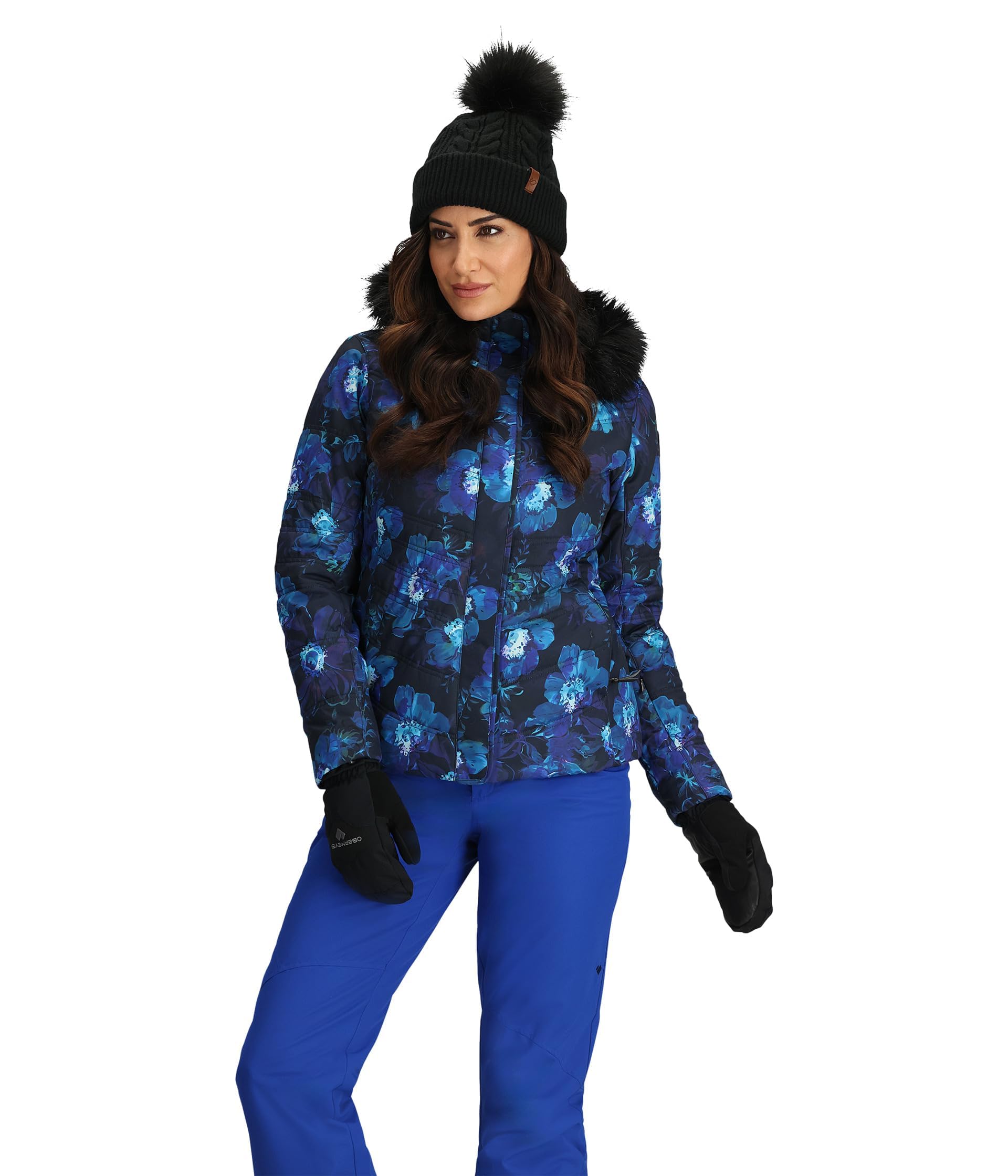
The Obermeyer Tuscany II combines a waterproof breathable outer shell with high-loft synthetic insulation to create a resort-focused jacket that looks as good as it performs. The tapered waist cut is flattering without restricting movement, and the removable faux-fur hood adds a touch of style that stands out on the slopes. The jacket is packed with ski-specific features: a sleeve ski pass pocket, an internal chest pocket, a dedicated goggle pocket with a detachable wipe, soft elastic cuffs, and a powder skirt that integrates with Obermeyer’s HydroLink pant system.
Multiple reviewers note that the jacket runs slightly small in the chest compared to other Obermeyer models, so sizing up is a safe bet if you plan to layer a thick mid-layer underneath. The insulation is warm enough for all-day resort skiing in the 10°F to 25°F range, and the waterproof shell keeps you dry through light snow and occasional flurries. The lack of thumbhole cuffs and zippered underarm vents means it’s not ideal for high-output touring, but for lift-served skiing, it checks every box.
The Obermeyer Tuscany II is the best choice for women who want a functional ski jacket that also looks polished apres-ski. It offers excellent construction, thoughtful details, and a warm, comfortable fit that works for a full day on the mountain.
Why it’s great
- Waterproof breathable shell with a flattering tapered waist
- Comprehensive pocket layout including goggle and pass pockets
- Removable faux-fur hood and powder skirt
Good to know
- Runs small in the chest; size up for comfortable layering
- No thumbhole cuffs or zippered ventilation
5. Rab Men’s Microlight Alpine 700-Fill Down Hooded Jacket
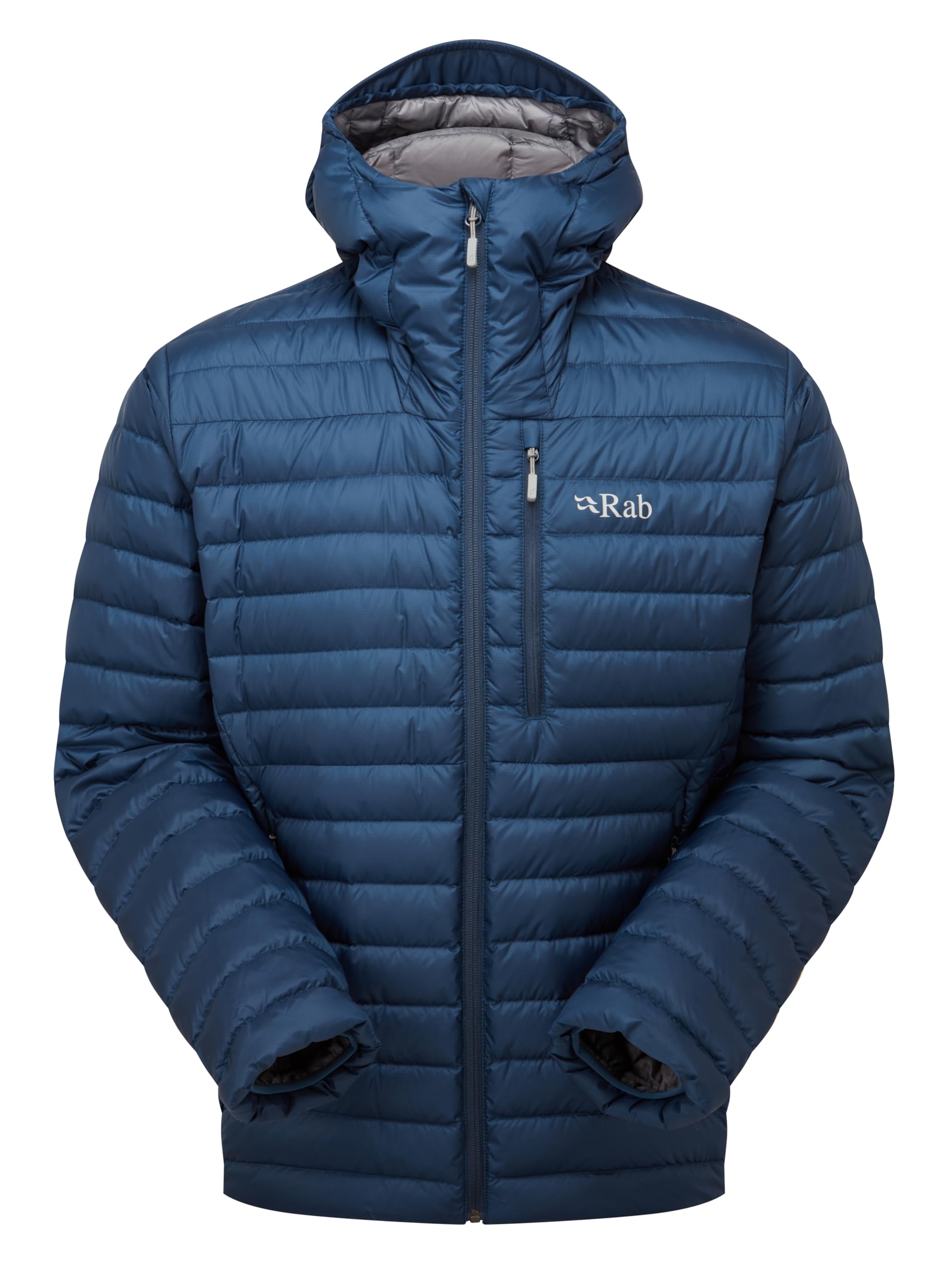
The Rab Microlight Alpine is a proven workhorse that balances warmth, weight, and durability better than almost any jacket in its class. The 700-fill European goose down is housed in a Pertex Quantum shell that offers excellent wind resistance and light water repellency, and the jacket includes a stowable hood that packs into the collar when not needed. It has been field-tested on multi-day treks like Patagonia’s W and O circuits, where reviewers praised its ability to stay warm in cold, windy, dry conditions while packing down to the size of a small water bottle.
The fit is athletic but not restrictive, allowing a light fleece underneath without feeling constricted. The two large hand pockets are easy to access even with a backpack hip belt, though the lack of internal or chest zip pockets is a missed opportunity for organizing smaller items. The zipper pull is on the left side—a design detail common in European brands—which takes a few wears to get used to but is not a functional issue.
The Rab Microlight Alpine is ideal for skiers and hikers who need a jacket that transitions seamlessly from the backcountry to the resort. It is lightweight enough to carry on a summer alpine climb but warm enough for winter resort days above 25°F with proper layering.
Why it’s great
- Excellent warmth-to-weight ratio with 700-fill down
- Pertex Quantum shell blocks wind and resists light moisture
- Packs down very small for easy storage in a backpack
Good to know
- Lacks internal or chest zip pockets
- Left-side zipper pull takes some adjustment
6. Obermeyer Womens Down Ski Jacket (Premium Variant)
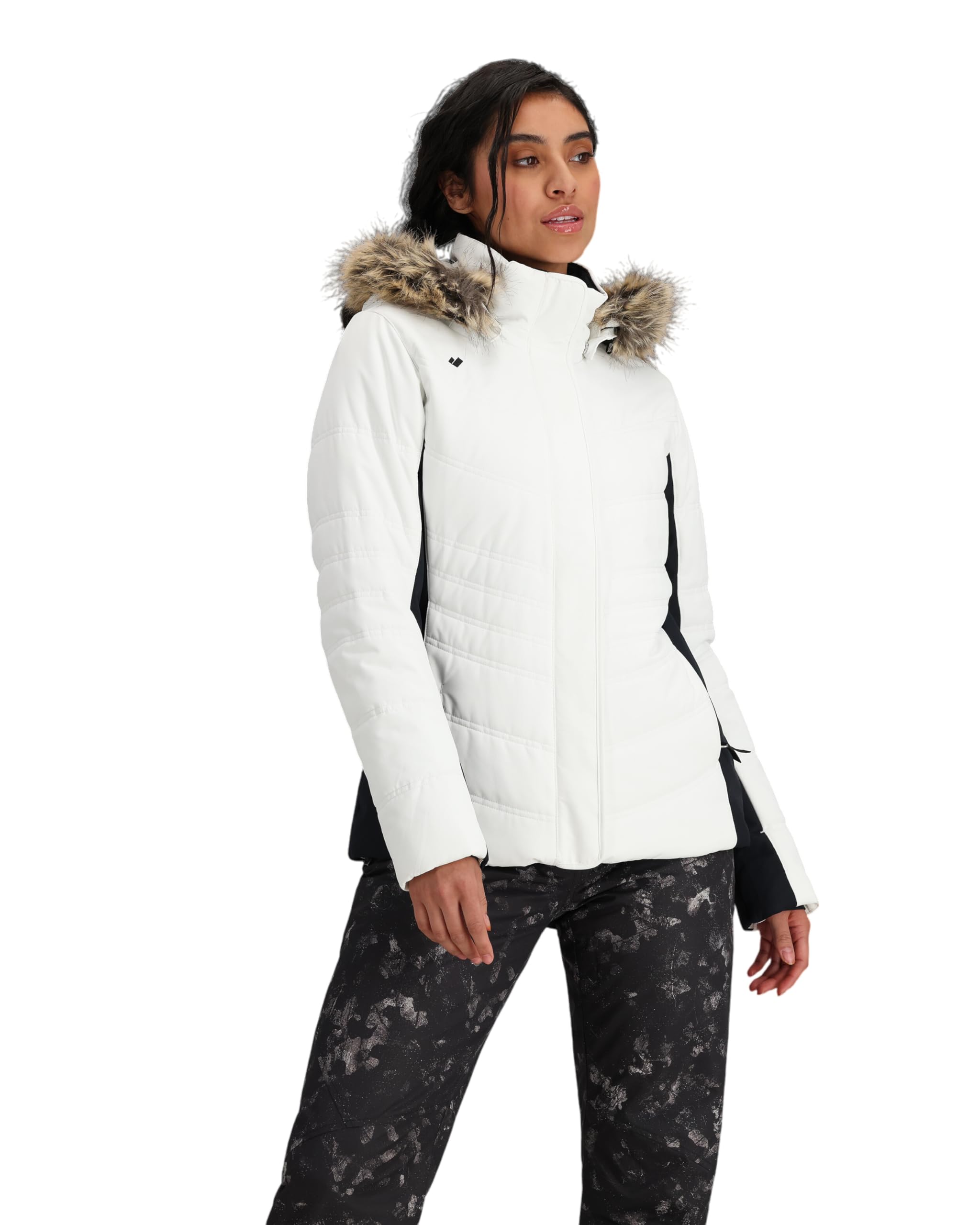
This premium Obermeyer ski jacket delivers down insulation in a shell that is both waterproof and breathable, making it a strong competitor for women who want the warmth of down without sacrificing wet-weather protection. The jacket features a detachable hood with removable faux fur, a soft chin guard, and a powder skirt that integrates with Obermeyer’s pant system for seamless snow protection. The cut is roomy enough to layer a fleece or mid-layer underneath while still maintaining a flattering silhouette.
Reviewers consistently highlight the jacket’s warmth without excessive bulk—a common complaint with many down ski jackets. The internal pocket layout includes a goggle pocket, a media pocket, and a pass pocket on the sleeve, keeping slope essentials organized and accessible. The polyester shell with a waterproof membrane holds up well in light to moderate snow, though some users noted the velcro closures on the cuffs may wear out over extended use. Color options are limited compared to other brands, but the available shades are rich and attractive.
This Obermeyer down jacket is a top-tier option for women who prioritize a warm, durable jacket with a tailored look for resort skiing. It handles most winter conditions with confidence and offers the build quality that keeps skiers coming back to the same model year after year.
Why it’s great
- Warm down insulation with a waterproof breathable shell
- Detachable hood and faux fur for versatile styling
- Well-organized pockets for slope essentials
Good to know
- Limited color selection each season
- Velcro cuff closures may wear over time
7. MARMOT Men’s Zeus Jacket
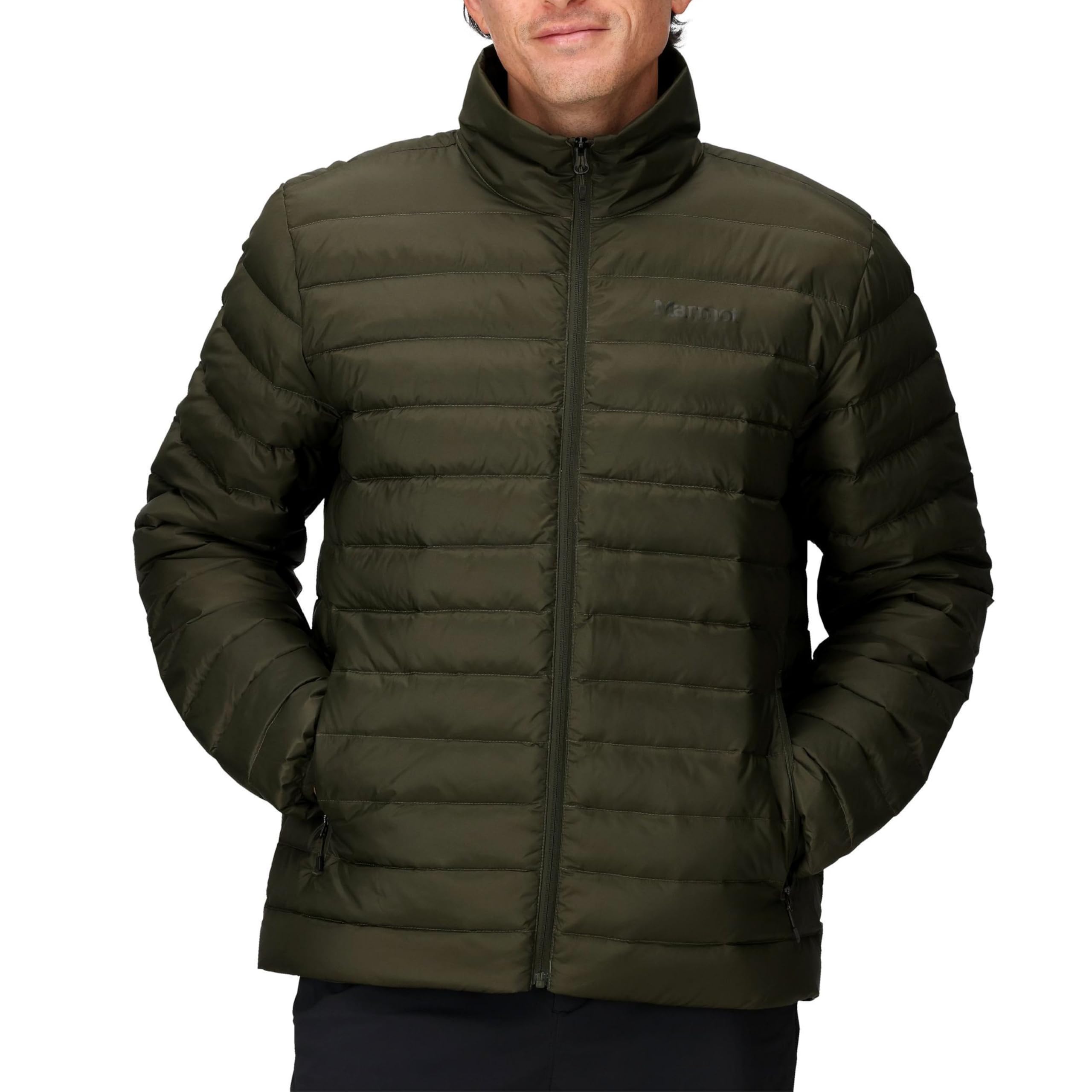
The Marmot Zeus Jacket is a classic lightweight down puffer that uses 700-fill goose down in a simple, no-fuss design. The shell features a DWR finish that beads up light moisture, and the jacket is exceptionally packable—ideal for travel or as a mid-layer under a hardshell on cold resort days. The fit is standard through the chest and shoulders, allowing for a fleece or thin sweater underneath without feeling tight. Owners praise its feather-light feel and the fact that it looks great as a standalone winter coat for everyday use.
The main limitation is pocket layout: the jacket has only two large handwarmer pockets and no internal zip or chest pocket for securing valuables. The insulation is warm enough for resort days above 20°F when paired with a base and mid-layer, but it requires significant layering in deep cold due to its relatively lightweight construction. The elastic cuffs and hem do a good job of sealing in heat, and the water resistance is adequate for light snow but not for prolonged wet exposure.
The Marmot Zeus is a solid entry-level down jacket for skiers who need a packable, affordable option for moderate cold. It is best suited for milder resort days, spring skiing, or as part of a layering system where the hardshell provides the weather protection and the down does the insulating.
Why it’s great
- Lightweight and packable for easy travel
- 700-fill goose down provides good warmth for the weight
- Simple, clean design works for casual and active use
Good to know
- Only two hand pockets; no internal storage
- Requires layering for temperatures below 20°F
8. THE NORTH FACE Men’s Aconcagua 3 Hooded Jacket
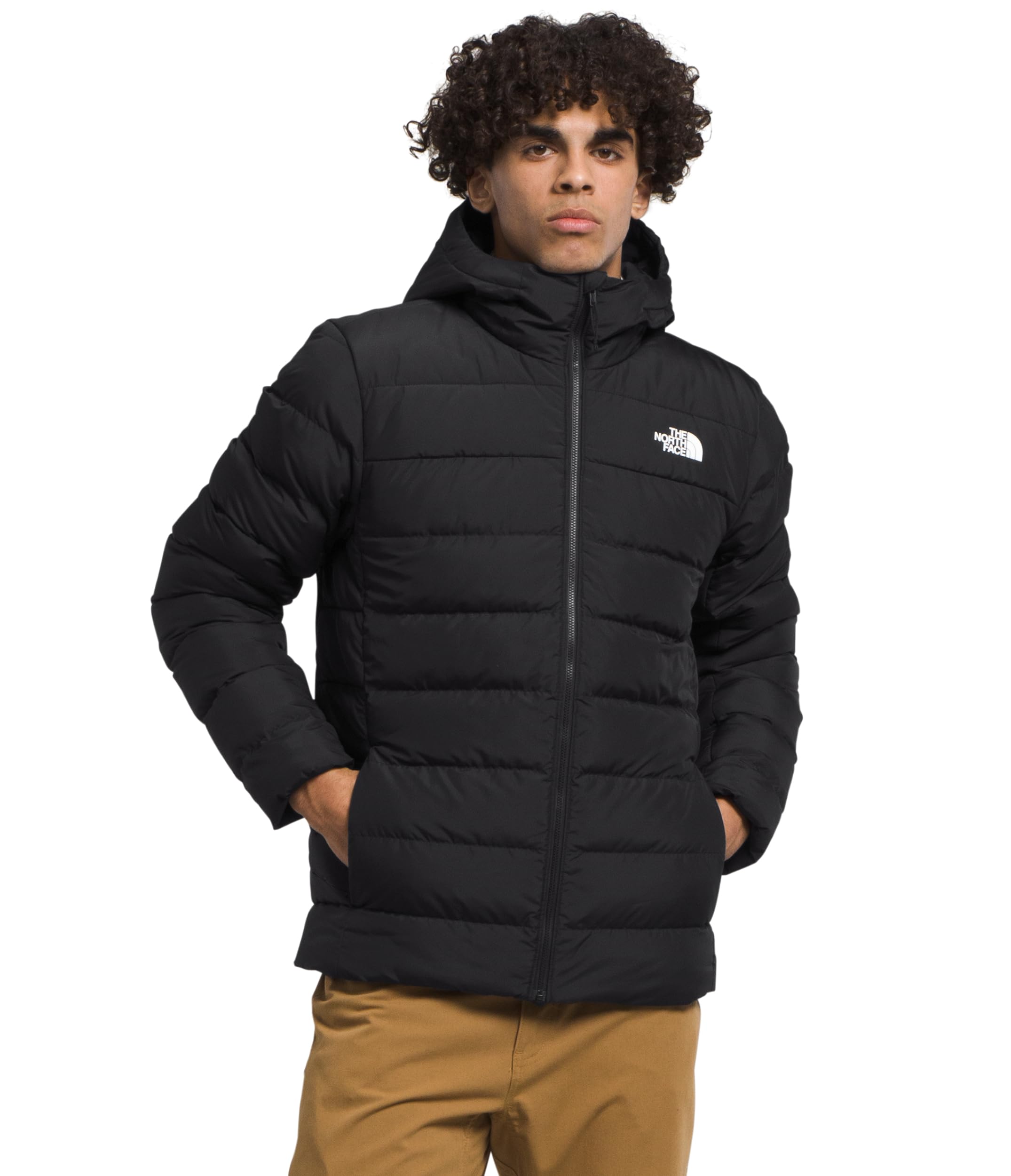
The North Face Aconcagua 3 is a insulated jacket that blends down and synthetic fibers for a balanced warmth-to-weight ratio at a mid-range price point. The outer shell is wind and water resistant, making it suitable for resort skiing in dry snow conditions and everyday winter use around town. The attached three-piece hood has a cinch cord for a secure fit, and the jacket includes a media pocket with a headphone loop and an internal chest pocket for small items. Reviewers consistently mention that the jacket is warm without feeling heavy, and the pearl grey color option is particularly popular for its subtle style.
Several users have noted feather leakage through the fabric, which is a common issue in this price range where the shell fabric denier is lower to keep weight down. The insulation is warm enough for resort days above 15°F with a good base layer, but the lack of a powder skirt and a non-waterproof shell means this jacket is best suited for mild conditions or as part of a layering system with a hardshell. The fit is true to size, with enough room for a mid-layer without being baggy.
The Aconcagua 3 is a versatile, affordable option for skiers who want a warm, comfortable jacket for resort days and daily commuting. It is not a technical backcountry piece, but for its intended use as a general-purpose cold-weather jacket, it delivers solid value and dependable warmth.
Why it’s great
- Wind and water resistant shell for weather protection
- Warm insulation without excessive weight or bulk
- True-to-size fit that layers comfortably
Good to know
- Some users report feather leakage
- Not fully waterproof; best for dry snow conditions
9. Cotopaxi Women’s Fuego Down Hooded Jacket

The Cotopaxi Fuego Down Hooded Jacket packs 700-fill responsibly sourced down into a lightweight shell that compresses into its own pocket—making it an excellent travel companion for skiers who need a warm layer that disappears into a pack. The jacket features a unique design where the colorful pattern is hidden on the inside, giving the exterior a clean, neutral look that works well for both the slopes and the city. Reviewers love its warmth for the weight, noting that it keeps them comfortable in low 30s temperatures with a thermal layer underneath.
Several users have reported that the shell fabric is thin and prone to ripping, with one account of a slit in the jacket that went unnoticed until down began leaking out. This is a trade-off for the jacket’s low weight and high packability—the 20-denier face fabric saves ounces but does not hold up well to brush, ski edges, or heavy use as a standalone resort jacket. The fit is comfortable and true to size, with enough room for a light mid-layer, and the hood is snug enough for helmet-free use but too small for a helmet.
The Cotopaxi Fuego is a budget-friendly option ideal for warm-weather resort skiing, spring days, or as a highly packable mid-layer for backcountry use. It is not a heavy-duty winter jacket, but for skiers who prioritize weight savings and ethical manufacturing over rugged durability, it delivers impressive warmth at a competitive price.
Why it’s great
- Packs into its own pocket for ultimate portability
- 700-fill responsibly sourced down provides good warmth
- Unique colorful interior adds personality
Good to know
- Thin shell fabric is prone to ripping
- Hood is not helmet-compatible
FAQ
Can I use a regular down jacket for skiing or do I need a specific ski jacket?
What fill power is ideal for a down ski jacket?
How do I prevent down from leaking out of my ski jacket?
Can a down jacket be waterproof enough for skiing in wet snow?
How should I wash and dry my down ski jacket?
Final Thoughts: The Verdict
For most users, the best down ski jacket winner is the Rab Electron Pro because its 800-fill down, box-wall baffles, and Pertex shell deliver unmatched warmth-per-ounce for both resort and backcountry use. If you want synthetic insulation that stays warm when wet, grab the Helly Hansen LIFALOFT. And for extreme cold and daily winter wear, nothing beats the North Face McMurdo Bomber.

Mo Maruf
I created WellFizz to bridge the gap between vague wellness advice and actionable solutions. My mission is simple: to decode the research and give you practical tools you can actually use.
Beyond the data, I am a passionate traveler. I believe that stepping away from the screen to explore new environments is essential for mental clarity and physical vitality.