Our readers keep the lights on and my smoothie glass nicely filled. As an Amazon Associate, I earn from qualifying purchases.
No matter how thick your sleeping bag is, if your feet are cold, your whole night is ruined. Down booties solve that problem with lightweight, packable insulation that turns any camp chair or sleeping bag into a warm sanctuary for your feet. The best down booties deliver concentrated heat right where you lose it the most, without weighing down your pack.
I’m Mohammad Maruf — the founder and writer behind WellFizz. To build this guide, I pored over hundreds of real customer reviews and compared the technical specs of each fill power, shell fabric, and sole design to identify which models actually deliver the warmth they promise at camp or at home.
Whether you are shivering in a mountain hut or just tired of cold floors at home, this deep dive into the top models will help you find the best down booties for your exact needs and budget.
How To Choose The Best Down Booties
Choosing the right pair of down booties goes beyond just picking a warm-looking slipper. You need to consider where you’ll use them, how much weight you can afford to carry, and how much protection the bottom of the bootie offers against wet ground. Here’s what separates a good camp bootie from a great one.
Fill Power and Insulation Type
Fill power measures the loft, or fluffiness, of the down. A higher fill power (700 to 800+) traps more air per ounce, meaning you get more warmth with less weight. Some booties use a hybrid insulation that mimics down but still insulates when damp — a valuable feature if you expect condensation inside your tent or wet feet after a stream crossing.
Sole Construction and Insole Support
Not all down booties are built for walking. Many ultralight models have a thin nylon or foam sole designed for inside the tent only. If you plan to walk to the camp bathroom or fetch water, look for a bootie with a non-slip rubber or EVA outsole that provides grip and protects the down from compression underfoot. A foam insole adds cushioning and prevents the hard ground from sapping warmth through the bottom.
Fit and Closure System
Down booties should fit snugly enough to trap heat but with enough room for a medium-weight wool sock. A loose fit lets warm air escape and forces your body to heat dead space. Look for adjustable closures like drawstrings, elastic cuffs, or lace-up systems that seal heat around the ankle and keep snow or debris out. A bootie that slips off easily is not a warm bootie.
Quick Comparison
On smaller screens, swipe sideways to see the full table.
| Model | Category | Best For | Key Spec | Amazon |
|---|---|---|---|---|
| Western Mountaineering Standard Booties | Premium | Base camp & extreme cold | 800-fill down, foam insole | Amazon |
| Baffin Cush Booty | Premium | Home lounging & sedentary warmth | Soft sole, roomy fit | Amazon |
| Exped Camp Booty | Mid-Range | Backpacking & camp chores | EVA sole, durable bottom | Amazon |
| Rab Down Hut Slipper | Mid-Range | Alpine huts & ski lodge | Down insulation, tight cuff | Amazon |
| Winter Down Booties Socks | Entry-Level | Sleeping warmth & lounging | Drawstring closure, long cuff | Amazon |
| Outdoor Vitals LoftTek Hybrid Booties | Entry-Level | Wet conditons & ultralight | Hybrid insulation, 4 oz | Amazon |
| The North Face Thermoball Progressive Zip Up II | Premium | Winter city wear | Zip-up, rubber outsole | Amazon |
In‑Depth Reviews
1. Western Mountaineering Standard Booties
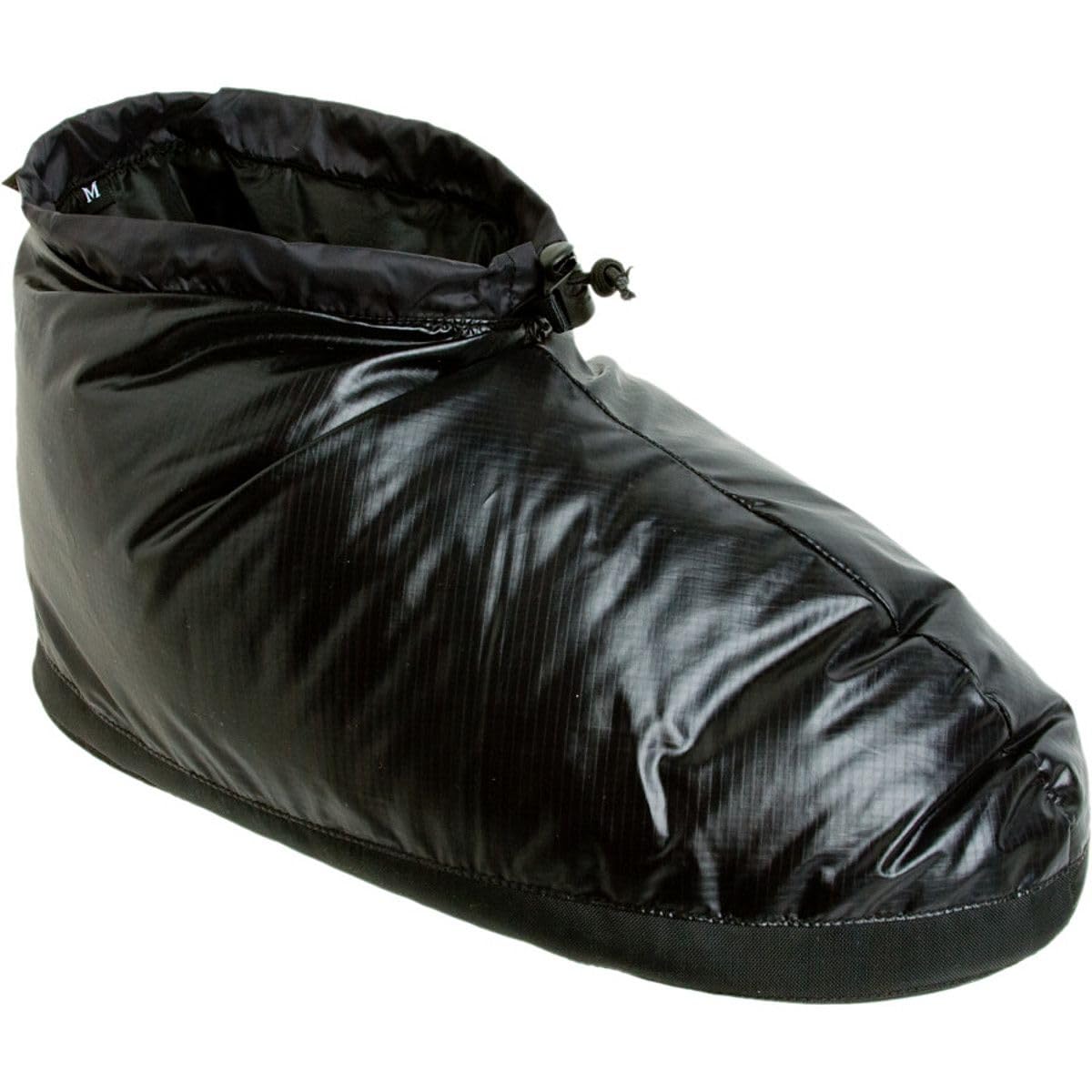
Western Mountaineering has a reputation for making some of the warmest down gear available, and these booties are no exception. Packing 800-fill goose down inside a durable nylon shell with a DWR finish, they offer the highest warmth-to-weight ratio in this lineup. The foam insole adds noticeable cushioning and prevents the ground from stealing heat through the bottom of your foot.
The design includes two elastic cinches — one around the inner ankle and another at the top of the mid-calf shaft — which lock heat in and keep snow out. Users describe them as “little ovens” for cold camp nights, and the grippy, flexible sole provides enough traction for short trips outside the tent. At 1.3 pounds per pair, they are heavier than ultralight options, but the trade-off is superior warmth.
Where they fall short is side support; the booties lack structure, causing the foot to slide off the sole on slick indoor surfaces. They also require socks to manage moisture. Made in the USA, these booties justify their premium status with thoughtful construction and uncompromising warmth for serious cold-weather camping.
Why it’s great
- Exceptional 800-fill down
- Foam insole for cushion and ground insulation
- Adjustable double-cinch closure seals in heat
Good to know
- Heavier than ultralight alternatives
- Lacks lateral support for walking on smooth floors
- Best worn with socks to avoid sweat buildup
2. Baffin Cush Booty Unisex Insulated Slippers

The Baffin Cush Booty is a favorite among users who prioritize pure comfort for sedentary lounging. With a soft, flexible sole and a generous cut that accommodates thick socks, these booties feel like a warm, insulated cloud around your feet. Multiple long-term owners have reported buying three or four pairs over the years, testifying to their consistent quality and warmth.
They are incredibly light at just 4 ounces per bootie, and the down insulation stays in place without migrating to one side. Reviewers with poor circulation or cold feet say these are the only slippers that keep their toes toasty all night long without making them sweat. The ankle coverage is high enough to prevent heat from escaping, and the soft material does not catch on bed sheets.
The thin sole is not watertight and offers almost no traction for wet or icy ground. A few users reported that the initial fit felt tight, but the booties loosened up after a couple of days of wear. If you need a bootie for walking between tent and cooking area, this is not your choice, but for a warm bed companion, it is nearly perfect.
Why it’s great
- Extremely soft and comfortable for lounging
- Very light at 4 ounces per bootie
- Roomy enough for thick wool socks
Good to know
- Thin sole offers no traction or waterproofing
- Not designed for walking outdoors
- Initial fit may be tight before breaking in
3. Exped Camp Booty

Exped’s Camp Booty fills the gap between ultralight tent-only booties and heavy-duty winter slippers. It features a molded EVA outsole that provides actual traction for walking across gravel, dirt, and grass around camp. Several backpackers noted that the sole makes these booties comfortable enough for short hikes to the bathroom or to chase pets, which is rare in the down bootie category.
The booties are near-zero weight in a pack and compress down to about the size of a water bottle, making them ideal for multi-day trips where every cubic inch counts. Users describe them as feeling like a puffy jacket for the feet, with a generous fit that allows for easy slip-on. The removable ankle strap helps keep the bootie secure during movement but is small enough to lose if not packed carefully.
One common complaint is the “goofy moon boot” look, and the fit runs large — size Medium fits women’s 8.5 to 10.5 comfortably. Some users reported that their feet slide inside the bootie on inclines. Still, for a mid-range option that can handle real camp use, the Exped Camp Booty delivers dependable warmth and a practical sole that most ultralight booties lack.
Why it’s great
- EVA outsole provides real traction at camp
- Compressible and lightweight for backpacking
- Generous fit with adjustable ankle strap
Good to know
- Fit runs large; size down if between sizes
- Feet can slide inside on steep terrain
- Ankle strap is easy to misplace
4. Rab Down Hut Slipper
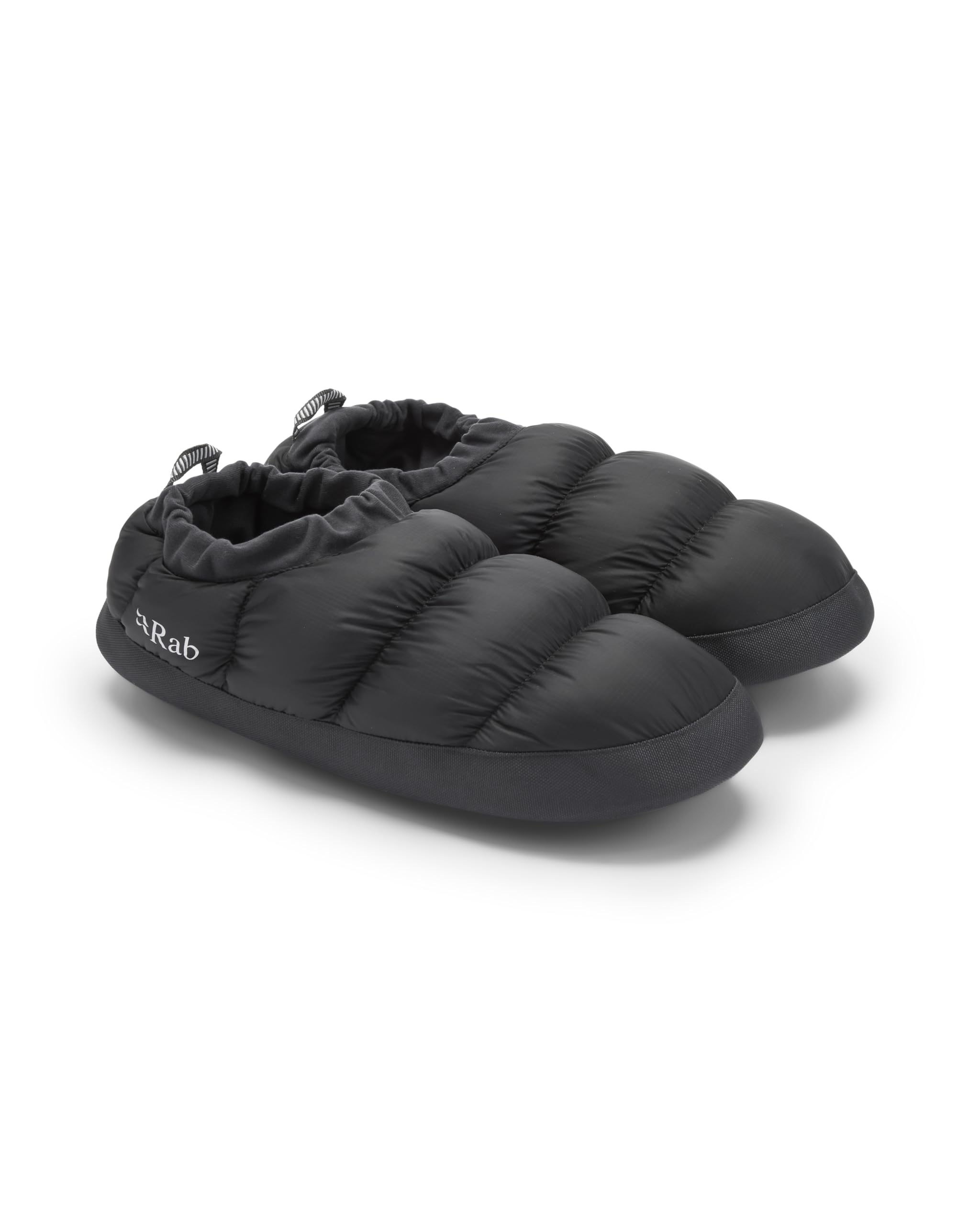
Rab is known for mountain-ready gear, and the Down Hut Slipper brings that alpine engineering to your feet. These booties use high-quality down insulation that traps heat effectively, making them a go-to for skiers and mountaineers recovering in a cold hut. Users with poor circulation say these are the first slippers that have ever kept their toes truly toasty during winter months.
The construction feels robust, with a tight ankle that helps retain heat without being restrictive. The insole provides enough cushion to take the pressure off joints when walking on hard floors, though the sole is not designed for heavy outdoor use. One seasoned reviewer noted the fit is like a comfortable glove, which suggests Rab paid attention to ergonomics and edge sealing.
The opening at the top is small enough to make putting them on a bit of a struggle, especially if you wear thick socks. A few users mentioned that the cold still seeps through the sole when standing on cold lodge floors, which somewhat compromises the warmth-per-dollar ratio for the price. If you need a premium bootie for hut life and lounging, this is a strong contender, but expect a snug entry.
Why it’s great
- High-quality down for serious warmth
- Tight ankle seal prevents heat escape
- Durable build with good cushioning
Good to know
- Small opening makes putting them on difficult
- Cold can still come through the sole
- High price for the warmth delivered
5. Winter Down Booties Socks
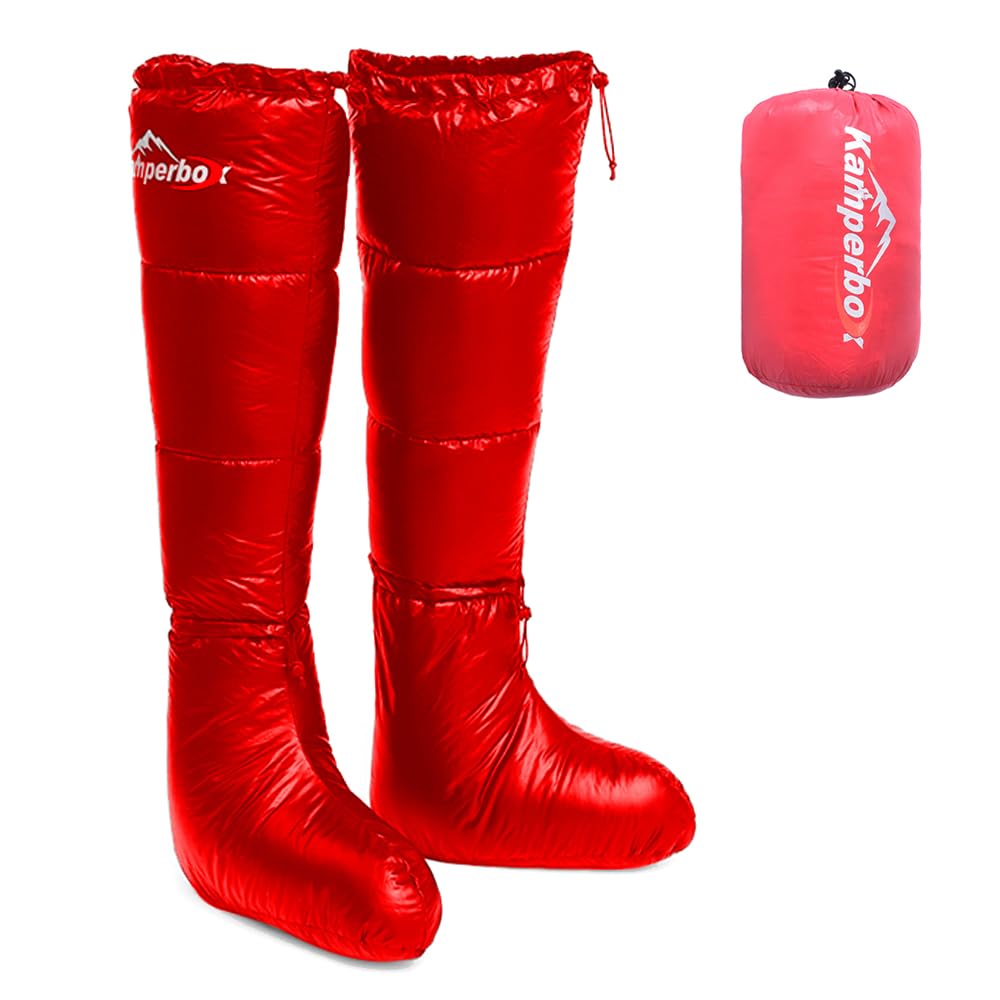
For those looking for an entry-level down bootie that doesn’t break the budget, this drawstring model covers the basics. It extends from toes to above the knee, providing a long shaft of down warmth that helps people with cold-related leg pain. Reviewers with poor circulation report sleeping much better thanks to the continuous heat column from foot to mid-thigh.
The drawstring closure at the top seals the heat in, and the bootie compresses easily for packing. Several users confirmed that they work well as sleeping bag accessories or for lounging on tile and carpet over ankle socks. The fit is generous, with size 10 shoes fitting with room for layered socks underneath, as one buyer noted.
There is no formed slipper bottom, so the down compresses underfoot when walking, and the bootie is not built for extensive movement. A few reviewers complained about the overall quality feeling poor for the price, and one returned the product after noticing fit issues. If you need an inexpensive pair for sleeping warmth and light use around the house, these work, but manage expectations regarding durability.
Why it’s great
- Long shaft provides warmth up to the thigh
- Drawstring closure seals in heat effectively
- Generous fit allows for sock layering
Good to know
- No sole support; down compresses when walking
- Inconsistent quality control reported
- Better for sleeping than for active use
6. Outdoor Vitals LoftTek Hybrid Booties

Outdoor Vitals tackled the biggest weakness of down — failure when wet — by engineering a hybrid insulation that maintains loft and warmth even when damp. That makes these booties uniquely suited for wet camps or for slipping on with slightly damp feet after a stream crossing. At just 4 ounces per pair, they are among the lightest options available, making them ideal for gram-conscious backpackers.
The 10D ripstop nylon shell feels delicate but has proven durable enough for tent and shelter use. Reviewers consistently point out that these booties are not meant for walking on open ground — the insulation compresses underfoot, and there is no protective sole. Worn inside a sleeping bag or on a camp chair, they deliver noticeable warmth without any feeling of bulk.
The fit is roomy, with enough space for a wool sock, and the elastic stretch band seals the ankle well. Several users with cold feet said these booties made a massive difference in their camping sleep system. The main compromise is that they are strictly for static use; if you need booties for short trips outside the tent, look elsewhere.
Why it’s great
- Hybrid insulation stays warm when wet
- Ultralight at 4 ounces per pair
- Room fit accommodates sock layering
Good to know
- No sole; not for walking on ground
- Fragile 10D nylon can rip on sharp objects
- Strictly for tent and sleeping bag use
7. The North Face Women’s Thermoball Progressive Zip Up II
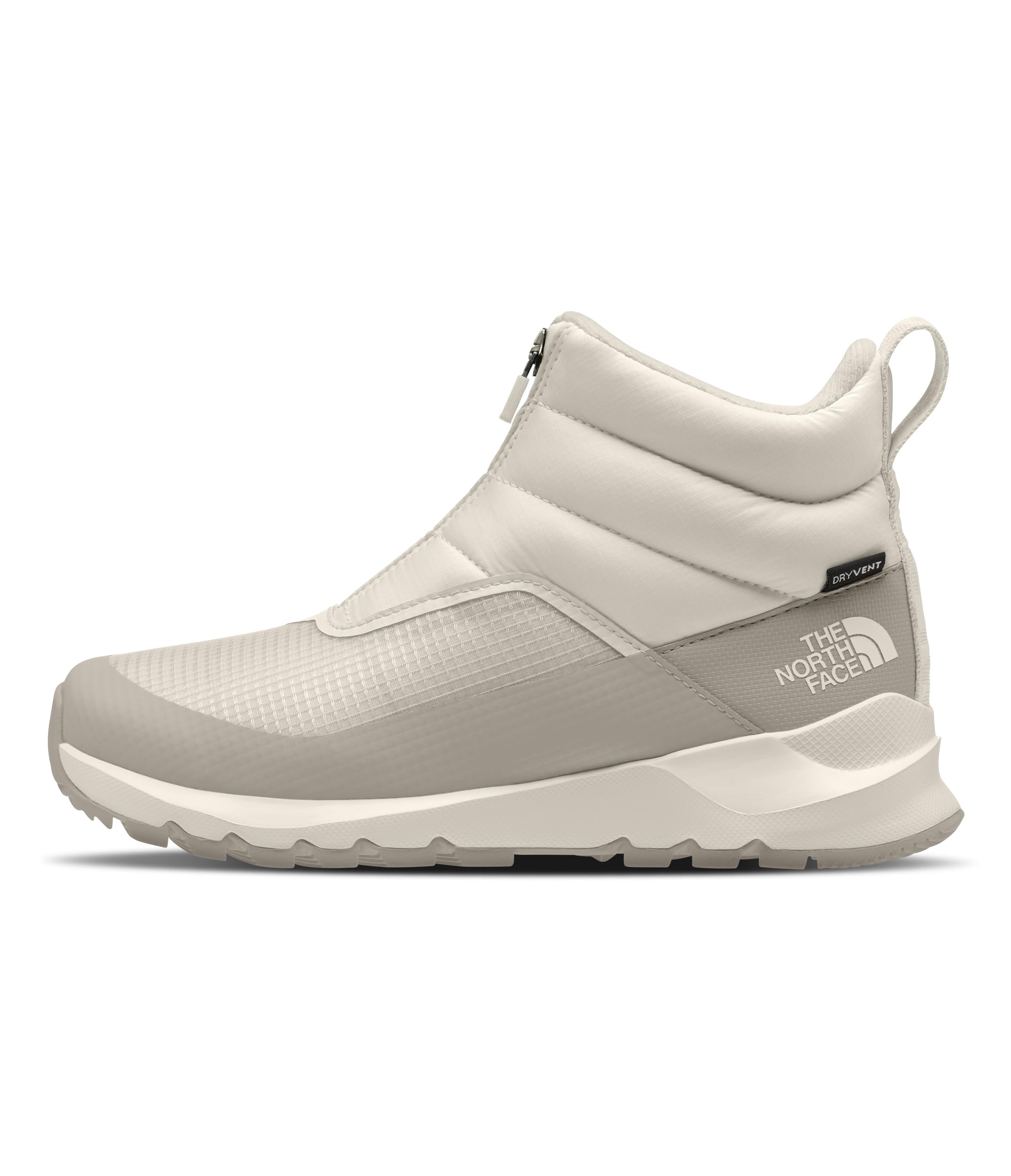
The North Face Thermoball Progressive Zip Up II is a different breed of down bootie — built less for ultralight camping and more for cold-weather city wear. It uses Thermoball synthetic insulation rather than loose down, and features a zip-up closure plus a rubber outsole for real traction on snow and slush. Users planning winter trips to Norway or Europe bought these specifically for all-day walking in cold conditions.
The cushioned footbed and running-shoe-like silhouette make them comfortable for extended wear, and the waterproof construction keeps feet dry in wet snow. However, the fit runs small, and reviewers consistently advise going up a full size to accommodate thick winter socks. The zipper area is notably snug, even after sizing up, which can become bothersome after hours of wear.
These are not traditional camp booties — they are more like heavily insulated snow boots with a softer build. If your need is to walk around a cold city or shuttle between lodge and car, the Thermoball Progressive delivers. But for packing weight or sleeping bag use, the bulk and ankle stiffness make them less practical than the other options on this list.
Why it’s great
- Rubber outsole for real winter grip
- Zip-up entry is easy to put on and remove
- Waterproof for slush and light snow
Good to know
- Runs small; go up a full size
- Snug zipper can be uncomfortable
- Not packable or ultralight for backpacking
FAQ
Can I walk around camp wearing down booties with thin soles?
How should down booties fit for maximum warmth?
Are down booties waterproof?
Final Thoughts: The Verdict
For most users, the best down booties winner is the Western Mountaineering Standard Booties because they combine the highest 800-fill down with a foam insole and double-cinch closure for unmatched cold-weather camp warmth. If you want a lightweight, wet-tolerant bootie for backpacking, grab the Outdoor Vitals LoftTek Hybrid Booties. And for campers who need a durable sole for walking around the site, nothing beats the Exped Camp Booty.

Mo Maruf
I created WellFizz to bridge the gap between vague wellness advice and actionable solutions. My mission is simple: to decode the research and give you practical tools you can actually use.
Beyond the data, I am a passionate traveler. I believe that stepping away from the screen to explore new environments is essential for mental clarity and physical vitality.