Our readers keep the lights on and my smoothie glass nicely filled. As an Amazon Associate, I earn from qualifying purchases.
The difference between a frustrating afternoon of splintered wood and a clean, satisfying joint often comes down to a single choice: the direction you cut. Most woodworkers grew up with Western push saws that require significant force and leave a rough kerf, but a shift to the finer, lighter Japanese pull saw design changes everything for dovetail work. The thin blade, high tooth count, and pull-stroke action combine to produce cuts that need almost no sanding or chisel cleanup, letting you focus on the joinery rather than the effort.
I’m Mohammad Maruf — the founder and writer behind WellFizz. My research into hand tool ergonomics and Japanese steel manufacturing processes has shown me why the pull saw consistently outperforms Western designs for precision joinery across hardwood and softwood species.
After spending hours comparing blade geometries, tooth pitches, and handle ergonomics across dozens of models, I have identified the seven best options on the market today. The following best dovetail saws guide covers every price tier and skill level so you can make a confident purchase decision.
How To Choose The Best Dovetail Saw
Selecting a dovetail saw is about matching blade geometry to your typical material thickness and desired cut finish. A saw that works beautifully for 3/4-inch cherry may feel sluggish on 2-inch walnut, so understanding these core specs is essential.
Tooth Pitch and TPI
Teeth per inch (TPI) directly determines cut smoothness and speed. Higher TPI (20+ teeth) produces glass-smooth surfaces ideal for dovetails and tenons, but cuts more slowly. Lower TPI (8 to 12) rips through material faster but leaves a rougher kerf that requires more cleanup. For dovetail work, you want at least 17 TPI on the rip side and 20 TPI on the crosscut side for the smoothest possible joint.
Blade Stiffness and Backing
Dovetail saws typically fall into two categories: backed (Dozuki) and unbacked (Ryoba). A backed saw has a rigid spine that keeps the blade perfectly straight, making it easier to cut precise vertical walls for dovetail pins and tails. Unbacked Ryoba saws offer flexibility for flush cuts but require more skill to maintain a straight line. Beginners should start with a Dozuki for predictable joint accuracy.
Handle Ergonomics
A dovetail saw handle should fill your palm and allow a relaxed grip without slipping. Wooden handles wrapped in rattan or contoured hardwood provide better sweat absorption and control than plastic handles. Japanese saw handles are typically offset slightly to keep your knuckles clear of the work surface, which matters most during repetitive sawing on smaller stock.
Quick Comparison
On smaller screens, swipe sideways to see the full table.
| Model | Category | Best For | Key Spec | Amazon |
|---|---|---|---|---|
| TAJIMA JPR-SET Kit | Premium Kit | Two-blade versatility & daily pro use | 16 TPI & 19 TPI blades | Amazon |
| Temple Tool Co. Ryoba | Premium Single | Large joinery & hardwood rip/crosscut | 9.5-inch double-edge blade | Amazon |
| Gyokucho Razorsaw 651 | Mid-Range | Hardwood joinery & half-lap joints | 9.5-inch, 20 TPI crosscut / 8 TPI rip | Amazon |
| Z-Saw Dozuki 5338ai | Mid-Range | Precision dovetails & mortise/tenon | 240mm blade, 26 TPI | Amazon |
| SUIZAN Dozuki SDE-002 | Mid-Range | Rip, cross & angle cuts in small stock | 6-inch blade, 17 TPI, 0.3mm thick | Amazon |
| IRWIN Dovetail Pull Saw | Mid-Range | Flush cutting dowels & fine detail cuts | 7.25-inch blade, 22 TPI | Amazon |
| VAUGHAN Bear Saw BS250D | Entry-Level | Multi-purpose cutting with interchangeable blades | 8-3/8 to 13-inch blade set | Amazon |
In‑Depth Reviews
1. TAJIMA Pull-Stroke Saw Set JPR-SET

The TAJIMA set delivers two impulse-hardened blades — 16 TPI for ripping and 19 TPI for crosscutting — in a single kit with a rigid metal handle and a tri-fold canvas case. The quick-release mechanism lets you swap blades in seconds without tools, making it the most versatile option for a professional shop that switches between rough dimensioning and fine joinery throughout the day. Professional woodworkers report the original blade lasting over five years of daily use on hardwoods like Bubinga and Purple Heart thanks to the triple-edge hardened teeth.
The metal handle provides a solid grip but weighs more than wooden alternatives, which some users find fatiguing during extended sawing sessions. Blades are extremely brittle and need careful storage to avoid chipping the hardened teeth. The canvas case solves this by protecting the edges between uses, though the handle protrudes about an inch past the case length. For anyone needing a do-it-all pull saw system with pro-grade durability, this kit represents the best long-term value.
Beginner woodworkers should practice on scrap softwood first, as the thin kerf and aggressive sharpness require a controlled pull stroke. Once muscle memory develops, this saw cuts through hard maple like butter and leaves a finish that requires minimal chisel work on dovetails. The third blade slot in the case allows you to add a finer Bakuma 13 TPI blade later for ultra-detailed work.
Why it’s great
- Two high-quality blades cover 90% of sawing needs
- Quick-release blade change is shop-ready fast
- Impulse-hardened teeth stay sharp for years
Good to know
- Metal handle is heavier than wooden alternatives
- Teeth are brittle and require careful storage
- Handle protrudes past the included canvas case
2. Temple Tool Co. Japanese Pull Saw Ryoba

The Temple Tool Co. Ryoba stands out for its oversized 9.5-inch blade and ergonomic Wingnut wood handle with brass fittings. The rip teeth gradually decrease in size and spacing near the handle, creating a smoother pull that reduces chatter in thick hardwoods. Users consistently rate this as the sharpest hand saw they have ever used, with one review noting it cut through a half-inch piece of cherry in under thirty seconds with no splintering.
This saw is roughly 50% larger than typical Japanese pull saws, making it ideal for timber framing and large furniture joinery where speed and long, straight cuts matter. The double-edge design — rip on one side, crosscut on the other — eliminates the need to switch tools when breaking down stock. The thin kerf produces minimal waste, which matters when working with expensive figured hardwoods.
The larger blade requires more space to operate and may feel unwieldy for very small dovetails on boxes or jewelry-sized stock. The Wingnut handle, while beautiful and comfortable, has a smooth finish that can become slippery with sweaty hands. For woodworkers tackling substantial joinery projects and wanting a single saw that handles both rip and crosscut duties, this is the best premium Ryoba available.
Why it’s great
- Variable tooth spacing for smoother pull across grain
- Largest blade in its class suitable for timber framing
- Beautiful Wingnut handle with brass fittings
Good to know
- Smooth handle may slip with sweaty hands
- Oversized blade less nimble for small box dovetails
- Premium pricing reflects artisan craftsmanship
3. Gyokucho Razorsaw 651 Ryoba

The Gyokucho Razorsaw 651 features a 9.5-inch double-sided blade with 20 TPI on the crosscut side and 8 TPI on the rip side, wrapped in a traditional rattan handle that absorbs sweat and provides excellent grip. The high-speed steel blade maintains sharpness significantly longer than standard carbon steel, and users report clean, accurate cuts in red oak and poplar joinery with almost no tearout. The thin kerf requires less effort than any Western saw and produces edges that need minimal chisel cleanup.
This saw excels at half-lap joints and dovetails in hardwoods up to 1-inch thick. The forgiving blade length (9.5 inches) gives you enough stroke to cut through standard stock without overreaching while still providing excellent control. The rattan-wrapped handle allows a relaxed grip that reduces hand fatigue during repetitive sawing sessions. Several reviewers noted that this saw replaced their more expensive Western dovetail saws entirely.
The interchangeable blade system is compatible with other Gyokucho double-sided saws, allowing you to swap in a finer or coarser blade later. The rattan wrap can fray over years of heavy use but is replaceable. For woodworkers who cut hardwoods regularly and want a mid-priced saw that outperforms its cost, the Razorsaw 651 is the clear winner.
Why it’s great
- Rattan handle provides better sweat absorption than smooth wood
- High-speed steel blade holds edge longer than carbon variants
- Forgiving blade length suitable for most joinery tasks
Good to know
- Rattan wrap can fray after extended heavy use
- 8 TPI rip side is coarser than dedicated rip saws
- Thin kerf requires careful blade alignment on start
4. Z-Saw Dozuki 5338ai

The Z-Saw Dozuki 5338ai is the best-selling saw in Japan for a reason: its rigid backed design with 26 TPI delivers dead-straight cuts for dovetails and mortise-and-tenon joints at a price that undercuts most competitors. The bamboo handle is lightweight and ergonomic, and the carbon steel blade is easily removable for replacement. Users consistently report that this saw allows them to hand-cut jewelry box dovetails and furniture-grade tenons with accuracy that rivals a router and jig.
The backed design ensures the blade stays perfectly flat during the pull stroke, which is critical for beginners learning to cut dovetail pins. The thin kerf (approximately 0.5mm) removes very little material, making it easier to follow layout lines precisely. Professional reviews note that the crosscut tooth geometry leaves a glass-smooth finish on both softwoods and hardwoods, requiring only light chisel paring to fit joints.
Some users have reported teeth breaking off the hardened carbon steel blade after hitting knots or nails, which is common with thin, hardened Japanese saw blades. The saw is optimized for crosscuts and dovetails — it is less efficient for ripping long grain beyond 2-inch widths. For a beginner or intermediate woodworker seeking the most accurate dovetail saw under premium pricing, this Z-Saw delivers unmatched value.
Why it’s great
- Rigid back ensures perfectly straight cuts for joinery
- Bamboo handle is lightweight and comfortable for extended use
- Best-selling saw in Japan for good reason
Good to know
- Teeth can chip on knots or hard inclusions
- Not efficient for ripping wide boards
- Replaceable blades require careful sourcing
5. SUIZAN Dozuki Dovetail Saw SDE-002

The SUIZAN Dozuki SDE-002 uses a 6-inch blade made from premium Japanese steel with a thickness of just 0.3mm and 17 TPI. This short backed saw is purpose-built for rip, cross, and angle cuts in smaller stock, making it ideal for detailed dovetail work, miter cuts, and jewelry box joinery. The Kurikata blade shape narrows near the handle for better sight lines to your cut line, which is a significant advantage when cutting tight dovetail angles.
The wood handle is contoured for a relaxed pinch grip and provides excellent feedback during the pull stroke. Users consistently describe the cut finish as extremely smooth, with one reviewer noting it produces kerfs so clean they require no sanding before glue-up. The 17 TPI strikes an effective balance between cut speed and surface quality — faster than a 26 TPI saw but still leaving a finish that needs minimal cleanup.
The short 6-inch blade limits your cutting depth to roughly 1.5 inches of material, so this saw is not suitable for thick stock or large tenons. The blade is extremely thin and flexible, requiring careful alignment to avoid deflection on start. For woodworkers focused on small-scale dovetail projects, box making, or fine furniture with thin stock, the SUIZAN is the most precise short-blade option available.
Why it’s great
- Kurikata blade shape improves sightline to cut line
- Japanese steel stays sharp through many projects
- Ultra-thin 0.3mm kerf removes minimal material
Good to know
- Short blade limits cutting depth to thin stock
- Flexible blade requires precise starting technique
- Not ideal for large tenons or thick hardwoods
6. IRWIN Dovetail Pull Saw 10505165

The IRWIN Dovetail Pull Saw features a 7.25-inch micro-thin blade with 22 TPI induction-hardened teeth specifically designed for flush cutting dowels, fine detail work, and small dovetails. The flexible blade allows you to bend it slightly against the surface you are cutting flush to, ensuring you do not score the surrounding workpiece. This makes it the go-to saw for cabinetmakers who need to cut protruding dowel pins or pocket screw plugs flush to a panel surface without scratching.
The plastic handle houses a push-button blade release system that allows quick changes without tools. At 110 grams, this is one of the lightest dovetail saws available, reducing hand fatigue during fine detail work. The 22 TPI produces exceptionally smooth cuts that require minimal chisel cleanup, and the pull-stroke action eliminates binding even in wet or resinous woods.
The plastic handle lacks the aesthetic appeal of wood and the ergonomic grip of rattan-wrapped handles. The flexible blade can deflect if you apply too much lateral pressure, requiring a straight pull technique. Several users note that the saw is best suited for small precision cuts rather than general joinery. For flush cutting and fine detail work, this IRWIN saw is a specialized tool that excels in its narrow use case.
Why it’s great
- Flexible blade enables perfect flush cuts without scoring
- Ultralight design reduces fatigue for detail work
- Push-button blade release for quick swaps
Good to know
- Plastic handle less comfortable for long sessions
- Flexible blade can deflect with lateral pressure
- Best as a specialized detail saw, not a primary joinery saw
7. VAUGHAN Bear Saw Hand Saw BS250D
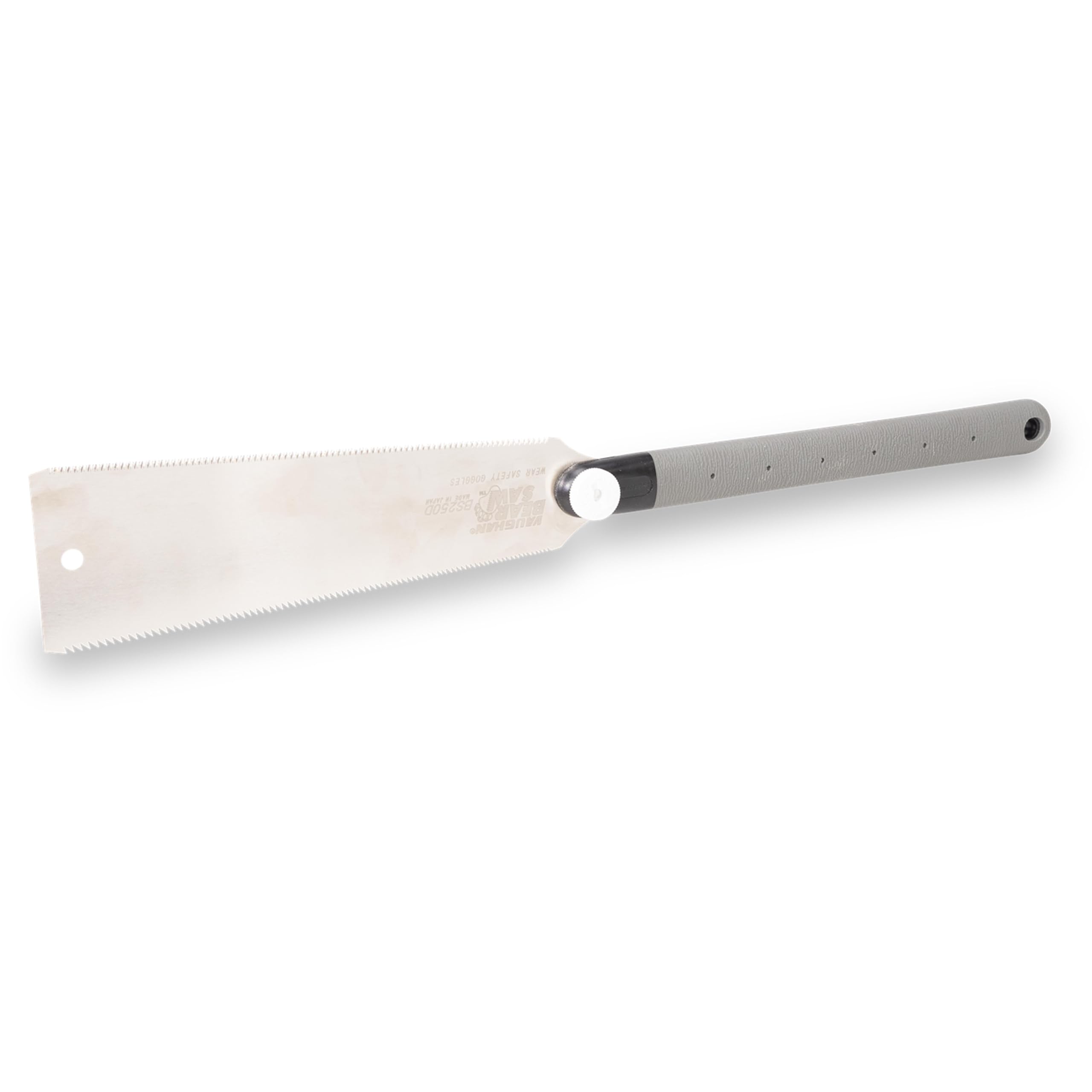
The VAUGHAN Bear Saw BS250D is a 5-blade interchangeable system that includes coarse, medium, extra-fine, double-edged, and mini double-edged blades, making it the most versatile entry-level option for woodworkers who want one saw that handles everything from rough framing to fine dovetails. The wooden handle is comfortable and durable, and the blades screw out for compact storage. The double-edged mini blade (5.5 inches) is specifically designed for detailed work like dovetails, moldings, and flush cuts.
This saw uses a Japanese-style pull stroke on all blades, which eliminates binding and reduces effort compared to Western push saws. Users report that the extra-fine blade cuts 2x4s quickly and smoothly, and the double-edged blade produces clean, accurate results for dovetail joints. The system includes a 13-inch coarse blade for framing, making this a true all-in-one kit for beginners who are not yet ready to invest in multiple dedicated saws.
The blade quality does not match dedicated single-blade Japanese saws — the steel is alloy rather than the high-carbon or high-speed steel found on premium models. The wooden handle, while comfortable, has a bulkier profile than traditional Japanese saw handles. For a woodworker on a budget who needs a single tool that covers framing, trim work, and basic joinery, the Vaughan Bear Saw delivers remarkable versatility.
Why it’s great
- Five interchangeable blades cover framing to dovetails
- Wooden handle is comfortable for extended use
- Pull-stroke design reduces binding and effort
Good to know
- Alloy steel blades are less durable than premium carbon/high-speed steel
- Bulkier handle than traditional Japanese saws
- Blade change requires screwdriver
FAQ
What is the ideal TPI for cutting dovetails in hardwood?
Should I buy a Dozuki (backed) or Ryoba (unbacked) saw for dovetails?
Can I use a Japanese pull saw for rip cuts along the grain?
How do I prevent the thin kerf blade from wandering off my cut line?
Why do my Japanese saw teeth sometimes break off?
Final Thoughts: The Verdict
For most users, the best dovetail saws winner is the Z-Saw Dozuki 5338ai because its rigid backed design, 26 TPI blade, and lightweight bamboo handle deliver the most accurate dovetails at a mid-range price that outperforms saws costing twice as much. If you want two-blade versatility for daily professional use, grab the TAJIMA JPR-SET Kit. And for compact precision on small-scale box and jewelry projects, nothing beats the SUIZAN Dozuki SDE-002 with its ultra-thin 0.3mm kerf and excellent sight-line visibility.

Mo Maruf
I created WellFizz to bridge the gap between vague wellness advice and actionable solutions. My mission is simple: to decode the research and give you practical tools you can actually use.
Beyond the data, I am a passionate traveler. I believe that stepping away from the screen to explore new environments is essential for mental clarity and physical vitality.